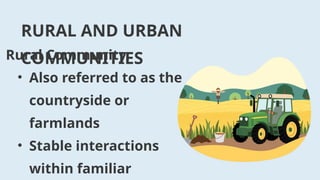
RURAL AND URBAN
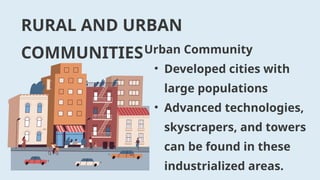
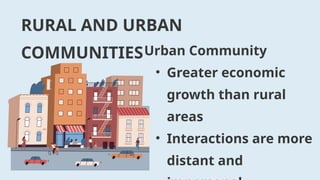
COMMUNITIESUrbanCommunity
• Developed cities with
large populations
• Advanced technologies,
skyscrapers, and towers
can be found in these
industrialized areas.
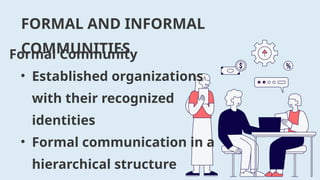
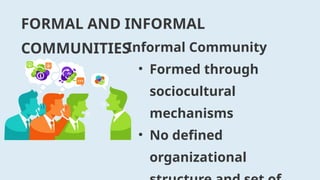
FORMAL AND INFORMAL
COMMUNITIES
FormalCommunity
• Established organizations
with their recognized
identities
• Formal communication in a
hierarchical structure
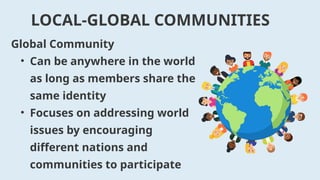
Global Community
• Canbe anywhere in the world
as long as members share the
same identity
• Focuses on addressing world
issues by encouraging
different nations and
communities to participate
LOCAL-GLOBAL COMMUNITIES
15.
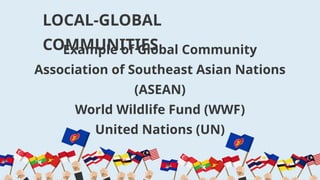
Example of GlobalCommunity
Association of Southeast Asian Nations
(ASEAN)
World Wildlife Fund (WWF)
United Nations (UN)
LOCAL-GLOBAL
COMMUNITIES
16.
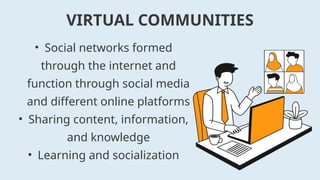
• Social networksformed
through the internet and
function through social media
and different online platforms
• Sharing content, information,
and knowledge
• Learning and socialization
VIRTUAL COMMUNITIES
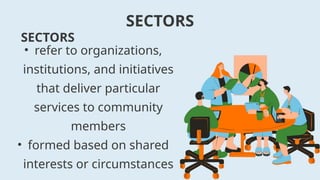
• refer toorganizations,
institutions, and initiatives
that deliver particular
services to community
members
• formed based on shared
interests or circumstances
SECTORS
SECTORS
19.
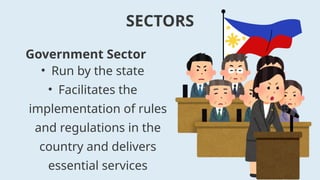
• Run bythe state
• Facilitates the
implementation of rules
and regulations in the
country and delivers
essential services
SECTORS
Government Sector
20.
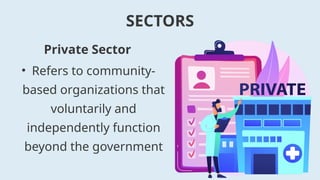
• Refers tocommunity-
based organizations that
voluntarily and
independently function
beyond the government
SECTORS
Private Sector
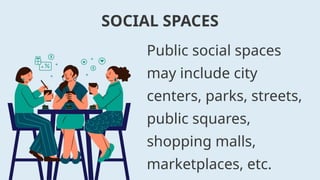
Public social spaces
mayinclude city
centers, parks, streets,
public squares,
shopping malls,
marketplaces, etc.
SOCIAL SPACES
25.
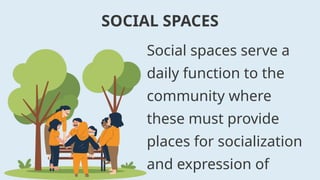
Social spaces servea
daily function to the
community where
these must provide
places for socialization
and expression of
SOCIAL SPACES
26.
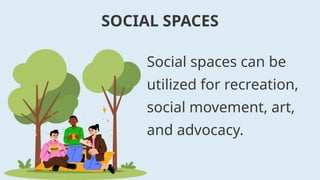
Social spaces canbe
utilized for recreation,
social movement, art,
and advocacy.
SOCIAL SPACES
27.
• Types ofcommunities can be classified
according to the following major
characteristics: location, practice, action,
interest, and circumstance.
• Sectors refer to organizations, institutions, and
initiatives that function in delivering particular
services to community members.
• A social space is a physical or virtual place that
people in a community use for social
Editor's Notes
#5 Ang Community Typologies ay iba’t ibang uri ng komunidad batay sa kung saan sila matatagpuan, ano ang ginagawa ng mga tao, at kung ano ang nag-uugnay sa kanila.
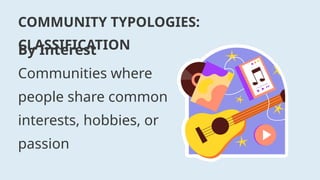
#11 nabubuo dahil sa iisang gawain o propesyon.
Mga guro
Mga nurse o doktor
Mga atleta o mananayaw
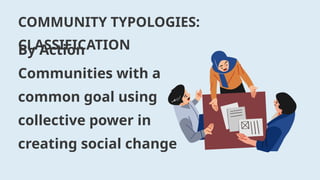
#12 nabubuo dahil sa iisang layunin at sama-samang pagkilos upang magdulot ng pagbabago sa lipuna
ga volunteer group
Environmental groups
People’s organization na tumutulong sa komunidad
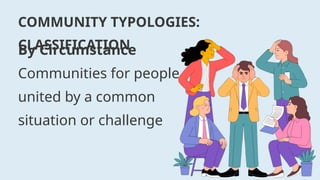
#14 nabubuo dahil sa pare-parehong sitwasyon o problema na nararanasan ng mga tao.
Mga biktima ng kalamidad
Mga evacuee sa evacuation center
Mga taong naapektuhan ng pandemya
#15 may malinaw na organisasyon at pagkakakilanlan.
Paaralan
Barangay o pamahalaan
Simbahan
Kumpanya o organisasyon
#17 kusang nabubuo at walang pormal na organisasyon.
Barkadahan sa kanto
Mga kapitbahay na madalas magkwentuhan
Online group na nabuo dahil sa parehong interes
#20 maaaring nasa iba’t ibang panig ng mundo basta pare-pareho ang pagkakakilanlan o layunin ng mga miyembro.
International organizations
Global environmental groups
Humanitarian groups na tumutulong sa iba’t ibang bansa
#22 nabubuo at umiiral sa internet o digital platforms.
Facebook groups o Discord servers
Online gaming communities
Forum para sa mga mahilig sa libro, musika, o sports
#24 isang bahagi o kategorya ng lipunan batay sa trabaho, industriya, o tungkulin ng mga tao.
ublic Sector (Pampublikong Sektor) – Gobyerno at mga ahensya nito (hal. barangay, ospital ng gobyerno, paaralan).
Private Sector (Pribadong Sektor) – Mga negosyo o kompanya na pag-aari ng pribadong tao (hal. sari-sari store, kumpanya, ospital na pribado).
Voluntary/Nonprofit Sector (Boluntaryo o Nonprofit) – Mga organisasyong tumutulong sa lipunan pero hindi para sa kita (hal. Red Cross, NGO, charity group).
#29 nagkikita, nag-uusap, at nakikisalamuha ang mga tao para sa pakikitungo sa isa’t isa.
#31 social spaces ay mga lugar na bukas sa lahat kung saan puwedeng makisalamuha, maglibang, at gawin ang pang-araw-araw na gawain sa komunidad
#32 Barangay hall (para sa pagpupulong at pagtulong sa residente)
Plaza o parke (para sa laro at socialization)
Community center (para sa aktibidad at pagtutulungan)