CENTRALIZATION AND
DECENTRALIZATION OF
AUTHORITY
PRESENTED BY:
SID G
• Henri Fayol (was a French mining engineer and
director of mines who developed a general theory of
business administration.
• He and his colleagues developed this theory
independently of scientific management but
roughly contemporaneously.
• He was one of the most influential contributors to
modern concepts of management.
• Fayol has introduced the 14th principles of
management which are very dynamic in
nature.
• Among those the 8th principle is CENTRALIZATION
AND DECENRALIZATION.
INTRODUCTION
“Centralization” is the systematic and
consistent reservation of authority at
central points in the organization.
• The implication of centralization can be :-
 Reservation of decision making power at top
level.
 Reservation of operating authority with the
middle level managers.
 Reservation of operation at lower level at the
directions of the top level.
“Decentralization” is a systematic
delegation of authority at all levels of
management and in all of the
organization.
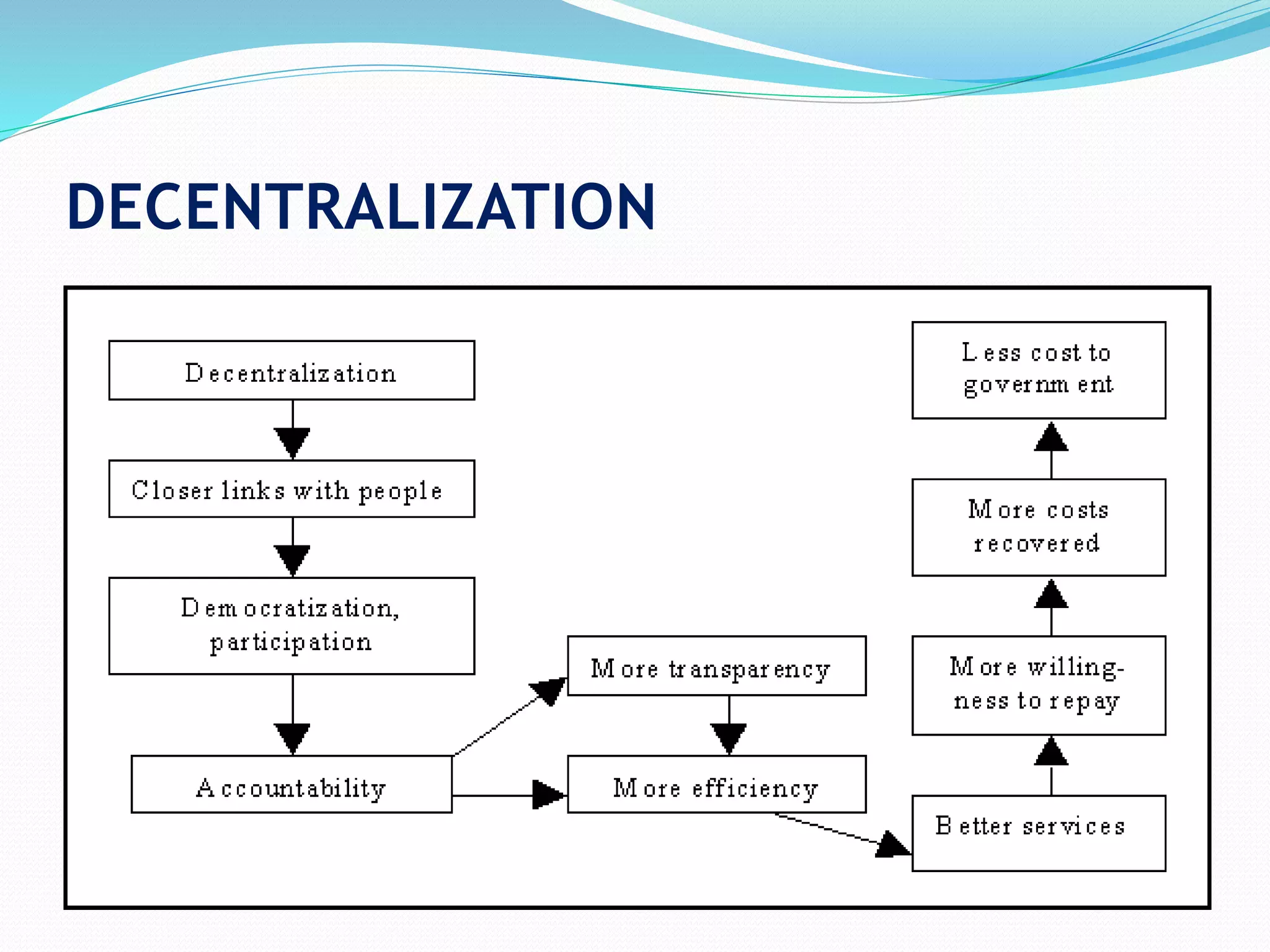
DECENTRALIZATION
• “Everything that increasing the role of
subordinates is decentralization and that
decreases the role is centralization”
• Authority in retained by the top management
for taking major decisions.
• Decentralization pattern is wider is scope.
Advantage of Centralized
Organizational Structure
• Reduced cost
• Uniformity in action
• Personal leadership
• Flexibility
• Improved quality of work
• Better co-ordination
Dis Advantage of Centralized
Organizational Structure
• Delay in work
• Remote control
• No loyalty
• No Secrecy
• No special attention
Advantage of De Centralized
Organizational Structure
• Distribution of burden of top executive
• Increased motivation and morale
• Greater efficiency and output
• Diversification of Activities
• Better Co-ordination
• Maintenance of Secrecy
• Facilitate effective control and quick decision
Dis Advantage of De Centralized
Organizational Structure
• More cost
• No specialization
• Need more specialists
• No uniform action
• No equitable distribution of work
• Control Systems
• Types of Business
• Branches of organization
• Type of organization
WHAT ARE THE FACTORS INFLUENCING
CENTRALIZATION?
• Size and dispersal of operation
• Level of diversity of product-lines
• Nature of growth
• Nature of Business
• Quality of Executives
• Management by Exception
• Effective Control System
WHAT ARE THE FACTORS AFFECTING
DECENTRALIZATION?
• Size of the organization – large or small
• Cost and Importance of decisions
• Uniformity
• History of organization
• Management Philosophy
• Availability of efficient managers
• Type of business
• Branches of organisation
WHAT ARE THE FACTORS AFFECTING
DECENTRALIZATION?
• Size of the organization – large or small
• Cost and Importance of decisions
• Uniformity
• History of organization
• Management Philosophy
• Availability of efficient managers
• Type of business
• Branches of organisation
THANK YOU

Centralization & decentralization of authority

  • 1.
  • 2.
    • Henri Fayol(was a French mining engineer and director of mines who developed a general theory of business administration. • He and his colleagues developed this theory independently of scientific management but roughly contemporaneously. • He was one of the most influential contributors to modern concepts of management. • Fayol has introduced the 14th principles of management which are very dynamic in nature. • Among those the 8th principle is CENTRALIZATION AND DECENRALIZATION. INTRODUCTION
  • 3.
    “Centralization” is thesystematic and consistent reservation of authority at central points in the organization.
  • 4.
    • The implicationof centralization can be :-  Reservation of decision making power at top level.  Reservation of operating authority with the middle level managers.  Reservation of operation at lower level at the directions of the top level.
  • 5.
    “Decentralization” is asystematic delegation of authority at all levels of management and in all of the organization.
  • 6.
  • 7.
    • “Everything thatincreasing the role of subordinates is decentralization and that decreases the role is centralization” • Authority in retained by the top management for taking major decisions. • Decentralization pattern is wider is scope.
  • 8.
    Advantage of Centralized OrganizationalStructure • Reduced cost • Uniformity in action • Personal leadership • Flexibility • Improved quality of work • Better co-ordination
  • 10.
    Dis Advantage ofCentralized Organizational Structure • Delay in work • Remote control • No loyalty • No Secrecy • No special attention
  • 11.
    Advantage of DeCentralized Organizational Structure • Distribution of burden of top executive • Increased motivation and morale • Greater efficiency and output • Diversification of Activities • Better Co-ordination • Maintenance of Secrecy • Facilitate effective control and quick decision
  • 12.
    Dis Advantage ofDe Centralized Organizational Structure • More cost • No specialization • Need more specialists • No uniform action • No equitable distribution of work • Control Systems • Types of Business • Branches of organization • Type of organization
  • 13.
    WHAT ARE THEFACTORS INFLUENCING CENTRALIZATION? • Size and dispersal of operation • Level of diversity of product-lines • Nature of growth • Nature of Business • Quality of Executives • Management by Exception • Effective Control System
  • 14.
    WHAT ARE THEFACTORS AFFECTING DECENTRALIZATION? • Size of the organization – large or small • Cost and Importance of decisions • Uniformity • History of organization • Management Philosophy • Availability of efficient managers • Type of business • Branches of organisation
  • 15.
    WHAT ARE THEFACTORS AFFECTING DECENTRALIZATION? • Size of the organization – large or small • Cost and Importance of decisions • Uniformity • History of organization • Management Philosophy • Availability of efficient managers • Type of business • Branches of organisation
  • 16.