COMPARISON OF MOBILE GENERATIONS
MOBILE & WIRELESS NETWORKS
ENGR. SHAHZAIB MALIK
HOD ELECTRONICS
GCT BHAKKAR
WIRELESS NETWORK’S GENERATIONS
• Advanced Mobile Phone System (AMPS) : 1G (FDMA)
• Global System for Mobile Communications (GSM) : 2G (TDMA)
• Universal Mobile Telecommunications System (UMTS) : 3G (CDMA)
• Long-term Evolution (LTE): 4G (OFDMA)
• LTE-A , etc. : 5G (NOMA, MIMO etc.)
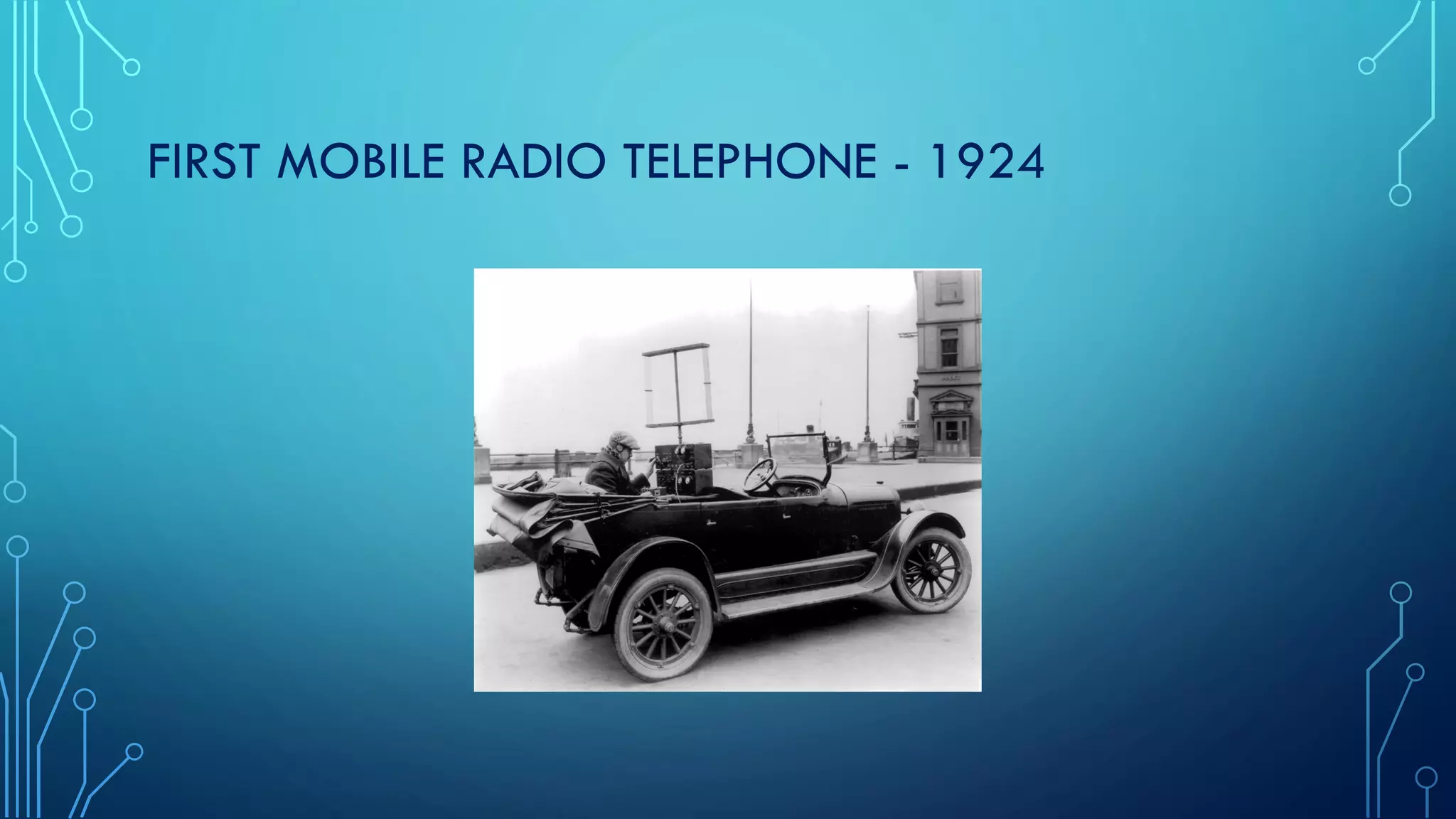
FIRST MOBILE RADIO TELEPHONE - 1924
FIRST GENERATION – 1G CELLULAR
• Advanced Mobile Phone Service (AMPS)
• US trials 1978; deployed in Japan (’79) & US (’83)
• 800 MHz band – two 20 MHz bands
• Nordic Mobile Telephony (NMT)
• Sweden, Norway, Demark & Finland
• Launched 1981;
• 450 MHz; later at 900 MHz (NMT900)
• Total Access Communications System (TACS)
• British design; similar to AMPS; deployed 1985
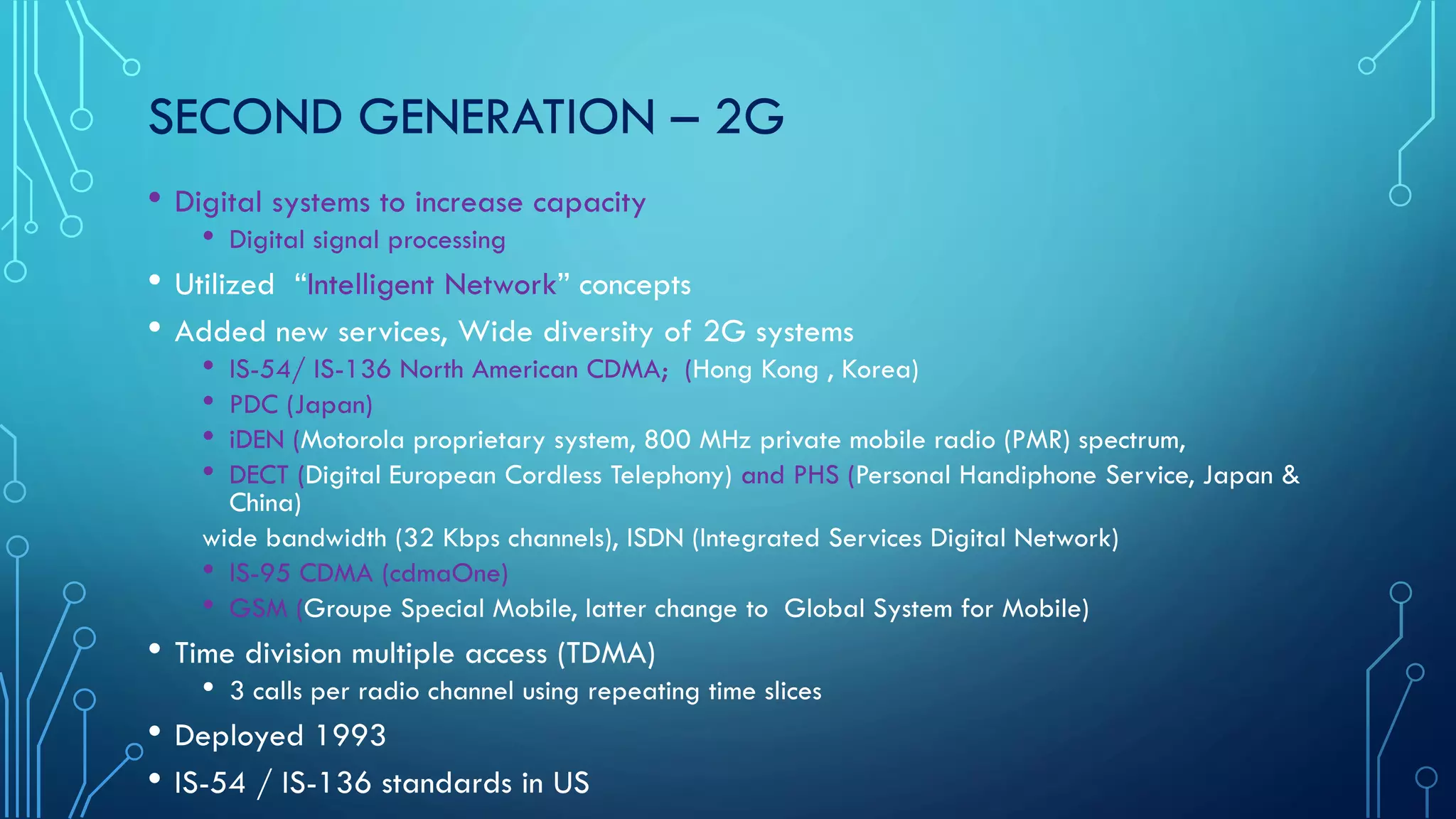
SECOND GENERATION – 2G
• Digital systems to increase capacity
• Digital signal processing
• Utilized “Intelligent Network” concepts
• Added new services, Wide diversity of 2G systems
• IS-54/ IS-136 North American CDMA; (Hong Kong , Korea)
• PDC (Japan)
• iDEN (Motorola proprietary system, 800 MHz private mobile radio (PMR) spectrum,
• DECT (Digital European Cordless Telephony) and PHS (Personal Handiphone Service, Japan &
China)
wide bandwidth (32 Kbps channels), ISDN (Integrated Services Digital Network)
• IS-95 CDMA (cdmaOne)
• GSM (Groupe Special Mobile, latter change to Global System for Mobile)
• Time division multiple access (TDMA)
• 3 calls per radio channel using repeating time slices
• Deployed 1993
• IS-54 / IS-136 standards in US
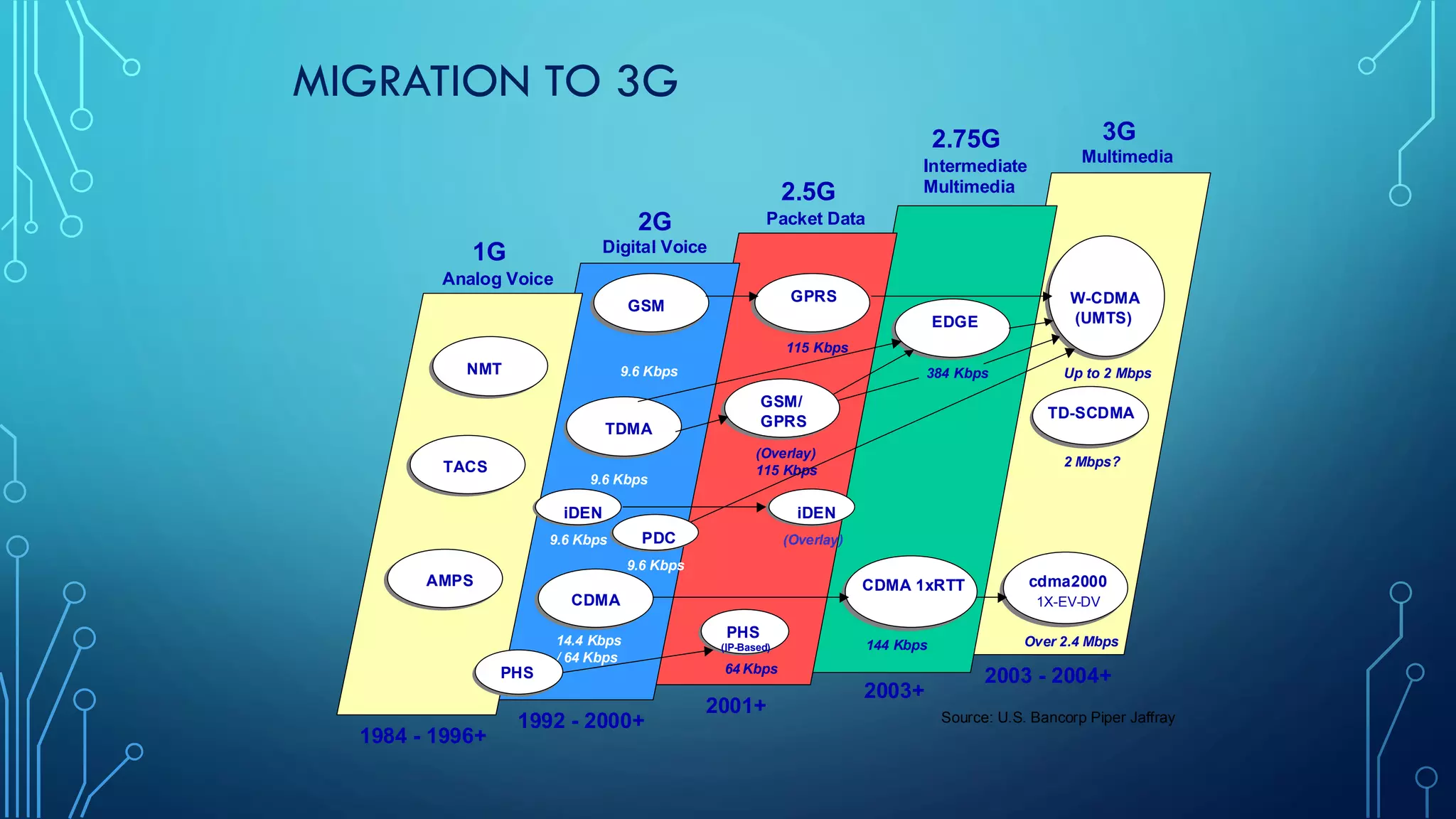
CDMA
GSM
TDMA
PHS
(IP-Based)
64 Kbps
GPRS
115 Kbps
CDMA 1xRTT
144 Kbps
EDGE
384 Kbps
cdma2000
1X-EV-DV
Over 2.4 Mbps
W-CDMA
(UMTS)
Up to 2 Mbps
2G
2.5G
2.75G 3G
1992 - 2000+
2001+
2003+
1G
1984 - 1996+
2003 - 2004+
TACS
NMT
AMPS
GSM/
GPRS
(Overlay)
115 Kbps
9.6 Kbps
9.6 Kbps
14.4 Kbps
/ 64 Kbps
9.6 Kbps
PDC
Analog Voice
Digital Voice
Packet Data
Intermediate
Multimedia
Multimedia
PHS
TD-SCDMA
2 Mbps?
9.6 Kbps
iDEN
(Overlay)
iDEN
Source: U.S. Bancorp Piper Jaffray
MIGRATION TO 3G
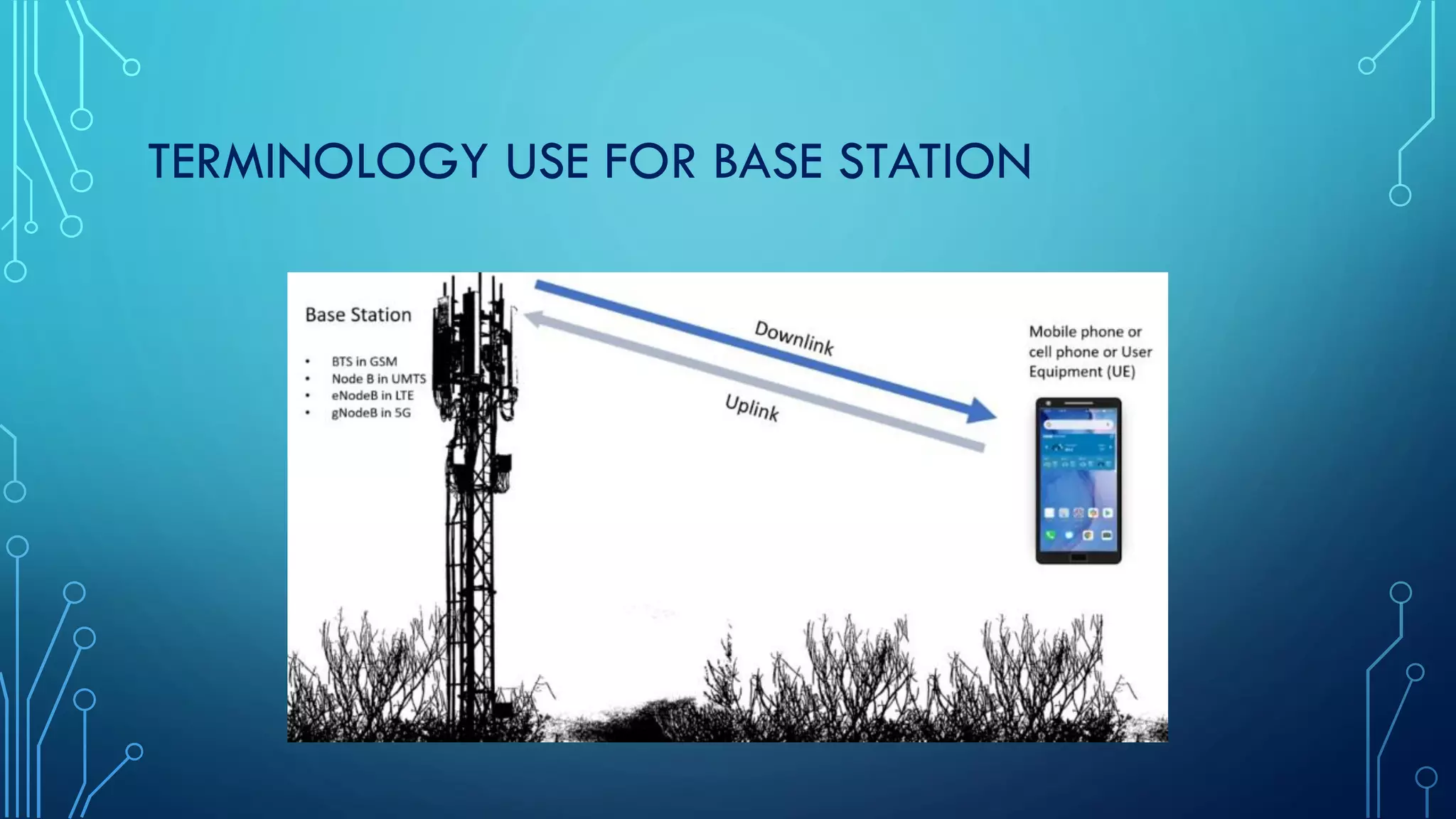
TERMINOLOGY USE FOR BASE STATION
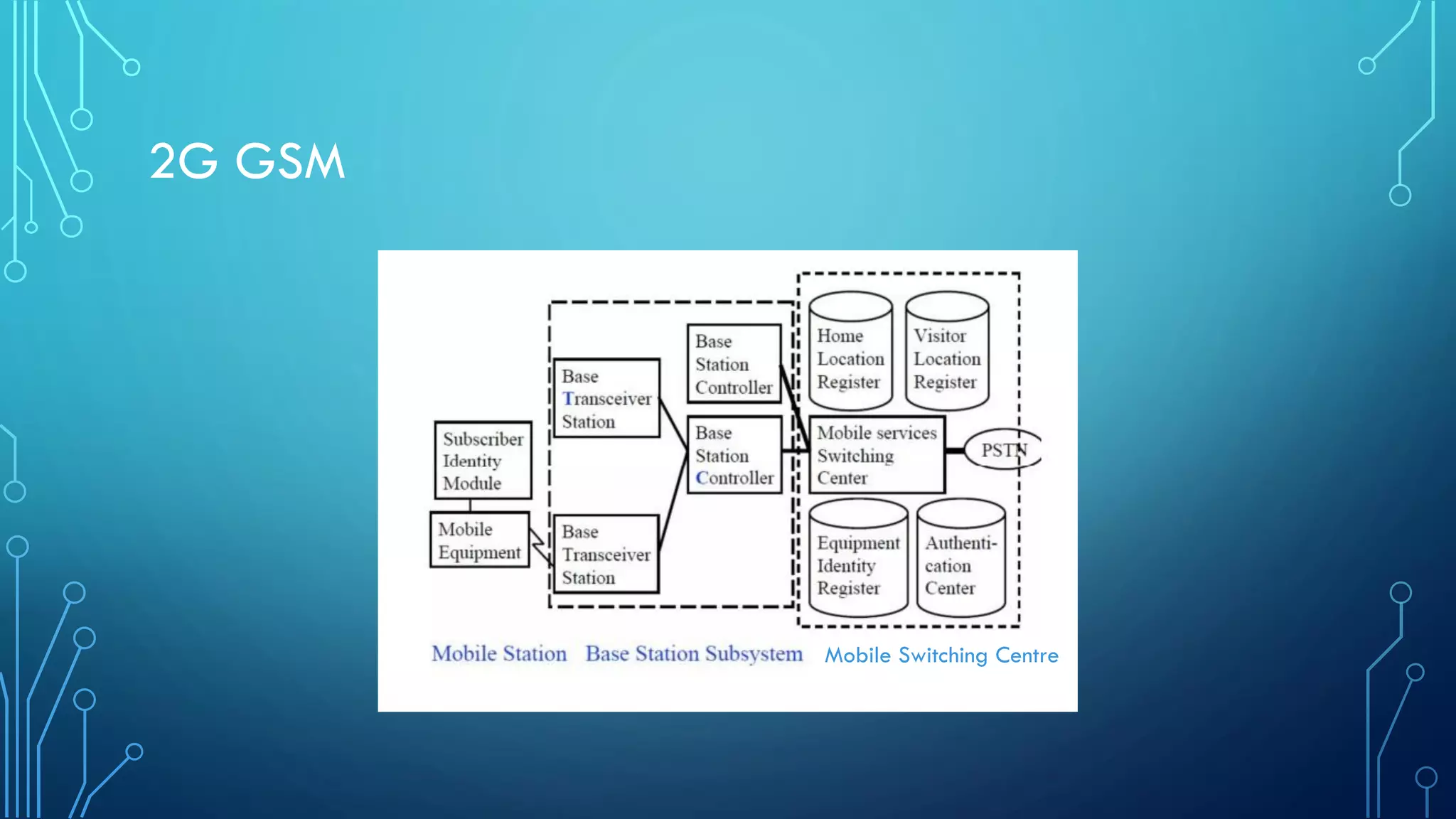
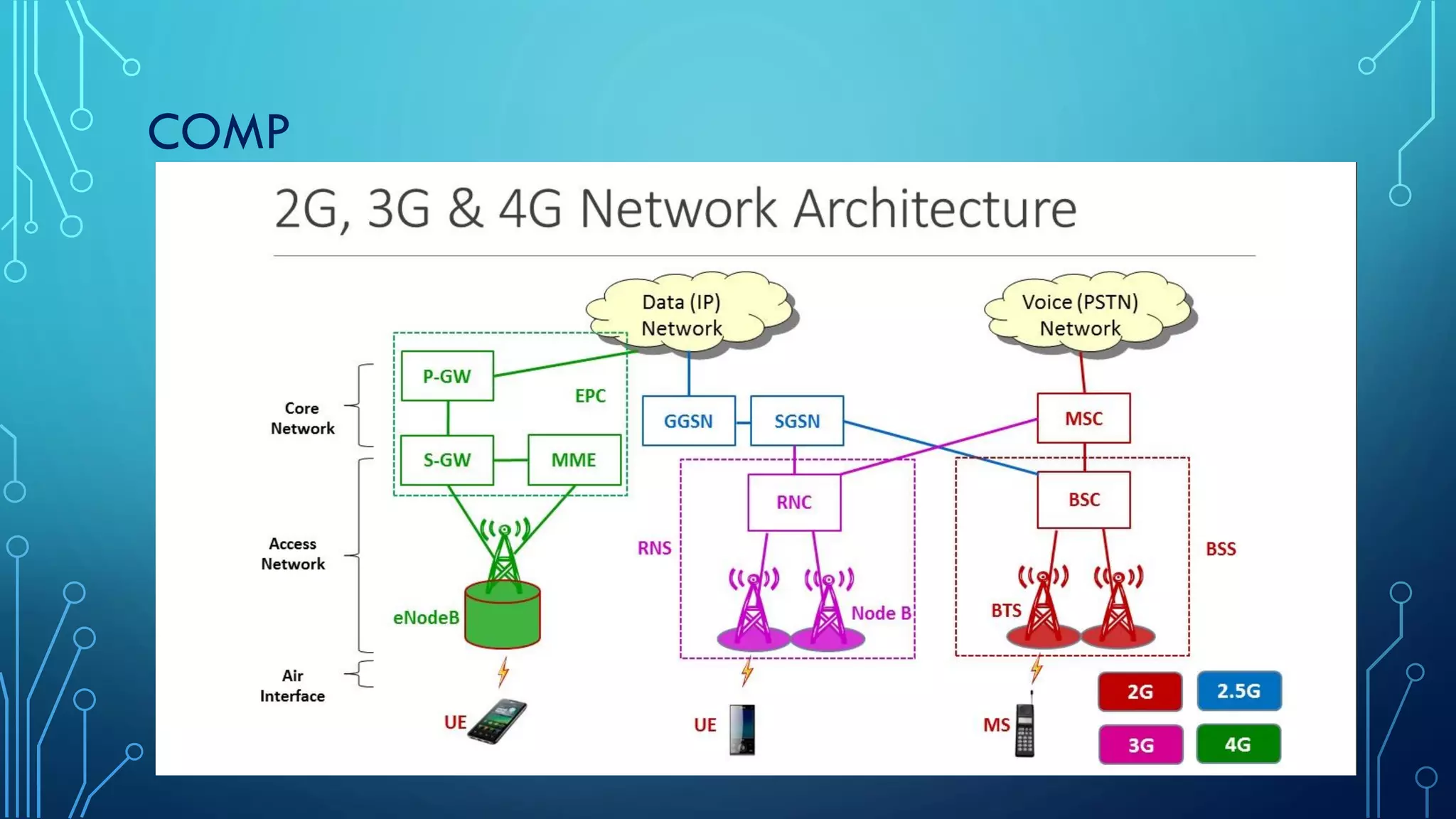
2G GSM
Mobile Switching Centre
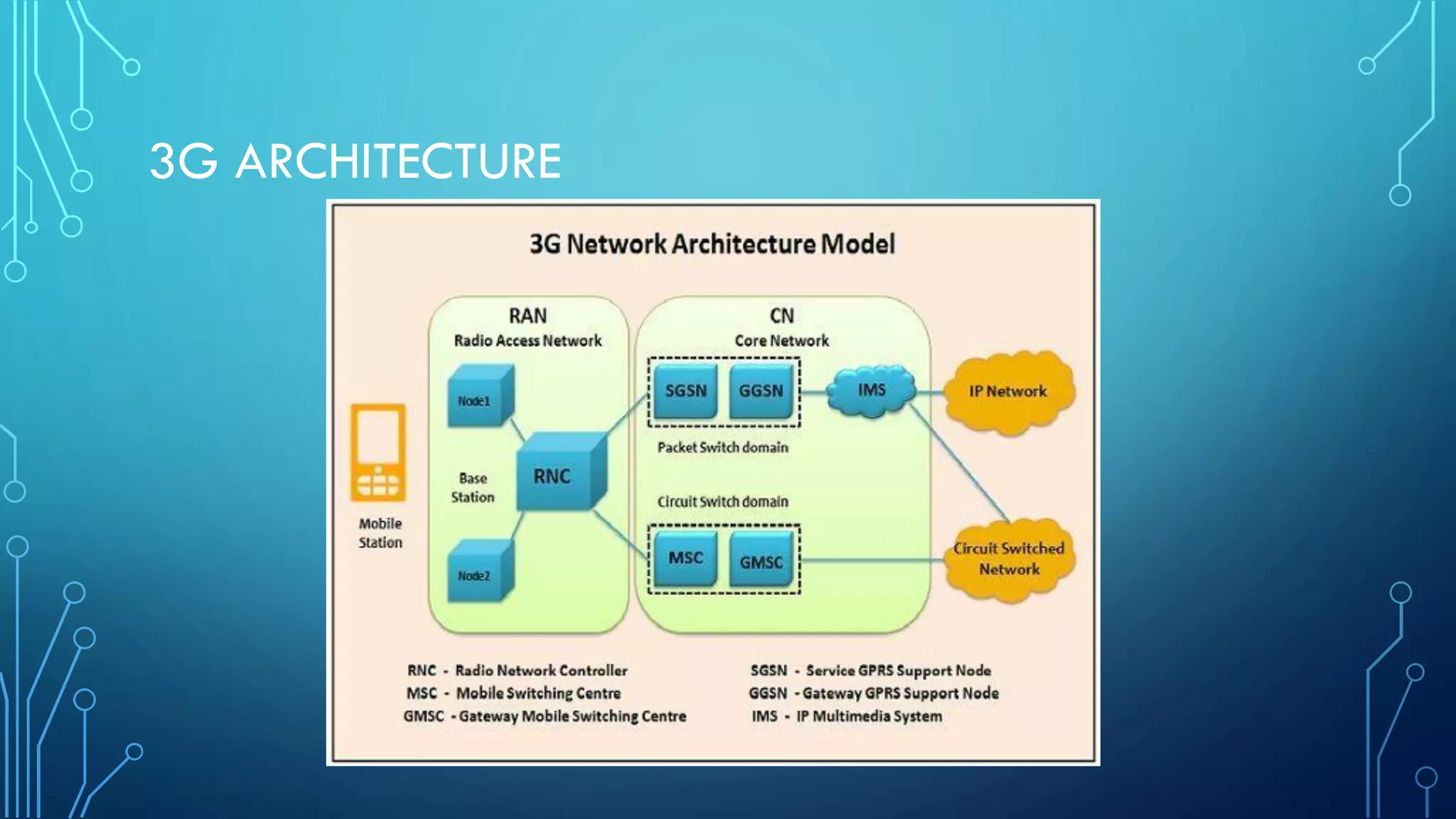
3G ARCHITECTURE
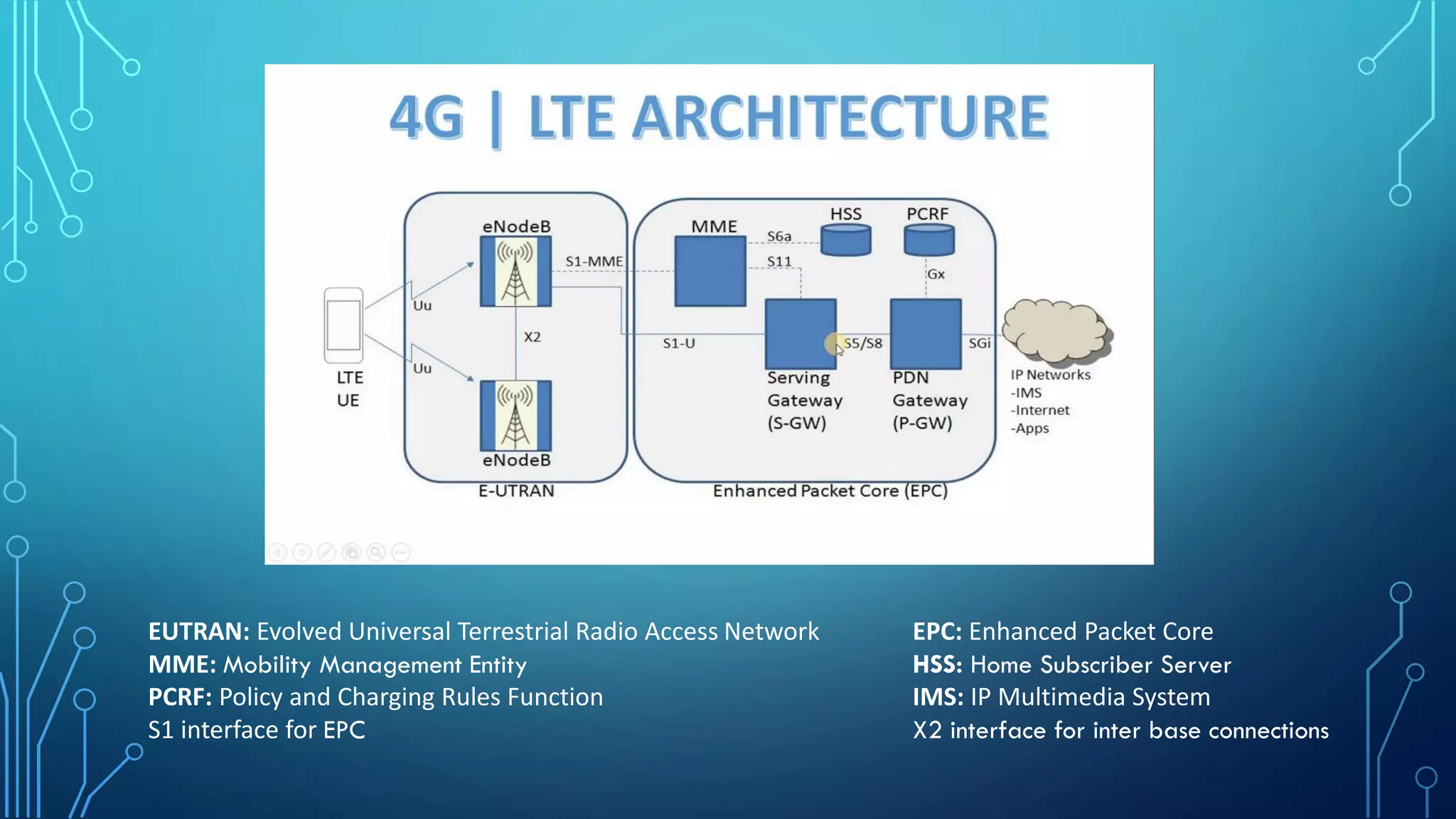
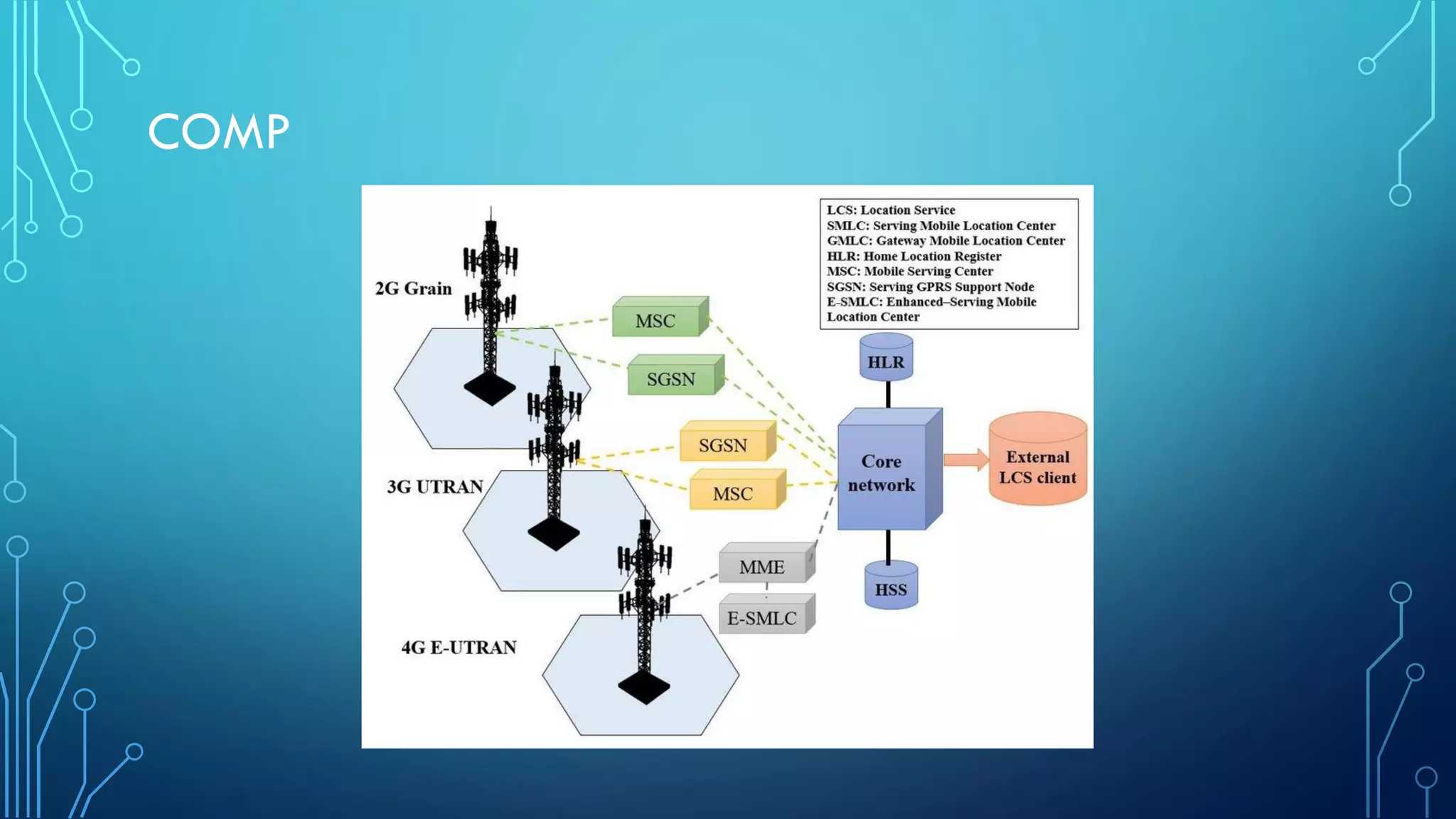
EUTRAN: Evolved Universal Terrestrial Radio Access Network EPC: Enhanced Packet Core
MME: Mobility Management Entity HSS: Home Subscriber Server
PCRF: Policy and Charging Rules Function IMS: IP Multimedia System
S1 interface for EPC X2 interface for inter base connections
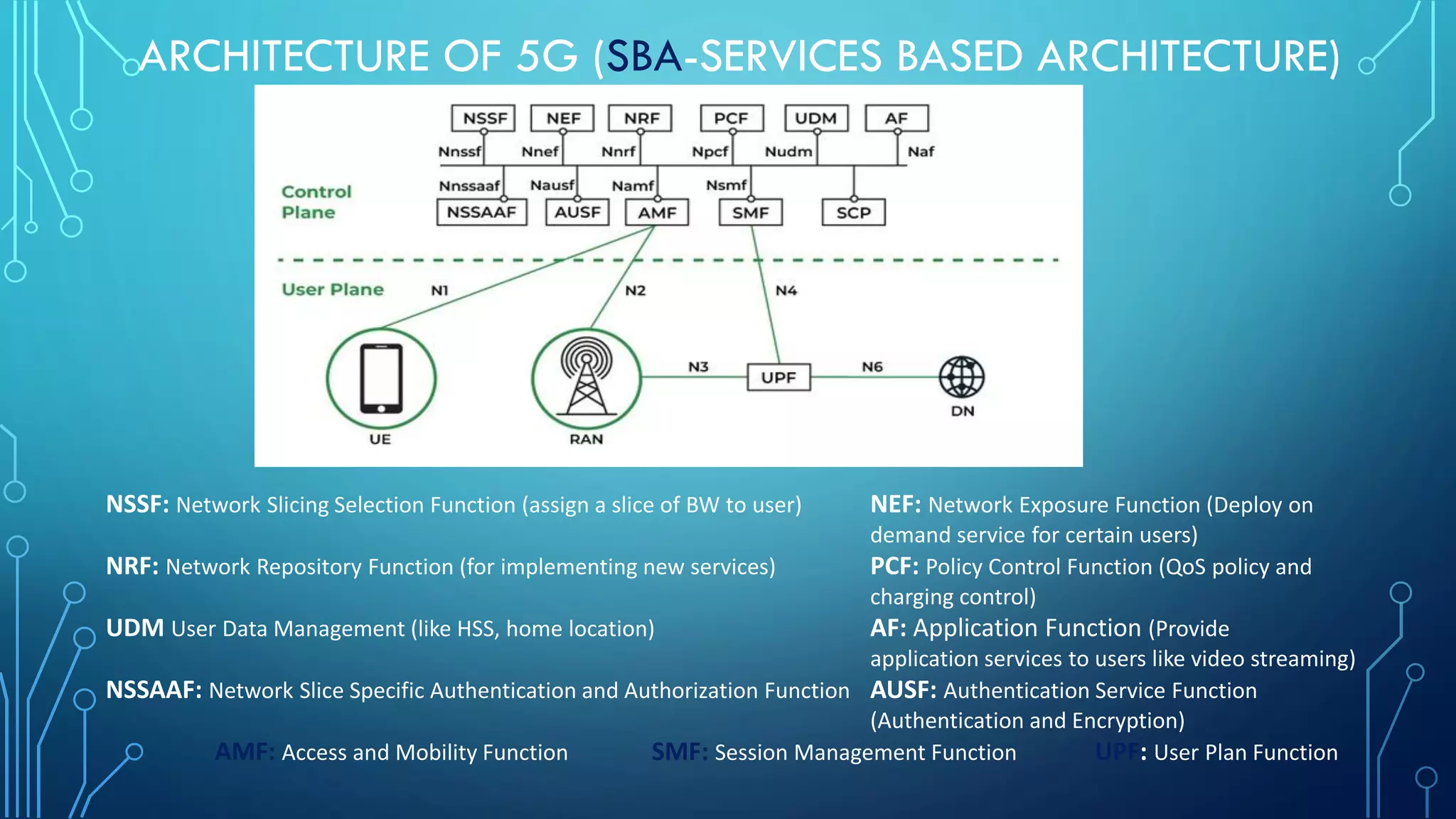
ARCHITECTURE OF 5G (SBA-SERVICES BASED ARCHITECTURE)
NSSF: Network Slicing Selection Function (assign a slice of BW to user) NEF: Network Exposure Function (Deploy on
demand service for certain users)
NRF: Network Repository Function (for implementing new services) PCF: Policy Control Function (QoS policy and
charging control)
UDM User Data Management (like HSS, home location) AF: Application Function (Provide
application services to users like video streaming)
NSSAAF: Network Slice Specific Authentication and Authorization Function AUSF: Authentication Service Function
(Authentication and Encryption)
AMF: Access and Mobility Function SMF: Session Management Function UPF: User Plan Function
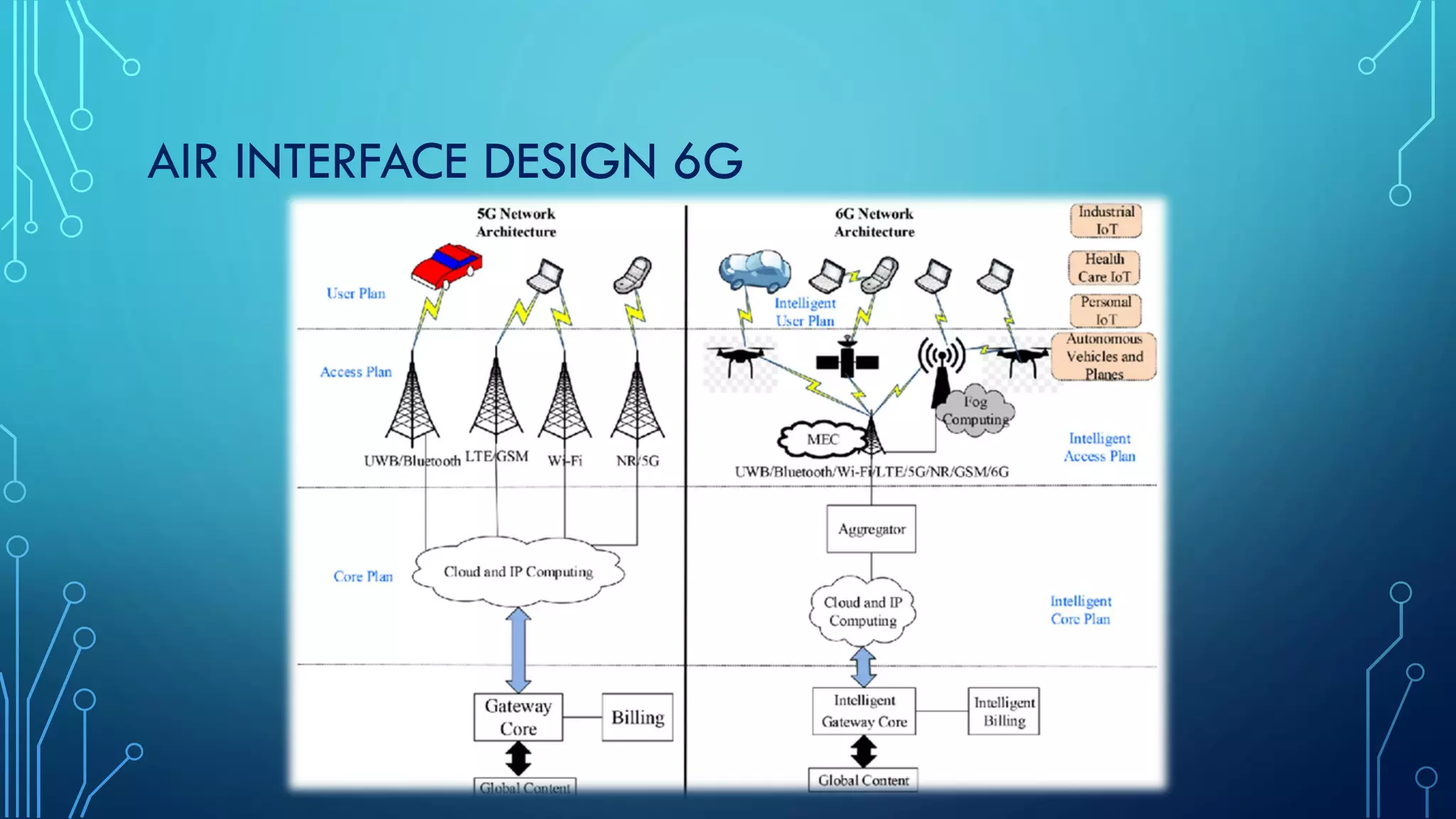
AIR INTERFACE DESIGN 6G
COMP
COMP
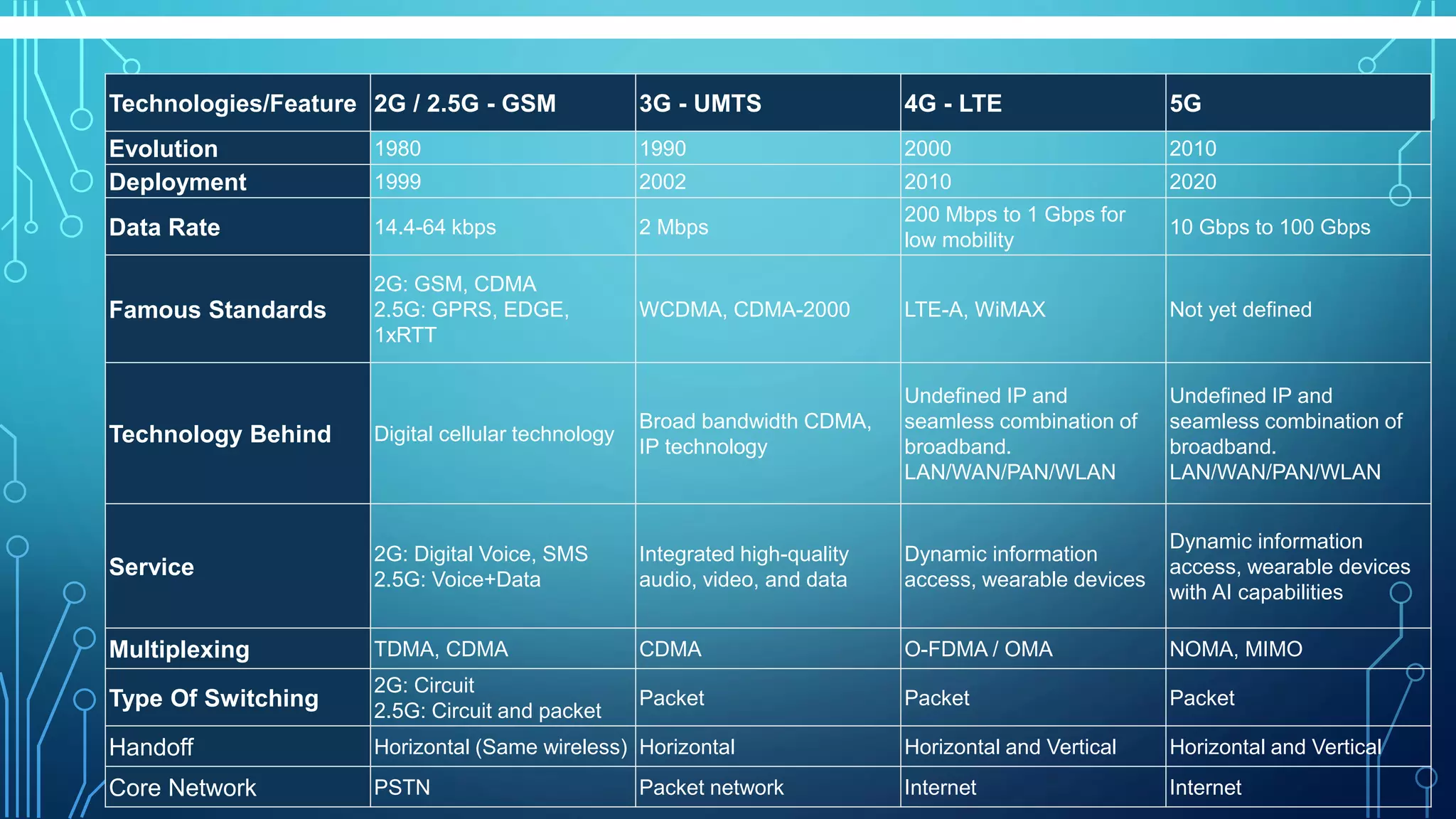
Technologies/Feature 2G / 2.5G - GSM 3G - UMTS 4G - LTE 5G
Evolution 1980 1990 2000 2010
Deployment 1999 2002 2010 2020
Data Rate 14.4-64 kbps 2 Mbps
200 Mbps to 1 Gbps for
low mobility
10 Gbps to 100 Gbps
Famous Standards
2G: GSM, CDMA
2.5G: GPRS, EDGE,
1xRTT
WCDMA, CDMA-2000 LTE-A, WiMAX Not yet defined
Technology Behind Digital cellular technology
Broad bandwidth CDMA,
IP technology
Undefined IP and
seamless combination of
broadband.
LAN/WAN/PAN/WLAN
Undefined IP and
seamless combination of
broadband.
LAN/WAN/PAN/WLAN
Service
2G: Digital Voice, SMS
2.5G: Voice+Data
Integrated high-quality
audio, video, and data
Dynamic information
access, wearable devices
Dynamic information
access, wearable devices
with AI capabilities
Multiplexing TDMA, CDMA CDMA O-FDMA / OMA NOMA, MIMO
Type Of Switching
2G: Circuit
2.5G: Circuit and packet
Packet Packet Packet
Handoff Horizontal (Same wireless) Horizontal Horizontal and Vertical Horizontal and Vertical
Core Network PSTN Packet network Internet Internet
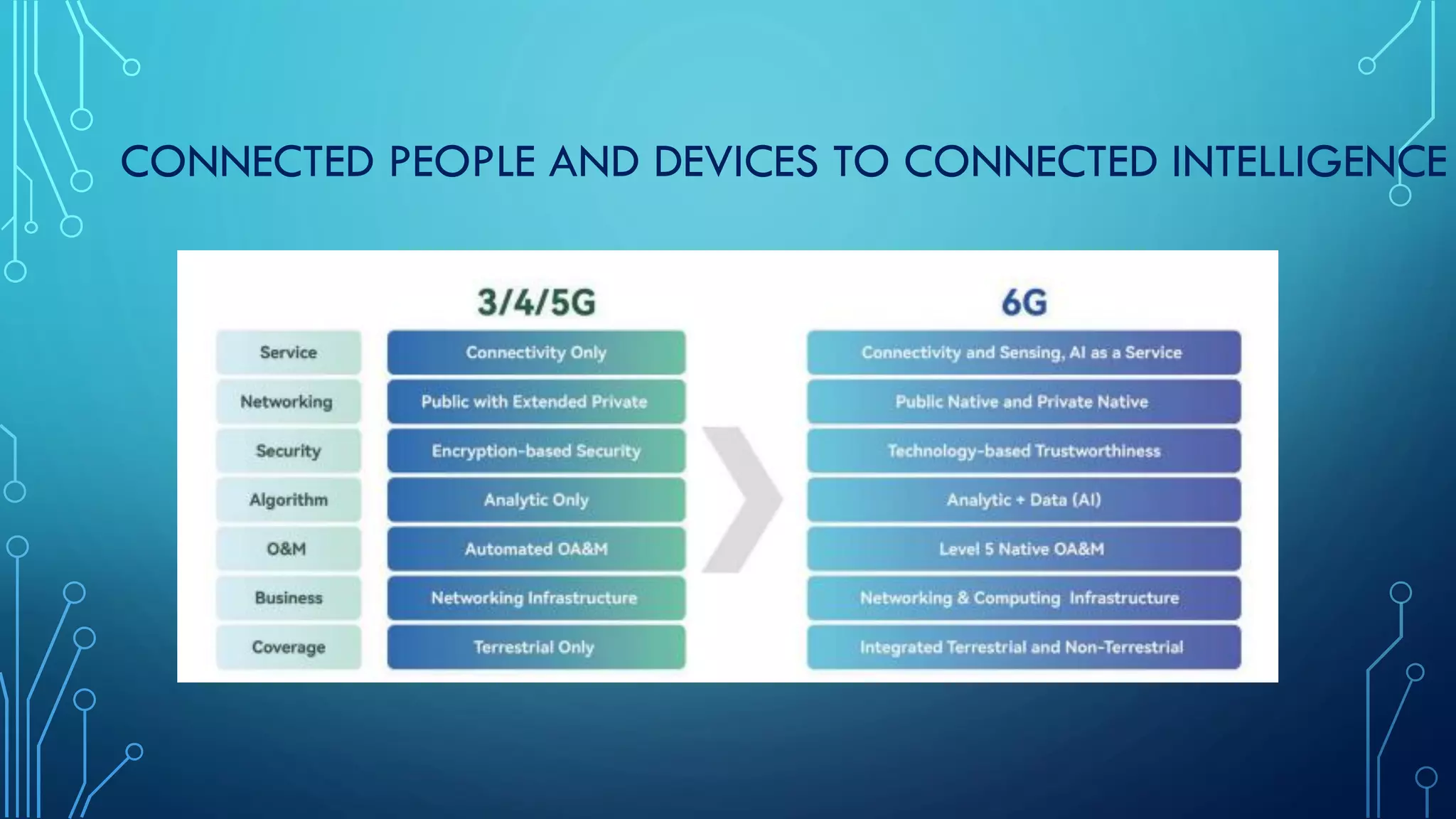
CONNECTED PEOPLE AND DEVICES TO CONNECTED INTELLIGENCE
Thank You

Cellular Systems - Comparison.pdf

  • 1.
    COMPARISON OF MOBILEGENERATIONS MOBILE & WIRELESS NETWORKS ENGR. SHAHZAIB MALIK HOD ELECTRONICS GCT BHAKKAR
  • 2.
    WIRELESS NETWORK’S GENERATIONS •Advanced Mobile Phone System (AMPS) : 1G (FDMA) • Global System for Mobile Communications (GSM) : 2G (TDMA) • Universal Mobile Telecommunications System (UMTS) : 3G (CDMA) • Long-term Evolution (LTE): 4G (OFDMA) • LTE-A , etc. : 5G (NOMA, MIMO etc.)
  • 3.
    FIRST MOBILE RADIOTELEPHONE - 1924
  • 4.
    FIRST GENERATION –1G CELLULAR • Advanced Mobile Phone Service (AMPS) • US trials 1978; deployed in Japan (’79) & US (’83) • 800 MHz band – two 20 MHz bands • Nordic Mobile Telephony (NMT) • Sweden, Norway, Demark & Finland • Launched 1981; • 450 MHz; later at 900 MHz (NMT900) • Total Access Communications System (TACS) • British design; similar to AMPS; deployed 1985
  • 5.
    SECOND GENERATION –2G • Digital systems to increase capacity • Digital signal processing • Utilized “Intelligent Network” concepts • Added new services, Wide diversity of 2G systems • IS-54/ IS-136 North American CDMA; (Hong Kong , Korea) • PDC (Japan) • iDEN (Motorola proprietary system, 800 MHz private mobile radio (PMR) spectrum, • DECT (Digital European Cordless Telephony) and PHS (Personal Handiphone Service, Japan & China) wide bandwidth (32 Kbps channels), ISDN (Integrated Services Digital Network) • IS-95 CDMA (cdmaOne) • GSM (Groupe Special Mobile, latter change to Global System for Mobile) • Time division multiple access (TDMA) • 3 calls per radio channel using repeating time slices • Deployed 1993 • IS-54 / IS-136 standards in US
  • 6.
    CDMA GSM TDMA PHS (IP-Based) 64 Kbps GPRS 115 Kbps CDMA1xRTT 144 Kbps EDGE 384 Kbps cdma2000 1X-EV-DV Over 2.4 Mbps W-CDMA (UMTS) Up to 2 Mbps 2G 2.5G 2.75G 3G 1992 - 2000+ 2001+ 2003+ 1G 1984 - 1996+ 2003 - 2004+ TACS NMT AMPS GSM/ GPRS (Overlay) 115 Kbps 9.6 Kbps 9.6 Kbps 14.4 Kbps / 64 Kbps 9.6 Kbps PDC Analog Voice Digital Voice Packet Data Intermediate Multimedia Multimedia PHS TD-SCDMA 2 Mbps? 9.6 Kbps iDEN (Overlay) iDEN Source: U.S. Bancorp Piper Jaffray MIGRATION TO 3G
  • 7.
    TERMINOLOGY USE FORBASE STATION
  • 8.
  • 9.
  • 10.
    EUTRAN: Evolved UniversalTerrestrial Radio Access Network EPC: Enhanced Packet Core MME: Mobility Management Entity HSS: Home Subscriber Server PCRF: Policy and Charging Rules Function IMS: IP Multimedia System S1 interface for EPC X2 interface for inter base connections
  • 11.
    ARCHITECTURE OF 5G(SBA-SERVICES BASED ARCHITECTURE) NSSF: Network Slicing Selection Function (assign a slice of BW to user) NEF: Network Exposure Function (Deploy on demand service for certain users) NRF: Network Repository Function (for implementing new services) PCF: Policy Control Function (QoS policy and charging control) UDM User Data Management (like HSS, home location) AF: Application Function (Provide application services to users like video streaming) NSSAAF: Network Slice Specific Authentication and Authorization Function AUSF: Authentication Service Function (Authentication and Encryption) AMF: Access and Mobility Function SMF: Session Management Function UPF: User Plan Function
  • 12.
  • 13.
  • 14.
  • 15.
    Technologies/Feature 2G /2.5G - GSM 3G - UMTS 4G - LTE 5G Evolution 1980 1990 2000 2010 Deployment 1999 2002 2010 2020 Data Rate 14.4-64 kbps 2 Mbps 200 Mbps to 1 Gbps for low mobility 10 Gbps to 100 Gbps Famous Standards 2G: GSM, CDMA 2.5G: GPRS, EDGE, 1xRTT WCDMA, CDMA-2000 LTE-A, WiMAX Not yet defined Technology Behind Digital cellular technology Broad bandwidth CDMA, IP technology Undefined IP and seamless combination of broadband. LAN/WAN/PAN/WLAN Undefined IP and seamless combination of broadband. LAN/WAN/PAN/WLAN Service 2G: Digital Voice, SMS 2.5G: Voice+Data Integrated high-quality audio, video, and data Dynamic information access, wearable devices Dynamic information access, wearable devices with AI capabilities Multiplexing TDMA, CDMA CDMA O-FDMA / OMA NOMA, MIMO Type Of Switching 2G: Circuit 2.5G: Circuit and packet Packet Packet Packet Handoff Horizontal (Same wireless) Horizontal Horizontal and Vertical Horizontal and Vertical Core Network PSTN Packet network Internet Internet
  • 16.
    CONNECTED PEOPLE ANDDEVICES TO CONNECTED INTELLIGENCE
  • 17.