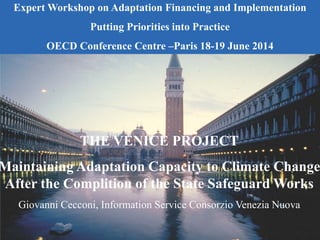
THE VENICE PROJECT
Maintaining Adaptation Capacity to Climate Change
After the Complition of the State Safeguard Works
Giovanni Cecconi, Information Service Consorzio Venezia Nuova
Expert Workshop on Adaptation Financing and Implementation
Putting Priorities into Practice
OECD Conference Centre –Paris 18-19 June 2014
OUTLINE
The Venice Project: a solution to CC-SLR provided by a
State concessionaire Consorzio Venezia Nuova
The design and implementation of the adaptive restoration
works
Relevance of Venice Project for Building CC Adaptation
Maintaining adaptation at the local scale: an opportunity
for private participation
The Venice Safeguard Project is a combination of environmental
restoration and flood control measures
It has been totally financed by the Italian State and Consorzio Venezia Nuova, a
private company made of local and national contractors, has been appointed to
study, design and implement the project acting as a State Concessionary,
according to the National Law n° 798 of 1984, for solving a very complex problem
of national importance.
While general study, design and environmental restoration works started
immediately 30 year ago, barrier construction was authorized by the Inter-
ministerial Committee for Policy Coordination and Control and started in May
2003.
Total cost of the storm surge barriers is 5.5 Billion Euro
4 000 people are currently employed and
85% of the works has been completed
Barrier operations is expected to start in June 2017
The design and implementation of the
adaptive restoration works
Climate Change Vulnerabity
Flooding Coastal erosion
Loss of habitat Pollution
1930
168 km2
2000
60 km2
1970
105 km2
LOSS OF INTERTIDAL HABITAT DUE TO SEA LEVEL RISE
4 Nov 1966 194 cm
22 Dec 1979 166
1 Feb 1986 159
1 Dec 2008 156
12 Nov 1951 151
11 Nov 2012 149
16 Nov 2002 147
16 Apr 1936 147
25 Dec 2009 145
15 Oct 1960 145
24 Dec 2010 144
23 Dec 2009 144
6 Nov 2000 144
3 Nov 1968 144
1 Nov 2012 143
Vulnerabity to Sea Level Rise
Working with Nature for Building Resilience :
Structural measures for enhancing bio-stabilizing processes
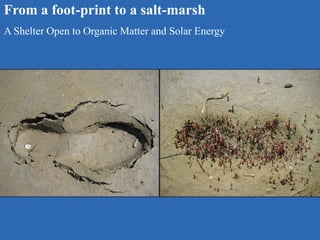
From a foot-print to a salt-marsh
A Shelter Open to Organic Matter and Solar Energy
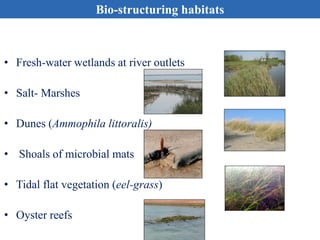
• Fresh-water wetlands at river outlets
• Salt- Marshes
• Dunes (Ammophila littoralis)
• Shoals of microbial mats
• Tidal flat vegetation (eel-grass)
• Oyster reefs
Bio-structuring habitats
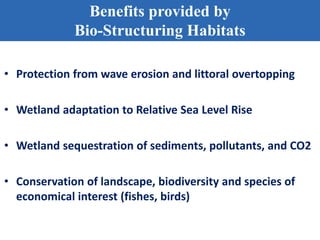
Benefits provided by
Bio-Structuring Habitats
• Protection from wave erosion and littoral overtopping
• Wetland adaptation to Relative Sea Level Rise
• Wetland sequestration of sediments, pollutants, and CO2
• Conservation of landscape, biodiversity and species of
economical interest (fishes, birds)
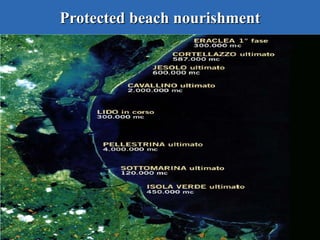
RE-USE OF DREDGED SEDIMENTS PROTECTED BEACH NOURISHMENT
THE VENICE SOLUTION OF BUILDING WITH NATURE
STORM SURGE BARRIERS AT
LAGOON INLETSURBAN ADAPTATION
Protected beach nourishment
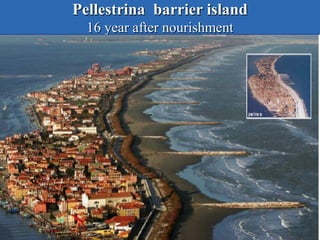
Pellestrina barrier island
16 year after nourishment
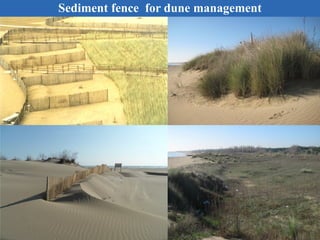
Sediment fence for dune management
Re-use of 20 million m3 of dredged sediments for building
124 salt marsh units, 15 km2, all over the lagoon 1987-2013
Evolution of constructed salt marshes
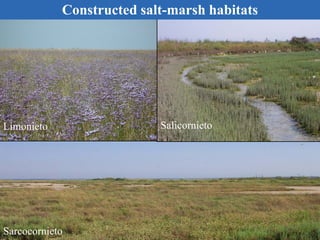
Limonieto
Sarcocornieto
Salicornieto
Constructed salt-marsh habitats
Endangered Breeding Species
at Constructed Salt-Marshes (years 2005-2006)
Avocet (39-44 pairs)
Redshank (94-136)
Black-winged Stilt (96-69)
Kentish Plover (34-71)
Oystercatcher (31-38)
Shelduck (12-17)
Little Tern (115-205)
Yellow-legged Gull (553-
1057)
SALT MARSH ADAPTATION TO R.S.L.R.
+ 0.5 cm/year ACCRETION
Limit of Urban Adaptation
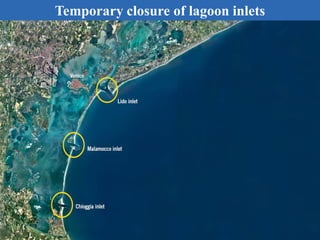
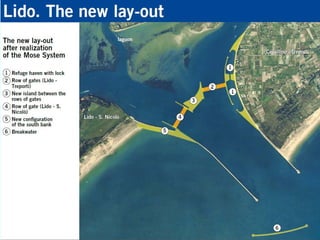
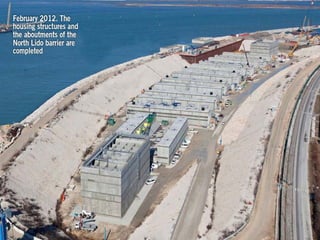
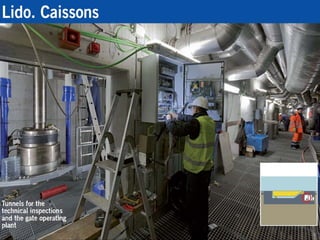
Temporary closure of lagoon inlets
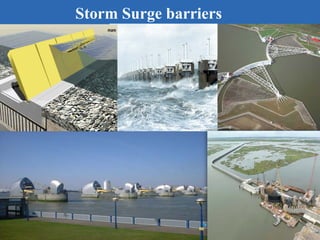
Storm surge barriersSto
Storm Surge barriers
How the floodgates work
Relevance of Venice Project for Building CC Adaptation
Long-term State-Consorzio Venezia Nuova partnership have produced an
ad-hoc integrated and adaptive solution to a flooding and erosion complex problems
with challenging constrains.
Integration of local and global protection works
Use of state of the art technology and local environmental knowledge
The Venice Lagoon can be regarded as a large scale demonstration
laboratory of building resilience and improving lagoon ecological services
(fishing, navigation, eco-tourism)
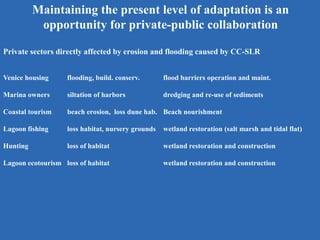
Maintaining the present level of adaptation is an
opportunity for private-public collaboration
Private sectors directly affected by erosion and flooding caused by CC-SLR
Venice housing flooding, build. conserv. flood barriers operation and maint.
Marina owners siltation of harbors dredging and re-use of sediments
Coastal tourism beach erosion, loss dune hab. Beach nourishment
Lagoon fishing loss habitat, nursery grounds wetland restoration (salt marsh and tidal flat)
Hunting loss of habitat wetland restoration and construction
Lagoon ecotourism loss of habitat wetland restoration and construction
Maintaining adaptation at the local scale:
an opportunity for private participation
- Dune and sand beach management (dune vegetation)
- Living shoreline management (oyster reef and gabions)
- Tidal flat management (sand filling, eel grass, clam selective harvesting,
microbial mats)
- Salt-marsh management (adaptive management of constructed salt marsh,
transfer of vegetation, nesting habitat)
- Conservation of buildings of the aging city.
Cultural intensive job opportunities for the lagoon users can be created by
transfer of knowledge and maintenance skills to the lagoon users and to local small
firm and funding their activities.
Conservation of traditional activities and promotion of local knowledge
Ecological services of the lagoon will be protected also by the direct users

Cecconi the venice project

  • 1.
    THE VENICE PROJECT MaintainingAdaptation Capacity to Climate Change After the Complition of the State Safeguard Works Giovanni Cecconi, Information Service Consorzio Venezia Nuova Expert Workshop on Adaptation Financing and Implementation Putting Priorities into Practice OECD Conference Centre –Paris 18-19 June 2014
  • 2.
    OUTLINE The Venice Project:a solution to CC-SLR provided by a State concessionaire Consorzio Venezia Nuova The design and implementation of the adaptive restoration works Relevance of Venice Project for Building CC Adaptation Maintaining adaptation at the local scale: an opportunity for private participation
  • 3.
    The Venice SafeguardProject is a combination of environmental restoration and flood control measures It has been totally financed by the Italian State and Consorzio Venezia Nuova, a private company made of local and national contractors, has been appointed to study, design and implement the project acting as a State Concessionary, according to the National Law n° 798 of 1984, for solving a very complex problem of national importance. While general study, design and environmental restoration works started immediately 30 year ago, barrier construction was authorized by the Inter- ministerial Committee for Policy Coordination and Control and started in May 2003. Total cost of the storm surge barriers is 5.5 Billion Euro 4 000 people are currently employed and 85% of the works has been completed Barrier operations is expected to start in June 2017
  • 4.
    The design andimplementation of the adaptive restoration works
  • 5.
    Climate Change Vulnerabity FloodingCoastal erosion Loss of habitat Pollution
  • 6.
    1930 168 km2 2000 60 km2 1970 105km2 LOSS OF INTERTIDAL HABITAT DUE TO SEA LEVEL RISE
  • 8.
    4 Nov 1966194 cm 22 Dec 1979 166 1 Feb 1986 159 1 Dec 2008 156 12 Nov 1951 151 11 Nov 2012 149 16 Nov 2002 147 16 Apr 1936 147 25 Dec 2009 145 15 Oct 1960 145 24 Dec 2010 144 23 Dec 2009 144 6 Nov 2000 144 3 Nov 1968 144 1 Nov 2012 143 Vulnerabity to Sea Level Rise
  • 9.
    Working with Naturefor Building Resilience : Structural measures for enhancing bio-stabilizing processes
  • 10.
    From a foot-printto a salt-marsh A Shelter Open to Organic Matter and Solar Energy
  • 11.
    • Fresh-water wetlandsat river outlets • Salt- Marshes • Dunes (Ammophila littoralis) • Shoals of microbial mats • Tidal flat vegetation (eel-grass) • Oyster reefs Bio-structuring habitats
  • 12.
    Benefits provided by Bio-StructuringHabitats • Protection from wave erosion and littoral overtopping • Wetland adaptation to Relative Sea Level Rise • Wetland sequestration of sediments, pollutants, and CO2 • Conservation of landscape, biodiversity and species of economical interest (fishes, birds)
  • 13.
    RE-USE OF DREDGEDSEDIMENTS PROTECTED BEACH NOURISHMENT THE VENICE SOLUTION OF BUILDING WITH NATURE STORM SURGE BARRIERS AT LAGOON INLETSURBAN ADAPTATION
  • 14.
  • 15.
    Pellestrina barrier island 16year after nourishment
  • 16.
    Sediment fence fordune management
  • 17.
    Re-use of 20million m3 of dredged sediments for building 124 salt marsh units, 15 km2, all over the lagoon 1987-2013
  • 18.
  • 19.
  • 20.
    Endangered Breeding Species atConstructed Salt-Marshes (years 2005-2006) Avocet (39-44 pairs) Redshank (94-136) Black-winged Stilt (96-69) Kentish Plover (34-71) Oystercatcher (31-38) Shelduck (12-17) Little Tern (115-205) Yellow-legged Gull (553- 1057)
  • 21.
    SALT MARSH ADAPTATIONTO R.S.L.R. + 0.5 cm/year ACCRETION
  • 22.
    Limit of UrbanAdaptation
  • 23.
    Temporary closure oflagoon inlets
  • 24.
  • 25.
  • 35.
    Relevance of VeniceProject for Building CC Adaptation Long-term State-Consorzio Venezia Nuova partnership have produced an ad-hoc integrated and adaptive solution to a flooding and erosion complex problems with challenging constrains. Integration of local and global protection works Use of state of the art technology and local environmental knowledge The Venice Lagoon can be regarded as a large scale demonstration laboratory of building resilience and improving lagoon ecological services (fishing, navigation, eco-tourism)
  • 36.
    Maintaining the presentlevel of adaptation is an opportunity for private-public collaboration Private sectors directly affected by erosion and flooding caused by CC-SLR Venice housing flooding, build. conserv. flood barriers operation and maint. Marina owners siltation of harbors dredging and re-use of sediments Coastal tourism beach erosion, loss dune hab. Beach nourishment Lagoon fishing loss habitat, nursery grounds wetland restoration (salt marsh and tidal flat) Hunting loss of habitat wetland restoration and construction Lagoon ecotourism loss of habitat wetland restoration and construction
  • 37.
    Maintaining adaptation atthe local scale: an opportunity for private participation - Dune and sand beach management (dune vegetation) - Living shoreline management (oyster reef and gabions) - Tidal flat management (sand filling, eel grass, clam selective harvesting, microbial mats) - Salt-marsh management (adaptive management of constructed salt marsh, transfer of vegetation, nesting habitat) - Conservation of buildings of the aging city. Cultural intensive job opportunities for the lagoon users can be created by transfer of knowledge and maintenance skills to the lagoon users and to local small firm and funding their activities. Conservation of traditional activities and promotion of local knowledge Ecological services of the lagoon will be protected also by the direct users