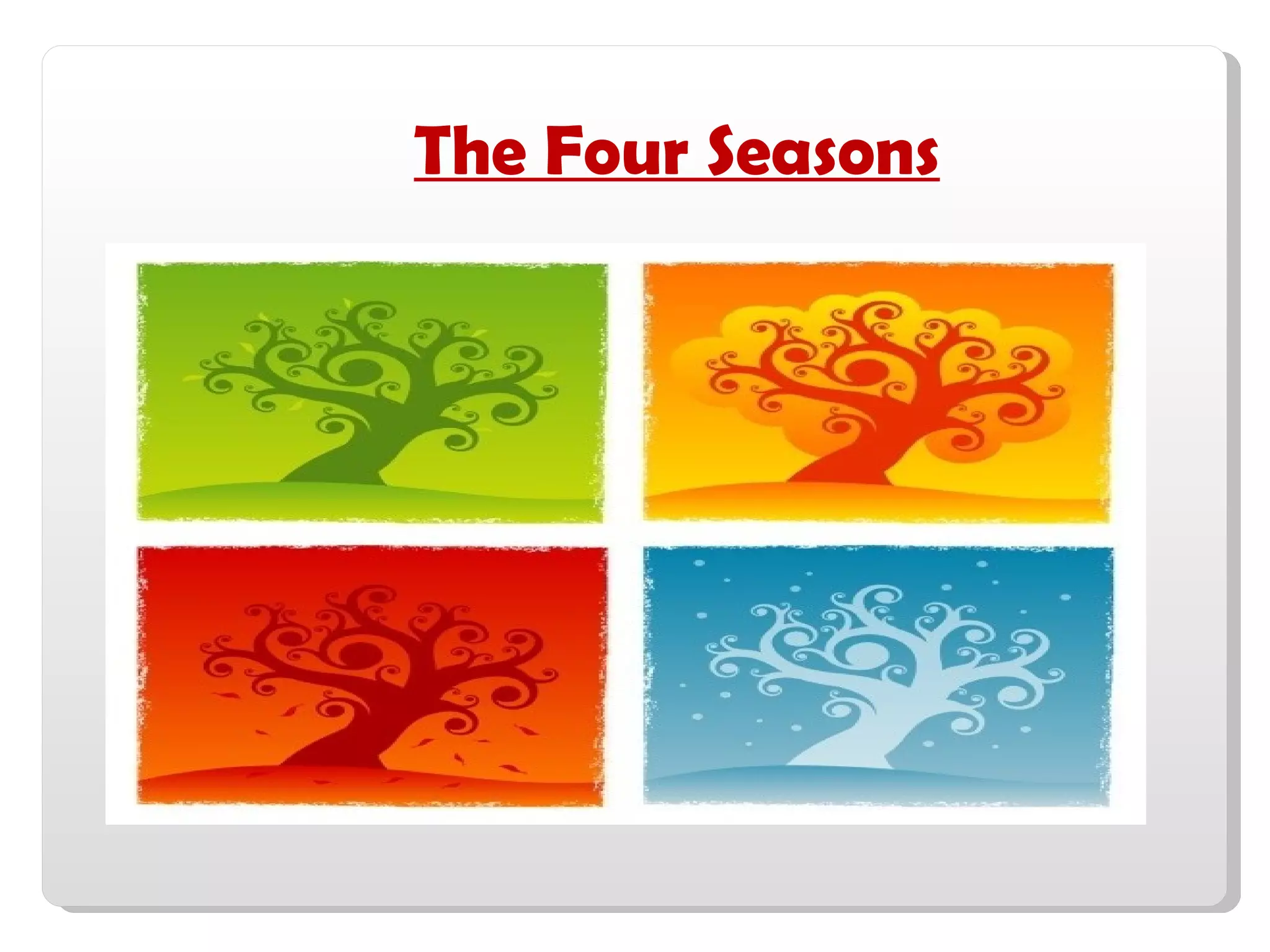
The Four Seasons
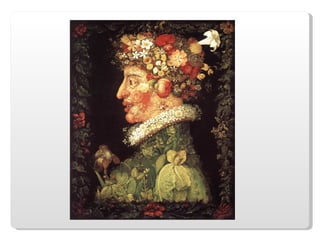
Spring  Summer Autunm Winter There are four seasons:
Many people think that the seasons are due to the distance of the Earth from the Sun.  But consider the following facts: The Earth’s orbit around the Sun is nearly a perfect circle. The Earth is slightly closer to the Sun in January and farther away from the Sun in July. Read the text below
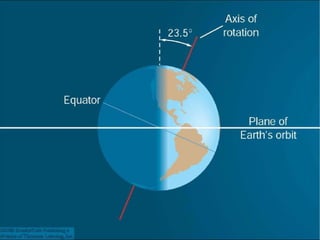
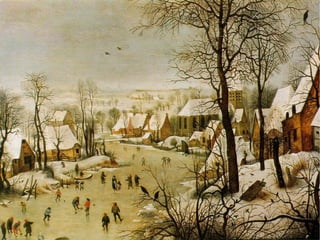
While it is winter in the Northern hemisphere it is summer in the Southern hemisphere. If the seasons were due to our distance from the Sun both hemispheres would have the same seasons at the same time. In fact, the seasons are due to the tilt of the Earth’s axis. In summer the sunlight strikes the ground more vertically than in winter and heats the ground better. The sun is above the horizon for a longer period of time
 
Listen and fill in the gaps
 
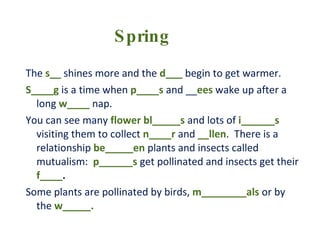
The  s__  shines more and the  d___  begin to get warmer. S____g  is a time when  p____s  and __ ees  wake up after a long  w____  nap. You can see many  flower bl_____s  and lots of  i______s   visiting them to collect  n____r  and  __llen .  There is a relationship  be_____en  plants and insects called mutualism:  p______s  get pollinated and insects get their  f____ .  Some plants are pollinated by birds,  m________als  or by the  w_____. Spring
 
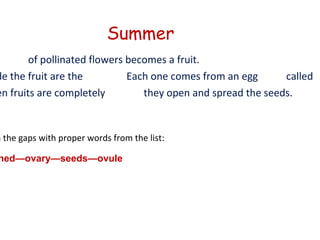
Summer The  of pollinated flowers becomes a fruit.  Inside the fruit are the  Each one comes from an egg  called  . When fruits are completely  they open and spread the seeds.  Fill in the gaps with proper words from the list: ripened—ovary—seeds—ovule
 
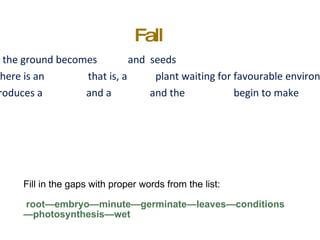
Fill in the gaps with proper words from the list: root—embryo—minute—germinate—leaves—conditions—photosynthesis—wet Fall After some rains the ground becomes  and  seeds  Inside the seed there is an  that is, a  plant waiting for favourable environmental  The new plant produces a  and a  and the  begin to make
 
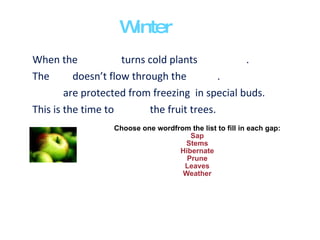
When the  turns cold plants  . The  doesn’t flow through the  . are protected from freezing  in special buds. This is the time to  the fruit trees. Choose one wordfrom the list to fill in each gap: Sap Stems Hibernate Prune Leaves Weather Winter
Reproduction  of  plants  and  animals
Listen
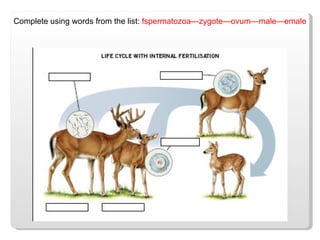
Complete using words from the list:  fspermatozoa—zygote—ovum—male—emale
 
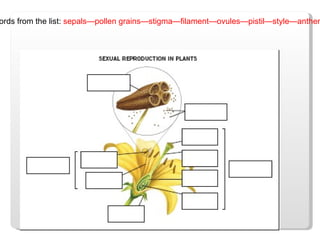
Complete using words from the list:  sepals—pollen grains—stigma—filament—ovules—pistil—style—anther—ovary—stamen.
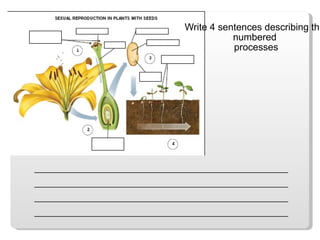
_________________________________________________________ _________________________________________________________ _________________________________________________________ _________________________________________________________ Write 4 sentences describing the  numbered  processes
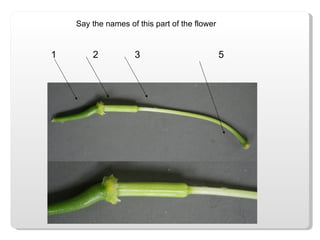
Say the names of this part of the flower 1 2 5 3
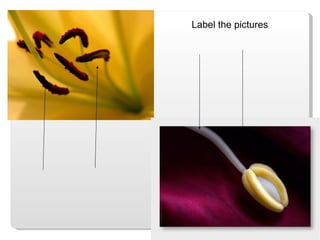
Label the pictures
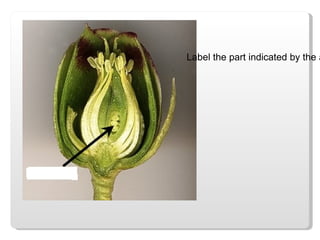
Label the part indicated by the arrow
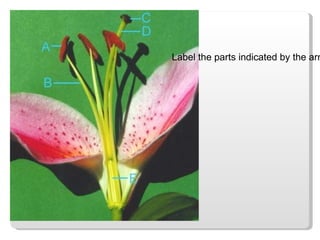
Label the parts indicated by the arrows
 
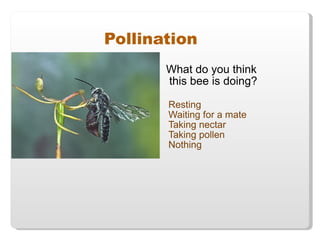
What do you think this bee is doing? Resting Waiting for a mate Taking nectar Taking pollen Nothing Pollination
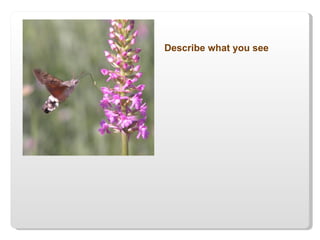
Describe what you see
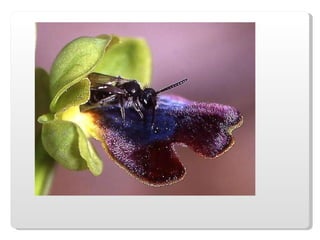
Look carefully at  the next picture and try to discover what is happening
 
Hints: 1. The bee is not looking for food 2. It is not taking a rest either 3. The bee is confused 4. The bee is in  love  with the    flower. 5. It is a male bee 6. “He” thinks the flower is a    she-bee
 
The bee is  copulating  with the flower. The bee is performing a  pseudocopulation
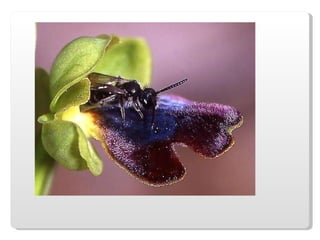
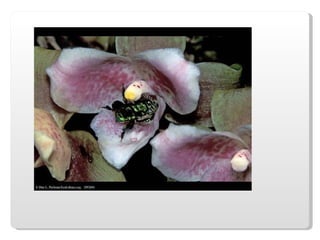
Look carefully at the next picture and try to discover what is happening
 
Hints: 1. The bee is not looking for food 2. It  is not taking a rest either 3. The bee has been deceived by  the flower 4. The bee is  drunk 5. The bee is an alcoholic
This flower attracts insects offering a strong substance that intoxicates them. The bee is very fond of this strong smell because...
The bee gathers this smell and uses it to attract females . The bee is getting dressed up. It is a male. It’s very vain
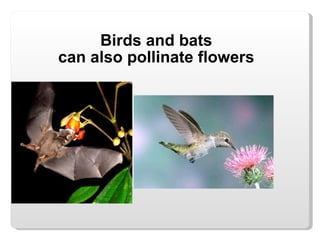
Birds and bats can also pollinate flowers
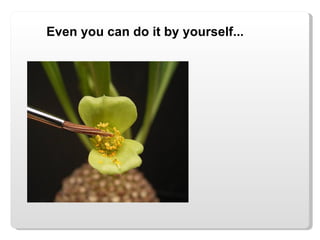
Even you can do it by yourself...
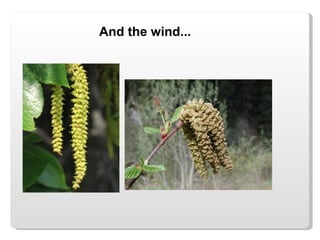
And the wind...
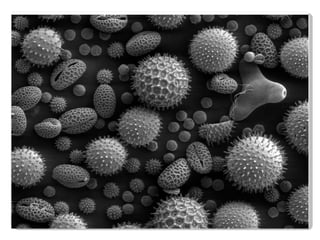
Look carefully at the next picture and try to discover what these pointy balls are
 
A microscopic view of some pollen grains. The picture was made with a scanning electronic microscope.
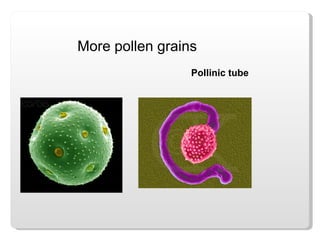
More pollen grains Pollinic tube
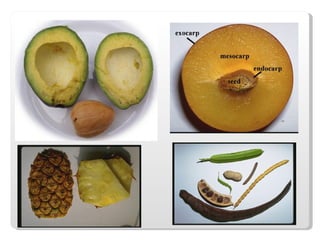
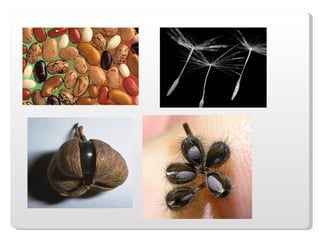
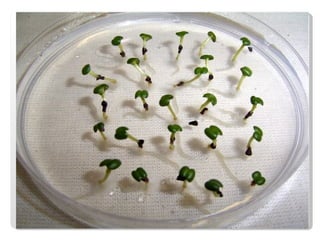
Fruits and seeds
 
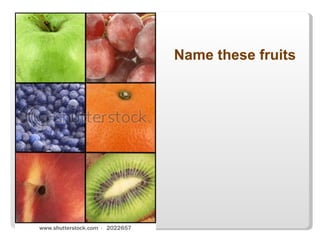
Name these fruits
 
The End
Describe what you see in the next picture
 

Ccnn 4estaciones Reformado B

  • 1.
  • 2.
    Spring SummerAutunm Winter There are four seasons:
  • 3.
    Many people thinkthat the seasons are due to the distance of the Earth from the Sun. But consider the following facts: The Earth’s orbit around the Sun is nearly a perfect circle. The Earth is slightly closer to the Sun in January and farther away from the Sun in July. Read the text below
  • 4.
    While it iswinter in the Northern hemisphere it is summer in the Southern hemisphere. If the seasons were due to our distance from the Sun both hemispheres would have the same seasons at the same time. In fact, the seasons are due to the tilt of the Earth’s axis. In summer the sunlight strikes the ground more vertically than in winter and heats the ground better. The sun is above the horizon for a longer period of time
  • 5.
  • 6.
    Listen and fillin the gaps
  • 7.
  • 8.
    The s__ shines more and the d___ begin to get warmer. S____g is a time when p____s and __ ees wake up after a long w____ nap. You can see many flower bl_____s and lots of i______s visiting them to collect n____r and __llen . There is a relationship be_____en plants and insects called mutualism: p______s get pollinated and insects get their f____ . Some plants are pollinated by birds, m________als or by the w_____. Spring
  • 9.
  • 10.
    Summer The of pollinated flowers becomes a fruit. Inside the fruit are the Each one comes from an egg called . When fruits are completely they open and spread the seeds. Fill in the gaps with proper words from the list: ripened—ovary—seeds—ovule
  • 11.
  • 12.
    Fill in thegaps with proper words from the list: root—embryo—minute—germinate—leaves—conditions—photosynthesis—wet Fall After some rains the ground becomes and seeds Inside the seed there is an that is, a plant waiting for favourable environmental The new plant produces a and a and the begin to make
  • 13.
  • 14.
    When the turns cold plants . The doesn’t flow through the . are protected from freezing in special buds. This is the time to the fruit trees. Choose one wordfrom the list to fill in each gap: Sap Stems Hibernate Prune Leaves Weather Winter
  • 15.
    Reproduction of plants and animals
  • 16.
  • 17.
    Complete using wordsfrom the list: fspermatozoa—zygote—ovum—male—emale
  • 18.
  • 19.
    Complete using wordsfrom the list: sepals—pollen grains—stigma—filament—ovules—pistil—style—anther—ovary—stamen.
  • 20.
  • 21.
    Say the namesof this part of the flower 1 2 5 3
  • 22.
  • 23.
    Label the partindicated by the arrow
  • 24.
    Label the partsindicated by the arrows
  • 25.
  • 26.
    What do youthink this bee is doing? Resting Waiting for a mate Taking nectar Taking pollen Nothing Pollination
  • 27.
  • 28.
    Look carefully at the next picture and try to discover what is happening
  • 29.
  • 30.
    Hints: 1. Thebee is not looking for food 2. It is not taking a rest either 3. The bee is confused 4. The bee is in love with the flower. 5. It is a male bee 6. “He” thinks the flower is a she-bee
  • 31.
  • 32.
    The bee is copulating with the flower. The bee is performing a pseudocopulation
  • 33.
    Look carefully atthe next picture and try to discover what is happening
  • 34.
  • 35.
    Hints: 1. Thebee is not looking for food 2. It is not taking a rest either 3. The bee has been deceived by the flower 4. The bee is drunk 5. The bee is an alcoholic
  • 36.
    This flower attractsinsects offering a strong substance that intoxicates them. The bee is very fond of this strong smell because...
  • 37.
    The bee gathersthis smell and uses it to attract females . The bee is getting dressed up. It is a male. It’s very vain
  • 38.
    Birds and batscan also pollinate flowers
  • 39.
    Even you cando it by yourself...
  • 40.
  • 41.
    Look carefully atthe next picture and try to discover what these pointy balls are
  • 42.
  • 43.
    A microscopic viewof some pollen grains. The picture was made with a scanning electronic microscope.
  • 44.
    More pollen grainsPollinic tube
  • 45.
  • 46.
  • 47.
  • 48.
  • 49.
  • 50.
    Describe what yousee in the next picture
  • 51.