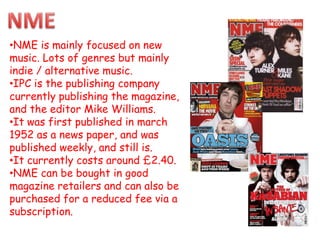
•NME is mainly focused on new
music. Lots of genres but mainly
indie / alternative music.
•IPC is the publishing company
currently publishing the magazine,
and the editor Mike Williams.
•It was first published in march
1952 as a news paper, and was
published weekly, and still is.
•It currently costs around £2.40.
•NME can be bought in good
magazine retailers and can also be
purchased for a reduced fee via a
subscription.
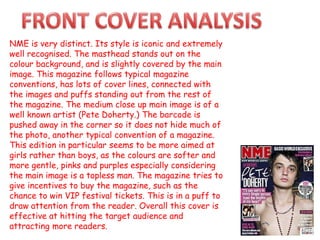
NME is very distinct. Its style is iconic and extremely
well recognised. The masthead stands out on the
colour background, and is slightly covered by the main
image. This magazine follows typical magazine
conventions, has lots of cover lines, connected with
the images and puffs standing out from the rest of
the magazine. The medium close up main image is of a
well known artist (Pete Doherty.) The barcode is
pushed away in the corner so it does not hide much of
the photo, another typical convention of a magazine.
This edition in particular seems to be more aimed at
girls rather than boys, as the colours are softer and
more gentle, pinks and purples especially considering
the main image is a topless man. The magazine tries to
give incentives to buy the magazine, such as the
chance to win VIP festival tickets. This is in a puff to
draw attention from the reader. Overall this cover is
effective at hitting the target audience and
attracting more readers.
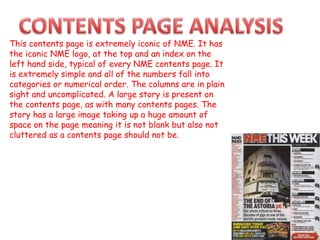
This contents page is extremely iconic of NME. It has
the iconic NME logo, at the top and an index on the
left hand side, typical of every NME contents page. It
is extremely simple and all of the numbers fall into
categories or numerical order. The columns are in plain
sight and uncomplicated. A large story is present on
the contents page, as with many contents pages. The
story has a large image taking up a huge amount of
space on the page meaning it is not blank but also not
cluttered as a contents page should not be.
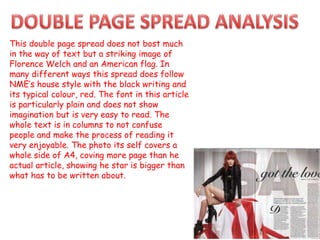
This double page spread does not bost much
in the way of text but a striking image of
Florence Welch and an American flag. In
many different ways this spread does follow
NME’s house style with the black writing and
its typical colour, red. The font in this article
is particularly plain and does not show
imagination but is very easy to read. The
whole text is in columns to not confuse
people and make the process of reading it
very enjoyable. The photo its self covers a
whole side of A4, coving more page than he
actual article, showing he star is bigger than
what has to be written about.
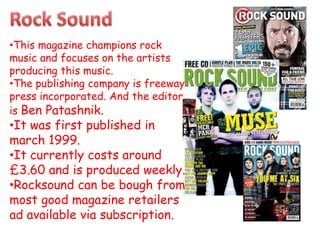
•This magazine champions rock
music and focuses on the artists
producing this music.
•The publishing company is freeway
press incorporated. And the editor
is Ben Patashnik.
•It was first published in
march 1999.
•It currently costs around
£3.60 and is produced weekly.
•Rocksound can be bough from
most good magazine retailers
ad available via subscription.
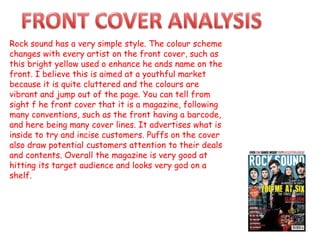
Rock sound has a very simple style. The colour scheme
changes with every artist on the front cover, such as
this bright yellow used o enhance he ands name on the
front. I believe this is aimed at a youthful market
because it is quite cluttered and the colours are
vibrant and jump out of the page. You can tell from
sight f he front cover that it is a magazine, following
many conventions, such as the front having a barcode,
and here being many cover lines. It advertises what is
inside to try and incise customers. Puffs on the cover
also draw potential customers attention to their deals
and contents. Overall the magazine is very good at
hitting its target audience and looks very god on a
shelf.
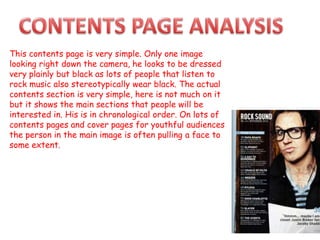
This contents page is very simple. Only one image
looking right down the camera, he looks to be dressed
very plainly but black as lots of people that listen to
rock music also stereotypically wear black. The actual
contents section is very simple, here is not much on it
but it shows the main sections that people will be
interested in. His is in chronological order. On lots of
contents pages and cover pages for youthful audiences
the person in the main image is often pulling a face to
some extent.
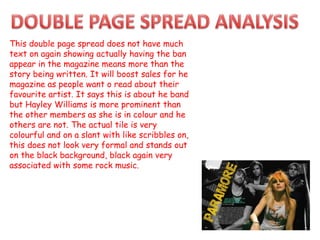
This double page spread does not have much
text on again showing actually having the ban
appear in the magazine means more than the
story being written. It will boost sales for he
magazine as people want o read about their
favourite artist. It says this is about he band
but Hayley Williams is more prominent than
the other members as she is in colour and he
others are not. The actual tile is very
colourful and on a slant with like scribbles on,
this does not look very formal and stands out
on the black background, black again very
associated with some rock music.

Case studynotes

  • 1.
    •NME is mainlyfocused on new music. Lots of genres but mainly indie / alternative music. •IPC is the publishing company currently publishing the magazine, and the editor Mike Williams. •It was first published in march 1952 as a news paper, and was published weekly, and still is. •It currently costs around £2.40. •NME can be bought in good magazine retailers and can also be purchased for a reduced fee via a subscription.
  • 2.
    NME is verydistinct. Its style is iconic and extremely well recognised. The masthead stands out on the colour background, and is slightly covered by the main image. This magazine follows typical magazine conventions, has lots of cover lines, connected with the images and puffs standing out from the rest of the magazine. The medium close up main image is of a well known artist (Pete Doherty.) The barcode is pushed away in the corner so it does not hide much of the photo, another typical convention of a magazine. This edition in particular seems to be more aimed at girls rather than boys, as the colours are softer and more gentle, pinks and purples especially considering the main image is a topless man. The magazine tries to give incentives to buy the magazine, such as the chance to win VIP festival tickets. This is in a puff to draw attention from the reader. Overall this cover is effective at hitting the target audience and attracting more readers.
  • 3.
    This contents pageis extremely iconic of NME. It has the iconic NME logo, at the top and an index on the left hand side, typical of every NME contents page. It is extremely simple and all of the numbers fall into categories or numerical order. The columns are in plain sight and uncomplicated. A large story is present on the contents page, as with many contents pages. The story has a large image taking up a huge amount of space on the page meaning it is not blank but also not cluttered as a contents page should not be.
  • 4.
    This double pagespread does not bost much in the way of text but a striking image of Florence Welch and an American flag. In many different ways this spread does follow NME’s house style with the black writing and its typical colour, red. The font in this article is particularly plain and does not show imagination but is very easy to read. The whole text is in columns to not confuse people and make the process of reading it very enjoyable. The photo its self covers a whole side of A4, coving more page than he actual article, showing he star is bigger than what has to be written about.
  • 5.
    •This magazine championsrock music and focuses on the artists producing this music. •The publishing company is freeway press incorporated. And the editor is Ben Patashnik. •It was first published in march 1999. •It currently costs around £3.60 and is produced weekly. •Rocksound can be bough from most good magazine retailers ad available via subscription.
  • 6.
    Rock sound hasa very simple style. The colour scheme changes with every artist on the front cover, such as this bright yellow used o enhance he ands name on the front. I believe this is aimed at a youthful market because it is quite cluttered and the colours are vibrant and jump out of the page. You can tell from sight f he front cover that it is a magazine, following many conventions, such as the front having a barcode, and here being many cover lines. It advertises what is inside to try and incise customers. Puffs on the cover also draw potential customers attention to their deals and contents. Overall the magazine is very good at hitting its target audience and looks very god on a shelf.
  • 7.
    This contents pageis very simple. Only one image looking right down the camera, he looks to be dressed very plainly but black as lots of people that listen to rock music also stereotypically wear black. The actual contents section is very simple, here is not much on it but it shows the main sections that people will be interested in. His is in chronological order. On lots of contents pages and cover pages for youthful audiences the person in the main image is often pulling a face to some extent.
  • 8.
    This double pagespread does not have much text on again showing actually having the ban appear in the magazine means more than the story being written. It will boost sales for he magazine as people want o read about their favourite artist. It says this is about he band but Hayley Williams is more prominent than the other members as she is in colour and he others are not. The actual tile is very colourful and on a slant with like scribbles on, this does not look very formal and stands out on the black background, black again very associated with some rock music.