Download to read offline
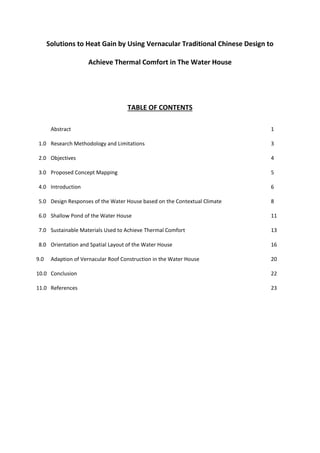
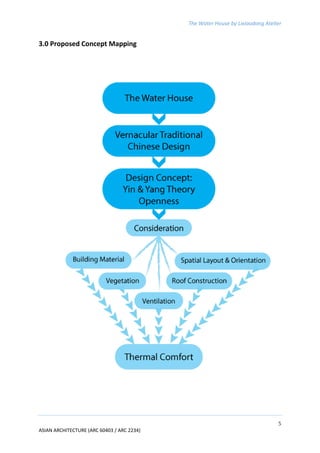
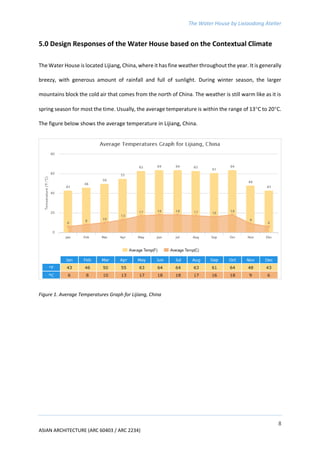
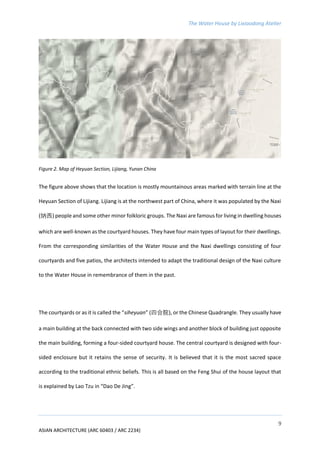
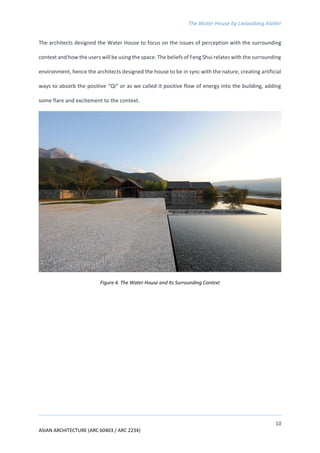
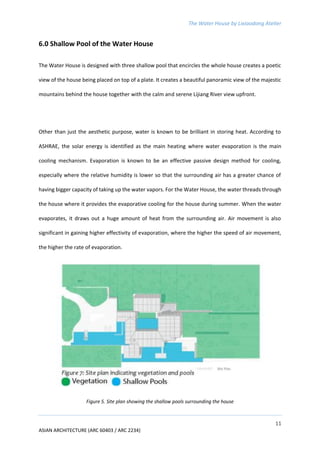
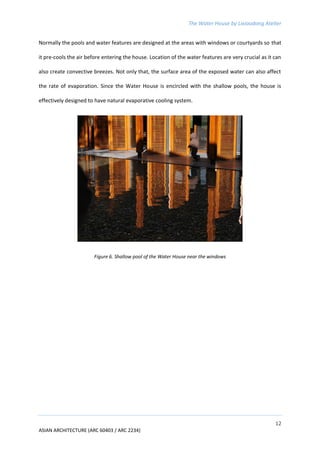
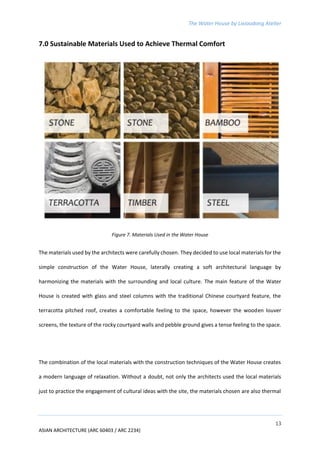
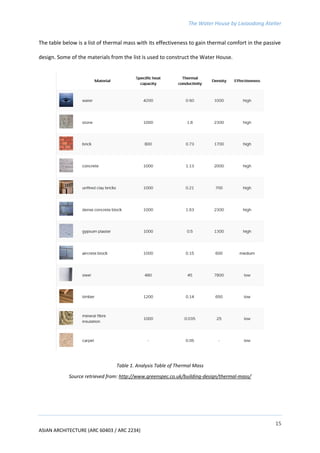
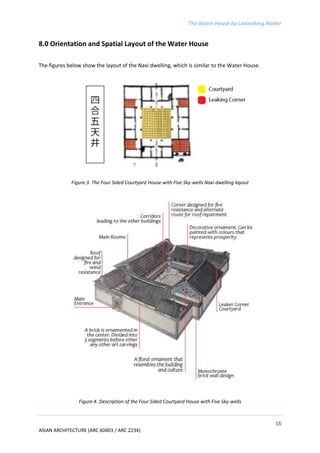
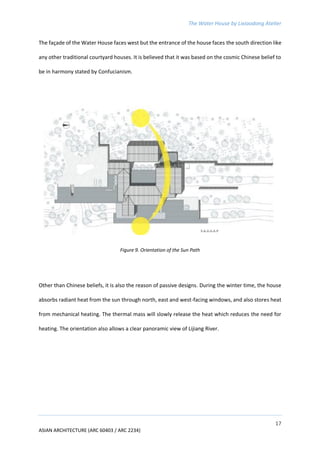
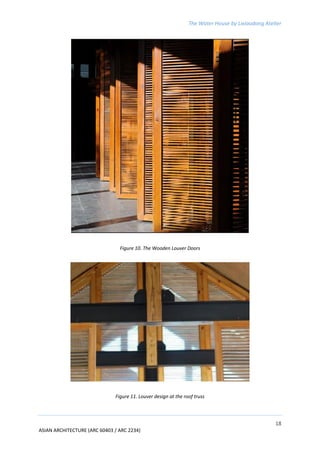
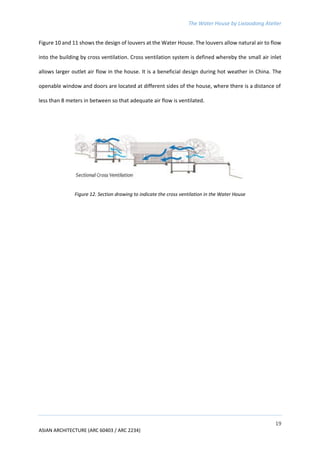
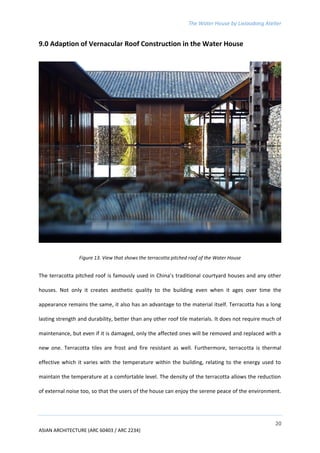


The document provides a case study analysis of the Water House located in Lijiang, China. It investigates how the building integrates vernacular traditional Chinese design approaches to achieve thermal comfort. Specifically: 1) The Water House draws from courtyard house designs of the local Naxi people, arranging spaces around a central courtyard. It also uses shallow ponds, thermal mass materials, and passive design strategies like cross ventilation. 2) The ponds provide evaporative cooling, while materials like stone and terracotta tiles absorb and release heat. Orientation exposes windows to winter sun but protects from northern winds. 3) Louvered openings and spaces separated by less than 8 meters enable cross ventilation


![[ARC2513] Building construction2 project 2](https://cdn.slidesharecdn.com/ss_thumbnails/b-141208080518-conversion-gate01-thumbnail.jpg?width=640&height=640&fit=bounds)


