Holistic Environmental Management approach
Presenter
Prakash Ghimire
MSc. Public Health Student (Epidemiology)
School of Health Science, MFU, Thailand
A case study of ITC Limited Cigarettes industry, Kolkata, India
Outline of Presentation
1. Introduction of ITC limited
2. Cigarrate Manufacture Company, ITC Limited, Kolkata, India
• Cigaratte Manufacturing processs
• Waste generates from various sectors
- Waste from roulette area
- Waste from secondary Manufacturing
Departments
- Waste from Canteen
- Waste from garden
- Waste from office buildings
- Waste from slide making area
- Waste from ambulance room
• Environemental and health risks due to various waste
• Waste Management by the factory
• Alternative waste management process
3. Holistic environmental management practices of ITC Limited.
- Air management
- Water Management
- Waste Management
- Raw material management
1. Introduction of ITC Limited
• ITC L was established in 1910 as the
Imperial Tobacco of India Limited. The
company name was changed to India
Tobacco Company Limited (1970),
I.T.C. Limited (1974), and finally to
ITC Limited in 2001.
• The name changes reflect ITC’s
attempts at “shedding the cigarette tag”
by diversifying into non-tobacco goods
and services.
• Its five diversified businesses are:
 Fast-Moving Consumer Goods (comprising Foods, Personal Care, Cigarettes
and Cigars, Apparel, Education and Stationery Products, Incense Sticks and
Safety Matches),
 Hotels
 Paperboards & Specialty Papers, Packaging
 Agri-Business
 and Information Technology
• Although the Cigarettes business remain ITC’s biggest earner, representing 62%
of the company's gross revenue in 2016 (42% of its net revenue), almost 80% of
the capital is invested in the non-tobacco businesses.
• It is one of India's top private companies with market capitalization of
approximately INR 70000 crores and annual turn over of over INR 16224 crores.
• The indian Tobacco Division (ITD) of ITC has four cigarrete manufacturing
industries located in Bangalore, Saharanpur, Munger, and Kolkata. ITC's
Kokata unit located at Kidderpore is operational since 1934.
2. Cigarrate Manufacture Industry, ITC Limited, Kolkata,
India
a. By Cigarrete manufacturing machine (LOGA)
Wastes
 Cut tobacco
 Tobacco dust
 Cigarrete
paper
 Filter
 Paper Cork
Tip
 Gum
 Winnowing
b. By Packaging machine (FOCKE)
Wastes
 Waste cigarrete
 Blank
 Inner frame
 Aluminium foil/
Metalized paper
 Gum
 Tobacco dust
c. By Wrapping machine
Wastes
 Waste cigarrete
 Blank
 Inner frame
 Aluminium foil
 BOPP (Biaxially
Orientaed
polypropylene) Film
 TAR
 Core
d. By Gay wrapping machine
Wastes
 Wrapping paper (Gay
wrapper)
 Gum
 Core
d. By Final packing
Wastes
 Gum Tape Waste
Pollutants / Wastes generators sectors within the industry
• Waste from roulette area
• Waste from secondary manufacturing department
• Waste from canteen
• Waste from garden
• Waste from office buildings
• Waste from slide making area
• Waste from ambulance room
Environmental risks due to various wastes
• All types of tobacco wastes creates air, water and soil pollution.
• Dumping of wastes cause bad smell, increasing of pests, and assist various
disease to break out and also causes site pollution.
• Dumping of non-biodegradable waste on land reduce its fertility.
• Oil and grease, TAR and other pollutants can pollute ground water causing
water pollution nearby industry.
• Tobacco dust from roulette area, maufacturing area, DRF plant etc can cause
allergy, fever and respiratory problems.
• Continous exposure to noise can damage the hearing system and also cause the
nerve problem, psycholgical problems.
• Vibration of manufacturing machines can cause various problems. White finger
is common among workers who use vibrating drills.
• Unplanned dumping of waste may contaminate the environment and leads to
various disease outbreak to peoples.
Waste management by the factory
WMS waste, Plastic rope, packaging, paper etc.
Collection Storage
Sold to vendors
Recycling
Tobacco
Reuse of the usable
tobacco from the SMD
area
Tobacco dust from DRF
pant collected in bags
Water damaged tobacco
stored in the dustbins
Stored for selling to
vendors
Stored for selling to
vendors
Recycling
Canteen wastes
Liquid waste (washing water,
oil and grease etc).
Solid waste (food, scrapes,
vegetables etc)
Plastics, paper and other
cover and packages
Discharged into drains after
removing Oil and Grease
Food wastes stored in container,
scraps and vegetables waste stored
in dustbins for selling
Stored for selling to
vendor
Used to feed animals, manure
manufacture etc.
Recycling of plastic, paper etc.
Possible alternative approach to waste management in
this cigarrete industry
• Bio-degradation of Nicotine by a newly isolated Agrobacterium Sp. Strain S 33,
Bacillus and LActobacillus Sp.
• Enzymatic production of glucose from the waste paper. Glucose thereafter can
be utilized for production of ethanol and other chemicals by specific microbial
cultures.
• Tobacco wastes can be used as fertilizer for improving yields and nutritional
value of tomato and lettuce (lactuca saliva).
• Production of Caffeic Acid (CA) from the Caffeoylquinic Acid (CQAs) of
tobacco. Caffeic Acid is widley used in food and pharmaceutical industries.
• Vermicomposting of bio-degradable waste produces a better quality fertilizer.
• Bio-gas and Bio-diesel production from the biodegradable waste is possible.
• Electricity production from the garbage is now possible.
3. Holistic environmental management practice
of ITC Limited Company.
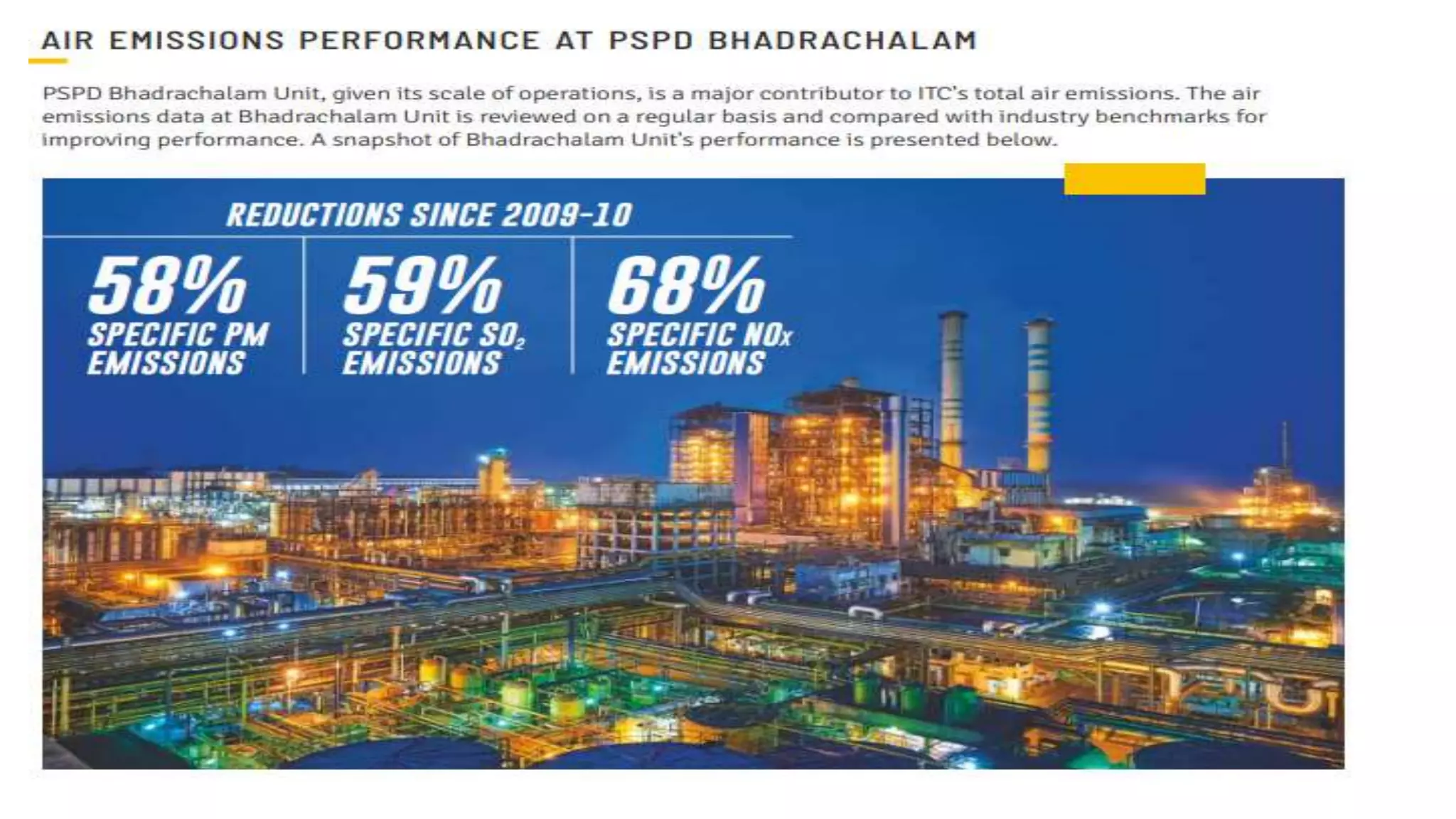
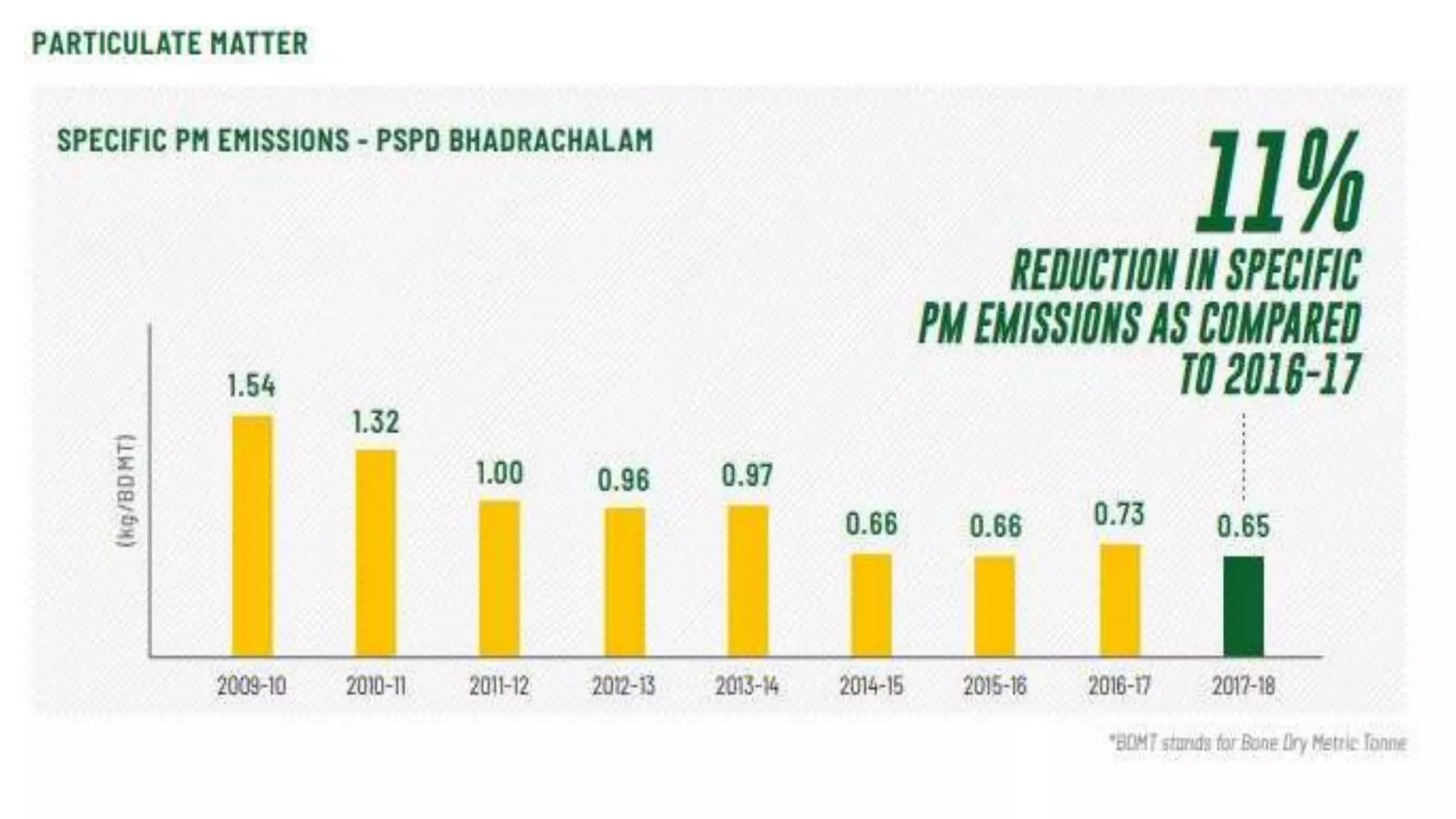
Air pollutants and management practices
Water management practices
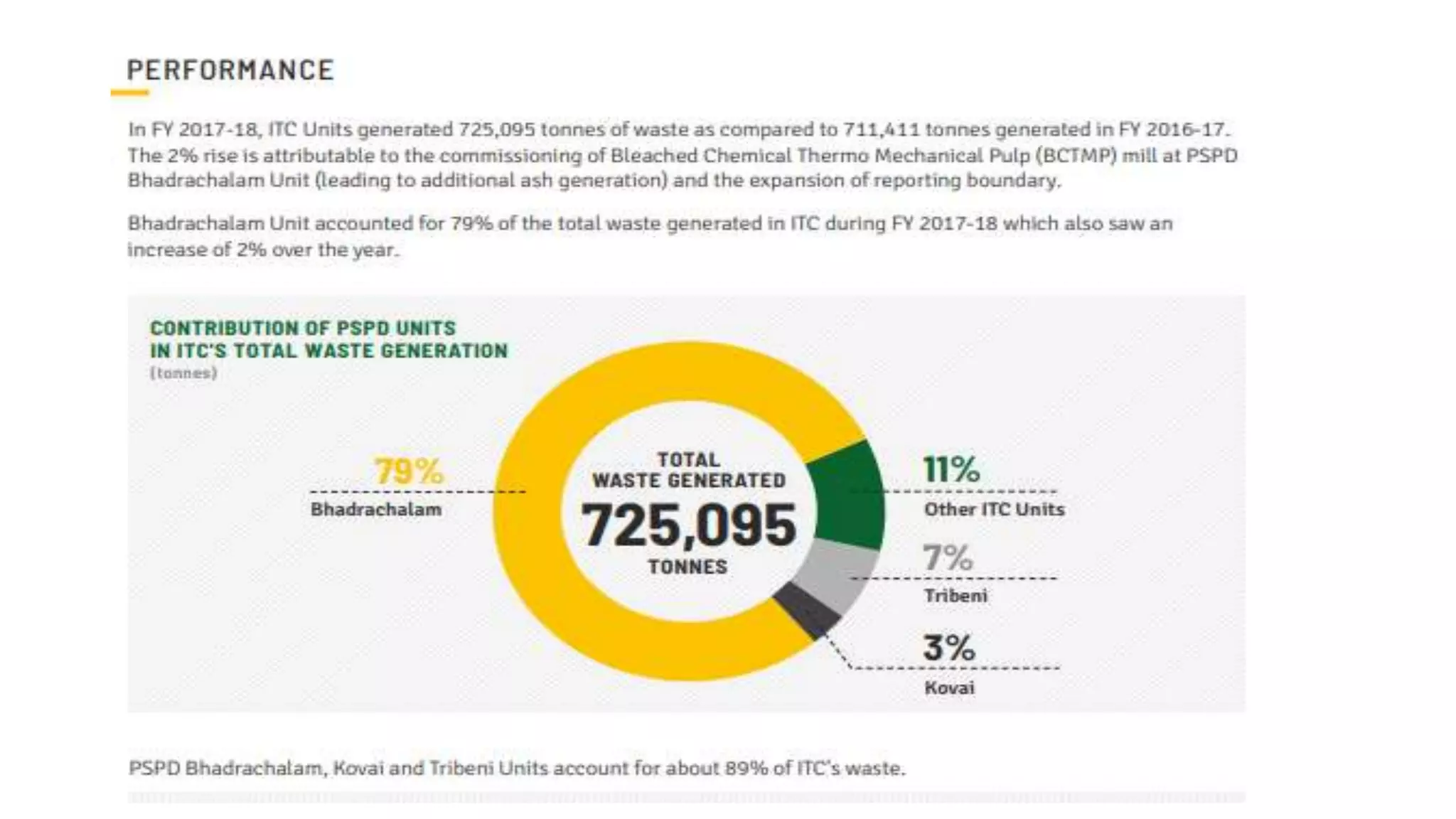
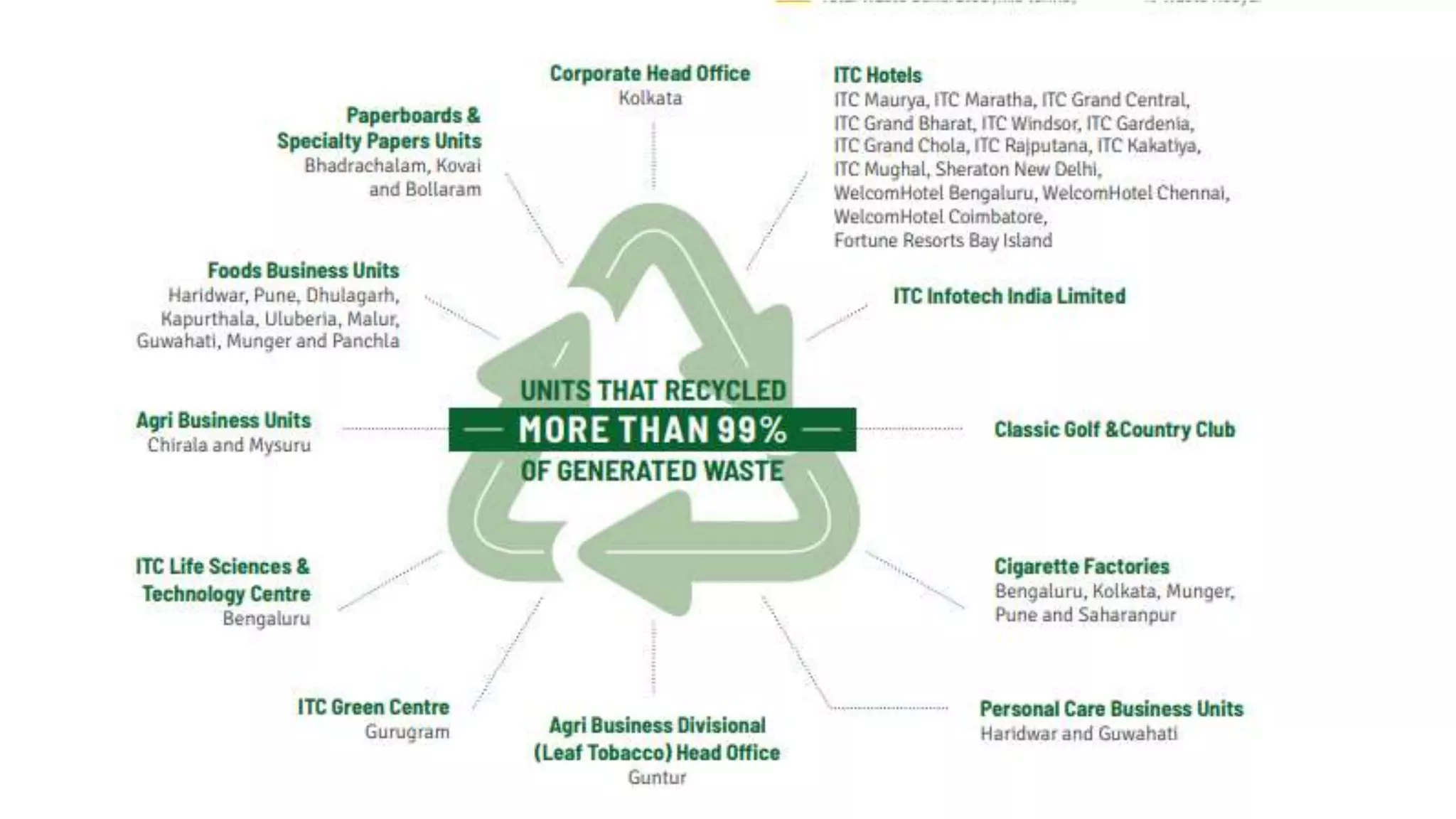
Waste management practices
•
Activities of ITC Limited outside operational boundaries
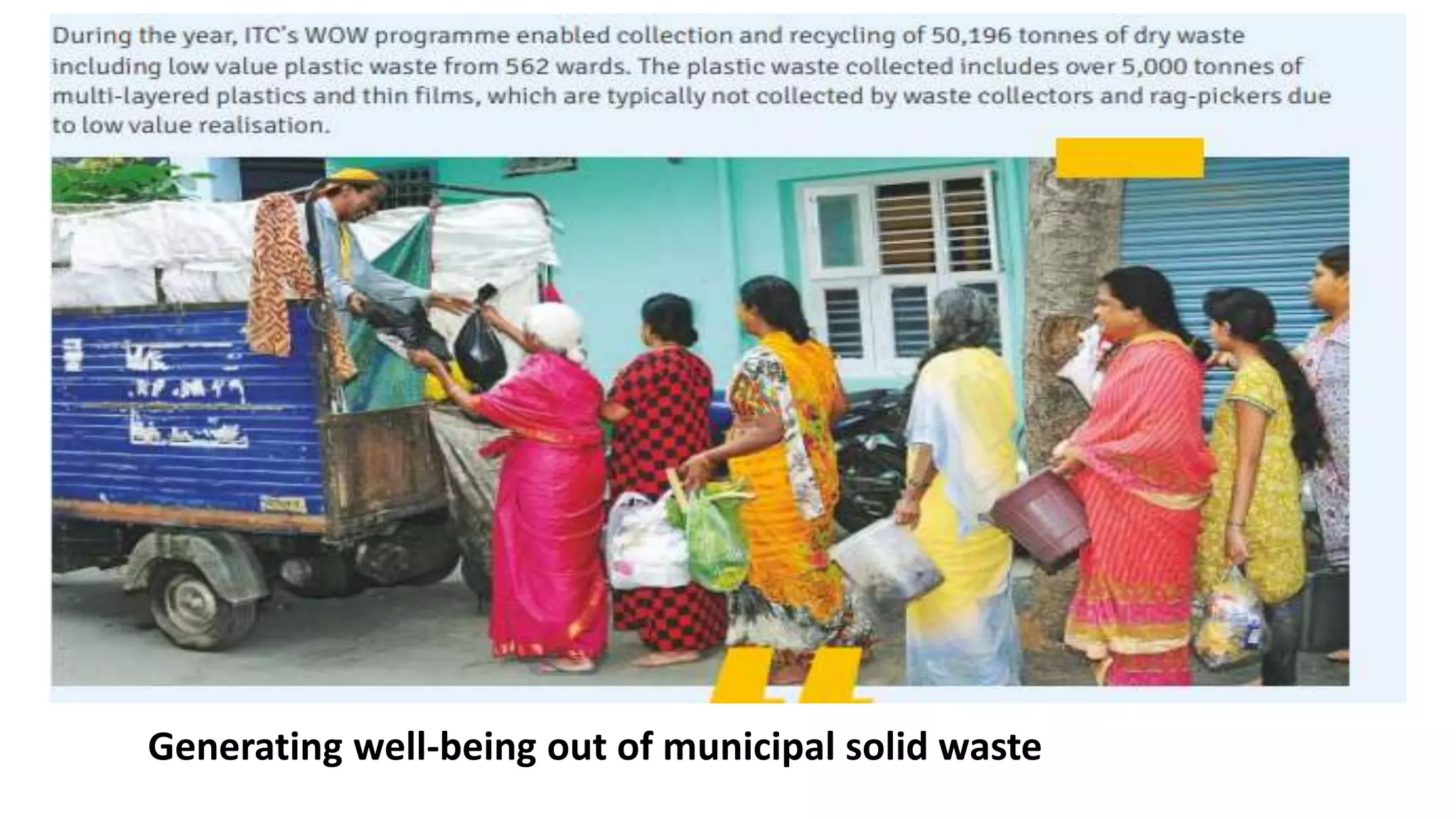
1. Well-being out of Waste (WOW) Programme
2. Mission Sunehra Kal (MSK) Programme
Generating well-being out of municipal solid waste
Strengthening rural livelihoods
through:
• ITC e-Choupal
• Wasteland Development through Social
Forestry
• Soil & Moisture Conservation
Programmes
• Livestock Development Initiatives
Building skills and social infrastructure
through:
• Primary Education, Health & Sanitation
• Women’s Empowerment & Gender
Equality
Mission sunhera Kal (MSK) Programme
Raw materials and management practices
Any queries and suggestions !!!!
Case study on holistic environmental management approach

Case study on holistic environmental management approach

  • 1.
    Holistic Environmental Managementapproach Presenter Prakash Ghimire MSc. Public Health Student (Epidemiology) School of Health Science, MFU, Thailand A case study of ITC Limited Cigarettes industry, Kolkata, India
  • 2.
    Outline of Presentation 1.Introduction of ITC limited 2. Cigarrate Manufacture Company, ITC Limited, Kolkata, India • Cigaratte Manufacturing processs • Waste generates from various sectors - Waste from roulette area - Waste from secondary Manufacturing Departments - Waste from Canteen - Waste from garden - Waste from office buildings - Waste from slide making area - Waste from ambulance room
  • 3.
    • Environemental andhealth risks due to various waste • Waste Management by the factory • Alternative waste management process 3. Holistic environmental management practices of ITC Limited. - Air management - Water Management - Waste Management - Raw material management
  • 4.
    1. Introduction ofITC Limited • ITC L was established in 1910 as the Imperial Tobacco of India Limited. The company name was changed to India Tobacco Company Limited (1970), I.T.C. Limited (1974), and finally to ITC Limited in 2001. • The name changes reflect ITC’s attempts at “shedding the cigarette tag” by diversifying into non-tobacco goods and services.
  • 5.
    • Its fivediversified businesses are:  Fast-Moving Consumer Goods (comprising Foods, Personal Care, Cigarettes and Cigars, Apparel, Education and Stationery Products, Incense Sticks and Safety Matches),  Hotels  Paperboards & Specialty Papers, Packaging  Agri-Business  and Information Technology
  • 6.
    • Although theCigarettes business remain ITC’s biggest earner, representing 62% of the company's gross revenue in 2016 (42% of its net revenue), almost 80% of the capital is invested in the non-tobacco businesses. • It is one of India's top private companies with market capitalization of approximately INR 70000 crores and annual turn over of over INR 16224 crores. • The indian Tobacco Division (ITD) of ITC has four cigarrete manufacturing industries located in Bangalore, Saharanpur, Munger, and Kolkata. ITC's Kokata unit located at Kidderpore is operational since 1934.
  • 7.
    2. Cigarrate ManufactureIndustry, ITC Limited, Kolkata, India a. By Cigarrete manufacturing machine (LOGA) Wastes  Cut tobacco  Tobacco dust  Cigarrete paper  Filter  Paper Cork Tip  Gum  Winnowing
  • 8.
    b. By Packagingmachine (FOCKE) Wastes  Waste cigarrete  Blank  Inner frame  Aluminium foil/ Metalized paper  Gum  Tobacco dust
  • 9.
    c. By Wrappingmachine Wastes  Waste cigarrete  Blank  Inner frame  Aluminium foil  BOPP (Biaxially Orientaed polypropylene) Film  TAR  Core
  • 10.
    d. By Gaywrapping machine Wastes  Wrapping paper (Gay wrapper)  Gum  Core
  • 11.
    d. By Finalpacking Wastes  Gum Tape Waste
  • 12.
    Pollutants / Wastesgenerators sectors within the industry • Waste from roulette area • Waste from secondary manufacturing department • Waste from canteen • Waste from garden • Waste from office buildings • Waste from slide making area • Waste from ambulance room
  • 13.
    Environmental risks dueto various wastes • All types of tobacco wastes creates air, water and soil pollution. • Dumping of wastes cause bad smell, increasing of pests, and assist various disease to break out and also causes site pollution. • Dumping of non-biodegradable waste on land reduce its fertility. • Oil and grease, TAR and other pollutants can pollute ground water causing water pollution nearby industry.
  • 14.
    • Tobacco dustfrom roulette area, maufacturing area, DRF plant etc can cause allergy, fever and respiratory problems. • Continous exposure to noise can damage the hearing system and also cause the nerve problem, psycholgical problems. • Vibration of manufacturing machines can cause various problems. White finger is common among workers who use vibrating drills. • Unplanned dumping of waste may contaminate the environment and leads to various disease outbreak to peoples.
  • 15.
    Waste management bythe factory WMS waste, Plastic rope, packaging, paper etc. Collection Storage Sold to vendors Recycling
  • 16.
    Tobacco Reuse of theusable tobacco from the SMD area Tobacco dust from DRF pant collected in bags Water damaged tobacco stored in the dustbins Stored for selling to vendors Stored for selling to vendors Recycling
  • 17.
    Canteen wastes Liquid waste(washing water, oil and grease etc). Solid waste (food, scrapes, vegetables etc) Plastics, paper and other cover and packages Discharged into drains after removing Oil and Grease Food wastes stored in container, scraps and vegetables waste stored in dustbins for selling Stored for selling to vendor Used to feed animals, manure manufacture etc. Recycling of plastic, paper etc.
  • 18.
    Possible alternative approachto waste management in this cigarrete industry • Bio-degradation of Nicotine by a newly isolated Agrobacterium Sp. Strain S 33, Bacillus and LActobacillus Sp. • Enzymatic production of glucose from the waste paper. Glucose thereafter can be utilized for production of ethanol and other chemicals by specific microbial cultures. • Tobacco wastes can be used as fertilizer for improving yields and nutritional value of tomato and lettuce (lactuca saliva). • Production of Caffeic Acid (CA) from the Caffeoylquinic Acid (CQAs) of tobacco. Caffeic Acid is widley used in food and pharmaceutical industries. • Vermicomposting of bio-degradable waste produces a better quality fertilizer. • Bio-gas and Bio-diesel production from the biodegradable waste is possible. • Electricity production from the garbage is now possible.
  • 19.
    3. Holistic environmentalmanagement practice of ITC Limited Company.
  • 20.
    Air pollutants andmanagement practices
  • 26.
  • 33.
  • 38.
  • 42.
    Activities of ITCLimited outside operational boundaries 1. Well-being out of Waste (WOW) Programme 2. Mission Sunehra Kal (MSK) Programme
  • 43.
    Generating well-being outof municipal solid waste
  • 45.
    Strengthening rural livelihoods through: •ITC e-Choupal • Wasteland Development through Social Forestry • Soil & Moisture Conservation Programmes • Livestock Development Initiatives Building skills and social infrastructure through: • Primary Education, Health & Sanitation • Women’s Empowerment & Gender Equality Mission sunhera Kal (MSK) Programme
  • 46.
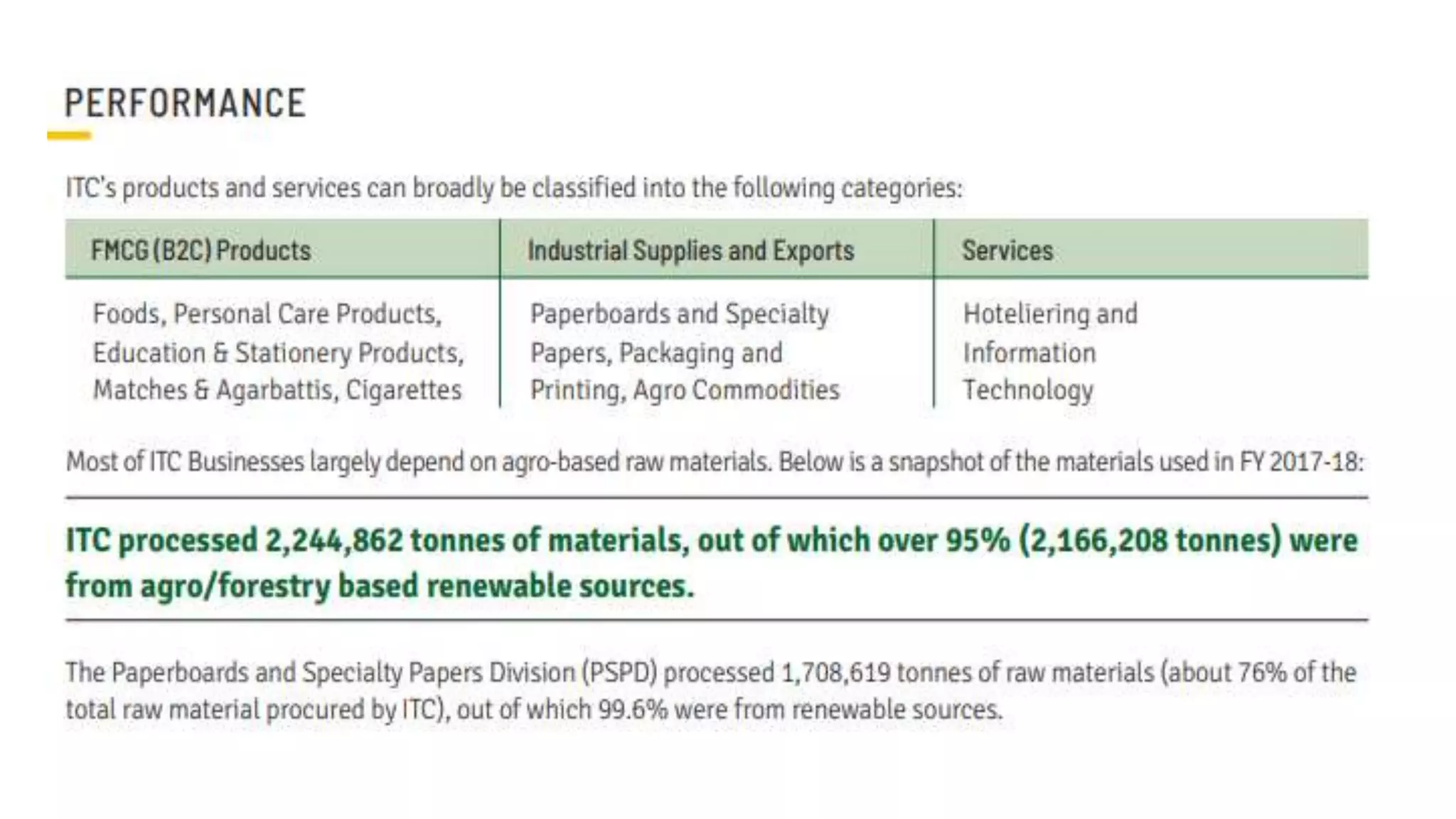
    Raw materials andmanagement practices
  • 50.
    Any queries andsuggestions !!!!