Case study 1

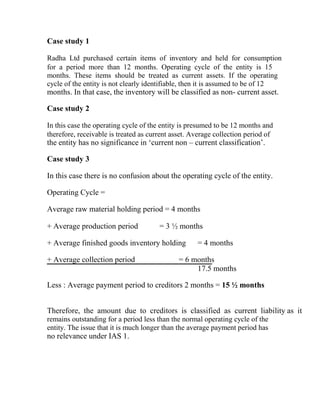
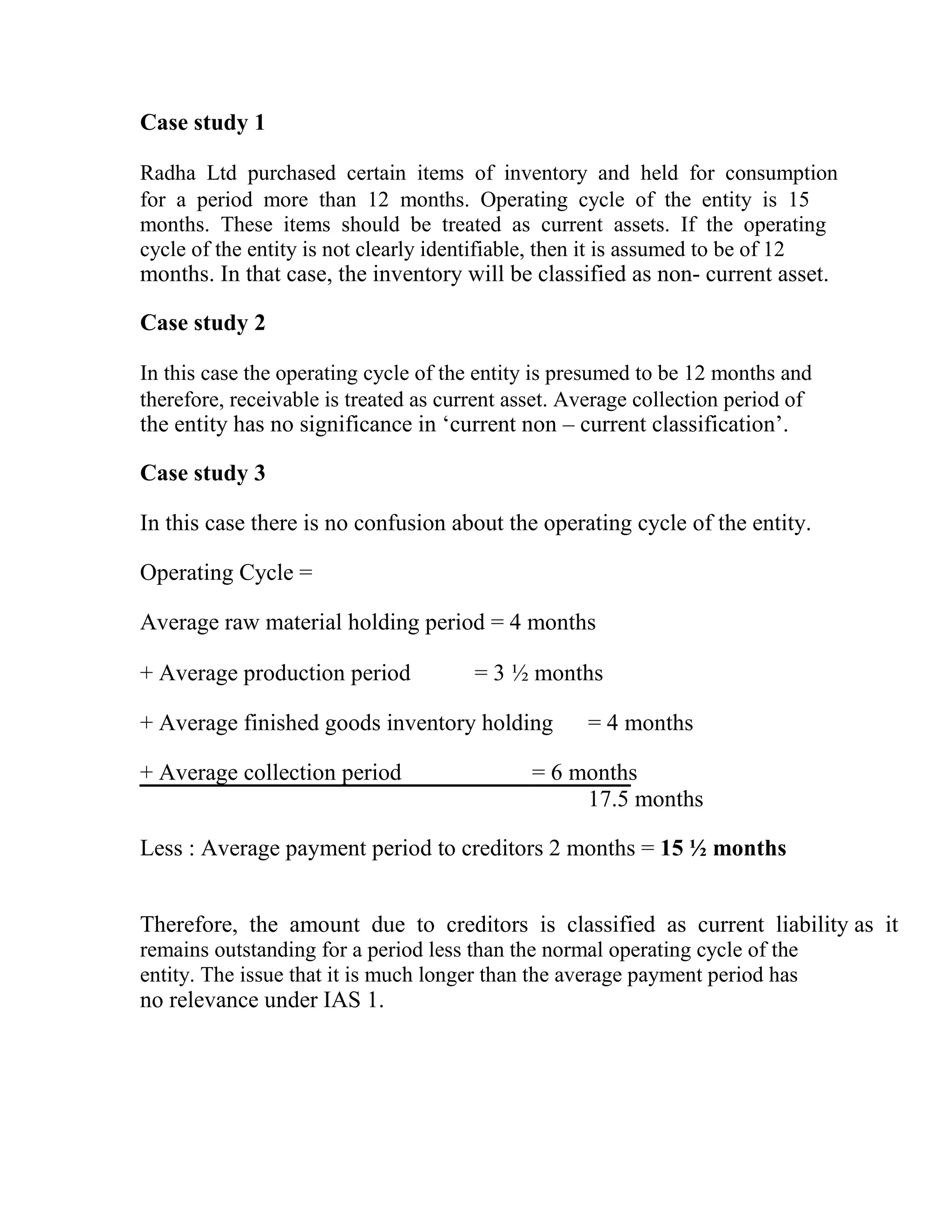
Radha Ltd purchased certain items of inventory and held for consumption
for a period more than 12 months. Operating cycle of the entity is 15
months. These items should be treated as current assets. If the operating
cycle of the entity is not clearly identifiable, then it is assumed to be of 12
months. In that case, the inventory will be classified as non- current asset.

Case study 2

In this case the operating cycle of the entity is presumed to be 12 months and
therefore, receivable is treated as current asset. Average collection period of
the entity has no significance in ‘current non – current classification’.

Case study 3

In this case there is no confusion about the operating cycle of the entity.

Operating Cycle =

Average raw material holding period = 4 months

+ Average production period            = 3 ½ months

+ Average finished goods inventory holding          = 4 months

+ Average collection period                   = 6 months
                                                   17.5 months

Less : Average payment period to creditors 2 months = 15 ½ months


Therefore, the amount due to creditors is classified as current liability as it
remains outstanding for a period less than the normal operating cycle of the
entity. The issue that it is much longer than the average payment period has
no relevance under IAS 1.
Case Study 4

Both categories of trade payables are classified as current liabilities. The
first category of payable are expected to be settled with in the normal
operating cycle; and the second category of liabilities although are not
expected to be settled within the normal operating cycle, they are expected
to be settled within twelve months from the balance sheet date.

Maturity based current liabilities are those which are to be settled within a
period 12 months from the reporting date. Examples are short-term
liabilities, long term liabilities to be settled within 12 months, dividend
accordance with IAS 39 Financial Instruments: Recognition and
Measurement.

Case Study 5

Held for trading financial liability is classified as current liability. It has to
mark to market the obligation of Rs. 1, 00,000 which should be classified as
current liability.

Case Study 6

[Current portion of non – current liability] The first installment of
redemption amounting to Rs.250 million will be due in June 2009 which is
falling within twelve months from the balance sheet date. Therefore, current
portion 9% Debentures Rs 250 million should be classified as current
liability. Balance Rs. 750 million will be shown as non – current liability.

Case Study 7

 Para 72(a) of IAS 1 is applicable. An organization should classify a loan
as current liability when it is due for settlement within twelve months from
the balance sheet date even though as per the original term it is payable after twelve
months from the balance sheet date. However, the agreement should be
modified before the financial statements are authorized for issue. Therefore,
9% Loans should be classified as current liability.
Case studies answers ias 1 7 nos

Case studies answers ias 1 7 nos

  • 1.
    Case study 1 RadhaLtd purchased certain items of inventory and held for consumption for a period more than 12 months. Operating cycle of the entity is 15 months. These items should be treated as current assets. If the operating cycle of the entity is not clearly identifiable, then it is assumed to be of 12 months. In that case, the inventory will be classified as non- current asset. Case study 2 In this case the operating cycle of the entity is presumed to be 12 months and therefore, receivable is treated as current asset. Average collection period of the entity has no significance in ‘current non – current classification’. Case study 3 In this case there is no confusion about the operating cycle of the entity. Operating Cycle = Average raw material holding period = 4 months + Average production period = 3 ½ months + Average finished goods inventory holding = 4 months + Average collection period = 6 months 17.5 months Less : Average payment period to creditors 2 months = 15 ½ months Therefore, the amount due to creditors is classified as current liability as it remains outstanding for a period less than the normal operating cycle of the entity. The issue that it is much longer than the average payment period has no relevance under IAS 1.
  • 2.
    Case Study 4 Bothcategories of trade payables are classified as current liabilities. The first category of payable are expected to be settled with in the normal operating cycle; and the second category of liabilities although are not expected to be settled within the normal operating cycle, they are expected to be settled within twelve months from the balance sheet date. Maturity based current liabilities are those which are to be settled within a period 12 months from the reporting date. Examples are short-term liabilities, long term liabilities to be settled within 12 months, dividend accordance with IAS 39 Financial Instruments: Recognition and Measurement. Case Study 5 Held for trading financial liability is classified as current liability. It has to mark to market the obligation of Rs. 1, 00,000 which should be classified as current liability. Case Study 6 [Current portion of non – current liability] The first installment of redemption amounting to Rs.250 million will be due in June 2009 which is falling within twelve months from the balance sheet date. Therefore, current portion 9% Debentures Rs 250 million should be classified as current liability. Balance Rs. 750 million will be shown as non – current liability. Case Study 7 Para 72(a) of IAS 1 is applicable. An organization should classify a loan as current liability when it is due for settlement within twelve months from the balance sheet date even though as per the original term it is payable after twelve months from the balance sheet date. However, the agreement should be modified before the financial statements are authorized for issue. Therefore, 9% Loans should be classified as current liability.