Jens Martensson
• Name : Master Jikir Hossain
• Age : 9 years
• Sex : Male
• Religion : Islam
• Address : Nator
• Date of examination :4/10/2023
2
Particulars of the Patient:
Jens Martensson
Master Jikir Hossain 9 years old male hailing from Nator came to
Department of Ophthalmology with complaints of forward
protrusion of both eyes with swelling of left eyelid for 7 months and
incomplete closure of both eyelids for same duration. It was
gradually increasing in nature and associated with redness,
photophobia ,grittiness but not associated with visual disturbance,
watering, itching, color halos and double vision.
3
Case Summary:
Jens Martensson
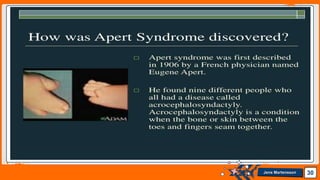
His father also complained of symmetric syndactyly of both
hands and feet, abnormal shape of the head and mental
retardation, manifested by the lack of development of
speech since birth.
He was born of a nonconsanguineous marriage. Patient is
the first issue of his parents and has a female sibling.
No illness or use of medications during pregnancy was
reported.
The delivery was full term and uneventful
4
Cont:
Jens Martensson
With the above complaints he went to Ispahani Islamia eye
Hospital and then he was referred to BSMMU for better
management. He is non diabetic, normotensive and non asthmatic.
5
Cont:
Jens Martensson
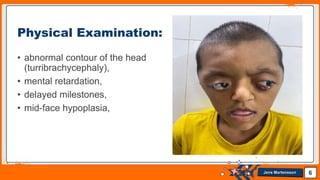
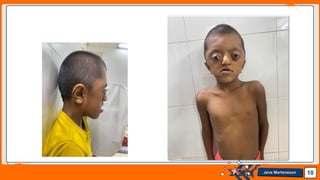
• abnormal contour of the head
(turribrachycephaly),
• mental retardation,
• delayed milestones,
• mid-face hypoplasia,
6
Physical Examination:
Jens Martensson
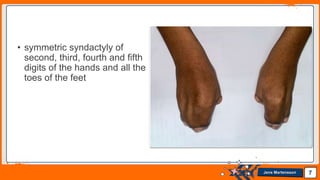
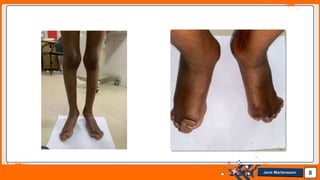
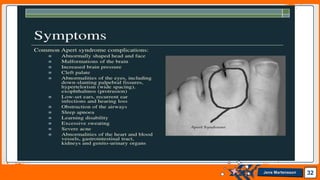
• symmetric syndactyly of
second, third, fourth and fifth
digits of the hands and all the
toes of the feet
7
Jens Martensson 8
Jens Martensson
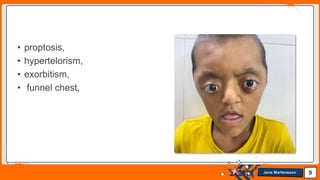
• proptosis,
• hypertelorism,
• exorbitism,
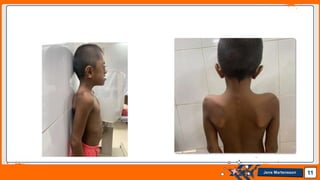
• funnel chest,
9
Jens Martensson 10
Jens Martensson 11
Jens Martensson
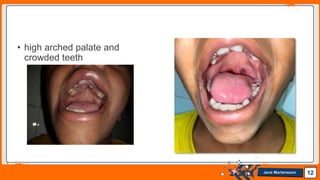
• high arched palate and
crowded teeth
12
Jens Martensson 13
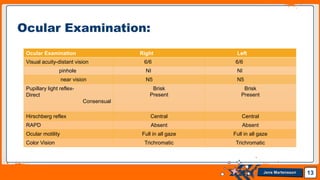
Ocular Examination:
Ocular Examination Right Left
Visual acuity-distant vision 6/6 6/6
pinhole NI NI
near vision N5 N5
Pupillary light reflex-
Direct
Consensual
Brisk
Present
Brisk
Present
Hirschberg reflex Central Central
RAPD Absent Absent
Ocular motility Full in all gaze Full in all gaze
Color Vision Trichromatic Trichromatic
Jens Martensson
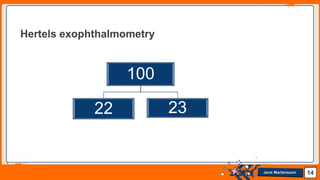
100
22 23
14
Hertels exophthalmometry
Jens Martensson
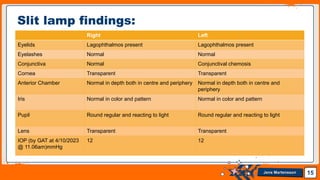
Right Left
Eyelids Lagophthalmos present Lagophthalmos present
Eyelashes Normal Normal
Conjunctiva Normal Conjunctival chemosis
Cornea Transparent Transparent
Anterior Chamber Normal in depth both in centre and periphery Normal in depth both in centre and
periphery
Iris Normal in color and pattern Normal in color and pattern
Pupil Round regular and reacting to light Round regular and reacting to light
Lens Transparent Transparent
IOP (by GAT at 4/10/2023
@ 11.06am)mmHg
12 12
15
Slit lamp findings:
Jens Martensson
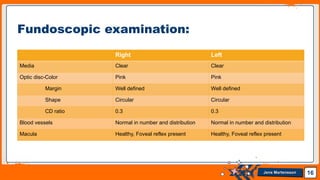
Right Left
Media Clear Clear
Optic disc-Color Pink Pink
Margin Well defined Well defined
Shape Circular Circular
CD ratio 0.3 0.3
Blood vessels Normal in number and distribution Normal in number and distribution
Macula Healthy, Foveal reflex present Healthy, Foveal reflex present
16
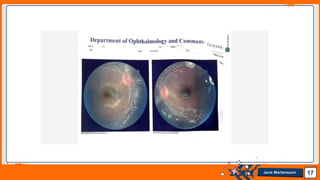
Fundoscopic examination:
Jens Martensson 17
Jens Martensson
• Other systemic examination revealed no abnormality
18
Jens Martensson
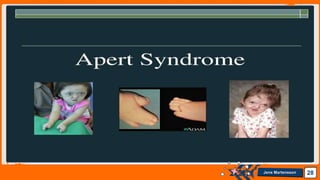
Apert Syndrome
19
Provisional Diagnosis:
Jens Martensson
• Crouzon’s syndrome
• Pfieffer’s syndrome
20
Differential diagnosis:
Jens Martensson
• CBC with ESR
• BT,CT
• Fasting blood sugar
• SGPT,TSH
• S. creatinine
• S. electrolytes
• Chest x-ray(P/A view) and x-ray wrists and ankle joints
• Ct scan of brain
• Colour Fundus photography(ocular)
21
Investigations:
Jens Martensson 22
Jens Martensson 23
Jens Martensson 24
Jens Martensson
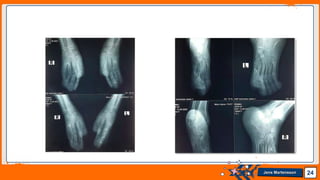
• Radiographs of both feet showed soft tissue syndactyly of all the
toes with synostosis involving metatarsals. Phalanges of great toe
were deformed.
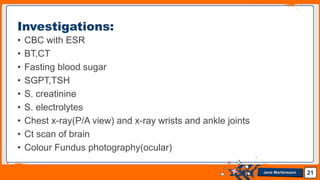
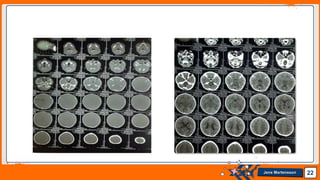
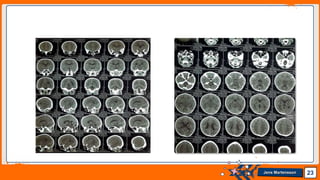
• Ct scan of brain revealed complete loss of interdigitation in coronal
and partial loss on left lambdoid suture, protrusion of both eyeballs,
abnormal shape of head, decreased nasal bridge and smaller
orbital cavity .
25
Jens Martensson
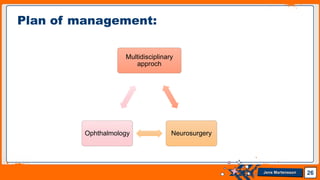
Multidisciplinary
approch
Neurosurgery
Ophthalmology
26
Plan of management:
Jens Martensson
• Proper counselling.
• Medical Management:
• Moxifloxacin eye drop(B/E)
• Artificial tear (B/E)
• Hypercellose0.3%+Carbomer0.2% eye prep (B/E)
• Surgical management:
• Lateral permanent tarsorrhaphy under general anesthesia
• Management from dept. of neurosurgery
27
Management:
Jens Martensson 28
Jens Martensson
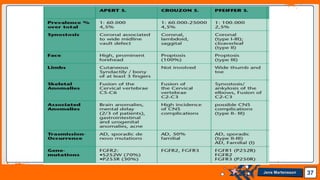
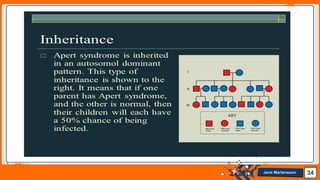
• Apert syndrome is a genetic disorder in which the fingers, face,
toes, or feet are mutated. Apert syndrome can be inherited
from a parent who has it or through a genetic mutation.
• A child with Apert syndrome usually has brain plates that have
fused together and cause pressure in the head and also
physical deformation of the head. Apert syndrome also shows
in the fingers and toes.
29
What is Apert Syndrome?
Jens Martensson 30
Jens Martensson
• 1 in 65,000 to 88,000 newborns have Apert syndrome.
• Apert syndrome is usually found in Asians at 22.3 cases per
million births whereas Hispanics have the lowest percent of
infected at 7.6 cases per million births.
• Apert syndrome affects males and females equally.
• It is seen a lot in children with elder fathers.
31
Who does Apert Syndrome affect?
Jens Martensson 32
Jens Martensson
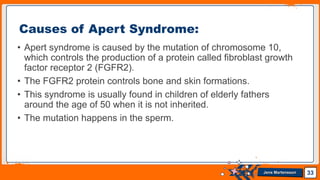
• Apert syndrome is caused by the mutation of chromosome 10,
which controls the production of a protein called fibroblast growth
factor receptor 2 (FGFR2).
• The FGFR2 protein controls bone and skin formations.
• This syndrome is usually found in children of elderly fathers
around the age of 50 when it is not inherited.
• The mutation happens in the sperm.
33
Causes of Apert Syndrome:
Jens Martensson 34
Jens Martensson
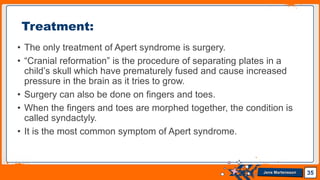
• The only treatment of Apert syndrome is surgery.
• ā€œCranial reformationā€ is the procedure of separating plates in a
child’s skull which have prematurely fused and cause increased
pressure in the brain as it tries to grow.
• Surgery can also be done on fingers and toes.
• When the fingers and toes are morphed together, the condition is
called syndactyly.
• It is the most common symptom of Apert syndrome.
35
Treatment:
Jens Martensson
• Apert Syndrome cannot be cured.
• However, there are many preventions and treatments to
developing complications and to help the child diagnosed to
grow normally. This might include seeing various specialists and,
or, surgery.
36
Prevention:
Jens Martensson 37
Jens Martensson 38
Jens Martensson 39

Case Presentation.pptx

  • 2.
    Jens Martensson • Name: Master Jikir Hossain • Age : 9 years • Sex : Male • Religion : Islam • Address : Nator • Date of examination :4/10/2023 2 Particulars of the Patient:
  • 3.
    Jens Martensson Master JikirHossain 9 years old male hailing from Nator came to Department of Ophthalmology with complaints of forward protrusion of both eyes with swelling of left eyelid for 7 months and incomplete closure of both eyelids for same duration. It was gradually increasing in nature and associated with redness, photophobia ,grittiness but not associated with visual disturbance, watering, itching, color halos and double vision. 3 Case Summary:
  • 4.
    Jens Martensson His fatheralso complained of symmetric syndactyly of both hands and feet, abnormal shape of the head and mental retardation, manifested by the lack of development of speech since birth. He was born of a nonconsanguineous marriage. Patient is the first issue of his parents and has a female sibling. No illness or use of medications during pregnancy was reported. The delivery was full term and uneventful 4 Cont:
  • 5.
    Jens Martensson With theabove complaints he went to Ispahani Islamia eye Hospital and then he was referred to BSMMU for better management. He is non diabetic, normotensive and non asthmatic. 5 Cont:
  • 6.
    Jens Martensson • abnormalcontour of the head (turribrachycephaly), • mental retardation, • delayed milestones, • mid-face hypoplasia, 6 Physical Examination:
  • 7.
    Jens Martensson • symmetricsyndactyly of second, third, fourth and fifth digits of the hands and all the toes of the feet 7
  • 8.
  • 9.
    Jens Martensson • proptosis, •hypertelorism, • exorbitism, • funnel chest, 9
  • 10.
  • 11.
  • 12.
    Jens Martensson • higharched palate and crowded teeth 12
  • 13.
    Jens Martensson 13 OcularExamination: Ocular Examination Right Left Visual acuity-distant vision 6/6 6/6 pinhole NI NI near vision N5 N5 Pupillary light reflex- Direct Consensual Brisk Present Brisk Present Hirschberg reflex Central Central RAPD Absent Absent Ocular motility Full in all gaze Full in all gaze Color Vision Trichromatic Trichromatic
  • 14.
  • 15.
    Jens Martensson Right Left EyelidsLagophthalmos present Lagophthalmos present Eyelashes Normal Normal Conjunctiva Normal Conjunctival chemosis Cornea Transparent Transparent Anterior Chamber Normal in depth both in centre and periphery Normal in depth both in centre and periphery Iris Normal in color and pattern Normal in color and pattern Pupil Round regular and reacting to light Round regular and reacting to light Lens Transparent Transparent IOP (by GAT at 4/10/2023 @ 11.06am)mmHg 12 12 15 Slit lamp findings:
  • 16.
    Jens Martensson Right Left MediaClear Clear Optic disc-Color Pink Pink Margin Well defined Well defined Shape Circular Circular CD ratio 0.3 0.3 Blood vessels Normal in number and distribution Normal in number and distribution Macula Healthy, Foveal reflex present Healthy, Foveal reflex present 16 Fundoscopic examination:
  • 17.
  • 18.
    Jens Martensson • Othersystemic examination revealed no abnormality 18
  • 19.
  • 20.
    Jens Martensson • Crouzon’ssyndrome • Pfieffer’s syndrome 20 Differential diagnosis:
  • 21.
    Jens Martensson • CBCwith ESR • BT,CT • Fasting blood sugar • SGPT,TSH • S. creatinine • S. electrolytes • Chest x-ray(P/A view) and x-ray wrists and ankle joints • Ct scan of brain • Colour Fundus photography(ocular) 21 Investigations:
  • 22.
  • 23.
  • 24.
  • 25.
    Jens Martensson • Radiographsof both feet showed soft tissue syndactyly of all the toes with synostosis involving metatarsals. Phalanges of great toe were deformed. • Ct scan of brain revealed complete loss of interdigitation in coronal and partial loss on left lambdoid suture, protrusion of both eyeballs, abnormal shape of head, decreased nasal bridge and smaller orbital cavity . 25
  • 26.
  • 27.
    Jens Martensson • Propercounselling. • Medical Management: • Moxifloxacin eye drop(B/E) • Artificial tear (B/E) • Hypercellose0.3%+Carbomer0.2% eye prep (B/E) • Surgical management: • Lateral permanent tarsorrhaphy under general anesthesia • Management from dept. of neurosurgery 27 Management:
  • 28.
  • 29.
    Jens Martensson • Apertsyndrome is a genetic disorder in which the fingers, face, toes, or feet are mutated. Apert syndrome can be inherited from a parent who has it or through a genetic mutation. • A child with Apert syndrome usually has brain plates that have fused together and cause pressure in the head and also physical deformation of the head. Apert syndrome also shows in the fingers and toes. 29 What is Apert Syndrome?
  • 30.
  • 31.
    Jens Martensson • 1in 65,000 to 88,000 newborns have Apert syndrome. • Apert syndrome is usually found in Asians at 22.3 cases per million births whereas Hispanics have the lowest percent of infected at 7.6 cases per million births. • Apert syndrome affects males and females equally. • It is seen a lot in children with elder fathers. 31 Who does Apert Syndrome affect?
  • 32.
  • 33.
    Jens Martensson • Apertsyndrome is caused by the mutation of chromosome 10, which controls the production of a protein called fibroblast growth factor receptor 2 (FGFR2). • The FGFR2 protein controls bone and skin formations. • This syndrome is usually found in children of elderly fathers around the age of 50 when it is not inherited. • The mutation happens in the sperm. 33 Causes of Apert Syndrome:
  • 34.
  • 35.
    Jens Martensson • Theonly treatment of Apert syndrome is surgery. • ā€œCranial reformationā€ is the procedure of separating plates in a child’s skull which have prematurely fused and cause increased pressure in the brain as it tries to grow. • Surgery can also be done on fingers and toes. • When the fingers and toes are morphed together, the condition is called syndactyly. • It is the most common symptom of Apert syndrome. 35 Treatment:
  • 36.
    Jens Martensson • ApertSyndrome cannot be cured. • However, there are many preventions and treatments to developing complications and to help the child diagnosed to grow normally. This might include seeing various specialists and, or, surgery. 36 Prevention:
  • 37.
  • 38.
  • 39.