

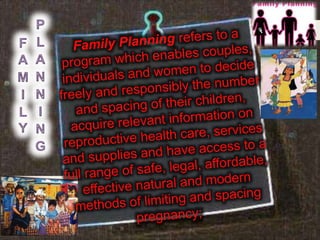

FAMILY PLANNING
&
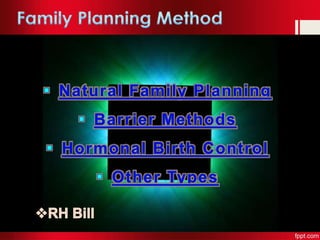
RH BILL
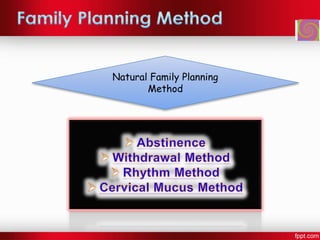
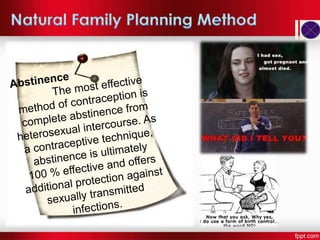
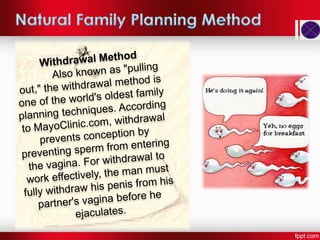
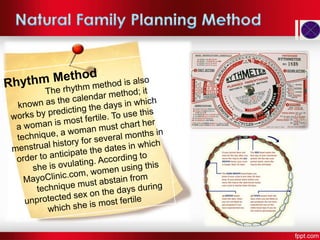
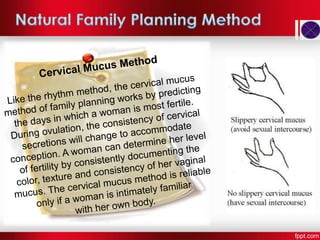
Natural Family Planning
Method
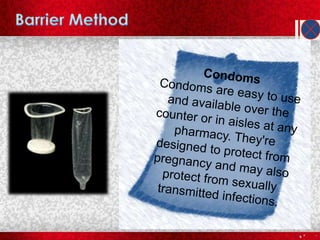
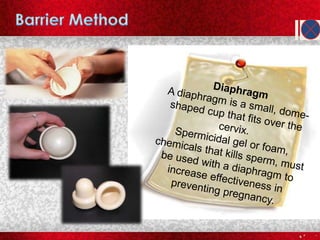
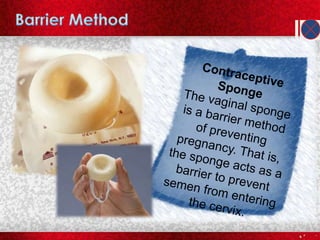
Barrier Contraception
Methods
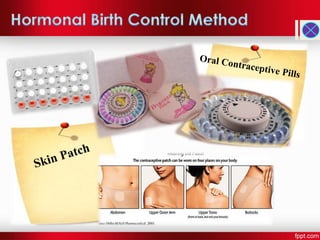
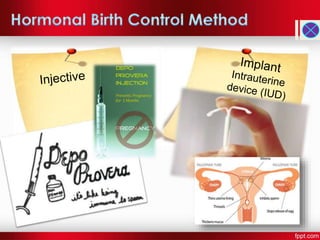
Hormonal Birth
Control Methods
Oral Contraceptive Pills
Skin Patch
Injection
Implant
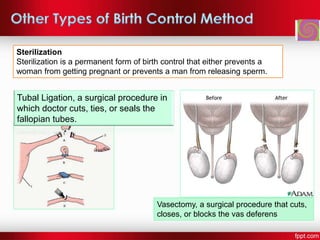
Sterilization
Sterilization is a permanent form of birth control that either prevents a
woman from getting pregnant or prevents a man from releasing sperm.
Tubal Ligation, a surgical procedure in
which doctor cuts, ties, or seals the
fallopian tubes.
Vasectomy, a surgical procedure that cuts,
closes, or blocks the vas deferens
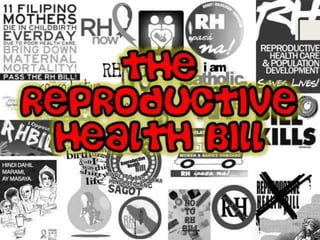
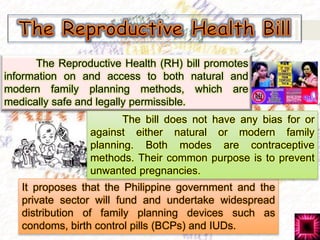
The Reproductive Health (RH) bill promotes
information on and access to both natural and
modern family planning methods, which are
medically safe and legally permissible.
It proposes that the Philippine government and the
private sector will fund and undertake widespread
distribution of family planning devices such as
condoms, birth control pills (BCPs) and IUDs.
The bill does not have any bias for or
against either natural or modern family
planning. Both modes are contraceptive
methods. Their common purpose is to prevent
unwanted pregnancies.
The bill mandates the government to “promote, without
bias, all effective natural and modern methods of family
planning that are medically safe and legal.”
Although abortion is recognized as illegal and punishable by
law, the bill states that “the government shall ensure that all
women needing care for post-abortion complications shall be
treated and counseled in a humane, non-judgmental and
compassionate manner.”
The bill calls for a “multi-dimensional approach”
integrates a component of family planning and
responsible parenthood into all government anti-poverty
programs.
Under the bill, age-appropriate reproductive health and
sexuality education is required from grade five to fourth
year high school using “life-skills and other approaches.”
The bill also mandates the Department of Labor and
Employment to guarantee the reproductive health rights of its
female employees. Companies with less than 200 workers are
required to enter into partnership with health care providers in
their area for the delivery of reproductive health services.
The national government and local governments will
ensure the availability of reproductive health care
services, including family planning and prenatal care.
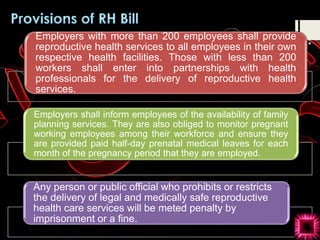
Employers with more than 200 employees shall provide
reproductive health services to all employees in their own
respective health facilities. Those with less than 200
workers shall enter into partnerships with health
professionals for the delivery of reproductive health
services.
Employers shall inform employees of the availability of family
planning services. They are also obliged to monitor pregnant
working employees among their workforce and ensure they
are provided paid half-day prenatal medical leaves for each
month of the pregnancy period that they are employed.
Any person or public official who prohibits or restricts
the delivery of legal and medically safe reproductive
health care services will be meted penalty by
imprisonment or a fine.
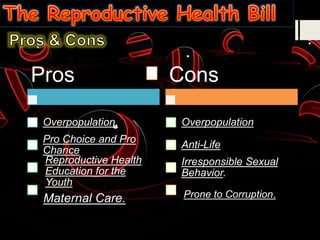
Pros
Overpopulation.
Pro Choice and Pro
Chance
Reproductive Health
Education for the
Youth
Cons
Overpopulation
Anti-Life
Irresponsible Sexual
Behavior.
Prone to Corruption.Maternal Care.
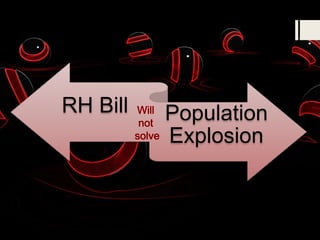
RH Bill Population
Explosion
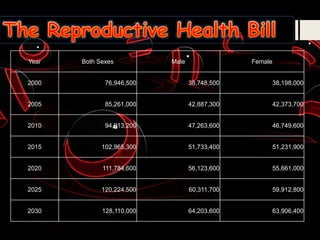
Year Both Sexes Male Female
2000 76,946,500 38,748,500 38,198,000
2005 85,261,000 42,887,300 42,373,700
2010 94,013,200 47,263,600 46,749,600
2015 102,965,300 51,733,400 51,231,900
2020 111,784,600 56,123,600 55,661,000
2025 120,224,500 60,311,700 59,912,800
2030 128,110,000 64,203,600 63,906,400
Case presentation RH Law

Case presentation RH Law

  • 1.
  • 4.
  • 9.
  • 13.
    Hormonal Birth Control Methods OralContraceptive Pills Skin Patch Injection Implant
  • 16.
    Sterilization Sterilization is apermanent form of birth control that either prevents a woman from getting pregnant or prevents a man from releasing sperm. Tubal Ligation, a surgical procedure in which doctor cuts, ties, or seals the fallopian tubes. Vasectomy, a surgical procedure that cuts, closes, or blocks the vas deferens
  • 19.
    The Reproductive Health(RH) bill promotes information on and access to both natural and modern family planning methods, which are medically safe and legally permissible. It proposes that the Philippine government and the private sector will fund and undertake widespread distribution of family planning devices such as condoms, birth control pills (BCPs) and IUDs. The bill does not have any bias for or against either natural or modern family planning. Both modes are contraceptive methods. Their common purpose is to prevent unwanted pregnancies.
  • 20.
    The bill mandatesthe government to “promote, without bias, all effective natural and modern methods of family planning that are medically safe and legal.” Although abortion is recognized as illegal and punishable by law, the bill states that “the government shall ensure that all women needing care for post-abortion complications shall be treated and counseled in a humane, non-judgmental and compassionate manner.” The bill calls for a “multi-dimensional approach” integrates a component of family planning and responsible parenthood into all government anti-poverty programs.
  • 21.
    Under the bill,age-appropriate reproductive health and sexuality education is required from grade five to fourth year high school using “life-skills and other approaches.” The bill also mandates the Department of Labor and Employment to guarantee the reproductive health rights of its female employees. Companies with less than 200 workers are required to enter into partnership with health care providers in their area for the delivery of reproductive health services. The national government and local governments will ensure the availability of reproductive health care services, including family planning and prenatal care.
  • 22.
    Employers with morethan 200 employees shall provide reproductive health services to all employees in their own respective health facilities. Those with less than 200 workers shall enter into partnerships with health professionals for the delivery of reproductive health services. Employers shall inform employees of the availability of family planning services. They are also obliged to monitor pregnant working employees among their workforce and ensure they are provided paid half-day prenatal medical leaves for each month of the pregnancy period that they are employed. Any person or public official who prohibits or restricts the delivery of legal and medically safe reproductive health care services will be meted penalty by imprisonment or a fine.
  • 23.
    Pros Overpopulation. Pro Choice andPro Chance Reproductive Health Education for the Youth Cons Overpopulation Anti-Life Irresponsible Sexual Behavior. Prone to Corruption.Maternal Care.
  • 24.
  • 25.
    Year Both SexesMale Female 2000 76,946,500 38,748,500 38,198,000 2005 85,261,000 42,887,300 42,373,700 2010 94,013,200 47,263,600 46,749,600 2015 102,965,300 51,733,400 51,231,900 2020 111,784,600 56,123,600 55,661,000 2025 120,224,500 60,311,700 59,912,800 2030 128,110,000 64,203,600 63,906,400