
CASE PRESENTATION ON ESRD &
RENAL DIALYSIS
End stage Renal disease (ESRD)
◦ Definition :
End-Stage Renal Disease (ESRD) is a medical condition in which a person’s
kidneys cease functioning on a permanent basis leading to the need for a regular course
of long-term dialysis or a kidney transplant to maintain life.
◦ In the end stage of renal damage the levels of eGFR were <15ml/min.
◦ Risk factors :
1. Advanced age
2. HTN&DM
3. Dyslipidemia, Obesity etc..
◦ Treatment :
Dialysis/kidney transplantation.
Haemodialysis:
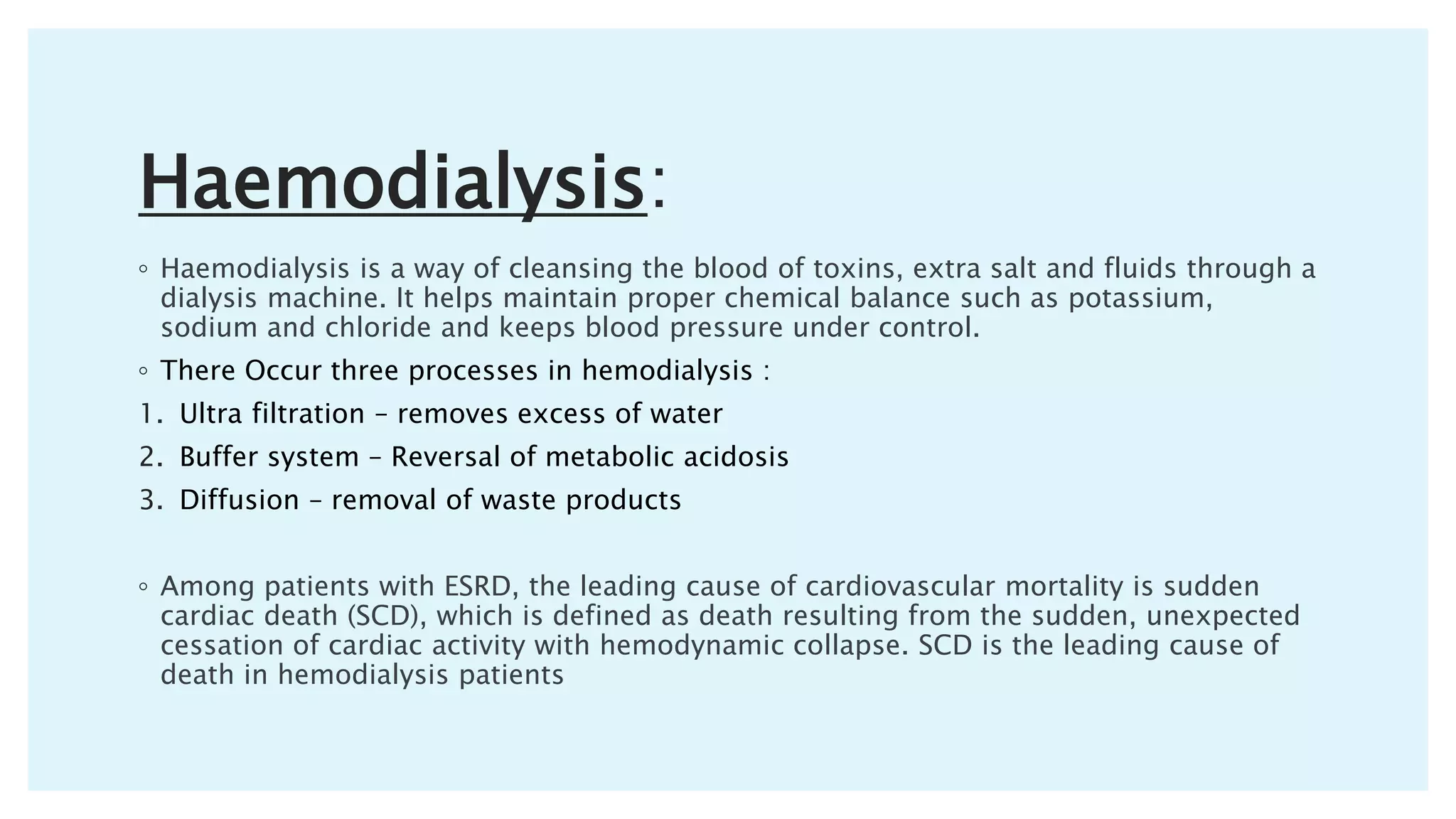
◦ Haemodialysis is a way of cleansing the blood of toxins, extra salt and fluids through a
dialysis machine. It helps maintain proper chemical balance such as potassium,
sodium and chloride and keeps blood pressure under control.
◦ There Occur three processes in hemodialysis :
1. Ultra filtration – removes excess of water
2. Buffer system – Reversal of metabolic acidosis
3. Diffusion – removal of waste products
◦ Among patients with ESRD, the leading cause of cardiovascular mortality is sudden
cardiac death (SCD), which is defined as death resulting from the sudden, unexpected
cessation of cardiac activity with hemodynamic collapse. SCD is the leading cause of
death in hemodialysis patients
SOAP ANALYSIS
Patient demographics:
A female patient of Age 57years was admitted to emergency unit with Chief complaints Of
Oliguria, shortness of breathe, elevated serum creatinine levels.
She was a Known patient of Hypertension(7yrs) and diabetes (20yrs), CKD since 6
months. Before admitting to this hospital she had undergone 4 sessions of hemodialysis
With the development of acute on chronic renal failure.
◦ Her family history and social history were nill.
◦ She has recently undergone a surgery Because of fracture to right femur .
◦ Subjective data:
◦ Oliguria
◦ Shortness of breath
◦ Elevated serum creatinine
◦ Anemia
Provisional diagnosis:
chronic kidney disease (stage 5)
VITALS-
DAYS
TEMP(*F) BP
(mm/Hg)
RR
(CPM)
PR
(BPM) NOTES
D1 98.6*F 150/90 28 90 Patient is disoriented,insominac,
complains of oliguria.
D2 98.6*F 150/80 26 94
Hemodialysis done at
9am,Heparin@10000U is given while doing
HD,patient still suffering from oliguria &
complains shortness of breath.
D3 98.6*F 150/85 28 92
Poor prognosis of disease is being
observed.due to irregular respiration BIPAP
appartus was kept.
D4 98.6*F 140/90 24 90 Due to decreased PH,Metabolic acidosis
developed.minimal pleural effusion was
observed from the lungs
Objective evidences:
VITAL
S-
DAYS
TEMP*F
BP
(mm/Hg)
RR
(CPM)
PR
(BPM) NOTES
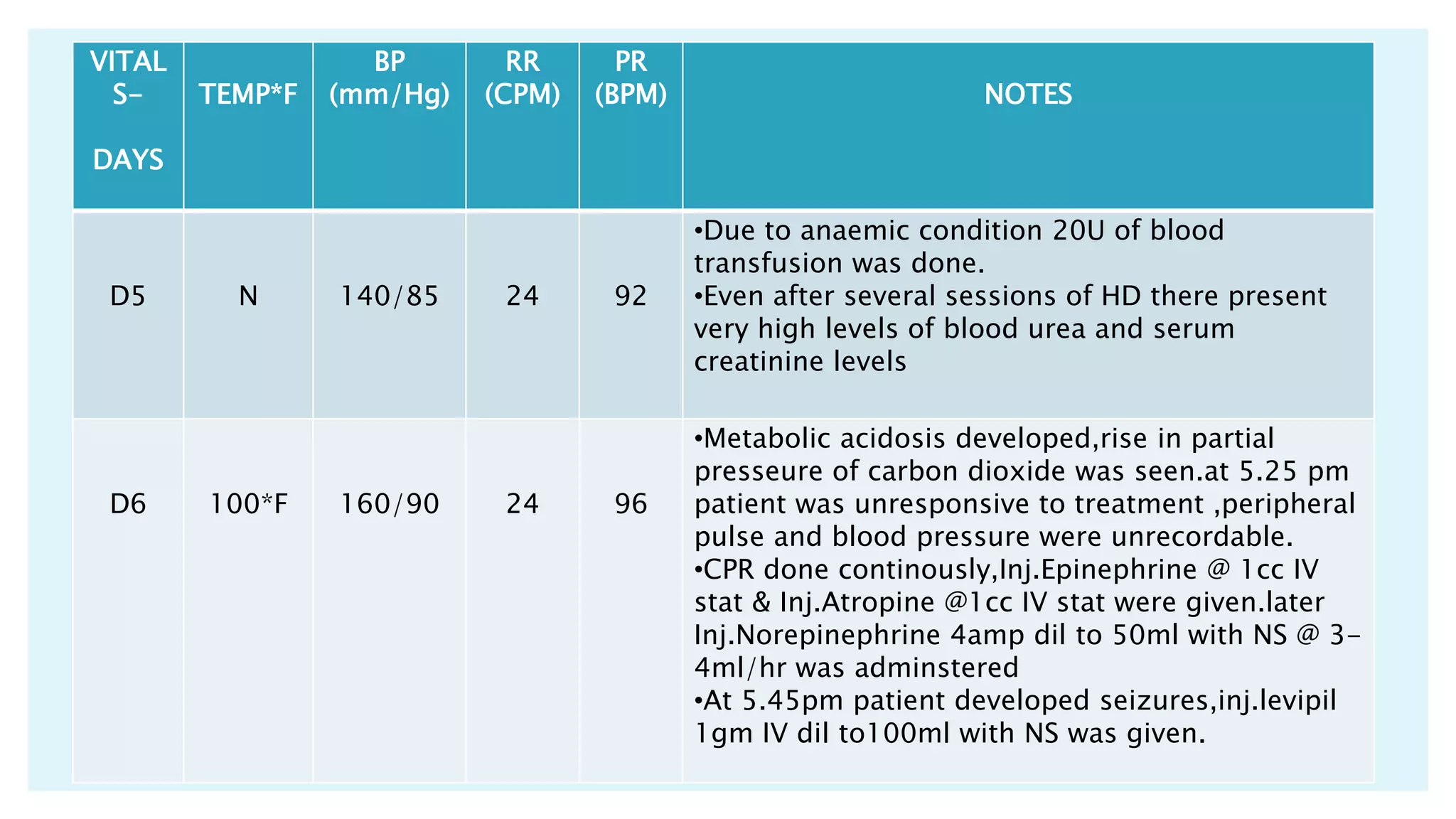
D5 N 140/85 24 92
•Due to anaemic condition 20U of blood
transfusion was done.
•Even after several sessions of HD there present
very high levels of blood urea and serum
creatinine levels
D6 100*F 160/90 24 96
•Metabolic acidosis developed,rise in partial
presseure of carbon dioxide was seen.at 5.25 pm
patient was unresponsive to treatment ,peripheral
pulse and blood pressure were unrecordable.
•CPR done continously,Inj.Epinephrine @ 1cc IV
stat & Inj.Atropine @1cc IV stat were given.later
Inj.Norepinephrine 4amp dil to 50ml with NS @ 3-
4ml/hr was adminstered
•At 5.45pm patient developed seizures,inj.levipil
1gm IV dil to100ml with NS was given.
Day 7
◦ Vitals: at 8 am
Temp: 98.6*F
BP:150/90 mm/Hg
PR: 94bpm.
◦ At 12 pm patient suddenly developed bradycardia and cardiac arrest,CPR done and
emergency medications were given.BP and Pulse not recordable.
Inj.Adrenaline 1amp IV Stat
Inj.atropine 1amp IV stat
Inj.sodabicarbonate 50mg IV
o CPR continued,not revived,pupil dilated,ECG resulted flat curve,patient expired.
o The cause of death is cardiopulmonary failure secondary to chronic kidney disease with
diabetes and hypertension.
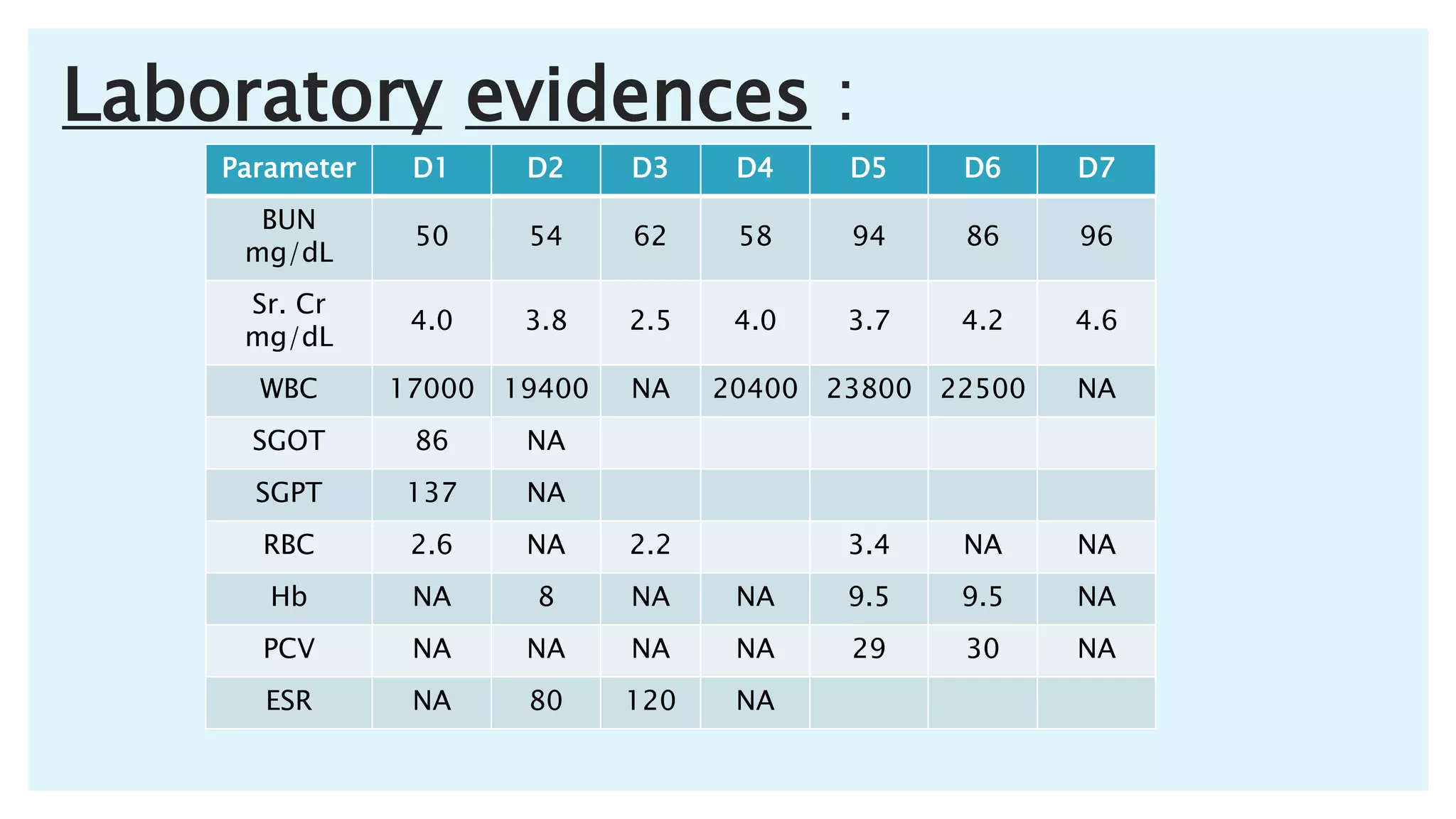
Laboratory evidences :
Parameter D1 D2 D3 D4 D5 D6 D7
BUN
mg/dL
50 54 62 58 94 86 96
Sr. Cr
mg/dL
4.0 3.8 2.5 4.0 3.7 4.2 4.6
WBC 17000 19400 NA 20400 23800 22500 NA
SGOT 86 NA
SGPT 137 NA
RBC 2.6 NA 2.2 3.4 NA NA
Hb NA 8 NA NA 9.5 9.5 NA
PCV NA NA NA NA 29 30 NA
ESR NA 80 120 NA
Parameter D1 D2 D3 D4 D5 D6 D7 Indications
Sr.
Chloride
94 124 112 107 112 acid base imbalance
Sr.
Potassium
3 3.3 3.3 3.3 Weakening of cellular functions
Sr.
Proteins
4 5 Chronic illness
Sr.
Albumin
2.5 Kidney disease
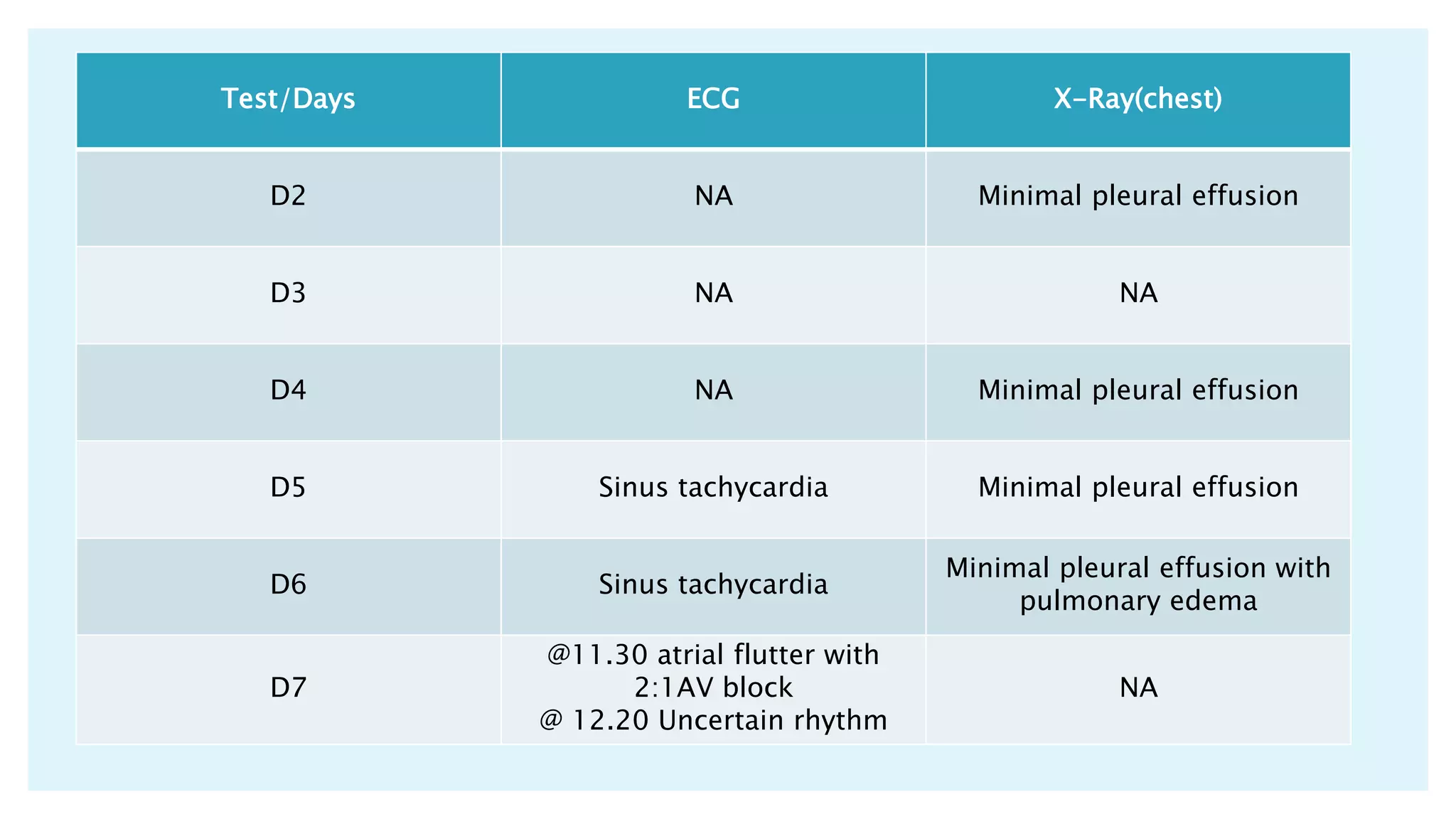
Test/Days ECG X-Ray(chest)
D2 NA Minimal pleural effusion
D3 NA NA
D4 NA Minimal pleural effusion
D5 Sinus tachycardia Minimal pleural effusion
D6 Sinus tachycardia
Minimal pleural effusion with
pulmonary edema
D7
@11.30 atrial flutter with
2:1AV block
@ 12.20 Uncertain rhythm
NA
Assessment:
◦ Based on the mentioned subjective data like oliguria,shortness of breath, and objective
evidences like elevated serum creatinine,blood urea levels,electrolyte imbalances
present,the patient was assessed to be suffering with end stage renal disorder
secondary to hypertension and diabetes
FINAL DIAGNOSIS:
End stage renal disease .
Pharmaceutical care plan :
Goals of treatment:
◦ To maintain the normal electrolyte levels of body
◦ To carry out hemodialysis under aseptic conditions
◦ To decrease the elevated levels of blood urea and serum creatinine
◦ To maintain blood glucose and Blood pressure at normal levels.
◦ To alleviate the presented symptoms
◦ To regain the normal condition of respiratory system
◦ To prevent further occuring cardiovascular damages
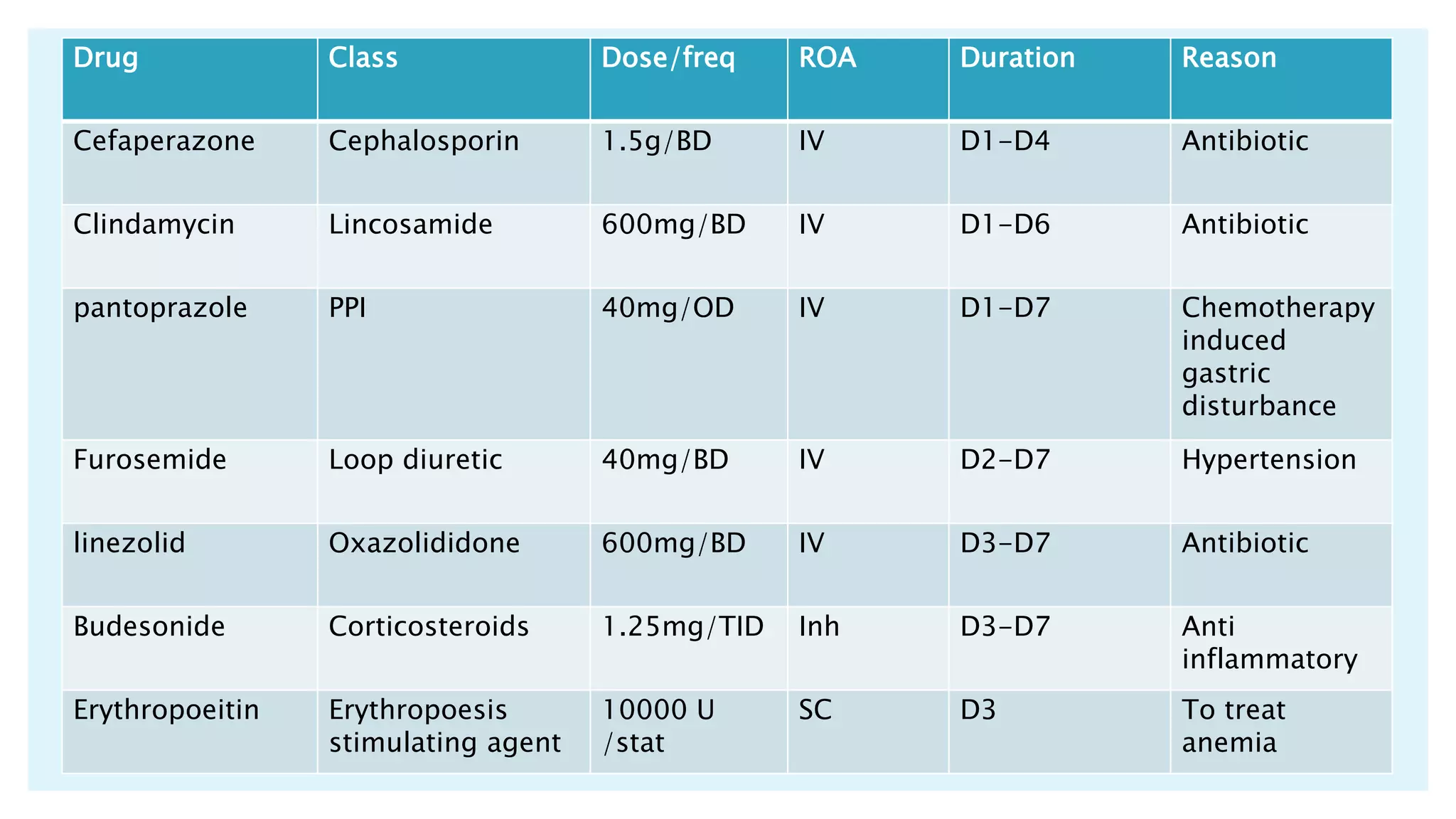
Drug Class Dose/freq ROA Duration Reason
Cefaperazone Cephalosporin 1.5g/BD IV D1-D4 Antibiotic
Clindamycin Lincosamide 600mg/BD IV D1-D6 Antibiotic
pantoprazole PPI 40mg/OD IV D1-D7 Chemotherapy
induced
gastric
disturbance
Furosemide Loop diuretic 40mg/BD IV D2-D7 Hypertension
linezolid Oxazolididone 600mg/BD IV D3-D7 Antibiotic
Budesonide Corticosteroids 1.25mg/TID Inh D3-D7 Anti
inflammatory
Erythropoeitin Erythropoesis
stimulating agent
10000 U
/stat
SC D3 To treat
anemia
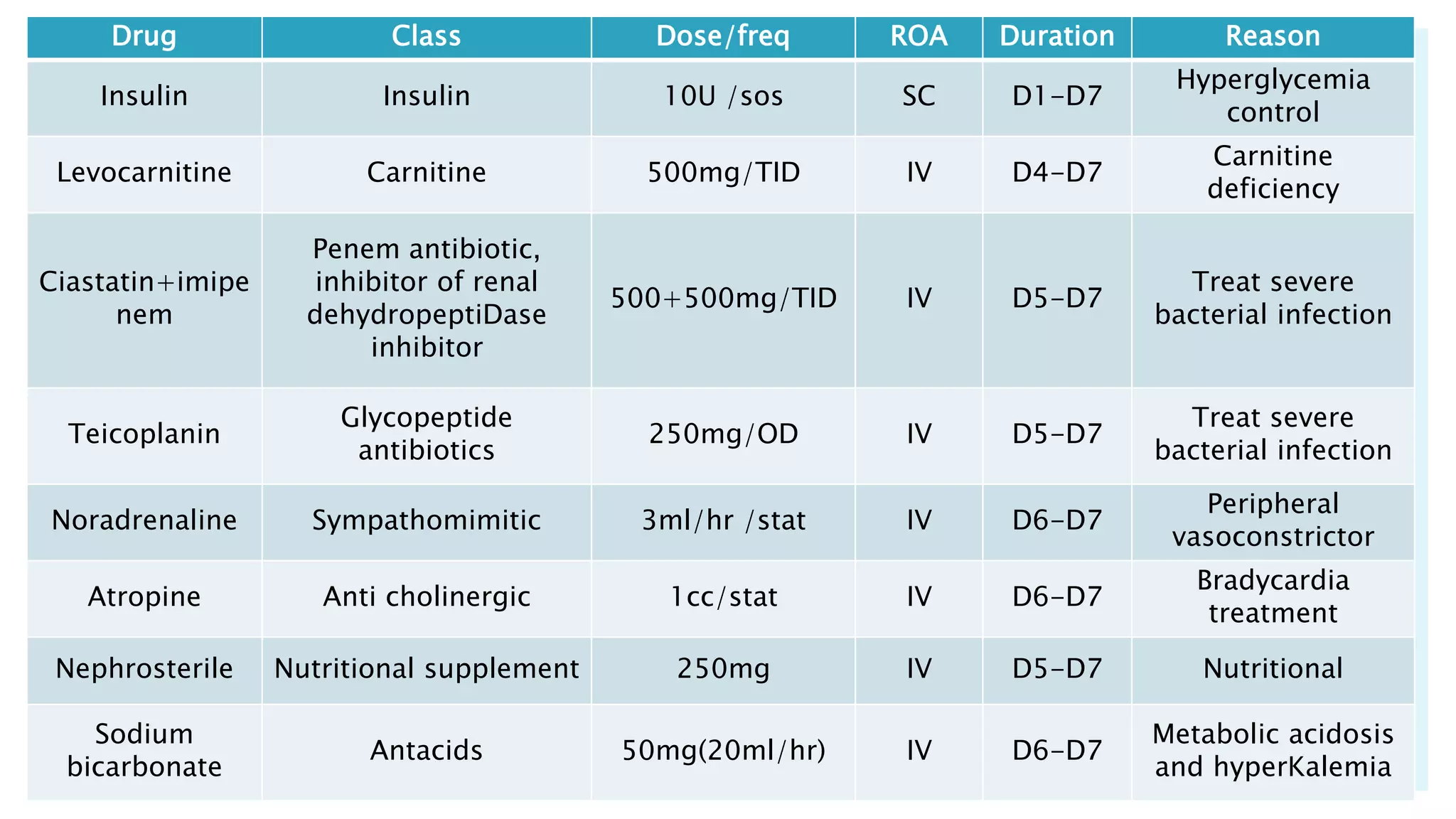
Drug Class Dose/freq ROA Duration Reason
Insulin Insulin 10U /sos SC D1-D7
Hyperglycemia
control
Levocarnitine Carnitine 500mg/TID IV D4-D7
Carnitine
deficiency
Ciastatin+imipe
nem
Penem antibiotic,
inhibitor of renal
dehydropeptiDase
inhibitor
500+500mg/TID IV D5-D7
Treat severe
bacterial infection
Teicoplanin
Glycopeptide
antibiotics
250mg/OD IV D5-D7
Treat severe
bacterial infection
Noradrenaline Sympathomimitic 3ml/hr /stat IV D6-D7
Peripheral
vasoconstrictor
Atropine Anti cholinergic 1cc/stat IV D6-D7
Bradycardia
treatment
Nephrosterile Nutritional supplement 250mg IV D5-D7 Nutritional
Sodium
bicarbonate
Antacids 50mg(20ml/hr) IV D6-D7
Metabolic acidosis
and hyperKalemia
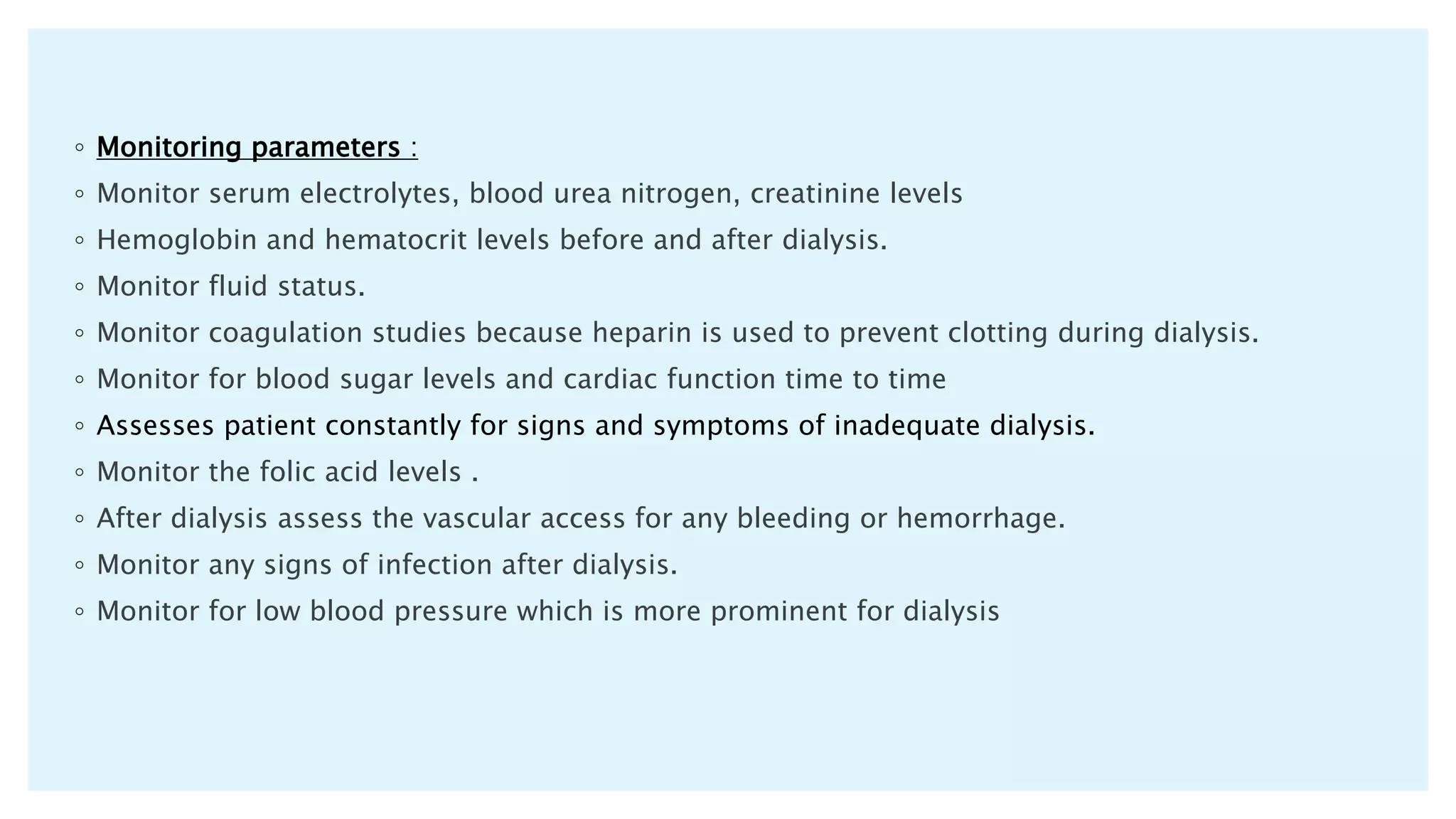
◦ Monitoring parameters :
◦ Monitor serum electrolytes, blood urea nitrogen, creatinine levels
◦ Hemoglobin and hematocrit levels before and after dialysis.
◦ Monitor fluid status.
◦ Monitor coagulation studies because heparin is used to prevent clotting during dialysis.
◦ Monitor for blood sugar levels and cardiac function time to time
◦ Assesses patient constantly for signs and symptoms of inadequate dialysis.
◦ Monitor the folic acid levels .
◦ After dialysis assess the vascular access for any bleeding or hemorrhage.
◦ Monitor any signs of infection after dialysis.
◦ Monitor for low blood pressure which is more prominent for dialysis
◦ DIET PLAN: Salt & Sodium
◦ Use less salt and eat fewer salty foods: this may help to control blood pressure and reduce
weight gains between dialysis sessions.
◦ Use herbs, spices, and low-salt flavor enhancers in place of salt.
◦ Avoid salt substitutes made with potassium.
◦ Meat/Protein
◦ People on dialysis need to eat more protein. Protein can help maintain blood protein levels and
improve health. Eat a high protein food (meat, fish, poultry, fresh pork, or eggs)
◦ though peanut butter, nuts, seeds, dried beans, peas, and lentils have protein, these foods are
generally not recommended because they are high in both potassium and phosphorusEven.
◦ Milk/Yogurt/Cheese
◦ Limit your intake of milk, yogurt, and cheese to ½-cup milk or ½-cup yogurt or 1-ounce
cheese per day. Most dairy foods are very high in phosphorus.
◦ The phosphorus content is the same for all types of milk – skim, low fat, and whole! If you do
eat any high-phosphorus foods, take a phosphate binder with that meal.
◦ Fruit/Juice
◦ All fruits have some potassium, but certain fruits have more than others and should be limited or
totally avoided. Limiting potassium protects your heart.
◦ Limit or avoid :
◦ Oranges and orange juice
◦ Raisins and dried fruit
◦ Bananas
◦ Choose:
◦ Apple (1)
◦ Berries (½ cup)
◦ Cherries etc..
◦ Vegetables/Salads
◦ All vegetables have some potassium, but certain vegetables have more than others and
should be limited or totally avoided. Limiting potassium intake protects your heart.
◦ Eat 2-3 servings of low-potassium vegetables each day. One serving = ½-cup.
◦ Choose:
◦ Cabbage,Carrots,Cauliflower
◦ Garlic,Green and Wax beans (“string beans”)
◦ Lettuce-all types (1 cup),Onion
◦ Limit or avoid:
◦ Potatoes (including French Fries, potato chips and sweet potatoes)
◦ Tomatoes and tomato sauce
◦ Pumpkin
◦ Asparagus (cooked)
Case presentation on ESRD

Case presentation on ESRD

  • 1.
    CASE PRESENTATION ONESRD & RENAL DIALYSIS
  • 2.
    End stage Renaldisease (ESRD) ◦ Definition : End-Stage Renal Disease (ESRD) is a medical condition in which a person’s kidneys cease functioning on a permanent basis leading to the need for a regular course of long-term dialysis or a kidney transplant to maintain life. ◦ In the end stage of renal damage the levels of eGFR were <15ml/min. ◦ Risk factors : 1. Advanced age 2. HTN&DM 3. Dyslipidemia, Obesity etc.. ◦ Treatment : Dialysis/kidney transplantation.
  • 3.
    Haemodialysis: ◦ Haemodialysis isa way of cleansing the blood of toxins, extra salt and fluids through a dialysis machine. It helps maintain proper chemical balance such as potassium, sodium and chloride and keeps blood pressure under control. ◦ There Occur three processes in hemodialysis : 1. Ultra filtration – removes excess of water 2. Buffer system – Reversal of metabolic acidosis 3. Diffusion – removal of waste products ◦ Among patients with ESRD, the leading cause of cardiovascular mortality is sudden cardiac death (SCD), which is defined as death resulting from the sudden, unexpected cessation of cardiac activity with hemodynamic collapse. SCD is the leading cause of death in hemodialysis patients
  • 4.
    SOAP ANALYSIS Patient demographics: Afemale patient of Age 57years was admitted to emergency unit with Chief complaints Of Oliguria, shortness of breathe, elevated serum creatinine levels. She was a Known patient of Hypertension(7yrs) and diabetes (20yrs), CKD since 6 months. Before admitting to this hospital she had undergone 4 sessions of hemodialysis With the development of acute on chronic renal failure. ◦ Her family history and social history were nill. ◦ She has recently undergone a surgery Because of fracture to right femur . ◦ Subjective data: ◦ Oliguria ◦ Shortness of breath ◦ Elevated serum creatinine ◦ Anemia
  • 5.
  • 6.
    VITALS- DAYS TEMP(*F) BP (mm/Hg) RR (CPM) PR (BPM) NOTES D198.6*F 150/90 28 90 Patient is disoriented,insominac, complains of oliguria. D2 98.6*F 150/80 26 94 Hemodialysis done at 9am,Heparin@10000U is given while doing HD,patient still suffering from oliguria & complains shortness of breath. D3 98.6*F 150/85 28 92 Poor prognosis of disease is being observed.due to irregular respiration BIPAP appartus was kept. D4 98.6*F 140/90 24 90 Due to decreased PH,Metabolic acidosis developed.minimal pleural effusion was observed from the lungs Objective evidences:
  • 7.
    VITAL S- DAYS TEMP*F BP (mm/Hg) RR (CPM) PR (BPM) NOTES D5 N140/85 24 92 •Due to anaemic condition 20U of blood transfusion was done. •Even after several sessions of HD there present very high levels of blood urea and serum creatinine levels D6 100*F 160/90 24 96 •Metabolic acidosis developed,rise in partial presseure of carbon dioxide was seen.at 5.25 pm patient was unresponsive to treatment ,peripheral pulse and blood pressure were unrecordable. •CPR done continously,Inj.Epinephrine @ 1cc IV stat & Inj.Atropine @1cc IV stat were given.later Inj.Norepinephrine 4amp dil to 50ml with NS @ 3- 4ml/hr was adminstered •At 5.45pm patient developed seizures,inj.levipil 1gm IV dil to100ml with NS was given.
  • 8.
    Day 7 ◦ Vitals:at 8 am Temp: 98.6*F BP:150/90 mm/Hg PR: 94bpm. ◦ At 12 pm patient suddenly developed bradycardia and cardiac arrest,CPR done and emergency medications were given.BP and Pulse not recordable. Inj.Adrenaline 1amp IV Stat Inj.atropine 1amp IV stat Inj.sodabicarbonate 50mg IV o CPR continued,not revived,pupil dilated,ECG resulted flat curve,patient expired. o The cause of death is cardiopulmonary failure secondary to chronic kidney disease with diabetes and hypertension.
  • 9.
    Laboratory evidences : ParameterD1 D2 D3 D4 D5 D6 D7 BUN mg/dL 50 54 62 58 94 86 96 Sr. Cr mg/dL 4.0 3.8 2.5 4.0 3.7 4.2 4.6 WBC 17000 19400 NA 20400 23800 22500 NA SGOT 86 NA SGPT 137 NA RBC 2.6 NA 2.2 3.4 NA NA Hb NA 8 NA NA 9.5 9.5 NA PCV NA NA NA NA 29 30 NA ESR NA 80 120 NA
  • 10.
    Parameter D1 D2D3 D4 D5 D6 D7 Indications Sr. Chloride 94 124 112 107 112 acid base imbalance Sr. Potassium 3 3.3 3.3 3.3 Weakening of cellular functions Sr. Proteins 4 5 Chronic illness Sr. Albumin 2.5 Kidney disease
  • 11.
    Test/Days ECG X-Ray(chest) D2NA Minimal pleural effusion D3 NA NA D4 NA Minimal pleural effusion D5 Sinus tachycardia Minimal pleural effusion D6 Sinus tachycardia Minimal pleural effusion with pulmonary edema D7 @11.30 atrial flutter with 2:1AV block @ 12.20 Uncertain rhythm NA
  • 12.
    Assessment: ◦ Based onthe mentioned subjective data like oliguria,shortness of breath, and objective evidences like elevated serum creatinine,blood urea levels,electrolyte imbalances present,the patient was assessed to be suffering with end stage renal disorder secondary to hypertension and diabetes FINAL DIAGNOSIS: End stage renal disease .
  • 13.
    Pharmaceutical care plan: Goals of treatment: ◦ To maintain the normal electrolyte levels of body ◦ To carry out hemodialysis under aseptic conditions ◦ To decrease the elevated levels of blood urea and serum creatinine ◦ To maintain blood glucose and Blood pressure at normal levels. ◦ To alleviate the presented symptoms ◦ To regain the normal condition of respiratory system ◦ To prevent further occuring cardiovascular damages
  • 14.
    Drug Class Dose/freqROA Duration Reason Cefaperazone Cephalosporin 1.5g/BD IV D1-D4 Antibiotic Clindamycin Lincosamide 600mg/BD IV D1-D6 Antibiotic pantoprazole PPI 40mg/OD IV D1-D7 Chemotherapy induced gastric disturbance Furosemide Loop diuretic 40mg/BD IV D2-D7 Hypertension linezolid Oxazolididone 600mg/BD IV D3-D7 Antibiotic Budesonide Corticosteroids 1.25mg/TID Inh D3-D7 Anti inflammatory Erythropoeitin Erythropoesis stimulating agent 10000 U /stat SC D3 To treat anemia
  • 15.
    Drug Class Dose/freqROA Duration Reason Insulin Insulin 10U /sos SC D1-D7 Hyperglycemia control Levocarnitine Carnitine 500mg/TID IV D4-D7 Carnitine deficiency Ciastatin+imipe nem Penem antibiotic, inhibitor of renal dehydropeptiDase inhibitor 500+500mg/TID IV D5-D7 Treat severe bacterial infection Teicoplanin Glycopeptide antibiotics 250mg/OD IV D5-D7 Treat severe bacterial infection Noradrenaline Sympathomimitic 3ml/hr /stat IV D6-D7 Peripheral vasoconstrictor Atropine Anti cholinergic 1cc/stat IV D6-D7 Bradycardia treatment Nephrosterile Nutritional supplement 250mg IV D5-D7 Nutritional Sodium bicarbonate Antacids 50mg(20ml/hr) IV D6-D7 Metabolic acidosis and hyperKalemia
  • 16.
    ◦ Monitoring parameters: ◦ Monitor serum electrolytes, blood urea nitrogen, creatinine levels ◦ Hemoglobin and hematocrit levels before and after dialysis. ◦ Monitor fluid status. ◦ Monitor coagulation studies because heparin is used to prevent clotting during dialysis. ◦ Monitor for blood sugar levels and cardiac function time to time ◦ Assesses patient constantly for signs and symptoms of inadequate dialysis. ◦ Monitor the folic acid levels . ◦ After dialysis assess the vascular access for any bleeding or hemorrhage. ◦ Monitor any signs of infection after dialysis. ◦ Monitor for low blood pressure which is more prominent for dialysis
  • 17.
    ◦ DIET PLAN:Salt & Sodium ◦ Use less salt and eat fewer salty foods: this may help to control blood pressure and reduce weight gains between dialysis sessions. ◦ Use herbs, spices, and low-salt flavor enhancers in place of salt. ◦ Avoid salt substitutes made with potassium. ◦ Meat/Protein ◦ People on dialysis need to eat more protein. Protein can help maintain blood protein levels and improve health. Eat a high protein food (meat, fish, poultry, fresh pork, or eggs) ◦ though peanut butter, nuts, seeds, dried beans, peas, and lentils have protein, these foods are generally not recommended because they are high in both potassium and phosphorusEven. ◦ Milk/Yogurt/Cheese ◦ Limit your intake of milk, yogurt, and cheese to ½-cup milk or ½-cup yogurt or 1-ounce cheese per day. Most dairy foods are very high in phosphorus. ◦ The phosphorus content is the same for all types of milk – skim, low fat, and whole! If you do eat any high-phosphorus foods, take a phosphate binder with that meal.
  • 18.
    ◦ Fruit/Juice ◦ Allfruits have some potassium, but certain fruits have more than others and should be limited or totally avoided. Limiting potassium protects your heart. ◦ Limit or avoid : ◦ Oranges and orange juice ◦ Raisins and dried fruit ◦ Bananas ◦ Choose: ◦ Apple (1) ◦ Berries (½ cup) ◦ Cherries etc..
  • 19.
    ◦ Vegetables/Salads ◦ Allvegetables have some potassium, but certain vegetables have more than others and should be limited or totally avoided. Limiting potassium intake protects your heart. ◦ Eat 2-3 servings of low-potassium vegetables each day. One serving = ½-cup. ◦ Choose: ◦ Cabbage,Carrots,Cauliflower ◦ Garlic,Green and Wax beans (“string beans”) ◦ Lettuce-all types (1 cup),Onion ◦ Limit or avoid: ◦ Potatoes (including French Fries, potato chips and sweet potatoes) ◦ Tomatoes and tomato sauce ◦ Pumpkin ◦ Asparagus (cooked)