
Cartels
What is cartel?
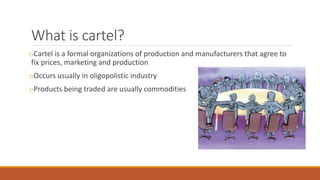
oCartel is a formal organizations of production and manufacturers that agree to
fix prices, marketing and production
oOccurs usually in oligopolistic industry
oProducts being traded are usually commodities
Types Of Cartels And Outcomes
Types
oPublics
oPrivate
Outcomes
oPrice fixing
oMarket shares
oAllocation of territories
Condition for cartels success and failure
oLow organisation cost
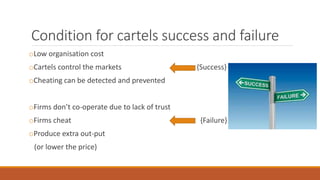
oCartels control the markets {Success}
oCheating can be detected and prevented
oFirms don’t co-operate due to lack of trust
oFirms cheat {Failure}
oProduce extra out-put
(or lower the price)
Cartels tends to be unstable over a long
period of time. WHY?
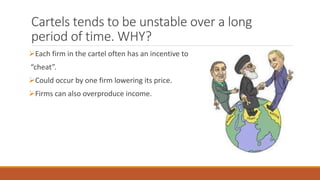
Each firm in the cartel often has an incentive to
“cheat”.
Could occur by one firm lowering its price.
Firms can also overproduce income.
Aviation cartel
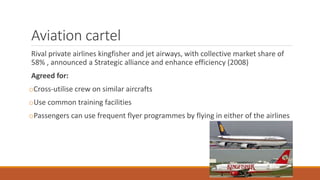
Rival private airlines kingfisher and jet airways, with collective market share of
58% , announced a Strategic alliance and enhance efficiency (2008)
Agreed for:
oCross-utilise crew on similar aircrafts
oUse common training facilities
oPassengers can use frequent flyer programmes by flying in either of the airlines
Lysine cartel
oTook place in 1990’s
oArcher Daniels Midland (ADM) and Asian companies involved
oPrice increased by 70% in the market with in a short span of 3 months
oADM was fined heavily with $70millions and other Asian companies with $21
million
Conclusion
oCartels agreements are economically unstable.
oOnce a cartel is broken, the incentives to form the cartel return and the cartel maybe
re-formed.
oInternational and national cartels are hard to burst
oCartels do not abolish competition, but regulate it.

Cartels

  • 1.
  • 2.
    What is cartel? oCartelis a formal organizations of production and manufacturers that agree to fix prices, marketing and production oOccurs usually in oligopolistic industry oProducts being traded are usually commodities
  • 3.
    Types Of CartelsAnd Outcomes Types oPublics oPrivate Outcomes oPrice fixing oMarket shares oAllocation of territories
  • 4.
    Condition for cartelssuccess and failure oLow organisation cost oCartels control the markets {Success} oCheating can be detected and prevented oFirms don’t co-operate due to lack of trust oFirms cheat {Failure} oProduce extra out-put (or lower the price)
  • 5.
    Cartels tends tobe unstable over a long period of time. WHY? Each firm in the cartel often has an incentive to “cheat”. Could occur by one firm lowering its price. Firms can also overproduce income.
  • 6.
    Aviation cartel Rival privateairlines kingfisher and jet airways, with collective market share of 58% , announced a Strategic alliance and enhance efficiency (2008) Agreed for: oCross-utilise crew on similar aircrafts oUse common training facilities oPassengers can use frequent flyer programmes by flying in either of the airlines
  • 7.
    Lysine cartel oTook placein 1990’s oArcher Daniels Midland (ADM) and Asian companies involved oPrice increased by 70% in the market with in a short span of 3 months oADM was fined heavily with $70millions and other Asian companies with $21 million
  • 8.
    Conclusion oCartels agreements areeconomically unstable. oOnce a cartel is broken, the incentives to form the cartel return and the cartel maybe re-formed. oInternational and national cartels are hard to burst oCartels do not abolish competition, but regulate it.