© 2010 Pearson Education, Inc.
Carbohydrates,
Sugars, and
Starches
© 2010 Pearson Education, Inc.
What Are Carbohydrates?
 Produced by plants during photosynthesis
 After eating plant foods, humans convert the carbohydrates
into glucose
 Glucose
• Most abundant carbohydrate
• Preferred source of energy for the blood, brain, and
nervous system
© 2010 Pearson Education, Inc.
Classification of Carbohydrates
 Simple carbohydrates
• Monosaccharide- one sugar
• Disaccharide- 2 sugars
• Perceived as sweeter than complex carbohydrates
- Mixes with saliva and reacts with taste buds
 Oligosaccharides 3-10 sugars
 Complex carbohydrates
• Polysaccharides
© 2010 Pearson Education, Inc.
Monosaccharides
 Three nutritionally important monosaccharides
• Glucose
• Fructose
• Galactose
© 2010 Pearson Education, Inc.
Monosaccharides
 Glucose
• Most abundant monosaccharide in the body
- Is the preferred and main source of energy for the
brain and red blood cells
• Part of every disaccharide
© 2010 Pearson Education, Inc.
Monosaccharides
 Fructose
• Sweetest of natural sugars
• Found abundantly in fruits
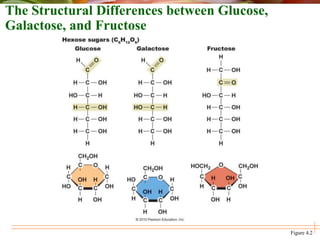
Figure 4.2
The Structural Differences between Glucose,
Galactose, and Fructose
© 2010 Pearson Education, Inc.
Disaccharides
 Three Disaccharides
• Sucrose Table sugar
• Lactose found in milk
• Maltose
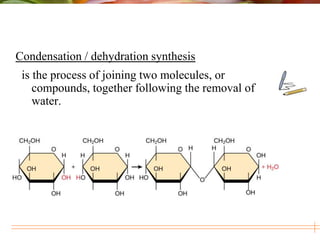
Figure 4.3
Monosaccharides Link to Form Disaccharides
Condensation / dehydration synthesis
is the process of joining two molecules, or
compounds, together following the removal of
water.
Hydrolysis - Breaking down large molecules into smaller
molecules.
(reverse reaction of condensation )
© 2010 Pearson Education, Inc.
Polysaccharides
 Starch
• Plants store glucose in chains of starch
© 2010 Pearson Education, Inc.
Polysaccharides
 Glycogen
• Storage form of glucose in animals
• Stored in liver and muscle
• Long, branched chains of glucose
© 2010 Pearson Education, Inc.
Natural versus Added Sugar
 Naturally occurring sugar
• Sugars such as fructose and lactose found naturally in
foods
• Tend to be nutrient dense
 Added sugar
• Sugars added to processed foods and sweets
• Empty calories
Figure 4.18
Slices of an Orange versus Orange Slices
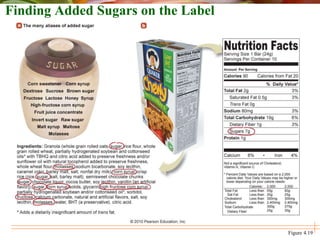
Figure 4.19
Finding Added Sugars on the Label
Figure 4.20
Americans Drink the Majority of Their Sugar

carbohydrates ppt.ppt

  • 1.
    © 2010 PearsonEducation, Inc. Carbohydrates, Sugars, and Starches
  • 2.
    © 2010 PearsonEducation, Inc. What Are Carbohydrates?  Produced by plants during photosynthesis  After eating plant foods, humans convert the carbohydrates into glucose  Glucose • Most abundant carbohydrate • Preferred source of energy for the blood, brain, and nervous system
  • 3.
    © 2010 PearsonEducation, Inc. Classification of Carbohydrates  Simple carbohydrates • Monosaccharide- one sugar • Disaccharide- 2 sugars • Perceived as sweeter than complex carbohydrates - Mixes with saliva and reacts with taste buds  Oligosaccharides 3-10 sugars  Complex carbohydrates • Polysaccharides
  • 4.
    © 2010 PearsonEducation, Inc. Monosaccharides  Three nutritionally important monosaccharides • Glucose • Fructose • Galactose
  • 5.
    © 2010 PearsonEducation, Inc. Monosaccharides  Glucose • Most abundant monosaccharide in the body - Is the preferred and main source of energy for the brain and red blood cells • Part of every disaccharide
  • 6.
    © 2010 PearsonEducation, Inc. Monosaccharides  Fructose • Sweetest of natural sugars • Found abundantly in fruits
  • 7.
    Figure 4.2 The StructuralDifferences between Glucose, Galactose, and Fructose
  • 8.
    © 2010 PearsonEducation, Inc. Disaccharides  Three Disaccharides • Sucrose Table sugar • Lactose found in milk • Maltose
  • 9.
    Figure 4.3 Monosaccharides Linkto Form Disaccharides
  • 10.
    Condensation / dehydrationsynthesis is the process of joining two molecules, or compounds, together following the removal of water.
  • 11.
    Hydrolysis - Breakingdown large molecules into smaller molecules. (reverse reaction of condensation )
  • 12.
    © 2010 PearsonEducation, Inc. Polysaccharides  Starch • Plants store glucose in chains of starch
  • 13.
    © 2010 PearsonEducation, Inc. Polysaccharides  Glycogen • Storage form of glucose in animals • Stored in liver and muscle • Long, branched chains of glucose
  • 14.
    © 2010 PearsonEducation, Inc.
  • 15.
    © 2010 PearsonEducation, Inc. Natural versus Added Sugar  Naturally occurring sugar • Sugars such as fructose and lactose found naturally in foods • Tend to be nutrient dense  Added sugar • Sugars added to processed foods and sweets • Empty calories
  • 16.
    Figure 4.18 Slices ofan Orange versus Orange Slices
  • 17.
    Figure 4.19 Finding AddedSugars on the Label
  • 18.
    Figure 4.20 Americans Drinkthe Majority of Their Sugar