1
Industrialize Construction
a paradigm shift
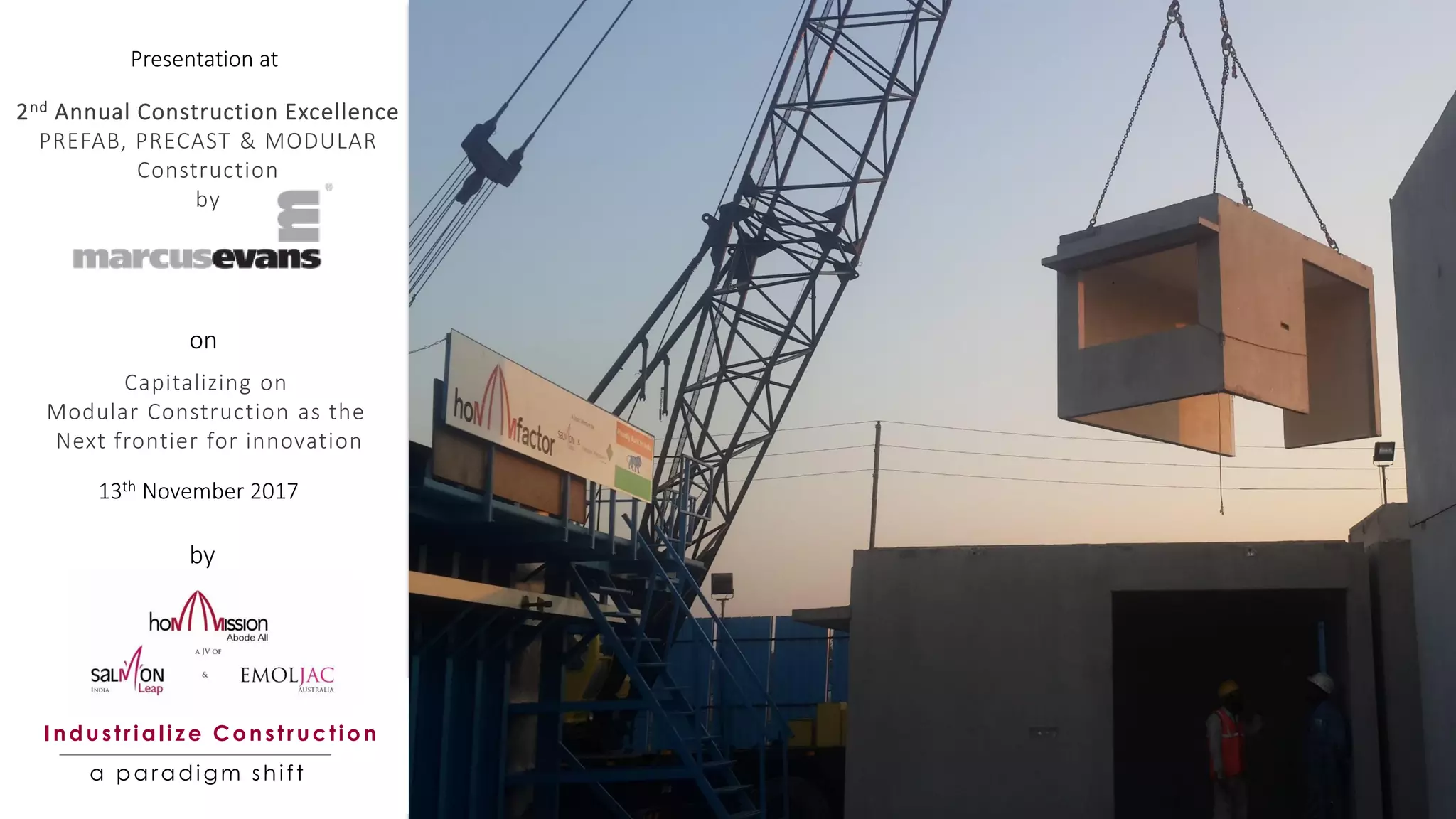
Presentation at
Capitalizing on
Modular Construction as the
Next frontier for innovation
on
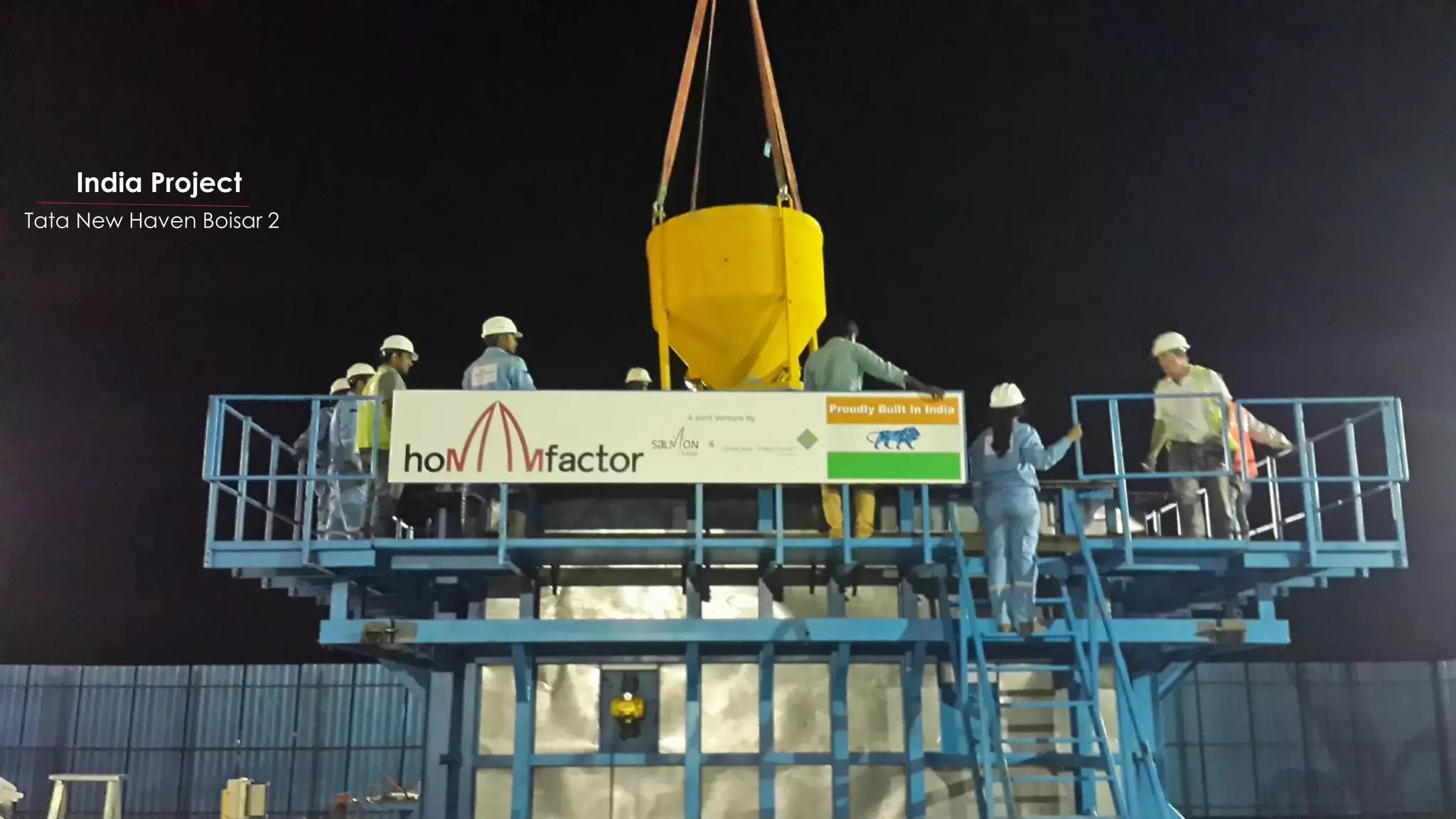
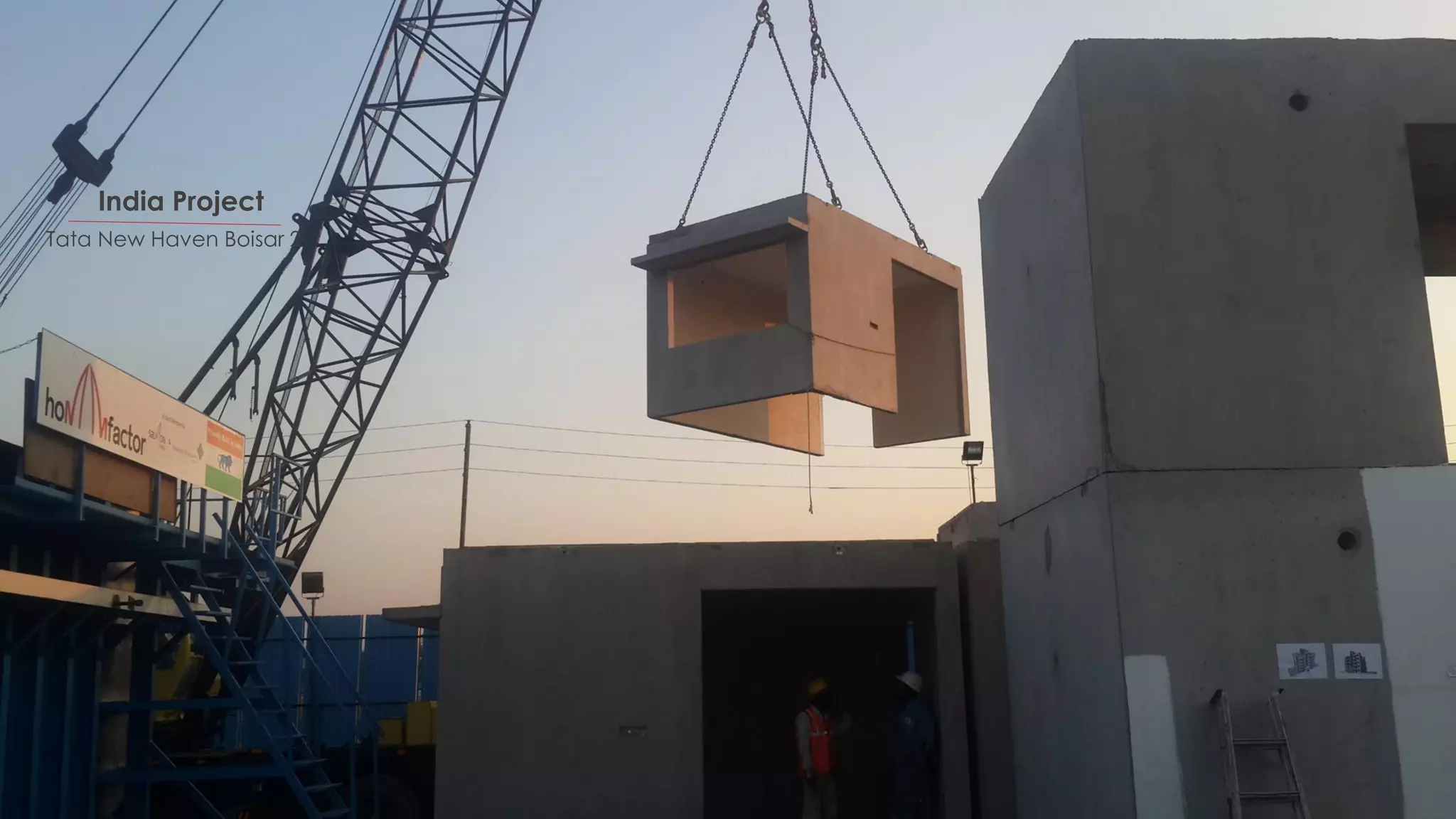
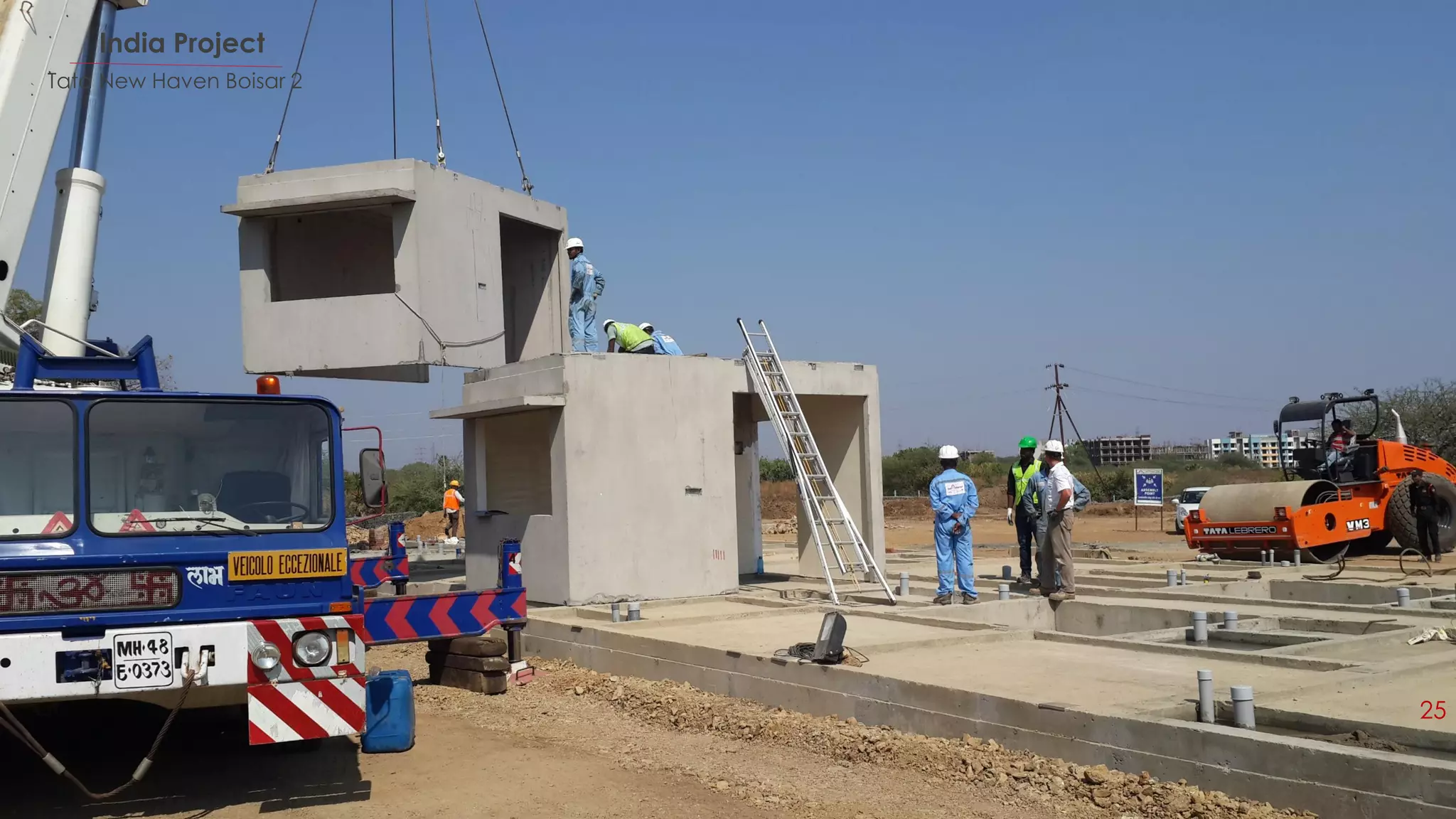
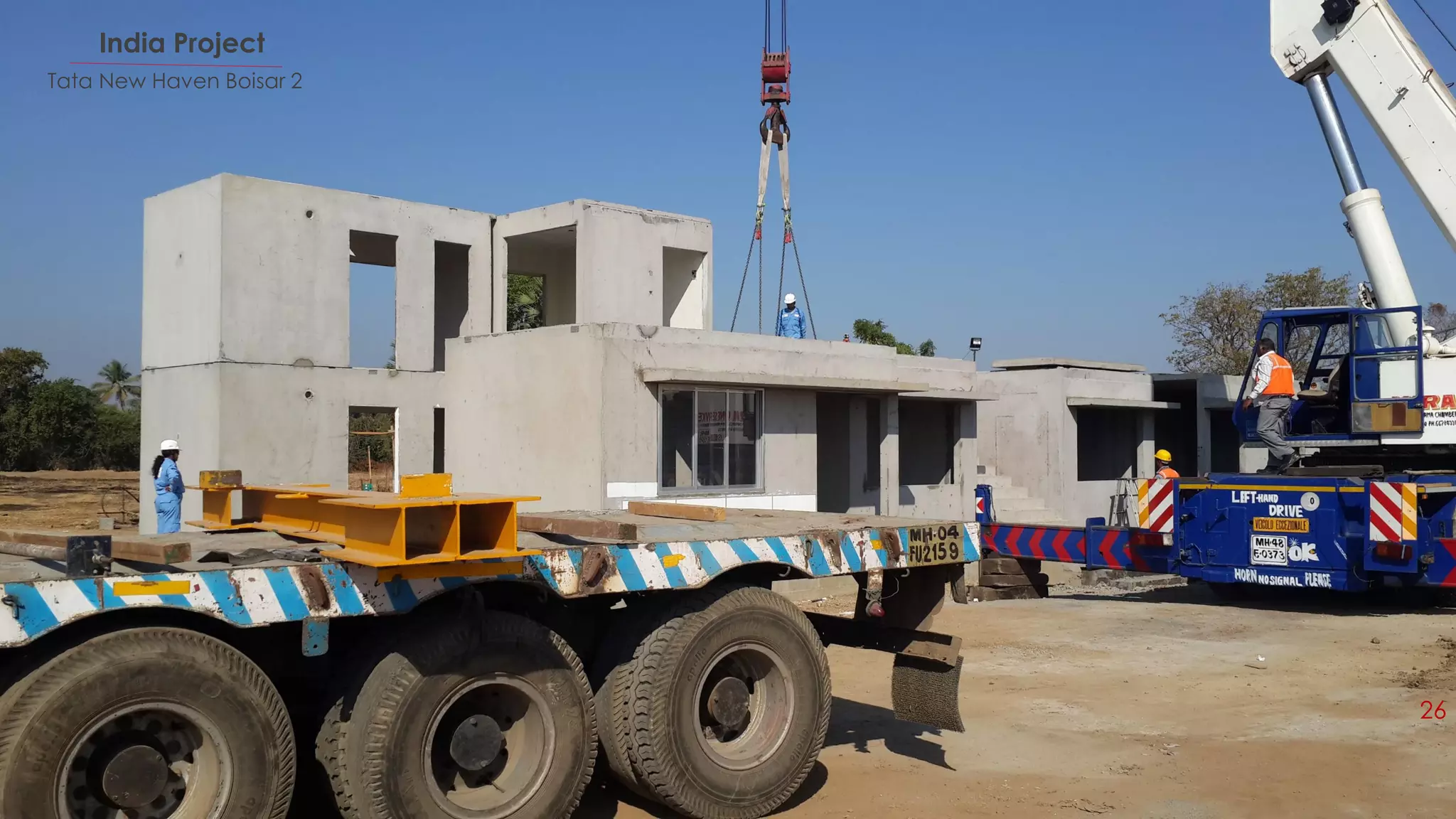
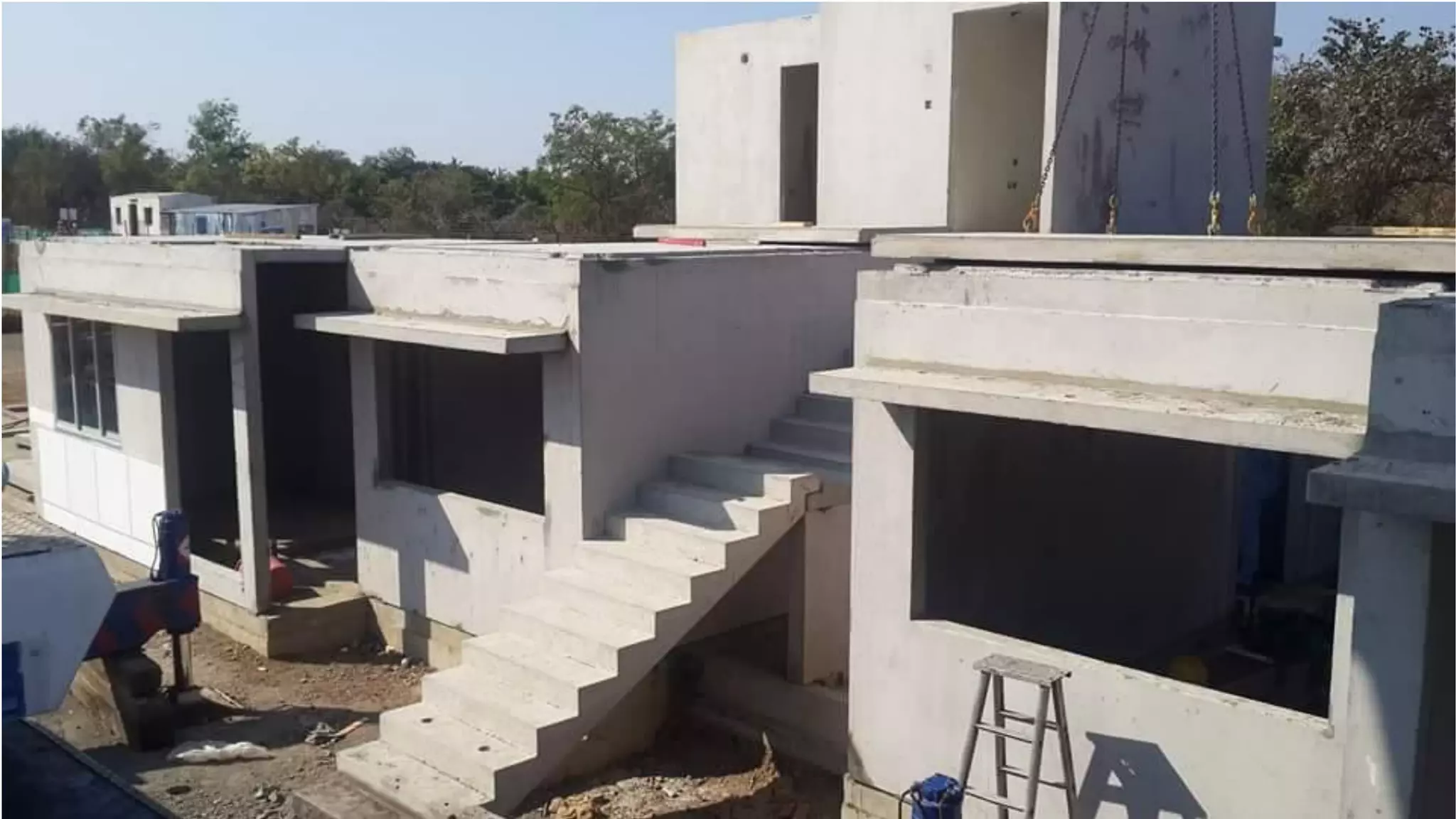
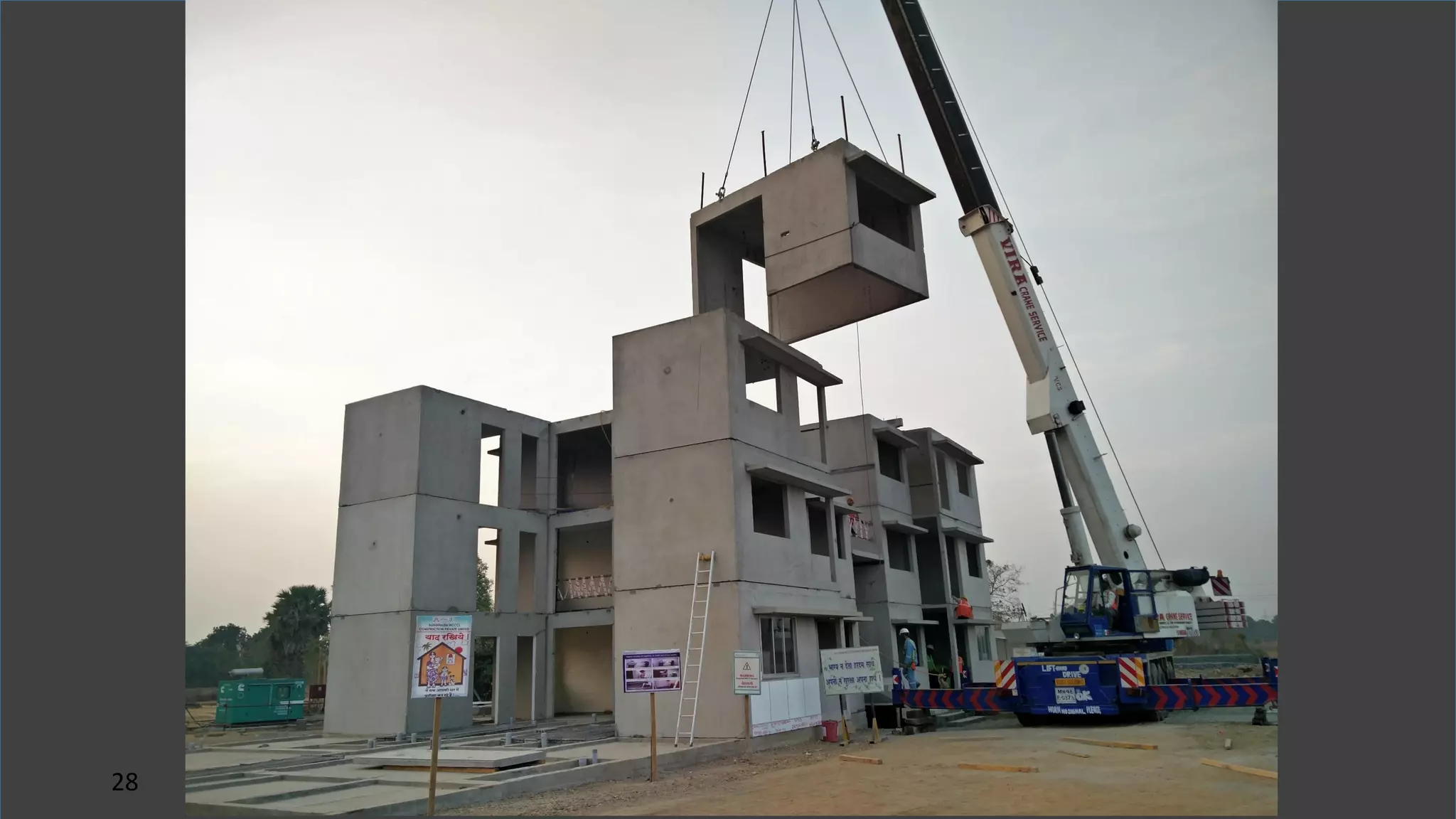
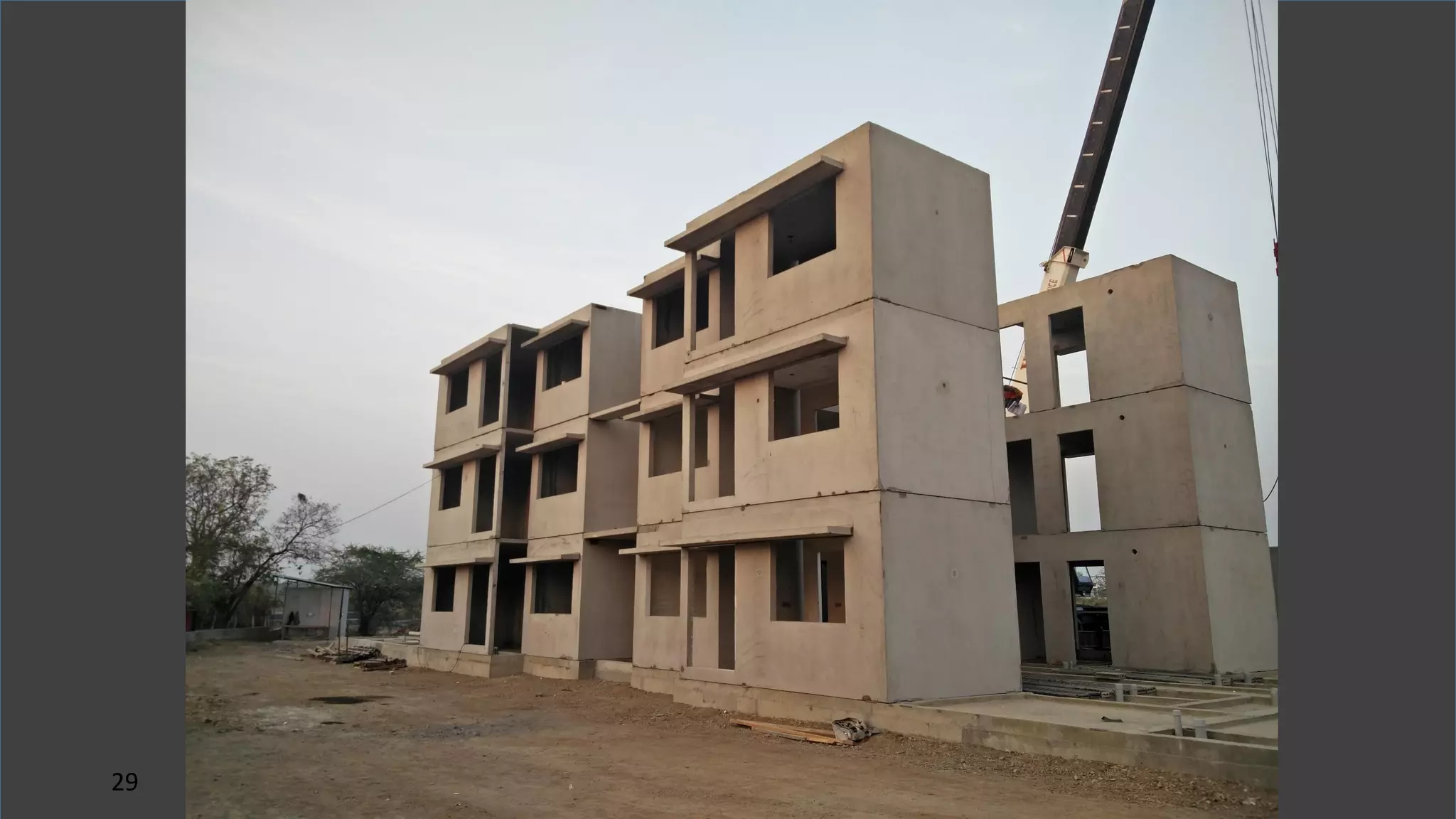
2nd Annual Construction Excellence
PREFAB, PRECAST & MODULAR
Construction
by
by
13th November 2017
Prefab
Precast
Modular Buildings
2nd Annual Construction Excellence
on
2
3
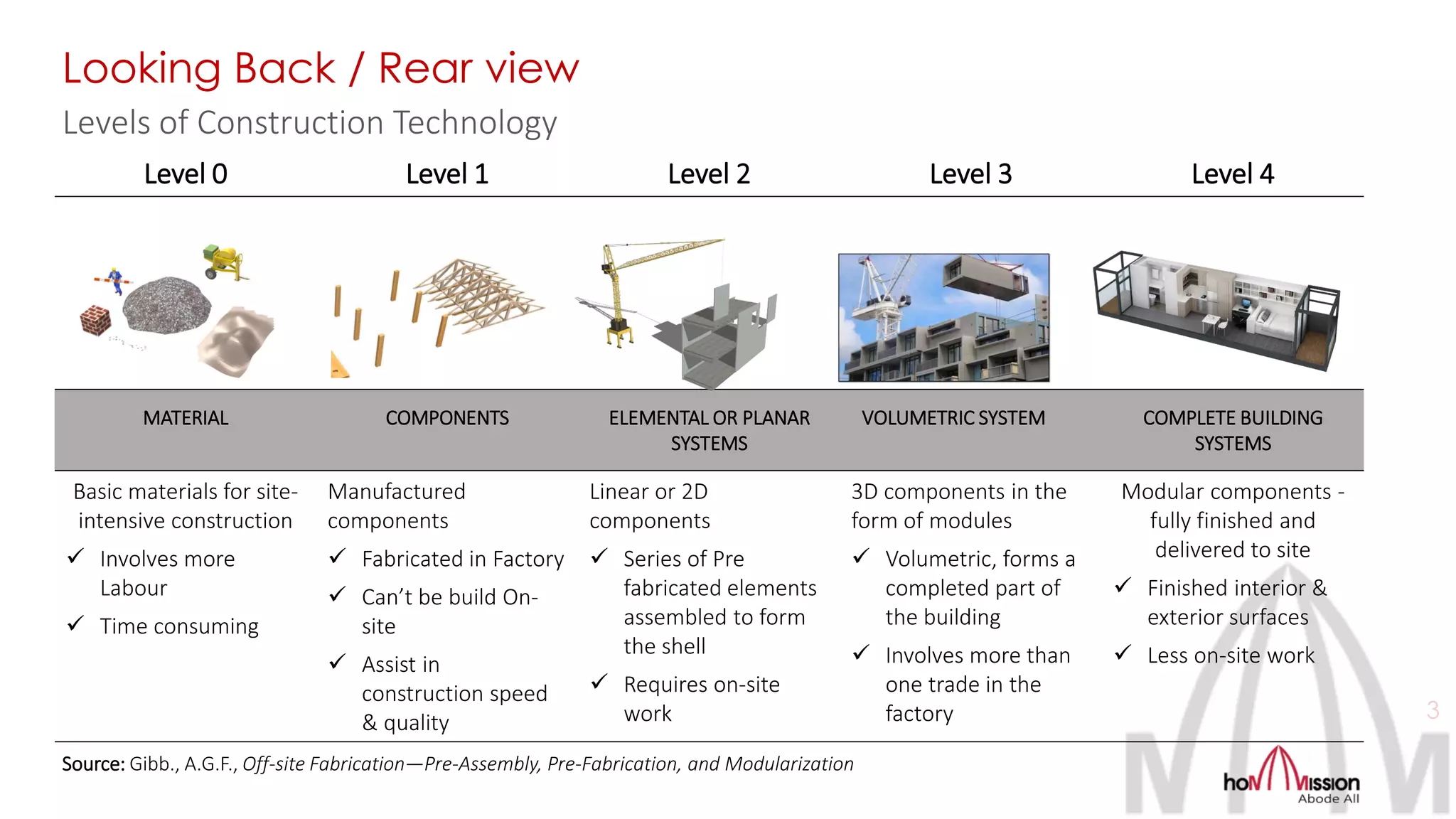
Levels of Construction Technology
Looking Back / Rear view
Level 0 Level 1 Level 2 Level 3 Level 4
MATERIAL COMPONENTS ELEMENTAL OR PLANAR
SYSTEMS
VOLUMETRIC SYSTEM COMPLETE BUILDING
SYSTEMS
Basic materials for site-
intensive construction
✓ Involves more
Labour
✓ Time consuming
Manufactured
components
✓ Fabricated in Factory
✓ Can’t be build On-
site
✓ Assist in
construction speed
& quality
Linear or 2D
components
✓ Series of Pre
fabricated elements
assembled to form
the shell
✓ Requires on-site
work
3D components in the
form of modules
✓ Volumetric, forms a
completed part of
the building
✓ Involves more than
one trade in the
factory
Modular components -
fully finished and
delivered to site
✓ Finished interior &
exterior surfaces
✓ Less on-site work
Source: Gibb., A.G.F., Off-site Fabrication—Pre-Assembly, Pre-Fabrication, and Modularization
4
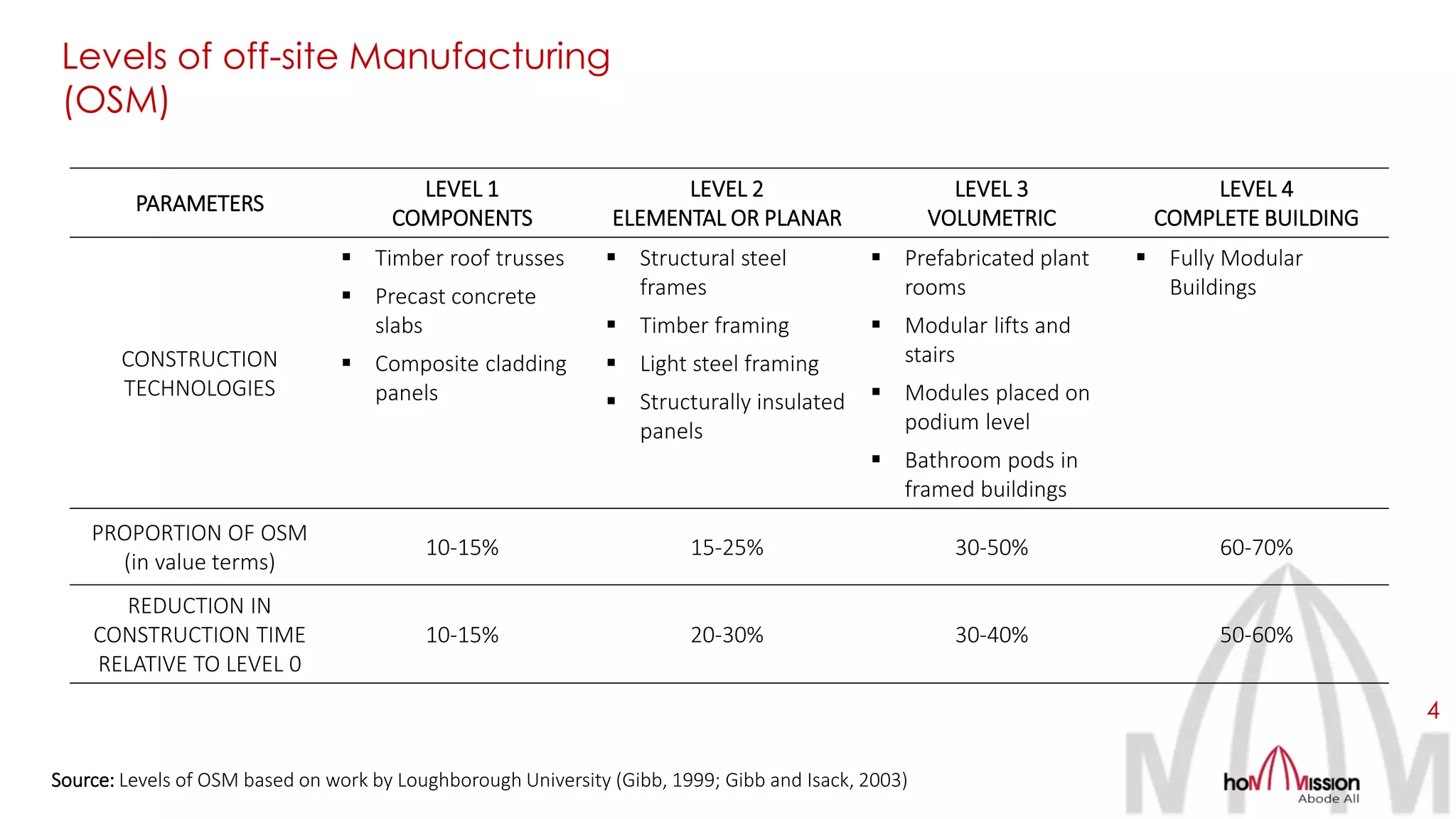
Levels of off-site Manufacturing
(OSM)
PARAMETERS
LEVEL 1
COMPONENTS
LEVEL 2
ELEMENTAL OR PLANAR
LEVEL 3
VOLUMETRIC
LEVEL 4
COMPLETE BUILDING
CONSTRUCTION
TECHNOLOGIES
▪ Timber roof trusses
▪ Precast concrete
slabs
▪ Composite cladding
panels
▪ Structural steel
frames
▪ Timber framing
▪ Light steel framing
▪ Structurally insulated
panels
▪ Prefabricated plant
rooms
▪ Modular lifts and
stairs
▪ Modules placed on
podium level
▪ Bathroom pods in
framed buildings
▪ Fully Modular
Buildings
PROPORTION OF OSM
(in value terms)
10-15% 15-25% 30-50% 60-70%
REDUCTION IN
CONSTRUCTION TIME
RELATIVE TO LEVEL 0
10-15% 20-30% 30-40% 50-60%
Source: Levels of OSM based on work by Loughborough University (Gibb, 1999; Gibb and Isack, 2003)
MODULAR CONSTRUCTION
Modular BENEFITS
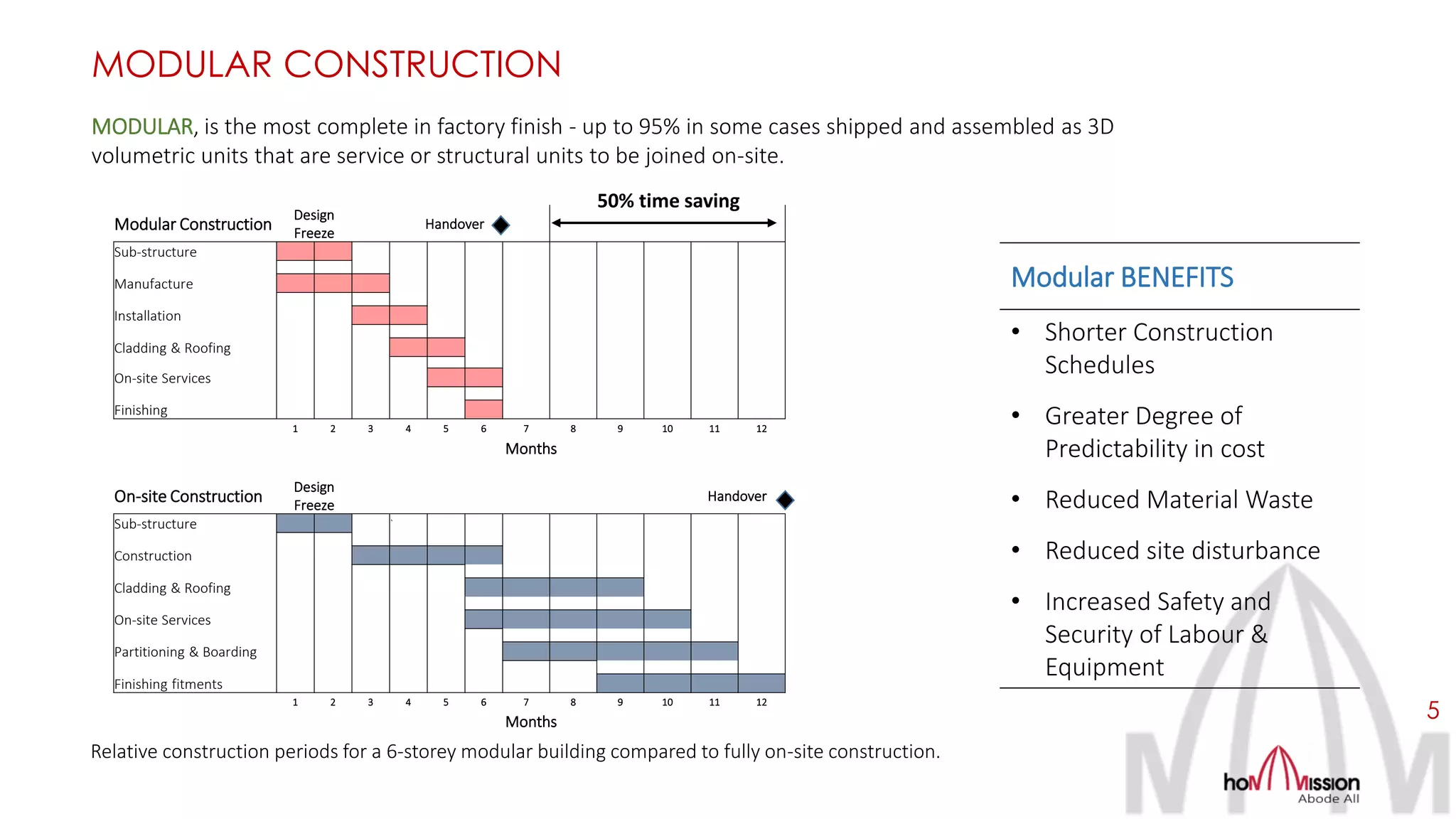
• Shorter Construction
Schedules
• Greater Degree of
Predictability in cost
• Reduced Material Waste
• Reduced site disturbance
• Increased Safety and
Security of Labour &
Equipment
MODULAR, is the most complete in factory finish - up to 95% in some cases shipped and assembled as 3D
volumetric units that are service or structural units to be joined on-site.
5
Modular Construction
Design
Freeze
Handover
Sub-structure
Manufacture
Installation
Cladding & Roofing
On-site Services
Finishing
1 2 3 4 5 6 7 8 9 10 11 12
Months
On-site Construction
Design
Freeze
Handover
Sub-structure `
Construction
Cladding & Roofing
On-site Services
Partitioning & Boarding
Finishing fitments
1 2 3 4 5 6 7 8 9 10 11 12
Months
Relative construction periods for a 6-storey modular building compared to fully on-site construction.
50% time saving
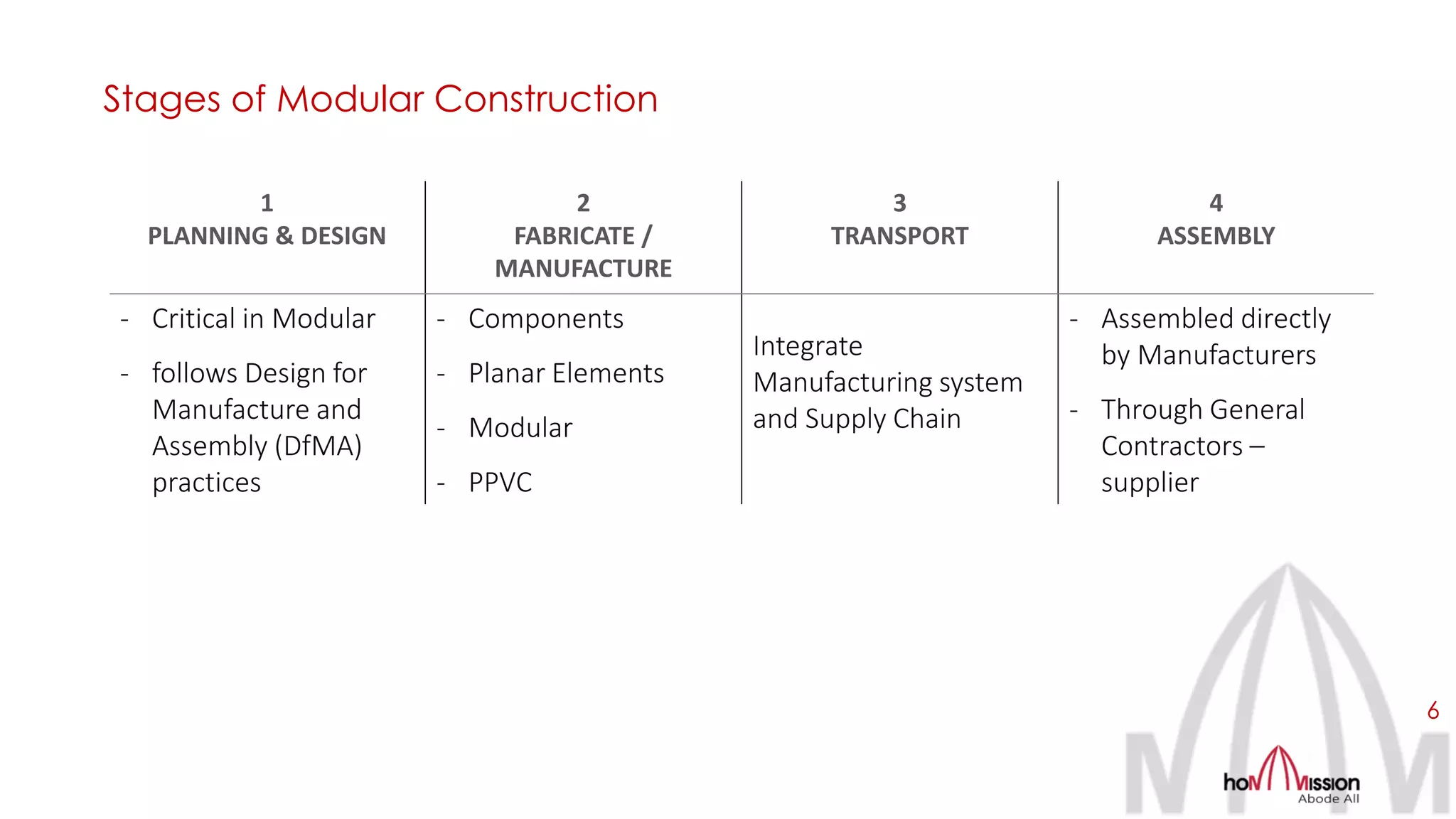
Stages of Modular Construction
1
PLANNING & DESIGN
2
FABRICATE /
MANUFACTURE
3
TRANSPORT
4
ASSEMBLY
- Critical in Modular
- follows Design for
Manufacture and
Assembly (DfMA)
practices
- Components
- Planar Elements
- Modular
- PPVC
Integrate
Manufacturing system
and Supply Chain
- Assembled directly
by Manufacturers
- Through General
Contractors –
supplier
6
7
Industrialize Indian housing
change the paradigm
by
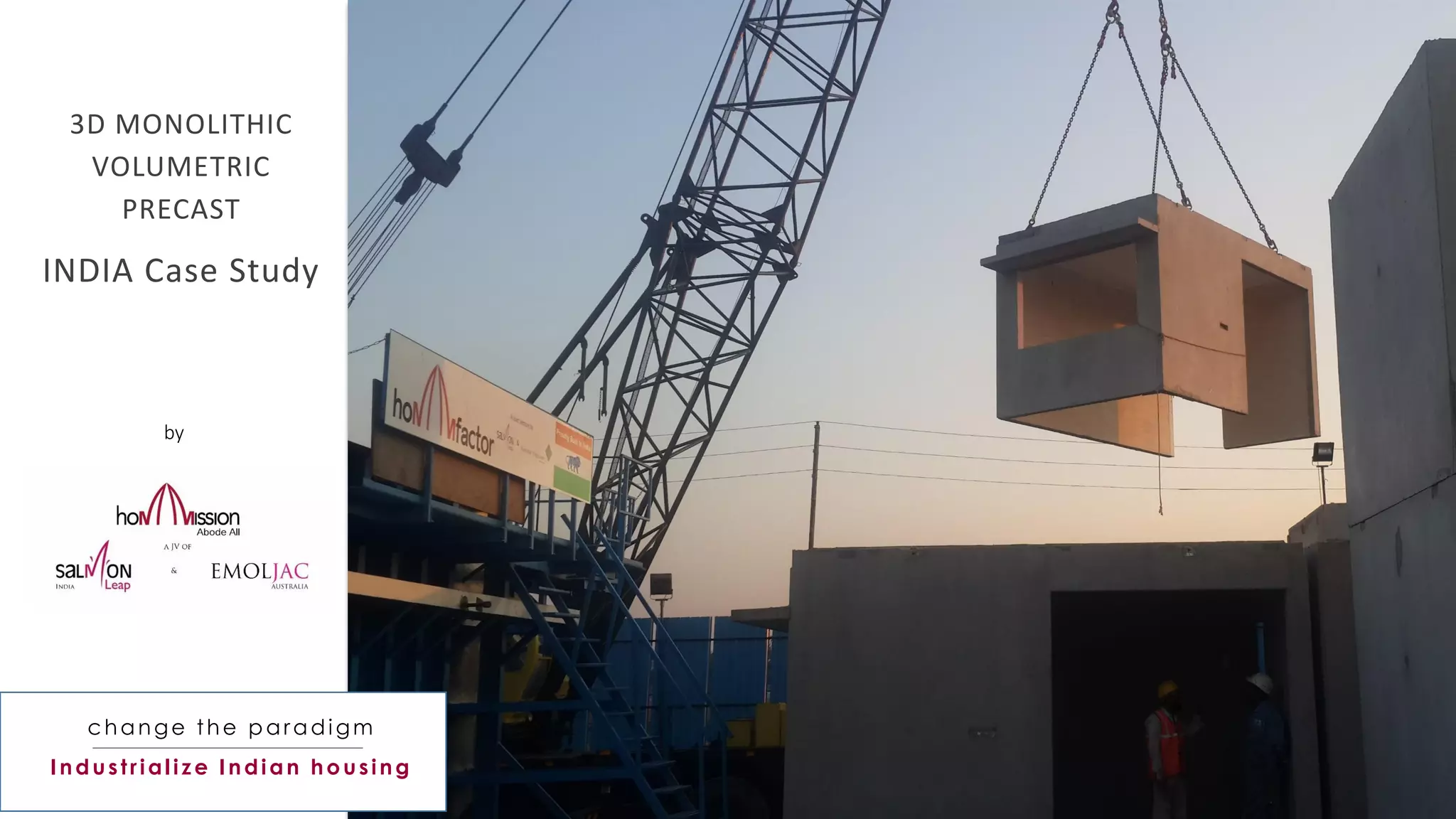
3D MONOLITHIC
VOLUMETRIC
PRECAST
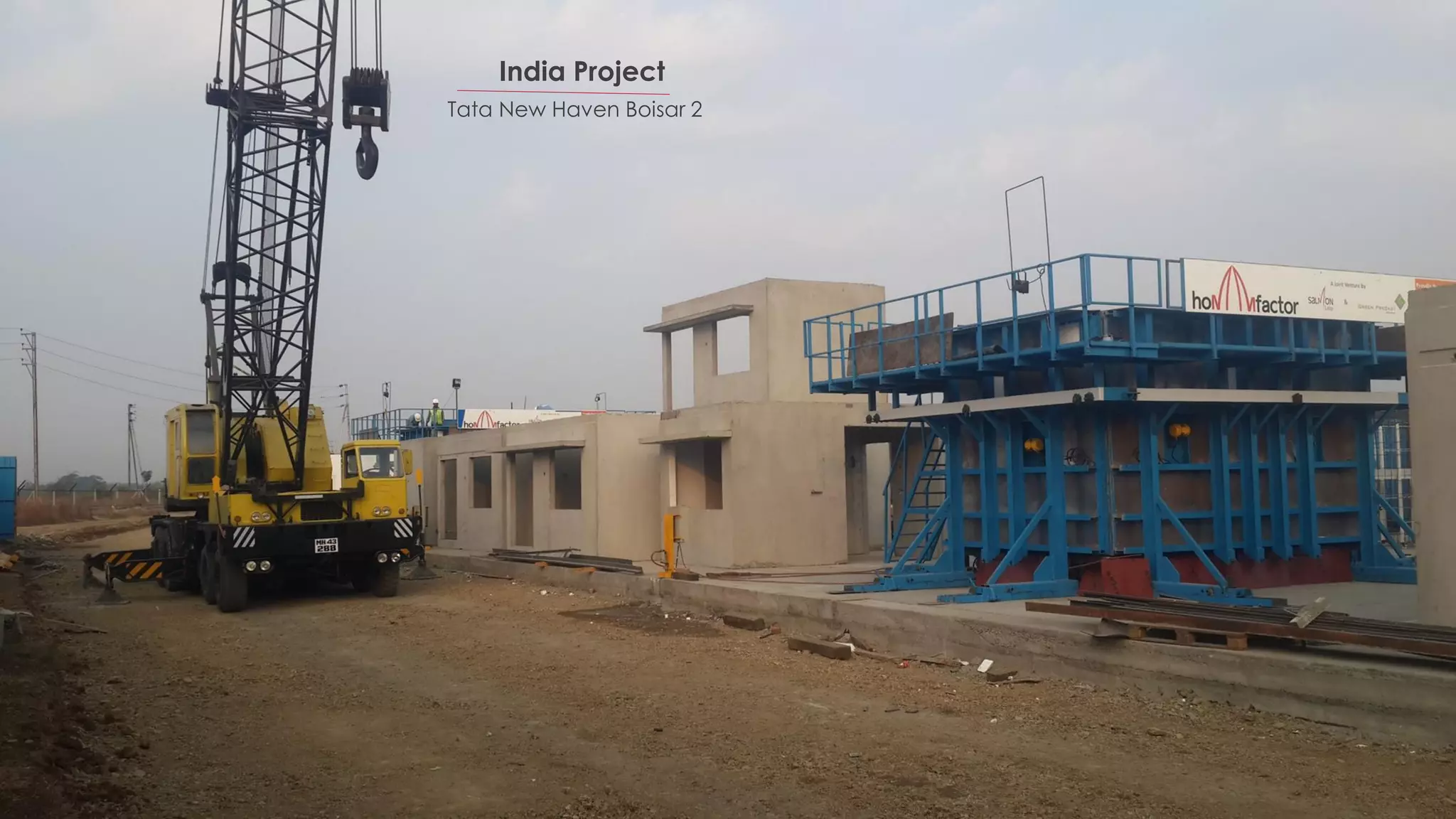
INDIA Case Study
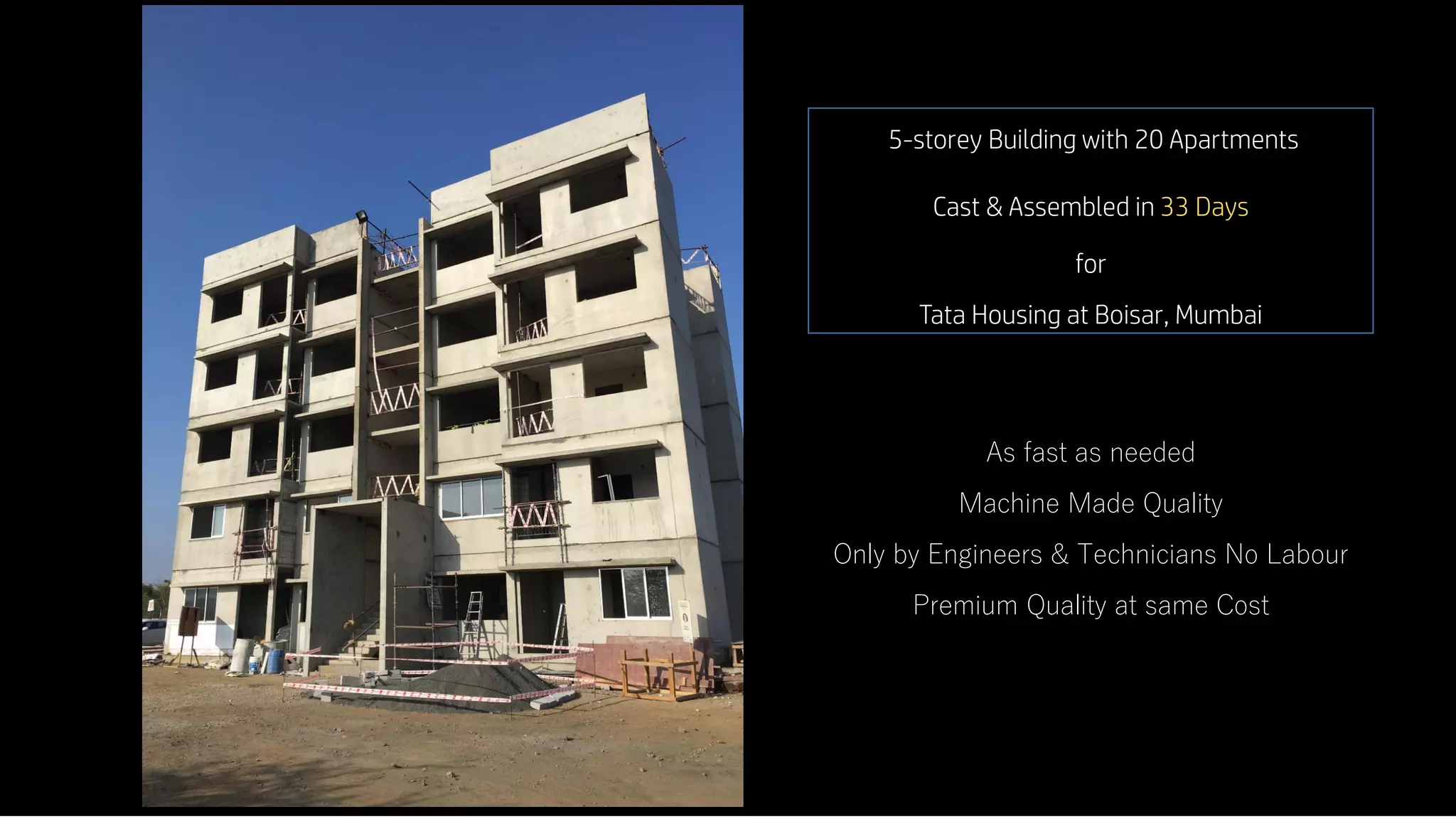
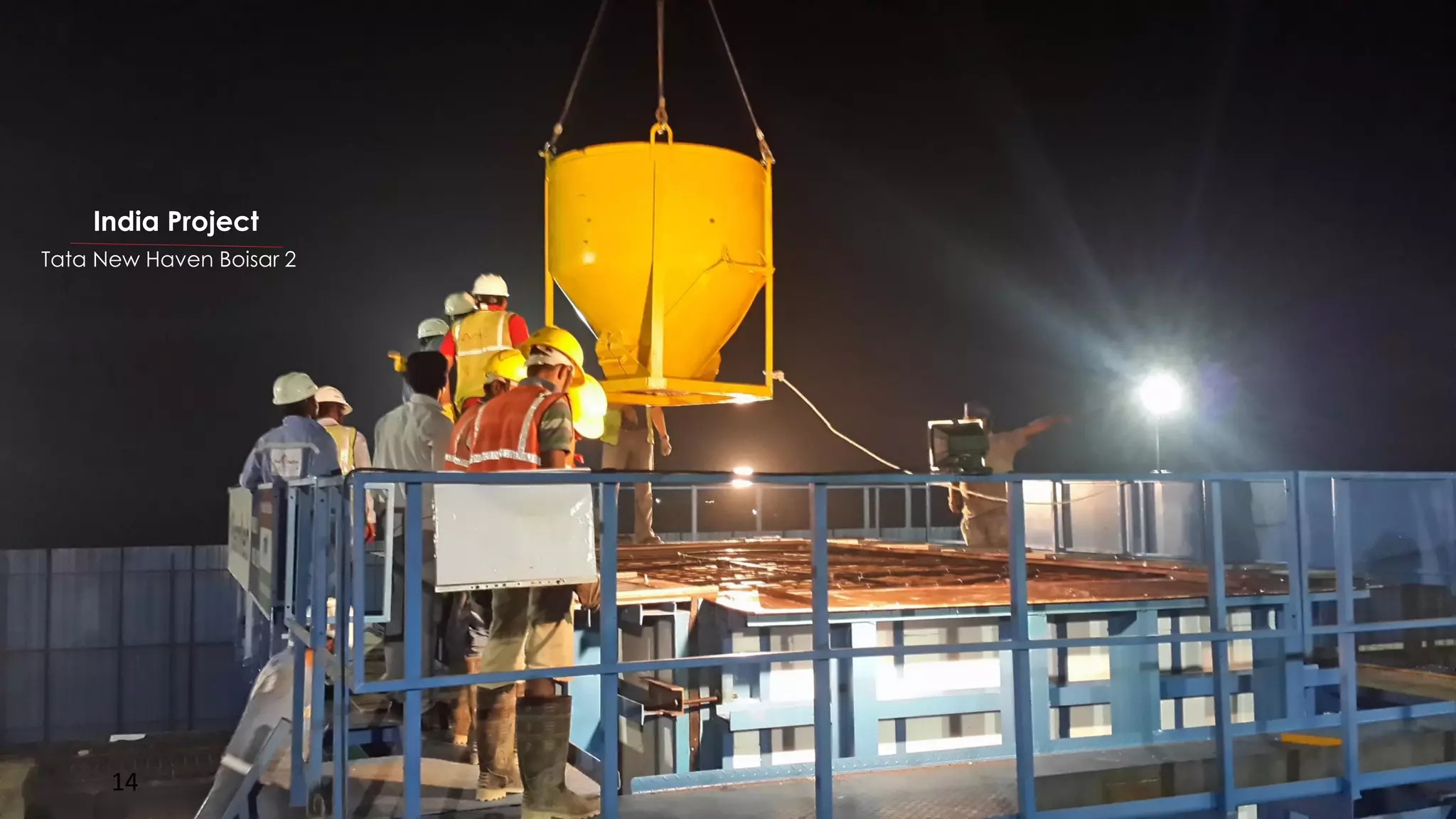
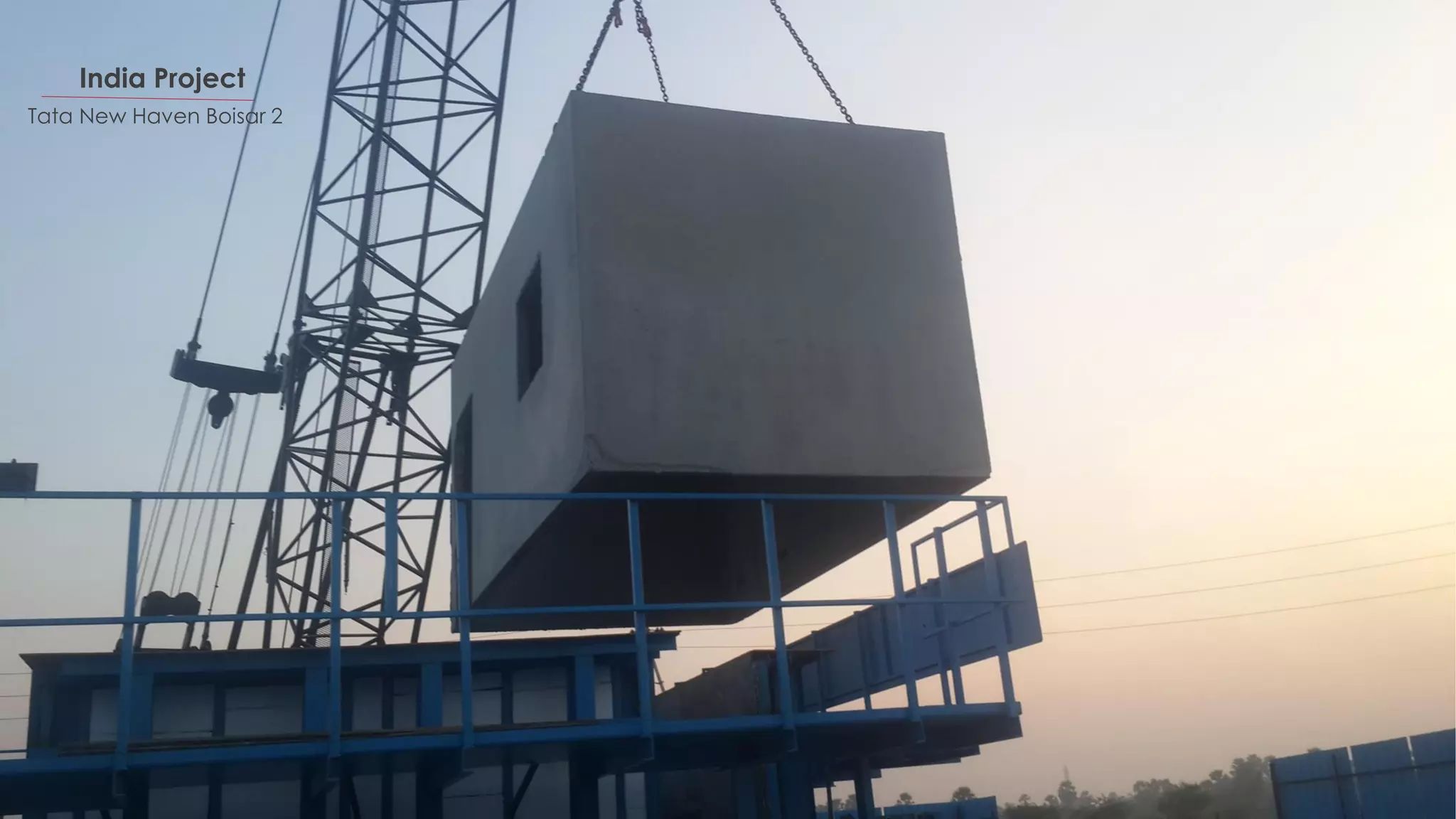
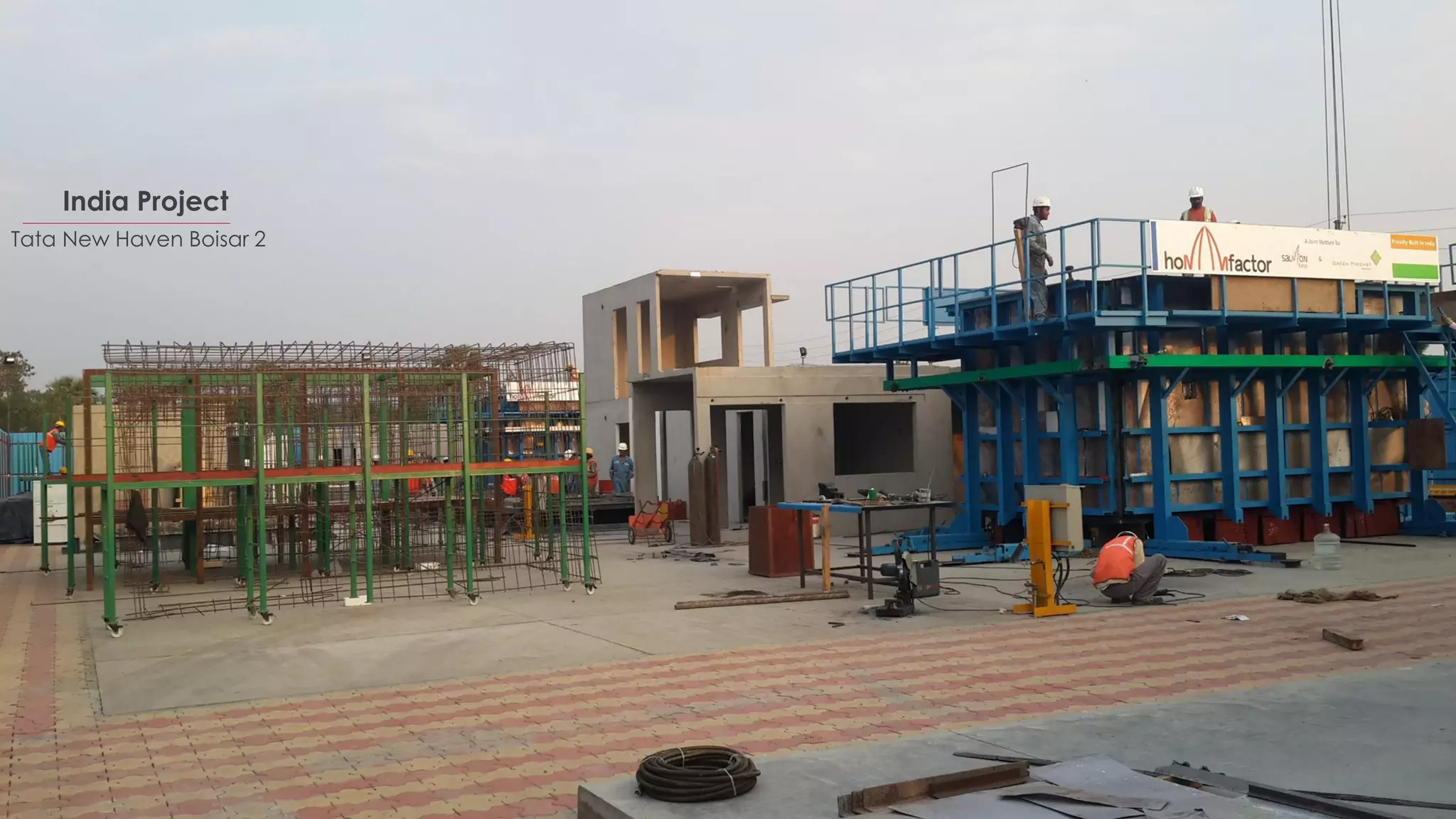
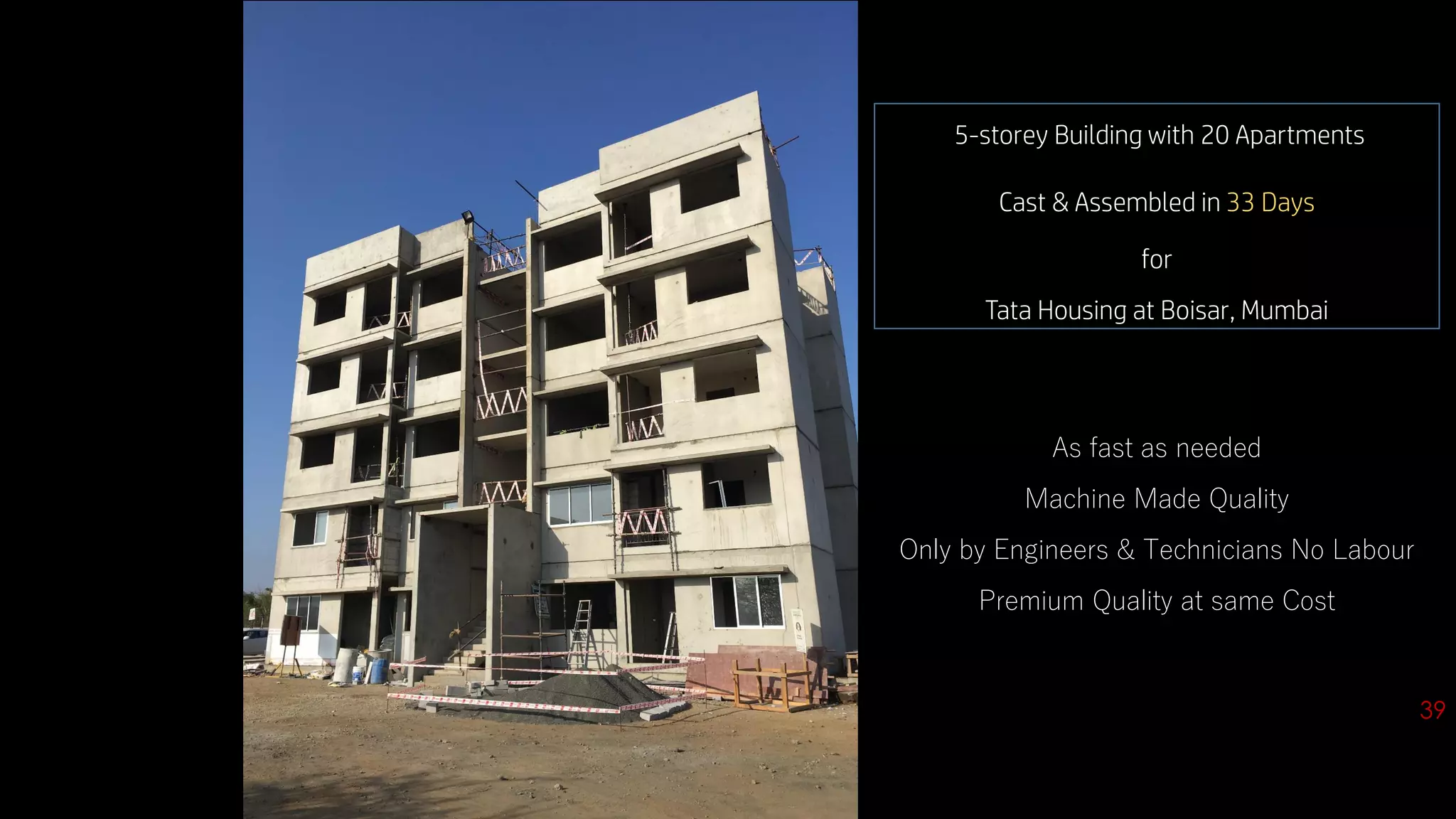
5-storey Building with 20 Apartments
Cast & Assembled in 33 Days
for
Tata Housing at Boisar, Mumbai
As fast as needed
Machine Made Quality
Only by Engineers & Technicians No Labour
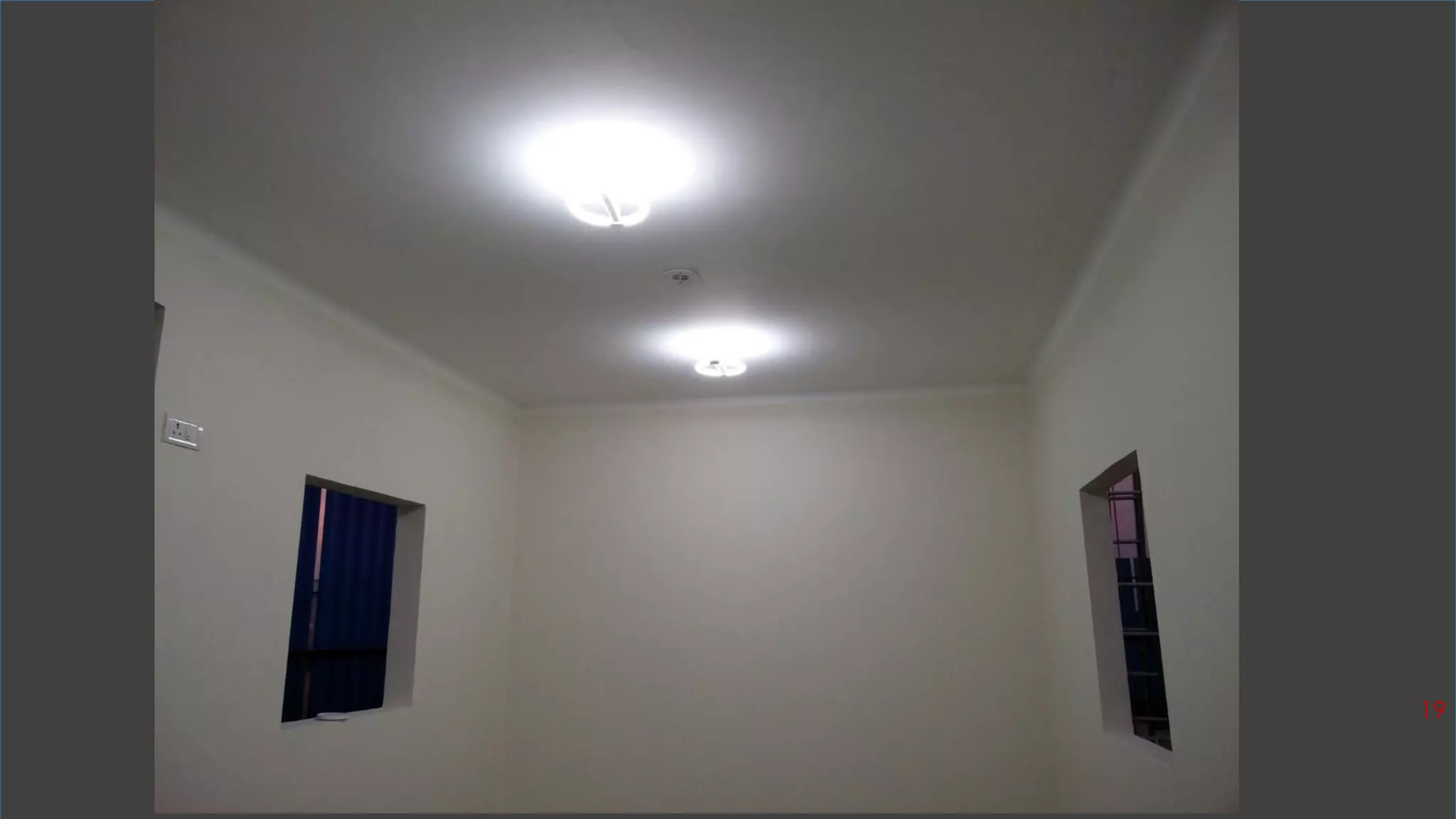
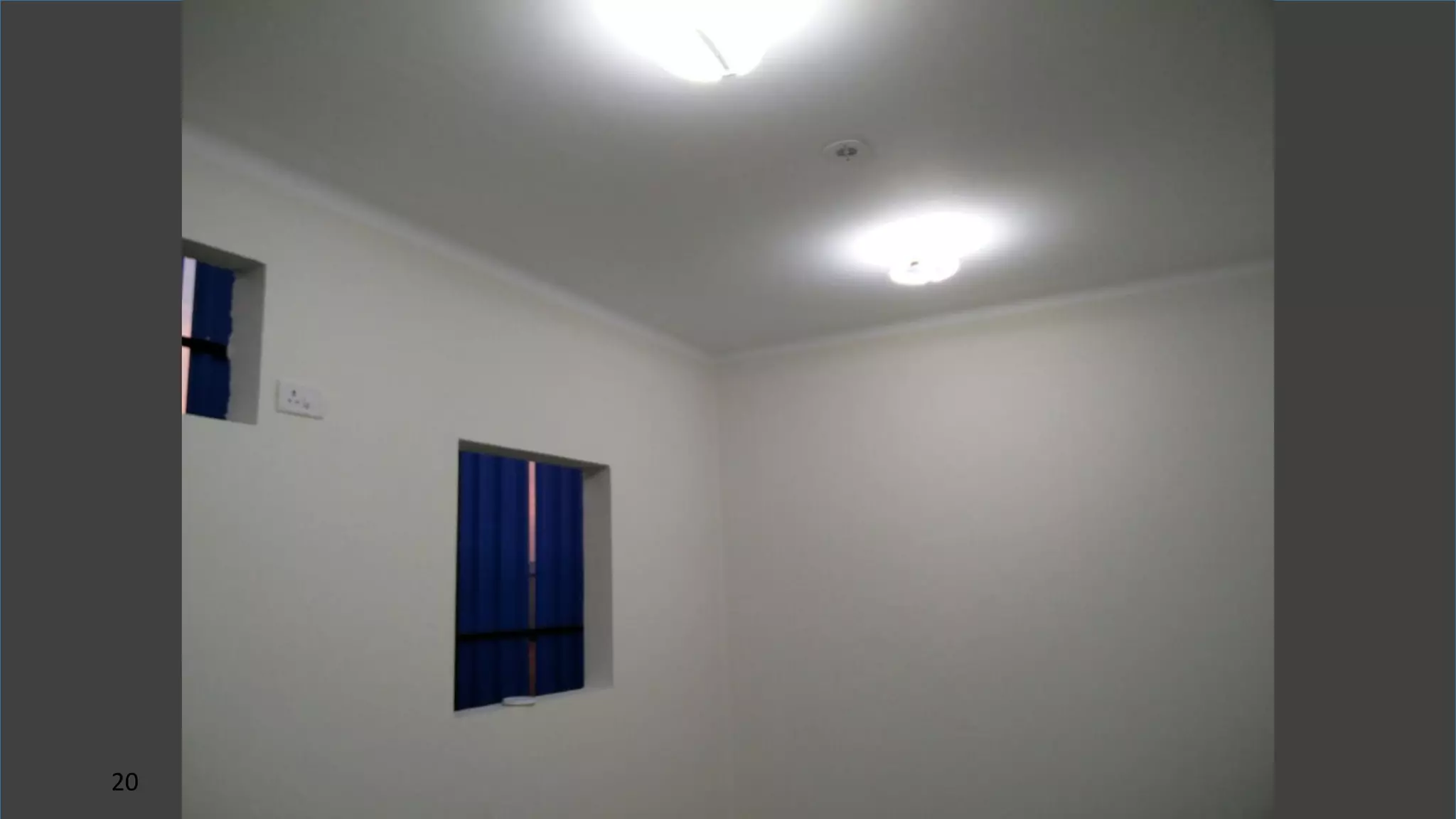
Premium Quality at same Cost
8 8
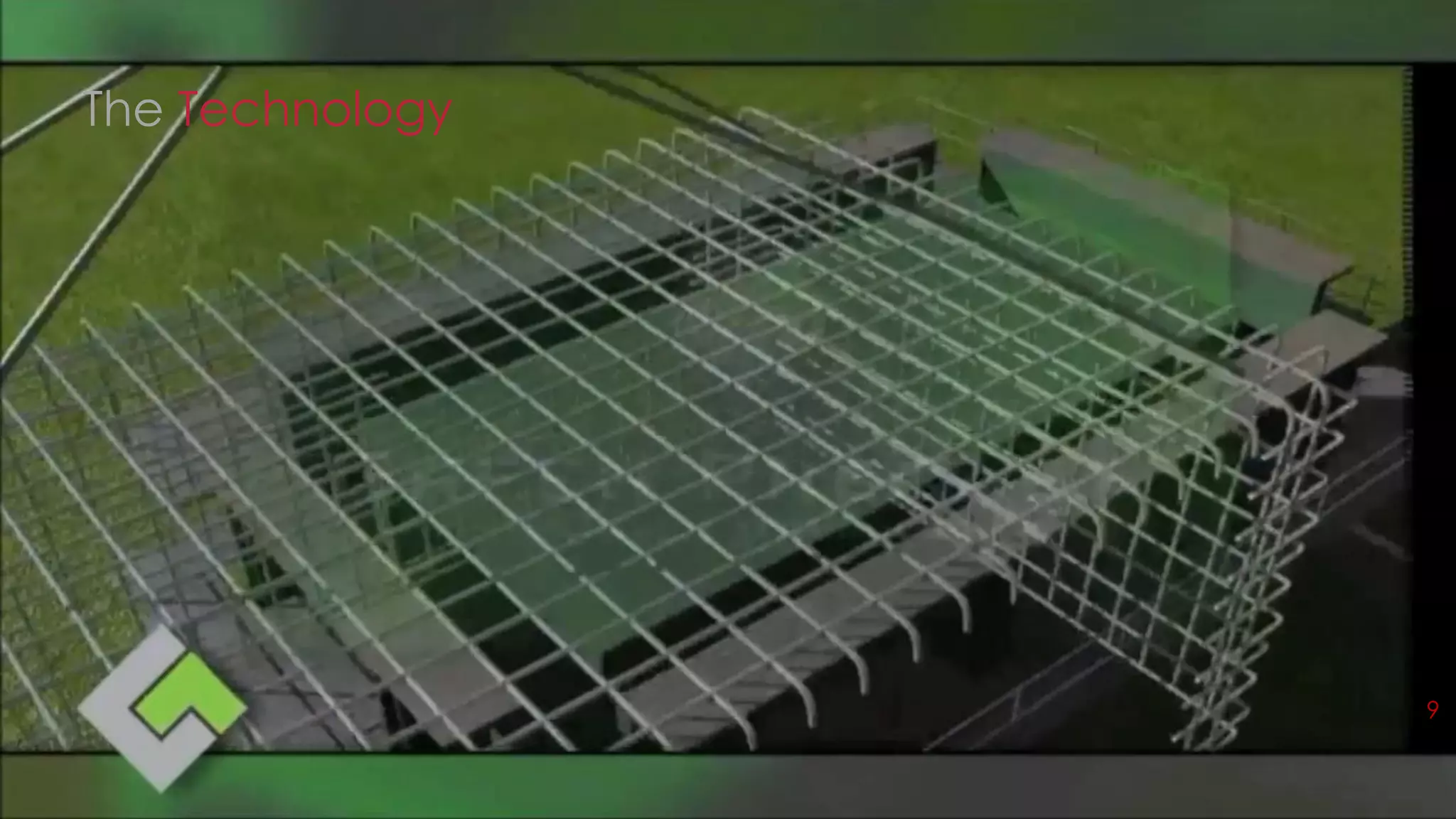
The Technology
9
highseismicload
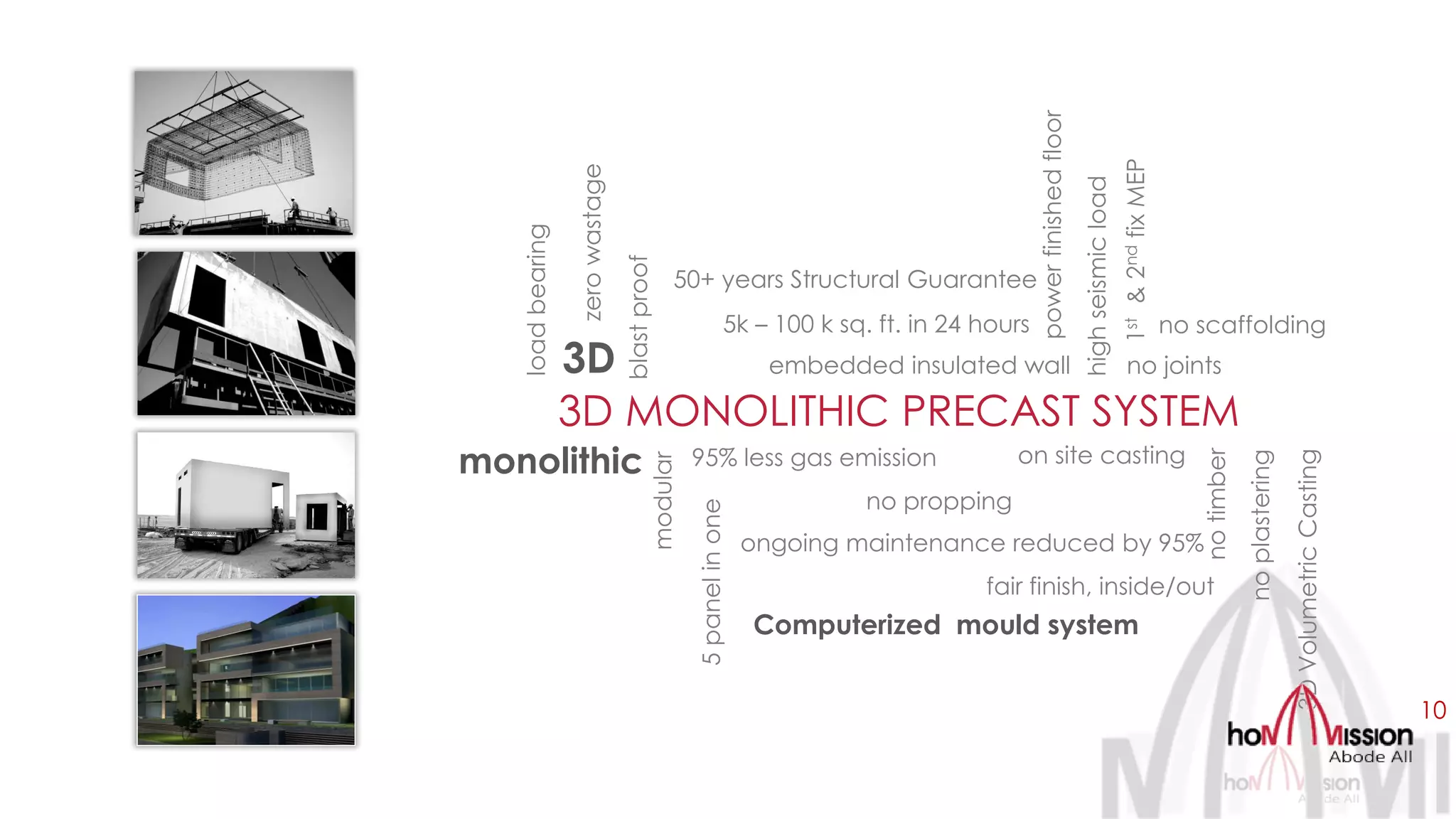
3D MONOLITHIC PRECAST SYSTEM
3D
monolithic
loadbearing
modular
5panelinone
no joints
blastproof
on site casting95% less gas emission
ongoing maintenance reduced by 95%
embedded insulated wall
zerowastage
notimber
no scaffolding
no propping
5k – 100 k sq. ft. in 24 hours
noplastering
1st&2ndfixMEP
fair finish, inside/out
powerfinishedfloor
50+ years Structural Guarantee
Computerized mould system
3DVolumetricCasting
10
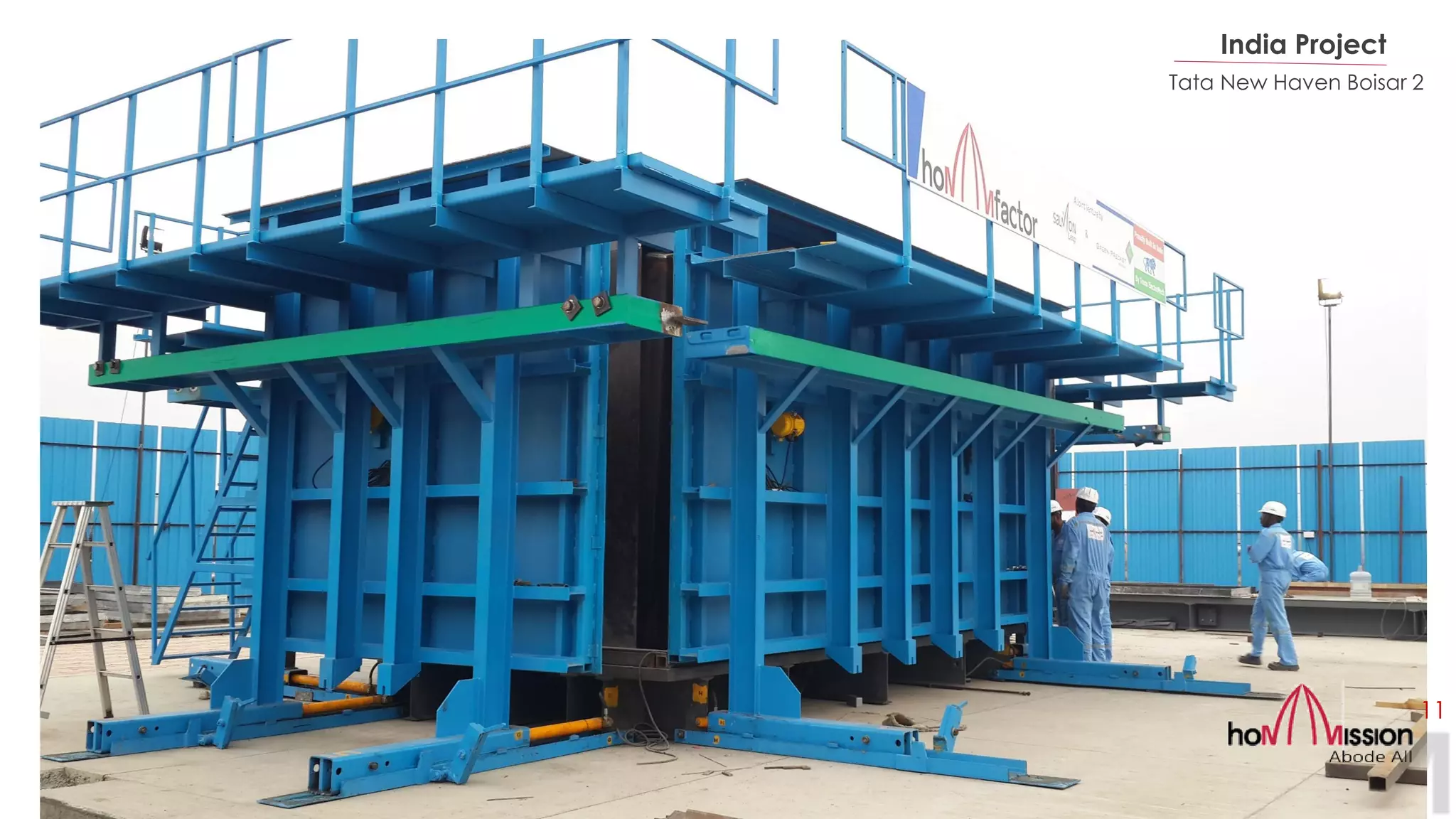
India Project
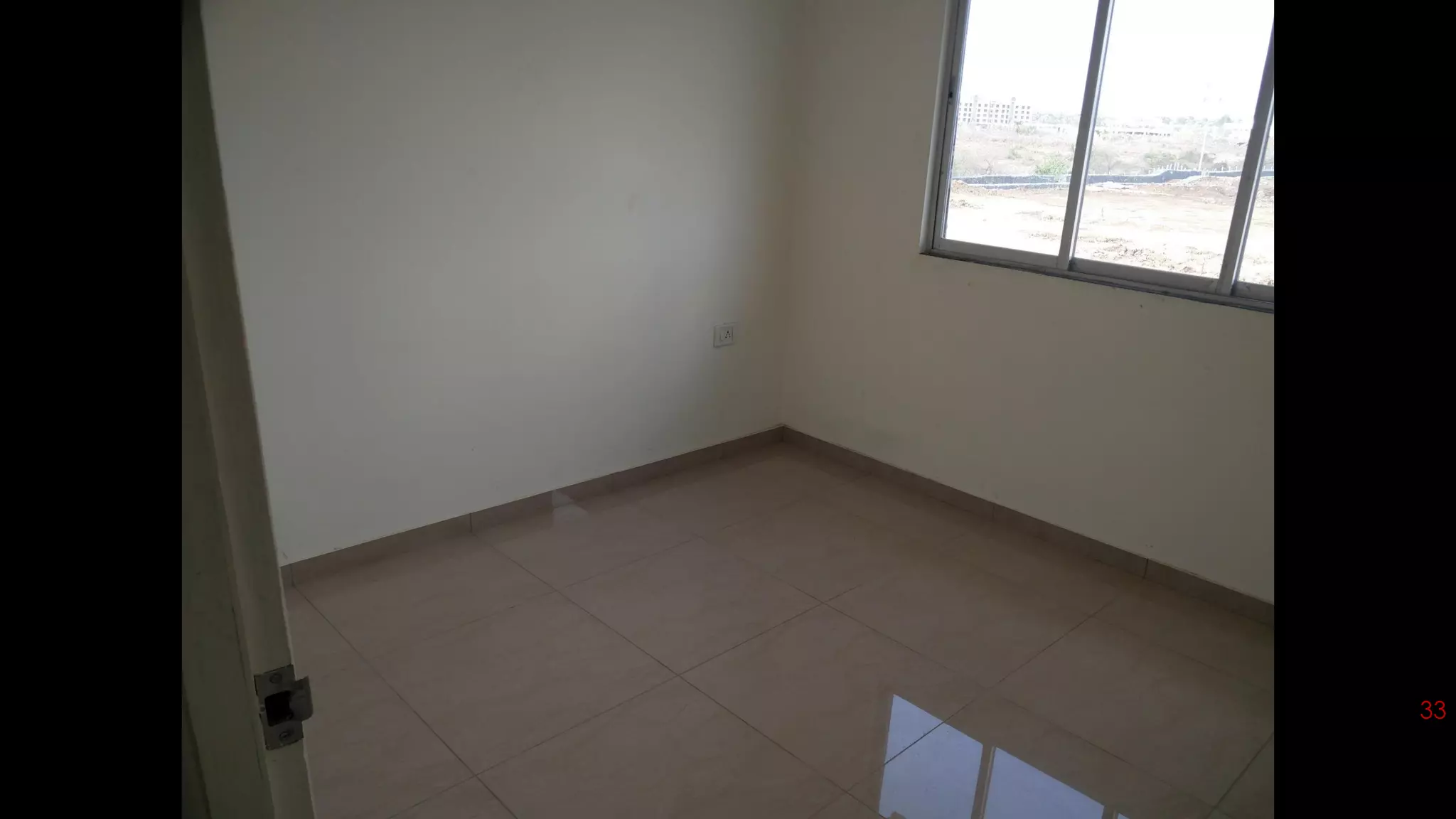
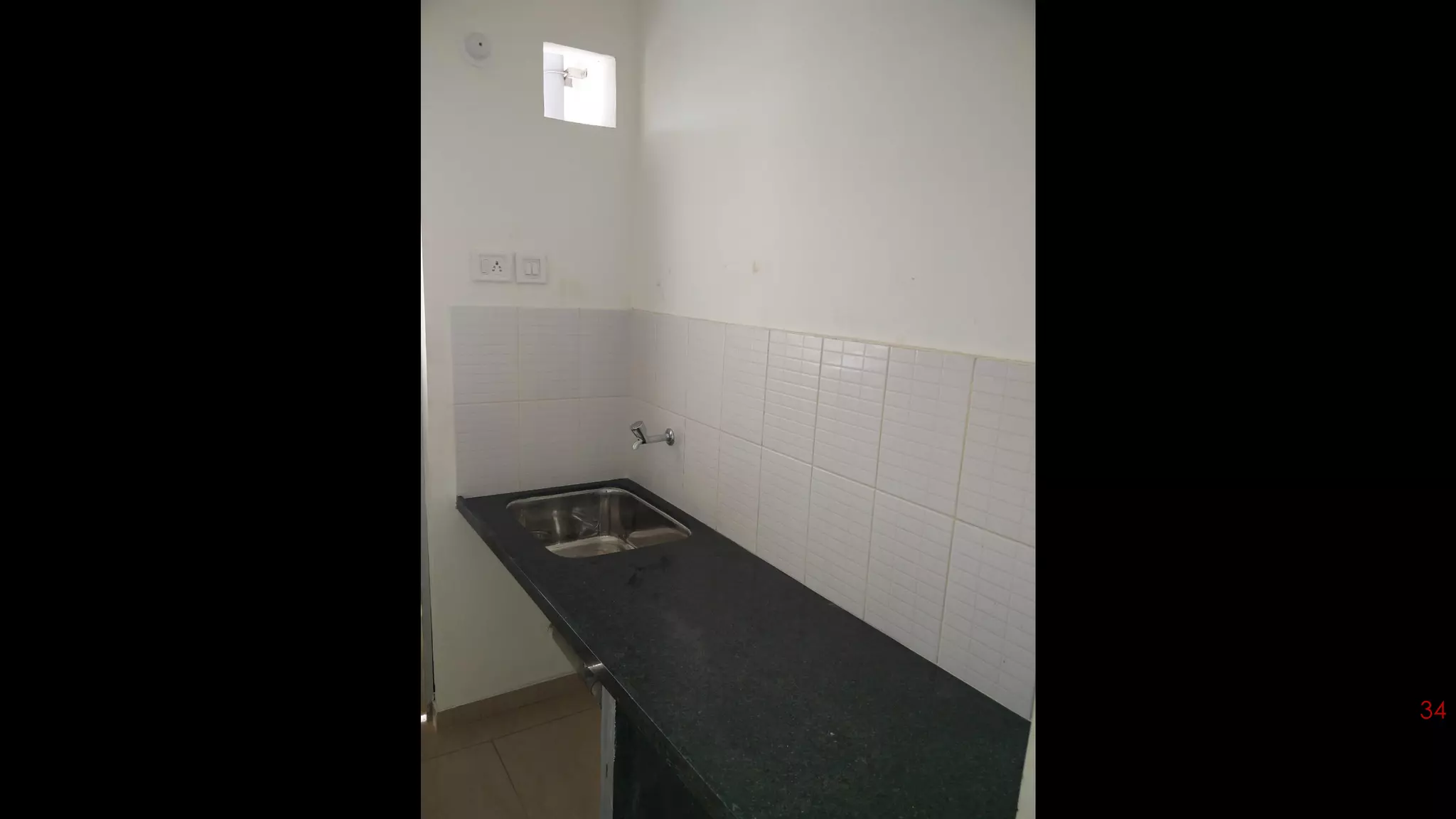
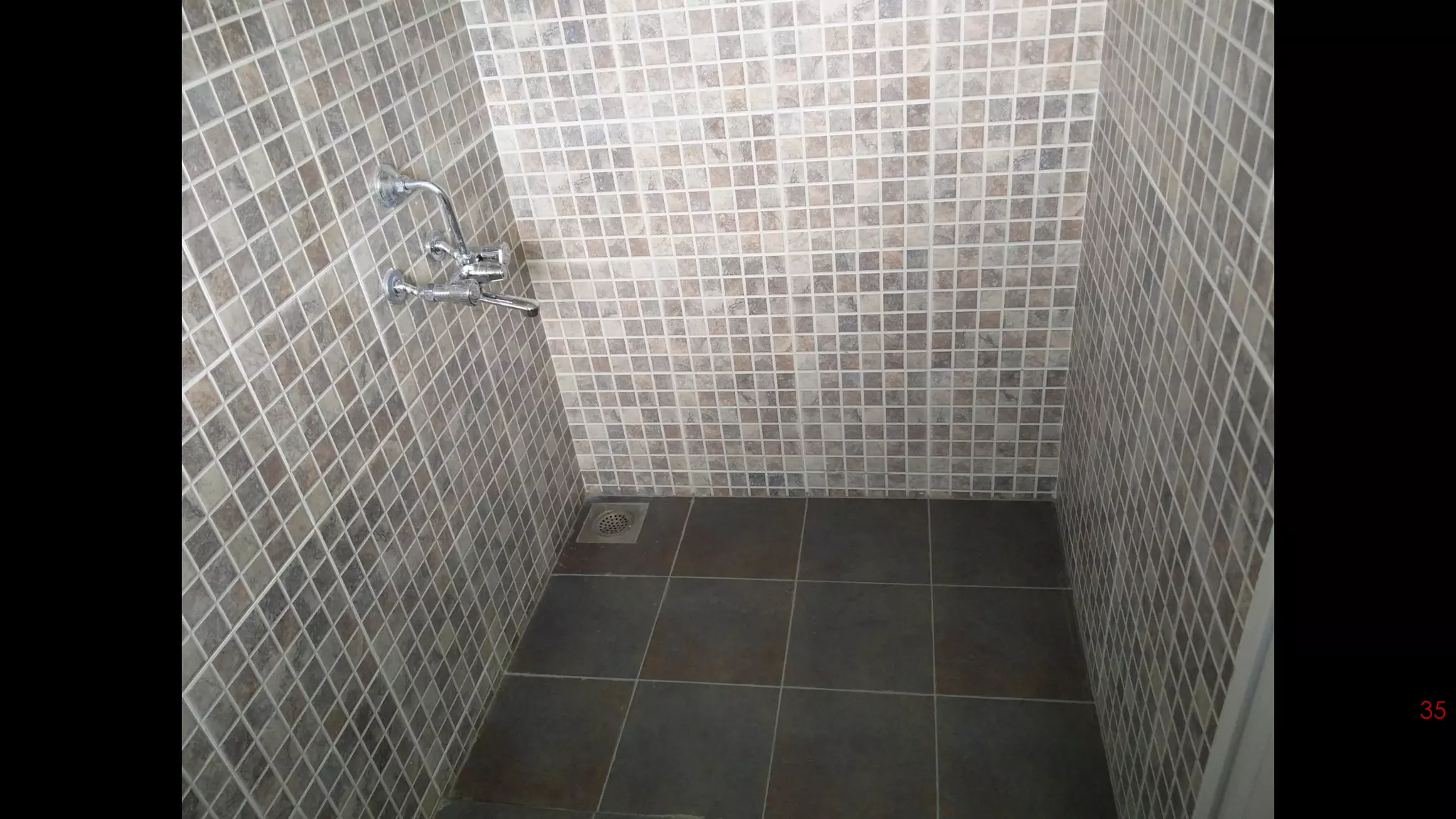
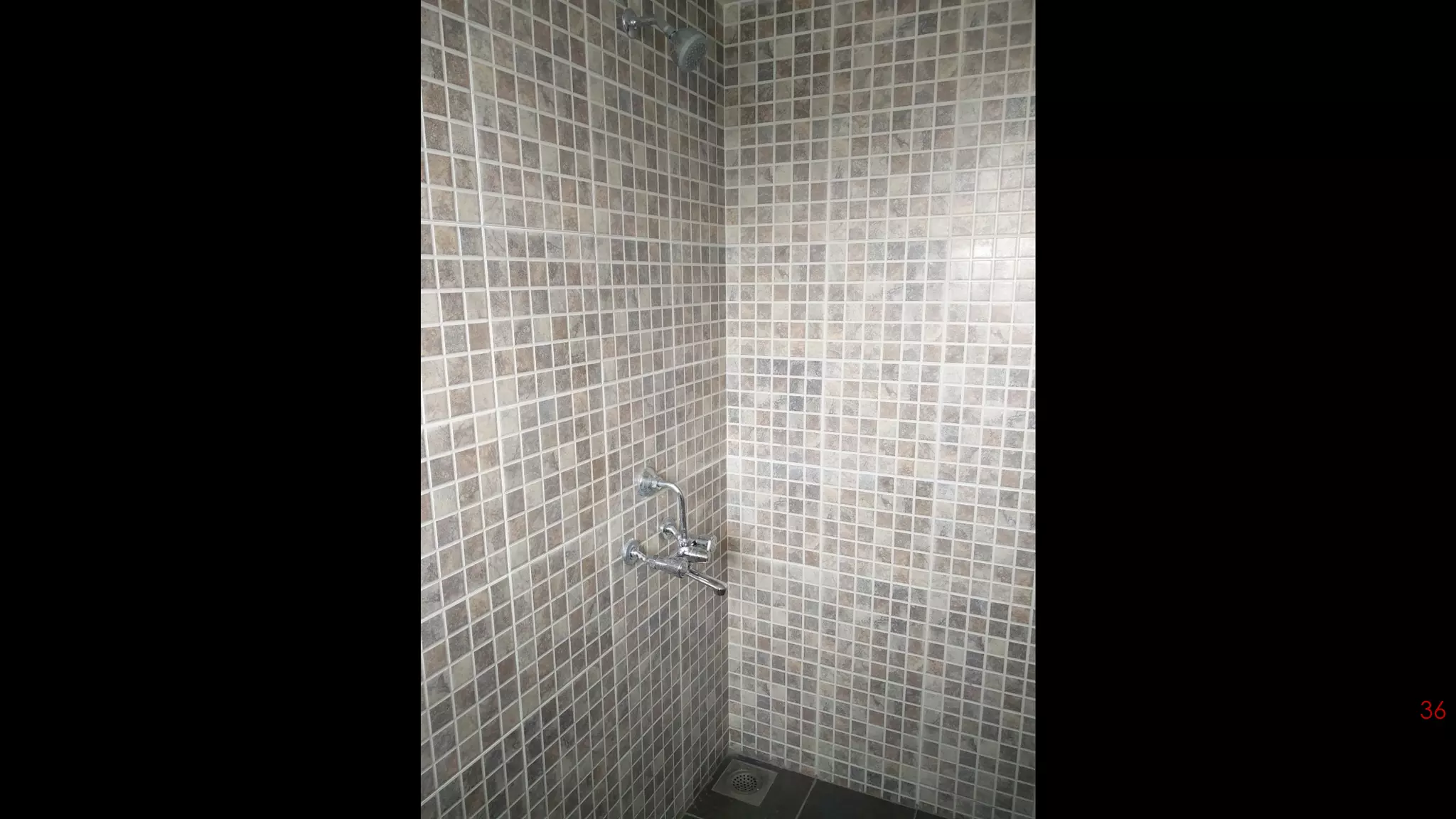
Tata New Haven Boisar 2
11
12
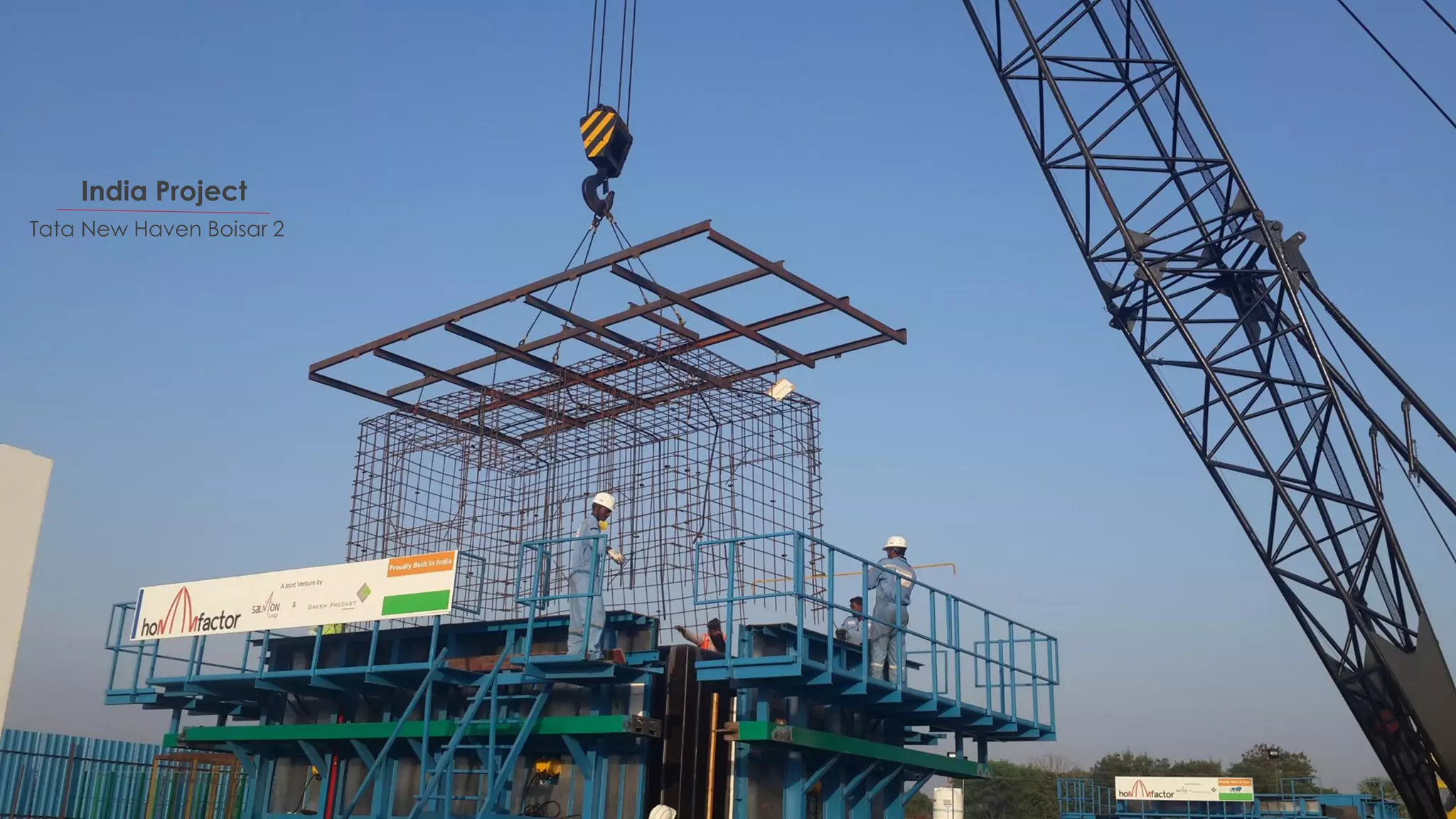
India Project
Tata New Haven Boisar 2
13
India Project
Tata New Haven Boisar 2
14
India Project
Tata New Haven Boisar 2
15
India Project
Tata New Haven Boisar 2
16
India Project
Tata New Haven Boisar 2
17
India Project
Tata New Haven Boisar 2
18
India Project
Tata New Haven Boisar 2
19
20
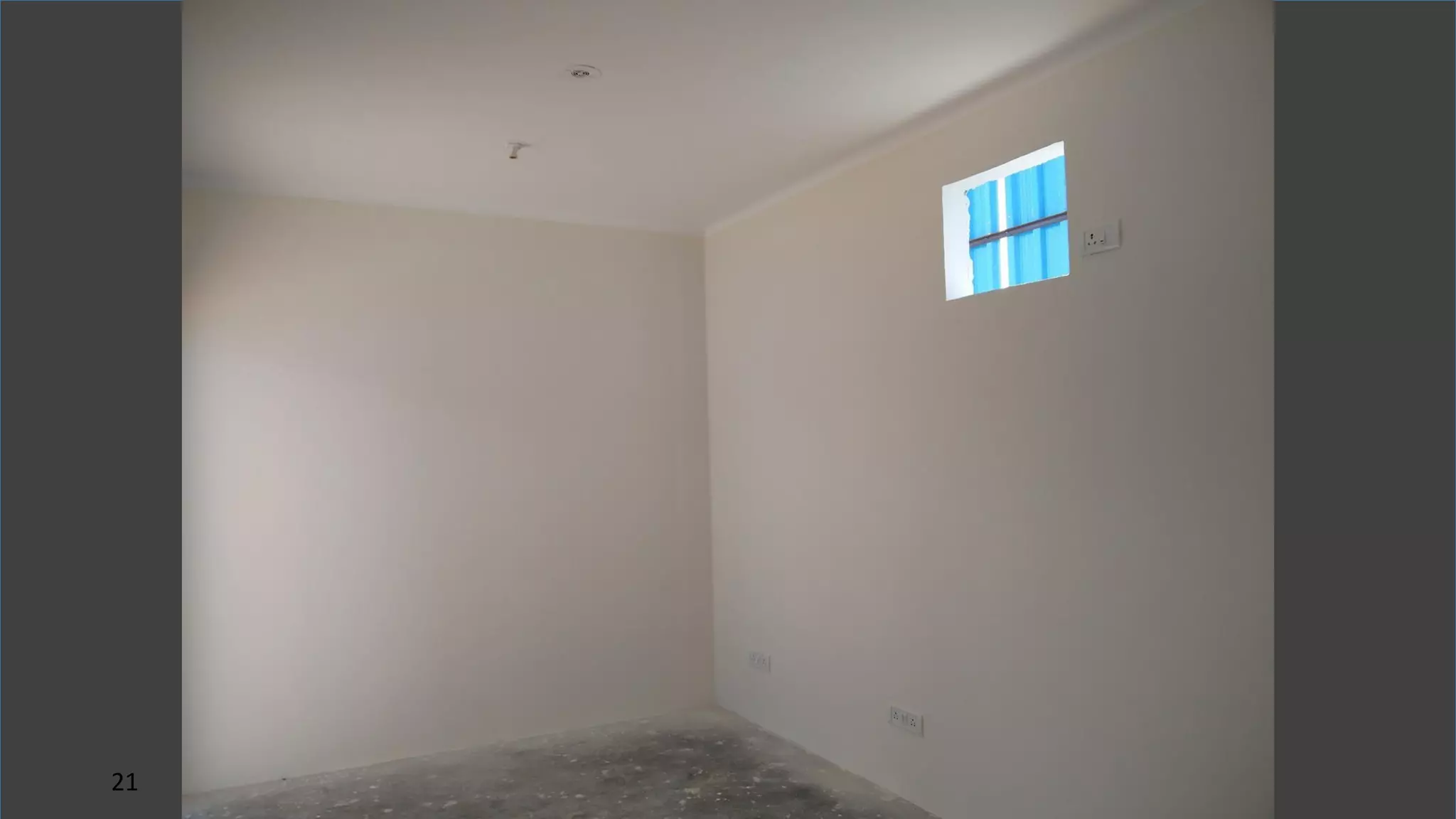
21
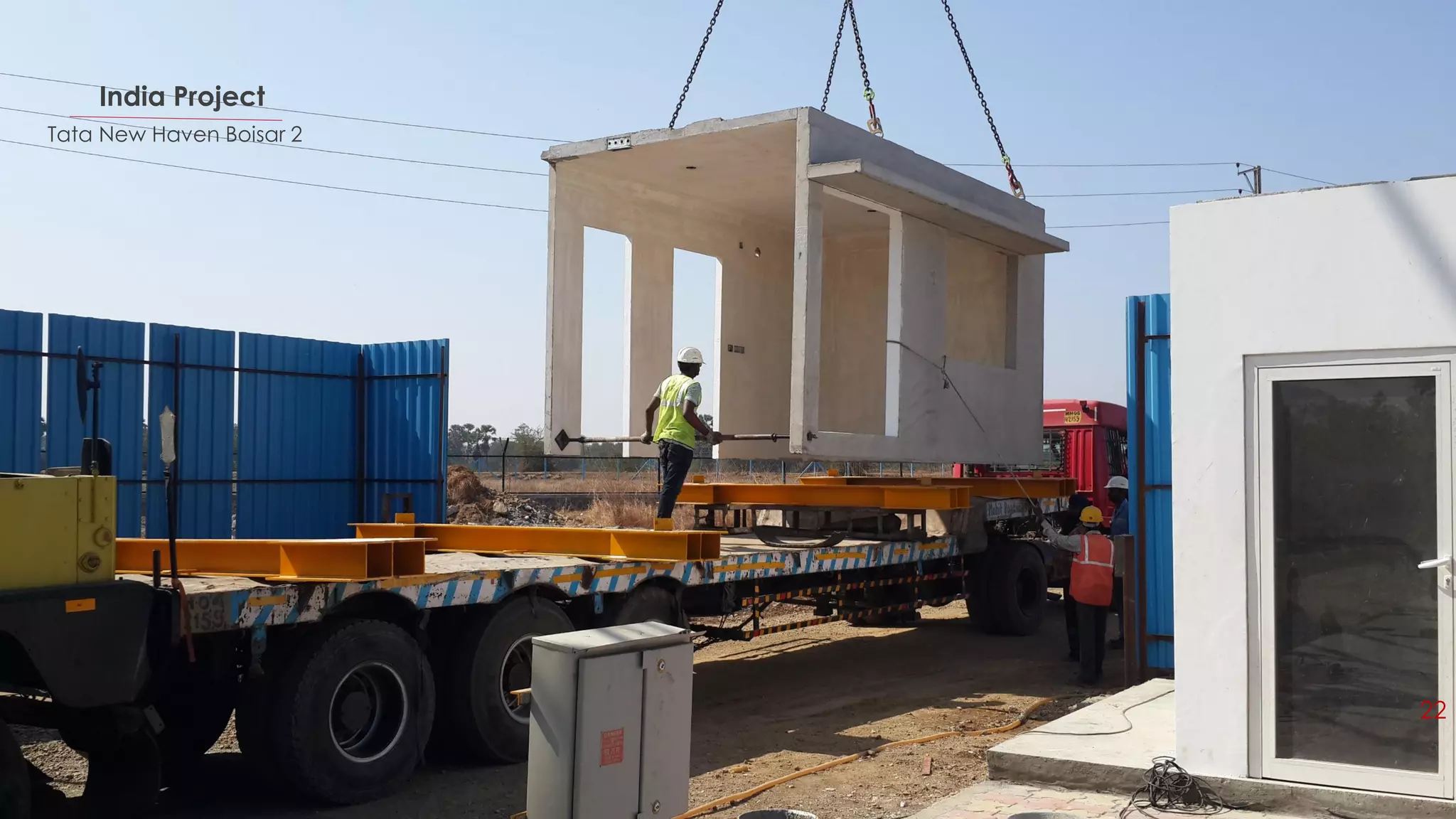
India Project
Tata New Haven Boisar 2
22
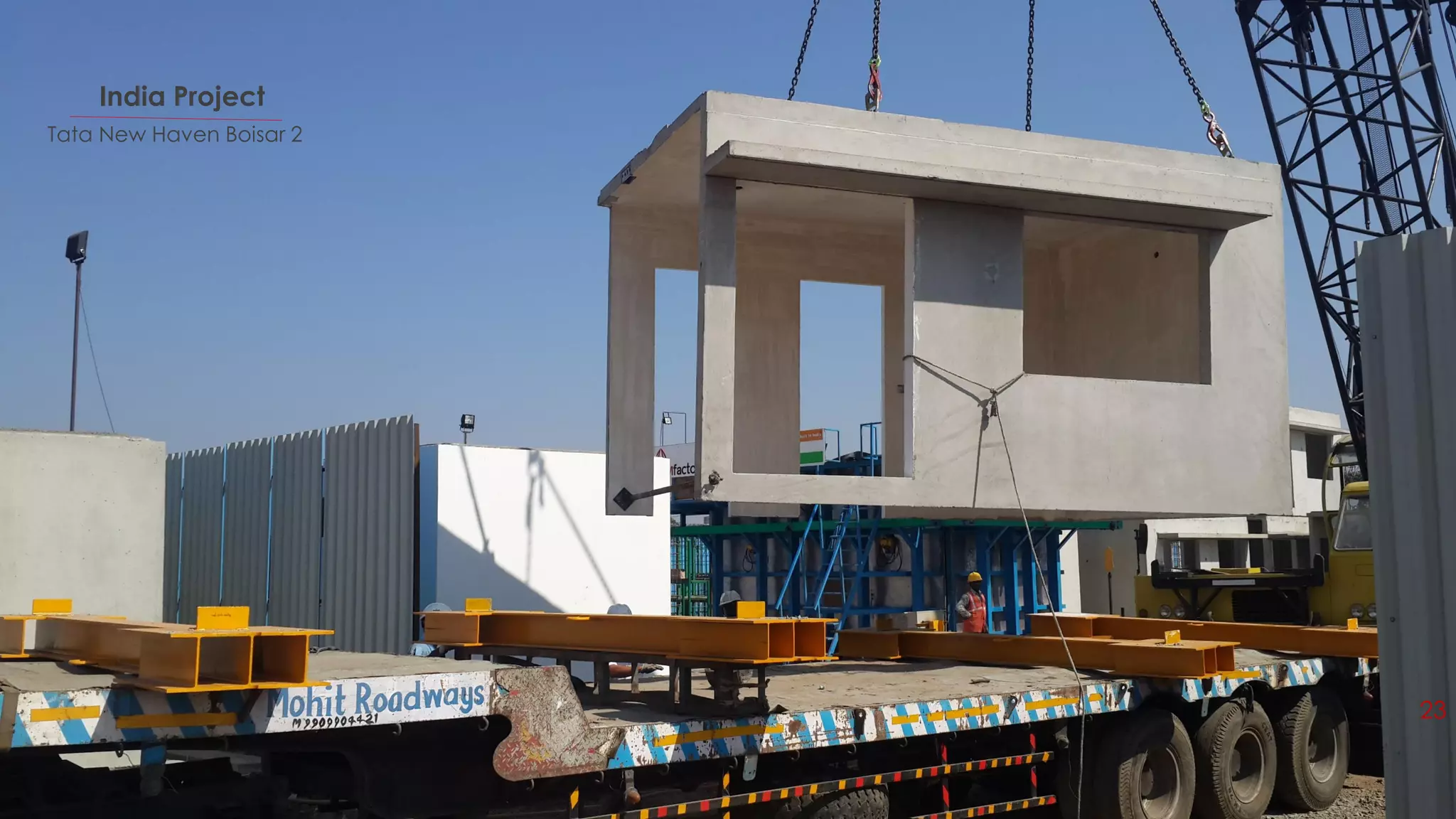
India Project
Tata New Haven Boisar 2
23
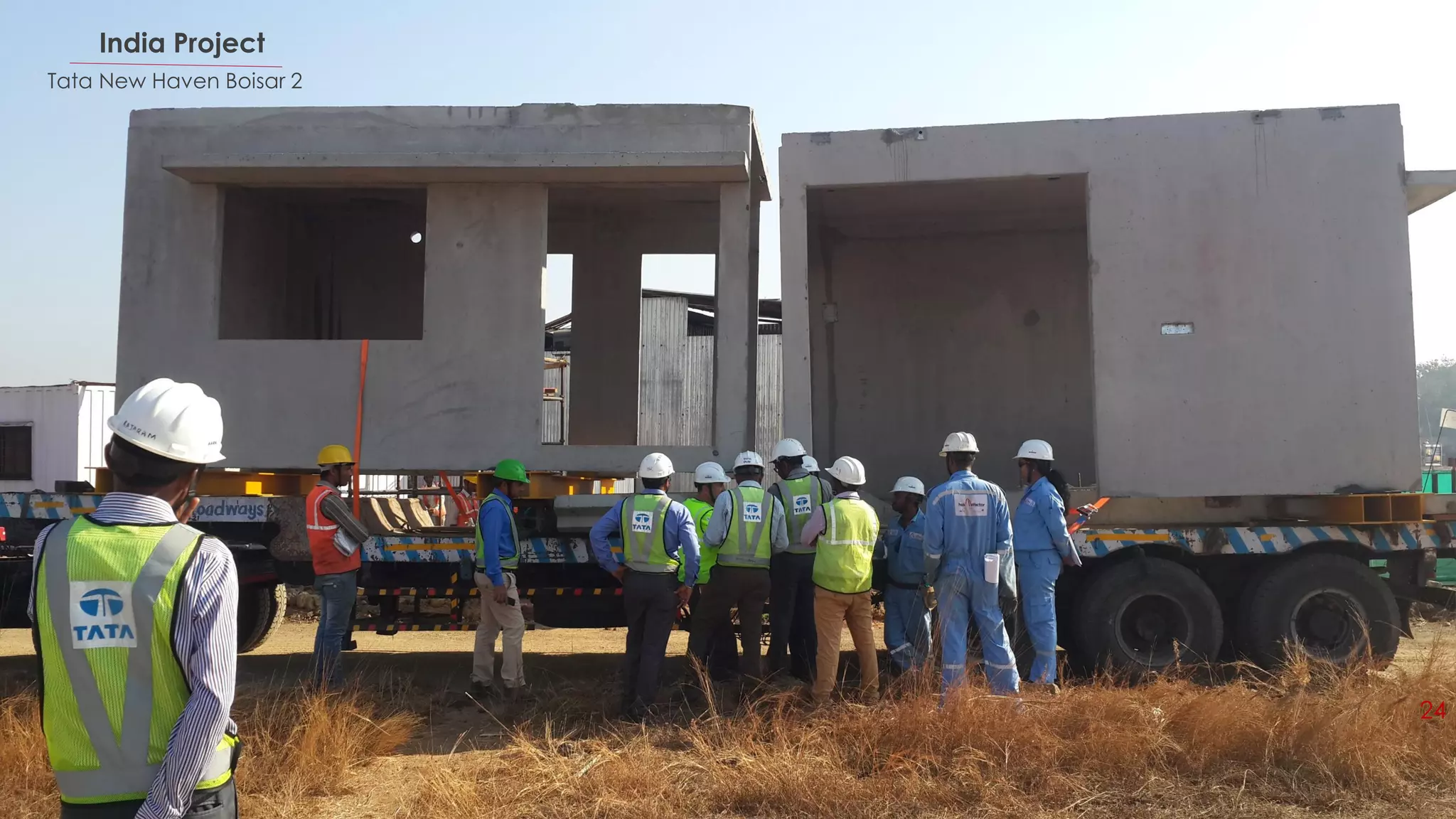
India Project
Tata New Haven Boisar 2
24
India Project
Tata New Haven Boisar 2
25
India Project
Tata New Haven Boisar 2
26
27
28
29
30
31
32
33
34
35
36
37
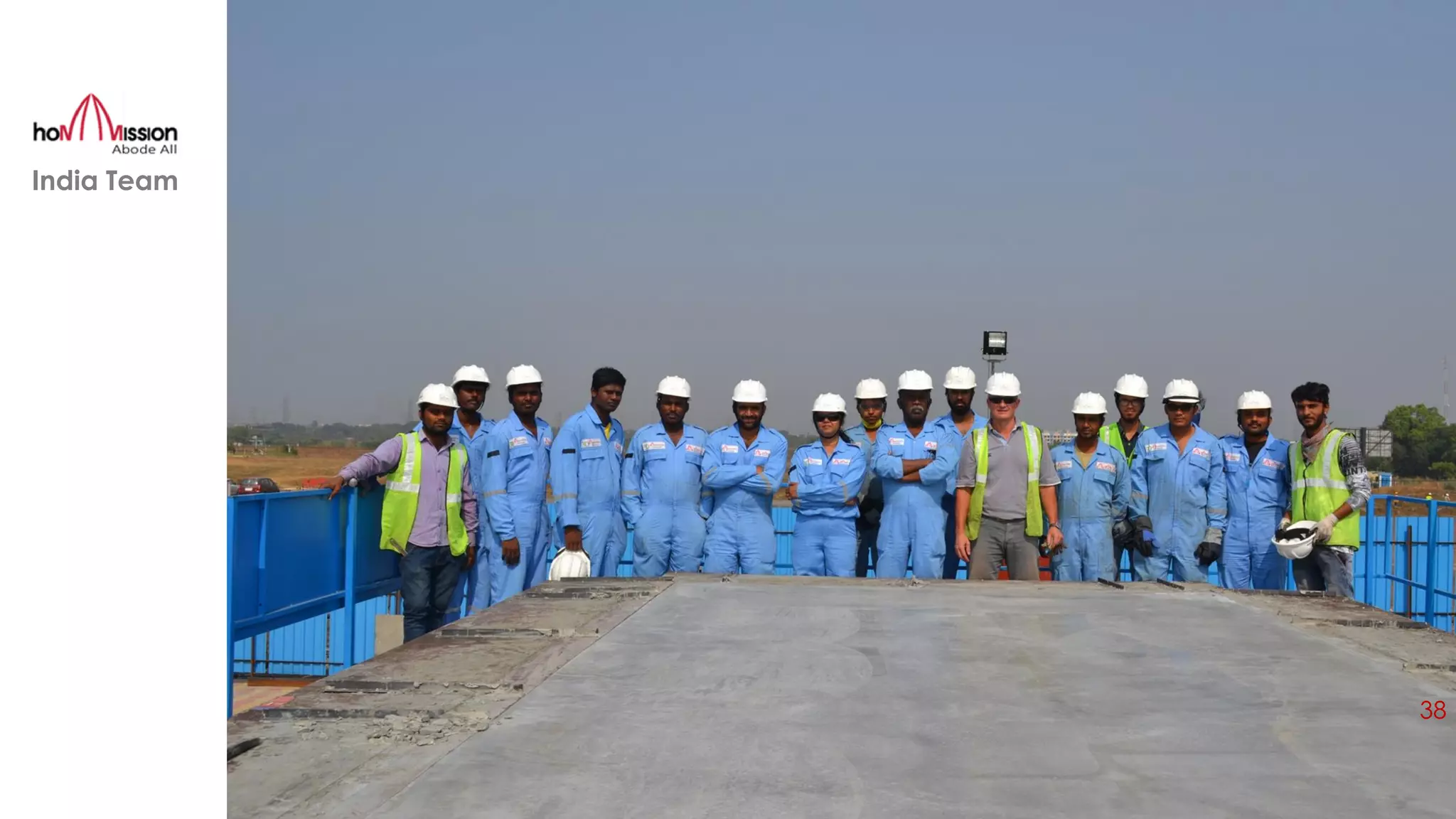
India Team
38
5-storey Building with 20 Apartments
Cast & Assembled in 33 Days
for
Tata Housing at Boisar, Mumbai
As fast as needed
Machine Made Quality
Only by Engineers & Technicians No Labour
Premium Quality at same Cost
39
40
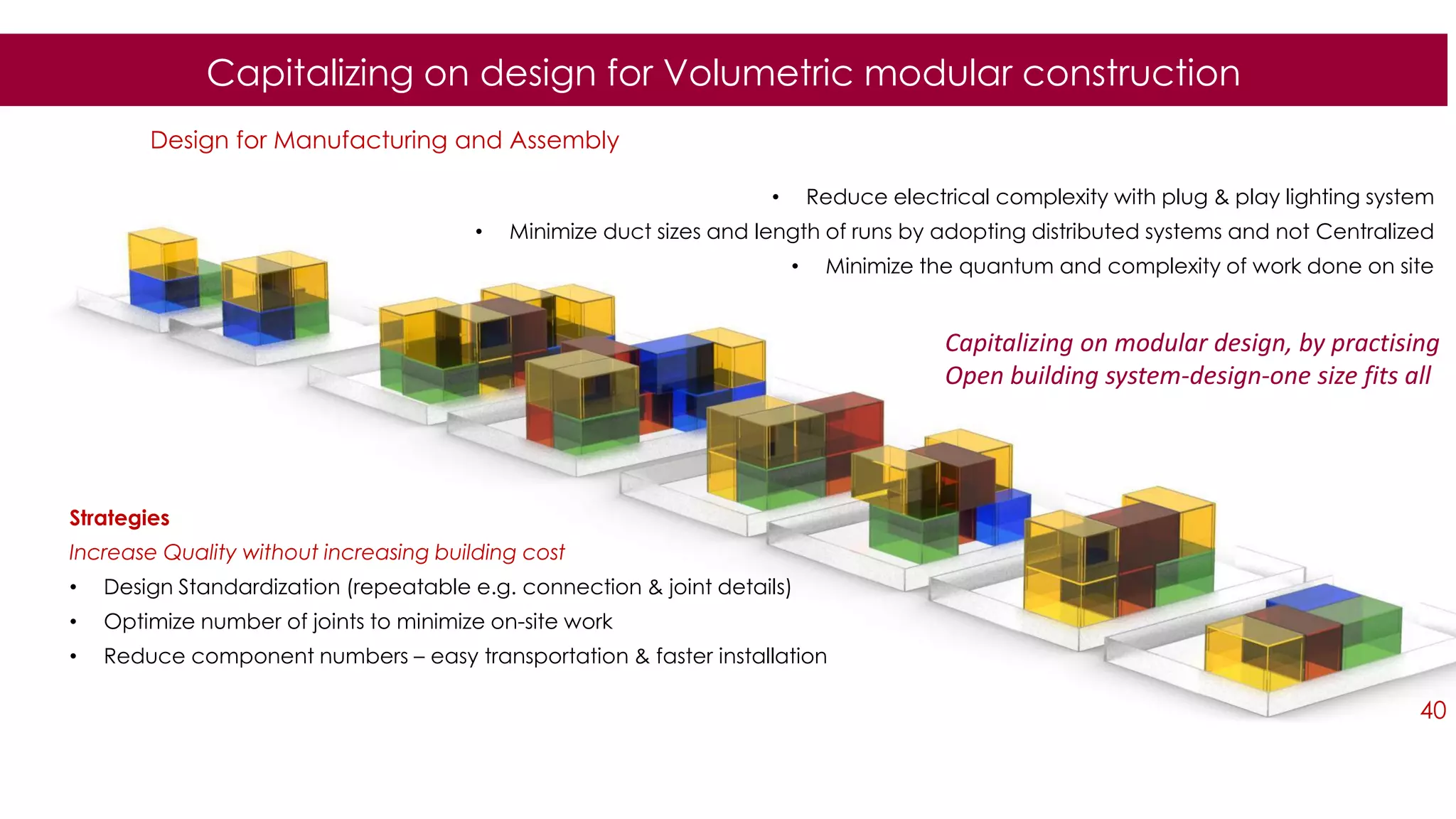
Capitalizing on design for Volumetric modular construction
Design for Manufacturing and Assembly
Strategies
Increase Quality without increasing building cost
• Design Standardization (repeatable e.g. connection & joint details)
• Optimize number of joints to minimize on-site work
• Reduce component numbers – easy transportation & faster installation
• Reduce electrical complexity with plug & play lighting system
• Minimize duct sizes and length of runs by adopting distributed systems and not Centralized
• Minimize the quantum and complexity of work done on site
Capitalizing on modular design, by practising
Open building system-design-one size fits all
Design Consideration – Integrated Approach
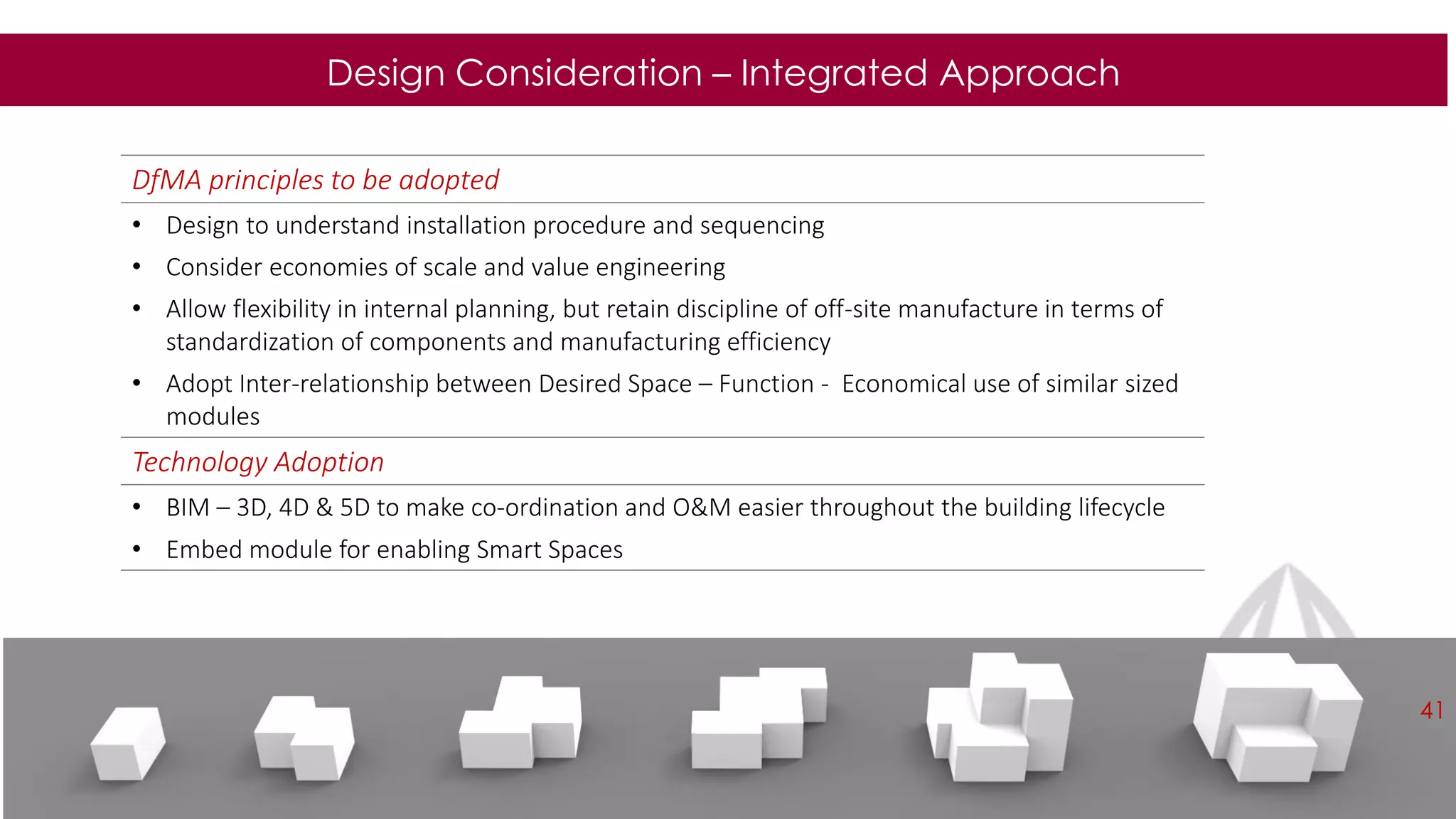
DfMA principles to be adopted
• Design to understand installation procedure and sequencing
• Consider economies of scale and value engineering
• Allow flexibility in internal planning, but retain discipline of off-site manufacture in terms of
standardization of components and manufacturing efficiency
• Adopt Inter-relationship between Desired Space – Function - Economical use of similar sized
modules
Technology Adoption
• BIM – 3D, 4D & 5D to make co-ordination and O&M easier throughout the building lifecycle
• Embed module for enabling Smart Spaces
41
42
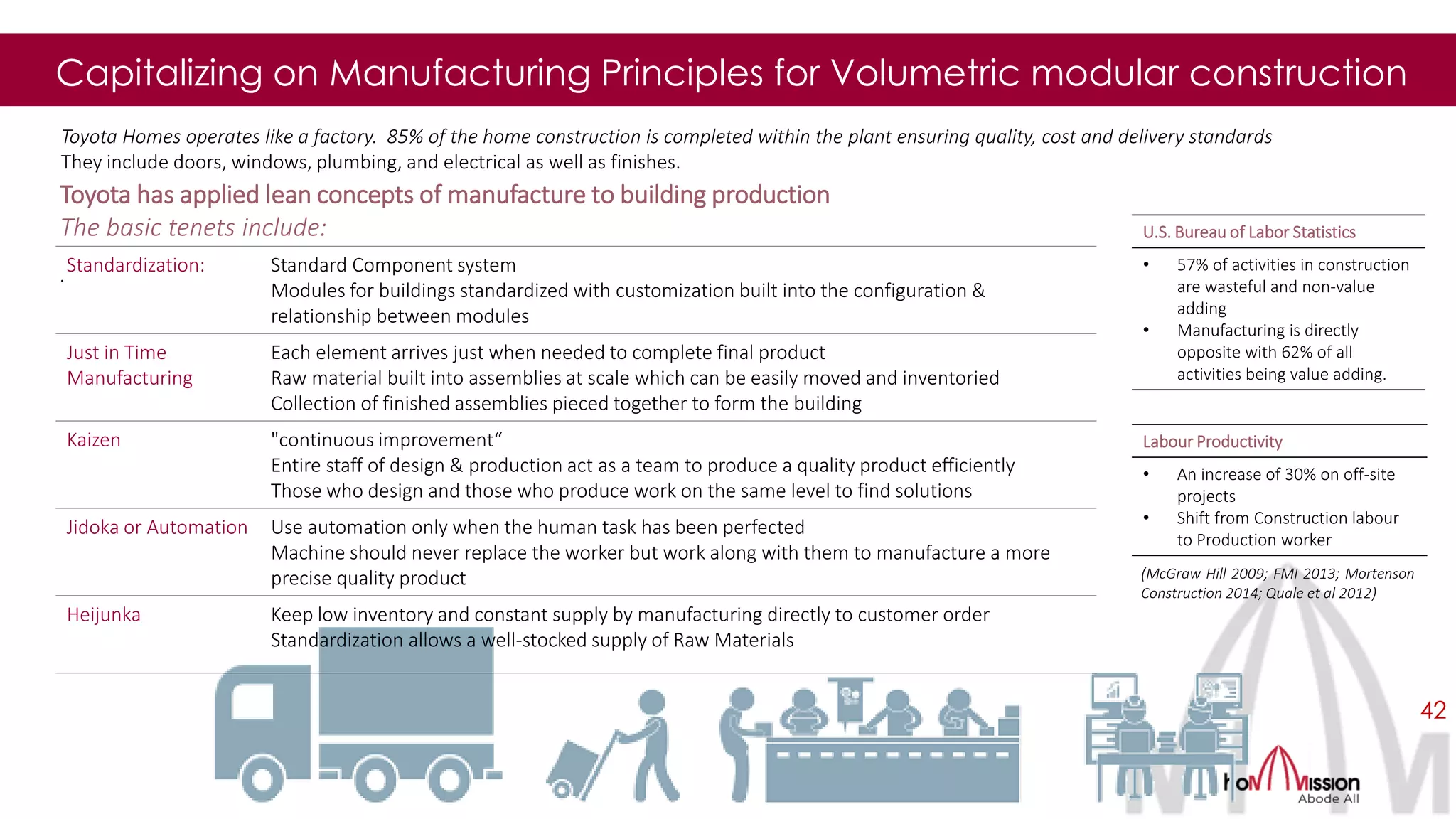
Capitalizing on Manufacturing Principles for Volumetric modular construction
Toyota has applied lean concepts of manufacture to building production
The basic tenets include:
.
(McGraw Hill 2009; FMI 2013; Mortenson
Construction 2014; Quale et al 2012)
U.S. Bureau of Labor Statistics
• 57% of activities in construction
are wasteful and non-value
adding
• Manufacturing is directly
opposite with 62% of all
activities being value adding.
Labour Productivity
• An increase of 30% on off-site
projects
• Shift from Construction labour
to Production worker
Toyota Homes operates like a factory. 85% of the home construction is completed within the plant ensuring quality, cost and delivery standards
They include doors, windows, plumbing, and electrical as well as finishes.
Standardization: Standard Component system
Modules for buildings standardized with customization built into the configuration &
relationship between modules
Just in Time
Manufacturing
Each element arrives just when needed to complete final product
Raw material built into assemblies at scale which can be easily moved and inventoried
Collection of finished assemblies pieced together to form the building
Kaizen "continuous improvement“
Entire staff of design & production act as a team to produce a quality product efficiently
Those who design and those who produce work on the same level to find solutions
Jidoka or Automation Use automation only when the human task has been perfected
Machine should never replace the worker but work along with them to manufacture a more
precise quality product
Heijunka Keep low inventory and constant supply by manufacturing directly to customer order
Standardization allows a well-stocked supply of Raw Materials
43
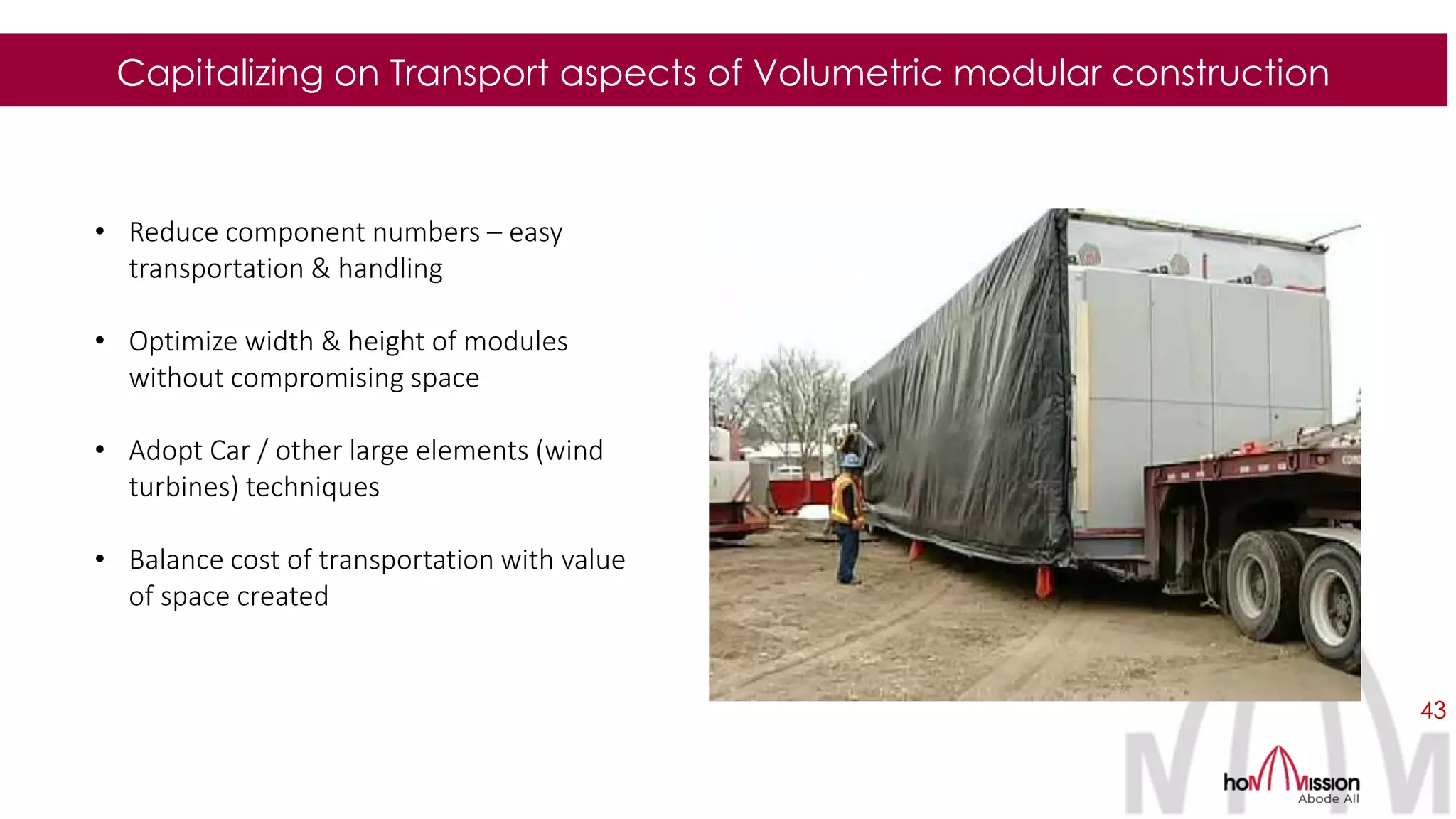
Capitalizing on Transport aspects of Volumetric modular construction
• Reduce component numbers – easy
transportation & handling
• Optimize width & height of modules
without compromising space
• Adopt Car / other large elements (wind
turbines) techniques
• Balance cost of transportation with value
of space created
44
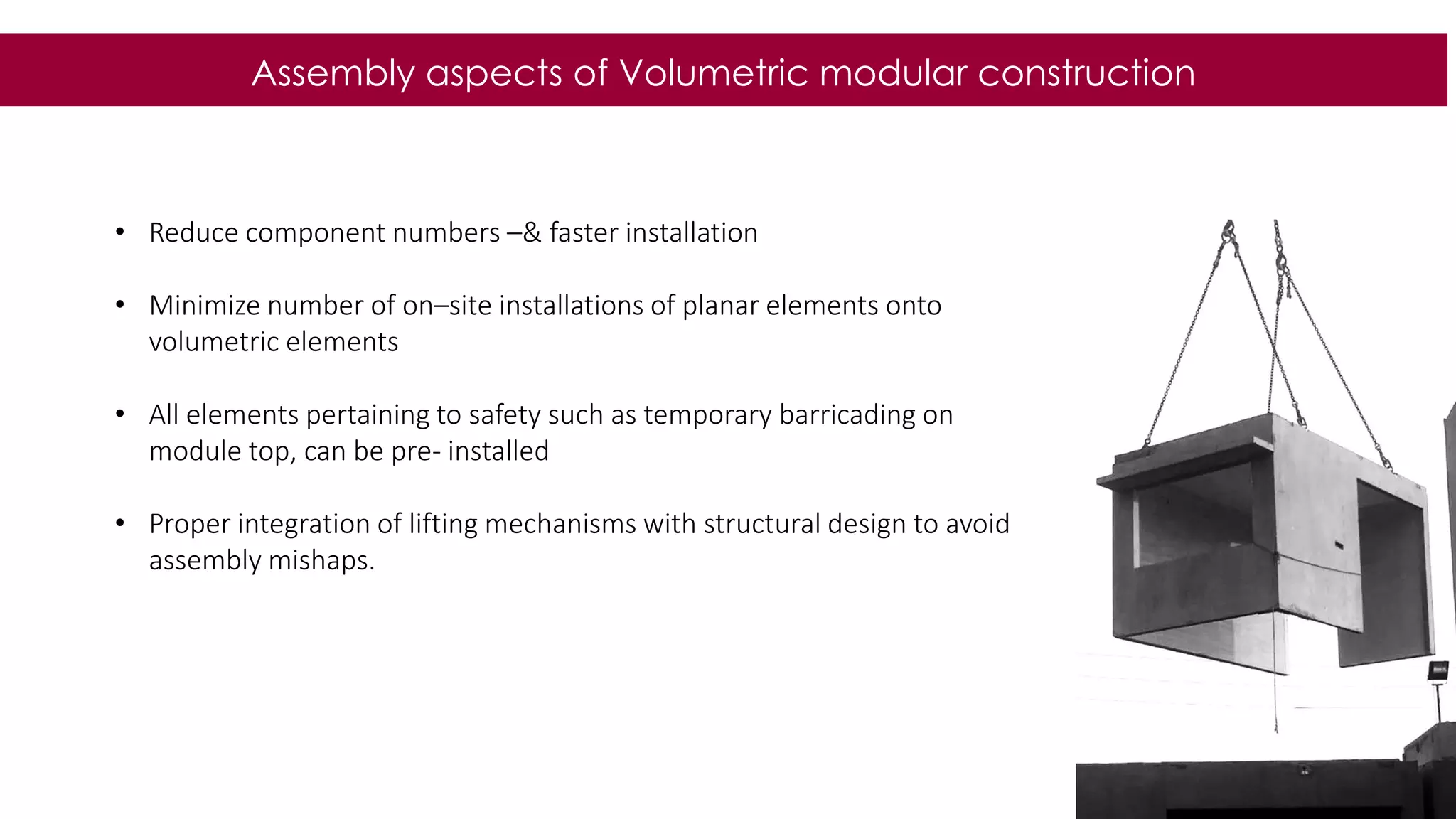
Assembly aspects of Volumetric modular construction
• Reduce component numbers –& faster installation
• Minimize number of on–site installations of planar elements onto
volumetric elements
• All elements pertaining to safety such as temporary barricading on
module top, can be pre- installed
• Proper integration of lifting mechanisms with structural design to avoid
assembly mishaps.
45
MODULARITY
Means REPETITION
Means SCALE
Means REPLICABILITY
Means ECONOMIES OF SCALE
M a s s M a r k e t C a p i t a l i z a t i o n
46
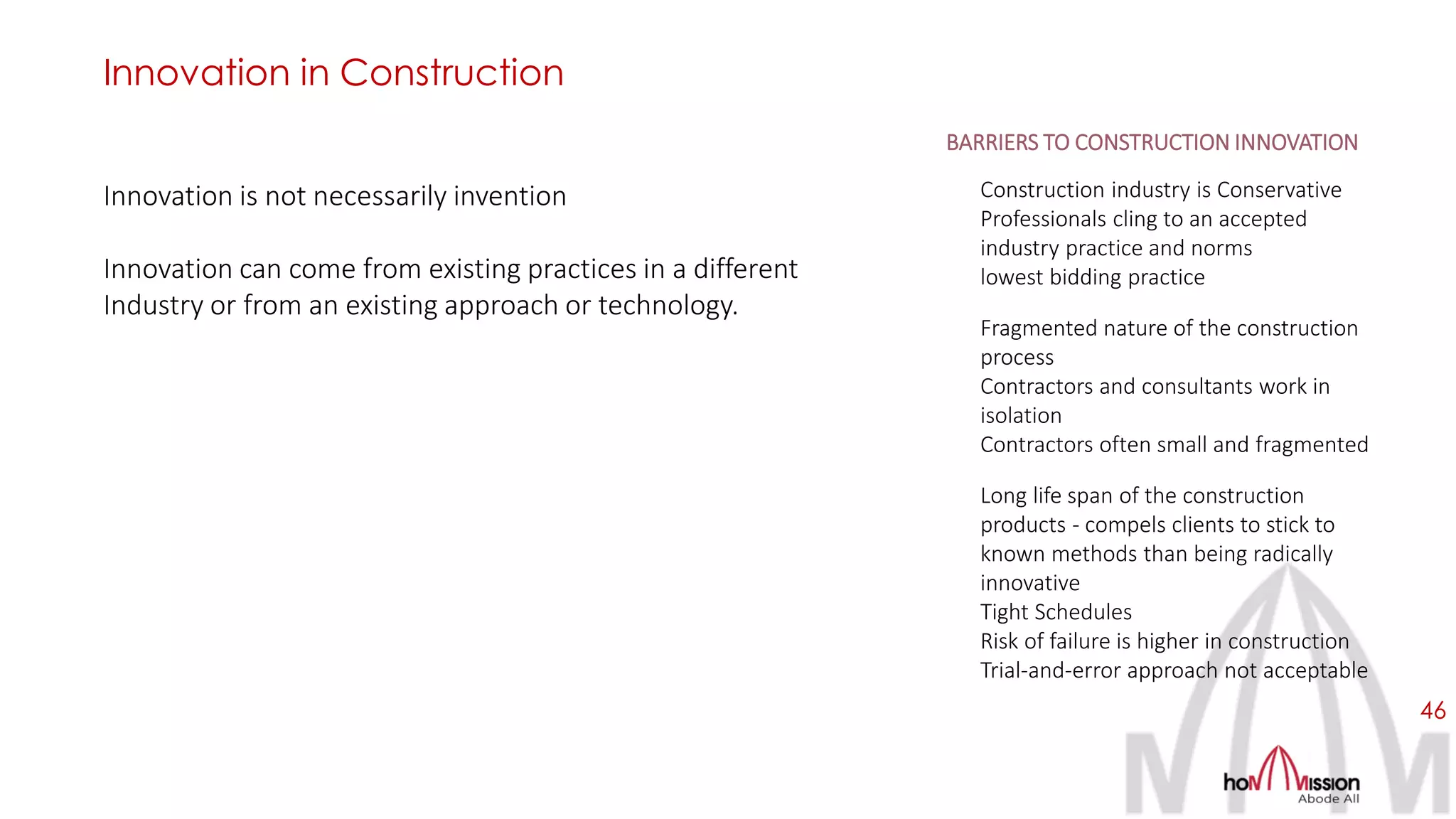
Innovation is not necessarily invention
Innovation can come from existing practices in a different
Industry or from an existing approach or technology.
Innovation in Construction
BARRIERS TO CONSTRUCTION INNOVATION
Construction industry is Conservative
Professionals cling to an accepted
industry practice and norms
lowest bidding practice
Fragmented nature of the construction
process
Contractors and consultants work in
isolation
Contractors often small and fragmented
Long life span of the construction
products - compels clients to stick to
known methods than being radically
innovative
Tight Schedules
Risk of failure is higher in construction
Trial-and-error approach not acceptable
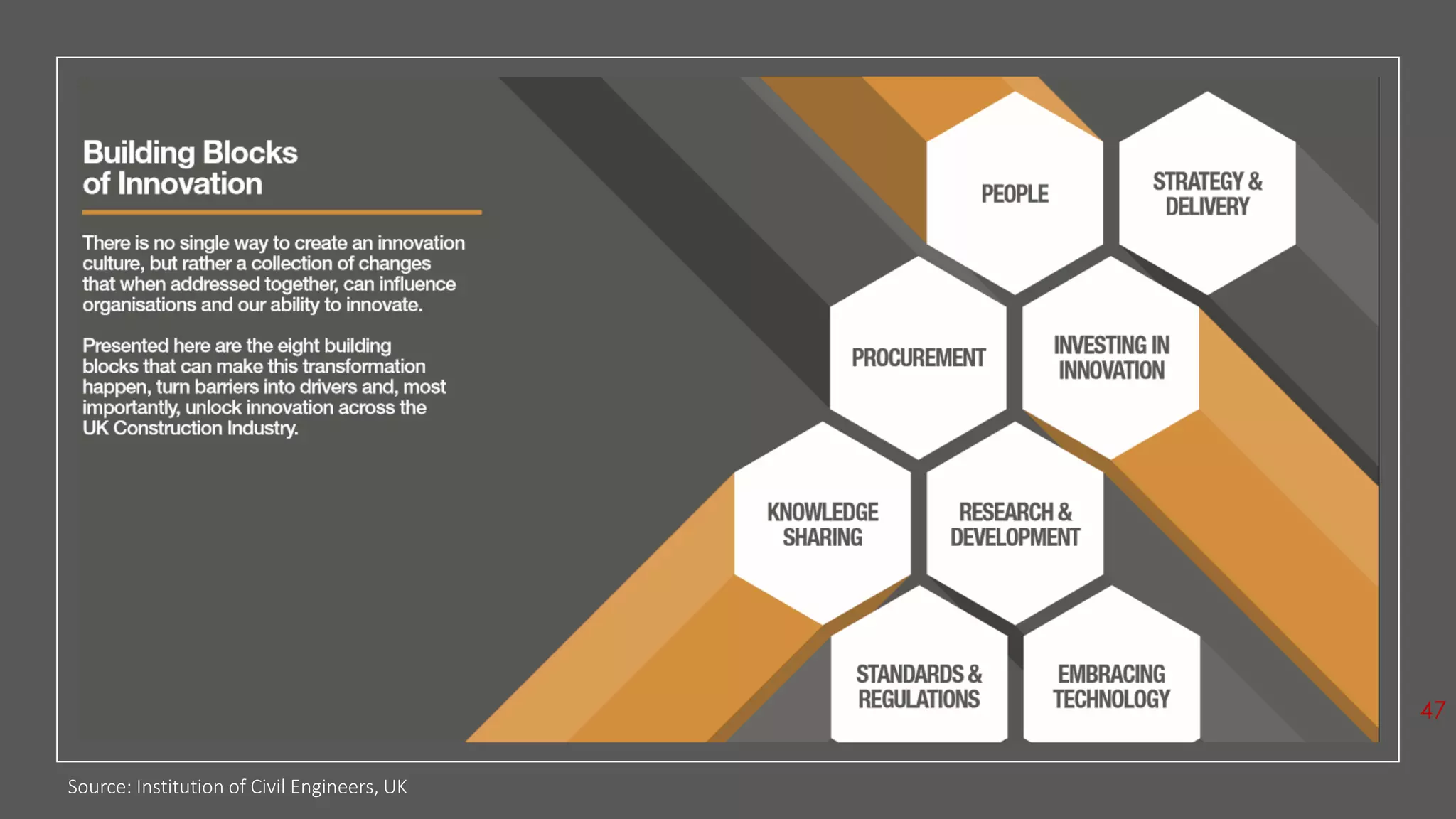
Source: Institution of Civil Engineers, UK
47
48
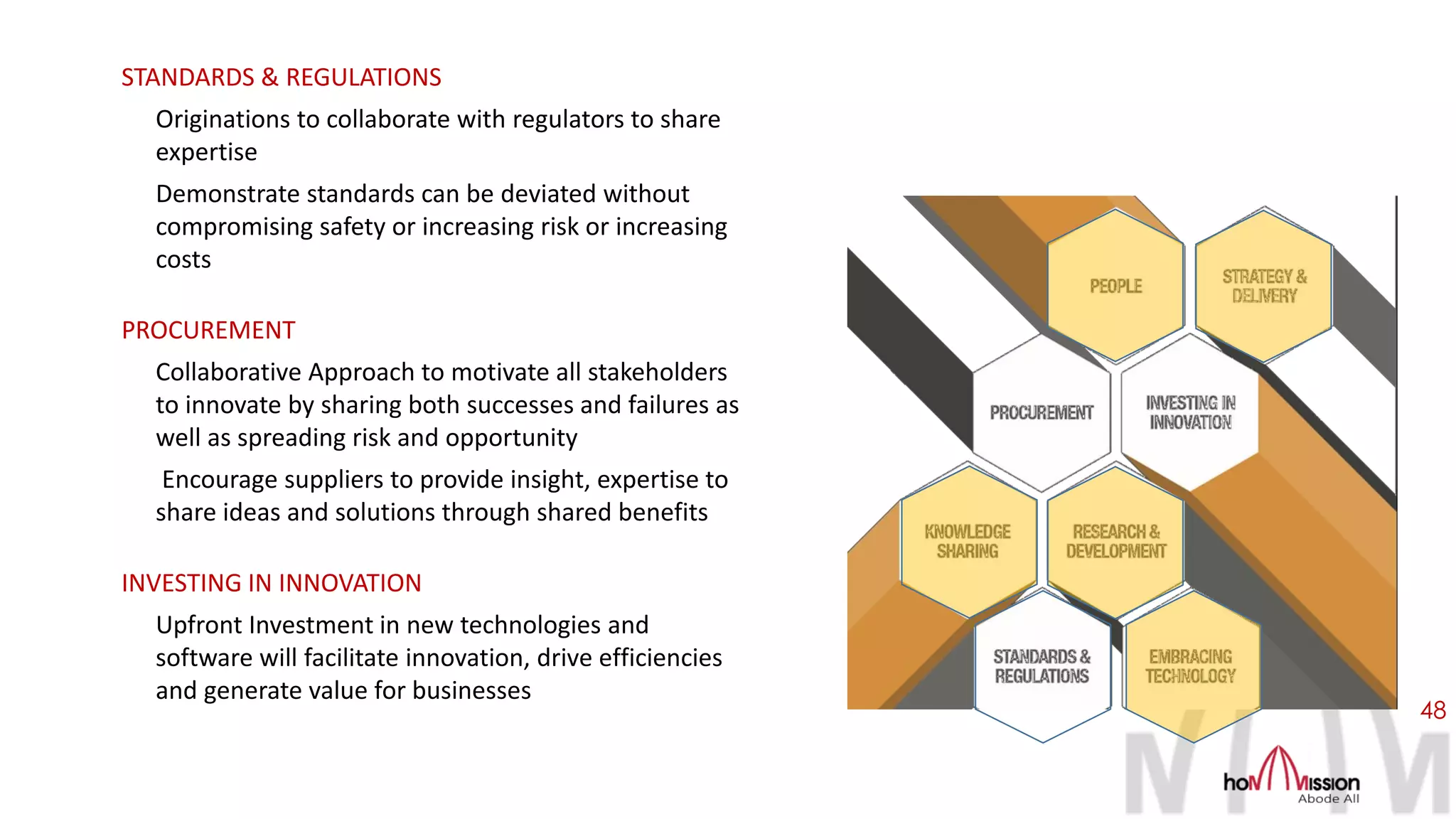
STANDARDS & REGULATIONS
Originations to collaborate with regulators to share
expertise
Demonstrate standards can be deviated without
compromising safety or increasing risk or increasing
costs
PROCUREMENT
Collaborative Approach to motivate all stakeholders
to innovate by sharing both successes and failures as
well as spreading risk and opportunity
Encourage suppliers to provide insight, expertise to
share ideas and solutions through shared benefits
INVESTING IN INNOVATION
Upfront Investment in new technologies and
software will facilitate innovation, drive efficiencies
and generate value for businesses
49
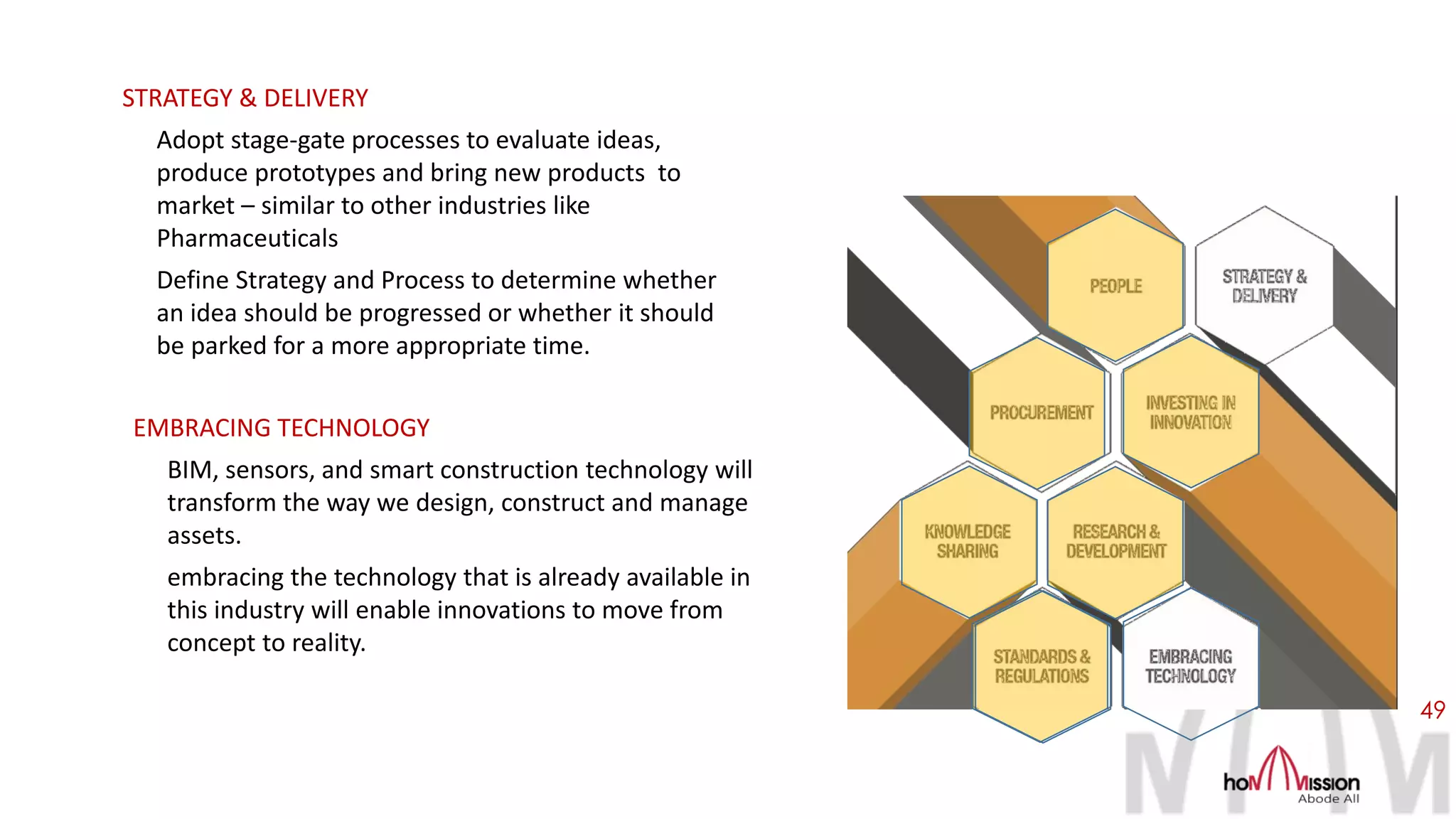
STRATEGY & DELIVERY
Adopt stage-gate processes to evaluate ideas,
produce prototypes and bring new products to
market – similar to other industries like
Pharmaceuticals
Define Strategy and Process to determine whether
an idea should be progressed or whether it should
be parked for a more appropriate time.
EMBRACING TECHNOLOGY
BIM, sensors, and smart construction technology will
transform the way we design, construct and manage
assets.
embracing the technology that is already available in
this industry will enable innovations to move from
concept to reality.
50
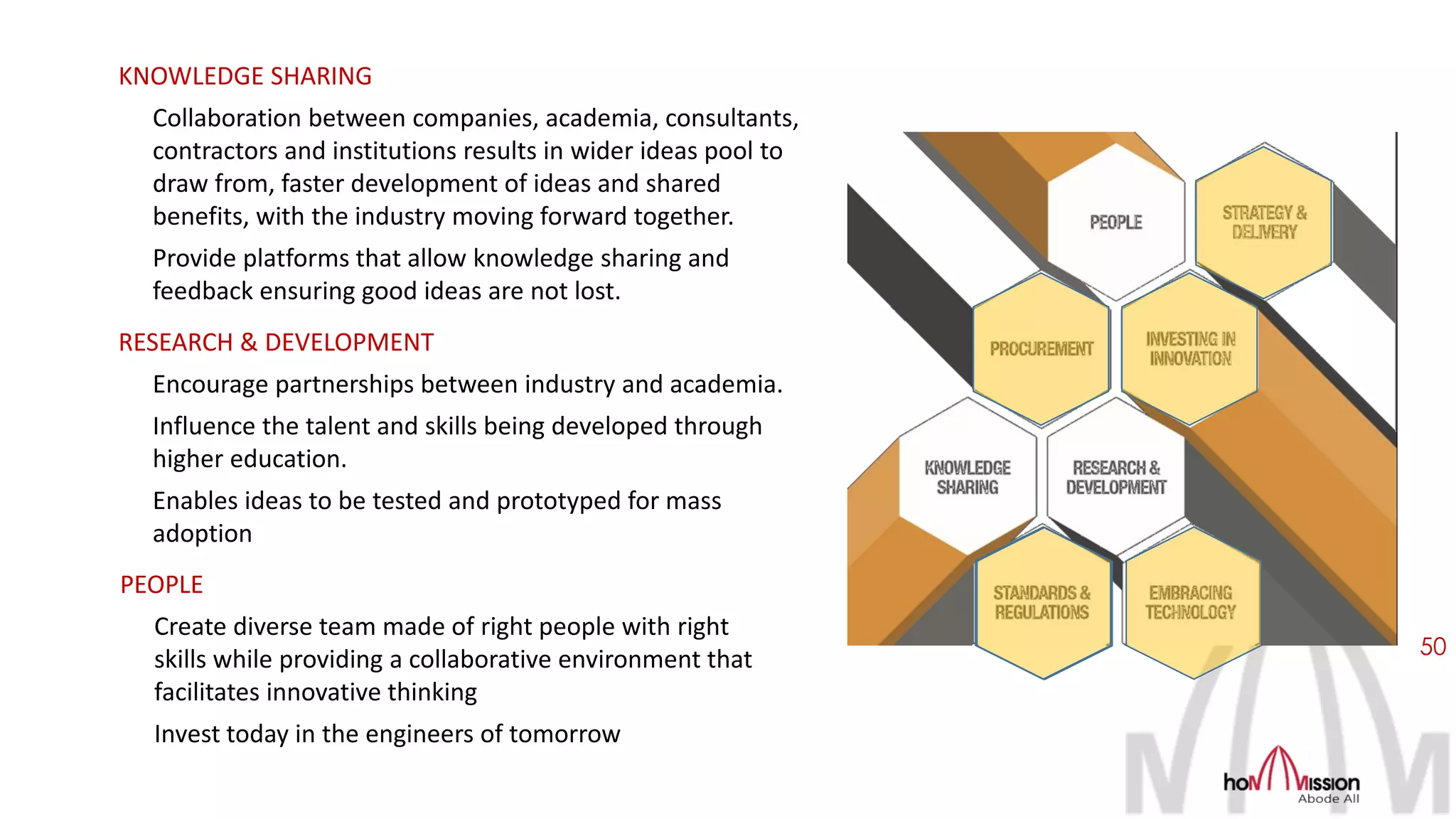
KNOWLEDGE SHARING
Collaboration between companies, academia, consultants,
contractors and institutions results in wider ideas pool to
draw from, faster development of ideas and shared
benefits, with the industry moving forward together.
Provide platforms that allow knowledge sharing and
feedback ensuring good ideas are not lost.
RESEARCH & DEVELOPMENT
Encourage partnerships between industry and academia.
Influence the talent and skills being developed through
higher education.
Enables ideas to be tested and prototyped for mass
adoption
PEOPLE
Create diverse team made of right people with right
skills while providing a collaborative environment that
facilitates innovative thinking
Invest today in the engineers of tomorrow
51
Research Engineering Construction & At Site Training
A Platform for Action
in the Biggest Market of the World
with the largest Talent Pool
Lets Act
Technology
Options across Built
Environment Value Chain
- Design
- Planning & Project
Management
- Execution
- Finishing
- Operations & Facilities
Management
Integration through BIM
Salmon Leap is Channelizing
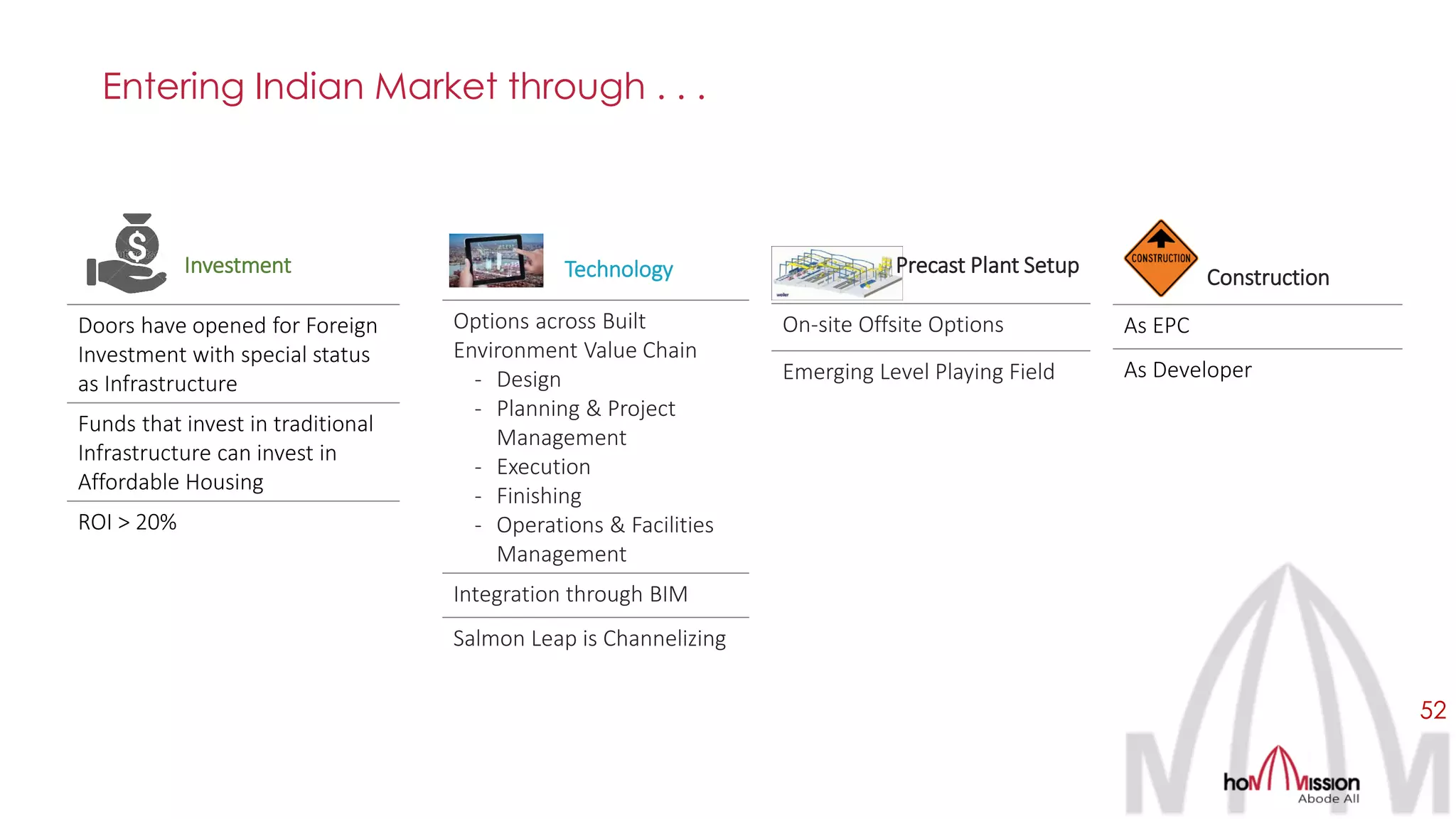
Entering Indian Market through . . .
Investment
Doors have opened for Foreign
Investment with special status
as Infrastructure
Funds that invest in traditional
Infrastructure can invest in
Affordable Housing
ROI > 20%
Precast Plant Setup
On-site Offsite Options
Emerging Level Playing Field
Construction
As EPC
As Developer
52
Thank You
Happy to Discuss
S. J. Vijay
Director
hoMMission India
sjvijjay@salmonleap.co.in
+91 9901454444
Sheila E. Britto
Director
hoMMission India
sheila@salmonleap.co.in
+91 9901455500
53

Capitalizing on modular construction as the next frontier for innovation

  • 1.
    1 Industrialize Construction a paradigmshift Presentation at Capitalizing on Modular Construction as the Next frontier for innovation on 2nd Annual Construction Excellence PREFAB, PRECAST & MODULAR Construction by by 13th November 2017
  • 2.
    Prefab Precast Modular Buildings 2nd AnnualConstruction Excellence on 2
  • 3.
    3 Levels of ConstructionTechnology Looking Back / Rear view Level 0 Level 1 Level 2 Level 3 Level 4 MATERIAL COMPONENTS ELEMENTAL OR PLANAR SYSTEMS VOLUMETRIC SYSTEM COMPLETE BUILDING SYSTEMS Basic materials for site- intensive construction ✓ Involves more Labour ✓ Time consuming Manufactured components ✓ Fabricated in Factory ✓ Can’t be build On- site ✓ Assist in construction speed & quality Linear or 2D components ✓ Series of Pre fabricated elements assembled to form the shell ✓ Requires on-site work 3D components in the form of modules ✓ Volumetric, forms a completed part of the building ✓ Involves more than one trade in the factory Modular components - fully finished and delivered to site ✓ Finished interior & exterior surfaces ✓ Less on-site work Source: Gibb., A.G.F., Off-site Fabrication—Pre-Assembly, Pre-Fabrication, and Modularization
  • 4.
    4 Levels of off-siteManufacturing (OSM) PARAMETERS LEVEL 1 COMPONENTS LEVEL 2 ELEMENTAL OR PLANAR LEVEL 3 VOLUMETRIC LEVEL 4 COMPLETE BUILDING CONSTRUCTION TECHNOLOGIES ▪ Timber roof trusses ▪ Precast concrete slabs ▪ Composite cladding panels ▪ Structural steel frames ▪ Timber framing ▪ Light steel framing ▪ Structurally insulated panels ▪ Prefabricated plant rooms ▪ Modular lifts and stairs ▪ Modules placed on podium level ▪ Bathroom pods in framed buildings ▪ Fully Modular Buildings PROPORTION OF OSM (in value terms) 10-15% 15-25% 30-50% 60-70% REDUCTION IN CONSTRUCTION TIME RELATIVE TO LEVEL 0 10-15% 20-30% 30-40% 50-60% Source: Levels of OSM based on work by Loughborough University (Gibb, 1999; Gibb and Isack, 2003)
  • 5.
    MODULAR CONSTRUCTION Modular BENEFITS •Shorter Construction Schedules • Greater Degree of Predictability in cost • Reduced Material Waste • Reduced site disturbance • Increased Safety and Security of Labour & Equipment MODULAR, is the most complete in factory finish - up to 95% in some cases shipped and assembled as 3D volumetric units that are service or structural units to be joined on-site. 5 Modular Construction Design Freeze Handover Sub-structure Manufacture Installation Cladding & Roofing On-site Services Finishing 1 2 3 4 5 6 7 8 9 10 11 12 Months On-site Construction Design Freeze Handover Sub-structure ` Construction Cladding & Roofing On-site Services Partitioning & Boarding Finishing fitments 1 2 3 4 5 6 7 8 9 10 11 12 Months Relative construction periods for a 6-storey modular building compared to fully on-site construction. 50% time saving
  • 6.
    Stages of ModularConstruction 1 PLANNING & DESIGN 2 FABRICATE / MANUFACTURE 3 TRANSPORT 4 ASSEMBLY - Critical in Modular - follows Design for Manufacture and Assembly (DfMA) practices - Components - Planar Elements - Modular - PPVC Integrate Manufacturing system and Supply Chain - Assembled directly by Manufacturers - Through General Contractors – supplier 6
  • 7.
    7 Industrialize Indian housing changethe paradigm by 3D MONOLITHIC VOLUMETRIC PRECAST INDIA Case Study
  • 8.
    5-storey Building with20 Apartments Cast & Assembled in 33 Days for Tata Housing at Boisar, Mumbai As fast as needed Machine Made Quality Only by Engineers & Technicians No Labour Premium Quality at same Cost 8 8
  • 9.
  • 10.
    highseismicload 3D MONOLITHIC PRECASTSYSTEM 3D monolithic loadbearing modular 5panelinone no joints blastproof on site casting95% less gas emission ongoing maintenance reduced by 95% embedded insulated wall zerowastage notimber no scaffolding no propping 5k – 100 k sq. ft. in 24 hours noplastering 1st&2ndfixMEP fair finish, inside/out powerfinishedfloor 50+ years Structural Guarantee Computerized mould system 3DVolumetricCasting 10
  • 11.
    India Project Tata NewHaven Boisar 2 11
  • 12.
  • 13.
  • 14.
  • 15.
  • 16.
  • 17.
  • 18.
  • 19.
  • 20.
  • 21.
  • 22.
    India Project Tata NewHaven Boisar 2 22
  • 23.
    India Project Tata NewHaven Boisar 2 23
  • 24.
    India Project Tata NewHaven Boisar 2 24
  • 25.
    India Project Tata NewHaven Boisar 2 25
  • 26.
    India Project Tata NewHaven Boisar 2 26
  • 27.
  • 28.
  • 29.
  • 30.
  • 31.
  • 32.
  • 33.
  • 34.
  • 35.
  • 36.
  • 37.
  • 38.
  • 39.
    5-storey Building with20 Apartments Cast & Assembled in 33 Days for Tata Housing at Boisar, Mumbai As fast as needed Machine Made Quality Only by Engineers & Technicians No Labour Premium Quality at same Cost 39
  • 40.
    40 Capitalizing on designfor Volumetric modular construction Design for Manufacturing and Assembly Strategies Increase Quality without increasing building cost • Design Standardization (repeatable e.g. connection & joint details) • Optimize number of joints to minimize on-site work • Reduce component numbers – easy transportation & faster installation • Reduce electrical complexity with plug & play lighting system • Minimize duct sizes and length of runs by adopting distributed systems and not Centralized • Minimize the quantum and complexity of work done on site Capitalizing on modular design, by practising Open building system-design-one size fits all
  • 41.
    Design Consideration –Integrated Approach DfMA principles to be adopted • Design to understand installation procedure and sequencing • Consider economies of scale and value engineering • Allow flexibility in internal planning, but retain discipline of off-site manufacture in terms of standardization of components and manufacturing efficiency • Adopt Inter-relationship between Desired Space – Function - Economical use of similar sized modules Technology Adoption • BIM – 3D, 4D & 5D to make co-ordination and O&M easier throughout the building lifecycle • Embed module for enabling Smart Spaces 41
  • 42.
    42 Capitalizing on ManufacturingPrinciples for Volumetric modular construction Toyota has applied lean concepts of manufacture to building production The basic tenets include: . (McGraw Hill 2009; FMI 2013; Mortenson Construction 2014; Quale et al 2012) U.S. Bureau of Labor Statistics • 57% of activities in construction are wasteful and non-value adding • Manufacturing is directly opposite with 62% of all activities being value adding. Labour Productivity • An increase of 30% on off-site projects • Shift from Construction labour to Production worker Toyota Homes operates like a factory. 85% of the home construction is completed within the plant ensuring quality, cost and delivery standards They include doors, windows, plumbing, and electrical as well as finishes. Standardization: Standard Component system Modules for buildings standardized with customization built into the configuration & relationship between modules Just in Time Manufacturing Each element arrives just when needed to complete final product Raw material built into assemblies at scale which can be easily moved and inventoried Collection of finished assemblies pieced together to form the building Kaizen "continuous improvement“ Entire staff of design & production act as a team to produce a quality product efficiently Those who design and those who produce work on the same level to find solutions Jidoka or Automation Use automation only when the human task has been perfected Machine should never replace the worker but work along with them to manufacture a more precise quality product Heijunka Keep low inventory and constant supply by manufacturing directly to customer order Standardization allows a well-stocked supply of Raw Materials
  • 43.
    43 Capitalizing on Transportaspects of Volumetric modular construction • Reduce component numbers – easy transportation & handling • Optimize width & height of modules without compromising space • Adopt Car / other large elements (wind turbines) techniques • Balance cost of transportation with value of space created
  • 44.
    44 Assembly aspects ofVolumetric modular construction • Reduce component numbers –& faster installation • Minimize number of on–site installations of planar elements onto volumetric elements • All elements pertaining to safety such as temporary barricading on module top, can be pre- installed • Proper integration of lifting mechanisms with structural design to avoid assembly mishaps.
  • 45.
    45 MODULARITY Means REPETITION Means SCALE MeansREPLICABILITY Means ECONOMIES OF SCALE M a s s M a r k e t C a p i t a l i z a t i o n
  • 46.
    46 Innovation is notnecessarily invention Innovation can come from existing practices in a different Industry or from an existing approach or technology. Innovation in Construction BARRIERS TO CONSTRUCTION INNOVATION Construction industry is Conservative Professionals cling to an accepted industry practice and norms lowest bidding practice Fragmented nature of the construction process Contractors and consultants work in isolation Contractors often small and fragmented Long life span of the construction products - compels clients to stick to known methods than being radically innovative Tight Schedules Risk of failure is higher in construction Trial-and-error approach not acceptable
  • 47.
    Source: Institution ofCivil Engineers, UK 47
  • 48.
    48 STANDARDS & REGULATIONS Originationsto collaborate with regulators to share expertise Demonstrate standards can be deviated without compromising safety or increasing risk or increasing costs PROCUREMENT Collaborative Approach to motivate all stakeholders to innovate by sharing both successes and failures as well as spreading risk and opportunity Encourage suppliers to provide insight, expertise to share ideas and solutions through shared benefits INVESTING IN INNOVATION Upfront Investment in new technologies and software will facilitate innovation, drive efficiencies and generate value for businesses
  • 49.
    49 STRATEGY & DELIVERY Adoptstage-gate processes to evaluate ideas, produce prototypes and bring new products to market – similar to other industries like Pharmaceuticals Define Strategy and Process to determine whether an idea should be progressed or whether it should be parked for a more appropriate time. EMBRACING TECHNOLOGY BIM, sensors, and smart construction technology will transform the way we design, construct and manage assets. embracing the technology that is already available in this industry will enable innovations to move from concept to reality.
  • 50.
    50 KNOWLEDGE SHARING Collaboration betweencompanies, academia, consultants, contractors and institutions results in wider ideas pool to draw from, faster development of ideas and shared benefits, with the industry moving forward together. Provide platforms that allow knowledge sharing and feedback ensuring good ideas are not lost. RESEARCH & DEVELOPMENT Encourage partnerships between industry and academia. Influence the talent and skills being developed through higher education. Enables ideas to be tested and prototyped for mass adoption PEOPLE Create diverse team made of right people with right skills while providing a collaborative environment that facilitates innovative thinking Invest today in the engineers of tomorrow
  • 51.
    51 Research Engineering Construction& At Site Training A Platform for Action in the Biggest Market of the World with the largest Talent Pool Lets Act
  • 52.
    Technology Options across Built EnvironmentValue Chain - Design - Planning & Project Management - Execution - Finishing - Operations & Facilities Management Integration through BIM Salmon Leap is Channelizing Entering Indian Market through . . . Investment Doors have opened for Foreign Investment with special status as Infrastructure Funds that invest in traditional Infrastructure can invest in Affordable Housing ROI > 20% Precast Plant Setup On-site Offsite Options Emerging Level Playing Field Construction As EPC As Developer 52
  • 53.
    Thank You Happy toDiscuss S. J. Vijay Director hoMMission India sjvijjay@salmonleap.co.in +91 9901454444 Sheila E. Britto Director hoMMission India sheila@salmonleap.co.in +91 9901455500 53