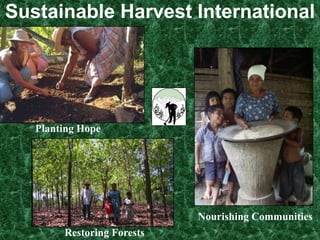
Sustainable Family Farms Reducing Poverty and Deforestation in Central AmericaBelize, Honduras, Nicaragua & Panama             Cape Elizabeth H.S., 2009
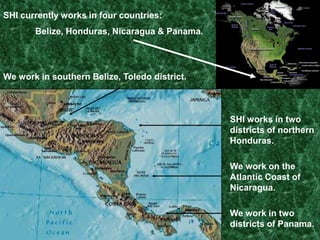
SHI currently works in four countries:	Belize, Honduras, Nicaragua & Panama.We work in southern Belize, Toledo district.SHI works in two districts of northern Honduras.We work on the Atlantic Coast of Nicaragua.We work in two districts of Panama.
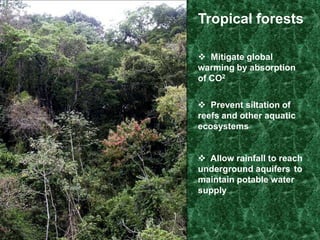
Tropical forests  Mitigate global warming by absorption of CO2
  Prevent siltation of reefs and other aquatic ecosystems
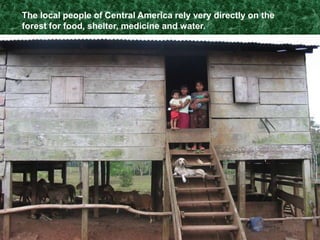
  Allow rainfall to reach underground aquifers 	to maintain potable water supplyThe local people of Central America rely very directly on the forest for food, shelter, medicineand water.
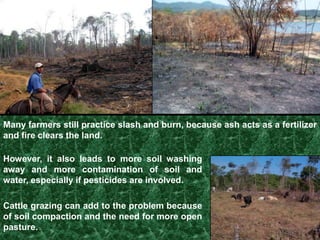
Many farmers still practice slash and burn, because ash acts as a fertilizer and fire clears the land.However, it also leads to more soil washing away and more contamination of soil and water, especially if pesticides are involved.Cattle grazing can add to the problem because of soil compaction and the need for more open pasture.
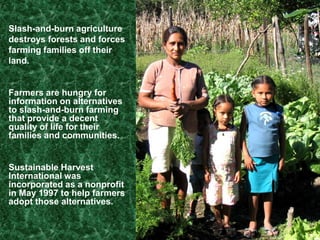
Slash-and-burn agriculture destroys forests and forces farming families off their land.Farmers are hungry for information on alternatives to slash-and-burn farming that provide a decent quality of life for their families and communities.Sustainable Harvest International was incorporated as a nonprofit in May 1997 to help farmers adopt those alternatives.
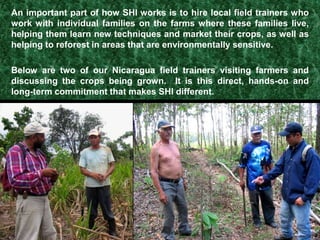
An important part of how SHI works is to hire local field trainers who work with individual families on the farms where these families live, helping them learn new techniques and market their crops, as well as helping to reforest in areas that are environmentally sensitive.Below are two of our Nicaragua field trainers visiting farmers and discussing the crops being grown.  It is this direct, hands-on and long-term commitment that makes SHI different.
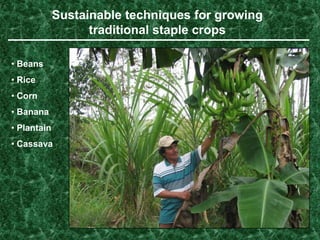
 Beans
 Rice
 Corn
 Banana
 Plantain
 CassavaSustainable techniques for growing   traditional staple crops
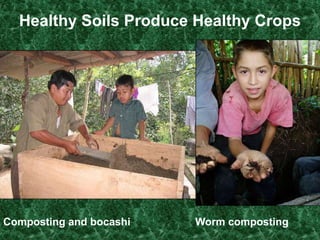
Healthy Soils Produce Healthy CropsComposting and bocashi			Worm composting
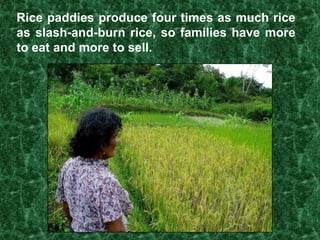
Rice paddies produce four times as much rice as slash-and-burn rice, so families have more to eat and more to sell.
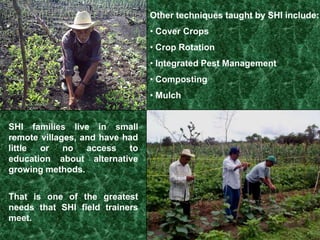
Other techniques taught by SHI include: Cover Crops
 Crop Rotation
Integrated Pest Management
 Composting
 MulchSHI families live in small remote villages, and have had little or no access to education about alternative growing methods.  That is one of the greatest needs that SHI field trainers meet.
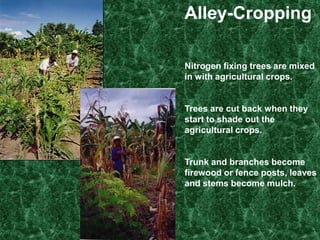
Alley-CroppingNitrogen fixing trees are mixed in with agricultural crops.Trees are cut back when they start to shade out the agricultural crops.Trunk and branches become firewood or fence posts, leaves and stems become mulch.
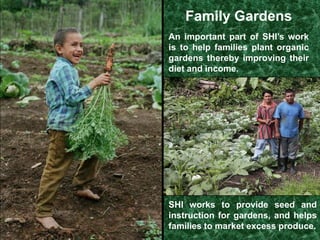
Family GardensAn important part of SHI’s work is to help families plant organic gardens thereby improving their diet and income.SHI works to provide seed and instruction for gardens, and helps families to market excess produce.
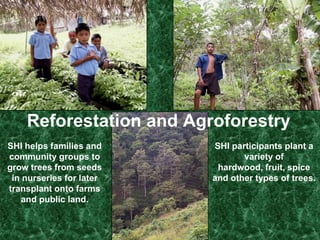
Reforestation and AgroforestrySHI helps families and community groups to grow trees from seeds in nurseries for later transplant onto farms and public land.SHI participants plant a variety of hardwood, fruit, spice and other types of trees.
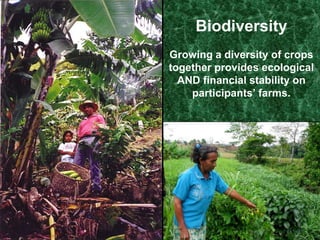
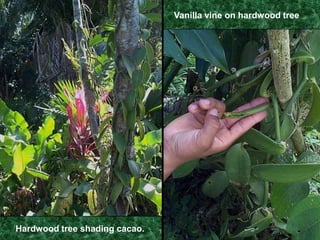
BiodiversityGrowing a diversity of crops together provides ecological AND financial stability on participants’ farms.
Vanilla vine on hardwood treeHardwood tree shading cacao.
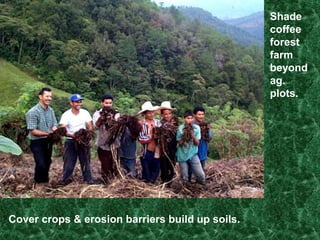
Shade coffee forest farm beyond ag. plots. Cover crops & erosion barriers build up soils.
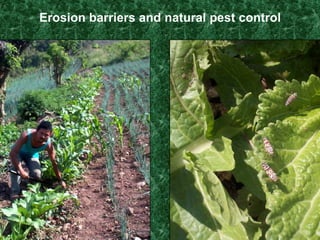
Erosion barriers and natural pest control
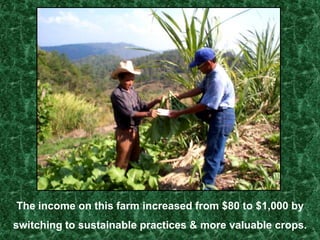
The income on this farm increased from $80 to $1,000 by switching to sustainable practices & more valuable crops.
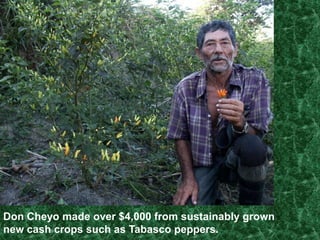
Don Cheyo made over $4,000 from sustainably grown new cash crops such as Tabasco peppers.
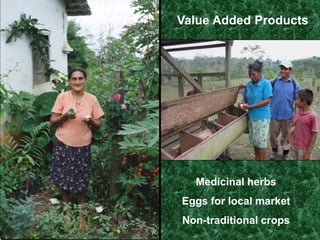
Value Added ProductsMedicinal herbsEggs for local marketNon-traditional crops
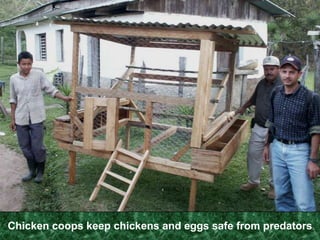
Chicken coops keep chickens and eggs safe from predators
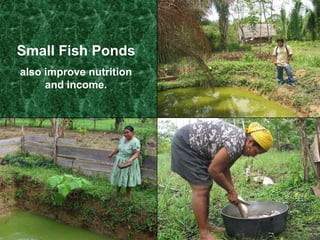
Small Fish Pondsalso improve nutrition and income.

Cape Elizabeth Hs

  • 1.
    Sustainable Family FarmsReducing Poverty and Deforestation in Central AmericaBelize, Honduras, Nicaragua & Panama Cape Elizabeth H.S., 2009
  • 2.
    SHI currently worksin four countries: Belize, Honduras, Nicaragua & Panama.We work in southern Belize, Toledo district.SHI works in two districts of northern Honduras.We work on the Atlantic Coast of Nicaragua.We work in two districts of Panama.
  • 3.
    Tropical forests Mitigate global warming by absorption of CO2
  • 4.
    Preventsiltation of reefs and other aquatic ecosystems
  • 5.
    Allowrainfall to reach underground aquifers to maintain potable water supplyThe local people of Central America rely very directly on the forest for food, shelter, medicineand water.
  • 6.
    Many farmers stillpractice slash and burn, because ash acts as a fertilizer and fire clears the land.However, it also leads to more soil washing away and more contamination of soil and water, especially if pesticides are involved.Cattle grazing can add to the problem because of soil compaction and the need for more open pasture.
  • 7.
    Slash-and-burn agriculture destroysforests and forces farming families off their land.Farmers are hungry for information on alternatives to slash-and-burn farming that provide a decent quality of life for their families and communities.Sustainable Harvest International was incorporated as a nonprofit in May 1997 to help farmers adopt those alternatives.
  • 8.
    An important partof how SHI works is to hire local field trainers who work with individual families on the farms where these families live, helping them learn new techniques and market their crops, as well as helping to reforest in areas that are environmentally sensitive.Below are two of our Nicaragua field trainers visiting farmers and discussing the crops being grown. It is this direct, hands-on and long-term commitment that makes SHI different.
  • 9.
  • 10.
  • 11.
  • 12.
  • 13.
  • 14.
    CassavaSustainable techniquesfor growing traditional staple crops
  • 15.
    Healthy Soils ProduceHealthy CropsComposting and bocashi Worm composting
  • 16.
    Rice paddies producefour times as much rice as slash-and-burn rice, so families have more to eat and more to sell.
  • 17.
    Other techniques taughtby SHI include: Cover Crops
  • 18.
  • 19.
  • 20.
  • 21.
    MulchSHI familieslive in small remote villages, and have had little or no access to education about alternative growing methods. That is one of the greatest needs that SHI field trainers meet.
  • 22.
    Alley-CroppingNitrogen fixing treesare mixed in with agricultural crops.Trees are cut back when they start to shade out the agricultural crops.Trunk and branches become firewood or fence posts, leaves and stems become mulch.
  • 23.
    Family GardensAn importantpart of SHI’s work is to help families plant organic gardens thereby improving their diet and income.SHI works to provide seed and instruction for gardens, and helps families to market excess produce.
  • 24.
    Reforestation and AgroforestrySHIhelps families and community groups to grow trees from seeds in nurseries for later transplant onto farms and public land.SHI participants plant a variety of hardwood, fruit, spice and other types of trees.
  • 25.
    BiodiversityGrowing a diversityof crops together provides ecological AND financial stability on participants’ farms.
  • 26.
    Vanilla vine onhardwood treeHardwood tree shading cacao.
  • 27.
    Shade coffee forestfarm beyond ag. plots. Cover crops & erosion barriers build up soils.
  • 28.
    Erosion barriers andnatural pest control
  • 29.
    The income onthis farm increased from $80 to $1,000 by switching to sustainable practices & more valuable crops.
  • 30.
    Don Cheyo madeover $4,000 from sustainably grown new cash crops such as Tabasco peppers.
  • 31.
    Value Added ProductsMedicinalherbsEggs for local marketNon-traditional crops
  • 32.
    Chicken coops keepchickens and eggs safe from predators
  • 33.
    Small Fish Pondsalsoimprove nutrition and income.