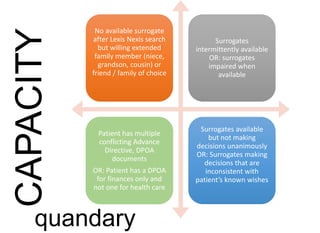
CAPACITY
quandary
No available surrogate
after Lexis Nexis search
but willing extended
family member (niece,
grandson, cousin) or
friend / family of choice
Surrogates
intermittently available
OR: surrogates
impaired when
available
Patient has multiple
conflicting Advance
Directive, DPOA
documents
OR: Patient has a DPOA
for finances only and
not one for health care
Surrogates available
but not making
decisions unanimously
OR: Surrogates making
decisions that are
inconsistent with
patient’s known wishes
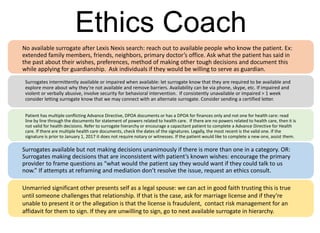
Ethics Coach
Surrogates intermittently available or impaired when available: let surrogate know that they are required to be available and
explore more about why they’re not available and remove barriers. Availability can be via phone, skype, etc. If impaired and
violent or verbally abusive, involve security for behavioral intervention. If consistently unavailable or impaired > 1 week
consider letting surrogate know that we may connect with an alternate surrogate. Consider sending a certified letter.
Patient has multiple conflicting Advance Directive, DPOA documents or has a DPOA for finances only and not one for health care: read
line by line through the documents for statement of powers related to health care. If there are no powers related to health care, then it is
not valid for health decisions. Refer to surrogate hierarchy or encourage a capacitant patient to complete a Advance Directive for Health
care. If there are multiple health care documents, check the dates of the signatures. Legally, the most recent is the valid one. If the
signature is prior to January 1, 2017 it does not require notary or witnesses. If the patient would like to complete a new one, assist them.
Surrogates available but not making decisions unanimously if there is more than one in a category. OR:
Surrogates making decisions that are inconsistent with patient’s known wishes: encourage the primary
provider to frame questions as “what would the patient say they would want if they could talk to us
now.” If attempts at reframing and mediation don’t resolve the issue, request an ethics consult.
Unmarried significant other presents self as a legal spouse: we can act in good faith trusting this is true
until someone challenges that relationship. If that is the case, ask for marriage license and if they’re
unable to present it or the allegation is that the license is fraudulent, contact risk management for an
affidavit for them to sign. If they are unwilling to sign, go to next available surrogate in hierarchy.
No available surrogate after Lexis Nexis search: reach out to available people who know the patient. Ex:
extended family members, friends, neighbors, primary doctor’s office. Ask what the patient has said in
the past about their wishes, preferences, method of making other tough decisions and document this
while applying for guardianship. Ask individuals if they would be willing to serve as guardian.

Capacity Quandary Ethics Coach

  • 1.
    CAPACITY quandary No available surrogate afterLexis Nexis search but willing extended family member (niece, grandson, cousin) or friend / family of choice Surrogates intermittently available OR: surrogates impaired when available Patient has multiple conflicting Advance Directive, DPOA documents OR: Patient has a DPOA for finances only and not one for health care Surrogates available but not making decisions unanimously OR: Surrogates making decisions that are inconsistent with patient’s known wishes
  • 2.
    Ethics Coach Surrogates intermittentlyavailable or impaired when available: let surrogate know that they are required to be available and explore more about why they’re not available and remove barriers. Availability can be via phone, skype, etc. If impaired and violent or verbally abusive, involve security for behavioral intervention. If consistently unavailable or impaired > 1 week consider letting surrogate know that we may connect with an alternate surrogate. Consider sending a certified letter. Patient has multiple conflicting Advance Directive, DPOA documents or has a DPOA for finances only and not one for health care: read line by line through the documents for statement of powers related to health care. If there are no powers related to health care, then it is not valid for health decisions. Refer to surrogate hierarchy or encourage a capacitant patient to complete a Advance Directive for Health care. If there are multiple health care documents, check the dates of the signatures. Legally, the most recent is the valid one. If the signature is prior to January 1, 2017 it does not require notary or witnesses. If the patient would like to complete a new one, assist them. Surrogates available but not making decisions unanimously if there is more than one in a category. OR: Surrogates making decisions that are inconsistent with patient’s known wishes: encourage the primary provider to frame questions as “what would the patient say they would want if they could talk to us now.” If attempts at reframing and mediation don’t resolve the issue, request an ethics consult. Unmarried significant other presents self as a legal spouse: we can act in good faith trusting this is true until someone challenges that relationship. If that is the case, ask for marriage license and if they’re unable to present it or the allegation is that the license is fraudulent, contact risk management for an affidavit for them to sign. If they are unwilling to sign, go to next available surrogate in hierarchy. No available surrogate after Lexis Nexis search: reach out to available people who know the patient. Ex: extended family members, friends, neighbors, primary doctor’s office. Ask what the patient has said in the past about their wishes, preferences, method of making other tough decisions and document this while applying for guardianship. Ask individuals if they would be willing to serve as guardian.

Editor's Notes

  • #3 6th scenario: patient from another state (ex: ID, MT, OR) or is a Tribal Member