CAPA Training
CORRECTIVE ACTION PREVENTIVE ACTION
Prepared by: Izzati & Jasmin
Date: 29/2/2024
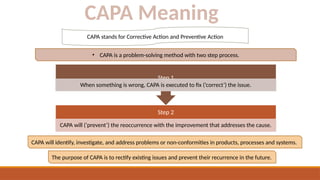
Step 2
CAPA will (‘prevent’) the reoccurrence with the improvement that addresses the cause.
Step 1
When something is wrong, CAPA is executed to fix (‘correct’) the issue.
CAPA stands for Corrective Action and Preventive Action
CAPA Meaning
• CAPA is a problem-solving method with two step process.
CAPA will identify, investigate, and address problems or non-conformities in products, processes and systems.
The purpose of CAPA is to rectify existing issues and prevent their recurrence in the future.
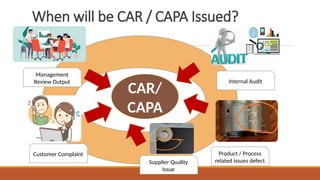
When will be CAR / CAPA Issued?
CAR/
CAPA
Customer Complaint
Management
Review Output Internal Audit
Product / Process
related issues defect
Supplier Quality
Issue
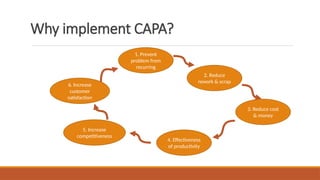
Why implement CAPA?
1. Prevent
problem from
recurring
2. Reduce
rework & scrap
4. Effectiveness
of productivity
3. Reduce cost
& money
5. Increase
competitiveness
6. Increase
customer
satisfaction
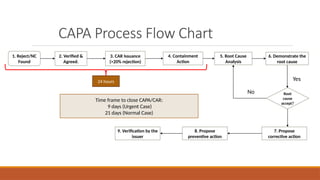
CAPA Process Flow Chart
2. Verified &
Agreed.
4. Containment
Action
5. Root Cause
Analysis
6. Demonstrate the
root cause
7. Propose
corrective action
8. Propose
preventive action
9. Verification by the
issuer
1. Reject/NC
Found
Root
cause
accept?
Yes
No
3. CAR Issuance
(>20% rejection)
Time frame to close CAPA/CAR:
9 days (Urgent Case)
21 days (Normal Case)
24 hours
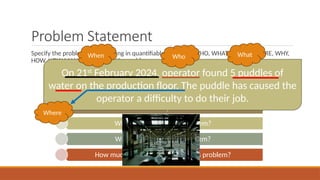
Specify the problem by identifying in quantifiable terms the WHO, WHAT, WHEN, WHERE, WHY,
HOW, HOW MANY (5W 2H) for the problem.
Problem Statement
Where does it happen?
When does it happen?
What is the problem?
Who is affected by the problem?
Who is involved in the problem?
How much could be affected by this problem?
On 21st
February 2024, operator found 5 puddles of
water on the production floor. The puddle has caused the
operator a difficulty to do their job.
When Who What
Where
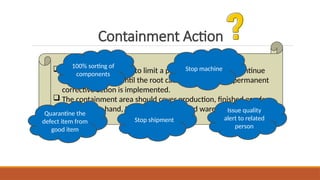
 Containment action is to limit a problem extent while continue
normal operation until the root cause is defined and permanent
corrective action is implemented.
 The containment area should cover production, finished goods,
customer on hand, Incoming material and warehouse storage.
Containment Action
100% sorting of
components
Stop shipment
Quarantine the
defect item from
good item
Stop machine
Issue quality
alert to related
person
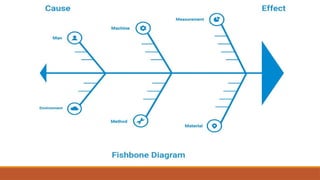
Useful Tool To Determine Root Cause
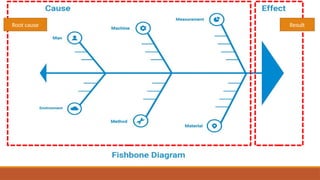
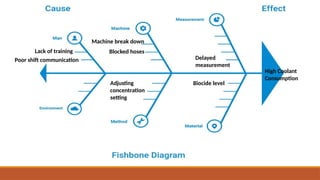
Fishbone Diagram (5 M 1 E)
The “5 Whys”
Root cause Result
High Coolant
Consumption
Lack of training
Poor shift communication
Machine break down
Blocked hoses
Adjusting
concentration
setting
Biocide level
Delayed
measurement
5 Why Video
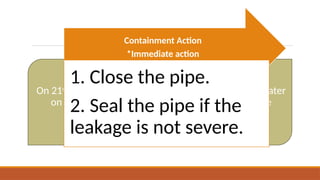
Problem Statement
On 21st
February 2024, operator found 5 puddles of water
on the production floor. The puddle has caused the
operator a difficulty to do their job.
Containment Action
*Immediate action
1. Close the pipe.
2. Seal the pipe if the
leakage is not severe.
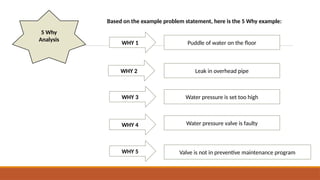
Puddle of water on the floor
Leak in overhead pipe
Water pressure is set too high
Water pressure valve is faulty
Valve is not in preventive maintenance program
5 Why
Analysis
WHY 1
WHY 2
WHY 3
WHY 4
WHY 5
Based on the example problem statement, here is the 5 Why example:
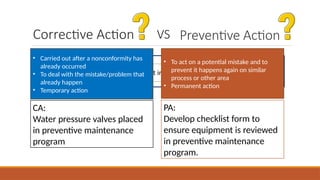
Preventive Action
Corrective Action
CA:
Water pressure valves placed
in preventive maintenance
program
PA:
Develop checklist form to
ensure equipment is reviewed
in preventive maintenance
program.
• Carried out after a nonconformity has
already occurred
• To deal with the mistake/problem that
already happen
• Temporary action
• To act on a potential mistake and to
prevent it happens again on similar
process or other area
• Permanent action
VS
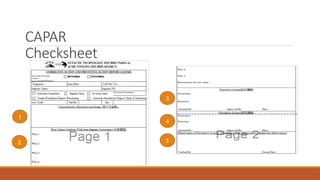
CAPAR
Checksheet
1
2
3
4
5
Non Conformity Issue:
On 21st
February, Customer found 3
pcs of Part A Mix with Part B at
their Warehouse.
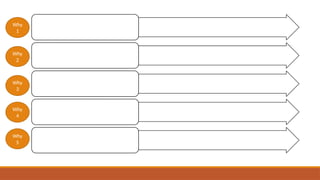
Please list out the root cause using any quality tool.
Why
1
Why
2
Why
3
Why
4
Why
5
Q&A

CAPA Training Material for corrective action and preventive action

  • 1.
    CAPA Training CORRECTIVE ACTIONPREVENTIVE ACTION Prepared by: Izzati & Jasmin Date: 29/2/2024
  • 2.
    Step 2 CAPA will(‘prevent’) the reoccurrence with the improvement that addresses the cause. Step 1 When something is wrong, CAPA is executed to fix (‘correct’) the issue. CAPA stands for Corrective Action and Preventive Action CAPA Meaning • CAPA is a problem-solving method with two step process. CAPA will identify, investigate, and address problems or non-conformities in products, processes and systems. The purpose of CAPA is to rectify existing issues and prevent their recurrence in the future.
  • 3.
    When will beCAR / CAPA Issued? CAR/ CAPA Customer Complaint Management Review Output Internal Audit Product / Process related issues defect Supplier Quality Issue
  • 4.
    Why implement CAPA? 1.Prevent problem from recurring 2. Reduce rework & scrap 4. Effectiveness of productivity 3. Reduce cost & money 5. Increase competitiveness 6. Increase customer satisfaction
  • 5.
    CAPA Process FlowChart 2. Verified & Agreed. 4. Containment Action 5. Root Cause Analysis 6. Demonstrate the root cause 7. Propose corrective action 8. Propose preventive action 9. Verification by the issuer 1. Reject/NC Found Root cause accept? Yes No 3. CAR Issuance (>20% rejection) Time frame to close CAPA/CAR: 9 days (Urgent Case) 21 days (Normal Case) 24 hours
  • 6.
    Specify the problemby identifying in quantifiable terms the WHO, WHAT, WHEN, WHERE, WHY, HOW, HOW MANY (5W 2H) for the problem. Problem Statement Where does it happen? When does it happen? What is the problem? Who is affected by the problem? Who is involved in the problem? How much could be affected by this problem? On 21st February 2024, operator found 5 puddles of water on the production floor. The puddle has caused the operator a difficulty to do their job. When Who What Where
  • 7.
     Containment actionis to limit a problem extent while continue normal operation until the root cause is defined and permanent corrective action is implemented.  The containment area should cover production, finished goods, customer on hand, Incoming material and warehouse storage. Containment Action 100% sorting of components Stop shipment Quarantine the defect item from good item Stop machine Issue quality alert to related person
  • 8.
    Useful Tool ToDetermine Root Cause Fishbone Diagram (5 M 1 E) The “5 Whys”
  • 9.
  • 10.
    High Coolant Consumption Lack oftraining Poor shift communication Machine break down Blocked hoses Adjusting concentration setting Biocide level Delayed measurement
  • 11.
  • 12.
    Problem Statement On 21st February2024, operator found 5 puddles of water on the production floor. The puddle has caused the operator a difficulty to do their job. Containment Action *Immediate action 1. Close the pipe. 2. Seal the pipe if the leakage is not severe.
  • 13.
    Puddle of wateron the floor Leak in overhead pipe Water pressure is set too high Water pressure valve is faulty Valve is not in preventive maintenance program 5 Why Analysis WHY 1 WHY 2 WHY 3 WHY 4 WHY 5 Based on the example problem statement, here is the 5 Why example:
  • 14.
    Preventive Action Corrective Action CA: Waterpressure valves placed in preventive maintenance program PA: Develop checklist form to ensure equipment is reviewed in preventive maintenance program. • Carried out after a nonconformity has already occurred • To deal with the mistake/problem that already happen • Temporary action • To act on a potential mistake and to prevent it happens again on similar process or other area • Permanent action VS
  • 15.
  • 16.
    Non Conformity Issue: On21st February, Customer found 3 pcs of Part A Mix with Part B at their Warehouse. Please list out the root cause using any quality tool.
  • 18.
  • 19.

Editor's Notes

  • #1 j
  • #2 CAPA stands for Corrective Action and Preventive Action CAPA is a problem-solving method with two-step process. Step 1: When something is wrong, CAPA is executed to fix (‘correct’) the issue. Step 2: CAPA will identify, investigate, and address problems or non-conformities in products, processes and systems.