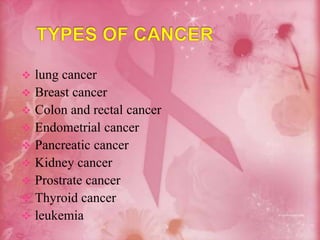
 TYPES
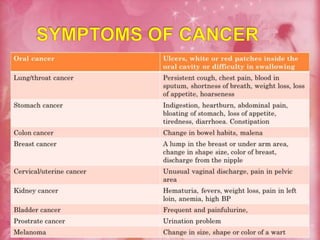
 SYMPTOMS
 DIETARY MANAGEMENT
 Division – uncontrolled cell division
 Growth – formation of a lump (tumour) or
large numbers of abnormal white cells in the
blood
 Mutation – changes to how the cell is viewed
by the immune system
 Spread – ability to move within the body and
survive in another part
 lung cancer
 Breast cancer
 Colon and rectal cancer
 Endometrial cancer
 Pancreatic cancer
 Kidney cancer
 Prostrate cancer
 Thyroid cancer
 leukemia
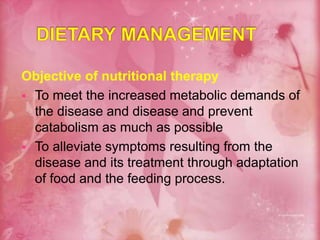
Objective of nutritional therapy
 To meet the increased metabolic demands of
the disease and disease and prevent
catabolism as much as possible
 To alleviate symptoms resulting from the
disease and its treatment through adaptation
of food and the feeding process.
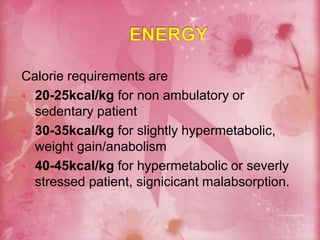
Calorie requirements are
 20-25kcal/kg for non ambulatory or
sedentary patient
 30-35kcal/kg for slightly hypermetabolic,
weight gain/anabolism
 40-45kcal/kg for hypermetabolic or severly
stressed patient, signicicant malabsorption.
Additional protein is required for regeneration,
healing and rehabilitation.
 0.8-1.0g/kg- normal maintenance level
 1.5-2.5g/kg if increased protein demands
exist. E.g. protein losing enteropathy, hyper
metabolism or extreme wasting
 Optimal intake of vitamins and minerals are
recommended
 Vitamin D(400-800IU) helps to protect
against several types of cancer including
breast cancer.
 High calorie
 Moderate protein
 High fiber
 Adequate vitamin and minerals
 Avoid transfat.
 Cut down sugar and refined food.
 Limit and red meat
 High intake of fruit and vegetable(without
much cook)
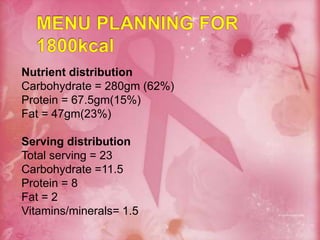
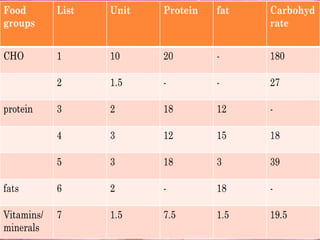
Nutrient distribution
Carbohydrate = 280gm (62%)
Protein = 67.5gm(15%)
Fat = 47gm(23%)
Serving distribution
Total serving = 23
Carbohydrate =11.5
Protein = 8
Fat = 2
Vitamins/minerals= 1.5
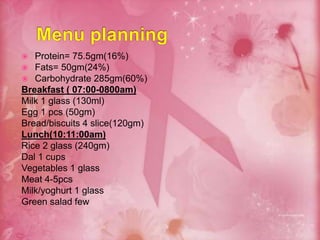
 Protein= 75.5gm(16%)
 Fats= 50gm(24%)
 Carbohydrate 285gm(60%)
Breakfast ( 07:00-0800am)
Milk 1 glass (130ml)
Egg 1 pcs (50gm)
Bread/biscuits 4 slice(120gm)
Lunch(10:11:00am)
Rice 2 glass (240gm)
Dal 1 cups
Vegetables 1 glass
Meat 4-5pcs
Milk/yoghurt 1 glass
Green salad few
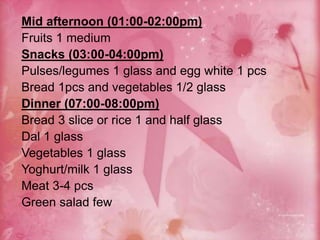
Mid afternoon (01:00-02:00pm)
Fruits 1 medium
Snacks (03:00-04:00pm)
Pulses/legumes 1 glass and egg white 1 pcs
Bread 1pcs and vegetables 1/2 glass
Dinner (07:00-08:00pm)
Bread 3 slice or rice 1 and half glass
Dal 1 glass
Vegetables 1 glass
Yoghurt/milk 1 glass
Meat 3-4 pcs
Green salad few
 Cancer is a disease of Division, growth and
spread
 It has a number of causes many of them are
preventable
 The survival of the patient is determined by
the stage of the disease, the earlier the
detection or the smaller the tumour the better
the survival
Cancer

Cancer

  • 2.
     TYPES  SYMPTOMS DIETARY MANAGEMENT
  • 3.
     Division –uncontrolled cell division  Growth – formation of a lump (tumour) or large numbers of abnormal white cells in the blood  Mutation – changes to how the cell is viewed by the immune system  Spread – ability to move within the body and survive in another part
  • 4.
     lung cancer Breast cancer  Colon and rectal cancer  Endometrial cancer  Pancreatic cancer  Kidney cancer  Prostrate cancer  Thyroid cancer  leukemia
  • 6.
    Objective of nutritionaltherapy  To meet the increased metabolic demands of the disease and disease and prevent catabolism as much as possible  To alleviate symptoms resulting from the disease and its treatment through adaptation of food and the feeding process.
  • 7.
    Calorie requirements are 20-25kcal/kg for non ambulatory or sedentary patient  30-35kcal/kg for slightly hypermetabolic, weight gain/anabolism  40-45kcal/kg for hypermetabolic or severly stressed patient, signicicant malabsorption.
  • 8.
    Additional protein isrequired for regeneration, healing and rehabilitation.  0.8-1.0g/kg- normal maintenance level  1.5-2.5g/kg if increased protein demands exist. E.g. protein losing enteropathy, hyper metabolism or extreme wasting
  • 9.
     Optimal intakeof vitamins and minerals are recommended  Vitamin D(400-800IU) helps to protect against several types of cancer including breast cancer.
  • 11.
     High calorie Moderate protein  High fiber  Adequate vitamin and minerals  Avoid transfat.  Cut down sugar and refined food.  Limit and red meat  High intake of fruit and vegetable(without much cook)
  • 12.
    Nutrient distribution Carbohydrate =280gm (62%) Protein = 67.5gm(15%) Fat = 47gm(23%) Serving distribution Total serving = 23 Carbohydrate =11.5 Protein = 8 Fat = 2 Vitamins/minerals= 1.5
  • 14.
     Protein= 75.5gm(16%) Fats= 50gm(24%)  Carbohydrate 285gm(60%) Breakfast ( 07:00-0800am) Milk 1 glass (130ml) Egg 1 pcs (50gm) Bread/biscuits 4 slice(120gm) Lunch(10:11:00am) Rice 2 glass (240gm) Dal 1 cups Vegetables 1 glass Meat 4-5pcs Milk/yoghurt 1 glass Green salad few
  • 15.
    Mid afternoon (01:00-02:00pm) Fruits1 medium Snacks (03:00-04:00pm) Pulses/legumes 1 glass and egg white 1 pcs Bread 1pcs and vegetables 1/2 glass Dinner (07:00-08:00pm) Bread 3 slice or rice 1 and half glass Dal 1 glass Vegetables 1 glass Yoghurt/milk 1 glass Meat 3-4 pcs Green salad few
  • 16.
     Cancer isa disease of Division, growth and spread  It has a number of causes many of them are preventable  The survival of the patient is determined by the stage of the disease, the earlier the detection or the smaller the tumour the better the survival