microelements
How micro elements are used in film openings to create
meaning and provoke response in the audience.
“The Conjuring”- film opening
microfeatures:
1. Extreme close up
2. Close up
3. Medium shot
4. Long shot
5. Extreme long shot
6. Track
7. Pan
8. Tilt
9. Zoom
10. Cut
11. Pace
12. Performance
Write a supporting paragraph to explain
how this analysis of the micro elements
will help you in your construction of your
film opening.
13. Diegetic
14. Non- Diegetic
15. Mise en scene (setting,
costume, figure expression,
props)
extremecloseup:
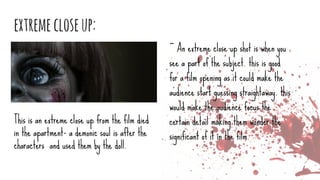
~ An extreme close up shot is when you
see a part of the subject. this is good
for a film opening as it could make the
audience start guessing straightaway. this
would make the audience focus the
certain detail making them wonder the
significant of it in the film.
This is an extreme close up from the film died
in the apartment- a demonic soul is after the
characters and used them by the doll.
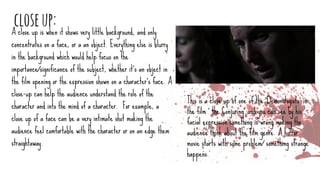
closeup:A close up is when it shows very little background, and only
concentrates on a face, or a an object. Everything else is blurry
in the background which would help focus on the
importance/significance of the subject, whether it’s an object in
the film opening or the expression shown on a character’s face. A
close-up can help the audience understand the role of the
character and into the mind of a character. For example, a
close up of a face can be a very intimate shot making the
audience feel comfortable with the character or on an edge them
straightaway.
This is a close up of one of the ‘Demonologists’ in
the film ‘ the Conjuring’ and you can see by his
facial expression something is wrong making the
audience think about the film genre. A horror
movie starts with some problem/ something strange
happens.
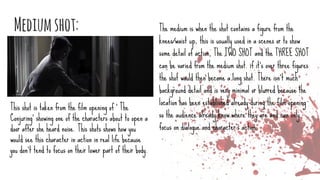
Mediumshot: The medium is when the shot contains a figure from the
knees/waist up, this is usually used in a scenes or to show
some detail of action. The TWO SHOT and the THREE SHOT
can be varied from the medium shot. if it’s over three figures
the shot would then become a long shot. There isn’t much
background detail and is very minimal or blurred because the
location has been established already during the film opening
so the audience already know where they are and can only
focus on dialogue and character’s action.
This shot is taken from the film opening of ‘ The
Conjuring’ showing one of the characters about to open a
door after she heard noise. This shots shows how you
would see this character in action in real life because
you don’t tend to focus on their lower part of their body.
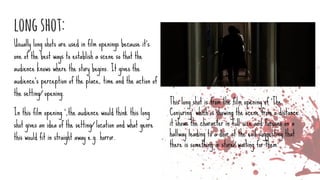
longshot:
Usually long shots are used in film openings because it's
one of the best ways to establish a scene so that the
audience knows where the story begins. It gives the
audience’s perception of the place, time and the action of
the setting/ opening.
In this film opening ’,the audience would think this long
shot gives an idea of the setting/ location and what genre
this would fit in straight away e.g. horror.
This long shot is from the film opening of ‘The
Conjuring’ which is showing the scene from a distance.
it shows the character in full size and focuses on a
hallway leading to a door at the end suggesting that
there is something in store/ waiting for them.
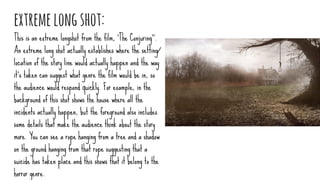
extremelongshot:
This is an extreme longshot from the film, ‘The Conjuring’’.
An extreme long shot actually establishes where the setting/
location of the story line would actually happen and the way
it's taken can suggest what genre the film would be in, so
the audience would respond quickly. For example, in the
background of this shot shows the house where all the
incidents actually happen, but the foreground also includes
some details that make the audience think about the story
more. You can see a rope hanging from a tree and a shadow
on the ground hanging from that rope suggesting that a
suicide has taken place and this shows that it belong to the
horror genre.
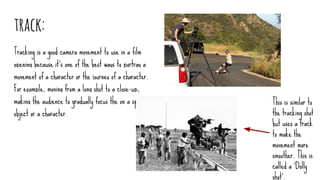
track:
Tracking is a good camera movement to use in a film
opening because it’s one of the best ways to portray a
movement of a character or the journey of a character.
For example, moving from a long shot to a close-up,
making the audience to gradually focus the on a specific
object or a character.
This is similar to
the tracking shot
but uses a track
to make the
movement more
smoother. This is
called a ‘Dolly
shot’.
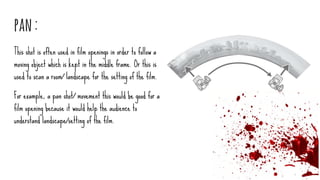
pan:
This shot is often used in film openings in order to follow a
moving object which is kept in the middle frame. Or this is
used to scan a room/ landscape for the setting of the film.
For example, a pan shot/ movement this would be good for a
film opening because it would help the audience to
understand landscape/setting of the film.
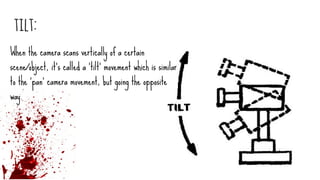
tilt:
When the camera scans vertically of a certain
scene/object, it’s called a ‘tilt’ movement which is similar
to the ‘pan’ camera movement, but going the opposite
way.
zoom:
This camera movement can actually be done hand-
held or using the zooming function on the camera.
This is when you focus on a subject and magnify it
which also helps the audience to focus on the
subject.
Cut:
A cut shot is a sudden transition from one shot to another. this helps the
flow/ continuity of the film opening so it's not dragging the opening
otherwise the audience would be uninterested quickly.
Pace:
This is the duration of a scene/ shot. A short duration/ faced paced scene reflects urgency or
action in a scene e.g when a person is being chased it will be fast paced. A long duration/ slow-
paced scene or shot is used in film openings to show importance of an object (mise-en scene). A
slow- paced shot gives a level of intimacy especially when focused on characters facial expressions.
Performance:
The facial expressions and body language of the characters completes everything. These are crucial
essentials give meaning to an action or dialogue in the scene which would help the audience to not
only understand but also react to it. For example, in a horror film one a the main facial expressions
would be fear and that would automatically tell the audience what might happen.
Diegetic:
Diegetic- is on screen or off screen sound- usually the dialogue of the scene or any other sound that belong to a scene
for example, a busy road scene you would naturally hear horns beeping, engines roaring, loud car radios and etc.
Non-Diegetic:
Is when the sound isn’t visible on-screen nor has been implied to be used in the scene. For example, the narrator's
commentary, a sound effect to make an action more dramatic and the background music (mood music).
There's a difference between diegetic or non-diegetic sound which depends on our understanding of the conventions.
A mixture of diegetic and non-diegetic conventions can create ambiguity and tension linking generally to horror, which
is usually known to surprise the audience. Another term for non-diegetic sound is commentary sound.
Commentary sound is another term that is used instead.
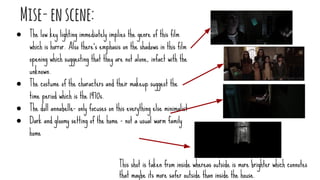
Mise-enscene:
● The low key lighting immediately implies the genre of this film
which is horror. Also there’s emphasis on the shadows in this film
opening which suggesting that they are not alone, infact with the
unknown.
● The costume of the characters and their makeup suggest the
time period which is the 1970s.
● The doll annabelle- only focuses on this everything else minimalist
● Dark and gloomy setting of the home - not a usual warm family
home
This shot is taken from inside whereas outside is more brighter which connotes
that maybe its more safer outside than inside the house.
Write a supporting paragraph to explain how this analysis of the micro elements will help you in
your construction of your film opening.
This analysis of these micro elements would help me in my construction of my film opening because i
would need to know what would be good for my film openings linking with the convention of the film
genre.

Media studies micro elements

  • 1.
    microelements How micro elementsare used in film openings to create meaning and provoke response in the audience. “The Conjuring”- film opening
  • 2.
    microfeatures: 1. Extreme closeup 2. Close up 3. Medium shot 4. Long shot 5. Extreme long shot 6. Track 7. Pan 8. Tilt 9. Zoom 10. Cut 11. Pace 12. Performance Write a supporting paragraph to explain how this analysis of the micro elements will help you in your construction of your film opening. 13. Diegetic 14. Non- Diegetic 15. Mise en scene (setting, costume, figure expression, props)
  • 3.
    extremecloseup: ~ An extremeclose up shot is when you see a part of the subject. this is good for a film opening as it could make the audience start guessing straightaway. this would make the audience focus the certain detail making them wonder the significant of it in the film. This is an extreme close up from the film died in the apartment- a demonic soul is after the characters and used them by the doll.
  • 4.
    closeup:A close upis when it shows very little background, and only concentrates on a face, or a an object. Everything else is blurry in the background which would help focus on the importance/significance of the subject, whether it’s an object in the film opening or the expression shown on a character’s face. A close-up can help the audience understand the role of the character and into the mind of a character. For example, a close up of a face can be a very intimate shot making the audience feel comfortable with the character or on an edge them straightaway. This is a close up of one of the ‘Demonologists’ in the film ‘ the Conjuring’ and you can see by his facial expression something is wrong making the audience think about the film genre. A horror movie starts with some problem/ something strange happens.
  • 5.
    Mediumshot: The mediumis when the shot contains a figure from the knees/waist up, this is usually used in a scenes or to show some detail of action. The TWO SHOT and the THREE SHOT can be varied from the medium shot. if it’s over three figures the shot would then become a long shot. There isn’t much background detail and is very minimal or blurred because the location has been established already during the film opening so the audience already know where they are and can only focus on dialogue and character’s action. This shot is taken from the film opening of ‘ The Conjuring’ showing one of the characters about to open a door after she heard noise. This shots shows how you would see this character in action in real life because you don’t tend to focus on their lower part of their body.
  • 6.
    longshot: Usually long shotsare used in film openings because it's one of the best ways to establish a scene so that the audience knows where the story begins. It gives the audience’s perception of the place, time and the action of the setting/ opening. In this film opening ’,the audience would think this long shot gives an idea of the setting/ location and what genre this would fit in straight away e.g. horror. This long shot is from the film opening of ‘The Conjuring’ which is showing the scene from a distance. it shows the character in full size and focuses on a hallway leading to a door at the end suggesting that there is something in store/ waiting for them.
  • 7.
    extremelongshot: This is anextreme longshot from the film, ‘The Conjuring’’. An extreme long shot actually establishes where the setting/ location of the story line would actually happen and the way it's taken can suggest what genre the film would be in, so the audience would respond quickly. For example, in the background of this shot shows the house where all the incidents actually happen, but the foreground also includes some details that make the audience think about the story more. You can see a rope hanging from a tree and a shadow on the ground hanging from that rope suggesting that a suicide has taken place and this shows that it belong to the horror genre.
  • 8.
    track: Tracking is agood camera movement to use in a film opening because it’s one of the best ways to portray a movement of a character or the journey of a character. For example, moving from a long shot to a close-up, making the audience to gradually focus the on a specific object or a character. This is similar to the tracking shot but uses a track to make the movement more smoother. This is called a ‘Dolly shot’.
  • 9.
    pan: This shot isoften used in film openings in order to follow a moving object which is kept in the middle frame. Or this is used to scan a room/ landscape for the setting of the film. For example, a pan shot/ movement this would be good for a film opening because it would help the audience to understand landscape/setting of the film.
  • 10.
    tilt: When the camerascans vertically of a certain scene/object, it’s called a ‘tilt’ movement which is similar to the ‘pan’ camera movement, but going the opposite way.
  • 11.
    zoom: This camera movementcan actually be done hand- held or using the zooming function on the camera. This is when you focus on a subject and magnify it which also helps the audience to focus on the subject.
  • 12.
    Cut: A cut shotis a sudden transition from one shot to another. this helps the flow/ continuity of the film opening so it's not dragging the opening otherwise the audience would be uninterested quickly.
  • 13.
    Pace: This is theduration of a scene/ shot. A short duration/ faced paced scene reflects urgency or action in a scene e.g when a person is being chased it will be fast paced. A long duration/ slow- paced scene or shot is used in film openings to show importance of an object (mise-en scene). A slow- paced shot gives a level of intimacy especially when focused on characters facial expressions.
  • 14.
    Performance: The facial expressionsand body language of the characters completes everything. These are crucial essentials give meaning to an action or dialogue in the scene which would help the audience to not only understand but also react to it. For example, in a horror film one a the main facial expressions would be fear and that would automatically tell the audience what might happen.
  • 15.
    Diegetic: Diegetic- is onscreen or off screen sound- usually the dialogue of the scene or any other sound that belong to a scene for example, a busy road scene you would naturally hear horns beeping, engines roaring, loud car radios and etc. Non-Diegetic: Is when the sound isn’t visible on-screen nor has been implied to be used in the scene. For example, the narrator's commentary, a sound effect to make an action more dramatic and the background music (mood music). There's a difference between diegetic or non-diegetic sound which depends on our understanding of the conventions. A mixture of diegetic and non-diegetic conventions can create ambiguity and tension linking generally to horror, which is usually known to surprise the audience. Another term for non-diegetic sound is commentary sound. Commentary sound is another term that is used instead.
  • 16.
    Mise-enscene: ● The lowkey lighting immediately implies the genre of this film which is horror. Also there’s emphasis on the shadows in this film opening which suggesting that they are not alone, infact with the unknown. ● The costume of the characters and their makeup suggest the time period which is the 1970s. ● The doll annabelle- only focuses on this everything else minimalist ● Dark and gloomy setting of the home - not a usual warm family home This shot is taken from inside whereas outside is more brighter which connotes that maybe its more safer outside than inside the house.
  • 17.
    Write a supportingparagraph to explain how this analysis of the micro elements will help you in your construction of your film opening. This analysis of these micro elements would help me in my construction of my film opening because i would need to know what would be good for my film openings linking with the convention of the film genre.