Download to read offline




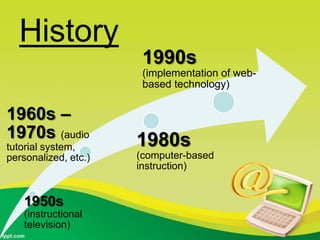

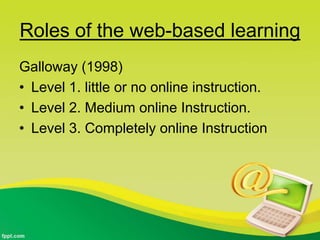

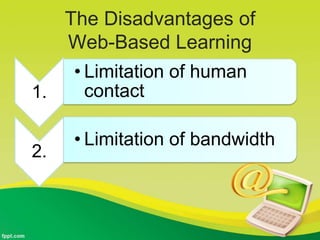


This document discusses Computer Assisted Language Learning (CALL). CALL uses computers to facilitate language learning. It is defined as applying computers to language teaching and learning. CALL aims to take advantage of computers' flexibility and ability to interact with learners to encourage language learning and develop communicative competence. Potential advantages include developing autonomous learners, creating effective learning, and motivating students. However, CALL can also be less handy, costly, and more difficult for reading long texts. The document then discusses the history and roles of web-based learning as well as its advantages like availability, affordable cost, and personalized learning, though it has limitations like reduced human contact and bandwidth.


