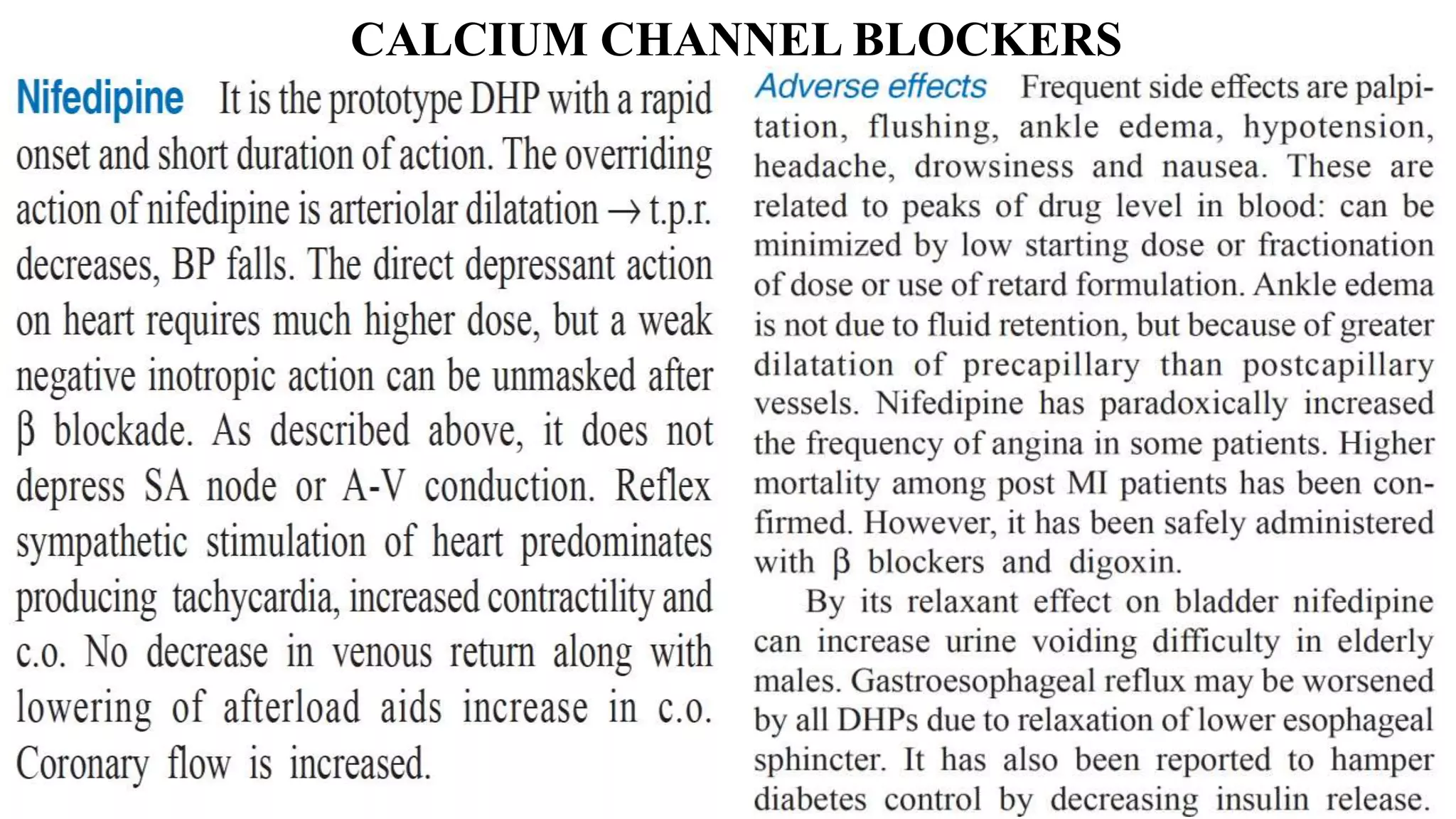
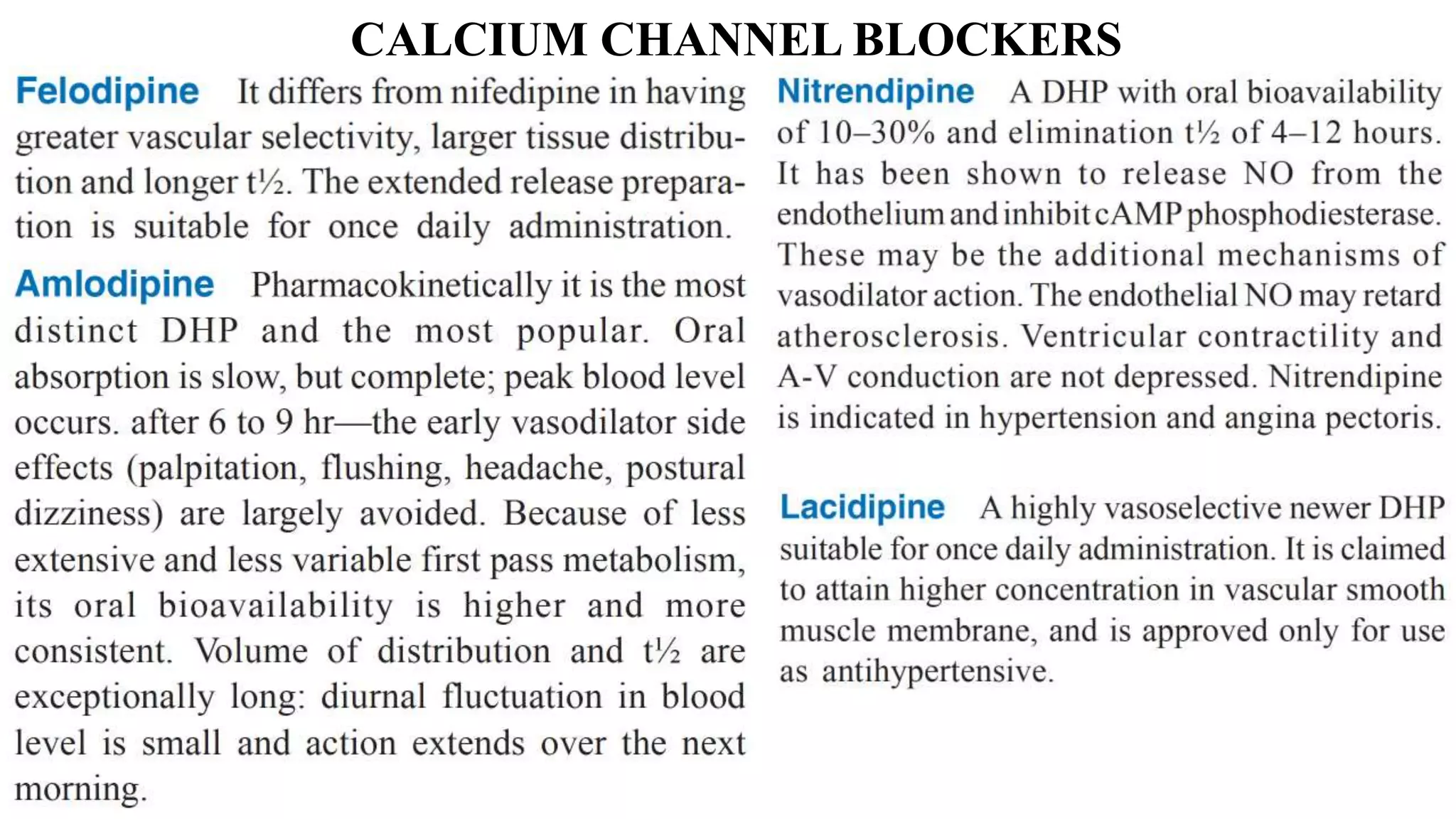
CALCIUM CHANNEL BLOCKERS
 Three important classes of calcium channel blockers are:
 Verapamil-–a phenyl alkylamine, hydrophilic papaverine congener
 Nifedipine---a dihydropyridine (lipophilic)
 Diltiazem----a hydrophilic benzothiazepine
 The dihydropyridines are the most potent Ca2+ channel blockers
 Calcium channels
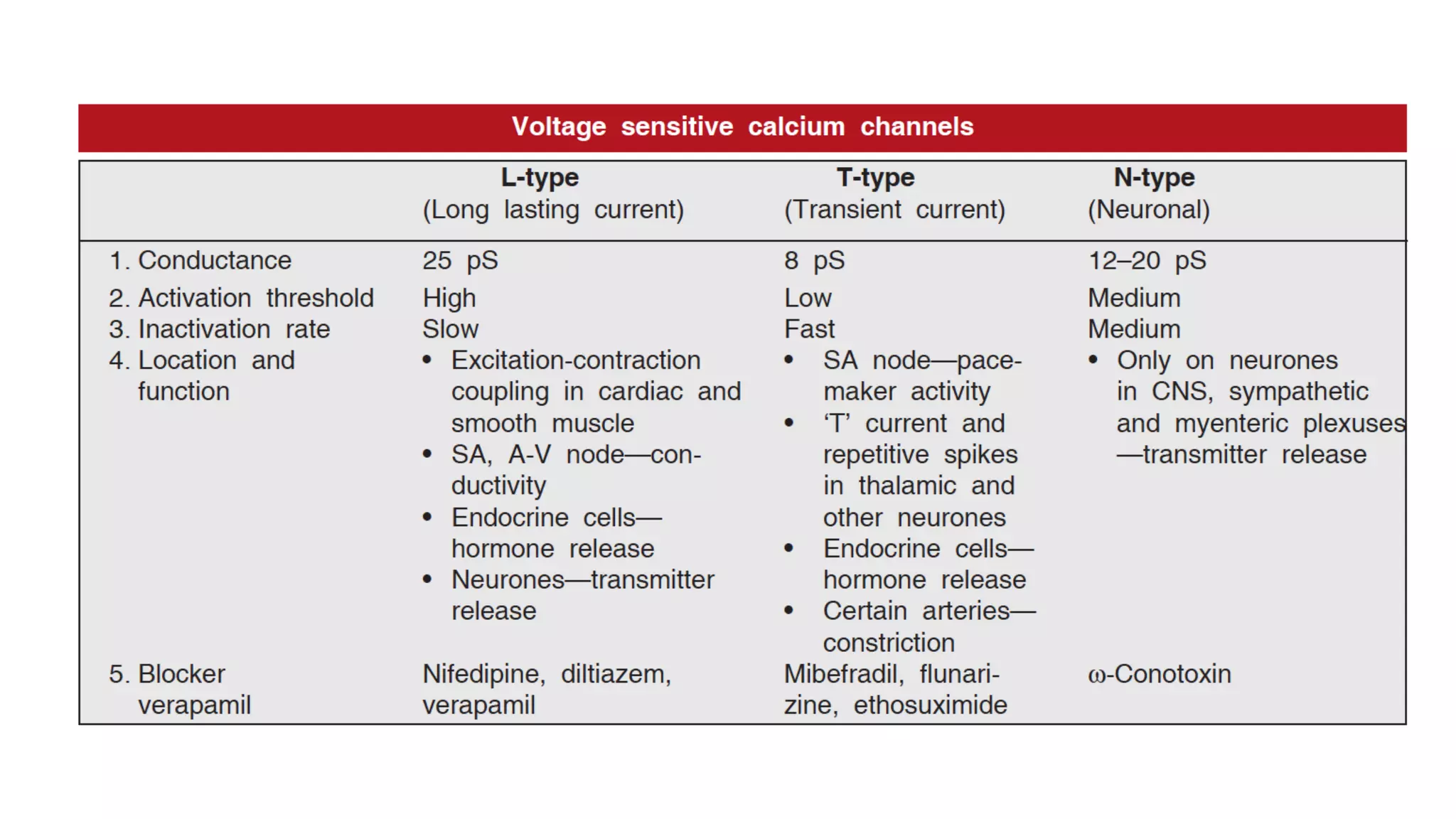
 Three types of calcium channels have been described
 Voltage sensitive channel: activated when membrane potential drop to around -40 mV or
lower
 Receptor operated channel: Activated by Adr & other agonists & independent of membrane
depolarization
CALCIUM CHANNEL BLOCKERS
 Calcium channels
 Leak channels: Small amount of Ca2+ leak into resting cell & pumped out by Ca2+ ATPase
 Mechanical stretch promotes inward movement of calcium through the leak channel or
through separate stretch sensitive channels
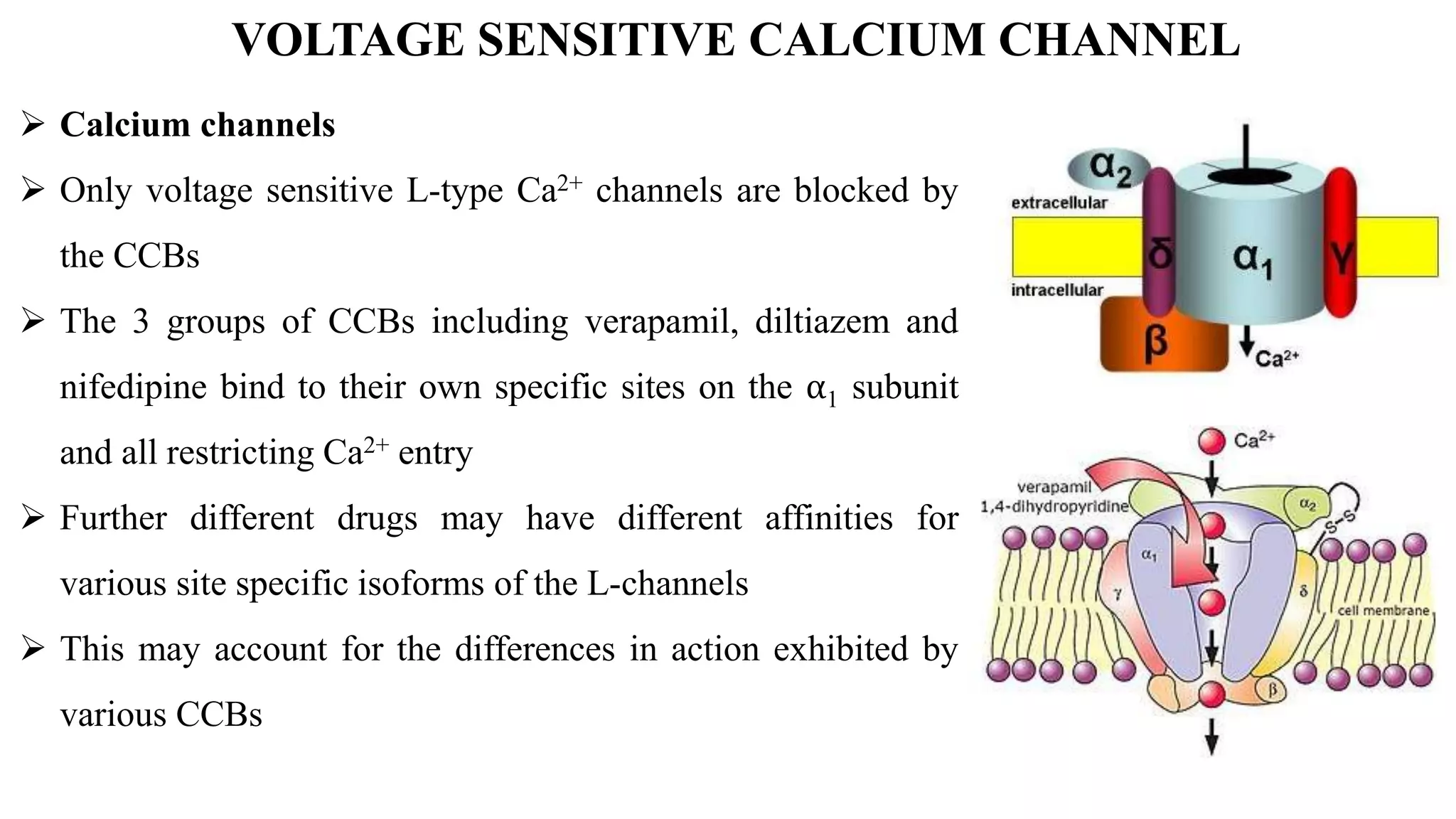
VOLTAGE SENSITIVE CALCIUM CHANNEL
 Calcium channels
 Only voltage sensitive L-type Ca2+ channels are blocked by
the CCBs
 The 3 groups of CCBs including verapamil, diltiazem and
nifedipine bind to their own specific sites on the ⍺1 subunit
and all restricting Ca2+ entry
 Further different drugs may have different affinities for
various site specific isoforms of the L-channels
 This may account for the differences in action exhibited by
various CCBs
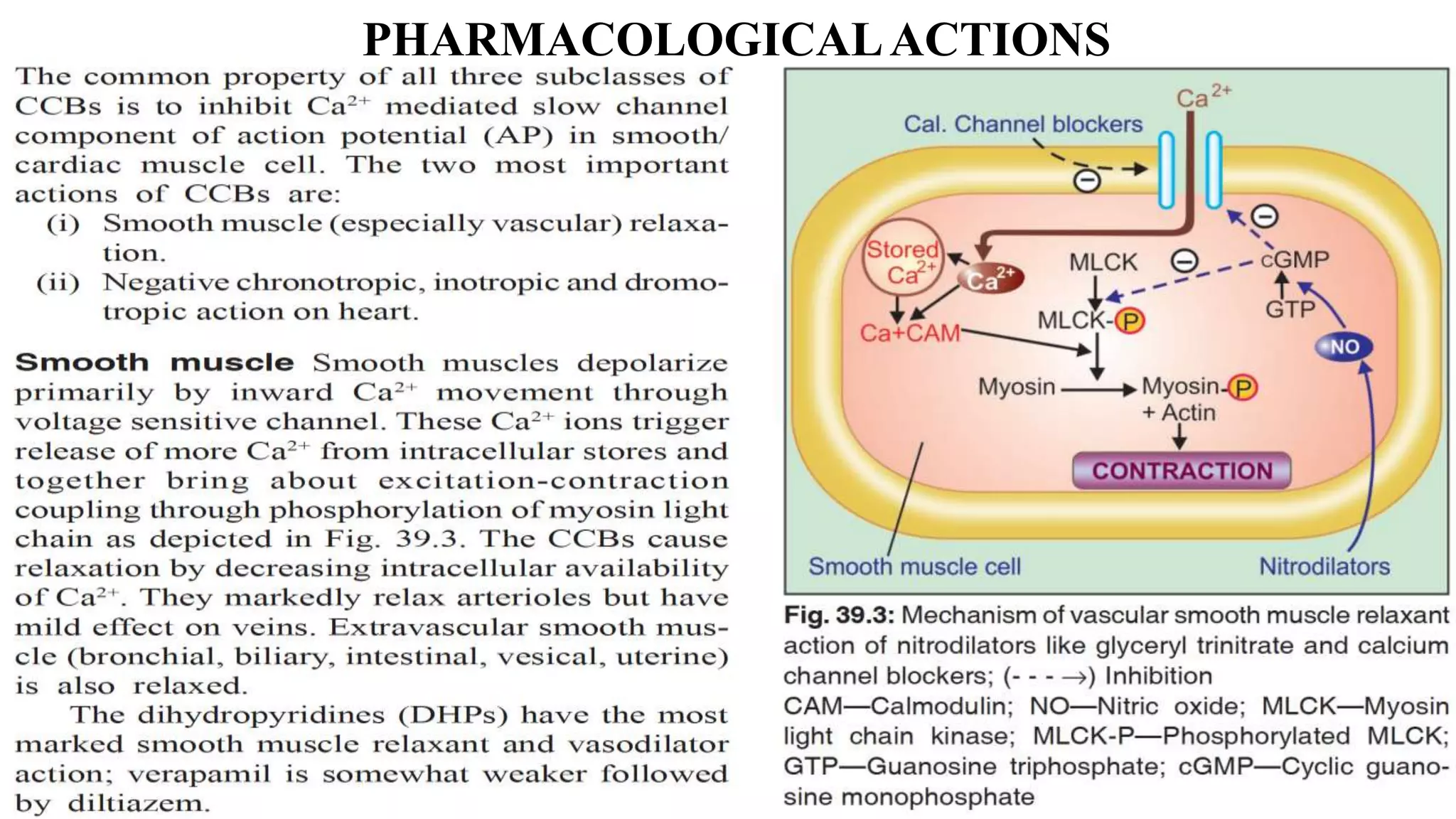
PHARMACOLOGICALACTIONS
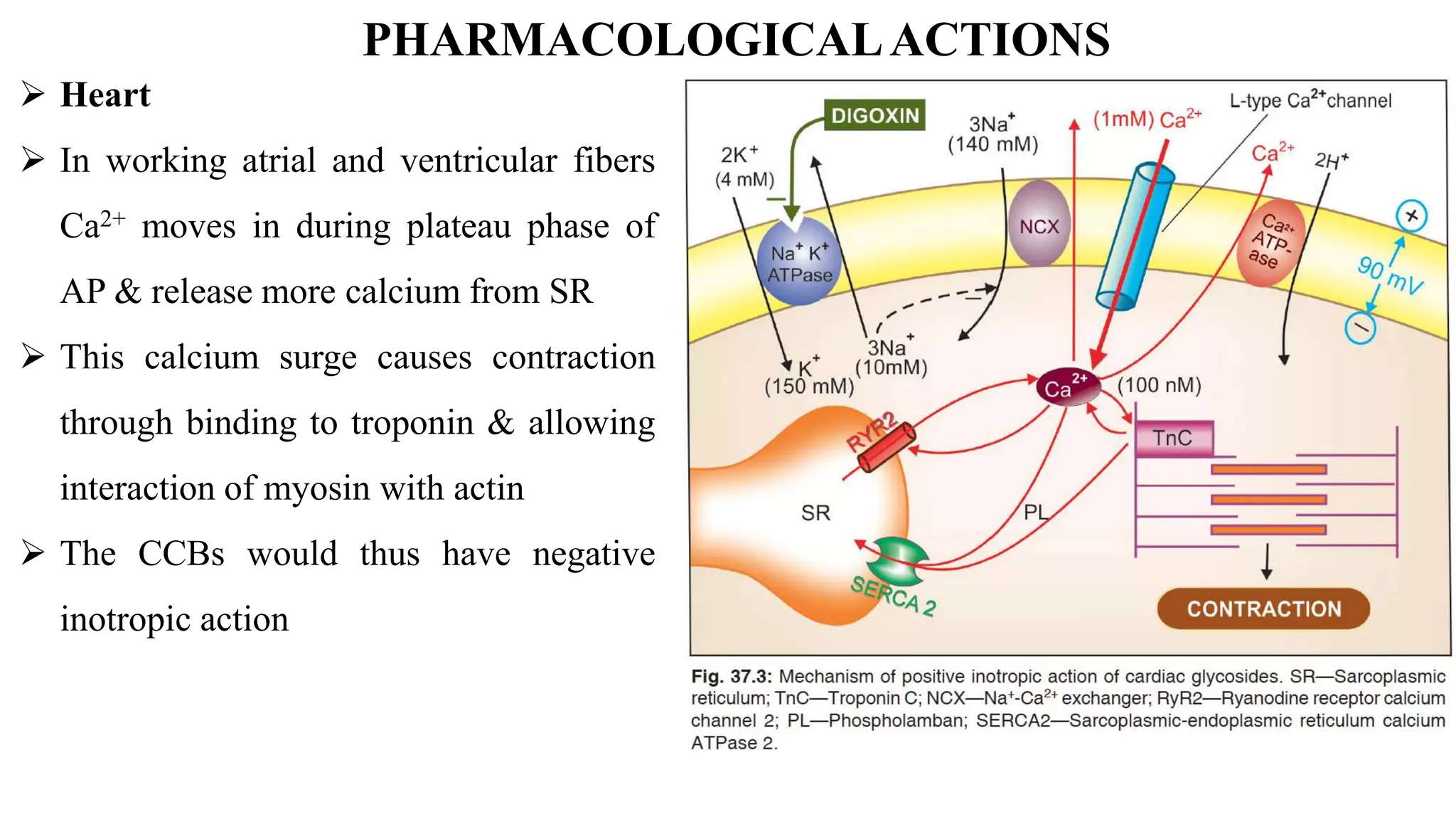
 Heart
 In working atrial and ventricular fibers
Ca2+ moves in during plateau phase of
AP & release more calcium from SR
 This calcium surge causes contraction
through binding to troponin & allowing
interaction of myosin with actin
 The CCBs would thus have negative
inotropic action
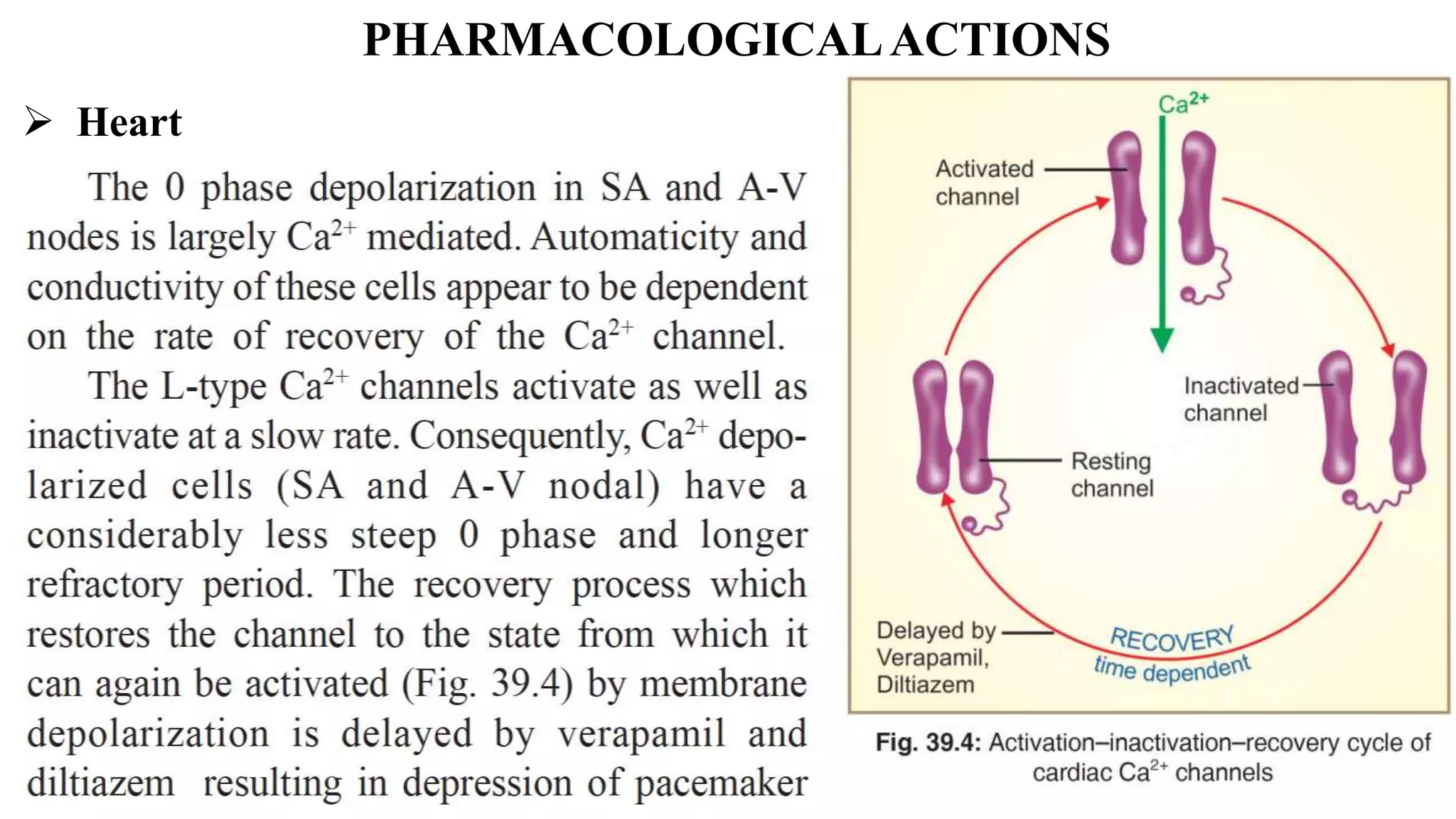
PHARMACOLOGICALACTIONS
 Heart
CALCIUM CHANNEL BLOCKERS
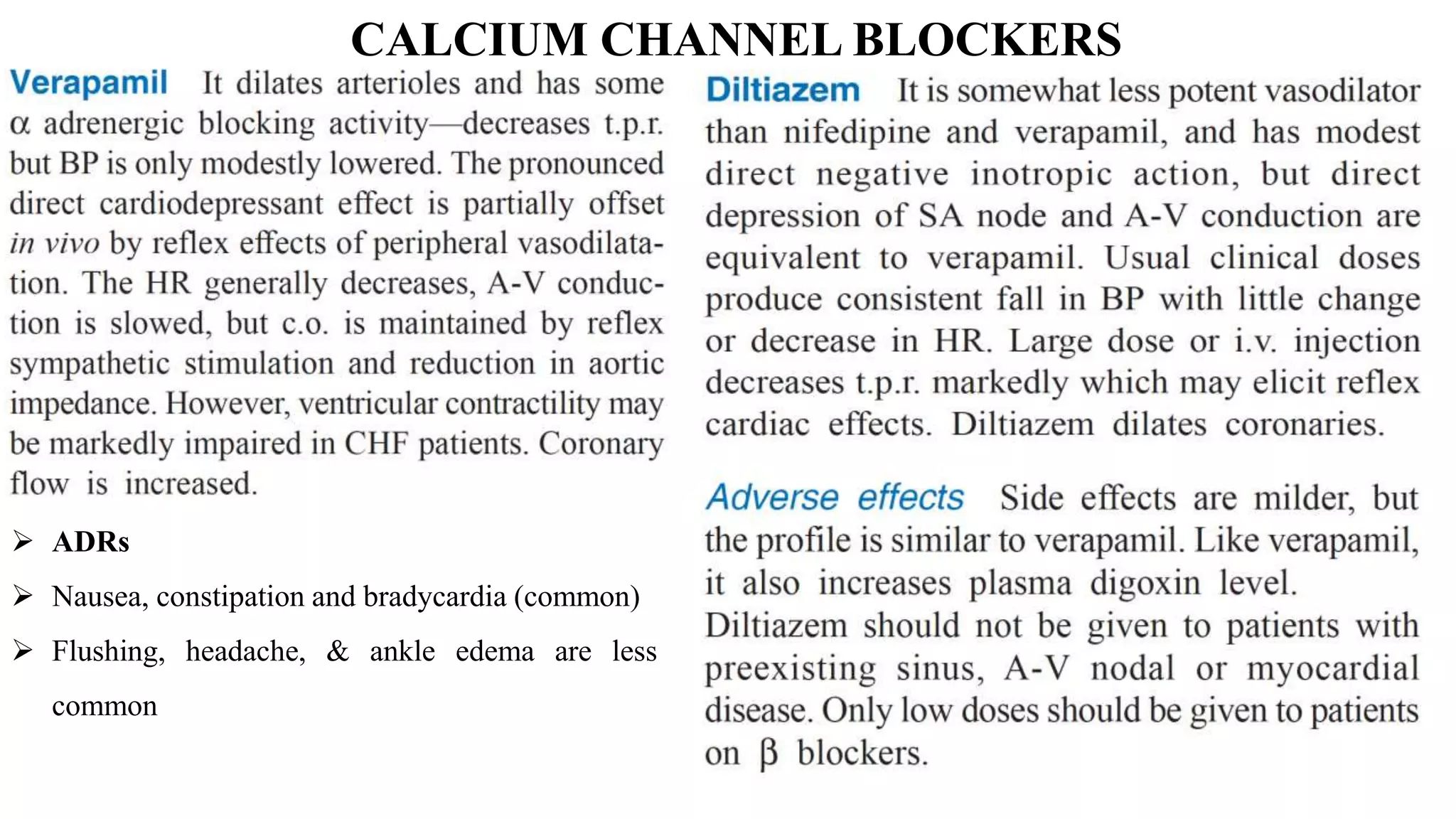
 ADRs
 Nausea, constipation and bradycardia (common)
 Flushing, headache, & ankle edema are less
common
CALCIUM CHANNEL BLOCKERS
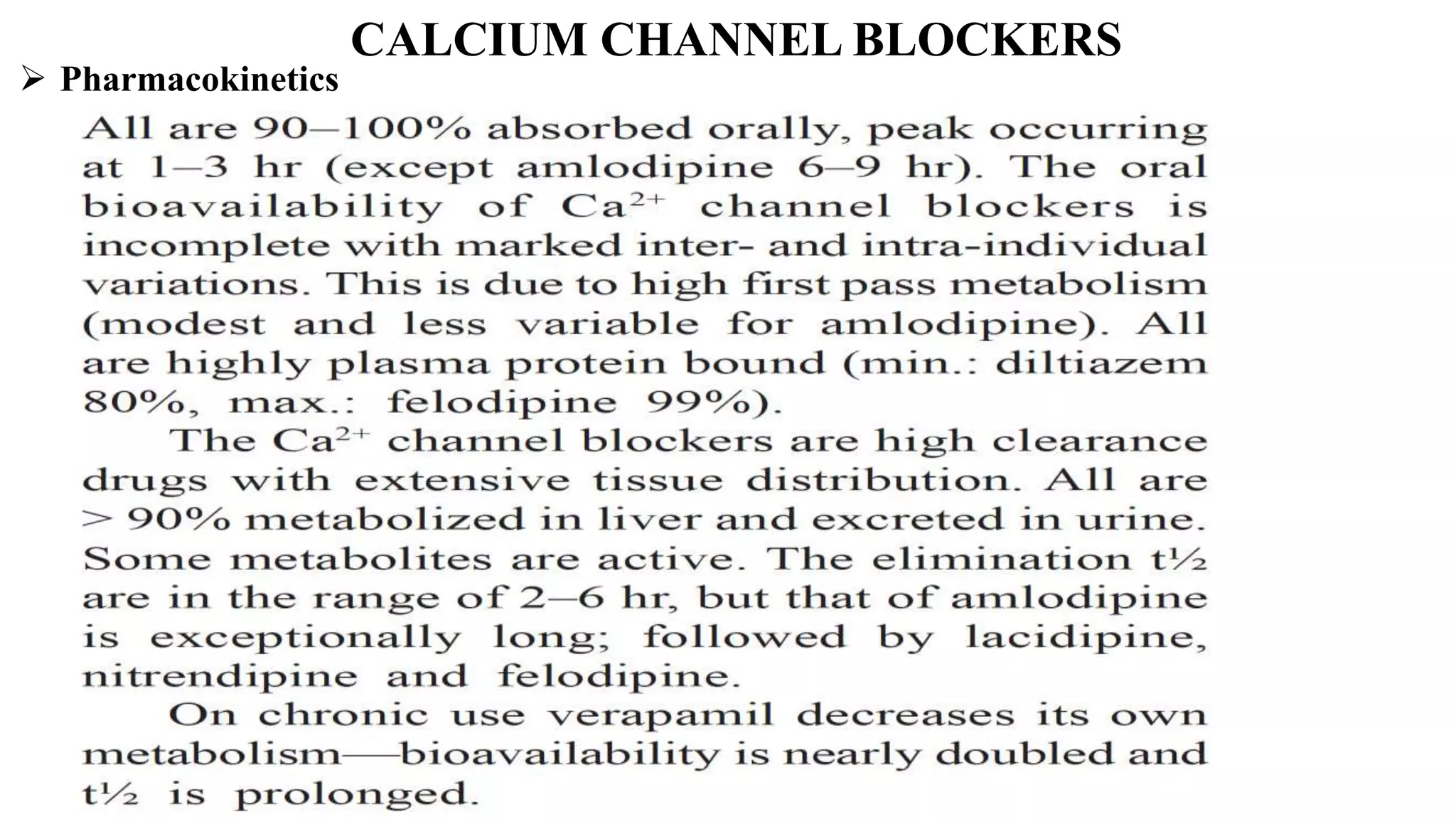
 Pharmacokinetics
Pharmacokinetics
Calcium channel blockers.pptx

Calcium channel blockers.pptx

  • 1.
    CALCIUM CHANNEL BLOCKERS Three important classes of calcium channel blockers are:  Verapamil-–a phenyl alkylamine, hydrophilic papaverine congener  Nifedipine---a dihydropyridine (lipophilic)  Diltiazem----a hydrophilic benzothiazepine  The dihydropyridines are the most potent Ca2+ channel blockers  Calcium channels  Three types of calcium channels have been described  Voltage sensitive channel: activated when membrane potential drop to around -40 mV or lower  Receptor operated channel: Activated by Adr & other agonists & independent of membrane depolarization
  • 2.
    CALCIUM CHANNEL BLOCKERS Calcium channels  Leak channels: Small amount of Ca2+ leak into resting cell & pumped out by Ca2+ ATPase  Mechanical stretch promotes inward movement of calcium through the leak channel or through separate stretch sensitive channels
  • 3.
  • 4.
    VOLTAGE SENSITIVE CALCIUMCHANNEL  Calcium channels  Only voltage sensitive L-type Ca2+ channels are blocked by the CCBs  The 3 groups of CCBs including verapamil, diltiazem and nifedipine bind to their own specific sites on the ⍺1 subunit and all restricting Ca2+ entry  Further different drugs may have different affinities for various site specific isoforms of the L-channels  This may account for the differences in action exhibited by various CCBs
  • 6.
  • 7.
    PHARMACOLOGICALACTIONS  Heart  Inworking atrial and ventricular fibers Ca2+ moves in during plateau phase of AP & release more calcium from SR  This calcium surge causes contraction through binding to troponin & allowing interaction of myosin with actin  The CCBs would thus have negative inotropic action
  • 8.
  • 9.
    CALCIUM CHANNEL BLOCKERS ADRs  Nausea, constipation and bradycardia (common)  Flushing, headache, & ankle edema are less common
  • 10.
  • 11.
  • 12.
  • 13.