Larva Terapia.com.ec
Dr. C.A. Vincent M.D.
INTERNISTA
Manuel Galecio 1208 y Av. del Ejército (Centro Guayaquil)
Bálsamos #629 e/ Ficus y Las Monjas (Urdesa)
Telf.: 2280008 / 2320936 Cel.: 0981137366 / 097226405
Guayas - Ecuador
Fatal Calcific Uraemic Arteriolopathy (Cua): A Case Report And Review
Of The Literature
N Lang, R Davie§, C Whitworth*, R Winney* J Hughes*
Department of Medicine, Queen Margaret Hospital, Whitefield Road, Dunfermline
*Department of Nephrology, Royal Infirmary of Edinburgh,
§Department of Pathology, St John’s Hospital at Howden, Howden Road, Livingston,
West Lothian
Correspondence to: ninian.lang@btinternet.com
SMJ 2004 49(3): 108-1 11


Abstract:
Calciphylaxis, now better known as Calcific uraemic arteriolopathy (CUA), is an
uncommon condition characterised by small vessel calcification and occlusion with
resultant painful violaceous skin lesions that typically ulcerate to form non-healing
gangrenous ulcers. The syndrome is usually found in patients with renal failure. In this
report we describe a 61 year old lady who developed lower limb ulceration secondary to
calciphylaxis and discuss the current treatment options for this serious condition.


Keywords: Calcific uraemic arteriolopathy, calciphylaxis, renal failure, ulceration.


Case report
A 61 year old lady developed end stage renal failure of uncertain aetiology in 1993 and
commenced chronic ambulatory peritoneal dialysis (CAPD). She received a cadaveric
renal transplant in 1994 but developed chronic allograft nephropathy and renal
dysfunction (serum creatinine (Cr) 249µmol/l and creatinine clearance 18ml/min. in
July 2002). She was referred to the nephrology clinic for a pre-dialysis assessment and
consideration for further transplantation. At this time she was receiving treatment with
cyclosporin A (75mg bd), mycophenolate mofetil ([MMF] 500mg tds), prednisolone
(5mg od), ramipril, doxazosin, metoprolol, bumetanide, 1-alphacalcidol, ferrous
gluconate, warfarin, omeprazole and pravastatin. In July 2002, an area of tender slightly
reddened skin was noted on her right calf compatible with ‘thrombophlebitis’. In
addition, reduced femoral and pedal pulses as well as a left femoral bruit were evident.
When reviewed in October 2002, she complained of exertional calf pain and tender legs,
especially over her lower calf. There was clinical evidence of lower limb oedema and
the bumetanide dosage was therefore increased. In addition, the dose of 1-alfacalcidol
was increased to combat her secondary hyperparathyroidism (parathyroid hormone
[PTH] concentration 272ng/l [normal < 65ng/l]). The calf pain remained unchanged
despite some evidence of fluid loss. She developed increasing calf discomfort and was
prescribed antibiotics from her GP for bilateral calf cellulitis.


The underlying cause of her calf pain was still unclear and a diagnosis of painful
uraemic neuropathy was considered (Urea 35 mmol/l) and treatment with Gabapentin
was initiated. In mid February 2003, she was admitted to the Renal Unit of the Royal
Infirmary of Edinburgh. She had developed an increasingly painful, erythematous right
calf and had received two courses of oral Co- Amoxiclav from her GP. However, an
area of skin ulceration developed with clinical examination confirming an 8x5cm
ulcerated lesion surrounded by tender, erythematous skin. The ulcer was felt to be
mainly the result of pressure as she admitted to sitting in a chair with her calves resting
on a stool for several hours each day. She was treated with intravenous antibiotics
(penicillin V, flucloxacillin and metronidazole) and underwent lower limb angiography
in order to exclude significant large vessel disease. This revealed some calcified plaque
but no significant stenoses that required interventional treatment. The appearance of the
ulcer improved with antibiotic treatment and she was discharged and referred to the
plastic surgeons for consideration of skin grafting.


However, she was readmitted two weeks later with a chest infection, reduced mobility,
increasing peripheral oedema and worsening ulceration of the right calf together with
new ulceration of the left calf. She was febrile and therefore commenced on intravenous
antibiotics. Blood tests on admission revealed: haemoglobin 96 g/dl, INR 1.3, urea 44
mmol/l, creatinine 358 µmol/l, potassium 6 mmol/l, bicarbonate 18 mmol/l, corrected
calcium 2.23 mmol/l, phosphate 2.19 mmol/l and C reactive protein 166 IU/l (normal
range <101U/l). Swabs of the ulcers variably grew commensal organisms, anaerobes
and MRSA and she was treated with intravenous teicoplanin and metronidazole. The
dose of MMF was reduced and the ramipril was discontinued in view of her worsening
renal function and hyperkalaemia. A renal ultrasound demonstrated no evidence of
obstruction and cyclosporin A levels were non-toxic. She was commenced on
intermittent haemodialysis. She was reviewed by the plastic surgeons and an initial
diagnosis of pressure sores was made. She underwent surgical debridement of the
ulcers. However, pathological examination of specimens of debrided tissue revealed
necrotic, ulcerated skin with small foci of calcification within the walls of blood vessels
suggestive of calcific uraemic arteriolopathy. (Fig 1*): Urgent parathyroidectomy was
considered but decided against as calcium and phosphate levels were relatively well
controlled with medical management. Plain X-rays of her thighs and calves confirmed
small vessel calcification (Fig 3). Investigations for an underlying vasculitic illness
were negative and Protein C and Protein S deficiencies were excluded.


Further management involved maintaining excellent calcium and phosphate control
with non-calcium containing phosphate binders and diet and regular ulcer dressings.
She was unresponsive to erythropoietin (EPO) and therefore, in order to optimise
oxygen delivery to the tissues, receive intermittent blood transfusions to maintain her
haemoglobin above 100g/dl. Her warfarin treatment was discontinued. Two weeks later
she complained of increasing pain over the lateral and anterior surface of her thighs with
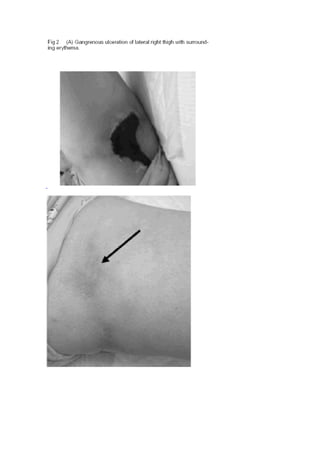
these areas developing livedo reticularis. The skin rapidly became gangrenous and
sloughed to form further large areas of ulceration (Fig 2A + 2B). Pain remained a
significant problem despite specialist input from the pain control team. The ulcers
became repeatedly infected and she ultimately opted to withdraw from dialysis and
aggressive antibiotic treatment. She died from septicaemia and uraemia just over one
month after the firm diagnosis of calcific uraemic arteriolopathy was made.


Discussion
Background and pathology
This condition was originally called calciphylaxis by Selye in 1962 but is now termed
calcific uraemic arteriolopathy (CUA). Although any systemic vessels may be affected,
CUA more commonly involves, cutaneous small and medium sized vessels.
Histologically, these vessels exhibit mural calcification, prominent intimal proliferation
and often thrombosis.


Pathogenesis athogenesis
CUA is considered to be rare although some reports suggest that the incidence is
increasing and that up to 4% of the dialysis population may be affected.1,2 The
increased incidence may relate to the more widespread use of calcium containing
phosphate binders and treatment with parenteral Vitamin D and iron dextran.3,4
Although almost entirely confined to patients with end-stage renal failure it has been
infrequently reported in other patient groups.5,6 CUA is a serious condition with a
grave prognosis. It has a mortality rate of approximately 60-80% with most deaths
attributable to septicaemia from secondary infection of skin lesions.2,4 . The
pathogenesis of calciphylaxis is incompletely understood but is related to abnormal
calcium-phosphate metabolism and hyperparathyroidism causing an elevated CaxPO4
product.3,7 Other risk factors include female sex (male:female ratio of 1:3), obesity,
Caucasian race, diabetes, malnutrition, warfarin, glucocorticoids and possibly
intravenous iron.4 It is noteworthy that, similar to the patient described in this report,
many patients developing calciphylaxis exhibit multiple risk factors and commonly
have a precipitating factor. This may be local trauma, hypotension, thrombosis or sepsis
thereby suggesting a multiple hit theory of pathogenesis.
For   example,    our    patient   had   multiple   risk    factors   (female,   warfarin,
hyperphosphataemia, elevated PTH level, steroid therapy) but also gave a history of
sitting with her calves resting on a stool for prolonged periods. It is likely that the
resultant prolonged pressure may have precipitated the initial ulceration of the calf.
However, recent research has greatly informed in this clinical area and indicates that
homeostatic mechanisms exist to combat vascular calcification. There are several
endogenous inhibitors of calcification that act within blood vessels such as osteopontin
(OPN)8,     matrix      Gla   protein    (MGP)9     and     alpha     2-Heremans-Schmid
glycoprotein/fetuin A [ahsg/fetuin].10 Mice targeted for the deletion of these genes
exhibit an increased propensity to vascular and genitourinary calcification.10,11 OPN
and MGP double knockout mice exhibit dramatically increased levels of vascular
calcification such that they die from calcific vessel rupture.12 It is therefore tempting to
speculate that these mechanisms may become dysfunctional in uraemic patients and
thereby contribute to the development of CUA as well as the burden of cardiovascular
disease carried by the dialysis population as a whole.13 It is well documented that an
elevated acute phase response as indicated by an elevated C reactive protein level is a
strong predictor of mortality.14 It is therefore pertinent that ahsg/fetuin is a negative
acute phase reactant with levels falling in states of chronic inflammation.15 The
circulating levels of ahsg/fetuin were found to be lower in dialysis populations
compared to controls and was an independent risk factor for patient death.16


Clinical presentation
Clinically, calciphylaxis usually presents with violaceous mottling, livedo reticularis or
as erythematous plaques, nodules or papules. When the condition is non-ulcerating the
clinical findings may be confused, as in our patient, with cellulitis. These lesions are
typically intensely painful and firm to touch. Ninety percent of lesions are found on the
lower extremities.2 Calciphylaxis may affect the distal limbs (calves and forearms) or
may be more proximal and involve the thighs, buttocks or abdomen.4 Not uncommonly,
the genitals may be affected or it may be acral, affecting the fingers and toes. It may
also involve other organs including muscles (causing a painful myopathy), heart, joints,
lungs, pancreas and the eye.4 The differential diagnosis includes peripheral vascular
disease, atheroembolic disease, cryoglobulinaemia and vasculitis.


Diagnosis
The diagnostic gold standard is a tissue biopsy that demonstrates the typical histological
features of calciphylaxis. However, it must be recognised that this should be avoided if
possible as there is a significant risk in performing biopsies of suspicious lesions as
ulceration commonly ensues. Other investigations should include measurement of
serum calcium, phosphate and PTH levels as well as assay of coagulation factors,
cryoglobulins and a vasculitis screen including assay for ANCA. Arterial duplex
doppler scanning and even peripheral angiography should be undertaken if there is
clinical suspicion of large vessel peripheral vascular disease. X-rays usually show
vascular calcification within the dermis and subcutaneous tissue but this may be seen in
patients with end-stage renal failure and is not specific to calciphylaxis.


Treatment options
Treatment options for calciphylaxis are limited.4,7 There are reports indicating benefit
from urgent parathyroidectomy performed on patients with CUA in association
hyperparathyroidism17,18 with larger studie suggesting benefit only in cases with
markedly elevated PTH levels.19 It is important to control the [calcium x phosphate]
product with non-calcium containing phosphate binders such as Aluminium Hydroxide
or Sevelamer.20 Consideration should also be made to the discontinuation of Warfarin
in view of the similarities between calciphylaxis and Warfarin skin necrosis. A
multidisciplinary approach involving meticulous wound care,21 the judicious use of
antibiotics and close liaison with surgical colleagues is essential.22,23 Other therapies
are principally aimed at Fig3: Plain X-ray of the thighs indicate extensive small vessel
calcification. maximising tissue oxygen delivery since measurement of transcutaneous
oxygen tension indicates abnormally low oxygen tensions in affected and non-affected
areas of skin in patients with CUA.24 Anaemia should be corrected; hypotension and
excessive peripheral oedema should be avoided. In a further attempt to improve tissue
oxygenation hyperbaric oxygen therapy has proved to be effective in selected
patients.25


Conclusion
In summary, calciphic uraemic arteriolopathy is an uncommon condition with a very
poor prognosis. The diagnosis is often considerably delayed whilst other, more common
diagnoses, are considered. The treatment options are few and, as with our patient, the
speed of progression of the disease can preclude more specialist treatment options
including hyperbaric oxygen therapy. However, the mechanisms whereby vascular
calcification is regulated are slowly being unravelled and this does raise the possibility
of novel therapeutic strategies in the future for patients at risk.
Fig 1* Copies of this figure are available from the author


REFERENCES
1 Angelis, M, L.L. Wong, S.A. Myers, and L.M. Wong. Calciphylaxis in patients on
hemodialysis: a prevalence study. Surgery. 1997; 122, no. 6:1083-9.
2 Fine, A., and J. Zacharias. Calciphylaxis is usually non-ulcerating: risk factors,
outcome and therapy. 2002; 61 6, no. 2210-7.
3 Zacharias, J.M., B. Fontaine, and A. Fine. Calcium use increases risk of calciphylaxis:
a case-control study. Perit Dial Int. 1999; 19, no. 3:248-52.
4 Mathur, R.V., J.R. Shortland, and A.M. el-Nahas. Calciphylaxis. Postgrad Med J.
2001; 77, no. 911:557-61.
5 Lim, S.P., K. Batta, and B.B. Tan. Calciphylaxis in a patient with alcoholic liver
disease in the absence of renal failure. Clin Exp Dermatol. 2003; 28, no. 1:34-6.
6 Goyal, S., K.M. Huhn, and T.T. Provost. Calciphylaxis in a patient without renal
failure or elevated parathyroid hormone: possible aetiological role of chemotherapy. Br
J Dermatol. 2000; 143, no. 5:1087-90.
7 Wilmer, W.A., and C.M. Magro. Calciphylaxis: emerging concepts in prevention,
diagnosis, and treatment. Semin Dial. 2002; 15, no. 3:172-86.
8 Ahmed, S., K.D. O’Neill, A.F. Hood, et al. Calciphylaxis is associated with
hyperphosphatemia and increased osteopontin expression by vascular smooth muscle
cells. Am J Kidney Dis. 2001; 37, no. 6:1267-76.
9 Canfield, A.E., C. Farrington, M.D. Dziobon, et al. The involvement of matrix
glycoproteins in vascular calcification and fibrosis: an immunohistochemical study. J
Pathol. 2002; 196, no. 2:228-34.
10 Schafer, C., A. Heiss, A. Schwarz, et al. The serum protein alpha 2-Heremans-
Schmid glycoprotein/fetuin-A is a systemically acting inhibitor of ectopic calcification.
J Clin Invest. 2003; 112, no. 3:357-66.
11 Wesson, J.A., R.J. Johnson, J. Hughes et al. Osteopontin is a critical inhibitor of
calcium oxalate crystal formation and retention in renal tubules. J Am Soc Nephrol.
2003; 14, no. 1:139-47.
12 Speer, M.Y., M.D. McKee, R.E. Guldberg, et al. Inactivation of the osteopontin gene
enhances vascular calcification of matrix Gla protein-deficient mice: evidence for
osteopontin as an inducible inhibitor of vascular calcification in vivo. J Exp Med. 2002;
196, no. 8:1047-55.
13 Ketteler, M., C. Wanner, T. Metzger,et al. Deficiencies of calcium-regulatory
proteins in dialysis patients: a novel concept of cardiovascular calcification in uremia.
Kidney Int Suppl. 2003; 84:S84-7.
14 Zimmermann, J., S. Herrlinger, A. Pruy, T. Metzger, and C. Wanner. Inflammation
enhances cardiovascular risk and mortality in hemodialysis patients. Kidney Int. 1999;
55, no. 2:648-58.
15 Lebreton, J.P., F. Joisel, J.P. Raoult, B. Lannuzel, J.P. Rogez, and G. Humbert.
Serum concentration of human alpha 2 HS glycoprotein during the inflammatory
process: evidence that alpha 2 HS glycoprotein is a negative acute-phase reactant. J Clin
Invest. 1979; 64, no. 4:1118-29.
16 Ketteler, M., C. Vermeer, C. Wanner, R. Westenfeld, W. Jahnen-Dechent, and J.
Floege. Novel insights into uremic vascular calcification: role of matrix Gla protein and
alpha-2-Heremans Schmid glycoprotein/fetuin. Blood Purif. 2002; 20, no. 5:473-6.
17 Bahar, G., D. Mimouni, M. Feinmesser, M. David, A. Popovzer, and R. einmesser.
Subtotal parathyroidectomy: a possible treatment for calciphylaxis. Ear Nose Throat J.
2003; 82, no. 5:390-3.
18 Younis, N., R.A. Sells, A. Desmond, et al. Painful cutaneous lesions, renal failure
and urgent parathyroidectomy. J Nephrol. 2002; 15, no. 3:324-9.
19 Kang, A.S., J.T. McCarthy, C. Rowland, D.R. Farley, and J.A. van Heerden. Is
calciphylaxis best treated surgically or medically? Surgery. 2000; 128, no. 6:967-71.
20 Russell, R., M.A. Brookshire, M. Zekonis, and S.M. Moe. Distal calcific uremic
arteriolopathy in a hemodialysis patient responds to lowering of Ca x P product and
aggressive wound care. Clin Nephrol. 2002; 58, no. 3:238-43.
21 Tittelbach, J., T. Graefe, and U. Wollina. Painful ulcers in calciphylaxis - combined
treatment with maggot therapy and oral pentoxyfillin. J Dermatolog Treat. 2001; 12, no.
4:211-4.
22 Milas, M., R.L. Bush, P. Lin, K., et al. Calciphylaxis and nonhealing wounds: he role
of the vascular surgeon in a multidisciplinary treatment. J Vasc Surg. 2003; 37, no.
3:501-7.
23 Don, B.R., and A.I. Chin. A strategy for the treatment of calcific uremic
arteriolopathy (calciphylaxis) employing a combination of therapies. lin Nephrol. 2003;
59, no. 6:463-70.
24 Wilmer, W.A., O. Voroshilova, I. Singh, D.F. Middendorf, and F.G. Cosio.
Transcutaneous oxygen tension in patients with calciphylaxis. Am J Kidney Dis. 2001;
37, no. 4:797-806.
25 Basile, C., A. Montanaro, M. Masi, G. Pati, P. De Maio, and A. Gismondi.
Hyperbaric oxygen therapy for calcific uremic arteriolopathy: a case series. J Nephrol.
2002; 15., no. 6:676-80.
Calcifilaxiaiii 100615192435-phpapp02

Calcifilaxiaiii 100615192435-phpapp02

  • 1.
    Larva Terapia.com.ec Dr. C.A.Vincent M.D. INTERNISTA Manuel Galecio 1208 y Av. del Ejército (Centro Guayaquil) Bálsamos #629 e/ Ficus y Las Monjas (Urdesa) Telf.: 2280008 / 2320936 Cel.: 0981137366 / 097226405 Guayas - Ecuador
  • 2.
    Fatal Calcific UraemicArteriolopathy (Cua): A Case Report And Review Of The Literature N Lang, R Davie§, C Whitworth*, R Winney* J Hughes* Department of Medicine, Queen Margaret Hospital, Whitefield Road, Dunfermline *Department of Nephrology, Royal Infirmary of Edinburgh, §Department of Pathology, St John’s Hospital at Howden, Howden Road, Livingston, West Lothian Correspondence to: ninian.lang@btinternet.com SMJ 2004 49(3): 108-1 11 Abstract: Calciphylaxis, now better known as Calcific uraemic arteriolopathy (CUA), is an uncommon condition characterised by small vessel calcification and occlusion with resultant painful violaceous skin lesions that typically ulcerate to form non-healing gangrenous ulcers. The syndrome is usually found in patients with renal failure. In this report we describe a 61 year old lady who developed lower limb ulceration secondary to calciphylaxis and discuss the current treatment options for this serious condition. Keywords: Calcific uraemic arteriolopathy, calciphylaxis, renal failure, ulceration. Case report A 61 year old lady developed end stage renal failure of uncertain aetiology in 1993 and commenced chronic ambulatory peritoneal dialysis (CAPD). She received a cadaveric renal transplant in 1994 but developed chronic allograft nephropathy and renal dysfunction (serum creatinine (Cr) 249µmol/l and creatinine clearance 18ml/min. in July 2002). She was referred to the nephrology clinic for a pre-dialysis assessment and
  • 3.
    consideration for furthertransplantation. At this time she was receiving treatment with cyclosporin A (75mg bd), mycophenolate mofetil ([MMF] 500mg tds), prednisolone (5mg od), ramipril, doxazosin, metoprolol, bumetanide, 1-alphacalcidol, ferrous gluconate, warfarin, omeprazole and pravastatin. In July 2002, an area of tender slightly reddened skin was noted on her right calf compatible with ‘thrombophlebitis’. In addition, reduced femoral and pedal pulses as well as a left femoral bruit were evident. When reviewed in October 2002, she complained of exertional calf pain and tender legs, especially over her lower calf. There was clinical evidence of lower limb oedema and the bumetanide dosage was therefore increased. In addition, the dose of 1-alfacalcidol was increased to combat her secondary hyperparathyroidism (parathyroid hormone [PTH] concentration 272ng/l [normal < 65ng/l]). The calf pain remained unchanged despite some evidence of fluid loss. She developed increasing calf discomfort and was prescribed antibiotics from her GP for bilateral calf cellulitis. The underlying cause of her calf pain was still unclear and a diagnosis of painful uraemic neuropathy was considered (Urea 35 mmol/l) and treatment with Gabapentin was initiated. In mid February 2003, she was admitted to the Renal Unit of the Royal Infirmary of Edinburgh. She had developed an increasingly painful, erythematous right calf and had received two courses of oral Co- Amoxiclav from her GP. However, an area of skin ulceration developed with clinical examination confirming an 8x5cm ulcerated lesion surrounded by tender, erythematous skin. The ulcer was felt to be mainly the result of pressure as she admitted to sitting in a chair with her calves resting on a stool for several hours each day. She was treated with intravenous antibiotics (penicillin V, flucloxacillin and metronidazole) and underwent lower limb angiography in order to exclude significant large vessel disease. This revealed some calcified plaque but no significant stenoses that required interventional treatment. The appearance of the ulcer improved with antibiotic treatment and she was discharged and referred to the plastic surgeons for consideration of skin grafting. However, she was readmitted two weeks later with a chest infection, reduced mobility, increasing peripheral oedema and worsening ulceration of the right calf together with new ulceration of the left calf. She was febrile and therefore commenced on intravenous antibiotics. Blood tests on admission revealed: haemoglobin 96 g/dl, INR 1.3, urea 44
  • 4.
    mmol/l, creatinine 358µmol/l, potassium 6 mmol/l, bicarbonate 18 mmol/l, corrected calcium 2.23 mmol/l, phosphate 2.19 mmol/l and C reactive protein 166 IU/l (normal range <101U/l). Swabs of the ulcers variably grew commensal organisms, anaerobes and MRSA and she was treated with intravenous teicoplanin and metronidazole. The dose of MMF was reduced and the ramipril was discontinued in view of her worsening renal function and hyperkalaemia. A renal ultrasound demonstrated no evidence of obstruction and cyclosporin A levels were non-toxic. She was commenced on intermittent haemodialysis. She was reviewed by the plastic surgeons and an initial diagnosis of pressure sores was made. She underwent surgical debridement of the ulcers. However, pathological examination of specimens of debrided tissue revealed necrotic, ulcerated skin with small foci of calcification within the walls of blood vessels suggestive of calcific uraemic arteriolopathy. (Fig 1*): Urgent parathyroidectomy was considered but decided against as calcium and phosphate levels were relatively well controlled with medical management. Plain X-rays of her thighs and calves confirmed small vessel calcification (Fig 3). Investigations for an underlying vasculitic illness were negative and Protein C and Protein S deficiencies were excluded. Further management involved maintaining excellent calcium and phosphate control with non-calcium containing phosphate binders and diet and regular ulcer dressings. She was unresponsive to erythropoietin (EPO) and therefore, in order to optimise oxygen delivery to the tissues, receive intermittent blood transfusions to maintain her haemoglobin above 100g/dl. Her warfarin treatment was discontinued. Two weeks later she complained of increasing pain over the lateral and anterior surface of her thighs with these areas developing livedo reticularis. The skin rapidly became gangrenous and sloughed to form further large areas of ulceration (Fig 2A + 2B). Pain remained a significant problem despite specialist input from the pain control team. The ulcers became repeatedly infected and she ultimately opted to withdraw from dialysis and aggressive antibiotic treatment. She died from septicaemia and uraemia just over one month after the firm diagnosis of calcific uraemic arteriolopathy was made. Discussion Background and pathology
  • 5.
    This condition wasoriginally called calciphylaxis by Selye in 1962 but is now termed calcific uraemic arteriolopathy (CUA). Although any systemic vessels may be affected, CUA more commonly involves, cutaneous small and medium sized vessels. Histologically, these vessels exhibit mural calcification, prominent intimal proliferation and often thrombosis. Pathogenesis athogenesis CUA is considered to be rare although some reports suggest that the incidence is increasing and that up to 4% of the dialysis population may be affected.1,2 The increased incidence may relate to the more widespread use of calcium containing phosphate binders and treatment with parenteral Vitamin D and iron dextran.3,4 Although almost entirely confined to patients with end-stage renal failure it has been infrequently reported in other patient groups.5,6 CUA is a serious condition with a grave prognosis. It has a mortality rate of approximately 60-80% with most deaths attributable to septicaemia from secondary infection of skin lesions.2,4 . The pathogenesis of calciphylaxis is incompletely understood but is related to abnormal calcium-phosphate metabolism and hyperparathyroidism causing an elevated CaxPO4 product.3,7 Other risk factors include female sex (male:female ratio of 1:3), obesity, Caucasian race, diabetes, malnutrition, warfarin, glucocorticoids and possibly intravenous iron.4 It is noteworthy that, similar to the patient described in this report, many patients developing calciphylaxis exhibit multiple risk factors and commonly have a precipitating factor. This may be local trauma, hypotension, thrombosis or sepsis thereby suggesting a multiple hit theory of pathogenesis. For example, our patient had multiple risk factors (female, warfarin, hyperphosphataemia, elevated PTH level, steroid therapy) but also gave a history of sitting with her calves resting on a stool for prolonged periods. It is likely that the resultant prolonged pressure may have precipitated the initial ulceration of the calf. However, recent research has greatly informed in this clinical area and indicates that homeostatic mechanisms exist to combat vascular calcification. There are several endogenous inhibitors of calcification that act within blood vessels such as osteopontin (OPN)8, matrix Gla protein (MGP)9 and alpha 2-Heremans-Schmid glycoprotein/fetuin A [ahsg/fetuin].10 Mice targeted for the deletion of these genes exhibit an increased propensity to vascular and genitourinary calcification.10,11 OPN
  • 6.
    and MGP doubleknockout mice exhibit dramatically increased levels of vascular calcification such that they die from calcific vessel rupture.12 It is therefore tempting to speculate that these mechanisms may become dysfunctional in uraemic patients and thereby contribute to the development of CUA as well as the burden of cardiovascular disease carried by the dialysis population as a whole.13 It is well documented that an elevated acute phase response as indicated by an elevated C reactive protein level is a strong predictor of mortality.14 It is therefore pertinent that ahsg/fetuin is a negative acute phase reactant with levels falling in states of chronic inflammation.15 The circulating levels of ahsg/fetuin were found to be lower in dialysis populations compared to controls and was an independent risk factor for patient death.16 Clinical presentation Clinically, calciphylaxis usually presents with violaceous mottling, livedo reticularis or as erythematous plaques, nodules or papules. When the condition is non-ulcerating the clinical findings may be confused, as in our patient, with cellulitis. These lesions are typically intensely painful and firm to touch. Ninety percent of lesions are found on the lower extremities.2 Calciphylaxis may affect the distal limbs (calves and forearms) or may be more proximal and involve the thighs, buttocks or abdomen.4 Not uncommonly, the genitals may be affected or it may be acral, affecting the fingers and toes. It may also involve other organs including muscles (causing a painful myopathy), heart, joints, lungs, pancreas and the eye.4 The differential diagnosis includes peripheral vascular disease, atheroembolic disease, cryoglobulinaemia and vasculitis. Diagnosis The diagnostic gold standard is a tissue biopsy that demonstrates the typical histological features of calciphylaxis. However, it must be recognised that this should be avoided if possible as there is a significant risk in performing biopsies of suspicious lesions as ulceration commonly ensues. Other investigations should include measurement of serum calcium, phosphate and PTH levels as well as assay of coagulation factors, cryoglobulins and a vasculitis screen including assay for ANCA. Arterial duplex doppler scanning and even peripheral angiography should be undertaken if there is clinical suspicion of large vessel peripheral vascular disease. X-rays usually show
  • 7.
    vascular calcification withinthe dermis and subcutaneous tissue but this may be seen in patients with end-stage renal failure and is not specific to calciphylaxis. Treatment options Treatment options for calciphylaxis are limited.4,7 There are reports indicating benefit from urgent parathyroidectomy performed on patients with CUA in association hyperparathyroidism17,18 with larger studie suggesting benefit only in cases with markedly elevated PTH levels.19 It is important to control the [calcium x phosphate] product with non-calcium containing phosphate binders such as Aluminium Hydroxide or Sevelamer.20 Consideration should also be made to the discontinuation of Warfarin in view of the similarities between calciphylaxis and Warfarin skin necrosis. A multidisciplinary approach involving meticulous wound care,21 the judicious use of antibiotics and close liaison with surgical colleagues is essential.22,23 Other therapies are principally aimed at Fig3: Plain X-ray of the thighs indicate extensive small vessel calcification. maximising tissue oxygen delivery since measurement of transcutaneous oxygen tension indicates abnormally low oxygen tensions in affected and non-affected areas of skin in patients with CUA.24 Anaemia should be corrected; hypotension and excessive peripheral oedema should be avoided. In a further attempt to improve tissue oxygenation hyperbaric oxygen therapy has proved to be effective in selected patients.25 Conclusion In summary, calciphic uraemic arteriolopathy is an uncommon condition with a very poor prognosis. The diagnosis is often considerably delayed whilst other, more common diagnoses, are considered. The treatment options are few and, as with our patient, the speed of progression of the disease can preclude more specialist treatment options including hyperbaric oxygen therapy. However, the mechanisms whereby vascular calcification is regulated are slowly being unravelled and this does raise the possibility of novel therapeutic strategies in the future for patients at risk. Fig 1* Copies of this figure are available from the author REFERENCES
  • 8.
    1 Angelis, M,L.L. Wong, S.A. Myers, and L.M. Wong. Calciphylaxis in patients on hemodialysis: a prevalence study. Surgery. 1997; 122, no. 6:1083-9. 2 Fine, A., and J. Zacharias. Calciphylaxis is usually non-ulcerating: risk factors, outcome and therapy. 2002; 61 6, no. 2210-7. 3 Zacharias, J.M., B. Fontaine, and A. Fine. Calcium use increases risk of calciphylaxis: a case-control study. Perit Dial Int. 1999; 19, no. 3:248-52. 4 Mathur, R.V., J.R. Shortland, and A.M. el-Nahas. Calciphylaxis. Postgrad Med J. 2001; 77, no. 911:557-61. 5 Lim, S.P., K. Batta, and B.B. Tan. Calciphylaxis in a patient with alcoholic liver disease in the absence of renal failure. Clin Exp Dermatol. 2003; 28, no. 1:34-6. 6 Goyal, S., K.M. Huhn, and T.T. Provost. Calciphylaxis in a patient without renal failure or elevated parathyroid hormone: possible aetiological role of chemotherapy. Br J Dermatol. 2000; 143, no. 5:1087-90. 7 Wilmer, W.A., and C.M. Magro. Calciphylaxis: emerging concepts in prevention, diagnosis, and treatment. Semin Dial. 2002; 15, no. 3:172-86. 8 Ahmed, S., K.D. O’Neill, A.F. Hood, et al. Calciphylaxis is associated with hyperphosphatemia and increased osteopontin expression by vascular smooth muscle cells. Am J Kidney Dis. 2001; 37, no. 6:1267-76. 9 Canfield, A.E., C. Farrington, M.D. Dziobon, et al. The involvement of matrix glycoproteins in vascular calcification and fibrosis: an immunohistochemical study. J Pathol. 2002; 196, no. 2:228-34. 10 Schafer, C., A. Heiss, A. Schwarz, et al. The serum protein alpha 2-Heremans- Schmid glycoprotein/fetuin-A is a systemically acting inhibitor of ectopic calcification. J Clin Invest. 2003; 112, no. 3:357-66. 11 Wesson, J.A., R.J. Johnson, J. Hughes et al. Osteopontin is a critical inhibitor of calcium oxalate crystal formation and retention in renal tubules. J Am Soc Nephrol. 2003; 14, no. 1:139-47. 12 Speer, M.Y., M.D. McKee, R.E. Guldberg, et al. Inactivation of the osteopontin gene enhances vascular calcification of matrix Gla protein-deficient mice: evidence for osteopontin as an inducible inhibitor of vascular calcification in vivo. J Exp Med. 2002; 196, no. 8:1047-55.
  • 9.
    13 Ketteler, M.,C. Wanner, T. Metzger,et al. Deficiencies of calcium-regulatory proteins in dialysis patients: a novel concept of cardiovascular calcification in uremia. Kidney Int Suppl. 2003; 84:S84-7. 14 Zimmermann, J., S. Herrlinger, A. Pruy, T. Metzger, and C. Wanner. Inflammation enhances cardiovascular risk and mortality in hemodialysis patients. Kidney Int. 1999; 55, no. 2:648-58. 15 Lebreton, J.P., F. Joisel, J.P. Raoult, B. Lannuzel, J.P. Rogez, and G. Humbert. Serum concentration of human alpha 2 HS glycoprotein during the inflammatory process: evidence that alpha 2 HS glycoprotein is a negative acute-phase reactant. J Clin Invest. 1979; 64, no. 4:1118-29. 16 Ketteler, M., C. Vermeer, C. Wanner, R. Westenfeld, W. Jahnen-Dechent, and J. Floege. Novel insights into uremic vascular calcification: role of matrix Gla protein and alpha-2-Heremans Schmid glycoprotein/fetuin. Blood Purif. 2002; 20, no. 5:473-6. 17 Bahar, G., D. Mimouni, M. Feinmesser, M. David, A. Popovzer, and R. einmesser. Subtotal parathyroidectomy: a possible treatment for calciphylaxis. Ear Nose Throat J. 2003; 82, no. 5:390-3. 18 Younis, N., R.A. Sells, A. Desmond, et al. Painful cutaneous lesions, renal failure and urgent parathyroidectomy. J Nephrol. 2002; 15, no. 3:324-9. 19 Kang, A.S., J.T. McCarthy, C. Rowland, D.R. Farley, and J.A. van Heerden. Is calciphylaxis best treated surgically or medically? Surgery. 2000; 128, no. 6:967-71. 20 Russell, R., M.A. Brookshire, M. Zekonis, and S.M. Moe. Distal calcific uremic arteriolopathy in a hemodialysis patient responds to lowering of Ca x P product and aggressive wound care. Clin Nephrol. 2002; 58, no. 3:238-43. 21 Tittelbach, J., T. Graefe, and U. Wollina. Painful ulcers in calciphylaxis - combined treatment with maggot therapy and oral pentoxyfillin. J Dermatolog Treat. 2001; 12, no. 4:211-4. 22 Milas, M., R.L. Bush, P. Lin, K., et al. Calciphylaxis and nonhealing wounds: he role of the vascular surgeon in a multidisciplinary treatment. J Vasc Surg. 2003; 37, no. 3:501-7. 23 Don, B.R., and A.I. Chin. A strategy for the treatment of calcific uremic arteriolopathy (calciphylaxis) employing a combination of therapies. lin Nephrol. 2003; 59, no. 6:463-70.
  • 10.
    24 Wilmer, W.A.,O. Voroshilova, I. Singh, D.F. Middendorf, and F.G. Cosio. Transcutaneous oxygen tension in patients with calciphylaxis. Am J Kidney Dis. 2001; 37, no. 4:797-806. 25 Basile, C., A. Montanaro, M. Masi, G. Pati, P. De Maio, and A. Gismondi. Hyperbaric oxygen therapy for calcific uremic arteriolopathy: a case series. J Nephrol. 2002; 15., no. 6:676-80.