1
CHAPTER ONE
INTRODUCTION
Background to the study
The Free Maternal Health Care (FMHC) policy is an intervention
embedded in the work plan of the World Health Organization which aims at
improving maternal and child survival rates worldwide. The World Health
Organization in accordance with this goal set two global targets of reducing
maternal mortality by 75% between 1990 and 2015 and ensuring universal
coverage of skilled care at birth by 2015.
The free maternal health care policy as an intervention has succeeded in
modifying the poor state of maternal and child mortality rates worldwide. This
poor state of maternal and child mortality rates worldwide is one that needs
attention since estimates from the World Health Organization (2006) show that
half of all maternal deaths occur within the first 24 hours after birth and another
20 percent in the first week after delivery. Estimates from the World Health
Organization (2006) suggest that only about 53% of deliveries in developing
countries currently take place with the assistance of skilled attendants while
emergency services are not accessible in many places.
According to World Bank (2003), of all the regions in the world, tropical
sub-Saharan Africa ranks highest in mortality for children under-five. Statistics
from the World Health Organization attests to this observation. For instance,
2
about 4.3 million still births and 3.4 million deaths occur annually in the first
week of delivery, with 98% of the deaths occurring in developing countries.
Again, an estimated total of 536,000 maternal deaths worldwide in 2005,
developing countries accounted for 99% (533,000) of these deaths. These deaths
according to the World Health Organization can be attributed to complications of
pregnancy and childbirth, bleeding, hypertension, anaemia, unsafe abortions,
infections and obstructed labour (WHO, 2005).
The Government of Ghana introduced the maternal health care policy in
September 2003 in the four most deprived regions of the country, namely, the
Central, Upper West, Upper East and Northern regions. This was later extended to
the remaining six regions in April 2005 by removing delivery fees in all public,
private and mission facilities (Witter, Arhinful, Kusi, & Zakariah-Akoto, 2007).
The motive of the policy was to reduce financial barriers to accessing maternity
services to help reduce maternal and perinatal mortality among women (Witter,
et. al, 2007). As of 2005, the estimate of maternal mortality rate in Ghana was 560
per 100,000 live births which has been considered to be high. The free maternal
health care policy was funded through the Highly Indebted Poor Country (HIPC)
debt relief funds which were used to reimburse public, mission and private health
care facilities (Witter, et. al, 2007).
The free maternal health care policy was introduced into the nation’s
health insurance scheme in 2008 to improve maternal health and reduce child
mortality. The policy is open to all pregnant women resident in Ghana. The
beneficiaries of the policy are all pregnant women, nursing mothers and all babies
3
born to mothers who have registered under the policy. Under the free maternal
health care policy, pregnant women are entitled to free health care service in all
National Health Insurance Scheme (NHIS) accredited health care facilities. These
facilities may be public, mission or private (Witter, et. al, 2007).
The validity period of the policy spans from the period when the woman is
certified by a skilled health personnel to be pregnant up till nine months after
child birth. Emergency service delivery and all other medical problems that would
arise within this period are covered under the policy. For pregnant women to
access the free maternal health care policy, one must first obtain pregnancy
confirmation note from a medical officer and submit the pregnancy confirmation
note to the nearest National Health Insurance Scheme (NHIS) office or agent.
Afterwards, it is followed by subsequent registration and issuance of NHIS
membership card which enables one to attend NHIS accredited hospitals, clinics
or maternity homes with their NHIS card to receive free antenatal and postnatal
care. Newly-born babies will continue to access free health care for the first three
months after which parents would be required to register them at no cost for a
NHIS membership card which will enable their children access free health care
till the age of 18 years (NHIS, 2008).
The free maternal health care policy has had a positive effect on maternal
mortality rate in Ghana. This can be attributed to the services offered under the
policy to pregnant women and nursing mothers ranging from six antenatal visits,
mandatory medical visits, delivery including all emergencies that arise from child
4
birth, 2 post-natal visits within 6 weeks and free medical care for babies up to
three months (NHIS, 2008).
Worldwide, health intervention policies aimed at addressing health care
needs are hindered from performing at their highest potential by several problems.
Claeson et al. (2001) reveals that challenges to maternal health intervention
policies like the free maternal health care policy have created dysfunctional health
systems that are failing to save women’s lives and meet their basic reproductive
and maternal health needs. According to Claeson et al. (2001), these dysfunctional
health systems are slowing down progress of maternal health intervention policies
in addressing maternal and under-five mortality.
Problem statement
Across the globe, developing countries continue to bear the brunt of
pregnancy-related deaths (Ronsmans & Graham, 2006). This situation has
aroused the curiosity of researchers which has seen the emergence of many
studies pertaining to maternal mortality in less developed countries. The works of
Witter, et al, (2007), Addai (2000) and other international bodies like the World
Health Organization attest to this curiosity maternal mortality rates in Ghana have
generated. For instance, Witter, et al. (2007) in a study titled “The experience of
Ghana in implementing a user fee exemption policy to provide free delivery care”
sought to explore how the free maternal health care policy in Ghana has been
implemented. Other examples include that of Addai (2000) who examined
determinants of maternal and child health care service utilization, and Campbell et
5
al. (2006), who examined strategies aimed at reducing maternal mortality in
Ghana.
The abundance of information pertaining to the implementation of the free
maternal health care policy in Ghana does not mean there is nothing new to add to
knowledge. Akwatia the study area, is confronted with three critical maternal
health issues spanning from decreased supervised deliveries, increased maternal
deaths among the most vibrant age group of 25-29 and maternal deaths
associated with pregnancy and its related complications (Maternal & Child Health
Data, 2012). Statistics from the St. Dominic Hospital in Akwatia indicated that
pregnancy and its related complications was the 4th highest contributor when it
came to admissions for the year 2012. It came only behind malaria, pneumonia
and other diseases with a 5.7% contribution to total admissions (Maternal & Child
Health Data, 2012).
Even more worrying is the declining state of supervised deliveries for the
year 2012. Supervised deliveries at the St. Dominic Hospital for the year 2012
were 2,353 which was a decline from the 2011 figure of 2,922. More so, the fact
that the 25-29 age group recorded the highest percentage of maternal deaths for
the year 2012 raises some concern. This is because this age group contributed
50% of all maternal deaths at the St. Dominic Hospital, Akwatia (Maternal &
Child Health Data, 2012).
In light of these maternal health issues, the study sought to delve into
those factors which induced these unfavourable maternal health care situations at
the St. Dominic Hospital, Akwatia as stated above. Hence, the study’s focus on
6
exploring the implementation challenges of the free maternal health care policy
pertaining to its operation at the St. Dominic Hospital Akwatia.
Research questions
Based on the above observation, the study sort to answer the following
research questions:
1. What were the implementation challenges of the Free Maternal
Health Care (FMHC) policy?
2. Which implementation challenges were policy induced?
3. Which implementation challenges were externally induced?
4. Which implementation challenges were internally induced?
5. How these implementation challenges could be addressed?
Research objectives
The main objective of the study was to explore the challenges in the
implementation of the free maternal health care policy at the St. Dominic
Hospital, Akwatia.
Specifically, the study sought to:
1. Assess the policy related challenges that affect the implementation
of the Free Maternal Health Care (FMHC) policy;
2. Analyse the external factors that challenge the implementation of
the Free Maternal Health Care (FMHC) policy;
7
3. Assess the internal factors that challenge the implementation of the
Free Maternal Health Care (FMHC) policy;
4. Discuss how to address the challenges that affect the
implementation of the Free Maternal Health Care (FMHC) policy.
Rationale of the study
The free maternal health care policy has been in operation for five years
since it was implemented on a nationwide basis in 2008. However, the
implementation process is without challenges.
This study therefore sought to explore how the implementation of the Free
Maternal Health Care (FMHC) policy at the St. Dominic Hospital in Akwatia was
being challenged by policy related factors alongside external and internal factors.
The study also offered recommendations on how these challenges could be
addressed which was specifically done to aid Government and other stakeholders
involved in their bid to provide better and equitable maternal health care services.
Organization of the study
The work is organized into five chapters. Chapter One covers the
background information, problem statement, research questions and objectives of
the study. Chapter Two reviews empirical, theoretical and conceptual issues
pertaining to the study. Chapter Three illustrates the procedures used in the
collection of data. It also captures fieldwork challenges, ethical issues involved,
data processing and analysis. Chapter Four covers the presentation of findings
8
from the study. Chapter Five deals with the discussion, conclusion and
recommendations of the study.
9
CHAPTER TWO
REVIEW OF RELATED LITERATURE
Introduction
This chapter focuses on the relevant literature on the free maternal health
care policy in a global, African and Ghanaian context. It also, touches on
empirical literature pertaining to factors that affect the implementation of the Free
Maternal Health Care (FMHC) policy. Lastly, the chapter concludes with the
conceptual framework that guides the study.
Maternal health care services
The concept of providing maternal health care services began in the
1940’s. The United Nation’s Declaration of Human Rights in 1948 identified
women and children as “vulnerable groups” and further tasked governments and
health care stakeholders with the responsibility of formulating programs which
addressed the needs of these “vulnerable groups”. This led to the “birth” of
maternal health care services worldwide. These services targeted women and their
unborn children with emphasis placed on clean delivery practices, immunization
and overall promotion of maternal health care (Cooper et al, 2004). The World
Health Organization (WHO) in conjunction with the United Nations (UN), the
Convention on the Elimination of all Forms of Discrimination Against Women
(CEDAW) and other organisations instituted maternal health-oriented initiatives
10
like Safe Motherhood and Family Planning to serve as a boost for the
effectiveness of maternal health care services globally.
However as envisaged by these maternal health stakeholders, user fees
posed a challenge to the realization of the goal of reducing maternal mortality.
The pre 1980 era saw a number of countries adopting user fees as a mode of
maternal health care management. Women paid for maternal health care services
so as to have access to medicines, surgical treatments (caesarian sessions) and
health care infrastructure like beds and wards. These had a negative effect on
utilization of maternal health care services. Currently, most countries are
providing free maternal health care services since there has been a paradigm shift
from the user fee type of maternal health care service delivery to a fee exemption
type of maternal health care service delivery (World Health Report, 2005).
In Africa, women were expected to bear user fee costs whenever they
wanted to utilize maternal health care services. This only favoured the rich and
condemned the poor to their own fate. User fees were common in sub-Saharan
Africa with majority of health care facilities implementing a cost recovery system.
Most health care facilities saw user fees as an important generator of revenue
since women were trooping the facility in their numbers. However, the numbers
began to decline with most of them resorting to traditional forms of maternal care
which were relatively cheaper. Unfortunately, these traditional health care
facilities were unable to handle maternal cases that resulted in complications. This
resulted in more maternal deaths in sub-Saharan Africa. The alarming rate of
maternal mortality across the sub region caught the attention of governments of
11
sub-Sahara African countries, the World Health Organization, United Nations and
other organisations. This concern was also clearly stated in the Millennium
Development Goals and hence the advocacy for a fee exemption type of maternal
health care (James et al, 2005).
From the turn of the 21st century most countries began to offer maternal
health care services free of charge. Women were expected to enjoy services like
obstetric care, assisted delivery, surgical care (vesico-vaginal & recto-vaginal
fistulae) and management of infections. This era saw and has continually seen
increased patronage for maternal health care services among women. This high
demand for maternal health care services has put pressure on health care facilities
with factors like inadequate personnel, poor funding and non-existent health care
infrastructure compelling service providers to perform below their capabilities.
This has led to some health care facilities reverting to charging user fees and
reducing their service delivery coverage. This has favoured the rich leaving
women who can’t afford user fees, transportation and food costs to their fate. This
explains the relatively high rates of maternal mortality in Africa and some parts of
Asia even though most countries have implemented a fee exemption policy on
maternal health care service delivery (World Health Report, 2005; Nanda, 2002).
Maternal health care services in Ghana
In Ghana’s health care system, maternal health care services comprising of
basic obstetric, immunization, weighing, antenatal and postnatal care is provided
by health centers, health posts, mission clinics and private midwifery homes
12
(Witter et al, 2007). In the rural areas, Traditional birth attendants (TBAs) carry
out deliveries and normally refer more complex maternal cases to hospitals and
health care facilities for skilled birth deliveries. More so, comprehensive
emergency obstetric care is available from district hospitals and regional
hospitals, as well as national referral hospitals. The private sector also offers
maternal health care services to women in Ghana with some mission and private
hospitals extending their services to more remote regions of the country (MOH,
2007).
The provision and utilization of maternal health care services in Ghana has
over the years been confronted with several problems. Issues pertaining to user
fees, low economic status of women coupled with inadequate health care
infrastructure and skilled health personnel have been identified as being
responsible for maternal health care service delivery problems (James et al.,
2005). In the early 2000s, health service coverage rates in Ghana were
unsatisfactory and user fees were seen as an important barrier to higher health
service coverage in the country. During this period, the maternal mortality rate in
the country was high and not improving. The low proportion of births supervised
by trained medical professionals was also seen as a major contributor to this
problem (WHO, 2007).
Maternal health care services in Ghana were rendered ineffective
particularly by financial constraints. Service providers like hospitals, clinics,
health care centres and facilities were forced to implement user fees so as to
recover costs and stay financially sound. This situation created utilization
13
constraints for women since they were unable to pay user fees charged for
maternal health care services. User fees further compounded the already
accumulated cost of transportation to and from the health care facility as well as
other costs related to food (Witter et al. 2007).
The eventual realization that significantly higher coverage of maternal
health care services was needed to achieve the Millennium Development Goals
led Ghana to experiment with eliminating user fees altogether or introducing
exemptions for particular populations of women (nursing mothers and pregnant
women) especially when user fees were responsible for low utilization of
maternal health care services. (James et al, 2005).
Free maternal health care policy
The post fee exemption policy era saw the operation of a user fee health
care system which included maternal health care. In Africa, user fees contributed
to high maternal mortality rates through its negative effect on maternal health care
service utilization (Nanda, 2002). In Zimbabwe for instance, the use of antenatal
care services declined with the introduction of user fees in the early 1990s while a
survey carried out in Nigeria showed that the introduction of user fees led to a 46
percent decline in the number of deliveries at the main hospital in the Zaria region
(Nanda, 2002). This adverse effect of user fees on general maternal mortality
levels worldwide led to the urgency in eliminating these user fees through the
implementation of maternal health care exemption policies for particular services
or particular groups during the past decade (Xu et al, 2006). The World Health
14
Organization in 2005 reported that more than half of maternal deaths (270,000)
occurred in sub-Saharan Africa alone followed by South Asia (188,000). In sub-
Saharan Africa, maternal deaths were estimated to be nearly 1000 per 100,000
live births almost twice that of south Asia, four times as high as that of Latin
America and the Caribbean and nearly 50 times higher than that of industrialized
countries (World Health Organization, 2005).
It is in line with these alarming maternal mortality rates that the idea of a
fee exemption policy on maternal health care emerged. The concept of a fee
exemption policy on maternal health care was conceived as a result of the desire
of nations worldwide to make reproductive services an integral part of the existing
general health system. It was realized that maternal deaths were dragging the
economies of these nations towards the path of underdevelopment especially the
developing ones (Ravindran, 2005; Cooper et al, 2004).
The conception of a fee exemption policy on maternal health care began
with the United Nation’s Universal Declaration of Human Rights in 1948. (World
Health Report, 2005). According to the declaration, governments were to provide
special care, ensure equitable access to health care and provide assistance for
mothers and children. This turn of events saw development agencies and
governments characterizing mothers and children as vulnerable groups and
“priority targets” of their national health plans and policy documents (World
Health Report, 2005).
Significantly, the turn of the 21st century saw a remarkable stride made
towards the prioritization of women and children’s health needs. One hundred and
15
eighty-nine (189) countries endorsed the Millennium Declaration and signed up to
meeting eight goals of which the fourth and fifth goals were based on improving
child and maternal health (Lancet, 2005). The fifth millennium development goal
came on the backdrop of maternal death being chosen as one of the outcomes with
which to judge development. This brought renewed attention to what was and
now is a 21st century problem especially for the poor who don’t have the means
and status to access health care (Ronsmans & Graham, 2006). This confirmed the
assertion that financial barriers are one of the most important constraints to
equitable access and use of skilled maternity care (Bosu et al, 2007; Witter et al,
2007). It is in this regard, that a group of researchers (Meda et al, 2008) argue that
alleviating financial barriers must become a priority for policymakers if their aim
is to accelerate the reduction of maternal and infant mortality rates of their
countries.
In response to this, most governments worldwide have shown
commitments towards running a maternal health care system that is free, equitable
and humane. Many governments have made it a point to ensuring that women,
children and the poor have access to free quality maternal health care services. In
most countries, services rendered free of charge to pregnant women by skilled
health personnel include clean delivery, resuscitation, the management of
infections, exclusive breastfeeding practices and obstetric care. It worth noting
however, that the provision of these services might vary across countries due to
economic and socio-cultural differences that exist in such countries.
16
Free maternal health care policy in Ghana
In 2003, prior to the delivery-fee exemption policy (DFEP) only 45% of
births in Ghana were supervised by a trained medical professional (79% in urban
areas, 33% in rural), 31% of births were supervised by untrained providers such
as TBAs, and 25% were unsupervised (Ghana Statistical Service, 2004). Ghana
had a high maternal mortality ratio, estimated to range from 214 to 800 per
100,000 live births (World Health Organization, 2007).
The policy, which was funded through Highly Indebted Poor Country
(HIPC) debt relief funds, was initially implemented in September 2003 in the four
poorest regions of the country believed to have the highest maternal mortality
rates (i.e. Upper West, Upper East, Northern and Central regions). The aim was to
reduce financial barriers to accessing essential maternal services and to reduce
poverty. The policy was formulated to improve uptake, quality and financial and
geographic access to delivery care services. Services covered by the exemption
policy were normal deliveries, assisted deliveries (including caesarean section)
and management of medical and surgical complications arising out of deliveries
(including the repair of vesico-vaginal and recto-vaginal fistulae).
The Ministry of Health set tariffs to reimburse health facilities according
to the type of delivery performed (e.g. normal or caesarian section). The
reimbursement rates were based on an estimated average cost of a delivery of
roughly 100,000 old Ghana cedis (roughly $8-10 current USD) (Ministry Of
Health, 2005). The central government allocated funds to the districts based on
an expected number of births by district. The funds were channeled through the
17
district assemblies, which had the discretion on how to reimburse individual
facilities and service providers. Normal deliveries were generally reimbursed at
lower rates as compared to complicated births (MOH, 2005). Mission and private
facilities were reimbursed at a higher rate because they do not receive substantial
public subsidies (MOH, 2005). In April 2005, the policy was extended to the
remaining regions in the country (Witter & Adjei, 2007).
After the policy was implemented nationwide, an evaluation was launched
to measure its effectiveness. According to Penfold et al, (2007), the evaluation
suggested that the policy likely increased the utilization of maternity services and
reduced the overall cost-sharing by approximately 25-28%. However the
evaluation also found that the wealthiest users benefited the most from the policy
(Asante et. al, 2007). Also, the implementation of the policy did not have
adequate financial backing and a system of standardised charging. Failure of
prompt and adequate reimbursement to the clinical facilities led to the near
collapse of the policy (Ronsmans & Graham, 2006). The evaluation also revealed
that these initial challenges encountered under the policy after its nationwide
implementation emerged as a result of the absence of an effective monitoring
system.
The delivery fee exemption policy operates through the National Health
Insurance Scheme (NHIS) which allows mothers to have the full package of
antenatal, perinatal and postnatal care. The maternal benefit package includes the
following: six antenatal visits; additional medically necessary visits captured as
outpatient department visits, delivery including all emergencies arising from the
18
delivery, two post-natal visits within 6 weeks, care of the baby up to three months
on the mother’s registration and all other NHIS covered benefits (NHIS, 2008).
The registration of women occurs at the Scheme Offices or NHIS desks at health
care facilities. There is no payment of premium made by the women and there is
no charge for the processing fee as well as no waiting period (NHIS, 2008). The
waiting period was waived so as to ensure that women can start using their
benefits under the NHIS plan immediately. Normal NHIS insured persons would
have the waiting period because they would need to be issued an ID card for
reimbursement processing. For pregnant women who would not have a card, a
slip would be attached to their claim form.
After the implementation of the free maternal care policy, the NHIS
tracked the progress of the registration of pregnant women for the year, 2008.
In July, the number of registrants was 166,009, while in August and September;
it was 80,217 and 44,135 registrants respectively. The challenge with these
numbers of registrants was that the expansion in capacity at health facilities could
not match the sudden increase in people assessing services. The processing and
production of registration ID cards for members was problematic as was claims
reimbursement. As of December 2010, the NHIS registered a cumulative total of
1,394,445 pregnant women representing 7.7% of total number registered and
subscribed to the scheme (NHIS, 2008).
Currently, the free maternal health care policy is still confronted with
similar problems. Identification of the poor in the informal sector is a challenge.
This is because the NHIS as a pro-poor programme that targets the poor for
19
exemption has failed in doing so (NHIS, 2008). Identity card management is
another key problem confronting the scheme. Issues of delays in members
obtaining their cards on time, delays along the entire ID card management chain,
comprising data entry, data batching, card production and distribution are
encountered under the scheme (NHIS, 2008).
Also, several challenges have been identified with claims management
within the NHIS. There have been delays in the submission of claims by some
service providers, which is frequently occasioned by inadequate capacity within
health facilities in the preparation of claims (NHIS, 2008).
Approaches to implementation of a health care policy
All across the globe, governments and organizations have adopted or have
ever adopted an implementation policy theory as blueprints based on which health
care projects are operationalized. The study discusses the two main approaches to
implementation; the top-down perspective and the bottom-up perspective of
policy implementation.
The top-down policy implementation perspective is based on the
assumption that policy goals can be specified and carried out successfully by
policy makers through the setting up of certain mechanisms (Palumbo and Calista,
1990). The approach is exclusively based on the views of the policymaker and
gives the policy maker the power to manipulate his/her environment and
resources at his/her disposal in order to operationalize policy goals (Younis and
Davidson, 1990). Implementation as seen under this policy implementation
20
perspective is the degree to which the actions of implementing officials and target
groups coincide with the goals embodied in an authoritative decision (v. Meter
and Horn, 1975). This portrays the top-down approach as an implementation
policy perspective that has a strong desire for generalizing policy ideals among
the populace.
According to Elmore (1978), this perspective is formulated based on a
hierarchical order of policy implementation which has a top-down direction. For
Elmore (1978) policy formulation begins at the top with a clear statement of the
policy maker’s intent and proceeds through a sequence of increasingly more
specific steps to define what is expected of implementers at each level. Procession
to the bottom is measured in terms of the precision with which the original intent
of the policy maker has been communicated (Elmore, 1978).
The top-down approach largely restricts its attention to actors who are
formally involved in the implementation process. Actors involved in the
implementation process usually formulate policies on the backdrop of specific
political decisions which are eventually passed into law. It is from here that
implementation down the system is initiated with the help of lower-level decision
makers who operate under the control of higher-level decision makers who are the
main custodians of the policy.
There are however criticisms about the perspective. First of all, the top-
down approach in a biased manner gives much priority to views expressed by
high-level policy makers while it disregards equally good suggestions or ideas
expressed by low-level decision makers. More so, the perspective most often than
21
not creates the situation where contributions made by local service deliverers
(who are the experts and have knowledge about the true problems ‘on the
ground’) are disregarded and not taken into consideration during the policy
formulation process. This creates the situation where policies formulated do not
meet the needs of the people for which it was formulated. More so, the autocratic
style of policy implementation as envisaged by the top-down approach means
policy implementation is highly likely to crumble since it is based on the ideals of
an autocratic person or group who are blinded by their perceived knowledge of
societal problems that they fail to see the shortfalls of their ideas. Usually,
autocratic policy implementers fail to seek counsel from other parties that possess
ideas pertaining to how societal problems can be fixed. These lapses of the top-
down perspective on policy implementation could lead to implementation failures
which can be attributed to resistance, disregard and non-compliance on the part of
policy beneficiaries. This usually translates into policies being rejected due to the
failure of such policies addressing issues linked to accessibility, affordability and
acceptability. All over the world, implementation challenges of policies have
emanated from issues that have to do with socio-cultural or socio-economic
characteristics of the populace. Usually, the beliefs of people, the norms they are
exposed to, their literacy levels and economic status if not taken into
consideration lead to resistance, disregard and non-compliance towards a
particular policy.
The second approach is the bottom-up. This perspective is based on the
assumption that relationships exist between formal and informal policy
22
subsystems where both parties are involved in the making and implementation of
policies (Howllet and Ramesh, 2003). This perspective further explains that the
starting point of policy formulation is when a problem is identified and that the
focus of policy formulation is exclusively based on individuals and their
problems. This makes the bottom-up approach a policy implementation model
which prioritizes the people as its central focus. The people are the focal point of
the perspective because they have a better understanding of societal problems and
also have first-hand experience of how societal problems unfold. This perspective
makes use of ‘street-level bureaucrats’ who are people who have direct contact
with the public (Winter, 2003). It is through these people that information
pertaining to problems affecting the public are relayed to policy makers (Lipsky,
1980). For Lipsky, ‘street-level bureaucrats’ are the real policy makers in that
they make discretional decisions in relation to the delivery of policies to citizens
and also enforce policy regulations.
However, there are shortcomings. Usually, implementation failures are
connected with the manner in which street-level bureaucrats execute their routine
and exercise their discretion (Elmore, 1978). Usually, the success of policies
formulated using the ideals of bottom-up approach to policy implementation
perspectives depends on the skills of individuals and the structures (environment)
they are exposed to. Normally, issues pertaining to manpower constraints,
inadequate equipment and logistics coupled with poor infrastructure culminate
into poor execution of routine and discretion on the part of policy implementers.
This dysfunction in routine and exercise normally leads to the development of
23
implementation challenges experienced under a policy (Elmore, 1978). There is
also over-emphasis on the level of local autonomy. According to Matland (1995),
there are situations where local-level differences may lead to divided interest
which might force policy makers to consider the situation which needs immediate
attention. This means not all societal problems can be solved at one time.
Implementation challenges associated with Free Maternal Health Care
(FMHC) policy
Health care system factors that induce implementation challenges
encountered under the free maternal health care policy are in most cases triggered
by factors which have to do with the nature in which the policy is operationalized,
inherent factors pertaining at facilities where the policy is operational and finally
environmental factors pertaining at the facilities implementing the policy.
The future of the free maternal health care policy is extensively placed in
the hands of service providers but the most unfortunate situation is that health
service providers are confronted with serious issues pertaining to inherent
characteristics of health facilities which manifest in the form of inadequate health
care infrastructure and manpower constraints which can be attributed to poor
conditions of service of health care providers (Birungi et al, 2006).
Worldwide, the human resource crisis is caused by many factors such as
inadequate production in some countries, inability to hire in others, brain drain,
poor motivation, conflict of interest, corruption and misuse of resources. In many
countries, an overwhelming majority of health workers are concentrated in a few
24
urban areas. All categories, particularly doctors and nurses are in short supply
compared to the standards of population ratios for nurses and other health workers
(World Health Report, 2003).
In Ghana, the health sector has serious manpower constraints. A critical
problem that confronts maternal health services is the inequitable distribution of
the health workforce. Doctors, nurses, pharmacists, technical and other staff are
disproportionately distributed across the country with a significant proportion
based in Greater Accra and Ashanti Regions. The internal and external brain drain
is due to the search for ‘greener pastures’ by health personnel. (The Global Health
Workforce Crisis 2003; World Health Organization, 2003).
The State of the Ghanaian Economy Report for 2002 (ISSER 2003) notes
that 68% of medical officers trained between 1993 and 2000 left the country. The
major beneficiaries of Ghana’s loss of medical personnel include the United
States of America (USA), United Kingdom (UK), Germany and Canada. As of
2003, the USA, for instance, was estimated to be employing 1,200 physicians of
Ghanaian origin whilst United Kingdom had about 300 doctors. The rest of the
beneficiaries included South Africa (150 doctors) and Canada (50 doctors)
(ISSER, 2003).
More so, the production of skilled health personnel with appropriate
competence has been inadequate over the years. The Health Sector Review in
2006 put the numbers of health personnel at about 43,000 people. The public
sector at the time of the review employed about 41,000 of which five percent
were medical doctors, 34.7% were nurses (including midwives), a little over three
25
percent were pharmacists and 57.2% were non-clinical staff. From the review, the
main issue that came up was the large number of non-clinical staff compared with
numbers of clinical staff in the health sector (GHS, 2005). The low numbers can
be attributed partly to the low production levels of medical personnel from the
available training institutions which always fall short of annual requirements. In
2002, for instance, the medical training schools in Ghana produced 159
physicians, as against a potential demand of over 1,000 due to lack of teachers,
teaching materials and teaching institutions (GHS, 2005).
Furthermore, most African countries and some Asian countries are
confronted with health care infrastructure challenges which make the
implementation of the free maternal health care policy a daunting task. The issue
is that most African health systems are replicas of what was inherited from the
colonial era (Birungi et. al., 2006). In most of these regions, misplaced priority
pertaining to revising health care infrastructure on the part of governments have
led to cutbacks in health budgets which have slowed down advances in health
care. This has eventually weakened the capacity of African governments to cope
with the growing maternal mortality crisis. The poorest sections of the populace
who constitute the large chunk of the population of most sub-Saharan Africa have
been disproportionately disadvantaged by pro-rich national and international
policy decisions.
According to Birungi et al. (2006), women cited poor infrastructure and
physical condition of clinics as some of the biggest impediments toward effective
and sustainable implementation of the free maternal health care policy. Due to
26
limited space, some crucial components of maternal health care such as
individualized counselling and laboratory tests were not offered in some clinics in
Kenya. Acharya and Cleland (2000) conducted a study in rural Nepal on access
and quality of health care infrastructure and revealed that quality care was defined
by physical infrastructure, number of staff, availability of drugs, and the presence
of special maternal and child health clinics. Thus, according to Acharya and
Cleland (2000), clients were likely to opt for traditional care than medical care if
such determinants of quality care are missing. The patronage of traditional, faith
and other informal sources of care is because of their availability, accessibility,
affordability and acceptability (World Health Organization, 2005). This has
eventually made the free maternal health care ineffective and undesirable among
most regions in sub-Saharan Africa and parts of Asia.
Most sub-Saharan Africa countries are constrained by resource scarcity
which undermines the implementation of decentralized public services like the
free maternal health care policy. The dilemma of most sub-Saharan Africa
governments is one where financial commitments of implementing a fee
exemption policy on maternal health care competes with other sectors of the
economy for scarce resources. The average expenditure of the health sector in
sub-Saharan Africa rarely exceeds 5 percent of GDP with most African countries
spending less than US $10 per person per year on healthcare when at least US $27
is needed (World Bank ; World Development Indicators, 2006).
In a bid to correct these funding anomalies, Ghana has implemented most
of the known health care financing mechanisms, namely, general tax, loans, out-
27
of-pocket, donor funding and health insurance (community based and the national
health insurance). In 2006, over 60% of total health care funds in Ghana were via
public sector financing intermediaries (primarily the national, regional, municipal
and district health authorities) while the percentage of donor funding was 20%.
(National Health Accounts; GHS 2005). The largest financiers of the health fund
are the World Bank, DANIDA, the Danish government and the Royal
Netherlands government (MOH 2010). According to the September 2005
financial statement, the World Bank provided 45.7% of all donor assistance for
the year; 14.5% from the Danish government, 13.2% from the Royal Netherlands
government and 10.6% from DANIDA.
However, despite the inflow of these funds to finance the health sector, the
overall increases in salary increases and other allowances exert severe financial
pressure on the government’s budget expenditure (MOH, 2006). There are also
issues of mismanagement of funds by officials coupled with factors of
underfunding, delays in payment of grants and budgetary constraints. All these
act in unison to create funding problems which pose challenges to the
implementation of the free maternal health care policy.
More so, the belief system of the inhabitants of the area where health care
facilities are sited also play significant roles in determining whether health care
policies like the free maternal health care policy can be successfully implemented
or not. The belief system in most developing countries is one that has been
defined by cultural and societal norms (Addai, 2000). Across many parts of
Africa, women’s decision making power is extremely limited, particularly in
28
matters of reproduction and sexuality. In this regard, decisions about maternal
care are often made by husbands and other family members (WHO, 1998). This
effectively limits women’s power regarding the choice of maternal health care
utilization. In most situations, husband’s and family members of women favour
traditional forms of maternal health care service delivery which makes the free
maternal health care policy inaccessible to women who are coincidentally the
targets of the policy.
Furthermore, implementation challenges induced by external factors
manifest in the form of poor road networks and long distance of health care
facilities. According to Celik and Hotchkiss (2000), poor road infrastructure
coupled with poor access to emergency transportation makes access to health care
facilities difficult should childbirth complications occur. Overbosch et al. (2004)
revealed that more than a third of rural women in Ghana travelled more than 5km
to health care facilities in order to access maternal health care. This according to
Overbosch et al. (2004) creates a situation where accessibility becomes a
challenge to implementation of the free maternal health care policy. It is worth
noting therefore that accessibility problems determine whether women survive or
die as a result of poor nature of road networks and long distance of health care
facilities (World Bank, 1994)
Conceptual issues
The conceptual framework for the study is adapted from the public policy
theory propounded by Brewer and deLeon, 1983. According to the theory, there
29
are four stages involved in policy formulation namely problem definition stage,
planning stage, implementation of innovation stage and the evaluation stage. The
theory will be applied to how factors that arise at the various stages of policy
implementation induce challenges for the operationalization of Free Maternal
Health Care (FMHC) policy.
At the problem identification stage, governmental authorities in
conjunction with the public identify a public problem. Consequently, key
stakeholders were able to identify maternal mortality as a social problem based on
evidence. Indeed, statistics from the World Bank, the United Nations (UN) and
the World Health organization (WHO) showed that maternal deaths were rampant
across the globe. In light of these alarming statistics countries and international
bodies like the United Nations (UN) and the World Health organization (WHO)
took steps to implement a maternal health care policy.
The planning stage which is the second stage of the policy’s
implementation, involves the thorough planning and development of a policy
framework. This framework involved cost analysis, personnel capacity,
infrastructural capacity and innovation acceptability. Stakeholders had to access
whether the policy would fit into the structural make-up of the health system and
cultural fabric of society. Unfortunately, differentials in resource, personnel and
structural capacities of nations meant that funding, cultural and manpower
constraints were bound to render policy implementation ineffective. Inadequate
health care infrastructure, cultural, funding and manpower constraints have been
the main contributory factors to the ineffective implementation of the FMHC
30
policy in most developing countries. Eventually, these challenges in health care
infrastructure and personnel create service delivery problems which make health
care facilities ineffective in their implementation of the FMHC policy.
Usually, failure to set out good policy frameworks at the second stage of
policy implementation leads to policy induced challenges at the third stage. The
implementation of innovation stage as it is called is plagued with targeting and
funding problems. For targeting problems, the errors of exclusion and inclusion
are the main contributory elements (Vos, 2003). According to Cornia and Stewart
(1993), the error of exclusion occurs when people intended to benefit from a
policy are excluded from it while the error of inclusion occurs when those who
were not intended to benefit from a policy are included in the target populace.
These errors in the opinion of Cornia and Stewart (1993) render policies
ineffective. This assertion by Cornia and Stewart is true since most developing
countries are running maternal health care policies that favour the rich rather than
the poor. Overbosch et al. (2004), in a study reveal that poor planning of policy
makers concerning accessibility issues have led to the free maternal health care
policy in Ghana being well patronized by urban women at the expense of rural
women. According to Overbosch et al. (2004) more than a third of rural women in
Ghana travel more than 5km to health care facilities in order to access the FMHC
policy. This according to Overbosch et al. (2004) is due to targeting problems the
FMHC policy is confronted with.
Also, funding constraints have created challenges for the successful
implementation of the FMHC policy. Funding constraints arise during the stage of
31
planning when policy makers realise costs to be incurred are enormous especially
when other sectors of the economy are competing with the health sector for funds.
In light of this, most policy makers are compelled to seek help from donor
agencies like the WHO, UN, International Monetary Fund (IMF) and World
Bank. In the case of Ghana, 20% of funding for the health sector was provided by
donor by the World Bank, DANIDA, the Danish government and the Royal
Netherlands government (National Health Accounts; GHS 2005).
However, despite the inflow of funds from these donor agencies, Ghana
and most developing countries still face financial problems which translate into
the inability of the health sector to acquire the necessary skilled manpower, health
care logistics, medical equipment and infrastructural developments needed to
implement a health care policy like the FMHC policy (World Development
Indicators, 2006). This situation can be attributed to the mismanagement and
embezzlement of funds by policy makers and policy implementors. Eventually
these funding constraints translate into inadequate salaries for health workers and
inadequate health care infrastructure.
The last stage of the policy implementation process involves evaluation.
Evaluation determines whether policy objectives and goals have been met.
In line with this, Initiative on Maternal Mortality Programme Assessment
(IMMPACT) in 2005 evaluated the FMHC policy. The first stage of the
evaluation saw the conduction of a series of interviews done with the aim of
seeking the views of women and health stakeholders pertaining to the
effectiveness of the FMHC policy. The second stage involved tracking of finance
32
flows, the conduction of household surveys and a survey involving health workers
and traditional birth attendants (TBA’s). Qualitative investigations in
communities were done coupled with quality care assessments. The evaluation of
the FMHC policy by IMMPACT led to the implementation of the policy under
the National Health Insurance Scheme which enabled women have full access to
antenatal, perinatal and postnatal care. (Witter et al, 2007).
In recent times, the FMHC policy has been evaluated time and again with
recommendations formulated. Unfortunately these recommendations are not acted
upon due to low political will, financial and cultural constraints (World
Development Indicators, 2006). In most developing countries, low political will
has led to the under-funding of the FMHC policy and late payment of grants to
health care institutions. These have led to poor salaries of personnel and the
failure of health care facilities to provide quality maternal health care. Mention
can also be made of the neglect of the government in the face of poor road
networks linking health care facilities to settlements which led to accessibility
problems encountered by women (Witter et al, 2007). In Ghana and most
developing countries, norms and traditions ensure that women seek approval from
male counterparts before seeking maternal health care. The cultural fabric of most
African societies is one which gives males and the elderly exclusive decision
making powers. Usually, the elderly women in society favour traditional forms of
maternal health care since they are familiar with them as opposed to modern
maternal health care practices (WHO, 1998). These cultural practices have created
implementation challenges for the FMHC policy since women are likely to be
33
forced to patronize traditional forms of maternal health care should their partners
refuse (GHS, 2006).
Conceptual framework for the study
Fig. 1: The Policy Formulation Model
Source: Adapted from Brewer and deLeon, 1983.
Funding and
communication
problems
and
communication
problems
munication problems
Targeting,fundingand
commitmentproblems
Manpower,
commitment, funding
and infrastructural
problems
Poormonitoringand
evaluationpractices
FMHCP
IMPLEMENTATION
CHALLENGES
PROBLEM IDENTIFICATION
STAGE
PLANNINGSTAGE
IMPLEMENTATION
STAGE
EVALUATIONSTAGE
34
CHAPTER THREE
METHODOLOGY
Introduction
This chapter describes the methodology employed. It covers issues such as
description of study area, study design, data sources, target population, sampling
procedure, sample size for the study, research instrument(s), pre-testing of
instrument(s), fieldwork and challenges, ethical issues, data processing and
analysis.
Study area
The study area, St. Dominic Hospital is located at Akwatia which is the
found in Eastern region of Ghana. The hospital was established as a local clinic
but was taken over by the Dominican sisters from Germany in May, 1960
(modernghana.com).
The St. Dominic Hospital is a 350-bed facility equipped with state of the
art health care equipments and infrastructure like maternity wards, an eye clinic,
theatres and a children’s ward. It is funded by the Government of Ghana, the
Catholic Diocese and other donor agencies. The hospital serves as a referral point
for other hospitals in the region and offers training for interns and other allied
health students. The facility has a Maternal and Child Health (MCH) Unit, Family
Planning (FP) Unit, Adolescent Reproductive Health Unit, Nutrition Unit, Health
35
Promotion Unit, Optometry Unit, Disease Control Unit and Surveillance Unit
which are charged to provide specialist care in visceral surgery, paediatrics &
neonatology, obstetrics & gynaecology, general medicine, ophthalmology, dental
care and public health. Some of the policies currently being implemented include
the National Reproductive Health Service policy, National HIV/AIDS and STI
policy and Free Maternal Health Care (FMHC) policy.
Services offered include skilled deliveries, family planning services,
immunization, counselling services, clinical care for the sick and aged, antenatal
and postnatal care, prevention and control of infectious diseases & injuries and
reproductive health services. Some internal policies of the facility include clinical
care for the sick and aged, reproductive health counselling services for the youth,
AIDS treatment acceleration programme and free health care for children with
special health conditions.
The St. Dominic Hospital currently employs about 532 health personnel
comprising of 183 clinical personnel and 349 non-clinical personnel. The hospital
has a physical specialist, a surgeon, an ophthalmologist, five medical officers,
three medical assistants, thirty doctors, two obstetric gynaecologists and one
hundred and forty nurses. Currently, the hospital serves about 17,000 people who
mostly come from Akwatia and surrounding towns like Boadua, Kade,
Adankrono and Topreman (Office of the Administrator, St. Dominic Hospital).
36
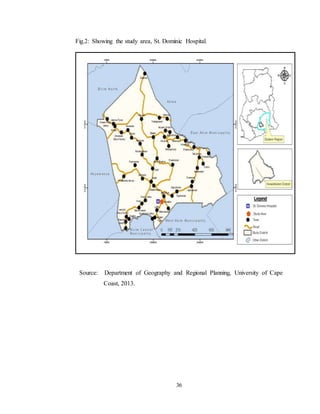
Fig.2: Showing the study area, St. Dominic Hospital.
Source: Department of Geography and Regional Planning, University of Cape
Coast, 2013.
37
Sources of data
Primary data and other information from various sources were used in the
study. Primary data was obtained from health personnel who render services
under the free maternal health care policy at the St. Dominic Hospital at Akwatia.
In-depth interviews were conducted using an interview guide to collect data.
Information gained from secondary sources was obtained from annual
statistics/reports of the St. Dominic Hospital, policy documents by the Ghana
Health Service, Ministry Of Health and published books.
Sampling procedure
Purposive sampling procedure was used to select health personnel to
participate in the study. Health personnel who had worked for at least seven (7) or
more years at the St. Dominic Hospital were selected. This was to ensure that
health personnel selected had in-depth knowledge experience about the free
maternal health care policy and its implementation. The selection was done by the
head administrator in charge of affairs at the St. Dominic Hospital.
Target population and sample
The target population for the study were health personnel who rendered
maternal health care services at the St Dominic Hospital, Akwatia. Specifically,
doctors, obstetric gynachologists, midwives and nurses formed the target
population of the study.
38
Ten respondents were chosen purposively. They comprised of two senior
midwives, two nurses, two midwives, two general doctors and two obstetric
gynaecologists.
Research instrument
An interview guide was used to collect the data. The interview guide
solicited for responses pertaining to questions asked based on the specific
objectives of the study. Questions asked sought to provide insights into internal
policies, the physical structure of the facility and health personnel’s knowledge on
the free maternal health care policy. Specifically, questions were asked based on
the challenges health personnel encountered in their bid to provide maternal
health care service under the free maternal health care policy.
The study adopted an in-depth interview procedure. The in-depth
interview saw a communication exchange between the interviewer and
respondents where both parties especially respondents, were made aware of the
adherence to their ethical rights. The in-depth interview allowed the researcher to
collect relevant information pertaining to the research questions the study sought
to answer.
Pre-testing of instrument
The interview guide was pre-tested at the Boadua Community-based
Health Planning and Services (CHPS) compound located at the Denkyembour
District in the Eastern region. To ensure that the instrument used captured the
39
relevant information needed for the study, five community health nurses were
interviewed. Responses collected informed the modification of the interview
guide for the actual study. Misinterpreted words were corrected and subsequently
not repeated in the interview guide for the actual study. The pre-testing ensured
the formulation and elimination of relevant and irrelevant questions respectively.
It also helped in the formulation of a suitable interview guide needed for the
actual study.
Fieldwork and challenges
Preparatory activities towards fieldwork began on the 11th of January,
2013 with pre-testing of the research instrument. Prior to that, an introductory
letter was acquired from the Population and Health Department of the Faculty of
Social Sciences, University of Cape Coast. The introductory letter clearly stated
the project topic and the name and registration number of the person conducting
the study. This introductory letter along with an informed consent form was then
sent to the head of the Boadua CHPS centre. The introductory letter was accepted
and permission granted for the pre-testing of the interview guide. Interview
sessions lasted for a day.
After modifications to the interview guide for the study, an introductory
letter acquired from the Population and Health Department was sent to the
administrative manager of the St. Dominic Hospital on the 23rd of May, 2013for
consideration. Permission to begin the study was granted on the 28th of May,
2013. A senior staff was assigned by the administrator to assist. Actual fieldwork
40
activities began on the same day permission was granted and ended on the 30th of
May, 2013. Fieldwork activities comprised of sampling and interview sessions.
The selection of respondents was ably done with the assistance of the Head
administrative manager. All respondents were made to sign an informed consent
form which stated they had the right to anonymity, confidentiality, the right to opt
out of the interview process if they so desired and that findings of the study would
only be used for academic purpose only.
Few challenges were encountered. There were instances where interviews
were disrupted. On the average, interview session lasted between an hour and
thirty minutes. In extreme cases, interviews lasted two hours. The long duration
of such interviews could be attributed to respondents excusing themselves in
order to attend to emergency situations. Another challenge was the slow progress
of interview sessions. This was attributable to the fact that responses given by
respondents had to be hand written. This was because they refused to be tape
recorded. Finally, some respondents scheduled for interviewing were indisposed.
This situation was however addressed through the interviewing of equally
resourceful health personnel.
Ethical issues
The study held the ethical rights of respondents in high esteem in that an
informed consent form was made available for respondents to read and willingly
sign to participate in the study. It also ensured that their right to confidentiality
and anonymity was adhered to. These ethical issues were acted upon through
41
certain conditions. To begin with, participants were informed about the rationale
behind the study and were accordingly allowed to voluntarily choose whether to
participate in the study or not. More so, interview sessions were carried out in an
enclosed area away from the public so as to ensure respondents ‘privacy. Lastly,
respondents were allowed to view notes collected in the course of the interview in
a bid to build a sense of trust between them and the researcher.
Data processing and analysis
The data collected were edited and analysed accordingly. Responses were
matched with the various aspects of questions in the interview guide and in
relation with the objectives and research questions. Data was analysed and
presented also with the use of quotes from respondents’ views.
42
CHAPTER FOUR
FINDINGS AND DISCUSSION
Introduction
The purpose of this chapter is to analyze and discuss the results of the
study. This chapter presents and discusses findings of the study based on the
themes developed for the study; internal policies, physical structure, external
factors, clientele personal characteristics, knowledge about the free maternal
health care policy and inherent characteristics of the health facility.
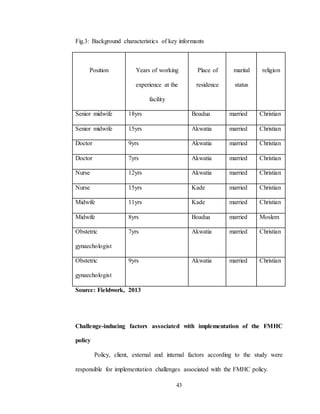
Background information of key informants
The study in its quest to solicit for answers pertaining to its research
questions interacted with ten (10) key informants specifically two (2) senior
midwives, two (2) nurses, two (2) midwives, two (2) doctors and two (2) obstetric
gynaecologists. Key informants were chosen by virtue of their years of work
experience, proximity of residence to study area (Akwatia) or residence at study
area (Akwatia) and position. Other characteristics like marital status and religion
where also enquired from key informants. Below is a table (fig.3) showing the
background characteristics of key informants used in the study.
43
Fig.3: Background characteristics of key informants
Position Years of working
experience at the
facility
Place of
residence
marital
status
religion
Senior midwife 18yrs Boadua married Christian
Senior midwife 15yrs Akwatia married Christian
Doctor 9yrs Akwatia married Christian
Doctor 7yrs Akwatia married Christian
Nurse 12yrs Akwatia married Christian
Nurse 15yrs Kade married Christian
Midwife 11yrs Kade married Christian
Midwife 8yrs Boadua married Moslem
Obstetric
gynaechologist
7yrs Akwatia married Christian
Obstetric
gynaechologist
9yrs Akwatia married Christian
Source: Fieldwork, 2013
Challenge-inducing factors associated with implementation of the FMHC
policy
Policy, client, external and internal factors according to the study were
responsible for implementation challenges associated with the FMHC policy.
44
Policy- induced implementation challenges
Policy induced challenges refer to those factors that arise as a result of lapses in
policy formulation. The implementation of the FMHC policy at the St. Dominic
Hospital is confronted with issues that have to do with targeting problems which
arise from the inability of policy implementors to identify their target populace;
and funding problems which arise from the inability of policy formulators and
policy implementors to provide the necessary financial backing needed to
operationalize the FMHC policy.
Targeting problems
The successful implementation of the FMHC policy at the St. Dominic
Hospital is hampered by problems related to targeting. Targeting problems arise
when error of inclusion and exclusion occur (Cornia and Stewart, 1993). These
targeting problems have created the situation where the poor who are supposed to
be identified for delivery-fee exemption are excluded while those who are well to
do are rather benefiting from the delivery-fee exemption policy on maternal
health care. The problem with targeting at the facility is accordingly
acknowledged in an account given by a senior midwife.
“failure to identify the poor means the purpose of eliminating
financial constraints associated with assessing maternal health
care has been deviated from. It is sad that the rich are rather
benefitting from the policy more than the poor”.
45
The difficulty of targeting the poor for exemption was linked to poor record
keeping practices in hospitals. As one nurse put it,
“identifying the poor is a daunting task for service providers which
could mean the tendency of poor people not benefitting from the
FMHC policy. In my opinion, the inability of the poor to be
identified can be attributed to the poor record keeping practices
adopted in hospitals across the country of which this hospital is
included”.
Studies done by Cornia and Stewart (1993); and Grosh, (1996) validate these
assertions. According to them, the under-coverage of the poor whom a pro-poor
policy was intended for are relegated to the background. They further revealed
that the rich rather benefited from pro-poor policies due to inclusion errors by
policy implementors. Similarly, Grosh (1996) attributed under-coverage of the
poor to over-reliance of policy makers on scanty data. For Grosh, Governments’
and policy makers’ inability to formulate fully fledged policy modeling that
included cost effectiveness and cost benefit analysis also led to targeting
problems.
Funding problems
Funding of a health care policy is critical since it influences health care
infrastructural development like the provision of wards, theatres, laboratories,
46
medical equipments and logistics. Funding also influences the ability of policy
formulators and implementors to acquire the services of skilled health personnel
and pay them satisfactorily. Unfortunately, health care facilities in most
developing countries lack the infrastructural qualities needed to deliver quality
health care services (World Health Report, 2006).
More so, the health sector of most developing countries is confronted
with low numbers of skilled personnel coupled with inadequacies in health care
equipments and logistics (Birungi et al, 2006). The implementation of the FMHC
policy at the St. Dominic Hospital suffers the same fate as most health care
facilities scattered across the sub-region. Inadequate funding leads to poor
infrastructural development which in turn impacts negatively on the delivery of
quality maternal health care (World Health Report, 2006). A senior midwife
shared similar sentiments.
“the policy advocates for the delivery of maternal health care
services free of charge without taking into consideration how to
equip health care facilities like this one with state of the art health
care infrastructure like wards, theatres, dispensaries, medical
equipment and other health care logistics”.
A doctor also shared his thoughts on how late payment of grants hampered the
implementation of the FMHC policy at the facility.
47
“inconsistent payment of grants and provision of funds have
created lapses in medical equipment acquisition with the aftermath
being the poor delivery of maternal health care services”.
Similarly, a survey conducted by the Ministry of Health (MOH) in 2006 revealed
late payment of grants as a challenge of the health sector which is a coincidentally
is a problem being experienced with the implementation of the FMHC policy.
Poor remuneration as a factor leading to low motivation of health personnel was
closely linked to funding problems by one nurse in her account.
“the inconsistencies in funding have led to poor motivation of
workers at the facility. Due to the poor salaries of workers, most
health personnel travel abroad in search of greener pastures and
this has led to the low number of skilled health personnel in the
country.”
This assertion further reveals the link between poor remuneration of staff and the
high incidence of brain drain where large numbers of health personnel travel
outside the country to other parts of the world in search of good working
conditions (The Global Health Workforce Crisis 2003; World Health
Organization, 2003).
48
Internally-induced implementation challenges
These challenges refer to how characteristics of a health care facility and
conditions pertaining there create implementation challenges for the FMHC
policy. Inherent traits of a health care facility come in the form of unfavourable
personnel behaviour, poor physical structure, staff inadequacies and poor
transport networks. These are the main inherent factors that hamper the
implementation of the FMHC policy at the St. Dominic Hospital.
Poor physical structure
Physical structure of a health care facility touches on elements like
medical theatres, wards and laboratories. Medical equipments, logistics and
personnel also form part of the physical structure of a health care facility.
Physical structure of a health care facility according to Birungi et al. (2006),
usually determines the quality of health care delivery. This assertion is confirmed
by health personnel at the St. Dominic Hospital. A nurse shared her sentiments on
infrastructural inadequacies of the facility and the poor state of road networks
linking the facility to surrounding towns. According to her,
“the poor state of roads linking Kade, Adankrono, Apinaman,
Boadua and Sakyiman coupled with the facility’s infrastructural
inadequacies in the form of wards, theatres, dispensaries and
laboratories hider implementation of the FMHC policy and overall
health care delivery”.
49
Another colleague, a doctor, shared his thoughts on the issue.
“poor road networks, inadequate health personnel, medical
equipment, wards and theatres coupled with inadequate
laboratories and insufficient drugs render implementation of the
FMHC policy difficult”.
Studies done by Acharya and Cleland (2000) as well as Birungi et al. (2006)
validate assertions made by health personnel. Acharya and Cleland (2000); and
Birungi et al. (2006), in their studies revealed that women defined quality of care
by the presence of physical infrastructure, availability of drugs and the presence
of special maternal and child health clinics. For them, the absence of these
physical structures deterred women from accessing maternal health care services
from health care facilities. This in their opinion made implementation of the
delivery-fee exemption policy on maternal health care difficult since women who
were the targets of the policy refused to patronize the services of health care
facilities but rather chose to utilize traditional forms of maternal health care. This
according to Acharya and Cleland (2000); and Birungi et al. (2006) led to more
maternal deaths since pregnancies that resulted in complications were poorly
managed.
50
Unfavourable personnel behaviour
Health personnel as ’tools’ for health care delivery tend to create
implementation problems for the FMHC policy when they exhibit unprofessional
behaviours in their service delivery duties. As one obstetric gynaechologist put it,
“poor attitudes displayed by health personnel lead to reduction in
the number of women who patronize maternal health care services
at the facility. When this happens, supervised deliveries at
hospitals will be replaced by home deliveries which will only mean
more maternal deaths should complications arise. This situation in
my opinion makes implementation of the FMHC policy difficult
since women, the focal point of the policy is not visiting the facility
for maternal health care”.
A midwife also gave a detailed account on the issue.
“even though health personnel at this facility behave
professionally, there are instances when health workers shout on
clients and fail to communicate appropriately with clients. These
unfortunately make the hospital a no go area for women which
eventually tilt their maternal health care service patronage
towards traditional forms of pregnancy management which in
51
most cases can’t be compared to modern medical forms of
pregnancy management when considering complicated maternal
cases. In the long run, utilization of maternal health care services
at the facility is reduced which defeats the purpose for which the
policy was formulated”.
These accounts are validated by studies on staff behaviour and health seeking
behaviour of clients conducted by Abrahams et al. (2001). According to
Abrahams et al. (2001), the abusive behavior and unfriendliness of staff often
influenced women’s decisions to seek maternal health care negatively since
pregnant women generally did not want to be treated badly by midwives.
Staff inadequacies
The successful implementation of the FMHC policy is exclusively
dependent on the availability of health personnel among other factors.
Unfortunately, health care facilities in most developing countries are deficient
when it considering health personnel numbers (World Health Report, 2006).
Poor working conditions can be attributed to the low number of health personnel
in most health care facilities. The case of the St. Dominic Hospital is no
exception. According to an obstetric gynaechologist,
“inconsistencies in funding have led to poor remuneration of
workers which has led to more health personnel travelling abroad
in search of greener pastures. This has caused the health sector
52
problems in the area of adequate skilled health personnel and just
like any other health care facility face manpower constraints”.
A midwife also shared her opinion,
“poor remuneration of health workers lead to poor health care
delivery since health personnel are poorly motivated to give off
their best. I can say for a fact that these poor conditions of service
force skilled health personnel to move to the major cities like
Accra and Kumasi. Some also migrate to other parts of the world
in search of greener pastures. This situation has led to staff
inadequacies not only in this facility but other less endowed
regions of the country”.
These assertions are ably confirmed by surveys done by the World Health
Organization (WHO) and the Ghana Health Service (GHS). WHO in their
publication; The Global Health Workforce Crisis, 2003 revealed that large
numbers of health workers from most developing countries were migrating to
other countries abroad in search of better working conditions since they were not
satisfied with conditions of service in their respective home countries. Similarly,
GHS revealed in survey that doctors, nurses, pharmacists and technical staff were
disproportionately distributed across the country. According to GHS a significant
proportion were based in Greater Accra and Ashanti Regions.
53
Poor road networks
The ability of women to access free maternal health care is determined
by the state of transport networks. Implementation problems pertaining to the
operationalization of the FMHC policy are bound to arise when transport
networks like roads are in a bad state. Women’s utilization of maternal health care
services is hindered by the poor state of road networks linking health facilities to
settlements. Health personnel at the St. Dominic Hospital shared their though on
the state of roads in the Akwatia township and how it influenced implementation
of the FMHC policy at the facility. According to a doctor,
“due to the bad nature of the roads, most maternal cases referred
to the facility end up in deaths. This occurs due to delays on the
way to the hospital with the situation even worse during the rainy
season. This situation denies health personnel the opportunity to
address pregnancies that result in complications making
implementation of the free maternal health care policy difficult.
This clearly defeats the purpose for which the policy was
formulated.”
A nurse also made similar comments.
“the poor state of roads linking Kade, Adankrono, Apinaman,
Boadua and Sakyiman hinder implementation of the FMHC policy
54
and overall health care delivery. It prevents more women from
accessing maternal health care services from the facility”.
Similarly, Celik and Hotchkiss (2000) confirm these assertions in their studies
pertaining to accessibility and maternal health care utilization. For them, poor
road infrastructure and lack of reliable public transport or access to emergency
transportation make access to health care facilities difficult especially when
childbirth complications occur. They further add that these accessibility problems
force women to seek maternal health care from less-trained providers who are
more accessible but are neither competent nor equipped to deal with pregnancy
complications.
Client induced implementation challenges
These challenges refer to unfavourable personal characteristics of women acting
as impediments to implementation of the FMHC policy. These challenge-inducing
characteristics are in the form of financial, literacy and residential status of
women. Unpleasant experiences of clients also play a part in hindering
implementation of the FMHC policy. These factors usually act in unison to hinder
women’s maternal health care accessibility capabilities. Health personnel shared
their thoughts on how these characteristics of clients impeded the implementation
of the FMHC policy. According to a midwife,
“if a woman has low economic status and a low literacy level she
cannot access maternal health care at a facility because of her
55
inability to pay for transportation and food; and lack of
understanding of the policy”.
Another midwife gave a similar but detailed insight into the issue.
“education influences understanding of the policy which means a
woman with low education level is bound to ignore such a policy
due to misunderstanding. Also, the ability to pay for food and
transport dwells on a woman’s stable economic status. Her ability
to access maternal health care services suffers when she is
financially instable. Logically, women living far from health care
facilities are likely to ignore maternal health care services offered
by that facility in favour of home deliveries. This makes
implementation of the FMHC policy a daunting task”.
Studies done by Gage (2007) and Overbosch et al. (2004) confirm these
assertions. For Gage, household poverty and personal problems of women
negatively influence their use of maternal health care services. Overbosch et al.
(2004) on education and health care service utilization in Ghana, concluded that
women’s attitude to antenatal care seemed to be influenced by their schooling
since more years of education of a pregnant woman was associated with a choice
for sufficient antenatal care. Again, Overbosch et al (2004) revealed that the
56
scarcity of vehicles especially in remote areas in addition to the poor state of road
made accessibility to nearby facilities extremely difficult for women.
Unpleasant experiences of clients as an impediment to implementation of the
FMHC policy was spoken of by a nurse in her account.
“bad experiences at a health facility are likely to influence the
decision of women not to return to a health facility to access
maternal health care services. This has grave consequences for the
implementation of the FMHC policy since women whom the policy
targeted are no longer patronizing the services of the facility”.
Similarly, Lubbock and Stephenson (2008) in their studies on women’s
perception and their health seeking behaviour revealed that women’s
unfavourable past experiences at a health care facility negatively influenced future
health seeking behaviours. More so, Neelanjana (2010) identified excessive
waiting times, lack of urgency regarding one’s health and embarrassing physical
examinations as factors that made the patronage of health care services like
maternal health care unattractive to women.
Externally induced implementation challenges
These refer to how environmental factors pertaining at the setting of a health care
facility impede implementation of the FMHC policy. These challenges are
57
induced by external factors in the form of cultural practices or societal norms that
exist in the setting the facility is located at. According to Addai (2000), the belief
system of inhabitants of the area where health facilities are sited play a
significant role in determining whether health care policies can be successfully
implemented or not. This assertion is true since cultural practices among some
inhabitants in Akwatia hinder the implementation of the FMHC policy. Among
some inhabitants of Akwatia, males are mandated to make decisions that have to
do women’s reproductive health. Unfortunately, this limits women’s decision
making power compelling them to accept traditional forms of maternal health
care. An account given by a midwife threw more light on the issue.
“the decision making of women concerning reproductive issues
is not theirs to make and this creates a situation where women
are compelled to accept the possibility of delivering at home
especially when the family can’t afford to pay transportation
costs incurred by the woman”.
Also, a nurse in her account spoke of how the elderly in the family impede
women’s utilization capabilities and how that eventually created implementation
problems for the FMHC policy.
“the only problem societal norms here create for the free
maternal health care policy is the priority given to older
persons when matters of maternal health care are concerned.
58
Unfortunately, most of these old women advocate for traditional
forms of maternal health care and home deliveries. This
situation has made more women liable to home deliveries which
limits their utilization of free maternal health care thereby
making implementation of the FMHC policy difficult”.
This assertion is confirmed by Addai (2000). For Addai, women often rely on the
knowledge and advice of older and more experienced authority figures within
their society to direct their health care seeking behaviours. Usually, these
‘experienced’ individuals favour traditional forms of pregnancy management
since they are more familiar with them as opposed to modern maternal health
care.
59
CHAPTER FIVE
SUMMARY, CONCLUSIONS AND RECOMMENDATIONS
Introduction
This section summarizes information on background to the study,
objectives, review of literature, methodology as well as conclusions and
recommendations.
Summary
The study set out to examine the implementation challenges of the free
maternal health care policy at the St. Dominic Hospital, Akwatia. The target
population of the study was health personnel who rendered maternal health care
services at the St. Dominic Hospital, Akwatia. Specifically, doctors, obstetric
gynachologists, midwives and nurses formed the target population of the study.
Out of 252 health personnel, ten (10) key informants were purposively sampled
for interviews. In-depth interviews were conducted with the help of an interview
guide.
Interview sessions were conducted to solicit for answers to research
questions which captured issues of internally, externally and policy induced
implementation challenges of the FMHC policy. The study was able to answer
research questions through editing and analysis of accounts given by health
personnel. The study however encountered few challenges. Some health
60
personnel scheduled for interviews were not present while there were instances
where interviews were disrupted.
The study was able to unearth some major findings. First of all,
internally induced implementation challenges of the FMHC policy were strongly
linked to poor physical structure, unfavourable behavioural traits of health
personnel, staff inadequacies and poor state of roads linking the facility to
surrounding towns. Secondly, unpleasant experiences, low literacy levels, low
financial status of women and long distance from the facility were identified as
the main client induced factors that were responsible for implementation
difficulties encountered under the FMHC policy. Thirdly, policy induced
implementation challenges of the FMHC policy were attributed to targeting and
funding problems. Lastly, the study identified societal norms as an externally
induced factor which limited the decision making power of women pertaining to
their reproductive health. According to the study, this led to low patronage of
modern maternal health care services in favour of traditional forms of maternal
health care services. Unfortunately, this was likely to result in more maternal
deaths due to the poor management of pregnancies that resulted in complications.
Conclusions
Based on major findings of the study the following conclusions can be
drawn.
 Internally induced challenges of the FMHC policy are linked to poor
physical structure, unfavourable behavioural traits of health personnel,
61
staff inadequacies and poor state of roads linking the facility to
surrounding towns.
 The main client induced factors that are responsible for implementation
difficulties of the FMHC policy were issues that had to do with unpleasant
experiences, low literacy levels, low financial status of women and long
distance from the facility.
 Targeting and funding problems are the main policy induced challenges
that negatively impacted on the implementation of the FMHC policy.
 Societal norms limit women’s decision making power which hamper their
patronage of free maternal health care services.
Recommendations
1. Health personnel should organize regular health education programmes for
women to enlighten them on issues of antenatal care and other maternal
health services and also support them financially.
2. Health personnel should avoid rudeness or making derogatory remarks
about clients but should rather strive to be humane in their service delivery
duties.
3. The Government and other stakeholders must target the poor and ensure
adequate funding which can ensure adequate trained staff, a regular supply
of drugs, equipment and logistics as well as staff salaries.
4. Public–private partnerships must be encouraged so as to strengthen the
provision of referral services as well as exchange of staff and equipment.
62
REFERENCES
Abrahams, N. et al. (2001). Health care-seeking practices of pregnant
women and the role of midwife in Cape Town, South
Africa. Journal of Midwifery and Women’s Health 46(4):
240-247.
Acharya, L.B. and Cleland, J. (2000). Maternal and child health services
in rural Nepal: does access or quality matter more? Health
policy and planning 15(2):223-229.
Addai, I. 2000. Determinants of use of maternal-child health services in
rural Ghana. Journal of Biosocial Science 32(1):1-15.
Asante F., Chikwama C, Daniels A, Armar-Klemesu M. (2007) Evaluating
the Economic Outcomes of the Policy of Fee Exemption
for Maternal Delivery Care in Ghana. Ghana Medical
Journal 41(3): 110.
Birungi, H. and Onyango-Ouma, W. (2006). Acceptability and
Sustainability of the WHO Focused Antenatal Care
package in Kenya. Frontiers in Reproductive Health
Program, Population Council Institute of African Studies,
University of Nairobi.
Brewer, Garry and Peter deLeon (1983). The Foundations of Policy
Analysis, Pacific Grove: Brooks/Cole.
Bosu W. K, Bell JS, Armar-Klemesu M, Tornui JA. (2007) Effect of
delivery care user-fee exemption policy on institutional
63
maternal deaths in the Central and Volta regions of Ghana.
Ghana Medical Journal 41(3): 118-124.
Campbell, O. M., & Graham, W. J. (2006, September). Strategies for
reducing maternal mortality: getting on with what works.
The Lancet, 25-40.
Celik, Y., and Hotchkiss, D. R. (2000). The socio-economic determinants
of maternal care in Turkey. Social Science and Medicine,
50, 1797-1806.
Claeson, M., Griffin, C., Johnston, T., McLachlan, M., Soucat, A.,
Wagstaff, A., and Yazbeck, A. (2001). Poverty reduction
and the health sector: The Health, Nutrition and
Population Network’s chapter in the World Bank’s Poverty
Reduction Strategy Sourcebook (HNP Discussion Paper
Series). Washington, DC: The World Bank.
Cornia, A. and F. Stewart. 1993. “Two Errors of Targeting”. Journal of
International Development 5 (5): 459-496.
Elmore, Richard E. (1978), Organizational Models of Social Program
Implementation, Public Policy, Vol.26, No. 2: 185-228pp)
Gage AJ: Barriers to the Utilization of Maternal Health Care in Rural
Mali,” Soc Sci Med 2007. doi:10.1016/j.socscimed.
Ghana Statistical Service (2004), Noguchi Memorial Institute for Medical
Research (NMIMR)
GHS (2005), Policy Planning Monitoring & Evaluation Division (PPME)
64
GHS Report (2006): Reducing Maternal & Newborn Deaths in Ghana.
Grosh, M. 1996. “Five Criteria for Choosing Among Poverty
Programmes”. In N. Lustig (ed.) Coping With Austerity:
Poverty and Inequality in Latin America. Washington D.C.:
World Bank, pp146-186.
ISSER (2003) The State of The Ghanaian economy
James C, Hanson K, McPake B, Balabanova D, Gwatkin D, et al. (2005)
To Retain or Remove User Fees? Reactions on the current
debate. Unpublished manuscript.
Lubbock L. A, Stephenson R. B (2008). Utilization of maternal health care
services in the department of Matagalpa, Nicaragua. Rev
Panam Salud Publications. 2008; 24(2):75–84.
Matland, Richard E. (1995), Synthesizing the Implementation Literature:
The Ambiguity-Conflict Model of Policy Implementation,
Journal of Public Administration Research and Theory: J-
PART, Vol.5, No.2 (Apr. 1995) 145-174 pp.
Maternal Child Health Data; St. Dominic Hospital , 2012
Ministry of Health, Ghana’s Integrated Child Health Campaign (1-5
November, 2006). “The Potential to save at least 20,000
young Children’s Lives”
Ministry of Health, (2007) National Health Policy: Creating Wealth
through Health. Ministry of Health
65
Nanda, P. 2002. “Gender Dimensions of User Fees: Implications for
Women’s Utilization of Health Care.” Reproductive Health
Matters 10 (20): 127–134.
Neelanjana P. (2010). Perceived Barriers to Utilization of Maternal Health
and Child Health Services: Qualitative Insights from Rural
Uttar Pradesh, India.
NHIS (2008). Providing free maternal and neonatal care through NHIS
Overbosch, et al: Determinants of antenatal care use in Ghana,” Journal of
African Economies 2004, 13(2):277–301.
Penfold S, Harrison E, Bell J, and Fitzmaurice A. (2007) Evaluation of the
delivery fee exemption policy in Ghana: population
estimates of changes in delivery service utilization in two
regions. Ghana Medical Journal 41(3): 100-109.
Ravindran, S. and de Pinho, H. (ed). 2005. The Right Reforms? Health
Sector Reform and Sexual and Reproductive Health.
Women’s Health Project, School of Public Health,
University of the Witwatersrand, Johannesburg.
Ronsmans, C., and Graham, W. (2006), Maternal Mortality: who, when,
where and why? (R. Horton, Ed.) The Lancet
Van Meter, Donald S. & Van Horn, Cark E. (1975), The Policy
Implementation Process: A conceptual Framework,
Administration & Society, Vol.6 No4, February 1975, 445-
487pp.
66
Vos, R. 2003. Lecture Notes on “Alternative Perspectives of Social
Policies and Development”. Institute of Social Studies, The
Hague.
WHO (2006). The World Health Report, 2006. Working Together for
Health. Geneva.
Winter, Soren C. (2003), “Implementation”, (Section 5) In Handbook of
Public Administration, (ed.) BG Peter and J Pierre. London,
Thousand Oaks, CA and New Delhi: Sage 206-211 pp.
Witter S, Adjei S. (2007) Start-stop funding, its causes and consequences:
a case study of the delivery exemptions policy in Ghana.
International Journal of Health Planning and Management
22: 133-143.
Witter, S., Arhinful, D. K., Kusi, A., and Zakariah-Akoto, S. (2007), The
Experience of Ghana in Implementing a User Fee
Exemption Policy to Provide Free Delivery Care.
Reproductive Health Matters, 15 (30), 61-71.
World Bank (2003). “Ghana Poverty Reduction Strategy 2003-2005”: An
agenda for growth and prosperity Vol. (1): Analysis and
Policy Statement. February 19, 2003. Washington D.C. The
World Bank.
World Bank (2006). World Development Indicators
World Bank (1994). World development report: Infrastructure for
development. New York, New York: Oxford University
Press.
67
World Health Organization (2006). Data on perinatal and maternal
deaths. Geneva: World Health Organization.
World Health Organization (2007), maternal mortality in 2005: estimates
developed by WHO, UNICEF, UNFPA, and the World
Bank. Geneva, Switzerland.
World Health Organization (WHO). 1998. Improved access to maternal
health services. WHO 98.7. Geneva: WHO.
World Health Organization. (2003). The global health workforce crisis,
World Health Report, WHO, Geneva, Switzerland.
World Health Organization (2005). Health Systems Performance
Assessment.
World Health Organization. (2005). World Health Report 2005: Make
Every Mother and Child Count. World Health
Organization, Geneva.
Xu K, Evans D. B, Kadama P, Nabyonga J, Ogwang Ogwal P,
Nabukhonzo P, Mylena Aguilar A. (2006) Understanding
the impact of eliminating user fees: Utilization and
catastrophic health expenditures in Uganda. Social Science
and Medicine 62: 866-876.
Younis, Talib & Davidson, (1990), Implementation in public Policy,
Dartmouth Publishing Company Ltd.
68
APPENDIX
INTERVIEW GUIDE FOR HEALTH PERSONNEL
The purpose of this interview is to seek the views of health personnel at the St.
Dominic Hospital, Akwatia pertaining to the service delivery challenges they are
confronted with and how those challenges act to negatively influence the
implementation of the free maternal health care policy.
 Background characteristics of respondent
Position …………………………………………
Years spend at facility ………………………….
Place of residence & years spent there
………………………………………………………………………
Marital status ……………………………………
Religion …………………………………………
A. Issues related to internal policy
I. In your own words, can you please tell me about the
existing policies that are being implemented at this health
facility?
Probes: Who benefits from these policies?
How are these policies implemented?
Why are the beneficiaries targeted by these
policies?
II. How do clients respond to these internal policies?
III. What poses challenges to these internal policies?
B. Physical structure
IV. On a scale of 1 to 10 how do you rate St. Dominic Hospital
based on its health care infrastructure?
69
Probes: Please explain the reason for your answer?
V. In your own estimation, how does the physical structure of
the facility influence health care delivery?
Probes: Can you please throw light on any
challenges the facility has pertaining to
health care infrastructure?
VI. What is the maintenance culture at the facility like?
C. Issues about the free maternal health care policy
VII. In your own words can you please tell me about the free
maternal health care policy?
VIII. What is your take on the free maternal health care policy?
Probes: Why was it implemented?
IX. Can you please point out the key roles you perform under
the free maternal health care policy?
Probes: Can you please tell me about the
workload in the facility?
How does the workload affect the
effective implementation of the free
maternal health care policy?
D. Inherent issues affecting the policy
X. Which inherent factors enhance the implementation of the
policy at the facility?
XI. In this facility, what are the inherent factors that inhibit the
implementation of the free maternal health care policy?
 Funding
XII. What are the sources of funding for the facility?
Probes: What are the problems associated with
funding?
How do these funding inconsistencies pose
70
implementation challenges for the free
maternal health care policy?
 Policy
XIII. In your own words, which aspects of the free maternal
health care policy make its implementation a challenge?
Probes: How do these policy-induced factors pose
challenges to implementation?
 Personnel behaviour
XIV. From a candid perspective, please tell me about the main
unfavourable behaviours health personnel exhibit towards
clients?
Probes: How do these unfavourable behavioural
patterns of health personnel affect the
implementation of the free maternal health
care policy?
E. Client-induced challenges
XV. What are the main socio-economic and cultural factors that
influence the health-seeking behaviours of clients?
Probes: Can you please tell me how these socio-
economic and cultural characteristics of
clients pose challenges to the
implementation of the free maternal
health care policy?
What measures have health personnel like
yourself, put in place to curb these client-
induced challenges?
XVI. In your own estimation, how do clients’ perceive the free
maternal health care policy and its implementation?
Probes: What measures are put in place to educate
71
clients about the free maternal health care
policy?
E. Externally-induced challenges
XVII. What is your take on the societal norms existing among
the people of Akwatia?
Probes: How do they pose challenges to the
implementation of the free maternal health
care policy at the facility?
F. Recommendations
XVIII. From your point of view, how can the free maternal
health care policy be sustained?
XIX. What interventions in your point of view, can be adopted
to address implementation challenges of the free
maternal health care policy?

c1-c5 references and appendix

  • 1.
    1 CHAPTER ONE INTRODUCTION Background tothe study The Free Maternal Health Care (FMHC) policy is an intervention embedded in the work plan of the World Health Organization which aims at improving maternal and child survival rates worldwide. The World Health Organization in accordance with this goal set two global targets of reducing maternal mortality by 75% between 1990 and 2015 and ensuring universal coverage of skilled care at birth by 2015. The free maternal health care policy as an intervention has succeeded in modifying the poor state of maternal and child mortality rates worldwide. This poor state of maternal and child mortality rates worldwide is one that needs attention since estimates from the World Health Organization (2006) show that half of all maternal deaths occur within the first 24 hours after birth and another 20 percent in the first week after delivery. Estimates from the World Health Organization (2006) suggest that only about 53% of deliveries in developing countries currently take place with the assistance of skilled attendants while emergency services are not accessible in many places. According to World Bank (2003), of all the regions in the world, tropical sub-Saharan Africa ranks highest in mortality for children under-five. Statistics from the World Health Organization attests to this observation. For instance,
  • 2.
    2 about 4.3 millionstill births and 3.4 million deaths occur annually in the first week of delivery, with 98% of the deaths occurring in developing countries. Again, an estimated total of 536,000 maternal deaths worldwide in 2005, developing countries accounted for 99% (533,000) of these deaths. These deaths according to the World Health Organization can be attributed to complications of pregnancy and childbirth, bleeding, hypertension, anaemia, unsafe abortions, infections and obstructed labour (WHO, 2005). The Government of Ghana introduced the maternal health care policy in September 2003 in the four most deprived regions of the country, namely, the Central, Upper West, Upper East and Northern regions. This was later extended to the remaining six regions in April 2005 by removing delivery fees in all public, private and mission facilities (Witter, Arhinful, Kusi, & Zakariah-Akoto, 2007). The motive of the policy was to reduce financial barriers to accessing maternity services to help reduce maternal and perinatal mortality among women (Witter, et. al, 2007). As of 2005, the estimate of maternal mortality rate in Ghana was 560 per 100,000 live births which has been considered to be high. The free maternal health care policy was funded through the Highly Indebted Poor Country (HIPC) debt relief funds which were used to reimburse public, mission and private health care facilities (Witter, et. al, 2007). The free maternal health care policy was introduced into the nation’s health insurance scheme in 2008 to improve maternal health and reduce child mortality. The policy is open to all pregnant women resident in Ghana. The beneficiaries of the policy are all pregnant women, nursing mothers and all babies
  • 3.
    3 born to motherswho have registered under the policy. Under the free maternal health care policy, pregnant women are entitled to free health care service in all National Health Insurance Scheme (NHIS) accredited health care facilities. These facilities may be public, mission or private (Witter, et. al, 2007). The validity period of the policy spans from the period when the woman is certified by a skilled health personnel to be pregnant up till nine months after child birth. Emergency service delivery and all other medical problems that would arise within this period are covered under the policy. For pregnant women to access the free maternal health care policy, one must first obtain pregnancy confirmation note from a medical officer and submit the pregnancy confirmation note to the nearest National Health Insurance Scheme (NHIS) office or agent. Afterwards, it is followed by subsequent registration and issuance of NHIS membership card which enables one to attend NHIS accredited hospitals, clinics or maternity homes with their NHIS card to receive free antenatal and postnatal care. Newly-born babies will continue to access free health care for the first three months after which parents would be required to register them at no cost for a NHIS membership card which will enable their children access free health care till the age of 18 years (NHIS, 2008). The free maternal health care policy has had a positive effect on maternal mortality rate in Ghana. This can be attributed to the services offered under the policy to pregnant women and nursing mothers ranging from six antenatal visits, mandatory medical visits, delivery including all emergencies that arise from child
  • 4.
    4 birth, 2 post-natalvisits within 6 weeks and free medical care for babies up to three months (NHIS, 2008). Worldwide, health intervention policies aimed at addressing health care needs are hindered from performing at their highest potential by several problems. Claeson et al. (2001) reveals that challenges to maternal health intervention policies like the free maternal health care policy have created dysfunctional health systems that are failing to save women’s lives and meet their basic reproductive and maternal health needs. According to Claeson et al. (2001), these dysfunctional health systems are slowing down progress of maternal health intervention policies in addressing maternal and under-five mortality. Problem statement Across the globe, developing countries continue to bear the brunt of pregnancy-related deaths (Ronsmans & Graham, 2006). This situation has aroused the curiosity of researchers which has seen the emergence of many studies pertaining to maternal mortality in less developed countries. The works of Witter, et al, (2007), Addai (2000) and other international bodies like the World Health Organization attest to this curiosity maternal mortality rates in Ghana have generated. For instance, Witter, et al. (2007) in a study titled “The experience of Ghana in implementing a user fee exemption policy to provide free delivery care” sought to explore how the free maternal health care policy in Ghana has been implemented. Other examples include that of Addai (2000) who examined determinants of maternal and child health care service utilization, and Campbell et
  • 5.
    5 al. (2006), whoexamined strategies aimed at reducing maternal mortality in Ghana. The abundance of information pertaining to the implementation of the free maternal health care policy in Ghana does not mean there is nothing new to add to knowledge. Akwatia the study area, is confronted with three critical maternal health issues spanning from decreased supervised deliveries, increased maternal deaths among the most vibrant age group of 25-29 and maternal deaths associated with pregnancy and its related complications (Maternal & Child Health Data, 2012). Statistics from the St. Dominic Hospital in Akwatia indicated that pregnancy and its related complications was the 4th highest contributor when it came to admissions for the year 2012. It came only behind malaria, pneumonia and other diseases with a 5.7% contribution to total admissions (Maternal & Child Health Data, 2012). Even more worrying is the declining state of supervised deliveries for the year 2012. Supervised deliveries at the St. Dominic Hospital for the year 2012 were 2,353 which was a decline from the 2011 figure of 2,922. More so, the fact that the 25-29 age group recorded the highest percentage of maternal deaths for the year 2012 raises some concern. This is because this age group contributed 50% of all maternal deaths at the St. Dominic Hospital, Akwatia (Maternal & Child Health Data, 2012). In light of these maternal health issues, the study sought to delve into those factors which induced these unfavourable maternal health care situations at the St. Dominic Hospital, Akwatia as stated above. Hence, the study’s focus on
  • 6.
    6 exploring the implementationchallenges of the free maternal health care policy pertaining to its operation at the St. Dominic Hospital Akwatia. Research questions Based on the above observation, the study sort to answer the following research questions: 1. What were the implementation challenges of the Free Maternal Health Care (FMHC) policy? 2. Which implementation challenges were policy induced? 3. Which implementation challenges were externally induced? 4. Which implementation challenges were internally induced? 5. How these implementation challenges could be addressed? Research objectives The main objective of the study was to explore the challenges in the implementation of the free maternal health care policy at the St. Dominic Hospital, Akwatia. Specifically, the study sought to: 1. Assess the policy related challenges that affect the implementation of the Free Maternal Health Care (FMHC) policy; 2. Analyse the external factors that challenge the implementation of the Free Maternal Health Care (FMHC) policy;
  • 7.
    7 3. Assess theinternal factors that challenge the implementation of the Free Maternal Health Care (FMHC) policy; 4. Discuss how to address the challenges that affect the implementation of the Free Maternal Health Care (FMHC) policy. Rationale of the study The free maternal health care policy has been in operation for five years since it was implemented on a nationwide basis in 2008. However, the implementation process is without challenges. This study therefore sought to explore how the implementation of the Free Maternal Health Care (FMHC) policy at the St. Dominic Hospital in Akwatia was being challenged by policy related factors alongside external and internal factors. The study also offered recommendations on how these challenges could be addressed which was specifically done to aid Government and other stakeholders involved in their bid to provide better and equitable maternal health care services. Organization of the study The work is organized into five chapters. Chapter One covers the background information, problem statement, research questions and objectives of the study. Chapter Two reviews empirical, theoretical and conceptual issues pertaining to the study. Chapter Three illustrates the procedures used in the collection of data. It also captures fieldwork challenges, ethical issues involved, data processing and analysis. Chapter Four covers the presentation of findings
  • 8.
    8 from the study.Chapter Five deals with the discussion, conclusion and recommendations of the study.
  • 9.
    9 CHAPTER TWO REVIEW OFRELATED LITERATURE Introduction This chapter focuses on the relevant literature on the free maternal health care policy in a global, African and Ghanaian context. It also, touches on empirical literature pertaining to factors that affect the implementation of the Free Maternal Health Care (FMHC) policy. Lastly, the chapter concludes with the conceptual framework that guides the study. Maternal health care services The concept of providing maternal health care services began in the 1940’s. The United Nation’s Declaration of Human Rights in 1948 identified women and children as “vulnerable groups” and further tasked governments and health care stakeholders with the responsibility of formulating programs which addressed the needs of these “vulnerable groups”. This led to the “birth” of maternal health care services worldwide. These services targeted women and their unborn children with emphasis placed on clean delivery practices, immunization and overall promotion of maternal health care (Cooper et al, 2004). The World Health Organization (WHO) in conjunction with the United Nations (UN), the Convention on the Elimination of all Forms of Discrimination Against Women (CEDAW) and other organisations instituted maternal health-oriented initiatives
  • 10.
    10 like Safe Motherhoodand Family Planning to serve as a boost for the effectiveness of maternal health care services globally. However as envisaged by these maternal health stakeholders, user fees posed a challenge to the realization of the goal of reducing maternal mortality. The pre 1980 era saw a number of countries adopting user fees as a mode of maternal health care management. Women paid for maternal health care services so as to have access to medicines, surgical treatments (caesarian sessions) and health care infrastructure like beds and wards. These had a negative effect on utilization of maternal health care services. Currently, most countries are providing free maternal health care services since there has been a paradigm shift from the user fee type of maternal health care service delivery to a fee exemption type of maternal health care service delivery (World Health Report, 2005). In Africa, women were expected to bear user fee costs whenever they wanted to utilize maternal health care services. This only favoured the rich and condemned the poor to their own fate. User fees were common in sub-Saharan Africa with majority of health care facilities implementing a cost recovery system. Most health care facilities saw user fees as an important generator of revenue since women were trooping the facility in their numbers. However, the numbers began to decline with most of them resorting to traditional forms of maternal care which were relatively cheaper. Unfortunately, these traditional health care facilities were unable to handle maternal cases that resulted in complications. This resulted in more maternal deaths in sub-Saharan Africa. The alarming rate of maternal mortality across the sub region caught the attention of governments of
  • 11.
    11 sub-Sahara African countries,the World Health Organization, United Nations and other organisations. This concern was also clearly stated in the Millennium Development Goals and hence the advocacy for a fee exemption type of maternal health care (James et al, 2005). From the turn of the 21st century most countries began to offer maternal health care services free of charge. Women were expected to enjoy services like obstetric care, assisted delivery, surgical care (vesico-vaginal & recto-vaginal fistulae) and management of infections. This era saw and has continually seen increased patronage for maternal health care services among women. This high demand for maternal health care services has put pressure on health care facilities with factors like inadequate personnel, poor funding and non-existent health care infrastructure compelling service providers to perform below their capabilities. This has led to some health care facilities reverting to charging user fees and reducing their service delivery coverage. This has favoured the rich leaving women who can’t afford user fees, transportation and food costs to their fate. This explains the relatively high rates of maternal mortality in Africa and some parts of Asia even though most countries have implemented a fee exemption policy on maternal health care service delivery (World Health Report, 2005; Nanda, 2002). Maternal health care services in Ghana In Ghana’s health care system, maternal health care services comprising of basic obstetric, immunization, weighing, antenatal and postnatal care is provided by health centers, health posts, mission clinics and private midwifery homes
  • 12.
    12 (Witter et al,2007). In the rural areas, Traditional birth attendants (TBAs) carry out deliveries and normally refer more complex maternal cases to hospitals and health care facilities for skilled birth deliveries. More so, comprehensive emergency obstetric care is available from district hospitals and regional hospitals, as well as national referral hospitals. The private sector also offers maternal health care services to women in Ghana with some mission and private hospitals extending their services to more remote regions of the country (MOH, 2007). The provision and utilization of maternal health care services in Ghana has over the years been confronted with several problems. Issues pertaining to user fees, low economic status of women coupled with inadequate health care infrastructure and skilled health personnel have been identified as being responsible for maternal health care service delivery problems (James et al., 2005). In the early 2000s, health service coverage rates in Ghana were unsatisfactory and user fees were seen as an important barrier to higher health service coverage in the country. During this period, the maternal mortality rate in the country was high and not improving. The low proportion of births supervised by trained medical professionals was also seen as a major contributor to this problem (WHO, 2007). Maternal health care services in Ghana were rendered ineffective particularly by financial constraints. Service providers like hospitals, clinics, health care centres and facilities were forced to implement user fees so as to recover costs and stay financially sound. This situation created utilization
  • 13.
    13 constraints for womensince they were unable to pay user fees charged for maternal health care services. User fees further compounded the already accumulated cost of transportation to and from the health care facility as well as other costs related to food (Witter et al. 2007). The eventual realization that significantly higher coverage of maternal health care services was needed to achieve the Millennium Development Goals led Ghana to experiment with eliminating user fees altogether or introducing exemptions for particular populations of women (nursing mothers and pregnant women) especially when user fees were responsible for low utilization of maternal health care services. (James et al, 2005). Free maternal health care policy The post fee exemption policy era saw the operation of a user fee health care system which included maternal health care. In Africa, user fees contributed to high maternal mortality rates through its negative effect on maternal health care service utilization (Nanda, 2002). In Zimbabwe for instance, the use of antenatal care services declined with the introduction of user fees in the early 1990s while a survey carried out in Nigeria showed that the introduction of user fees led to a 46 percent decline in the number of deliveries at the main hospital in the Zaria region (Nanda, 2002). This adverse effect of user fees on general maternal mortality levels worldwide led to the urgency in eliminating these user fees through the implementation of maternal health care exemption policies for particular services or particular groups during the past decade (Xu et al, 2006). The World Health
  • 14.
    14 Organization in 2005reported that more than half of maternal deaths (270,000) occurred in sub-Saharan Africa alone followed by South Asia (188,000). In sub- Saharan Africa, maternal deaths were estimated to be nearly 1000 per 100,000 live births almost twice that of south Asia, four times as high as that of Latin America and the Caribbean and nearly 50 times higher than that of industrialized countries (World Health Organization, 2005). It is in line with these alarming maternal mortality rates that the idea of a fee exemption policy on maternal health care emerged. The concept of a fee exemption policy on maternal health care was conceived as a result of the desire of nations worldwide to make reproductive services an integral part of the existing general health system. It was realized that maternal deaths were dragging the economies of these nations towards the path of underdevelopment especially the developing ones (Ravindran, 2005; Cooper et al, 2004). The conception of a fee exemption policy on maternal health care began with the United Nation’s Universal Declaration of Human Rights in 1948. (World Health Report, 2005). According to the declaration, governments were to provide special care, ensure equitable access to health care and provide assistance for mothers and children. This turn of events saw development agencies and governments characterizing mothers and children as vulnerable groups and “priority targets” of their national health plans and policy documents (World Health Report, 2005). Significantly, the turn of the 21st century saw a remarkable stride made towards the prioritization of women and children’s health needs. One hundred and
  • 15.
    15 eighty-nine (189) countriesendorsed the Millennium Declaration and signed up to meeting eight goals of which the fourth and fifth goals were based on improving child and maternal health (Lancet, 2005). The fifth millennium development goal came on the backdrop of maternal death being chosen as one of the outcomes with which to judge development. This brought renewed attention to what was and now is a 21st century problem especially for the poor who don’t have the means and status to access health care (Ronsmans & Graham, 2006). This confirmed the assertion that financial barriers are one of the most important constraints to equitable access and use of skilled maternity care (Bosu et al, 2007; Witter et al, 2007). It is in this regard, that a group of researchers (Meda et al, 2008) argue that alleviating financial barriers must become a priority for policymakers if their aim is to accelerate the reduction of maternal and infant mortality rates of their countries. In response to this, most governments worldwide have shown commitments towards running a maternal health care system that is free, equitable and humane. Many governments have made it a point to ensuring that women, children and the poor have access to free quality maternal health care services. In most countries, services rendered free of charge to pregnant women by skilled health personnel include clean delivery, resuscitation, the management of infections, exclusive breastfeeding practices and obstetric care. It worth noting however, that the provision of these services might vary across countries due to economic and socio-cultural differences that exist in such countries.
  • 16.
    16 Free maternal healthcare policy in Ghana In 2003, prior to the delivery-fee exemption policy (DFEP) only 45% of births in Ghana were supervised by a trained medical professional (79% in urban areas, 33% in rural), 31% of births were supervised by untrained providers such as TBAs, and 25% were unsupervised (Ghana Statistical Service, 2004). Ghana had a high maternal mortality ratio, estimated to range from 214 to 800 per 100,000 live births (World Health Organization, 2007). The policy, which was funded through Highly Indebted Poor Country (HIPC) debt relief funds, was initially implemented in September 2003 in the four poorest regions of the country believed to have the highest maternal mortality rates (i.e. Upper West, Upper East, Northern and Central regions). The aim was to reduce financial barriers to accessing essential maternal services and to reduce poverty. The policy was formulated to improve uptake, quality and financial and geographic access to delivery care services. Services covered by the exemption policy were normal deliveries, assisted deliveries (including caesarean section) and management of medical and surgical complications arising out of deliveries (including the repair of vesico-vaginal and recto-vaginal fistulae). The Ministry of Health set tariffs to reimburse health facilities according to the type of delivery performed (e.g. normal or caesarian section). The reimbursement rates were based on an estimated average cost of a delivery of roughly 100,000 old Ghana cedis (roughly $8-10 current USD) (Ministry Of Health, 2005). The central government allocated funds to the districts based on an expected number of births by district. The funds were channeled through the
  • 17.
    17 district assemblies, whichhad the discretion on how to reimburse individual facilities and service providers. Normal deliveries were generally reimbursed at lower rates as compared to complicated births (MOH, 2005). Mission and private facilities were reimbursed at a higher rate because they do not receive substantial public subsidies (MOH, 2005). In April 2005, the policy was extended to the remaining regions in the country (Witter & Adjei, 2007). After the policy was implemented nationwide, an evaluation was launched to measure its effectiveness. According to Penfold et al, (2007), the evaluation suggested that the policy likely increased the utilization of maternity services and reduced the overall cost-sharing by approximately 25-28%. However the evaluation also found that the wealthiest users benefited the most from the policy (Asante et. al, 2007). Also, the implementation of the policy did not have adequate financial backing and a system of standardised charging. Failure of prompt and adequate reimbursement to the clinical facilities led to the near collapse of the policy (Ronsmans & Graham, 2006). The evaluation also revealed that these initial challenges encountered under the policy after its nationwide implementation emerged as a result of the absence of an effective monitoring system. The delivery fee exemption policy operates through the National Health Insurance Scheme (NHIS) which allows mothers to have the full package of antenatal, perinatal and postnatal care. The maternal benefit package includes the following: six antenatal visits; additional medically necessary visits captured as outpatient department visits, delivery including all emergencies arising from the
  • 18.
    18 delivery, two post-natalvisits within 6 weeks, care of the baby up to three months on the mother’s registration and all other NHIS covered benefits (NHIS, 2008). The registration of women occurs at the Scheme Offices or NHIS desks at health care facilities. There is no payment of premium made by the women and there is no charge for the processing fee as well as no waiting period (NHIS, 2008). The waiting period was waived so as to ensure that women can start using their benefits under the NHIS plan immediately. Normal NHIS insured persons would have the waiting period because they would need to be issued an ID card for reimbursement processing. For pregnant women who would not have a card, a slip would be attached to their claim form. After the implementation of the free maternal care policy, the NHIS tracked the progress of the registration of pregnant women for the year, 2008. In July, the number of registrants was 166,009, while in August and September; it was 80,217 and 44,135 registrants respectively. The challenge with these numbers of registrants was that the expansion in capacity at health facilities could not match the sudden increase in people assessing services. The processing and production of registration ID cards for members was problematic as was claims reimbursement. As of December 2010, the NHIS registered a cumulative total of 1,394,445 pregnant women representing 7.7% of total number registered and subscribed to the scheme (NHIS, 2008). Currently, the free maternal health care policy is still confronted with similar problems. Identification of the poor in the informal sector is a challenge. This is because the NHIS as a pro-poor programme that targets the poor for
  • 19.
    19 exemption has failedin doing so (NHIS, 2008). Identity card management is another key problem confronting the scheme. Issues of delays in members obtaining their cards on time, delays along the entire ID card management chain, comprising data entry, data batching, card production and distribution are encountered under the scheme (NHIS, 2008). Also, several challenges have been identified with claims management within the NHIS. There have been delays in the submission of claims by some service providers, which is frequently occasioned by inadequate capacity within health facilities in the preparation of claims (NHIS, 2008). Approaches to implementation of a health care policy All across the globe, governments and organizations have adopted or have ever adopted an implementation policy theory as blueprints based on which health care projects are operationalized. The study discusses the two main approaches to implementation; the top-down perspective and the bottom-up perspective of policy implementation. The top-down policy implementation perspective is based on the assumption that policy goals can be specified and carried out successfully by policy makers through the setting up of certain mechanisms (Palumbo and Calista, 1990). The approach is exclusively based on the views of the policymaker and gives the policy maker the power to manipulate his/her environment and resources at his/her disposal in order to operationalize policy goals (Younis and Davidson, 1990). Implementation as seen under this policy implementation
  • 20.
    20 perspective is thedegree to which the actions of implementing officials and target groups coincide with the goals embodied in an authoritative decision (v. Meter and Horn, 1975). This portrays the top-down approach as an implementation policy perspective that has a strong desire for generalizing policy ideals among the populace. According to Elmore (1978), this perspective is formulated based on a hierarchical order of policy implementation which has a top-down direction. For Elmore (1978) policy formulation begins at the top with a clear statement of the policy maker’s intent and proceeds through a sequence of increasingly more specific steps to define what is expected of implementers at each level. Procession to the bottom is measured in terms of the precision with which the original intent of the policy maker has been communicated (Elmore, 1978). The top-down approach largely restricts its attention to actors who are formally involved in the implementation process. Actors involved in the implementation process usually formulate policies on the backdrop of specific political decisions which are eventually passed into law. It is from here that implementation down the system is initiated with the help of lower-level decision makers who operate under the control of higher-level decision makers who are the main custodians of the policy. There are however criticisms about the perspective. First of all, the top- down approach in a biased manner gives much priority to views expressed by high-level policy makers while it disregards equally good suggestions or ideas expressed by low-level decision makers. More so, the perspective most often than
  • 21.
    21 not creates thesituation where contributions made by local service deliverers (who are the experts and have knowledge about the true problems ‘on the ground’) are disregarded and not taken into consideration during the policy formulation process. This creates the situation where policies formulated do not meet the needs of the people for which it was formulated. More so, the autocratic style of policy implementation as envisaged by the top-down approach means policy implementation is highly likely to crumble since it is based on the ideals of an autocratic person or group who are blinded by their perceived knowledge of societal problems that they fail to see the shortfalls of their ideas. Usually, autocratic policy implementers fail to seek counsel from other parties that possess ideas pertaining to how societal problems can be fixed. These lapses of the top- down perspective on policy implementation could lead to implementation failures which can be attributed to resistance, disregard and non-compliance on the part of policy beneficiaries. This usually translates into policies being rejected due to the failure of such policies addressing issues linked to accessibility, affordability and acceptability. All over the world, implementation challenges of policies have emanated from issues that have to do with socio-cultural or socio-economic characteristics of the populace. Usually, the beliefs of people, the norms they are exposed to, their literacy levels and economic status if not taken into consideration lead to resistance, disregard and non-compliance towards a particular policy. The second approach is the bottom-up. This perspective is based on the assumption that relationships exist between formal and informal policy
  • 22.
    22 subsystems where bothparties are involved in the making and implementation of policies (Howllet and Ramesh, 2003). This perspective further explains that the starting point of policy formulation is when a problem is identified and that the focus of policy formulation is exclusively based on individuals and their problems. This makes the bottom-up approach a policy implementation model which prioritizes the people as its central focus. The people are the focal point of the perspective because they have a better understanding of societal problems and also have first-hand experience of how societal problems unfold. This perspective makes use of ‘street-level bureaucrats’ who are people who have direct contact with the public (Winter, 2003). It is through these people that information pertaining to problems affecting the public are relayed to policy makers (Lipsky, 1980). For Lipsky, ‘street-level bureaucrats’ are the real policy makers in that they make discretional decisions in relation to the delivery of policies to citizens and also enforce policy regulations. However, there are shortcomings. Usually, implementation failures are connected with the manner in which street-level bureaucrats execute their routine and exercise their discretion (Elmore, 1978). Usually, the success of policies formulated using the ideals of bottom-up approach to policy implementation perspectives depends on the skills of individuals and the structures (environment) they are exposed to. Normally, issues pertaining to manpower constraints, inadequate equipment and logistics coupled with poor infrastructure culminate into poor execution of routine and discretion on the part of policy implementers. This dysfunction in routine and exercise normally leads to the development of
  • 23.
    23 implementation challenges experiencedunder a policy (Elmore, 1978). There is also over-emphasis on the level of local autonomy. According to Matland (1995), there are situations where local-level differences may lead to divided interest which might force policy makers to consider the situation which needs immediate attention. This means not all societal problems can be solved at one time. Implementation challenges associated with Free Maternal Health Care (FMHC) policy Health care system factors that induce implementation challenges encountered under the free maternal health care policy are in most cases triggered by factors which have to do with the nature in which the policy is operationalized, inherent factors pertaining at facilities where the policy is operational and finally environmental factors pertaining at the facilities implementing the policy. The future of the free maternal health care policy is extensively placed in the hands of service providers but the most unfortunate situation is that health service providers are confronted with serious issues pertaining to inherent characteristics of health facilities which manifest in the form of inadequate health care infrastructure and manpower constraints which can be attributed to poor conditions of service of health care providers (Birungi et al, 2006). Worldwide, the human resource crisis is caused by many factors such as inadequate production in some countries, inability to hire in others, brain drain, poor motivation, conflict of interest, corruption and misuse of resources. In many countries, an overwhelming majority of health workers are concentrated in a few
  • 24.
    24 urban areas. Allcategories, particularly doctors and nurses are in short supply compared to the standards of population ratios for nurses and other health workers (World Health Report, 2003). In Ghana, the health sector has serious manpower constraints. A critical problem that confronts maternal health services is the inequitable distribution of the health workforce. Doctors, nurses, pharmacists, technical and other staff are disproportionately distributed across the country with a significant proportion based in Greater Accra and Ashanti Regions. The internal and external brain drain is due to the search for ‘greener pastures’ by health personnel. (The Global Health Workforce Crisis 2003; World Health Organization, 2003). The State of the Ghanaian Economy Report for 2002 (ISSER 2003) notes that 68% of medical officers trained between 1993 and 2000 left the country. The major beneficiaries of Ghana’s loss of medical personnel include the United States of America (USA), United Kingdom (UK), Germany and Canada. As of 2003, the USA, for instance, was estimated to be employing 1,200 physicians of Ghanaian origin whilst United Kingdom had about 300 doctors. The rest of the beneficiaries included South Africa (150 doctors) and Canada (50 doctors) (ISSER, 2003). More so, the production of skilled health personnel with appropriate competence has been inadequate over the years. The Health Sector Review in 2006 put the numbers of health personnel at about 43,000 people. The public sector at the time of the review employed about 41,000 of which five percent were medical doctors, 34.7% were nurses (including midwives), a little over three
  • 25.
    25 percent were pharmacistsand 57.2% were non-clinical staff. From the review, the main issue that came up was the large number of non-clinical staff compared with numbers of clinical staff in the health sector (GHS, 2005). The low numbers can be attributed partly to the low production levels of medical personnel from the available training institutions which always fall short of annual requirements. In 2002, for instance, the medical training schools in Ghana produced 159 physicians, as against a potential demand of over 1,000 due to lack of teachers, teaching materials and teaching institutions (GHS, 2005). Furthermore, most African countries and some Asian countries are confronted with health care infrastructure challenges which make the implementation of the free maternal health care policy a daunting task. The issue is that most African health systems are replicas of what was inherited from the colonial era (Birungi et. al., 2006). In most of these regions, misplaced priority pertaining to revising health care infrastructure on the part of governments have led to cutbacks in health budgets which have slowed down advances in health care. This has eventually weakened the capacity of African governments to cope with the growing maternal mortality crisis. The poorest sections of the populace who constitute the large chunk of the population of most sub-Saharan Africa have been disproportionately disadvantaged by pro-rich national and international policy decisions. According to Birungi et al. (2006), women cited poor infrastructure and physical condition of clinics as some of the biggest impediments toward effective and sustainable implementation of the free maternal health care policy. Due to
  • 26.
    26 limited space, somecrucial components of maternal health care such as individualized counselling and laboratory tests were not offered in some clinics in Kenya. Acharya and Cleland (2000) conducted a study in rural Nepal on access and quality of health care infrastructure and revealed that quality care was defined by physical infrastructure, number of staff, availability of drugs, and the presence of special maternal and child health clinics. Thus, according to Acharya and Cleland (2000), clients were likely to opt for traditional care than medical care if such determinants of quality care are missing. The patronage of traditional, faith and other informal sources of care is because of their availability, accessibility, affordability and acceptability (World Health Organization, 2005). This has eventually made the free maternal health care ineffective and undesirable among most regions in sub-Saharan Africa and parts of Asia. Most sub-Saharan Africa countries are constrained by resource scarcity which undermines the implementation of decentralized public services like the free maternal health care policy. The dilemma of most sub-Saharan Africa governments is one where financial commitments of implementing a fee exemption policy on maternal health care competes with other sectors of the economy for scarce resources. The average expenditure of the health sector in sub-Saharan Africa rarely exceeds 5 percent of GDP with most African countries spending less than US $10 per person per year on healthcare when at least US $27 is needed (World Bank ; World Development Indicators, 2006). In a bid to correct these funding anomalies, Ghana has implemented most of the known health care financing mechanisms, namely, general tax, loans, out-
  • 27.
    27 of-pocket, donor fundingand health insurance (community based and the national health insurance). In 2006, over 60% of total health care funds in Ghana were via public sector financing intermediaries (primarily the national, regional, municipal and district health authorities) while the percentage of donor funding was 20%. (National Health Accounts; GHS 2005). The largest financiers of the health fund are the World Bank, DANIDA, the Danish government and the Royal Netherlands government (MOH 2010). According to the September 2005 financial statement, the World Bank provided 45.7% of all donor assistance for the year; 14.5% from the Danish government, 13.2% from the Royal Netherlands government and 10.6% from DANIDA. However, despite the inflow of these funds to finance the health sector, the overall increases in salary increases and other allowances exert severe financial pressure on the government’s budget expenditure (MOH, 2006). There are also issues of mismanagement of funds by officials coupled with factors of underfunding, delays in payment of grants and budgetary constraints. All these act in unison to create funding problems which pose challenges to the implementation of the free maternal health care policy. More so, the belief system of the inhabitants of the area where health care facilities are sited also play significant roles in determining whether health care policies like the free maternal health care policy can be successfully implemented or not. The belief system in most developing countries is one that has been defined by cultural and societal norms (Addai, 2000). Across many parts of Africa, women’s decision making power is extremely limited, particularly in
  • 28.
    28 matters of reproductionand sexuality. In this regard, decisions about maternal care are often made by husbands and other family members (WHO, 1998). This effectively limits women’s power regarding the choice of maternal health care utilization. In most situations, husband’s and family members of women favour traditional forms of maternal health care service delivery which makes the free maternal health care policy inaccessible to women who are coincidentally the targets of the policy. Furthermore, implementation challenges induced by external factors manifest in the form of poor road networks and long distance of health care facilities. According to Celik and Hotchkiss (2000), poor road infrastructure coupled with poor access to emergency transportation makes access to health care facilities difficult should childbirth complications occur. Overbosch et al. (2004) revealed that more than a third of rural women in Ghana travelled more than 5km to health care facilities in order to access maternal health care. This according to Overbosch et al. (2004) creates a situation where accessibility becomes a challenge to implementation of the free maternal health care policy. It is worth noting therefore that accessibility problems determine whether women survive or die as a result of poor nature of road networks and long distance of health care facilities (World Bank, 1994) Conceptual issues The conceptual framework for the study is adapted from the public policy theory propounded by Brewer and deLeon, 1983. According to the theory, there
  • 29.
    29 are four stagesinvolved in policy formulation namely problem definition stage, planning stage, implementation of innovation stage and the evaluation stage. The theory will be applied to how factors that arise at the various stages of policy implementation induce challenges for the operationalization of Free Maternal Health Care (FMHC) policy. At the problem identification stage, governmental authorities in conjunction with the public identify a public problem. Consequently, key stakeholders were able to identify maternal mortality as a social problem based on evidence. Indeed, statistics from the World Bank, the United Nations (UN) and the World Health organization (WHO) showed that maternal deaths were rampant across the globe. In light of these alarming statistics countries and international bodies like the United Nations (UN) and the World Health organization (WHO) took steps to implement a maternal health care policy. The planning stage which is the second stage of the policy’s implementation, involves the thorough planning and development of a policy framework. This framework involved cost analysis, personnel capacity, infrastructural capacity and innovation acceptability. Stakeholders had to access whether the policy would fit into the structural make-up of the health system and cultural fabric of society. Unfortunately, differentials in resource, personnel and structural capacities of nations meant that funding, cultural and manpower constraints were bound to render policy implementation ineffective. Inadequate health care infrastructure, cultural, funding and manpower constraints have been the main contributory factors to the ineffective implementation of the FMHC
  • 30.
    30 policy in mostdeveloping countries. Eventually, these challenges in health care infrastructure and personnel create service delivery problems which make health care facilities ineffective in their implementation of the FMHC policy. Usually, failure to set out good policy frameworks at the second stage of policy implementation leads to policy induced challenges at the third stage. The implementation of innovation stage as it is called is plagued with targeting and funding problems. For targeting problems, the errors of exclusion and inclusion are the main contributory elements (Vos, 2003). According to Cornia and Stewart (1993), the error of exclusion occurs when people intended to benefit from a policy are excluded from it while the error of inclusion occurs when those who were not intended to benefit from a policy are included in the target populace. These errors in the opinion of Cornia and Stewart (1993) render policies ineffective. This assertion by Cornia and Stewart is true since most developing countries are running maternal health care policies that favour the rich rather than the poor. Overbosch et al. (2004), in a study reveal that poor planning of policy makers concerning accessibility issues have led to the free maternal health care policy in Ghana being well patronized by urban women at the expense of rural women. According to Overbosch et al. (2004) more than a third of rural women in Ghana travel more than 5km to health care facilities in order to access the FMHC policy. This according to Overbosch et al. (2004) is due to targeting problems the FMHC policy is confronted with. Also, funding constraints have created challenges for the successful implementation of the FMHC policy. Funding constraints arise during the stage of
  • 31.
    31 planning when policymakers realise costs to be incurred are enormous especially when other sectors of the economy are competing with the health sector for funds. In light of this, most policy makers are compelled to seek help from donor agencies like the WHO, UN, International Monetary Fund (IMF) and World Bank. In the case of Ghana, 20% of funding for the health sector was provided by donor by the World Bank, DANIDA, the Danish government and the Royal Netherlands government (National Health Accounts; GHS 2005). However, despite the inflow of funds from these donor agencies, Ghana and most developing countries still face financial problems which translate into the inability of the health sector to acquire the necessary skilled manpower, health care logistics, medical equipment and infrastructural developments needed to implement a health care policy like the FMHC policy (World Development Indicators, 2006). This situation can be attributed to the mismanagement and embezzlement of funds by policy makers and policy implementors. Eventually these funding constraints translate into inadequate salaries for health workers and inadequate health care infrastructure. The last stage of the policy implementation process involves evaluation. Evaluation determines whether policy objectives and goals have been met. In line with this, Initiative on Maternal Mortality Programme Assessment (IMMPACT) in 2005 evaluated the FMHC policy. The first stage of the evaluation saw the conduction of a series of interviews done with the aim of seeking the views of women and health stakeholders pertaining to the effectiveness of the FMHC policy. The second stage involved tracking of finance
  • 32.
    32 flows, the conductionof household surveys and a survey involving health workers and traditional birth attendants (TBA’s). Qualitative investigations in communities were done coupled with quality care assessments. The evaluation of the FMHC policy by IMMPACT led to the implementation of the policy under the National Health Insurance Scheme which enabled women have full access to antenatal, perinatal and postnatal care. (Witter et al, 2007). In recent times, the FMHC policy has been evaluated time and again with recommendations formulated. Unfortunately these recommendations are not acted upon due to low political will, financial and cultural constraints (World Development Indicators, 2006). In most developing countries, low political will has led to the under-funding of the FMHC policy and late payment of grants to health care institutions. These have led to poor salaries of personnel and the failure of health care facilities to provide quality maternal health care. Mention can also be made of the neglect of the government in the face of poor road networks linking health care facilities to settlements which led to accessibility problems encountered by women (Witter et al, 2007). In Ghana and most developing countries, norms and traditions ensure that women seek approval from male counterparts before seeking maternal health care. The cultural fabric of most African societies is one which gives males and the elderly exclusive decision making powers. Usually, the elderly women in society favour traditional forms of maternal health care since they are familiar with them as opposed to modern maternal health care practices (WHO, 1998). These cultural practices have created implementation challenges for the FMHC policy since women are likely to be
  • 33.
    33 forced to patronizetraditional forms of maternal health care should their partners refuse (GHS, 2006). Conceptual framework for the study Fig. 1: The Policy Formulation Model Source: Adapted from Brewer and deLeon, 1983. Funding and communication problems and communication problems munication problems Targeting,fundingand commitmentproblems Manpower, commitment, funding and infrastructural problems Poormonitoringand evaluationpractices FMHCP IMPLEMENTATION CHALLENGES PROBLEM IDENTIFICATION STAGE PLANNINGSTAGE IMPLEMENTATION STAGE EVALUATIONSTAGE
  • 34.
    34 CHAPTER THREE METHODOLOGY Introduction This chapterdescribes the methodology employed. It covers issues such as description of study area, study design, data sources, target population, sampling procedure, sample size for the study, research instrument(s), pre-testing of instrument(s), fieldwork and challenges, ethical issues, data processing and analysis. Study area The study area, St. Dominic Hospital is located at Akwatia which is the found in Eastern region of Ghana. The hospital was established as a local clinic but was taken over by the Dominican sisters from Germany in May, 1960 (modernghana.com). The St. Dominic Hospital is a 350-bed facility equipped with state of the art health care equipments and infrastructure like maternity wards, an eye clinic, theatres and a children’s ward. It is funded by the Government of Ghana, the Catholic Diocese and other donor agencies. The hospital serves as a referral point for other hospitals in the region and offers training for interns and other allied health students. The facility has a Maternal and Child Health (MCH) Unit, Family Planning (FP) Unit, Adolescent Reproductive Health Unit, Nutrition Unit, Health
  • 35.
    35 Promotion Unit, OptometryUnit, Disease Control Unit and Surveillance Unit which are charged to provide specialist care in visceral surgery, paediatrics & neonatology, obstetrics & gynaecology, general medicine, ophthalmology, dental care and public health. Some of the policies currently being implemented include the National Reproductive Health Service policy, National HIV/AIDS and STI policy and Free Maternal Health Care (FMHC) policy. Services offered include skilled deliveries, family planning services, immunization, counselling services, clinical care for the sick and aged, antenatal and postnatal care, prevention and control of infectious diseases & injuries and reproductive health services. Some internal policies of the facility include clinical care for the sick and aged, reproductive health counselling services for the youth, AIDS treatment acceleration programme and free health care for children with special health conditions. The St. Dominic Hospital currently employs about 532 health personnel comprising of 183 clinical personnel and 349 non-clinical personnel. The hospital has a physical specialist, a surgeon, an ophthalmologist, five medical officers, three medical assistants, thirty doctors, two obstetric gynaecologists and one hundred and forty nurses. Currently, the hospital serves about 17,000 people who mostly come from Akwatia and surrounding towns like Boadua, Kade, Adankrono and Topreman (Office of the Administrator, St. Dominic Hospital).
  • 36.
    36 Fig.2: Showing thestudy area, St. Dominic Hospital. Source: Department of Geography and Regional Planning, University of Cape Coast, 2013.
  • 37.
    37 Sources of data Primarydata and other information from various sources were used in the study. Primary data was obtained from health personnel who render services under the free maternal health care policy at the St. Dominic Hospital at Akwatia. In-depth interviews were conducted using an interview guide to collect data. Information gained from secondary sources was obtained from annual statistics/reports of the St. Dominic Hospital, policy documents by the Ghana Health Service, Ministry Of Health and published books. Sampling procedure Purposive sampling procedure was used to select health personnel to participate in the study. Health personnel who had worked for at least seven (7) or more years at the St. Dominic Hospital were selected. This was to ensure that health personnel selected had in-depth knowledge experience about the free maternal health care policy and its implementation. The selection was done by the head administrator in charge of affairs at the St. Dominic Hospital. Target population and sample The target population for the study were health personnel who rendered maternal health care services at the St Dominic Hospital, Akwatia. Specifically, doctors, obstetric gynachologists, midwives and nurses formed the target population of the study.
  • 38.
    38 Ten respondents werechosen purposively. They comprised of two senior midwives, two nurses, two midwives, two general doctors and two obstetric gynaecologists. Research instrument An interview guide was used to collect the data. The interview guide solicited for responses pertaining to questions asked based on the specific objectives of the study. Questions asked sought to provide insights into internal policies, the physical structure of the facility and health personnel’s knowledge on the free maternal health care policy. Specifically, questions were asked based on the challenges health personnel encountered in their bid to provide maternal health care service under the free maternal health care policy. The study adopted an in-depth interview procedure. The in-depth interview saw a communication exchange between the interviewer and respondents where both parties especially respondents, were made aware of the adherence to their ethical rights. The in-depth interview allowed the researcher to collect relevant information pertaining to the research questions the study sought to answer. Pre-testing of instrument The interview guide was pre-tested at the Boadua Community-based Health Planning and Services (CHPS) compound located at the Denkyembour District in the Eastern region. To ensure that the instrument used captured the
  • 39.
    39 relevant information neededfor the study, five community health nurses were interviewed. Responses collected informed the modification of the interview guide for the actual study. Misinterpreted words were corrected and subsequently not repeated in the interview guide for the actual study. The pre-testing ensured the formulation and elimination of relevant and irrelevant questions respectively. It also helped in the formulation of a suitable interview guide needed for the actual study. Fieldwork and challenges Preparatory activities towards fieldwork began on the 11th of January, 2013 with pre-testing of the research instrument. Prior to that, an introductory letter was acquired from the Population and Health Department of the Faculty of Social Sciences, University of Cape Coast. The introductory letter clearly stated the project topic and the name and registration number of the person conducting the study. This introductory letter along with an informed consent form was then sent to the head of the Boadua CHPS centre. The introductory letter was accepted and permission granted for the pre-testing of the interview guide. Interview sessions lasted for a day. After modifications to the interview guide for the study, an introductory letter acquired from the Population and Health Department was sent to the administrative manager of the St. Dominic Hospital on the 23rd of May, 2013for consideration. Permission to begin the study was granted on the 28th of May, 2013. A senior staff was assigned by the administrator to assist. Actual fieldwork
  • 40.
    40 activities began onthe same day permission was granted and ended on the 30th of May, 2013. Fieldwork activities comprised of sampling and interview sessions. The selection of respondents was ably done with the assistance of the Head administrative manager. All respondents were made to sign an informed consent form which stated they had the right to anonymity, confidentiality, the right to opt out of the interview process if they so desired and that findings of the study would only be used for academic purpose only. Few challenges were encountered. There were instances where interviews were disrupted. On the average, interview session lasted between an hour and thirty minutes. In extreme cases, interviews lasted two hours. The long duration of such interviews could be attributed to respondents excusing themselves in order to attend to emergency situations. Another challenge was the slow progress of interview sessions. This was attributable to the fact that responses given by respondents had to be hand written. This was because they refused to be tape recorded. Finally, some respondents scheduled for interviewing were indisposed. This situation was however addressed through the interviewing of equally resourceful health personnel. Ethical issues The study held the ethical rights of respondents in high esteem in that an informed consent form was made available for respondents to read and willingly sign to participate in the study. It also ensured that their right to confidentiality and anonymity was adhered to. These ethical issues were acted upon through
  • 41.
    41 certain conditions. Tobegin with, participants were informed about the rationale behind the study and were accordingly allowed to voluntarily choose whether to participate in the study or not. More so, interview sessions were carried out in an enclosed area away from the public so as to ensure respondents ‘privacy. Lastly, respondents were allowed to view notes collected in the course of the interview in a bid to build a sense of trust between them and the researcher. Data processing and analysis The data collected were edited and analysed accordingly. Responses were matched with the various aspects of questions in the interview guide and in relation with the objectives and research questions. Data was analysed and presented also with the use of quotes from respondents’ views.
  • 42.
    42 CHAPTER FOUR FINDINGS ANDDISCUSSION Introduction The purpose of this chapter is to analyze and discuss the results of the study. This chapter presents and discusses findings of the study based on the themes developed for the study; internal policies, physical structure, external factors, clientele personal characteristics, knowledge about the free maternal health care policy and inherent characteristics of the health facility. Background information of key informants The study in its quest to solicit for answers pertaining to its research questions interacted with ten (10) key informants specifically two (2) senior midwives, two (2) nurses, two (2) midwives, two (2) doctors and two (2) obstetric gynaecologists. Key informants were chosen by virtue of their years of work experience, proximity of residence to study area (Akwatia) or residence at study area (Akwatia) and position. Other characteristics like marital status and religion where also enquired from key informants. Below is a table (fig.3) showing the background characteristics of key informants used in the study.
  • 43.
    43 Fig.3: Background characteristicsof key informants Position Years of working experience at the facility Place of residence marital status religion Senior midwife 18yrs Boadua married Christian Senior midwife 15yrs Akwatia married Christian Doctor 9yrs Akwatia married Christian Doctor 7yrs Akwatia married Christian Nurse 12yrs Akwatia married Christian Nurse 15yrs Kade married Christian Midwife 11yrs Kade married Christian Midwife 8yrs Boadua married Moslem Obstetric gynaechologist 7yrs Akwatia married Christian Obstetric gynaechologist 9yrs Akwatia married Christian Source: Fieldwork, 2013 Challenge-inducing factors associated with implementation of the FMHC policy Policy, client, external and internal factors according to the study were responsible for implementation challenges associated with the FMHC policy.
  • 44.
    44 Policy- induced implementationchallenges Policy induced challenges refer to those factors that arise as a result of lapses in policy formulation. The implementation of the FMHC policy at the St. Dominic Hospital is confronted with issues that have to do with targeting problems which arise from the inability of policy implementors to identify their target populace; and funding problems which arise from the inability of policy formulators and policy implementors to provide the necessary financial backing needed to operationalize the FMHC policy. Targeting problems The successful implementation of the FMHC policy at the St. Dominic Hospital is hampered by problems related to targeting. Targeting problems arise when error of inclusion and exclusion occur (Cornia and Stewart, 1993). These targeting problems have created the situation where the poor who are supposed to be identified for delivery-fee exemption are excluded while those who are well to do are rather benefiting from the delivery-fee exemption policy on maternal health care. The problem with targeting at the facility is accordingly acknowledged in an account given by a senior midwife. “failure to identify the poor means the purpose of eliminating financial constraints associated with assessing maternal health care has been deviated from. It is sad that the rich are rather benefitting from the policy more than the poor”.
  • 45.
    45 The difficulty oftargeting the poor for exemption was linked to poor record keeping practices in hospitals. As one nurse put it, “identifying the poor is a daunting task for service providers which could mean the tendency of poor people not benefitting from the FMHC policy. In my opinion, the inability of the poor to be identified can be attributed to the poor record keeping practices adopted in hospitals across the country of which this hospital is included”. Studies done by Cornia and Stewart (1993); and Grosh, (1996) validate these assertions. According to them, the under-coverage of the poor whom a pro-poor policy was intended for are relegated to the background. They further revealed that the rich rather benefited from pro-poor policies due to inclusion errors by policy implementors. Similarly, Grosh (1996) attributed under-coverage of the poor to over-reliance of policy makers on scanty data. For Grosh, Governments’ and policy makers’ inability to formulate fully fledged policy modeling that included cost effectiveness and cost benefit analysis also led to targeting problems. Funding problems Funding of a health care policy is critical since it influences health care infrastructural development like the provision of wards, theatres, laboratories,
  • 46.
    46 medical equipments andlogistics. Funding also influences the ability of policy formulators and implementors to acquire the services of skilled health personnel and pay them satisfactorily. Unfortunately, health care facilities in most developing countries lack the infrastructural qualities needed to deliver quality health care services (World Health Report, 2006). More so, the health sector of most developing countries is confronted with low numbers of skilled personnel coupled with inadequacies in health care equipments and logistics (Birungi et al, 2006). The implementation of the FMHC policy at the St. Dominic Hospital suffers the same fate as most health care facilities scattered across the sub-region. Inadequate funding leads to poor infrastructural development which in turn impacts negatively on the delivery of quality maternal health care (World Health Report, 2006). A senior midwife shared similar sentiments. “the policy advocates for the delivery of maternal health care services free of charge without taking into consideration how to equip health care facilities like this one with state of the art health care infrastructure like wards, theatres, dispensaries, medical equipment and other health care logistics”. A doctor also shared his thoughts on how late payment of grants hampered the implementation of the FMHC policy at the facility.
  • 47.
    47 “inconsistent payment ofgrants and provision of funds have created lapses in medical equipment acquisition with the aftermath being the poor delivery of maternal health care services”. Similarly, a survey conducted by the Ministry of Health (MOH) in 2006 revealed late payment of grants as a challenge of the health sector which is a coincidentally is a problem being experienced with the implementation of the FMHC policy. Poor remuneration as a factor leading to low motivation of health personnel was closely linked to funding problems by one nurse in her account. “the inconsistencies in funding have led to poor motivation of workers at the facility. Due to the poor salaries of workers, most health personnel travel abroad in search of greener pastures and this has led to the low number of skilled health personnel in the country.” This assertion further reveals the link between poor remuneration of staff and the high incidence of brain drain where large numbers of health personnel travel outside the country to other parts of the world in search of good working conditions (The Global Health Workforce Crisis 2003; World Health Organization, 2003).
  • 48.
    48 Internally-induced implementation challenges Thesechallenges refer to how characteristics of a health care facility and conditions pertaining there create implementation challenges for the FMHC policy. Inherent traits of a health care facility come in the form of unfavourable personnel behaviour, poor physical structure, staff inadequacies and poor transport networks. These are the main inherent factors that hamper the implementation of the FMHC policy at the St. Dominic Hospital. Poor physical structure Physical structure of a health care facility touches on elements like medical theatres, wards and laboratories. Medical equipments, logistics and personnel also form part of the physical structure of a health care facility. Physical structure of a health care facility according to Birungi et al. (2006), usually determines the quality of health care delivery. This assertion is confirmed by health personnel at the St. Dominic Hospital. A nurse shared her sentiments on infrastructural inadequacies of the facility and the poor state of road networks linking the facility to surrounding towns. According to her, “the poor state of roads linking Kade, Adankrono, Apinaman, Boadua and Sakyiman coupled with the facility’s infrastructural inadequacies in the form of wards, theatres, dispensaries and laboratories hider implementation of the FMHC policy and overall health care delivery”.
  • 49.
    49 Another colleague, adoctor, shared his thoughts on the issue. “poor road networks, inadequate health personnel, medical equipment, wards and theatres coupled with inadequate laboratories and insufficient drugs render implementation of the FMHC policy difficult”. Studies done by Acharya and Cleland (2000) as well as Birungi et al. (2006) validate assertions made by health personnel. Acharya and Cleland (2000); and Birungi et al. (2006), in their studies revealed that women defined quality of care by the presence of physical infrastructure, availability of drugs and the presence of special maternal and child health clinics. For them, the absence of these physical structures deterred women from accessing maternal health care services from health care facilities. This in their opinion made implementation of the delivery-fee exemption policy on maternal health care difficult since women who were the targets of the policy refused to patronize the services of health care facilities but rather chose to utilize traditional forms of maternal health care. This according to Acharya and Cleland (2000); and Birungi et al. (2006) led to more maternal deaths since pregnancies that resulted in complications were poorly managed.
  • 50.
    50 Unfavourable personnel behaviour Healthpersonnel as ’tools’ for health care delivery tend to create implementation problems for the FMHC policy when they exhibit unprofessional behaviours in their service delivery duties. As one obstetric gynaechologist put it, “poor attitudes displayed by health personnel lead to reduction in the number of women who patronize maternal health care services at the facility. When this happens, supervised deliveries at hospitals will be replaced by home deliveries which will only mean more maternal deaths should complications arise. This situation in my opinion makes implementation of the FMHC policy difficult since women, the focal point of the policy is not visiting the facility for maternal health care”. A midwife also gave a detailed account on the issue. “even though health personnel at this facility behave professionally, there are instances when health workers shout on clients and fail to communicate appropriately with clients. These unfortunately make the hospital a no go area for women which eventually tilt their maternal health care service patronage towards traditional forms of pregnancy management which in
  • 51.
    51 most cases can’tbe compared to modern medical forms of pregnancy management when considering complicated maternal cases. In the long run, utilization of maternal health care services at the facility is reduced which defeats the purpose for which the policy was formulated”. These accounts are validated by studies on staff behaviour and health seeking behaviour of clients conducted by Abrahams et al. (2001). According to Abrahams et al. (2001), the abusive behavior and unfriendliness of staff often influenced women’s decisions to seek maternal health care negatively since pregnant women generally did not want to be treated badly by midwives. Staff inadequacies The successful implementation of the FMHC policy is exclusively dependent on the availability of health personnel among other factors. Unfortunately, health care facilities in most developing countries are deficient when it considering health personnel numbers (World Health Report, 2006). Poor working conditions can be attributed to the low number of health personnel in most health care facilities. The case of the St. Dominic Hospital is no exception. According to an obstetric gynaechologist, “inconsistencies in funding have led to poor remuneration of workers which has led to more health personnel travelling abroad in search of greener pastures. This has caused the health sector
  • 52.
    52 problems in thearea of adequate skilled health personnel and just like any other health care facility face manpower constraints”. A midwife also shared her opinion, “poor remuneration of health workers lead to poor health care delivery since health personnel are poorly motivated to give off their best. I can say for a fact that these poor conditions of service force skilled health personnel to move to the major cities like Accra and Kumasi. Some also migrate to other parts of the world in search of greener pastures. This situation has led to staff inadequacies not only in this facility but other less endowed regions of the country”. These assertions are ably confirmed by surveys done by the World Health Organization (WHO) and the Ghana Health Service (GHS). WHO in their publication; The Global Health Workforce Crisis, 2003 revealed that large numbers of health workers from most developing countries were migrating to other countries abroad in search of better working conditions since they were not satisfied with conditions of service in their respective home countries. Similarly, GHS revealed in survey that doctors, nurses, pharmacists and technical staff were disproportionately distributed across the country. According to GHS a significant proportion were based in Greater Accra and Ashanti Regions.
  • 53.
    53 Poor road networks Theability of women to access free maternal health care is determined by the state of transport networks. Implementation problems pertaining to the operationalization of the FMHC policy are bound to arise when transport networks like roads are in a bad state. Women’s utilization of maternal health care services is hindered by the poor state of road networks linking health facilities to settlements. Health personnel at the St. Dominic Hospital shared their though on the state of roads in the Akwatia township and how it influenced implementation of the FMHC policy at the facility. According to a doctor, “due to the bad nature of the roads, most maternal cases referred to the facility end up in deaths. This occurs due to delays on the way to the hospital with the situation even worse during the rainy season. This situation denies health personnel the opportunity to address pregnancies that result in complications making implementation of the free maternal health care policy difficult. This clearly defeats the purpose for which the policy was formulated.” A nurse also made similar comments. “the poor state of roads linking Kade, Adankrono, Apinaman, Boadua and Sakyiman hinder implementation of the FMHC policy
  • 54.
    54 and overall healthcare delivery. It prevents more women from accessing maternal health care services from the facility”. Similarly, Celik and Hotchkiss (2000) confirm these assertions in their studies pertaining to accessibility and maternal health care utilization. For them, poor road infrastructure and lack of reliable public transport or access to emergency transportation make access to health care facilities difficult especially when childbirth complications occur. They further add that these accessibility problems force women to seek maternal health care from less-trained providers who are more accessible but are neither competent nor equipped to deal with pregnancy complications. Client induced implementation challenges These challenges refer to unfavourable personal characteristics of women acting as impediments to implementation of the FMHC policy. These challenge-inducing characteristics are in the form of financial, literacy and residential status of women. Unpleasant experiences of clients also play a part in hindering implementation of the FMHC policy. These factors usually act in unison to hinder women’s maternal health care accessibility capabilities. Health personnel shared their thoughts on how these characteristics of clients impeded the implementation of the FMHC policy. According to a midwife, “if a woman has low economic status and a low literacy level she cannot access maternal health care at a facility because of her
  • 55.
    55 inability to payfor transportation and food; and lack of understanding of the policy”. Another midwife gave a similar but detailed insight into the issue. “education influences understanding of the policy which means a woman with low education level is bound to ignore such a policy due to misunderstanding. Also, the ability to pay for food and transport dwells on a woman’s stable economic status. Her ability to access maternal health care services suffers when she is financially instable. Logically, women living far from health care facilities are likely to ignore maternal health care services offered by that facility in favour of home deliveries. This makes implementation of the FMHC policy a daunting task”. Studies done by Gage (2007) and Overbosch et al. (2004) confirm these assertions. For Gage, household poverty and personal problems of women negatively influence their use of maternal health care services. Overbosch et al. (2004) on education and health care service utilization in Ghana, concluded that women’s attitude to antenatal care seemed to be influenced by their schooling since more years of education of a pregnant woman was associated with a choice for sufficient antenatal care. Again, Overbosch et al (2004) revealed that the
  • 56.
    56 scarcity of vehiclesespecially in remote areas in addition to the poor state of road made accessibility to nearby facilities extremely difficult for women. Unpleasant experiences of clients as an impediment to implementation of the FMHC policy was spoken of by a nurse in her account. “bad experiences at a health facility are likely to influence the decision of women not to return to a health facility to access maternal health care services. This has grave consequences for the implementation of the FMHC policy since women whom the policy targeted are no longer patronizing the services of the facility”. Similarly, Lubbock and Stephenson (2008) in their studies on women’s perception and their health seeking behaviour revealed that women’s unfavourable past experiences at a health care facility negatively influenced future health seeking behaviours. More so, Neelanjana (2010) identified excessive waiting times, lack of urgency regarding one’s health and embarrassing physical examinations as factors that made the patronage of health care services like maternal health care unattractive to women. Externally induced implementation challenges These refer to how environmental factors pertaining at the setting of a health care facility impede implementation of the FMHC policy. These challenges are
  • 57.
    57 induced by externalfactors in the form of cultural practices or societal norms that exist in the setting the facility is located at. According to Addai (2000), the belief system of inhabitants of the area where health facilities are sited play a significant role in determining whether health care policies can be successfully implemented or not. This assertion is true since cultural practices among some inhabitants in Akwatia hinder the implementation of the FMHC policy. Among some inhabitants of Akwatia, males are mandated to make decisions that have to do women’s reproductive health. Unfortunately, this limits women’s decision making power compelling them to accept traditional forms of maternal health care. An account given by a midwife threw more light on the issue. “the decision making of women concerning reproductive issues is not theirs to make and this creates a situation where women are compelled to accept the possibility of delivering at home especially when the family can’t afford to pay transportation costs incurred by the woman”. Also, a nurse in her account spoke of how the elderly in the family impede women’s utilization capabilities and how that eventually created implementation problems for the FMHC policy. “the only problem societal norms here create for the free maternal health care policy is the priority given to older persons when matters of maternal health care are concerned.
  • 58.
    58 Unfortunately, most ofthese old women advocate for traditional forms of maternal health care and home deliveries. This situation has made more women liable to home deliveries which limits their utilization of free maternal health care thereby making implementation of the FMHC policy difficult”. This assertion is confirmed by Addai (2000). For Addai, women often rely on the knowledge and advice of older and more experienced authority figures within their society to direct their health care seeking behaviours. Usually, these ‘experienced’ individuals favour traditional forms of pregnancy management since they are more familiar with them as opposed to modern maternal health care.
  • 59.
    59 CHAPTER FIVE SUMMARY, CONCLUSIONSAND RECOMMENDATIONS Introduction This section summarizes information on background to the study, objectives, review of literature, methodology as well as conclusions and recommendations. Summary The study set out to examine the implementation challenges of the free maternal health care policy at the St. Dominic Hospital, Akwatia. The target population of the study was health personnel who rendered maternal health care services at the St. Dominic Hospital, Akwatia. Specifically, doctors, obstetric gynachologists, midwives and nurses formed the target population of the study. Out of 252 health personnel, ten (10) key informants were purposively sampled for interviews. In-depth interviews were conducted with the help of an interview guide. Interview sessions were conducted to solicit for answers to research questions which captured issues of internally, externally and policy induced implementation challenges of the FMHC policy. The study was able to answer research questions through editing and analysis of accounts given by health personnel. The study however encountered few challenges. Some health
  • 60.
    60 personnel scheduled forinterviews were not present while there were instances where interviews were disrupted. The study was able to unearth some major findings. First of all, internally induced implementation challenges of the FMHC policy were strongly linked to poor physical structure, unfavourable behavioural traits of health personnel, staff inadequacies and poor state of roads linking the facility to surrounding towns. Secondly, unpleasant experiences, low literacy levels, low financial status of women and long distance from the facility were identified as the main client induced factors that were responsible for implementation difficulties encountered under the FMHC policy. Thirdly, policy induced implementation challenges of the FMHC policy were attributed to targeting and funding problems. Lastly, the study identified societal norms as an externally induced factor which limited the decision making power of women pertaining to their reproductive health. According to the study, this led to low patronage of modern maternal health care services in favour of traditional forms of maternal health care services. Unfortunately, this was likely to result in more maternal deaths due to the poor management of pregnancies that resulted in complications. Conclusions Based on major findings of the study the following conclusions can be drawn.  Internally induced challenges of the FMHC policy are linked to poor physical structure, unfavourable behavioural traits of health personnel,
  • 61.
    61 staff inadequacies andpoor state of roads linking the facility to surrounding towns.  The main client induced factors that are responsible for implementation difficulties of the FMHC policy were issues that had to do with unpleasant experiences, low literacy levels, low financial status of women and long distance from the facility.  Targeting and funding problems are the main policy induced challenges that negatively impacted on the implementation of the FMHC policy.  Societal norms limit women’s decision making power which hamper their patronage of free maternal health care services. Recommendations 1. Health personnel should organize regular health education programmes for women to enlighten them on issues of antenatal care and other maternal health services and also support them financially. 2. Health personnel should avoid rudeness or making derogatory remarks about clients but should rather strive to be humane in their service delivery duties. 3. The Government and other stakeholders must target the poor and ensure adequate funding which can ensure adequate trained staff, a regular supply of drugs, equipment and logistics as well as staff salaries. 4. Public–private partnerships must be encouraged so as to strengthen the provision of referral services as well as exchange of staff and equipment.
  • 62.
    62 REFERENCES Abrahams, N. etal. (2001). Health care-seeking practices of pregnant women and the role of midwife in Cape Town, South Africa. Journal of Midwifery and Women’s Health 46(4): 240-247. Acharya, L.B. and Cleland, J. (2000). Maternal and child health services in rural Nepal: does access or quality matter more? Health policy and planning 15(2):223-229. Addai, I. 2000. Determinants of use of maternal-child health services in rural Ghana. Journal of Biosocial Science 32(1):1-15. Asante F., Chikwama C, Daniels A, Armar-Klemesu M. (2007) Evaluating the Economic Outcomes of the Policy of Fee Exemption for Maternal Delivery Care in Ghana. Ghana Medical Journal 41(3): 110. Birungi, H. and Onyango-Ouma, W. (2006). Acceptability and Sustainability of the WHO Focused Antenatal Care package in Kenya. Frontiers in Reproductive Health Program, Population Council Institute of African Studies, University of Nairobi. Brewer, Garry and Peter deLeon (1983). The Foundations of Policy Analysis, Pacific Grove: Brooks/Cole. Bosu W. K, Bell JS, Armar-Klemesu M, Tornui JA. (2007) Effect of delivery care user-fee exemption policy on institutional
  • 63.
    63 maternal deaths inthe Central and Volta regions of Ghana. Ghana Medical Journal 41(3): 118-124. Campbell, O. M., & Graham, W. J. (2006, September). Strategies for reducing maternal mortality: getting on with what works. The Lancet, 25-40. Celik, Y., and Hotchkiss, D. R. (2000). The socio-economic determinants of maternal care in Turkey. Social Science and Medicine, 50, 1797-1806. Claeson, M., Griffin, C., Johnston, T., McLachlan, M., Soucat, A., Wagstaff, A., and Yazbeck, A. (2001). Poverty reduction and the health sector: The Health, Nutrition and Population Network’s chapter in the World Bank’s Poverty Reduction Strategy Sourcebook (HNP Discussion Paper Series). Washington, DC: The World Bank. Cornia, A. and F. Stewart. 1993. “Two Errors of Targeting”. Journal of International Development 5 (5): 459-496. Elmore, Richard E. (1978), Organizational Models of Social Program Implementation, Public Policy, Vol.26, No. 2: 185-228pp) Gage AJ: Barriers to the Utilization of Maternal Health Care in Rural Mali,” Soc Sci Med 2007. doi:10.1016/j.socscimed. Ghana Statistical Service (2004), Noguchi Memorial Institute for Medical Research (NMIMR) GHS (2005), Policy Planning Monitoring & Evaluation Division (PPME)
  • 64.
    64 GHS Report (2006):Reducing Maternal & Newborn Deaths in Ghana. Grosh, M. 1996. “Five Criteria for Choosing Among Poverty Programmes”. In N. Lustig (ed.) Coping With Austerity: Poverty and Inequality in Latin America. Washington D.C.: World Bank, pp146-186. ISSER (2003) The State of The Ghanaian economy James C, Hanson K, McPake B, Balabanova D, Gwatkin D, et al. (2005) To Retain or Remove User Fees? Reactions on the current debate. Unpublished manuscript. Lubbock L. A, Stephenson R. B (2008). Utilization of maternal health care services in the department of Matagalpa, Nicaragua. Rev Panam Salud Publications. 2008; 24(2):75–84. Matland, Richard E. (1995), Synthesizing the Implementation Literature: The Ambiguity-Conflict Model of Policy Implementation, Journal of Public Administration Research and Theory: J- PART, Vol.5, No.2 (Apr. 1995) 145-174 pp. Maternal Child Health Data; St. Dominic Hospital , 2012 Ministry of Health, Ghana’s Integrated Child Health Campaign (1-5 November, 2006). “The Potential to save at least 20,000 young Children’s Lives” Ministry of Health, (2007) National Health Policy: Creating Wealth through Health. Ministry of Health
  • 65.
    65 Nanda, P. 2002.“Gender Dimensions of User Fees: Implications for Women’s Utilization of Health Care.” Reproductive Health Matters 10 (20): 127–134. Neelanjana P. (2010). Perceived Barriers to Utilization of Maternal Health and Child Health Services: Qualitative Insights from Rural Uttar Pradesh, India. NHIS (2008). Providing free maternal and neonatal care through NHIS Overbosch, et al: Determinants of antenatal care use in Ghana,” Journal of African Economies 2004, 13(2):277–301. Penfold S, Harrison E, Bell J, and Fitzmaurice A. (2007) Evaluation of the delivery fee exemption policy in Ghana: population estimates of changes in delivery service utilization in two regions. Ghana Medical Journal 41(3): 100-109. Ravindran, S. and de Pinho, H. (ed). 2005. The Right Reforms? Health Sector Reform and Sexual and Reproductive Health. Women’s Health Project, School of Public Health, University of the Witwatersrand, Johannesburg. Ronsmans, C., and Graham, W. (2006), Maternal Mortality: who, when, where and why? (R. Horton, Ed.) The Lancet Van Meter, Donald S. & Van Horn, Cark E. (1975), The Policy Implementation Process: A conceptual Framework, Administration & Society, Vol.6 No4, February 1975, 445- 487pp.
  • 66.
    66 Vos, R. 2003.Lecture Notes on “Alternative Perspectives of Social Policies and Development”. Institute of Social Studies, The Hague. WHO (2006). The World Health Report, 2006. Working Together for Health. Geneva. Winter, Soren C. (2003), “Implementation”, (Section 5) In Handbook of Public Administration, (ed.) BG Peter and J Pierre. London, Thousand Oaks, CA and New Delhi: Sage 206-211 pp. Witter S, Adjei S. (2007) Start-stop funding, its causes and consequences: a case study of the delivery exemptions policy in Ghana. International Journal of Health Planning and Management 22: 133-143. Witter, S., Arhinful, D. K., Kusi, A., and Zakariah-Akoto, S. (2007), The Experience of Ghana in Implementing a User Fee Exemption Policy to Provide Free Delivery Care. Reproductive Health Matters, 15 (30), 61-71. World Bank (2003). “Ghana Poverty Reduction Strategy 2003-2005”: An agenda for growth and prosperity Vol. (1): Analysis and Policy Statement. February 19, 2003. Washington D.C. The World Bank. World Bank (2006). World Development Indicators World Bank (1994). World development report: Infrastructure for development. New York, New York: Oxford University Press.
  • 67.
    67 World Health Organization(2006). Data on perinatal and maternal deaths. Geneva: World Health Organization. World Health Organization (2007), maternal mortality in 2005: estimates developed by WHO, UNICEF, UNFPA, and the World Bank. Geneva, Switzerland. World Health Organization (WHO). 1998. Improved access to maternal health services. WHO 98.7. Geneva: WHO. World Health Organization. (2003). The global health workforce crisis, World Health Report, WHO, Geneva, Switzerland. World Health Organization (2005). Health Systems Performance Assessment. World Health Organization. (2005). World Health Report 2005: Make Every Mother and Child Count. World Health Organization, Geneva. Xu K, Evans D. B, Kadama P, Nabyonga J, Ogwang Ogwal P, Nabukhonzo P, Mylena Aguilar A. (2006) Understanding the impact of eliminating user fees: Utilization and catastrophic health expenditures in Uganda. Social Science and Medicine 62: 866-876. Younis, Talib & Davidson, (1990), Implementation in public Policy, Dartmouth Publishing Company Ltd.
  • 68.
    68 APPENDIX INTERVIEW GUIDE FORHEALTH PERSONNEL The purpose of this interview is to seek the views of health personnel at the St. Dominic Hospital, Akwatia pertaining to the service delivery challenges they are confronted with and how those challenges act to negatively influence the implementation of the free maternal health care policy.  Background characteristics of respondent Position ………………………………………… Years spend at facility …………………………. Place of residence & years spent there ……………………………………………………………………… Marital status …………………………………… Religion ………………………………………… A. Issues related to internal policy I. In your own words, can you please tell me about the existing policies that are being implemented at this health facility? Probes: Who benefits from these policies? How are these policies implemented? Why are the beneficiaries targeted by these policies? II. How do clients respond to these internal policies? III. What poses challenges to these internal policies? B. Physical structure IV. On a scale of 1 to 10 how do you rate St. Dominic Hospital based on its health care infrastructure?
  • 69.
    69 Probes: Please explainthe reason for your answer? V. In your own estimation, how does the physical structure of the facility influence health care delivery? Probes: Can you please throw light on any challenges the facility has pertaining to health care infrastructure? VI. What is the maintenance culture at the facility like? C. Issues about the free maternal health care policy VII. In your own words can you please tell me about the free maternal health care policy? VIII. What is your take on the free maternal health care policy? Probes: Why was it implemented? IX. Can you please point out the key roles you perform under the free maternal health care policy? Probes: Can you please tell me about the workload in the facility? How does the workload affect the effective implementation of the free maternal health care policy? D. Inherent issues affecting the policy X. Which inherent factors enhance the implementation of the policy at the facility? XI. In this facility, what are the inherent factors that inhibit the implementation of the free maternal health care policy?  Funding XII. What are the sources of funding for the facility? Probes: What are the problems associated with funding? How do these funding inconsistencies pose
  • 70.
    70 implementation challenges forthe free maternal health care policy?  Policy XIII. In your own words, which aspects of the free maternal health care policy make its implementation a challenge? Probes: How do these policy-induced factors pose challenges to implementation?  Personnel behaviour XIV. From a candid perspective, please tell me about the main unfavourable behaviours health personnel exhibit towards clients? Probes: How do these unfavourable behavioural patterns of health personnel affect the implementation of the free maternal health care policy? E. Client-induced challenges XV. What are the main socio-economic and cultural factors that influence the health-seeking behaviours of clients? Probes: Can you please tell me how these socio- economic and cultural characteristics of clients pose challenges to the implementation of the free maternal health care policy? What measures have health personnel like yourself, put in place to curb these client- induced challenges? XVI. In your own estimation, how do clients’ perceive the free maternal health care policy and its implementation? Probes: What measures are put in place to educate
  • 71.
    71 clients about thefree maternal health care policy? E. Externally-induced challenges XVII. What is your take on the societal norms existing among the people of Akwatia? Probes: How do they pose challenges to the implementation of the free maternal health care policy at the facility? F. Recommendations XVIII. From your point of view, how can the free maternal health care policy be sustained? XIX. What interventions in your point of view, can be adopted to address implementation challenges of the free maternal health care policy?