Business Model
#tags
• Innovation
• Business Model
• Business Model Canvas
• NABC
2
3
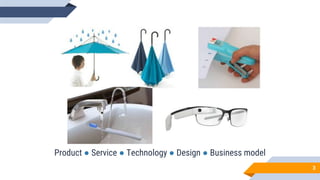
Product ● Service ● Technology ● Design ● Business model
“The process of translating an
idea or invention into a good or
service that creates values
44
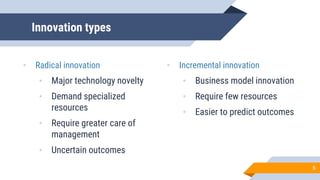
Innovation types
• Radical innovation
• Major technology novelty
• Demand specialized
resources
• Require greater care of
management
• Uncertain outcomes
• Incremental innovation
• Business model innovation
• Require few resources
• Easier to predict outcomes
5
6
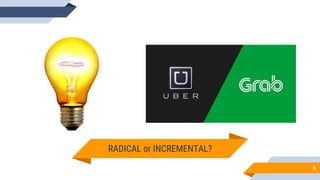
RADICAL or INCREMENTAL?
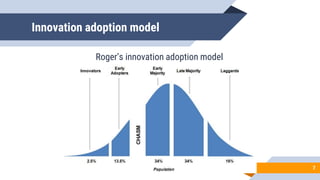
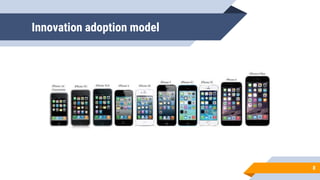
Innovation adoption model
7
Roger’s innovation adoption model
Innovation adoption model
8
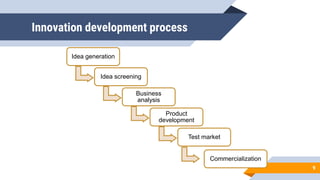
Innovation development process
9
Idea generation
Idea screening
Business
analysis
Product
development
Test market
Commercialization
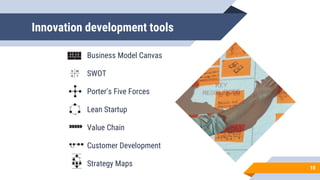
Innovation development tools
10
Business Model Canvas
SWOT
Porter’s Five Forces
Lean Startup
Value Chain
Customer Development
Strategy Maps
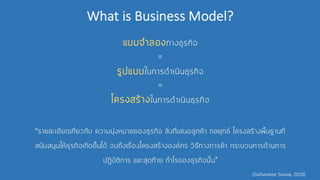
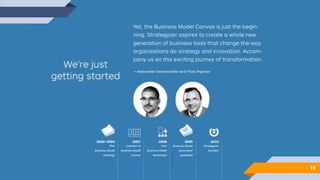
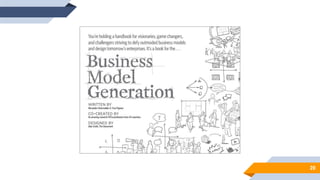
““A business model describes
the rationale of how an
organization creates, delivers,
and captures value”
- A. Osterwalder and Y. Pigneur, 2010
1111
13
Business Model vs Business Plan
What are the differences?
14
Business Model vs Proposal
What are the differences?
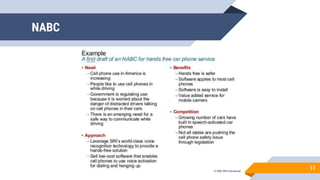
NABC
15
• Developed by the Stanford Research Institute
(www.sri.com)
• Curtis Carlson & William Wilmot (Stanford Research
Institute, US): Innovation – The Five Disciplines for Creating
What Customers Want, 2006
• https://www.youtube.com/watch?v=iHiLAJGDGt4
Need ● Approach ● Benefit ● Competition
NABC
16
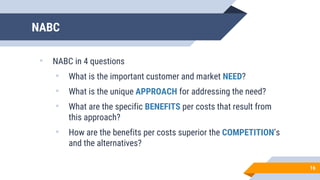
• NABC in 4 questions
• What is the important customer and market NEED?
• What is the unique APPROACH for addressing the need?
• What are the specific BENEFITS per costs that result from
this approach?
• How are the benefits per costs superior the COMPETITION’s
and the alternatives?
NABC
17
18
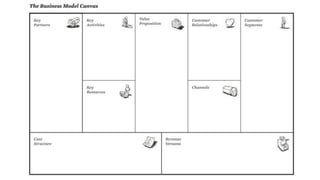
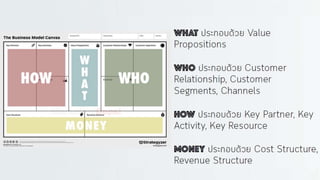
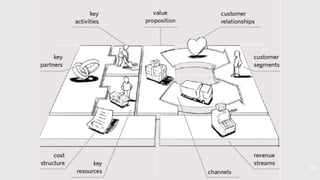
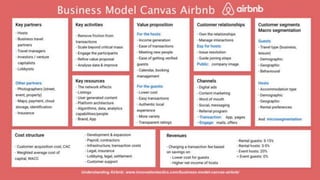
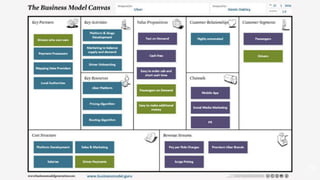
BUSINESS MODEL CANVAS
19
20
21
22
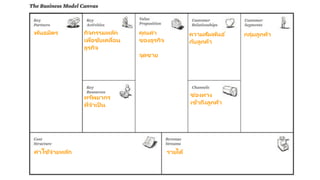
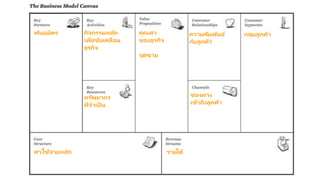
คุณค่า
ของธุรกิจ
จุดขาย
กิจกรรมหลัก
เพื่อขับเคลื่อน
ธุรกิจ
ทรัพยากร
ที่จาเป็ น
พันธมิตร
ค่าใช้จ่ายหลัก รายได้
ช่องทาง
เข้าถึงลูกค้า
กลุ่มลูกค้าความสัมพันธ ์
กับลูกค้า
23
24
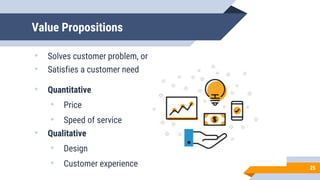
Value Propositions
• Solves customer problem, or
• Satisfies a customer need
• Quantitative
• Price
• Speed of service
• Qualitative
• Design
• Customer experience 25
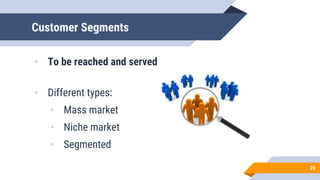
Customer Segments
• To be reached and served
• Different types:
• Mass market
• Niche market
• Segmented
26
Channels
• Communicates with and reaches the customer segments
• 5 distinct phases
• Awareness e.g. advertisement
• Evaluation e.g. survey, interactive activity
• Purchase
• Delivery
• After sales
27
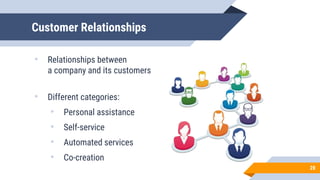
Customer Relationships
• Relationships between
a company and its customers
• Different categories:
• Personal assistance
• Self-service
• Automated services
• Co-creation
28
Revenue Streams
• The cash a company generates
• Transactions from one-time customer payments
• Recurring from ongoing payments
• Examples:
usage fee, subscription fee, lending/renting/leasing, licensing
29
Key Resources
• Required assets
• Types:
• Physical
• Financial
• Intellectual
• Human
30
Key Activities
• Must do to make the business model work
• Different categories:
• Production
• Problem solving
• Platform/network
31
Key Partnerships
• Suppliers and partners
• 4 types:
• Strategic alliances between non-competitors
• Cooperation, strategic partnership between
competitors
• Joint ventures to develop new business
• Buyer-supplier relationships to assure reliable
supplies
32
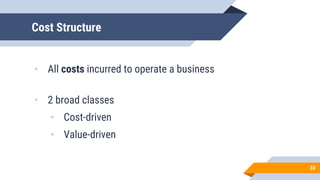
Cost Structure
33
• All costs incurred to operate a business
• 2 broad classes
• Cost-driven
• Value-driven
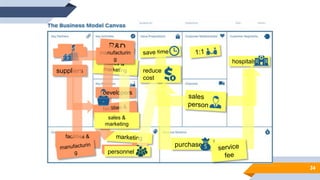
suppliers
facilities &
supply
personnel
hospitals
reduce
cost
purchase
personnel
developers
manufacturin
g
sales &
marketing
34
35
36
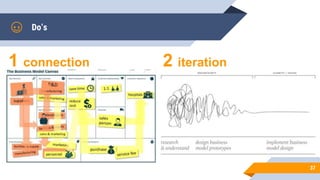
Do’s
37
1 connection 2 iteration
38
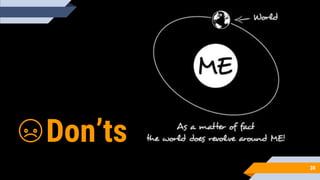
Don’ts
39
คุณค่า
ของธุรกิจ
จุดขาย
กิจกรรมหลัก
เพื่อขับเคลื่อน
ธุรกิจ
ทรัพยากร
ที่จาเป็ น
พันธมิตร
ค่าใช้จ่ายหลัก รายได้
ช่องทาง
เข้าถึงลูกค้า
กลุ่มลูกค้าความสัมพันธ ์
กับลูกค้า
40
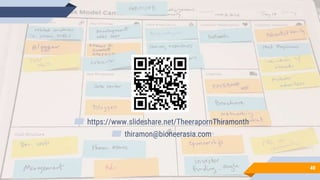
▰ https://www.slideshare.net/TheerapornThiramonth
▰ thiramon@bioneerasia.com

Business model