BUSINESS
INTELLIGENCE
RANDHIR KUMAR SHAH
WHAT IS BUSINESS INTELLIGENCE
 Business Intelligence is an application or tool that transforms data into
meaningful information to help business make better decision
 The main purpose of business intelligence is to help business managers,
corporate executives & other operational workers make better & informed
decision
 Companies use business intelligence to cut cost, identify new business
opportunities & improve inefficient business process
RAW DATA
MEANINGFUL INFORMATION
PROFT & STABILITY
HISTORY
 Richard Millar Deven used the term Business Intelligenge in 1865 to
describe how the banker Sir Henry Furnese gained profit by receiving and
acting upon information about his environment, prior to his competitors
 However it evolved from the decision support systems (DSS) that began in
the 1960s and developed throughout the mid-1980s.
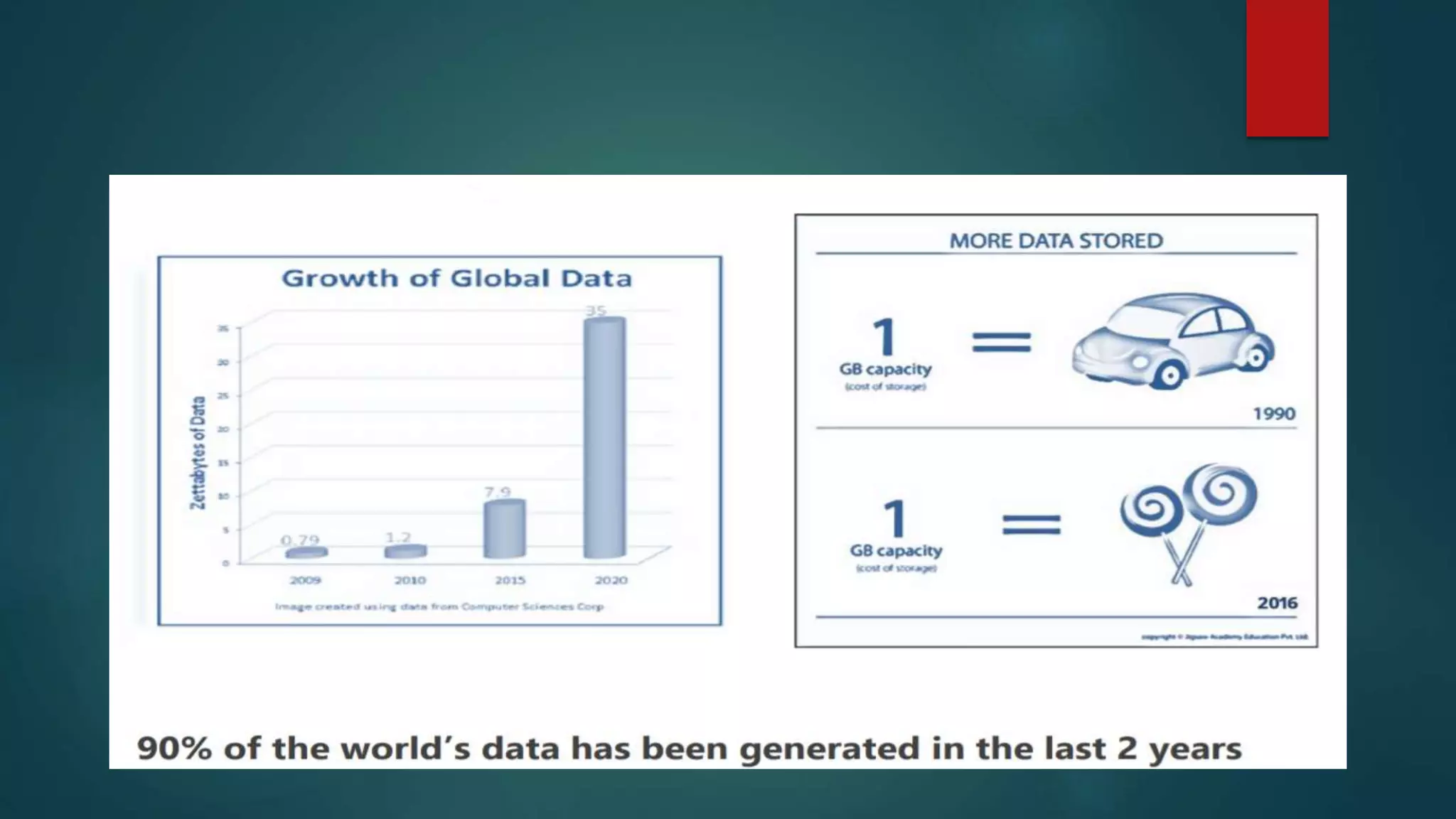
 It has grown more powerful and comprehensive mainly due to
 Increased data collection
 Greater storage capacity
 Cheaper storage cost of data
 Companies now have access to smart phone, internet usage record, social
media activity, etc.
 Business intelligence platform shift through this data to find patterns &
trends
BENEFITS OF BUSINESS INTELLIGENCE
 Accelerating and improving decision making
 Optimizing internal business processes
 Increasing operational efficiency
 Driving new revenues
 Gaining competitive advantages over business rivals.
 Identifying market trends
 Spotting business problems that need to be addressed
Why Should You Use Business
Intelligence Systems and Tools?
 Business intelligence tools are essentially data-driven Decision Support
Systems (DSS).
 BI is sometimes used interchangeably with briefing books, report and
query tools, and executive information systems.
 With these tools, business people can start analyzing the data themselves,
rather than wait for IT to run complex reports.
 This information access helps users back up business decisions with hard
numbers, rather than only gut feelings and anecdotes.
How Does Software Tools Optimize
Business Intelligence?
 Business Intelligence software systems provide historical, current, and
predictive views of business operations, most often using data that has
been gathered into a data warehouse or a data mart and occasionally
working from operational data.
 Software elements support reporting, interactive “slice-and-dice” pivot-
table analyses, visualization, and statistical data mining.
 Applications tackle sales, production, financial, and many other sources of
business data for purposes that include business performance
management.
 Information is often gathered about other companies in the same industry
which is known as benchmarking.
Examples of Business Intelligence
Software Solutions
 QlikView
 Tableau
 Sisense
 Looker
 Datapine
 Zoho Analytics
 Yellowfin
 AnswerDock
 Hotjar
 ReportPlus
How To Efficiently Roll out Business
Intelligence Systems?
 Make sure your data is clean.
 Train users effectively.
 Don’t spend a huge amount of time up front developing the “perfect” reports
because needs will evolve as the business evolves. Deliver reports that provide
the most value quickly, and then tweak them.
 Take an integrated approach to building your data warehouse from the
beginning. Make sure you’re not locking yourself into an unworkable data
strategy further down the road.
 Define ROI clearly before you start. Outline the specific benefits you expect to
achieve, then do a reality check every quarter or six months.
 Focus on business objectives.
 Don’t buy business intelligence software because you think you need it.
Deploy BI with the idea that there are numbers out there that you need to find,
and know roughly where they might be.
What Are Potential Business
Intelligence Problems?
 User resistance — Implementations can be dogged by cultural challenges.
 Irrelevant and poor quality data — To get accurate insights, you must
have standard data. Get your data in good working order before extracting
and acting on insights.
 BI tools — The core of BI is reporting, not process management. Be
careful not to confuse business intelligence with business analytics.
 Companies don’t understand their business processes well enough.
Understand all the activities that make up a particular business process
before starting a BI project.
THANK YOU

Business Intelligence-v1.pptx

  • 1.
  • 3.
    WHAT IS BUSINESSINTELLIGENCE  Business Intelligence is an application or tool that transforms data into meaningful information to help business make better decision  The main purpose of business intelligence is to help business managers, corporate executives & other operational workers make better & informed decision  Companies use business intelligence to cut cost, identify new business opportunities & improve inefficient business process
  • 4.
  • 5.
  • 6.
  • 7.
    HISTORY  Richard MillarDeven used the term Business Intelligenge in 1865 to describe how the banker Sir Henry Furnese gained profit by receiving and acting upon information about his environment, prior to his competitors  However it evolved from the decision support systems (DSS) that began in the 1960s and developed throughout the mid-1980s.  It has grown more powerful and comprehensive mainly due to  Increased data collection  Greater storage capacity  Cheaper storage cost of data  Companies now have access to smart phone, internet usage record, social media activity, etc.  Business intelligence platform shift through this data to find patterns & trends
  • 8.
    BENEFITS OF BUSINESSINTELLIGENCE  Accelerating and improving decision making  Optimizing internal business processes  Increasing operational efficiency  Driving new revenues  Gaining competitive advantages over business rivals.  Identifying market trends  Spotting business problems that need to be addressed
  • 9.
    Why Should YouUse Business Intelligence Systems and Tools?  Business intelligence tools are essentially data-driven Decision Support Systems (DSS).  BI is sometimes used interchangeably with briefing books, report and query tools, and executive information systems.  With these tools, business people can start analyzing the data themselves, rather than wait for IT to run complex reports.  This information access helps users back up business decisions with hard numbers, rather than only gut feelings and anecdotes.
  • 10.
    How Does SoftwareTools Optimize Business Intelligence?  Business Intelligence software systems provide historical, current, and predictive views of business operations, most often using data that has been gathered into a data warehouse or a data mart and occasionally working from operational data.  Software elements support reporting, interactive “slice-and-dice” pivot- table analyses, visualization, and statistical data mining.  Applications tackle sales, production, financial, and many other sources of business data for purposes that include business performance management.  Information is often gathered about other companies in the same industry which is known as benchmarking.
  • 11.
    Examples of BusinessIntelligence Software Solutions  QlikView  Tableau  Sisense  Looker  Datapine  Zoho Analytics  Yellowfin  AnswerDock  Hotjar  ReportPlus
  • 12.
    How To EfficientlyRoll out Business Intelligence Systems?  Make sure your data is clean.  Train users effectively.  Don’t spend a huge amount of time up front developing the “perfect” reports because needs will evolve as the business evolves. Deliver reports that provide the most value quickly, and then tweak them.  Take an integrated approach to building your data warehouse from the beginning. Make sure you’re not locking yourself into an unworkable data strategy further down the road.  Define ROI clearly before you start. Outline the specific benefits you expect to achieve, then do a reality check every quarter or six months.  Focus on business objectives.  Don’t buy business intelligence software because you think you need it. Deploy BI with the idea that there are numbers out there that you need to find, and know roughly where they might be.
  • 13.
    What Are PotentialBusiness Intelligence Problems?  User resistance — Implementations can be dogged by cultural challenges.  Irrelevant and poor quality data — To get accurate insights, you must have standard data. Get your data in good working order before extracting and acting on insights.  BI tools — The core of BI is reporting, not process management. Be careful not to confuse business intelligence with business analytics.  Companies don’t understand their business processes well enough. Understand all the activities that make up a particular business process before starting a BI project.
  • 14.