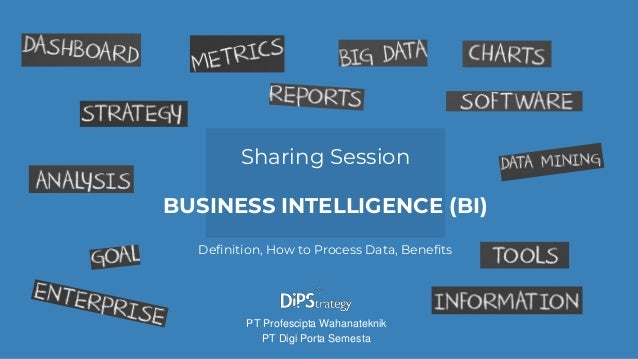
BUSINESS INTELLIGENCE (BI)
Sharing Session
PT Digi Porta Semesta
PT Profescipta Wahanateknik
Definition, How to Process Data, Benefits
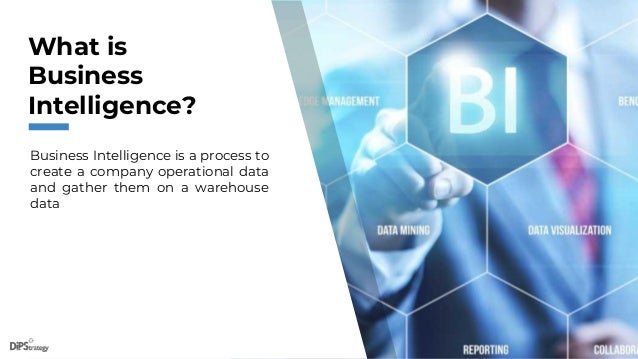
Business Intelligence is a process to
create a company operational data
and gather them on a warehouse
data
What is
Business
Intelligence?
As a supporting system for decision
making which is system and
application change data to become
information with goals serve the
most suitable data for every user.
Business
Intelligence
Function
Business
Intelligence Role
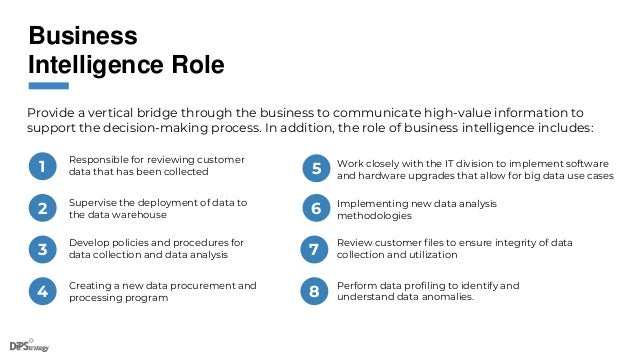
Provide a vertical bridge through the business to communicate high-value information to
support the decision-making process. In addition, the role of business intelligence includes:
1
2
8
4
3
5
6
7
Responsible for reviewing customer
data that has been collected
Supervise the deployment of data to
the data warehouse
Develop policies and procedures for
data collection and data analysis
Creating a new data procurement and
processing program
Work closely with the IT division to implement software
and hardware upgrades that allow for big data use cases
Implementing new data analysis
methodologies
Review customer files to ensure integrity of data
collection and utilization
Perform data profiling to identify and
understand data anomalies.
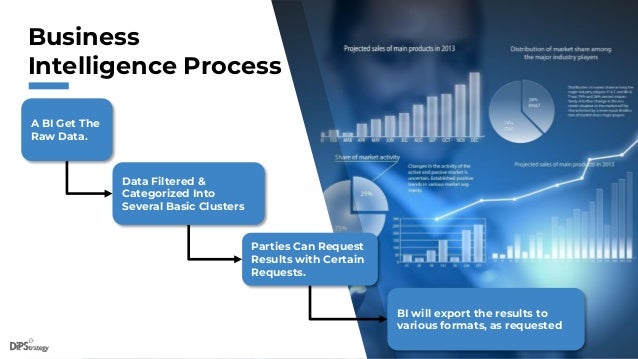
A BI Get The
Raw Data.
Data Filtered &
Categorized Into
Several Basic Clusters
Parties Can Request
Results with Certain
Requests.
BI will export the results to
various formats, as requested
Business
Intelligence Process
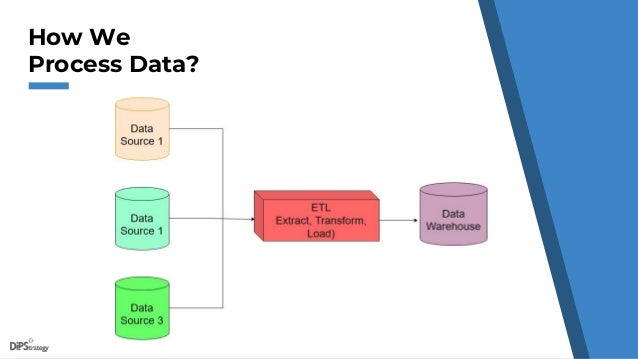
How We
Process Data?
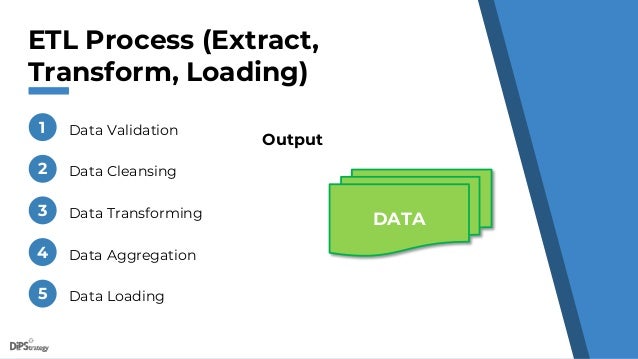
DATA
Output
1
2
4
3
Data Validation
Data Cleansing
Data Transforming
Data Aggregation
5 Data Loading
ETL Process (Extract,
Transform, Loading)
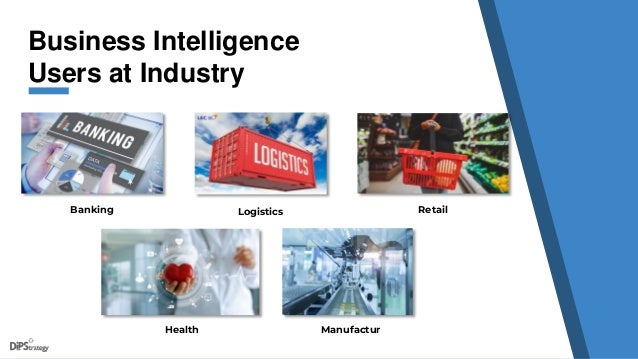
Business Intelligence
Users at Industry
Banking Retail
Logistics
Health Manufactur
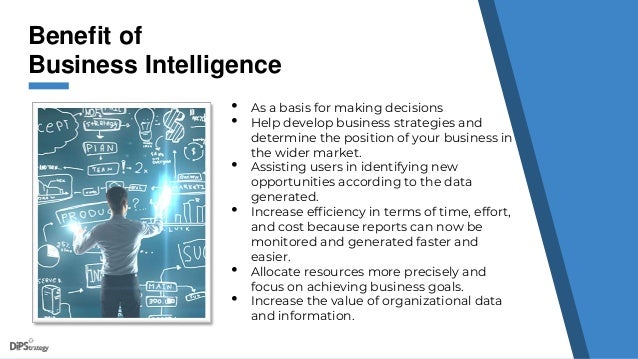
Benefit of
Business Intelligence
• As a basis for making decisions
• Help develop business strategies and
determine the position of your business in
the wider market.
• Assisting users in identifying new
opportunities according to the data
generated.
• Increase efficiency in terms of time, effort,
and cost because reports can now be
monitored and generated faster and
easier.
• Allocate resources more precisely and
focus on achieving business goals.
• Increase the value of organizational data
and information.
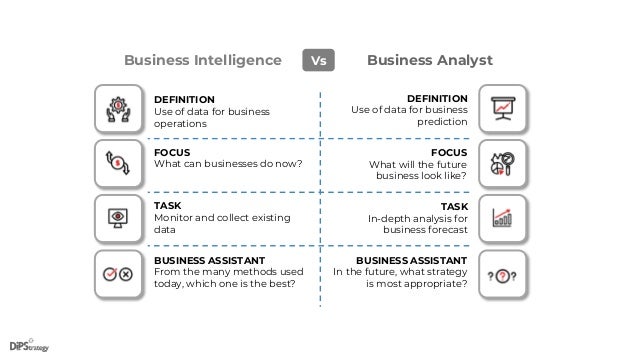
Business Intelligence Business Analyst
DEFINITION
Use of data for business
operations
FOCUS
What can businesses do now?
TASK
Monitor and collect existing
data
BUSINESS ASSISTANT
From the many methods used
today, which one is the best?
DEFINITION
Use of data for business
prediction
FOCUS
What will the future
business look like?
TASK
In-depth analysis for
business forecast
BUSINESS ASSISTANT
In the future, what strategy
is most appropriate?
Vs
DEEPLY THANKS!
Any questions?
You can find us at www.dipstrategy.co.id,
or email directly to info@dipstrategy.com
or by WA +62 851-5979-3477
PT Digi Porta Semesta
Titan Building 3rd floor
Jl. Slamet Riyadi no. 7
Kebon Manggis – Matraman
Jakarta Timur 13150

BUSINESS INTELLIGENCE (BI) - Definition, Process, and Benefit

  • 1.
    BUSINESS INTELLIGENCE (BI) SharingSession PT Digi Porta Semesta PT Profescipta Wahanateknik Definition, How to Process Data, Benefits
  • 2.
    Business Intelligence isa process to create a company operational data and gather them on a warehouse data What is Business Intelligence?
  • 3.
    As a supportingsystem for decision making which is system and application change data to become information with goals serve the most suitable data for every user. Business Intelligence Function
  • 4.
    Business Intelligence Role Provide avertical bridge through the business to communicate high-value information to support the decision-making process. In addition, the role of business intelligence includes: 1 2 8 4 3 5 6 7 Responsible for reviewing customer data that has been collected Supervise the deployment of data to the data warehouse Develop policies and procedures for data collection and data analysis Creating a new data procurement and processing program Work closely with the IT division to implement software and hardware upgrades that allow for big data use cases Implementing new data analysis methodologies Review customer files to ensure integrity of data collection and utilization Perform data profiling to identify and understand data anomalies.
  • 5.
    A BI GetThe Raw Data. Data Filtered & Categorized Into Several Basic Clusters Parties Can Request Results with Certain Requests. BI will export the results to various formats, as requested Business Intelligence Process
  • 6.
  • 7.
    DATA Output 1 2 4 3 Data Validation Data Cleansing DataTransforming Data Aggregation 5 Data Loading ETL Process (Extract, Transform, Loading)
  • 8.
    Business Intelligence Users atIndustry Banking Retail Logistics Health Manufactur
  • 9.
    Benefit of Business Intelligence •As a basis for making decisions • Help develop business strategies and determine the position of your business in the wider market. • Assisting users in identifying new opportunities according to the data generated. • Increase efficiency in terms of time, effort, and cost because reports can now be monitored and generated faster and easier. • Allocate resources more precisely and focus on achieving business goals. • Increase the value of organizational data and information.
  • 10.
    Business Intelligence BusinessAnalyst DEFINITION Use of data for business operations FOCUS What can businesses do now? TASK Monitor and collect existing data BUSINESS ASSISTANT From the many methods used today, which one is the best? DEFINITION Use of data for business prediction FOCUS What will the future business look like? TASK In-depth analysis for business forecast BUSINESS ASSISTANT In the future, what strategy is most appropriate? Vs
  • 11.
    DEEPLY THANKS! Any questions? Youcan find us at www.dipstrategy.co.id, or email directly to info@dipstrategy.com or by WA +62 851-5979-3477 PT Digi Porta Semesta Titan Building 3rd floor Jl. Slamet Riyadi no. 7 Kebon Manggis – Matraman Jakarta Timur 13150