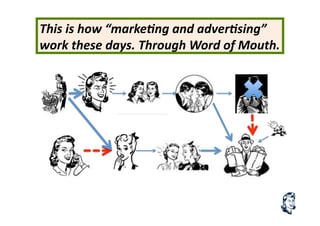
This	
  is	
  how	
  “marke.ng	
  and	
  adver.sing”	
  
work	
  these	
  days.	
  Through	
  Word	
  of	
  Mouth.	
  
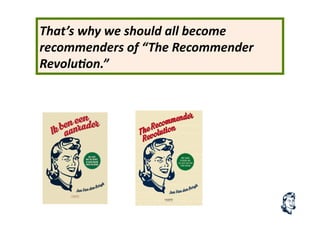
That’s	
  why	
  we	
  should	
  all	
  become	
  	
  
recommenders	
  of	
  “The	
  Recommender	
  
Revolu.on.”	
  
And	
  that’s	
  the	
  reason	
  why	
  I	
  am	
  here	
  
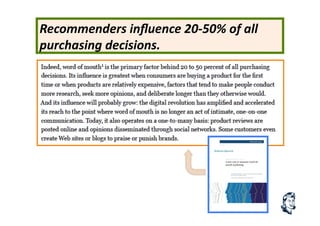
Recommenders	
  influence	
  20-­‐50%	
  of	
  all	
  
purchasing	
  decisions.	
  
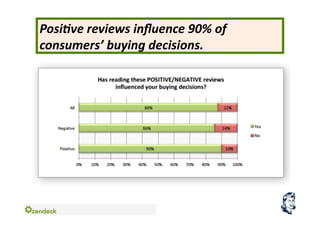
Posi.ve	
  reviews	
  influence	
  90%	
  of	
  
consumers’	
  buying	
  decisions.	
  
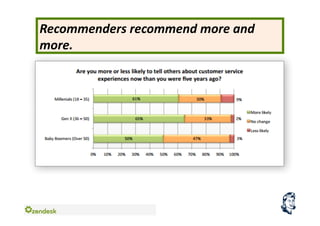
Recommenders	
  recommend	
  more	
  and	
  
more.	
  
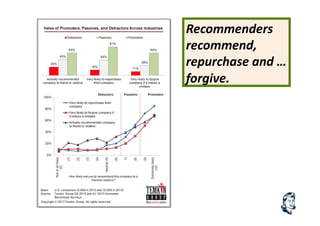
Recommenders	
  
recommend,	
  
repurchase	
  and	
  …
forgive.	
  
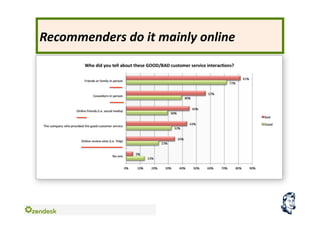
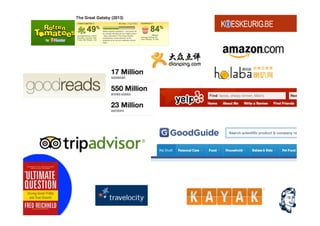
Recommenders	
  do	
  it	
  mainly	
  online	
  
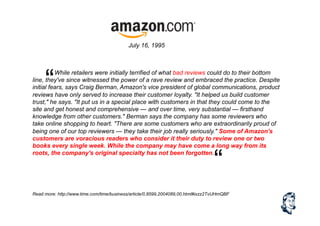
While retailers were initially terrified of what bad reviews could do to their bottom
line, they've since witnessed the power of a rave review and embraced the practice. Despite
initial fears, says Craig Berman, Amazon's vice president of global communications, product
reviews have only served to increase their customer loyalty. "It helped us build customer
trust," he says. "It put us in a special place with customers in that they could come to the
site and get honest and comprehensive — and over time, very substantial — firsthand
knowledge from other customers." Berman says the company has some reviewers who
take online shopping to heart. "There are some customers who are extraordinarily proud of
being one of our top reviewers — they take their job really seriously." Some of Amazon's
customers are voracious readers who consider it their duty to review one or two
books every single week. While the company may have come a long way from its
roots, the company's original specialty has not been forgotten.
Read more: http://www.time.com/time/business/article/0,8599,2004089,00.html#ixzz2TvUHmQBF
July 16, 1995
“
“
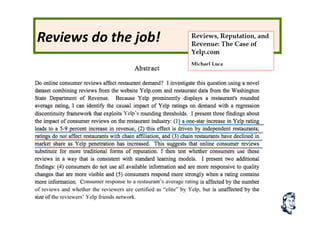
Reviews	
  do	
  the	
  job!	
  
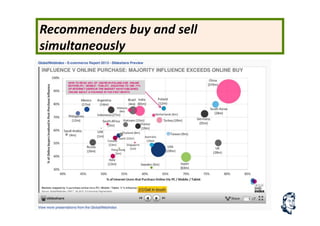
Recommenders	
  buy	
  and	
  sell	
  
simultaneously	
  
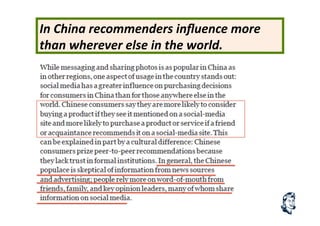
In	
  China	
  recommenders	
  influence	
  more	
  
than	
  wherever	
  else	
  in	
  the	
  world.	
  
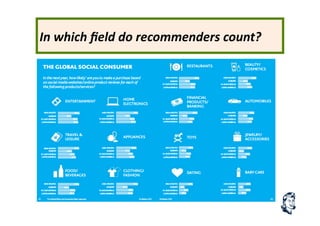
In	
  which	
  field	
  do	
  recommenders	
  count?	
  
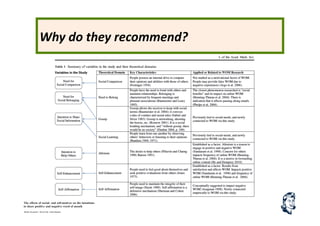
Why	
  do	
  they	
  recommend?	
  
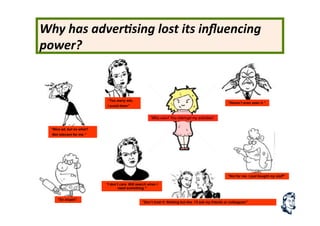
Why	
  has	
  adver.sing	
  lost	
  its	
  influencing	
  
power?	
  
“Don’t trust it. Nothing but lies. I’ll ask my friends or colleagues”
“I don’t care. Will search when I
need something.”
“Haven’t even seen it.”
“Nice ad, but so what?
Not relevant for me.”
“So stupid”.
“Too many ads.
I avoid them”
“Not for me. I just bought my stuff”
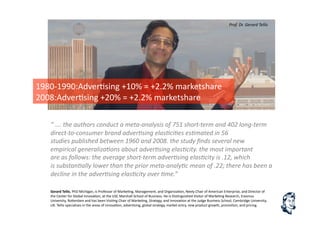
1980-­‐1990:Adver,sing	
  +10%	
  =	
  +2.2%	
  marketshare	
  
2008:Adver,sing	
  +20%	
  =	
  +2.2%	
  marketshare	
  
“	
  ….	
  the	
  authors	
  conduct	
  a	
  meta-­‐analysis	
  of	
  751	
  short-­‐term	
  and	
  402	
  long-­‐term	
  
direct-­‐to-­‐consumer	
  brand	
  adver?sing	
  elas?ci?es	
  es?mated	
  in	
  56	
  
studies	
  published	
  between	
  1960	
  and	
  2008.	
  the	
  study	
  finds	
  several	
  new	
  
empirical	
  generaliza?ons	
  about	
  adver?sing	
  elas?city.	
  the	
  most	
  important	
  
are	
  as	
  follows:	
  the	
  average	
  short-­‐term	
  adver?sing	
  elas?city	
  is	
  .12,	
  which	
  
is	
  substan?ally	
  lower	
  than	
  the	
  prior	
  meta-­‐analy?c	
  mean	
  of	
  .22;	
  there	
  has	
  been	
  a	
  
decline	
  in	
  the	
  adver?sing	
  elas?city	
  over	
  ?me.”	
  
Gerard	
  Tellis,	
  PhD	
  Michigan,	
  is	
  Professor	
  of	
  Marke,ng,	
  Management,	
  and	
  Organiza,on,	
  Neely	
  Chair	
  of	
  American	
  Enterprise,	
  and	
  Director	
  of	
  
the	
  Center	
  for	
  Global	
  Innova,on,	
  at	
  the	
  USC	
  Marshall	
  School	
  of	
  Business.	
  He	
  is	
  Dis,nguished	
  Visitor	
  of	
  Marke,ng	
  Research,	
  Erasmus	
  
University,	
  RoUerdam	
  and	
  has	
  been	
  Visi,ng	
  Chair	
  of	
  Marke,ng,	
  Strategy,	
  and	
  Innova,on	
  at	
  the	
  Judge	
  Business	
  School,	
  Cambridge	
  University,	
  
UK.	
  Tellis	
  specializes	
  in	
  the	
  areas	
  of	
  innova,on,	
  adver,sing,	
  global	
  strategy,	
  market	
  entry,	
  new	
  product	
  growth,	
  promo,on,	
  and	
  pricing.	
  
Prof.	
  Dr.	
  Gerard	
  Tellis	
  
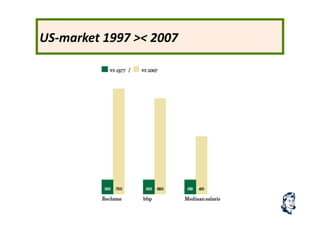
US-­‐market	
  1997	
  ><	
  2007	
  
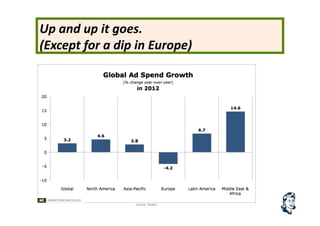
Up	
  and	
  up	
  it	
  goes.	
  	
  
(Except	
  for	
  a	
  dip	
  in	
  Europe)	
  
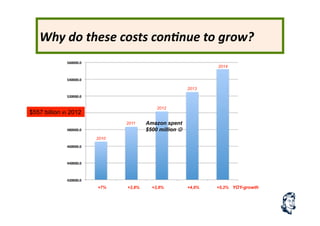
Why	
  do	
  these	
  costs	
  con.nue	
  to	
  grow?	
  
+7% +3,8% +3,8% +4,6% +5,2% YOY-growth
2010
2011
2012
2013
2014
Amazon spent
$500 million 
$557 billion in 2012
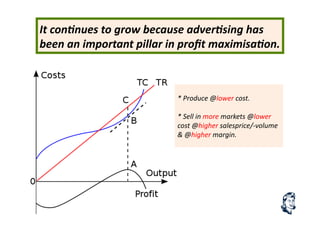
It	
  con.nues	
  to	
  grow	
  because	
  adver.sing	
  has	
  
been	
  an	
  important	
  pillar	
  in	
  profit	
  maximisa.on.	
  
*	
  Produce	
  @lower	
  cost.	
  	
  
*	
  Sell	
  in	
  more	
  markets	
  @lower	
  
cost	
  @higher	
  salesprice/-­‐volume	
  
&	
  @higher	
  margin.	
  	
  
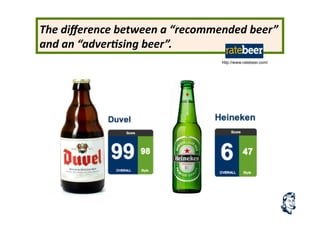
The	
  difference	
  between	
  a	
  “recommended	
  beer”	
  
and	
  an	
  “adver.sing	
  beer”.	
  
http://www.ratebeer.com/
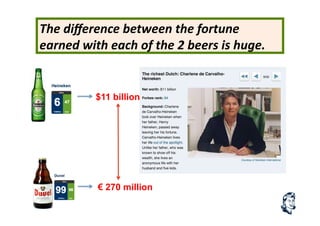
The	
  difference	
  between	
  the	
  fortune	
  
earned	
  with	
  each	
  of	
  the	
  2	
  beers	
  is	
  huge.	
  
€ 270 million
$11 billion
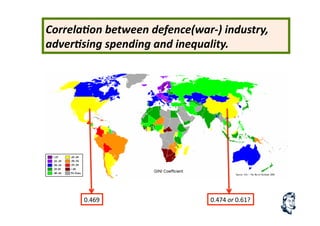
Correla.on	
  between	
  defence(war-­‐)	
  industry,	
  
adver.sing	
  spending	
  and	
  inequality.	
  
0.474	
  or	
  0.61?	
  0.469	
  
Greece.	
  The	
  end	
  of	
  adver2sing.	
  
Winter	
  2013-­‐De	
  Morgen	
  
Thanks	
  for	
  listening.	
  Mail	
  ques?ons	
  to	
  jevedebe@gmail.com	
  

Bubobox Talk May 30th Brussels

  • 1.
    This  is  how  “marke.ng  and  adver.sing”   work  these  days.  Through  Word  of  Mouth.  
  • 2.
    That’s  why  we  should  all  become     recommenders  of  “The  Recommender   Revolu.on.”  
  • 3.
    And  that’s  the  reason  why  I  am  here  
  • 4.
    Recommenders  influence  20-­‐50%  of  all   purchasing  decisions.  
  • 5.
    Posi.ve  reviews  influence  90%  of   consumers’  buying  decisions.  
  • 6.
  • 7.
  • 8.
    Recommenders  do  it  mainly  online  
  • 9.
    While retailers wereinitially terrified of what bad reviews could do to their bottom line, they've since witnessed the power of a rave review and embraced the practice. Despite initial fears, says Craig Berman, Amazon's vice president of global communications, product reviews have only served to increase their customer loyalty. "It helped us build customer trust," he says. "It put us in a special place with customers in that they could come to the site and get honest and comprehensive — and over time, very substantial — firsthand knowledge from other customers." Berman says the company has some reviewers who take online shopping to heart. "There are some customers who are extraordinarily proud of being one of our top reviewers — they take their job really seriously." Some of Amazon's customers are voracious readers who consider it their duty to review one or two books every single week. While the company may have come a long way from its roots, the company's original specialty has not been forgotten. Read more: http://www.time.com/time/business/article/0,8599,2004089,00.html#ixzz2TvUHmQBF July 16, 1995 “ “
  • 11.
  • 12.
    Recommenders  buy  and  sell   simultaneously  
  • 13.
    In  China  recommenders  influence  more   than  wherever  else  in  the  world.  
  • 14.
    In  which  field  do  recommenders  count?  
  • 15.
    Why  do  they  recommend?  
  • 17.
    Why  has  adver.sing  lost  its  influencing   power?   “Don’t trust it. Nothing but lies. I’ll ask my friends or colleagues” “I don’t care. Will search when I need something.” “Haven’t even seen it.” “Nice ad, but so what? Not relevant for me.” “So stupid”. “Too many ads. I avoid them” “Not for me. I just bought my stuff”
  • 18.
    1980-­‐1990:Adver,sing  +10%  =  +2.2%  marketshare   2008:Adver,sing  +20%  =  +2.2%  marketshare   “  ….  the  authors  conduct  a  meta-­‐analysis  of  751  short-­‐term  and  402  long-­‐term   direct-­‐to-­‐consumer  brand  adver?sing  elas?ci?es  es?mated  in  56   studies  published  between  1960  and  2008.  the  study  finds  several  new   empirical  generaliza?ons  about  adver?sing  elas?city.  the  most  important   are  as  follows:  the  average  short-­‐term  adver?sing  elas?city  is  .12,  which   is  substan?ally  lower  than  the  prior  meta-­‐analy?c  mean  of  .22;  there  has  been  a   decline  in  the  adver?sing  elas?city  over  ?me.”   Gerard  Tellis,  PhD  Michigan,  is  Professor  of  Marke,ng,  Management,  and  Organiza,on,  Neely  Chair  of  American  Enterprise,  and  Director  of   the  Center  for  Global  Innova,on,  at  the  USC  Marshall  School  of  Business.  He  is  Dis,nguished  Visitor  of  Marke,ng  Research,  Erasmus   University,  RoUerdam  and  has  been  Visi,ng  Chair  of  Marke,ng,  Strategy,  and  Innova,on  at  the  Judge  Business  School,  Cambridge  University,   UK.  Tellis  specializes  in  the  areas  of  innova,on,  adver,sing,  global  strategy,  market  entry,  new  product  growth,  promo,on,  and  pricing.   Prof.  Dr.  Gerard  Tellis  
  • 19.
  • 20.
    Up  and  up  it  goes.     (Except  for  a  dip  in  Europe)  
  • 21.
    Why  do  these  costs  con.nue  to  grow?   +7% +3,8% +3,8% +4,6% +5,2% YOY-growth 2010 2011 2012 2013 2014 Amazon spent $500 million  $557 billion in 2012
  • 22.
    It  con.nues  to  grow  because  adver.sing  has   been  an  important  pillar  in  profit  maximisa.on.   *  Produce  @lower  cost.     *  Sell  in  more  markets  @lower   cost  @higher  salesprice/-­‐volume   &  @higher  margin.    
  • 24.
    The  difference  between  a  “recommended  beer”   and  an  “adver.sing  beer”.   http://www.ratebeer.com/
  • 25.
    The  difference  between  the  fortune   earned  with  each  of  the  2  beers  is  huge.   € 270 million $11 billion
  • 26.
    Correla.on  between  defence(war-­‐)  industry,   adver.sing  spending  and  inequality.   0.474  or  0.61?  0.469  
  • 27.
    Greece.  The  end  of  adver2sing.   Winter  2013-­‐De  Morgen   Thanks  for  listening.  Mail  ques?ons  to  jevedebe@gmail.com