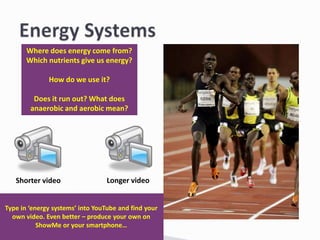
Where does energy come from? 
Which nutrients give us energy? 
How do we use it? 
Does it run out? What does 
anaerobic and aerobic mean? 
Shorter video Longer video 
Type in ‘energy systems’ into YouTube and find your 
own video. Even better – produce your own on 
ShowMe or your smartphone…
©Subject Support 2010. 
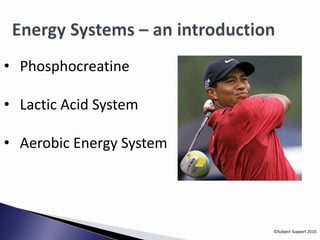
• Phosphocreatine 
• Lactic Acid System 
• Aerobic Energy System
©Subject Support 2010. 
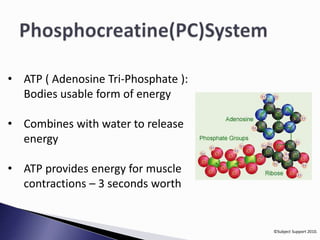
• ATP ( Adenosine Tri-Phosphate ): 
Bodies usable form of energy 
• Combines with water to release 
energy 
• ATP provides energy for muscle 
contractions – 3 seconds worth
©Subject Support 2010. 
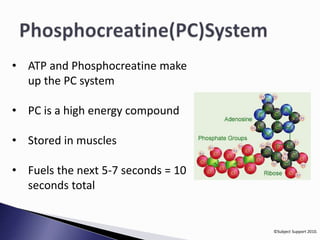
• ATP and Phosphocreatine make 
up the PC system 
• PC is a high energy compound 
• Stored in muscles 
• Fuels the next 5-7 seconds = 10 
seconds total
©Subject Support 2010. 
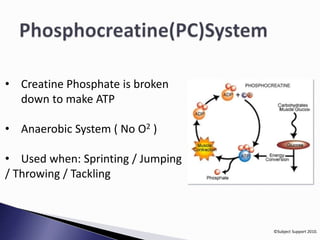
• Creatine Phosphate is broken 
down to make ATP 
• Anaerobic System ( No O2 ) 
• Used when: Sprinting / Jumping 
/ Throwing / Tackling
©Subject Support 2010. 
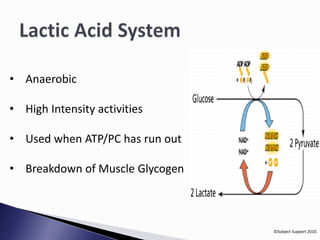
• Anaerobic 
• High Intensity activities 
• Used when ATP/PC has run out 
• Breakdown of Muscle Glycogen
©Subject Support 2010. 
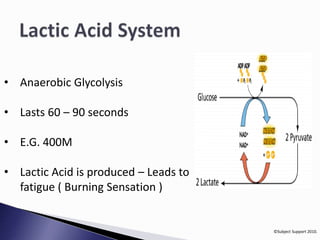
• Anaerobic Glycolysis 
• Lasts 60 – 90 seconds 
• E.G. 400M 
• Lactic Acid is produced – Leads to 
fatigue ( Burning Sensation )
©Subject Support 2010. 
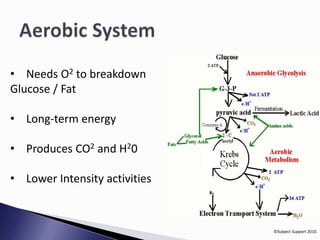
• Needs O2 to breakdown 
Glucose / Fat 
• Long-term energy 
• Produces CO2 and H20 
• Lower Intensity activities
©Subject Support 2010. 
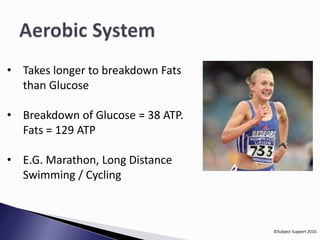
• Takes longer to breakdown Fats 
than Glucose 
• Breakdown of Glucose = 38 ATP. 
Fats = 129 ATP 
• E.G. Marathon, Long Distance 
Swimming / Cycling

Btec national unit 1 energy systems

  • 2.
    Where does energycome from? Which nutrients give us energy? How do we use it? Does it run out? What does anaerobic and aerobic mean? Shorter video Longer video Type in ‘energy systems’ into YouTube and find your own video. Even better – produce your own on ShowMe or your smartphone…
  • 3.
    ©Subject Support 2010. • Phosphocreatine • Lactic Acid System • Aerobic Energy System
  • 4.
    ©Subject Support 2010. • ATP ( Adenosine Tri-Phosphate ): Bodies usable form of energy • Combines with water to release energy • ATP provides energy for muscle contractions – 3 seconds worth
  • 5.
    ©Subject Support 2010. • ATP and Phosphocreatine make up the PC system • PC is a high energy compound • Stored in muscles • Fuels the next 5-7 seconds = 10 seconds total
  • 6.
    ©Subject Support 2010. • Creatine Phosphate is broken down to make ATP • Anaerobic System ( No O2 ) • Used when: Sprinting / Jumping / Throwing / Tackling
  • 7.
    ©Subject Support 2010. • Anaerobic • High Intensity activities • Used when ATP/PC has run out • Breakdown of Muscle Glycogen
  • 8.
    ©Subject Support 2010. • Anaerobic Glycolysis • Lasts 60 – 90 seconds • E.G. 400M • Lactic Acid is produced – Leads to fatigue ( Burning Sensation )
  • 9.
    ©Subject Support 2010. • Needs O2 to breakdown Glucose / Fat • Long-term energy • Produces CO2 and H20 • Lower Intensity activities
  • 10.
    ©Subject Support 2010. • Takes longer to breakdown Fats than Glucose • Breakdown of Glucose = 38 ATP. Fats = 129 ATP • E.G. Marathon, Long Distance Swimming / Cycling