Men’s Brief –
Operation Sequence
and Production
Technique
Aiswarya V Mohan(M- Tech)
Introduction:
 Underwear is an inner wear normally worn next to
skin or under other clothing.
 The innerwear is also called second skin because it
is in direct contact with the skin.
 Earlier, cotton was the only fabric used in making
under garments.
 However with changing preferences and
technological advancements , the underwear
industry for men has seen a lot of innovations in
terms of fabric.
 Some of the fabrics mostly used are cotton,
polyester, nylon, modal, rayon, silk.
Fabric
 The fabric is the most important feature in men’s underwear.
 Feel is probably the most important criterion for most men –
underwear needs to be soft. This is why most men’s underwear
is made of high-quality cotton with long fibres.
 The softest highest quality cotton is Pima cotton, Supima cotton,
and Egyptian cotton.
 Microfiber is another very soft fabric for men’s underwear.
 Microfiber is man-made and is thinner than silk (the thinnest
natural fibre you can find). And, the thinner the fibre, the softer
the fabric.
 Often, microfibers have wicking properties built into them as well.
This means that the fabric is not only soft, but wicks moisture
away from the body, and dries quickly. S
 ome elastic waistbands on men’s underwear are made from
microfiber. They’re very soft and feel great against a man’s skin.
Men’s Underwear Fitting
Standards
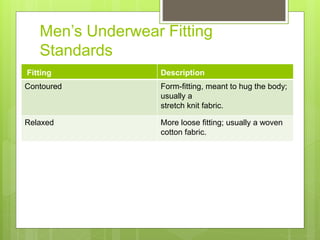
Fitting Description
Contoured Form-fitting, meant to hug the body;
usually a
stretch knit fabric.
Relaxed More loose fitting; usually a woven
cotton fabric.
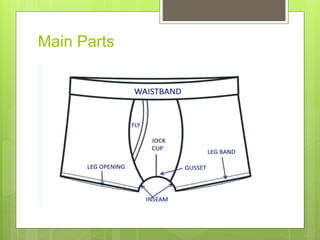
Main Parts
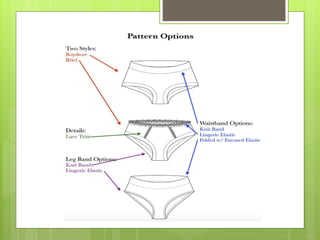
Waistband
Basically, there are 3 types of waistbands on
men’s underwear:
1. the encased elastic waistband,
2. the sewn inside the elastic waistband, and
3. the sewn on (usually logoed) elastic
waistband.
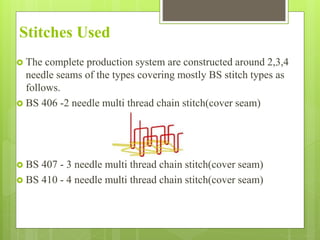
Stitches Used
 The complete production system are constructed around 2,3,4
needle seams of the types covering mostly BS stitch types as
follows.
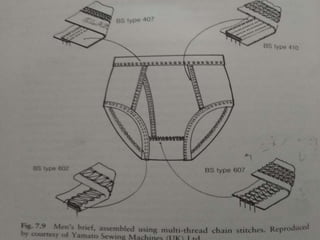
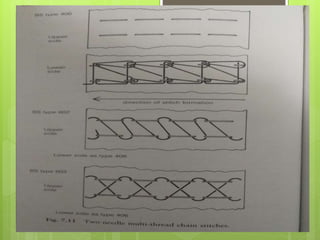
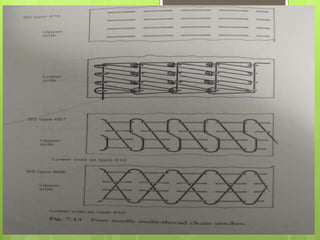
 BS 406 -2 needle multi thread chain stitch(cover seam)
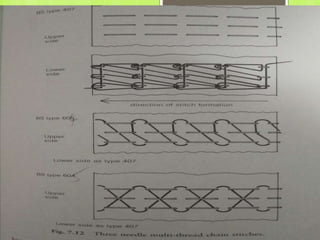
 BS 407 - 3 needle multi thread chain stitch(cover seam)
 BS 410 - 4 needle multi thread chain stitch(cover seam)
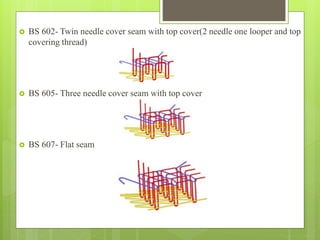
 BS 602- Twin needle cover seam with top cover(2 needle one looper and top
covering thread)
 BS 605- Three needle cover seam with top cover
 BS 607- Flat seam
There is a strong reliance on machine attachments,
each machine being set up to do a particular task.
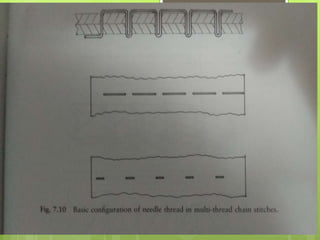
The needle threads all produce the same simple
structural configuration , penetrating the fabric layers
from one side.
The upper layer shows the advancing stitch pattern ,
while on the other side the loops are penetrated by a
single thread in a looping manner , so the needle
loops are connected and a ‘cover’ of the seam occurs.
The upper side of the seam can have a covering
thread added to the structure so that cover occurs on
both surfaces.
The addition of an upper cover thread converts type
400 stitch types to 600 types , so that type 406 (chain
stitch cover seam)– a two needle thread and one
looper thread construction – becomes type 602 with
the addition of a single upper cover thread, or type
603 with addition of two upper cover threads. 7.11
Type 407 a three needle one looper thread
construction - becomes type 605 with the
addition of one cover thread, or type 604 with
two.
Type 410 – a four needle and one looper thread
construction – becomes type 607 or 609 with
the addition of one cover thread, or type 608
with the addition of two upper cover threads.
 The multi thread constructions are relatively complex
compared to other stitches ; They are as a class relatively
stable with moderate extensibility.
 Because of this, within the majority of applications in which
these seams are used, the seam is less extensible than the base
fabric, and takes the strain of the longitudinal extension.
 It can also be said that with the longitudinal stress there will be
lateral compression of the seam component of such wide
seams, releasing looper thread to take part in the extension.
 Where greater extensibility and recovery is required
elastomeric yarns are used as looper threads and sometimes as
cover threads.
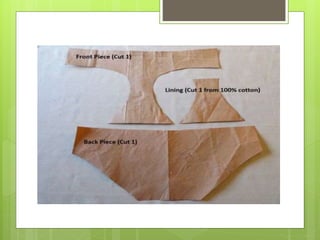
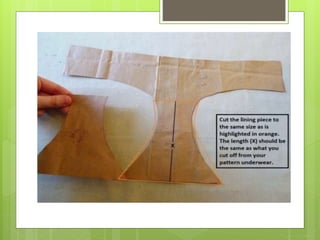
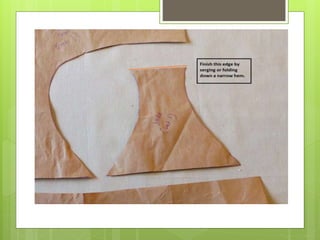
Brief construction using cut and
sew method
Sew-free Seaming Technology
 Sewing has been one of the oldest of textile arts and has
been the basics for garment construction since then. But
the use of thermoplastic or hot melt adhesive films have
started to revolutionise the way of garment construction
and has become the next generation of cut and sew.
 What is seam sealing or sew free seam?
Seam sealing is a process of sealing up of the seam
generally with a silicone coat or tape with a purpose of
waterproofing the seam. But with the use of elastomeric
adhesive tapes, this extra step of coating has been
removed altogether and the tape gets fused directly onto
the seam removing the need for stitch. It can be also used
in normal garments for panel attachment, side seams,
pocket and placket attachments etc. sew free seam can
be done using bonding, welding method too.
How the seam sealing (Sewfree seam) works?
 Sew-free seaming has been possible because of these special
elastomeric adhesive tapes. These tapes on heat and pressure
activate the adhesive through the fabrics melting through the
structure of it.
 The activation of the adhesive can be done through an iron
press, seam sealing machine. It can bond almost all non-fleece
fabrics (nylon, polyester, cotton, leather membrane etc.) with
some limitation such as silicone, porous materials like fleece and
so on.
 There is another technology wherein high-frequency mechanical
oscillations cause molecular and interface friction in the joining
zone. This creates the heat required for welding and the material
is plasticised. This allows for brief cooling times, whilst
maintaining the welding pressure and this is called ultrasonic roll
seam welding.
 The only disadvantage of it being it can only be used for
garments containing thermoplastic fibres.
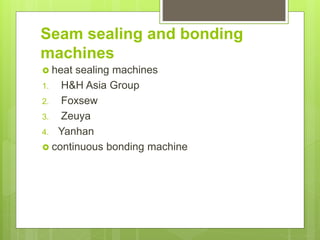
Seam sealing and bonding
machines
 heat sealing machines
1. H&H Asia Group
2. Foxsew
3. Zeuya
4. Yanhan
 continuous bonding machine
Seamless Brief Production Videos
 https://youtu.be/dcT3bC7zsQ8
 https://youtu.be/sP0z-6wwzH0
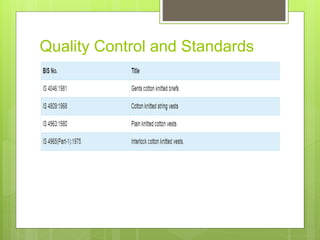
Quality Control and Standards
Briefs- construction procedure and operation sequence

Briefs- construction procedure and operation sequence

  • 1.
    Men’s Brief – OperationSequence and Production Technique Aiswarya V Mohan(M- Tech)
  • 2.
    Introduction:  Underwear isan inner wear normally worn next to skin or under other clothing.  The innerwear is also called second skin because it is in direct contact with the skin.  Earlier, cotton was the only fabric used in making under garments.  However with changing preferences and technological advancements , the underwear industry for men has seen a lot of innovations in terms of fabric.  Some of the fabrics mostly used are cotton, polyester, nylon, modal, rayon, silk.
  • 3.
    Fabric  The fabricis the most important feature in men’s underwear.  Feel is probably the most important criterion for most men – underwear needs to be soft. This is why most men’s underwear is made of high-quality cotton with long fibres.  The softest highest quality cotton is Pima cotton, Supima cotton, and Egyptian cotton.  Microfiber is another very soft fabric for men’s underwear.  Microfiber is man-made and is thinner than silk (the thinnest natural fibre you can find). And, the thinner the fibre, the softer the fabric.  Often, microfibers have wicking properties built into them as well. This means that the fabric is not only soft, but wicks moisture away from the body, and dries quickly. S  ome elastic waistbands on men’s underwear are made from microfiber. They’re very soft and feel great against a man’s skin.

  • 4.
    Men’s Underwear Fitting Standards FittingDescription Contoured Form-fitting, meant to hug the body; usually a stretch knit fabric. Relaxed More loose fitting; usually a woven cotton fabric.
  • 5.
  • 6.
    Waistband Basically, there are3 types of waistbands on men’s underwear: 1. the encased elastic waistband, 2. the sewn inside the elastic waistband, and 3. the sewn on (usually logoed) elastic waistband.
  • 7.
    Stitches Used  Thecomplete production system are constructed around 2,3,4 needle seams of the types covering mostly BS stitch types as follows.  BS 406 -2 needle multi thread chain stitch(cover seam)  BS 407 - 3 needle multi thread chain stitch(cover seam)  BS 410 - 4 needle multi thread chain stitch(cover seam)
  • 8.
     BS 602-Twin needle cover seam with top cover(2 needle one looper and top covering thread)  BS 605- Three needle cover seam with top cover  BS 607- Flat seam
  • 10.
    There is astrong reliance on machine attachments, each machine being set up to do a particular task. The needle threads all produce the same simple structural configuration , penetrating the fabric layers from one side. The upper layer shows the advancing stitch pattern , while on the other side the loops are penetrated by a single thread in a looping manner , so the needle loops are connected and a ‘cover’ of the seam occurs.
  • 12.
    The upper sideof the seam can have a covering thread added to the structure so that cover occurs on both surfaces. The addition of an upper cover thread converts type 400 stitch types to 600 types , so that type 406 (chain stitch cover seam)– a two needle thread and one looper thread construction – becomes type 602 with the addition of a single upper cover thread, or type 603 with addition of two upper cover threads. 7.11
  • 14.
    Type 407 athree needle one looper thread construction - becomes type 605 with the addition of one cover thread, or type 604 with two.
  • 16.
    Type 410 –a four needle and one looper thread construction – becomes type 607 or 609 with the addition of one cover thread, or type 608 with the addition of two upper cover threads.
  • 18.
     The multithread constructions are relatively complex compared to other stitches ; They are as a class relatively stable with moderate extensibility.  Because of this, within the majority of applications in which these seams are used, the seam is less extensible than the base fabric, and takes the strain of the longitudinal extension.  It can also be said that with the longitudinal stress there will be lateral compression of the seam component of such wide seams, releasing looper thread to take part in the extension.  Where greater extensibility and recovery is required elastomeric yarns are used as looper threads and sometimes as cover threads.
  • 19.
    Brief construction usingcut and sew method
  • 24.
    Sew-free Seaming Technology Sewing has been one of the oldest of textile arts and has been the basics for garment construction since then. But the use of thermoplastic or hot melt adhesive films have started to revolutionise the way of garment construction and has become the next generation of cut and sew.  What is seam sealing or sew free seam? Seam sealing is a process of sealing up of the seam generally with a silicone coat or tape with a purpose of waterproofing the seam. But with the use of elastomeric adhesive tapes, this extra step of coating has been removed altogether and the tape gets fused directly onto the seam removing the need for stitch. It can be also used in normal garments for panel attachment, side seams, pocket and placket attachments etc. sew free seam can be done using bonding, welding method too.
  • 25.
    How the seamsealing (Sewfree seam) works?  Sew-free seaming has been possible because of these special elastomeric adhesive tapes. These tapes on heat and pressure activate the adhesive through the fabrics melting through the structure of it.  The activation of the adhesive can be done through an iron press, seam sealing machine. It can bond almost all non-fleece fabrics (nylon, polyester, cotton, leather membrane etc.) with some limitation such as silicone, porous materials like fleece and so on.  There is another technology wherein high-frequency mechanical oscillations cause molecular and interface friction in the joining zone. This creates the heat required for welding and the material is plasticised. This allows for brief cooling times, whilst maintaining the welding pressure and this is called ultrasonic roll seam welding.  The only disadvantage of it being it can only be used for garments containing thermoplastic fibres.
  • 26.
    Seam sealing andbonding machines  heat sealing machines 1. H&H Asia Group 2. Foxsew 3. Zeuya 4. Yanhan  continuous bonding machine
  • 27.
    Seamless Brief ProductionVideos  https://youtu.be/dcT3bC7zsQ8  https://youtu.be/sP0z-6wwzH0
  • 28.