Ahsan Kabir Project Manager
………………………….
Day 1 Introduction
MSF Principle
“The Standish Group research shows 31.1% of projects
will be cancelled before they ever get completed.
Further results indicate 52.7% of projects will cost
189% of their original estimates.”
Problem Domain Research
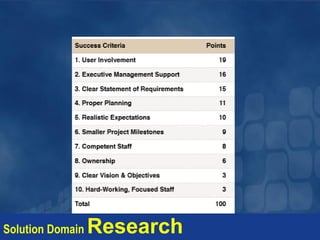
Solution Domain Research
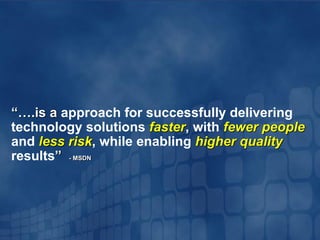
“….is a approach for successfully delivering
technology solutions faster, with fewer people
and less risk, while enabling higher quality
results” - MSDN
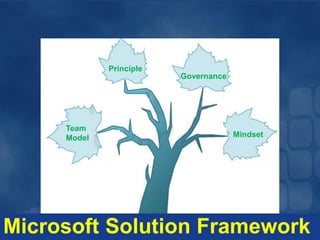
Principle
Governance
Mindset
Team
Model
Microsoft Solution Framework
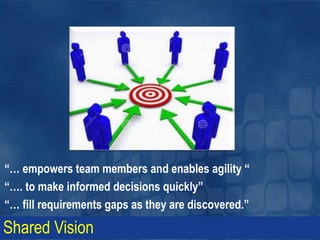
Shared Vision
“… empowers team members and enables agility “
“…. to make informed decisions quickly”
“… fill requirements gaps as they are discovered.”
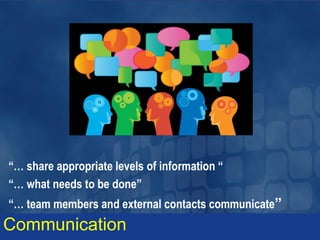
“… share appropriate levels of information “
“… what needs to be done”
“… team members and external contacts communicate”
Communication
“… ways to survive in an ever-changing environment “
“... learn to creatively find ways to be successful “
Empower team members
Accountability and shared responsibility
“…team member accountability leads to higher quality.”
“…shares responsibility for the overall solution and
its deliverables”
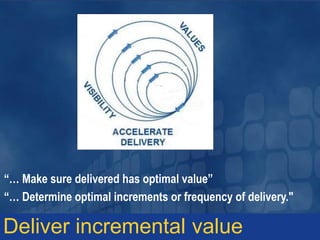
“… Make sure delivered has optimal value”
“… Determine optimal increments or frequency of delivery."
Deliver incremental value
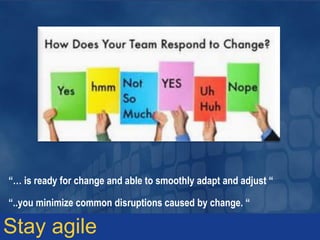
“… is ready for change and able to smoothly adapt and adjust “
“..you minimize common disruptions caused by change. “
Stay agile
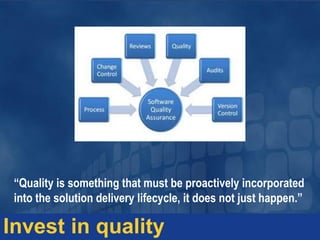
“Quality is something that must be proactively incorporated
into the solution delivery lifecycle, it does not just happen.”
Invest in quality
“… expected to improve next time”
“…individual, project and organization wide process”
Learn from experiences
“…customers work closely and incrementally”
“…better meets their expectations”
“…increase the for project success “
Make Partnership with customers
Question and Answer
Day 2 Mindset
“While the foundational principles discussed
above guide how a team should be oriented to
maximize success, orienting team members
as individuals to maximize their success is
called a mindset.”
Mindset
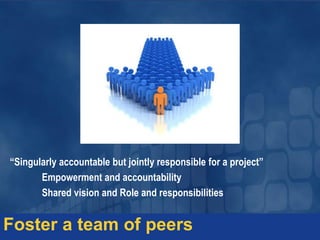
“Singularly accountable but jointly responsible for a project”
Empowerment and accountability
Shared vision and Role and responsibilities
Foster a team of peers
“Everyone on a team needs to understand what customers deem
valuable”
Customers need
Want and value.
Project at risk
Focus on business value
“As team members deliver their portions, they need to look back at the
overall mission, goals, and vision for a solution”
Size and complexity
Keep the ultimate solution
Subteam optimizes their area
Keep a solution perspective
“Not only should a team invest in quality, but the members should
also see that quality is as much their responsibility as that “
Delegated or passed
Solution delivery life cycle
Own quality and delivering the best
Continuous improvement
Pride in workmanship
“Given that most projects, teams, and environments are unique, each
project presents opportunities to learn, experiment, and refine skills,
processes, and procedures. ”
Learning and adapting
Better peers
All levels of an organization
Learn continuously
“Qualities of service (QoS) define expected operational characteristics
of a solution”
Understand QoS
Ensure QoS
Qualities of service
“The viewpoint of software development, good citizenship means being
trustworthy, honorable, responsible, and respectful in all aspects of
your work. ”
Interact with stakeholders
Openly and willingly
Good citizens act on and are mindful
of the greater good
Practice good citizenship
Deliver on your commitments
“MSF establishes an environment in which team members and
stakeholders are able to trust that their fellow team members will
deliver on they say they will do.”
Checks and balances
Trust and empowerment
Interdependent activities
Question and Answer
Day 3 Team Model
Governance
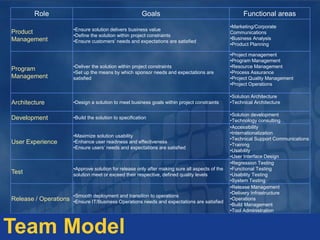
“The MSF Team Model segments typical solution delivery
activities and responsibilities into seven advocacy groups.”
Role Goals Functional areas
Product
Management
•Ensure solution delivers business value
•Define the solution within project constraints
•Ensure customers’ needs and expectations are satisfied
•Marketing/Corporate
Communications
•Business Analysis
•Product Planning
Program
Management
•Deliver the solution within project constraints
•Set up the means by which sponsor needs and expectations are
satisfied
•Project management
•Program Management
•Resource Management
•Process Assurance
•Project Quality Management
•Project Operations
Architecture •Design a solution to meet business goals within project constraints
•Solution Architecture
•Technical Architecture
Development •Build the solution to specification
•Solution development
•Technology consulting
User Experience
•Maximize solution usability
•Enhance user readiness and effectiveness
•Ensure users’ needs and expectations are satisfied
•Accessibility
•Internationalization
•Technical Support Communications
•Training
•Usability
•User Interface Design
Test
•Approve solution for release only after making sure all aspects of the
solution meet or exceed their respective, defined quality levels
•Regression Testing
•Functional Testing
•Usability Testing
•System Testing
Release / Operations
•Smooth deployment and transition to operations
•Ensure IT/Business Operations needs and expectations are satisfied
•Release Management
•Delivery Infrastructure
•Operations
•Build Management
•Tool Administration
Team Model
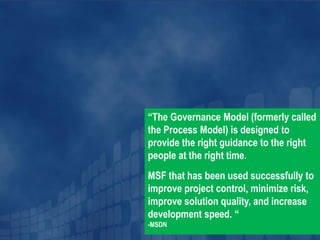
“The Governance Model (formerly called
the Process Model) is designed to
provide the right guidance to the right
people at the right time.
MSF that has been used successfully to
improve project control, minimize risk,
improve solution quality, and increase
development speed. “
-MSDN
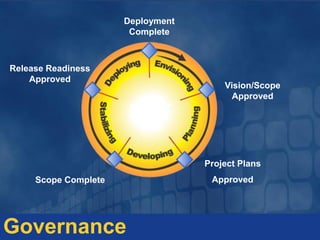
Project Plans
ApprovedScope Complete
Release Readiness
Approved
Deployment
Complete
Vision/Scope
Approved
MSF
Governance
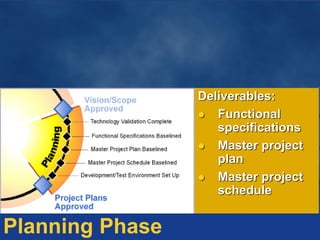
Deliverables:
 Functional
specifications
 Master project
plan
 Master project
schedule
Planning Phase
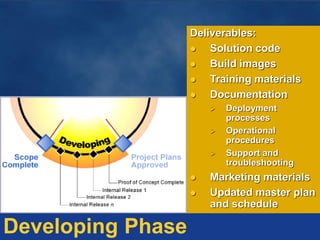
Deliverables:
 Solution code
 Build images
 Training materials
 Documentation
 Deployment
processes
 Operational
procedures
 Support and
troubleshooting
 Marketing materials
 Updated master plan
and schedule
Developing Phase
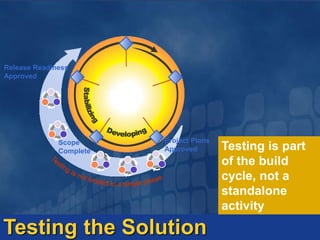
Testing is part
of the build
cycle, not a
standalone
activity
MSF
Release Readiness
Approved
Scope
Complete
Project Plans
Approved
Testing the Solution
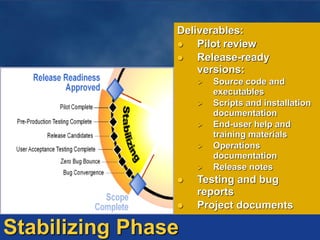
Deliverables:
 Pilot review
 Release-ready
versions:
 Source code and
executables
 Scripts and installation
documentation
 End-user help and
training materials
 Operations
documentation
 Release notes
 Testing and bug
reports
 Project documents
Stabilizing Phase
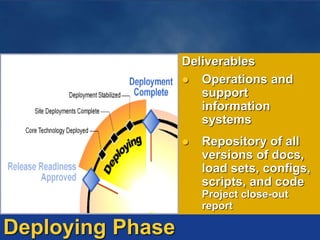
Deliverables
 Operations and
support
information
systems
 Repository of all
versions of docs,
load sets, configs,
scripts, and code
Project close-out
report
Deploying Phase
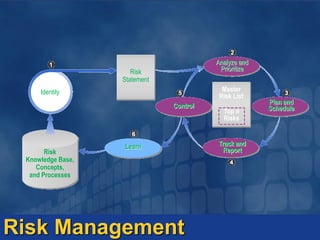
Analyze and
Prioritize
Master
Risk List
Top n
Risks
Plan and
Schedule
Identity
Risk
Statement
Control
Learn
Risk
Knowledge Base,
Concepts,
and Processes
Track and
Report
Risk Management
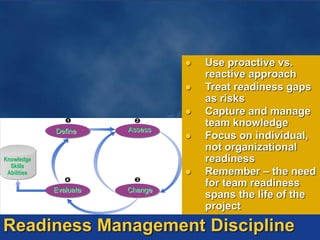
 Use proactive vs.
reactive approach
 Treat readiness gaps
as risks
 Capture and manage
team knowledge
 Focus on individual,
not organizational
readiness
 Remember – the need
for team readiness
spans the life of the
project
Knowledge
Skills
Abilities
Assess
Change
Define
Evaluate
Readiness Management Discipline
Question and Answer
Thanks

Brief overview on microsoft solution framework

  • 1.
    Ahsan Kabir ProjectManager ………………………….
  • 2.
  • 3.
    “The Standish Groupresearch shows 31.1% of projects will be cancelled before they ever get completed. Further results indicate 52.7% of projects will cost 189% of their original estimates.” Problem Domain Research
  • 4.
  • 5.
    “….is a approachfor successfully delivering technology solutions faster, with fewer people and less risk, while enabling higher quality results” - MSDN
  • 6.
  • 7.
    Shared Vision “… empowersteam members and enables agility “ “…. to make informed decisions quickly” “… fill requirements gaps as they are discovered.”
  • 8.
    “… share appropriatelevels of information “ “… what needs to be done” “… team members and external contacts communicate” Communication
  • 9.
    “… ways tosurvive in an ever-changing environment “ “... learn to creatively find ways to be successful “ Empower team members
  • 10.
    Accountability and sharedresponsibility “…team member accountability leads to higher quality.” “…shares responsibility for the overall solution and its deliverables”
  • 11.
    “… Make suredelivered has optimal value” “… Determine optimal increments or frequency of delivery." Deliver incremental value
  • 12.
    “… is readyfor change and able to smoothly adapt and adjust “ “..you minimize common disruptions caused by change. “ Stay agile
  • 13.
    “Quality is somethingthat must be proactively incorporated into the solution delivery lifecycle, it does not just happen.” Invest in quality
  • 14.
    “… expected toimprove next time” “…individual, project and organization wide process” Learn from experiences
  • 15.
    “…customers work closelyand incrementally” “…better meets their expectations” “…increase the for project success “ Make Partnership with customers
  • 16.
  • 17.
  • 18.
    “While the foundationalprinciples discussed above guide how a team should be oriented to maximize success, orienting team members as individuals to maximize their success is called a mindset.” Mindset
  • 19.
    “Singularly accountable butjointly responsible for a project” Empowerment and accountability Shared vision and Role and responsibilities Foster a team of peers
  • 20.
    “Everyone on ateam needs to understand what customers deem valuable” Customers need Want and value. Project at risk Focus on business value
  • 21.
    “As team membersdeliver their portions, they need to look back at the overall mission, goals, and vision for a solution” Size and complexity Keep the ultimate solution Subteam optimizes their area Keep a solution perspective
  • 22.
    “Not only shoulda team invest in quality, but the members should also see that quality is as much their responsibility as that “ Delegated or passed Solution delivery life cycle Own quality and delivering the best Continuous improvement Pride in workmanship
  • 23.
    “Given that mostprojects, teams, and environments are unique, each project presents opportunities to learn, experiment, and refine skills, processes, and procedures. ” Learning and adapting Better peers All levels of an organization Learn continuously
  • 24.
    “Qualities of service(QoS) define expected operational characteristics of a solution” Understand QoS Ensure QoS Qualities of service
  • 25.
    “The viewpoint ofsoftware development, good citizenship means being trustworthy, honorable, responsible, and respectful in all aspects of your work. ” Interact with stakeholders Openly and willingly Good citizens act on and are mindful of the greater good Practice good citizenship
  • 26.
    Deliver on yourcommitments “MSF establishes an environment in which team members and stakeholders are able to trust that their fellow team members will deliver on they say they will do.” Checks and balances Trust and empowerment Interdependent activities
  • 27.
  • 28.
    Day 3 TeamModel Governance
  • 29.
    “The MSF TeamModel segments typical solution delivery activities and responsibilities into seven advocacy groups.”
  • 30.
    Role Goals Functionalareas Product Management •Ensure solution delivers business value •Define the solution within project constraints •Ensure customers’ needs and expectations are satisfied •Marketing/Corporate Communications •Business Analysis •Product Planning Program Management •Deliver the solution within project constraints •Set up the means by which sponsor needs and expectations are satisfied •Project management •Program Management •Resource Management •Process Assurance •Project Quality Management •Project Operations Architecture •Design a solution to meet business goals within project constraints •Solution Architecture •Technical Architecture Development •Build the solution to specification •Solution development •Technology consulting User Experience •Maximize solution usability •Enhance user readiness and effectiveness •Ensure users’ needs and expectations are satisfied •Accessibility •Internationalization •Technical Support Communications •Training •Usability •User Interface Design Test •Approve solution for release only after making sure all aspects of the solution meet or exceed their respective, defined quality levels •Regression Testing •Functional Testing •Usability Testing •System Testing Release / Operations •Smooth deployment and transition to operations •Ensure IT/Business Operations needs and expectations are satisfied •Release Management •Delivery Infrastructure •Operations •Build Management •Tool Administration Team Model
  • 31.
    “The Governance Model(formerly called the Process Model) is designed to provide the right guidance to the right people at the right time. MSF that has been used successfully to improve project control, minimize risk, improve solution quality, and increase development speed. “ -MSDN
  • 32.
    Project Plans ApprovedScope Complete ReleaseReadiness Approved Deployment Complete Vision/Scope Approved MSF Governance
  • 33.
    Deliverables:  Functional specifications  Masterproject plan  Master project schedule Planning Phase
  • 34.
    Deliverables:  Solution code Build images  Training materials  Documentation  Deployment processes  Operational procedures  Support and troubleshooting  Marketing materials  Updated master plan and schedule Developing Phase
  • 35.
    Testing is part ofthe build cycle, not a standalone activity MSF Release Readiness Approved Scope Complete Project Plans Approved Testing the Solution
  • 36.
    Deliverables:  Pilot review Release-ready versions:  Source code and executables  Scripts and installation documentation  End-user help and training materials  Operations documentation  Release notes  Testing and bug reports  Project documents Stabilizing Phase
  • 37.
    Deliverables  Operations and support information systems Repository of all versions of docs, load sets, configs, scripts, and code Project close-out report Deploying Phase
  • 38.
    Analyze and Prioritize Master Risk List Topn Risks Plan and Schedule Identity Risk Statement Control Learn Risk Knowledge Base, Concepts, and Processes Track and Report Risk Management
  • 39.
     Use proactivevs. reactive approach  Treat readiness gaps as risks  Capture and manage team knowledge  Focus on individual, not organizational readiness  Remember – the need for team readiness spans the life of the project Knowledge Skills Abilities Assess Change Define Evaluate Readiness Management Discipline
  • 40.
  • 41.