 To know about structure and function of NDB.
 To know about the context of the formation of
NDB.
 To analyze the prospects and challenges of NDB.
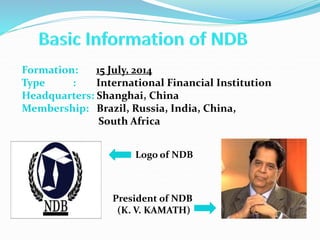
Formation: 15 July, 2014
Type : International Financial Institution
Headquarters: Shanghai, China
Membership: Brazil, Russia, India, China,
South Africa
Logo of NDB
President of NDB
(K. V. KAMATH)
 Discriminatory attitude of World Bank and IMF.
 Weighted voting system.
 Dominance of America in IMF and World Bank.
 Less voting power of China, Russia and India.
 Huge conditions of World Bank and IMF.
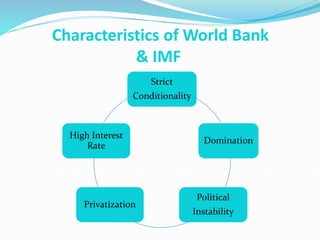
Characteristics of World Bank
& IMF
Strict
Conditionality
Domination
Political
Instability
Privatization
High Interest
Rate
Duopoly System of World Bank & IMF
 Focus on competition and market forces.
 One size fits all.
 Takes away political autonomy.
 Increase the value of dollar.
 Focus on privatization.
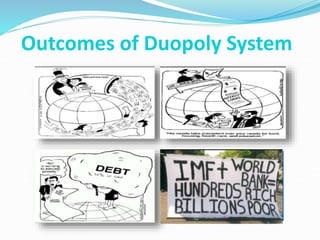
Outcomes of Duopoly System
Is Any Alternative
Needed???
 New Development Bank is a multilateral
development bank referred as BRICS Bank.
 A way of the cooperation among emerging
economies and developing countries.
 Alternative to the existing American and
European dominated World Bank and IMF.
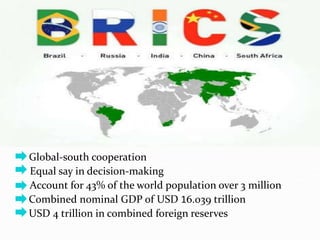
Global-south cooperation
Equal say in decision-making
Account for 43% of the world population over 3 million
 Combined nominal GDP of USD 16.039 trillion
 USD 4 trillion in combined foreign reserves
 Investment in infrastructure development
projects.
 Sustainable development projects
 Move away from a long-standing dependence on
IMF and World Bank.
 Improve and complement the global financial
system.
 Resource mobilization.
 Establish an extensive network of global
partnerships.
 Innovative approaches.
 Simple governance.
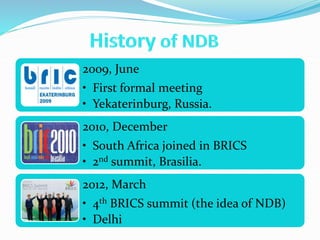
2009, June
• First formal meeting
• Yekaterinburg, Russia.
2010, December
• South Africa joined in BRICS
• 2nd summit, Brasilia.
2012, March
• 4th BRICS summit (the idea of NDB)
• Delhi
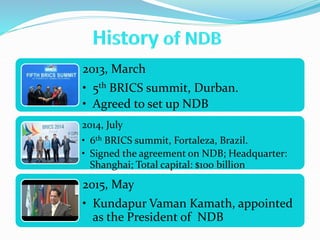
2013, March
• 5th BRICS summit, Durban.
• Agreed to set up NDB
2014, July
• 6th BRICS summit, Fortaleza, Brazil.
• Signed the agreement on NDB; Headquarter:
Shanghai; Total capital: $100 billion
2015, May
• Kundapur Vaman Kamath, appointed
as the President of NDB
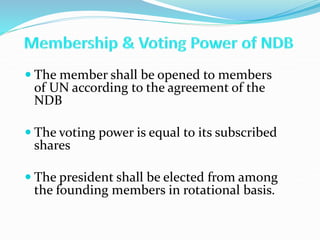
 The member shall be opened to members
of UN according to the agreement of the
NDB
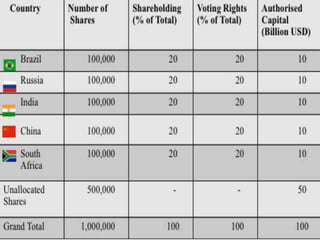
 The voting power is equal to its subscribed
shares
 The president shall be elected from among
the founding members in rotational basis.
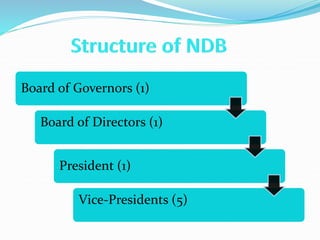
Board of Governors (1)
Board of Directors (1)
President (1)
Vice-Presidents (5)
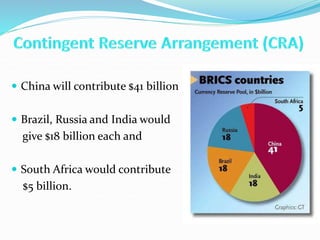
 China will contribute $41 billion
 Brazil, Russia and India would
give $18 billion each and
 South Africa would contribute
$5 billion.
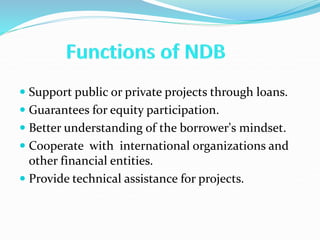
 Support public or private projects through loans.
 Guarantees for equity participation.
 Better understanding of the borrower's mindset.
 Cooperate with international organizations and
other financial entities.
 Provide technical assistance for projects.
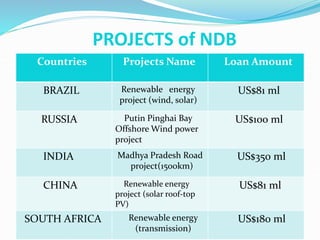
PROJECTS of NDB
Countries Projects Name Loan Amount
BRAZIL Renewable energy
project (wind, solar)
US$81 ml
RUSSIA Putin Pinghai Bay
Offshore Wind power
project
US$100 ml
INDIA Madhya Pradesh Road
project(1500km)
US$350 ml
CHINA Renewable energy
project (solar roof-top
PV)
US$81 ml
SOUTH AFRICA Renewable energy
(transmission)
US$180 ml
Prospects of NDB
 Rise of South.
 Alternative to World Bank and IMF.
 Financial Inclusion.
 Meet the need of more than 43% population of the
world.
 Decrease the value of USD.
Opportunities for 3rd world
Countries
 An alternative bank of World Bank and IMF.
 A bank for the emerging economies.
 Sustainable development: meet the needs of
millions (poor).
 South-South cooperation: by south for the south.
 Easy balance of payment.
NDB and BANGLADESH
 Finance Minister take decision to join NDB.
 Prime Minister given consent for joining the NDB.
 ERD has sent letter to the Bangladesh
ambassadors in the five BRICS countries.
 Decision of BRICS still pending.
 Reasonable interest rates.
 Favorable conditionality.
 Equal power of all founding member countries.
 Absence of partiality.
 Encouraging and supporting for Green project.
 Easy balance of payment.
Differences of NDB from
World Bank & IMF
Challenges of NDB
 Political conflict among BRICS states.
 Rule of CHINA.
 Popularity of World Bank and IMF.
 Asian Development Bank.
 Asian Infrastructure Investment Bank.
 www.ndbrics.org
 www.rt.com
 www.bbc.co.uk
 www.hindustantimes.com
 www.economictimes.com
 The Daily Star
 The Financial Express
 timesofindia.indiatimes.com
 www.countryeconomy.com
 www.bonikbarta.com
 www.venturesafrica.com
 africabusinessmagazine.com
 www.prothom-ato.com
 www.wikipedia.com
Bricks bank or new development bank

Bricks bank or new development bank

  • 2.
     To knowabout structure and function of NDB.  To know about the context of the formation of NDB.  To analyze the prospects and challenges of NDB.
  • 3.
    Formation: 15 July,2014 Type : International Financial Institution Headquarters: Shanghai, China Membership: Brazil, Russia, India, China, South Africa Logo of NDB President of NDB (K. V. KAMATH)
  • 4.
     Discriminatory attitudeof World Bank and IMF.  Weighted voting system.  Dominance of America in IMF and World Bank.  Less voting power of China, Russia and India.  Huge conditions of World Bank and IMF.
  • 5.
    Characteristics of WorldBank & IMF Strict Conditionality Domination Political Instability Privatization High Interest Rate
  • 6.
    Duopoly System ofWorld Bank & IMF  Focus on competition and market forces.  One size fits all.  Takes away political autonomy.  Increase the value of dollar.  Focus on privatization.
  • 7.
  • 8.
  • 9.
     New DevelopmentBank is a multilateral development bank referred as BRICS Bank.  A way of the cooperation among emerging economies and developing countries.  Alternative to the existing American and European dominated World Bank and IMF.
  • 10.
    Global-south cooperation Equal sayin decision-making Account for 43% of the world population over 3 million  Combined nominal GDP of USD 16.039 trillion  USD 4 trillion in combined foreign reserves
  • 11.
     Investment ininfrastructure development projects.  Sustainable development projects  Move away from a long-standing dependence on IMF and World Bank.  Improve and complement the global financial system.
  • 12.
     Resource mobilization. Establish an extensive network of global partnerships.  Innovative approaches.  Simple governance.
  • 13.
    2009, June • Firstformal meeting • Yekaterinburg, Russia. 2010, December • South Africa joined in BRICS • 2nd summit, Brasilia. 2012, March • 4th BRICS summit (the idea of NDB) • Delhi
  • 14.
    2013, March • 5thBRICS summit, Durban. • Agreed to set up NDB 2014, July • 6th BRICS summit, Fortaleza, Brazil. • Signed the agreement on NDB; Headquarter: Shanghai; Total capital: $100 billion 2015, May • Kundapur Vaman Kamath, appointed as the President of NDB
  • 15.
     The membershall be opened to members of UN according to the agreement of the NDB  The voting power is equal to its subscribed shares  The president shall be elected from among the founding members in rotational basis.
  • 16.
    Board of Governors(1) Board of Directors (1) President (1) Vice-Presidents (5)
  • 17.
     China willcontribute $41 billion  Brazil, Russia and India would give $18 billion each and  South Africa would contribute $5 billion.
  • 19.
     Support publicor private projects through loans.  Guarantees for equity participation.  Better understanding of the borrower's mindset.  Cooperate with international organizations and other financial entities.  Provide technical assistance for projects.
  • 20.
    PROJECTS of NDB CountriesProjects Name Loan Amount BRAZIL Renewable energy project (wind, solar) US$81 ml RUSSIA Putin Pinghai Bay Offshore Wind power project US$100 ml INDIA Madhya Pradesh Road project(1500km) US$350 ml CHINA Renewable energy project (solar roof-top PV) US$81 ml SOUTH AFRICA Renewable energy (transmission) US$180 ml
  • 21.
    Prospects of NDB Rise of South.  Alternative to World Bank and IMF.  Financial Inclusion.  Meet the need of more than 43% population of the world.  Decrease the value of USD.
  • 22.
    Opportunities for 3rdworld Countries  An alternative bank of World Bank and IMF.  A bank for the emerging economies.  Sustainable development: meet the needs of millions (poor).  South-South cooperation: by south for the south.  Easy balance of payment.
  • 23.
    NDB and BANGLADESH Finance Minister take decision to join NDB.  Prime Minister given consent for joining the NDB.  ERD has sent letter to the Bangladesh ambassadors in the five BRICS countries.  Decision of BRICS still pending.
  • 24.
     Reasonable interestrates.  Favorable conditionality.  Equal power of all founding member countries.  Absence of partiality.  Encouraging and supporting for Green project.  Easy balance of payment. Differences of NDB from World Bank & IMF
  • 25.
    Challenges of NDB Political conflict among BRICS states.  Rule of CHINA.  Popularity of World Bank and IMF.  Asian Development Bank.  Asian Infrastructure Investment Bank.
  • 26.
     www.ndbrics.org  www.rt.com www.bbc.co.uk  www.hindustantimes.com  www.economictimes.com  The Daily Star  The Financial Express  timesofindia.indiatimes.com  www.countryeconomy.com  www.bonikbarta.com  www.venturesafrica.com  africabusinessmagazine.com  www.prothom-ato.com  www.wikipedia.com