Part of the BRE Trust
Alignment between BREEAM and The WELL Building
StandardTM
Dr Chris Ward, Principal Consultant, BRE
CE Sustainability Theme Group – Healthy Buildings & Wellness
31 January 2017
BREEAM overview
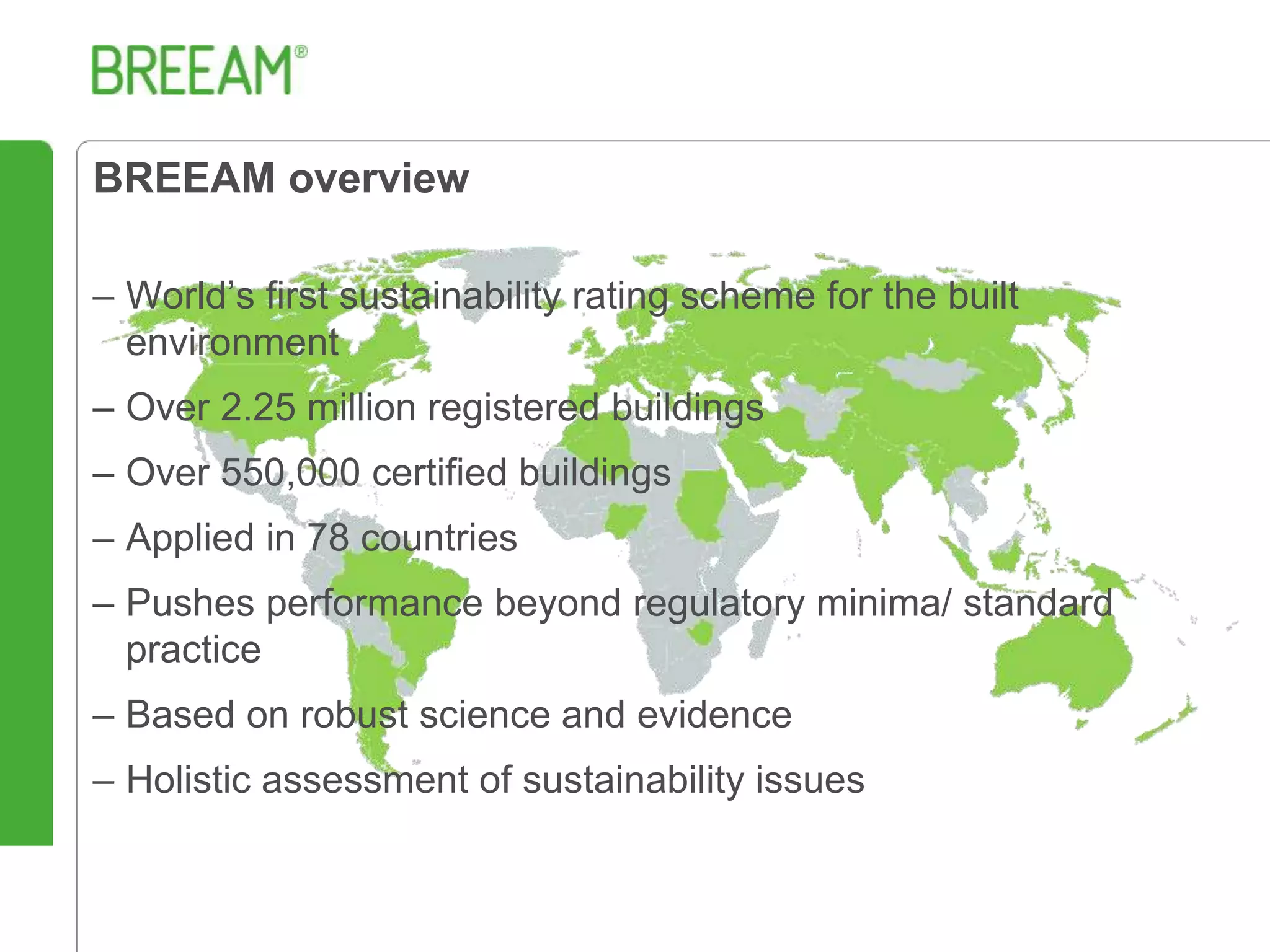
– World’s first sustainability rating scheme for the built
environment
– Over 2.25 million registered buildings
– Over 550,000 certified buildings
– Applied in 78 countries
– Pushes performance beyond regulatory minima/ standard
practice
– Based on robust science and evidence
– Holistic assessment of sustainability issues
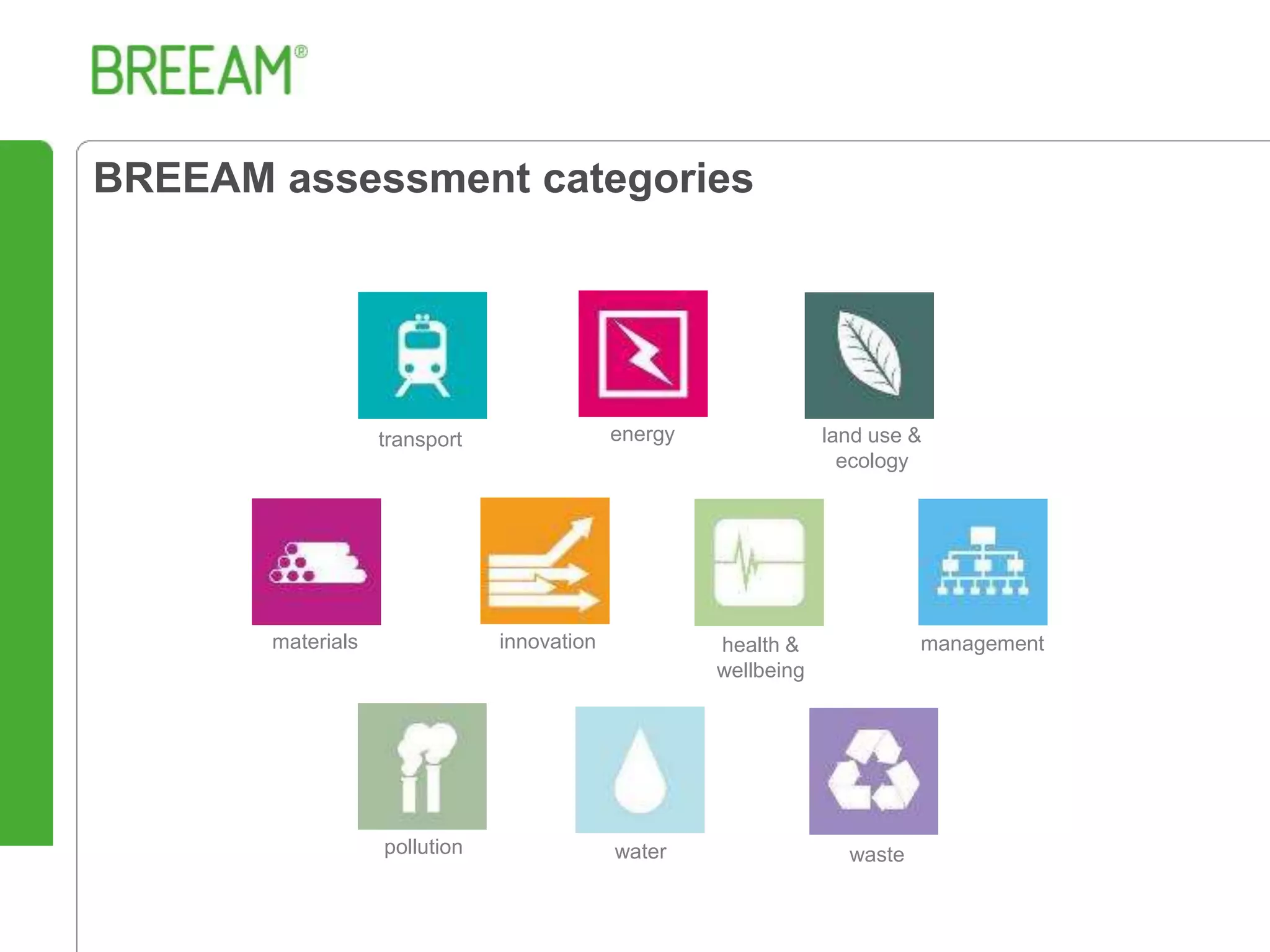
BREEAM assessment categories
innovation
transport land use &
ecology
materials management
water
energy
waste
health &
wellbeing
pollution
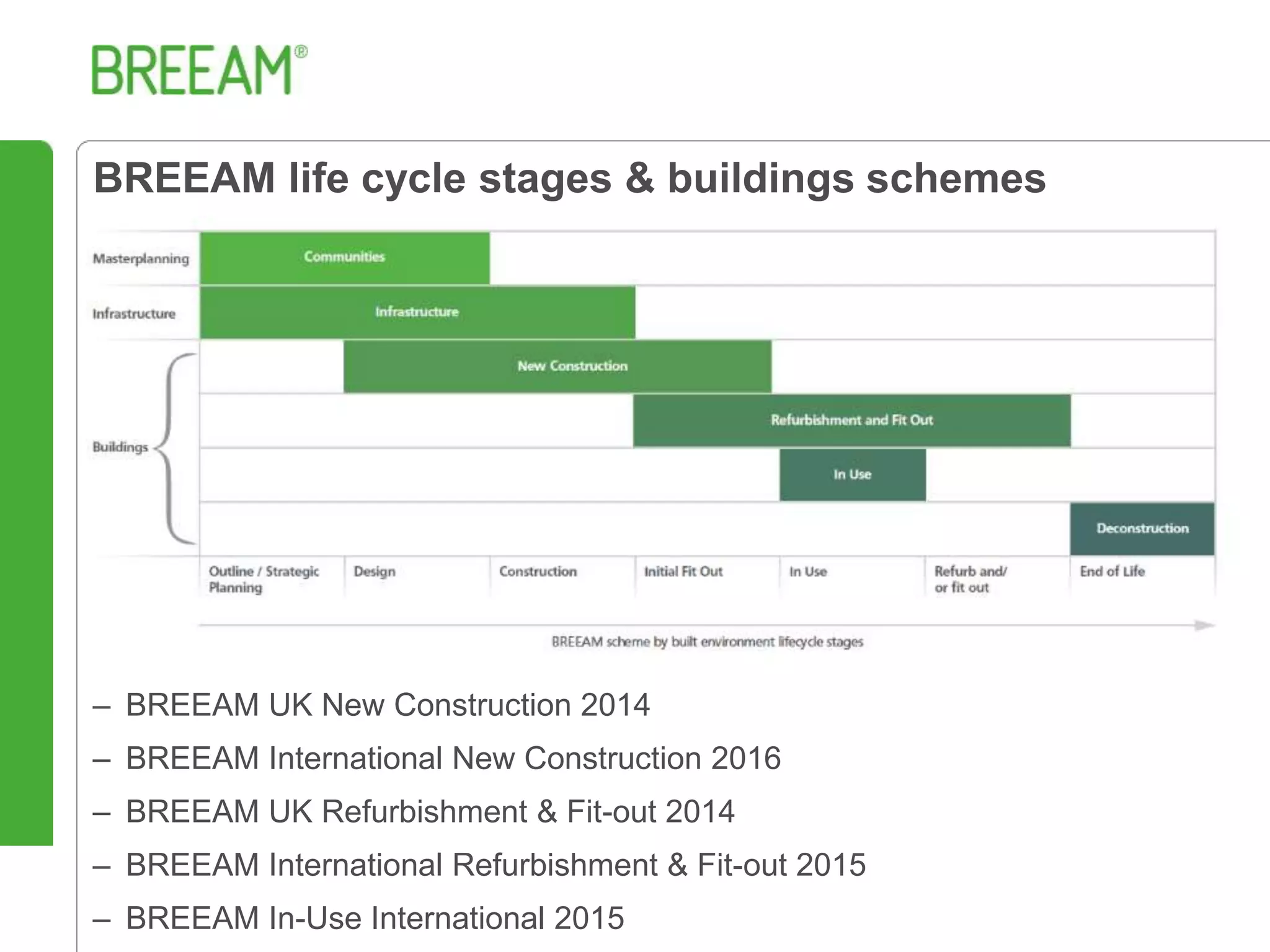
BREEAM life cycle stages & buildings schemes
– BREEAM UK New Construction 2014
– BREEAM International New Construction 2016
– BREEAM UK Refurbishment & Fit-out 2014
– BREEAM International Refurbishment & Fit-out 2015
– BREEAM In-Use International 2015
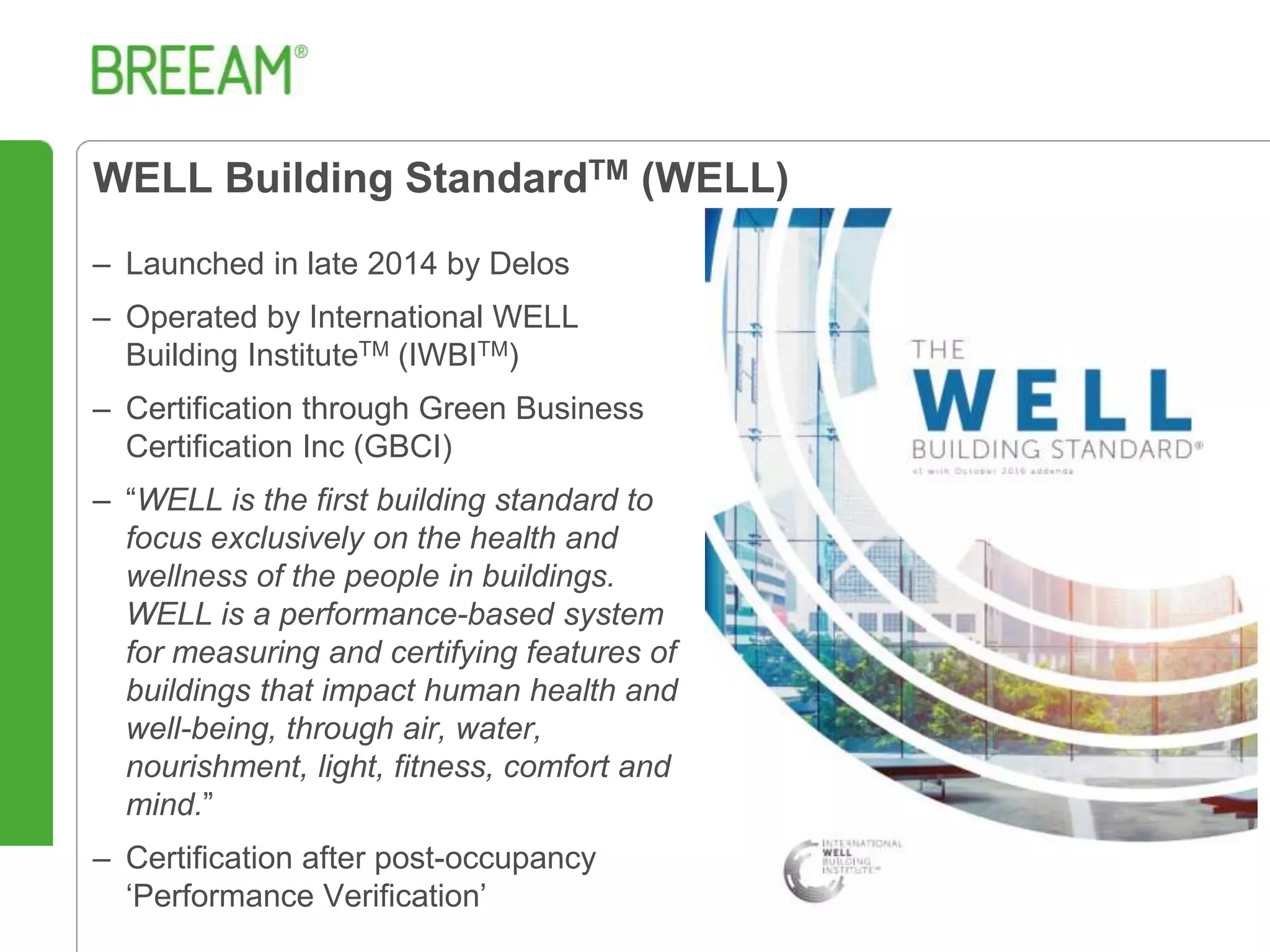
WELL Building StandardTM (WELL)
– Launched in late 2014 by Delos
– Operated by International WELL
Building InstituteTM (IWBITM)
– Certification through Green Business
Certification Inc (GBCI)
– “WELL is the first building standard to
focus exclusively on the health and
wellness of the people in buildings.
WELL is a performance-based system
for measuring and certifying features of
buildings that impact human health and
well-being, through air, water,
nourishment, light, fitness, comfort and
mind.”
– Certification after post-occupancy
‘Performance Verification’
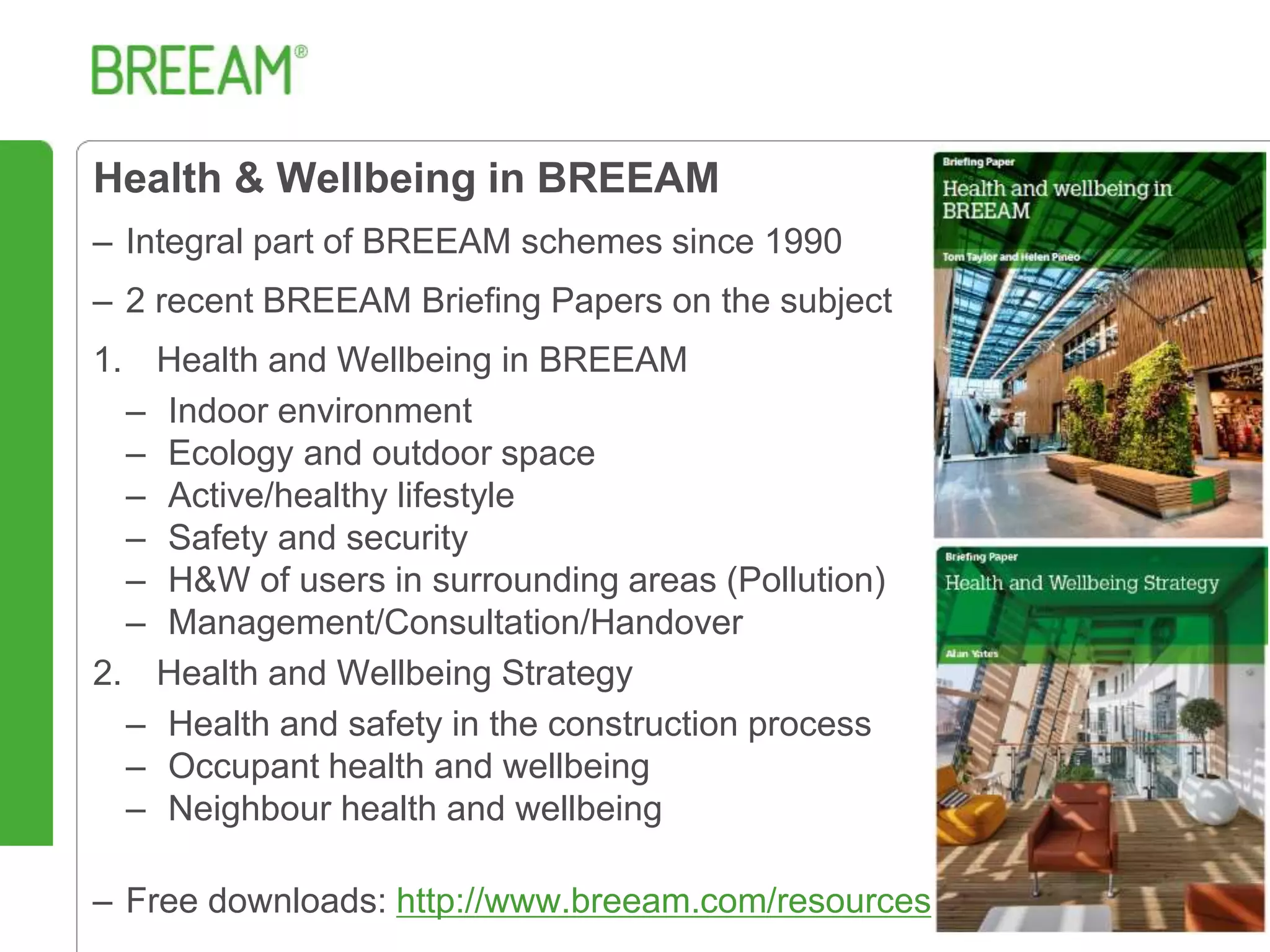
Health & Wellbeing in BREEAM
– Integral part of BREEAM schemes since 1990
– 2 recent BREEAM Briefing Papers on the subject
1. Health and Wellbeing in BREEAM
– Indoor environment
– Ecology and outdoor space
– Active/healthy lifestyle
– Safety and security
– H&W of users in surrounding areas (Pollution)
– Management/Consultation/Handover
2. Health and Wellbeing Strategy
– Health and safety in the construction process
– Occupant health and wellbeing
– Neighbour health and wellbeing
– Free downloads: http://www.breeam.com/resources
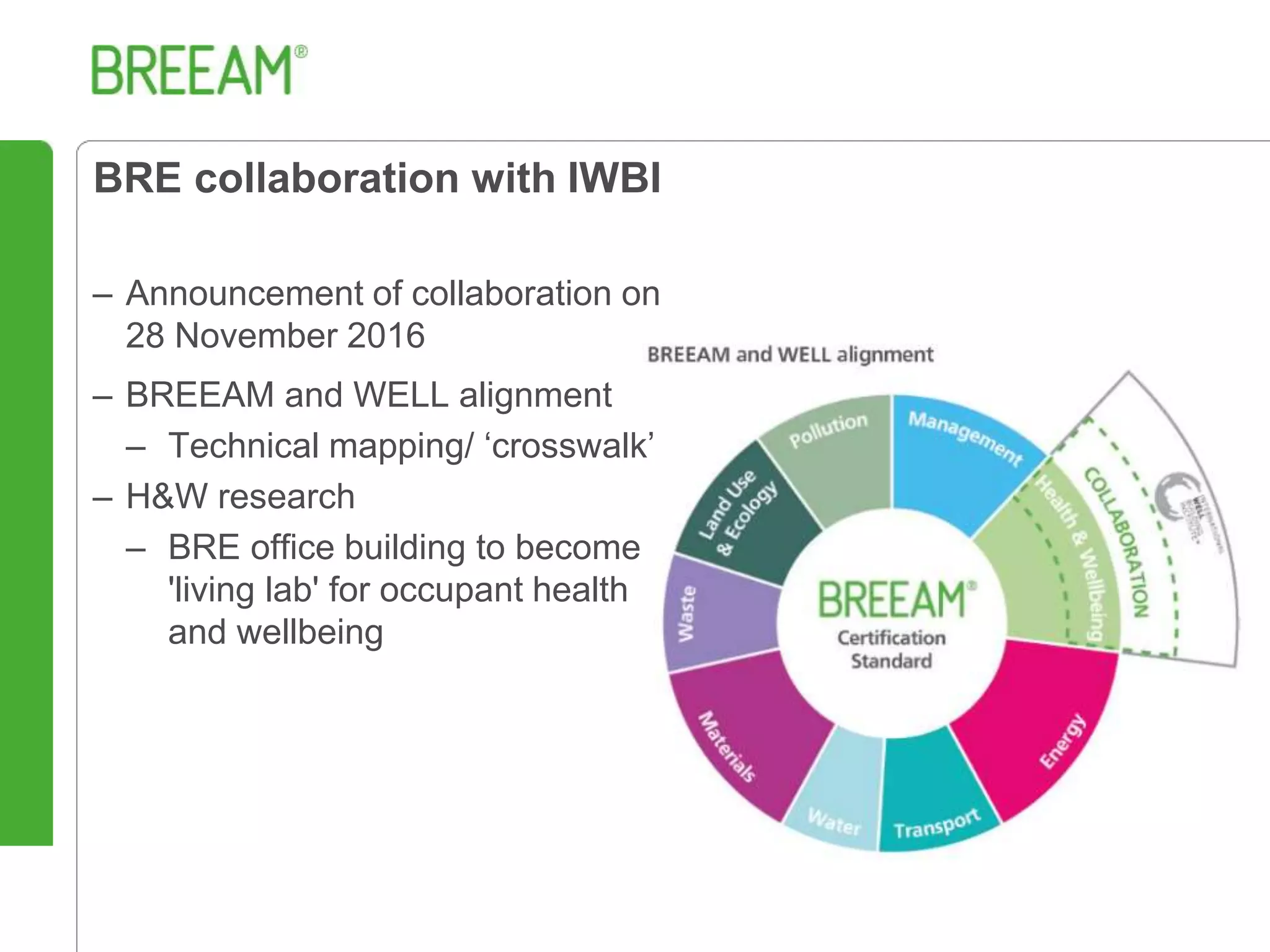
BRE collaboration with IWBI
– Announcement of collaboration on
28 November 2016
– BREEAM and WELL alignment
– Technical mapping/ ‘crosswalk’
– H&W research
– BRE office building to become
'living lab' for occupant health
and wellbeing
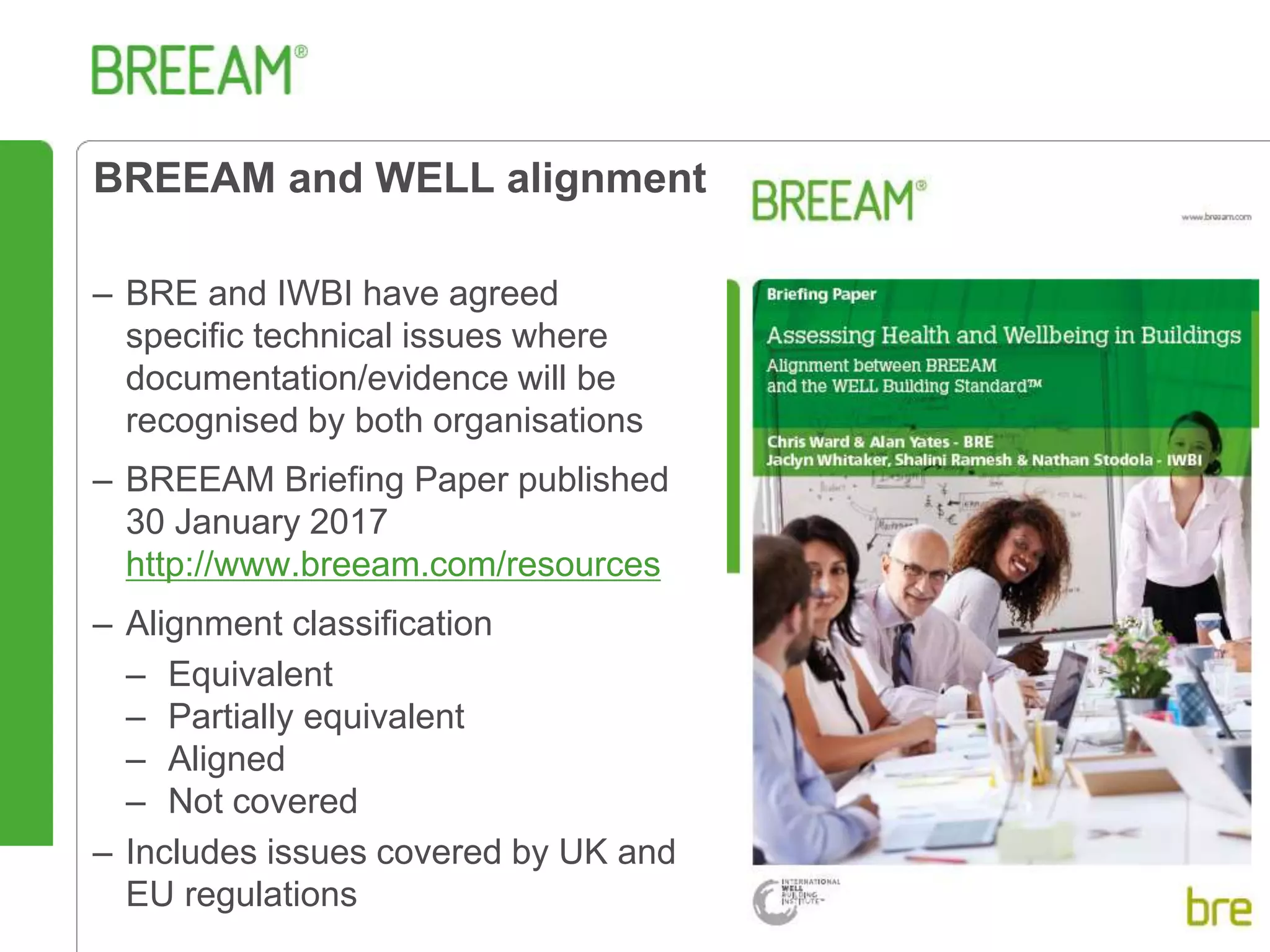
BREEAM and WELL alignment
– BRE and IWBI have agreed
specific technical issues where
documentation/evidence will be
recognised by both organisations
– BREEAM Briefing Paper published
30 January 2017
http://www.breeam.com/resources
– Alignment classification
– Equivalent
– Partially equivalent
– Aligned
– Not covered
– Includes issues covered by UK and
EU regulations
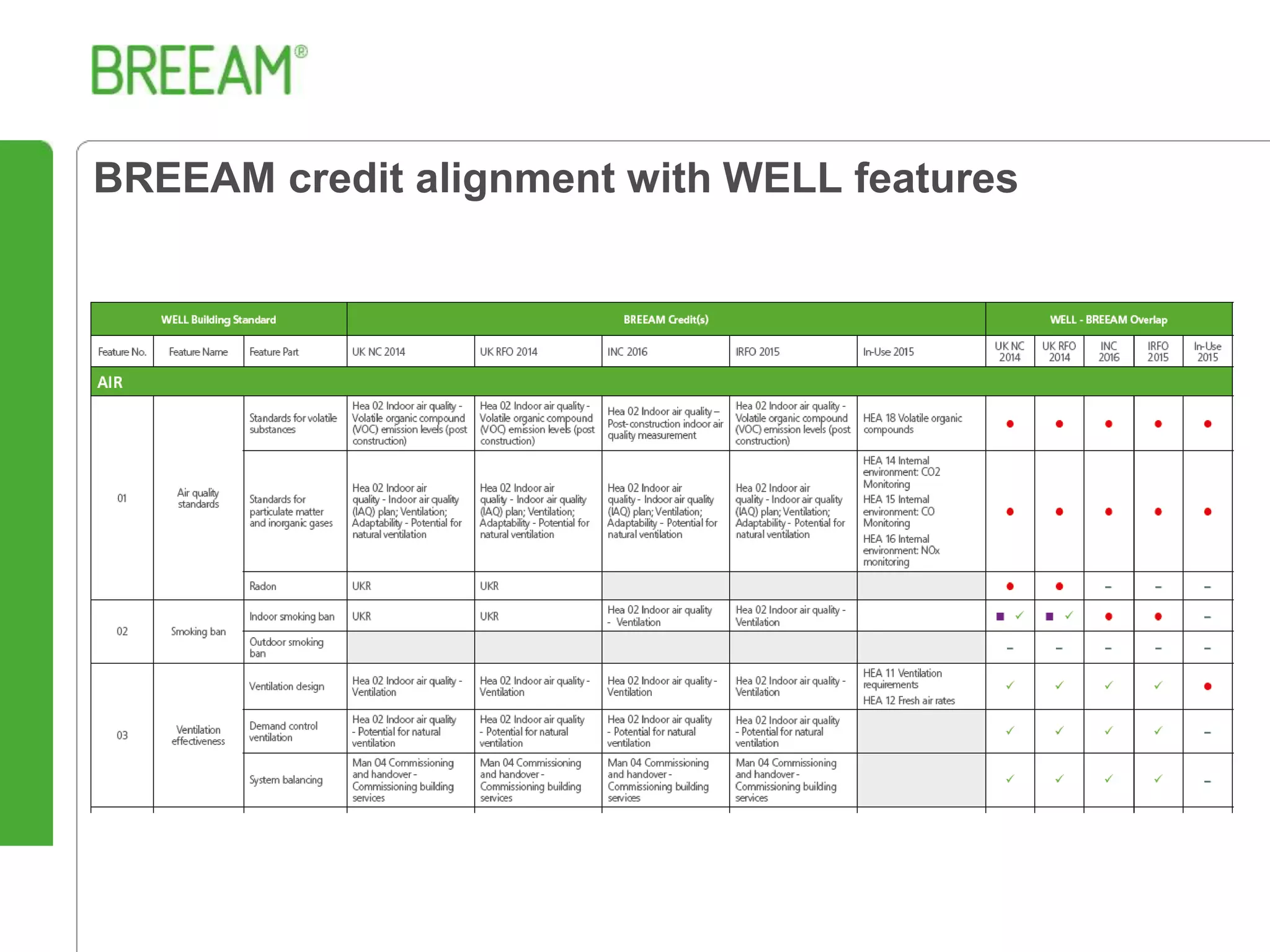
BREEAM credit alignment with WELL features
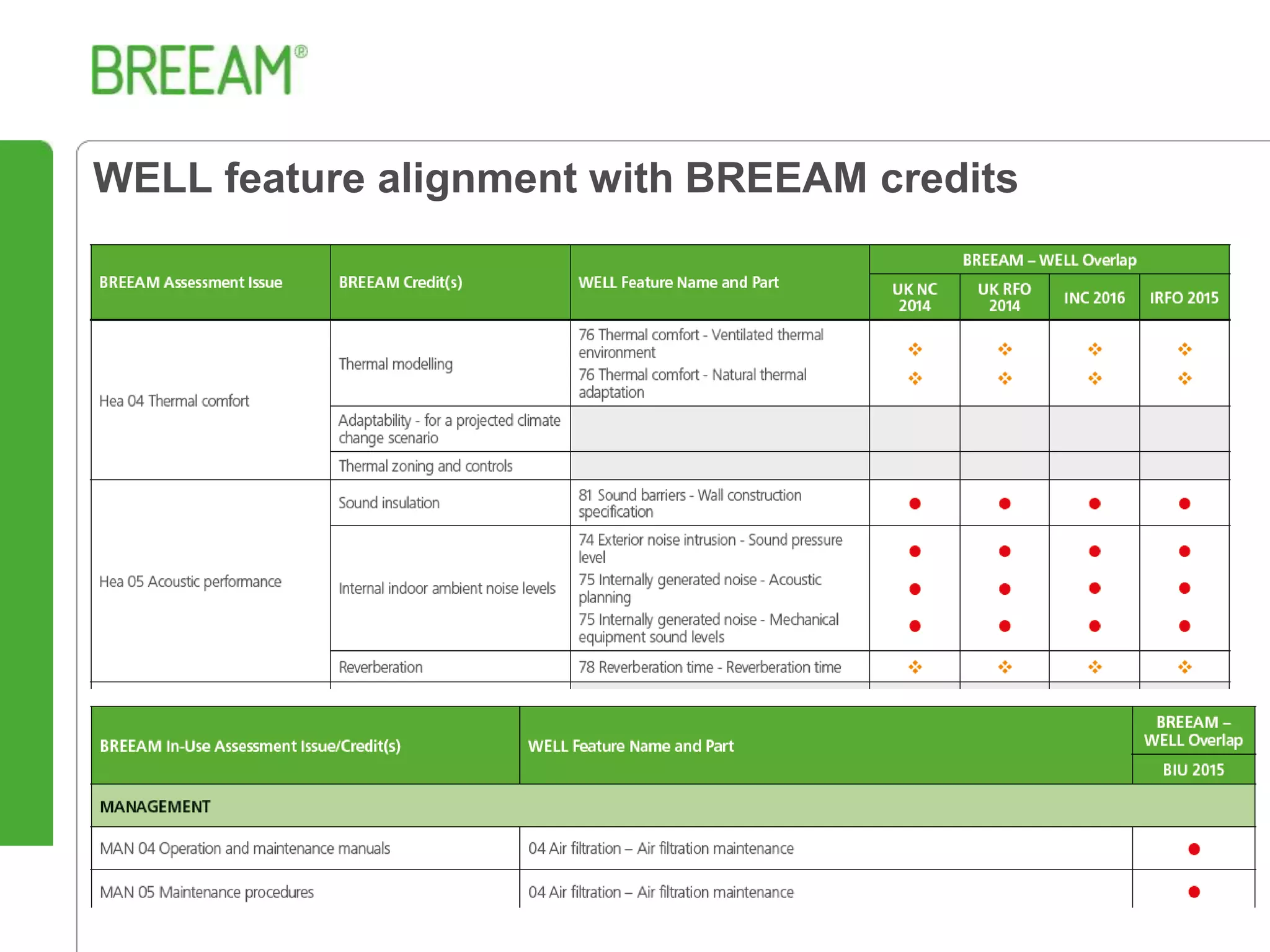
WELL feature alignment with BREEAM credits
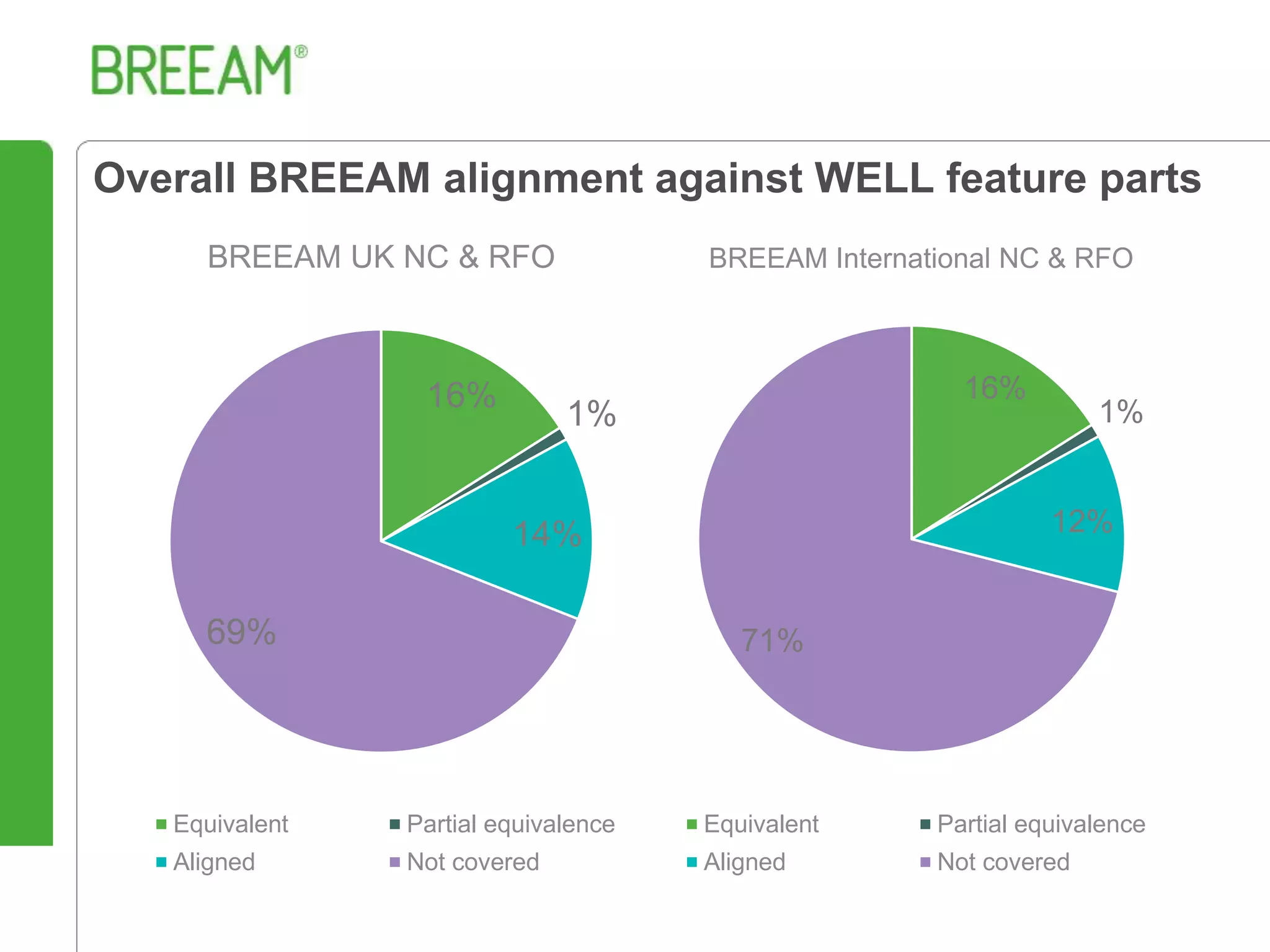
Overall BREEAM alignment against WELL feature parts
16%
1%
14%
69%
BREEAM UK NC & RFO
Equivalent Partial equivalence
Aligned Not covered
16%
1%
12%
71%
BREEAM International NC & RFO
Equivalent Partial equivalence
Aligned Not covered
Overall BREEAM alignment against WELL feature parts
11%
1%
18%
70%
BREEAM In-Use
Equivalent Partial equivalence
Aligned Not covered
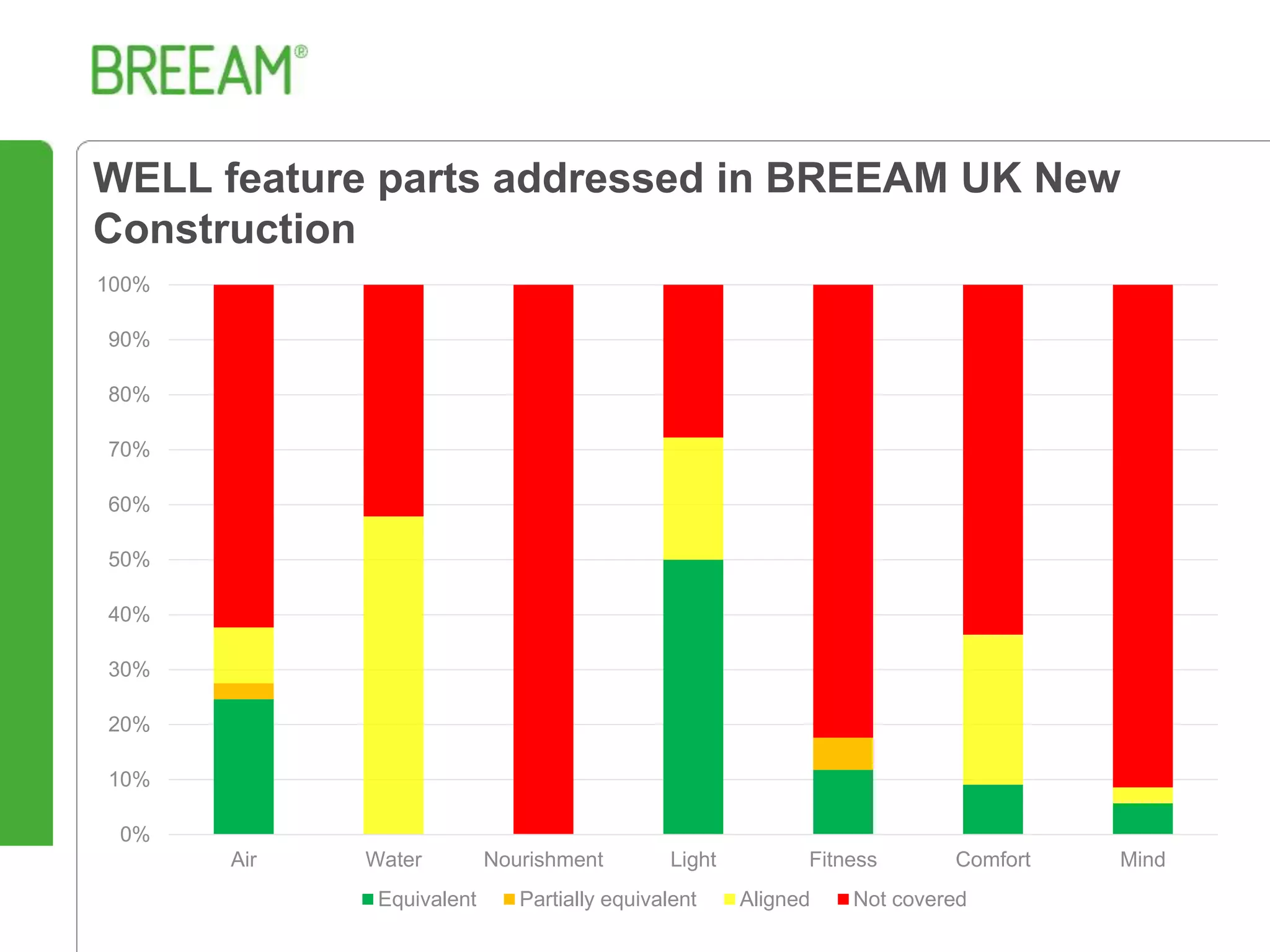
WELL feature parts addressed in BREEAM UK New
Construction
0%
10%
20%
30%
40%
50%
60%
70%
80%
90%
100%
Air Water Nourishment Light Fitness Comfort Mind
Equivalent Partially equivalent Aligned Not covered
WELL feature parts addressed in BREEAM International
New Construction
0%
10%
20%
30%
40%
50%
60%
70%
80%
90%
100%
Air Water Nourishment Light Fitness Comfort Mind
Equivalent Partially equivalent Aligned Not covered
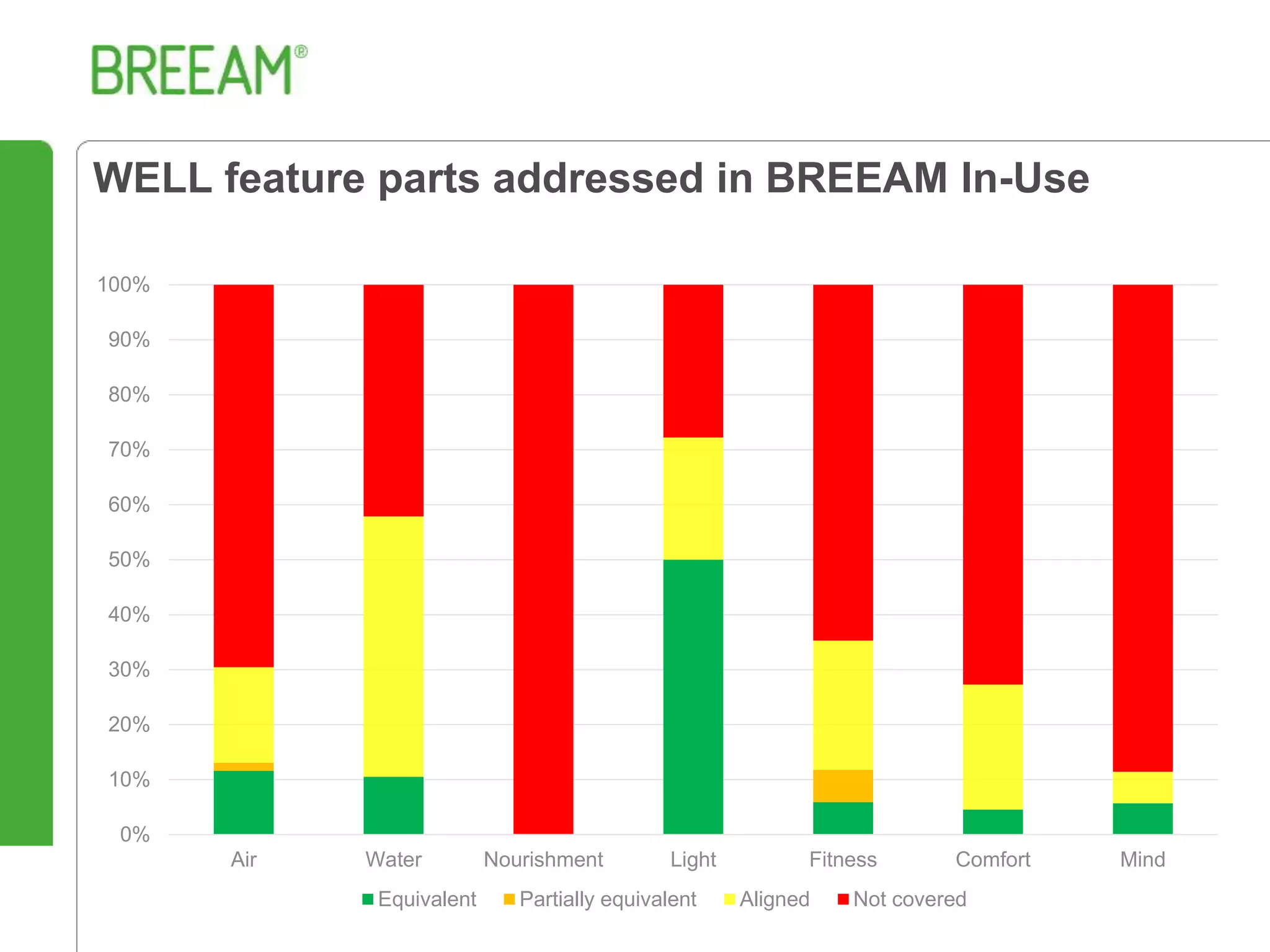
WELL feature parts addressed in BREEAM In-Use
0%
10%
20%
30%
40%
50%
60%
70%
80%
90%
100%
Air Water Nourishment Light Fitness Comfort Mind
Equivalent Partially equivalent Aligned Not covered
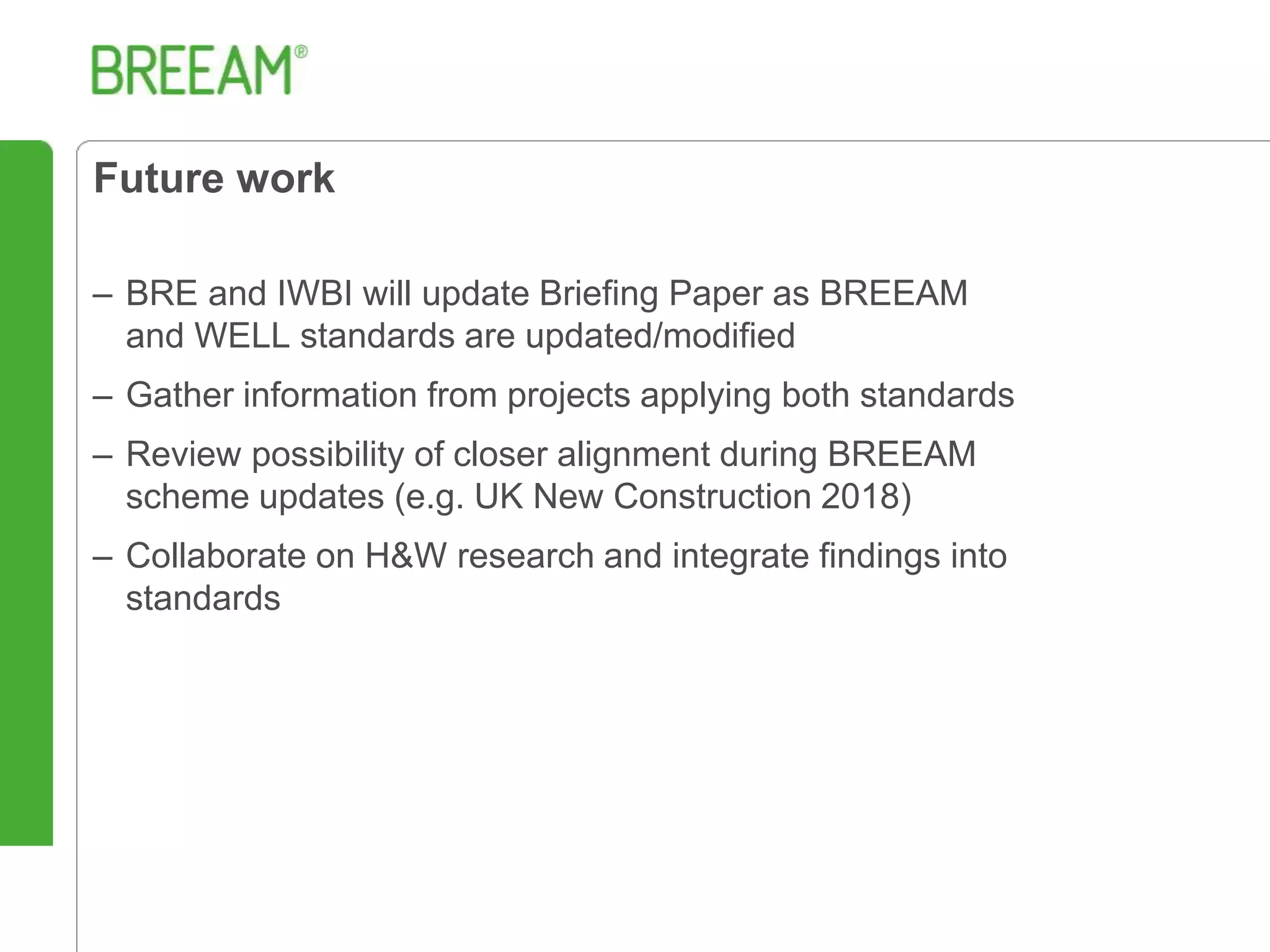
Future work
– BRE and IWBI will update Briefing Paper as BREEAM
and WELL standards are updated/modified
– Gather information from projects applying both standards
– Review possibility of closer alignment during BREEAM
scheme updates (e.g. UK New Construction 2018)
– Collaborate on H&W research and integrate findings into
standards
Questions?
BREEAM Briefing Papers:
www.breeam.com/resources
Email: Christopher.Ward@bre.co.uk

BREEAM & WELL Buildings Standard, Chris Ward, BREEAM

  • 1.
    Part of theBRE Trust Alignment between BREEAM and The WELL Building StandardTM Dr Chris Ward, Principal Consultant, BRE CE Sustainability Theme Group – Healthy Buildings & Wellness 31 January 2017
  • 2.
    BREEAM overview – World’sfirst sustainability rating scheme for the built environment – Over 2.25 million registered buildings – Over 550,000 certified buildings – Applied in 78 countries – Pushes performance beyond regulatory minima/ standard practice – Based on robust science and evidence – Holistic assessment of sustainability issues
  • 3.
    BREEAM assessment categories innovation transportland use & ecology materials management water energy waste health & wellbeing pollution
  • 4.
    BREEAM life cyclestages & buildings schemes – BREEAM UK New Construction 2014 – BREEAM International New Construction 2016 – BREEAM UK Refurbishment & Fit-out 2014 – BREEAM International Refurbishment & Fit-out 2015 – BREEAM In-Use International 2015
  • 5.
    WELL Building StandardTM(WELL) – Launched in late 2014 by Delos – Operated by International WELL Building InstituteTM (IWBITM) – Certification through Green Business Certification Inc (GBCI) – “WELL is the first building standard to focus exclusively on the health and wellness of the people in buildings. WELL is a performance-based system for measuring and certifying features of buildings that impact human health and well-being, through air, water, nourishment, light, fitness, comfort and mind.” – Certification after post-occupancy ‘Performance Verification’
  • 6.
    Health & Wellbeingin BREEAM – Integral part of BREEAM schemes since 1990 – 2 recent BREEAM Briefing Papers on the subject 1. Health and Wellbeing in BREEAM – Indoor environment – Ecology and outdoor space – Active/healthy lifestyle – Safety and security – H&W of users in surrounding areas (Pollution) – Management/Consultation/Handover 2. Health and Wellbeing Strategy – Health and safety in the construction process – Occupant health and wellbeing – Neighbour health and wellbeing – Free downloads: http://www.breeam.com/resources
  • 7.
    BRE collaboration withIWBI – Announcement of collaboration on 28 November 2016 – BREEAM and WELL alignment – Technical mapping/ ‘crosswalk’ – H&W research – BRE office building to become 'living lab' for occupant health and wellbeing
  • 8.
    BREEAM and WELLalignment – BRE and IWBI have agreed specific technical issues where documentation/evidence will be recognised by both organisations – BREEAM Briefing Paper published 30 January 2017 http://www.breeam.com/resources – Alignment classification – Equivalent – Partially equivalent – Aligned – Not covered – Includes issues covered by UK and EU regulations
  • 9.
    BREEAM credit alignmentwith WELL features
  • 10.
    WELL feature alignmentwith BREEAM credits
  • 11.
    Overall BREEAM alignmentagainst WELL feature parts 16% 1% 14% 69% BREEAM UK NC & RFO Equivalent Partial equivalence Aligned Not covered 16% 1% 12% 71% BREEAM International NC & RFO Equivalent Partial equivalence Aligned Not covered
  • 12.
    Overall BREEAM alignmentagainst WELL feature parts 11% 1% 18% 70% BREEAM In-Use Equivalent Partial equivalence Aligned Not covered
  • 13.
    WELL feature partsaddressed in BREEAM UK New Construction 0% 10% 20% 30% 40% 50% 60% 70% 80% 90% 100% Air Water Nourishment Light Fitness Comfort Mind Equivalent Partially equivalent Aligned Not covered
  • 14.
    WELL feature partsaddressed in BREEAM International New Construction 0% 10% 20% 30% 40% 50% 60% 70% 80% 90% 100% Air Water Nourishment Light Fitness Comfort Mind Equivalent Partially equivalent Aligned Not covered
  • 15.
    WELL feature partsaddressed in BREEAM In-Use 0% 10% 20% 30% 40% 50% 60% 70% 80% 90% 100% Air Water Nourishment Light Fitness Comfort Mind Equivalent Partially equivalent Aligned Not covered
  • 16.
    Future work – BREand IWBI will update Briefing Paper as BREEAM and WELL standards are updated/modified – Gather information from projects applying both standards – Review possibility of closer alignment during BREEAM scheme updates (e.g. UK New Construction 2018) – Collaborate on H&W research and integrate findings into standards
  • 17.