Climate Change Expert Group www.oecd.org/env/cc/ccxg.htm
Tracking the use, impact and
estimated results of support
received
Co-facilitators: Diann Black-Layne, Tomonori Sudo
CCXG Global Forum on the Environment and Climate Change
13 September 2016
2 Climate Change Expert Group
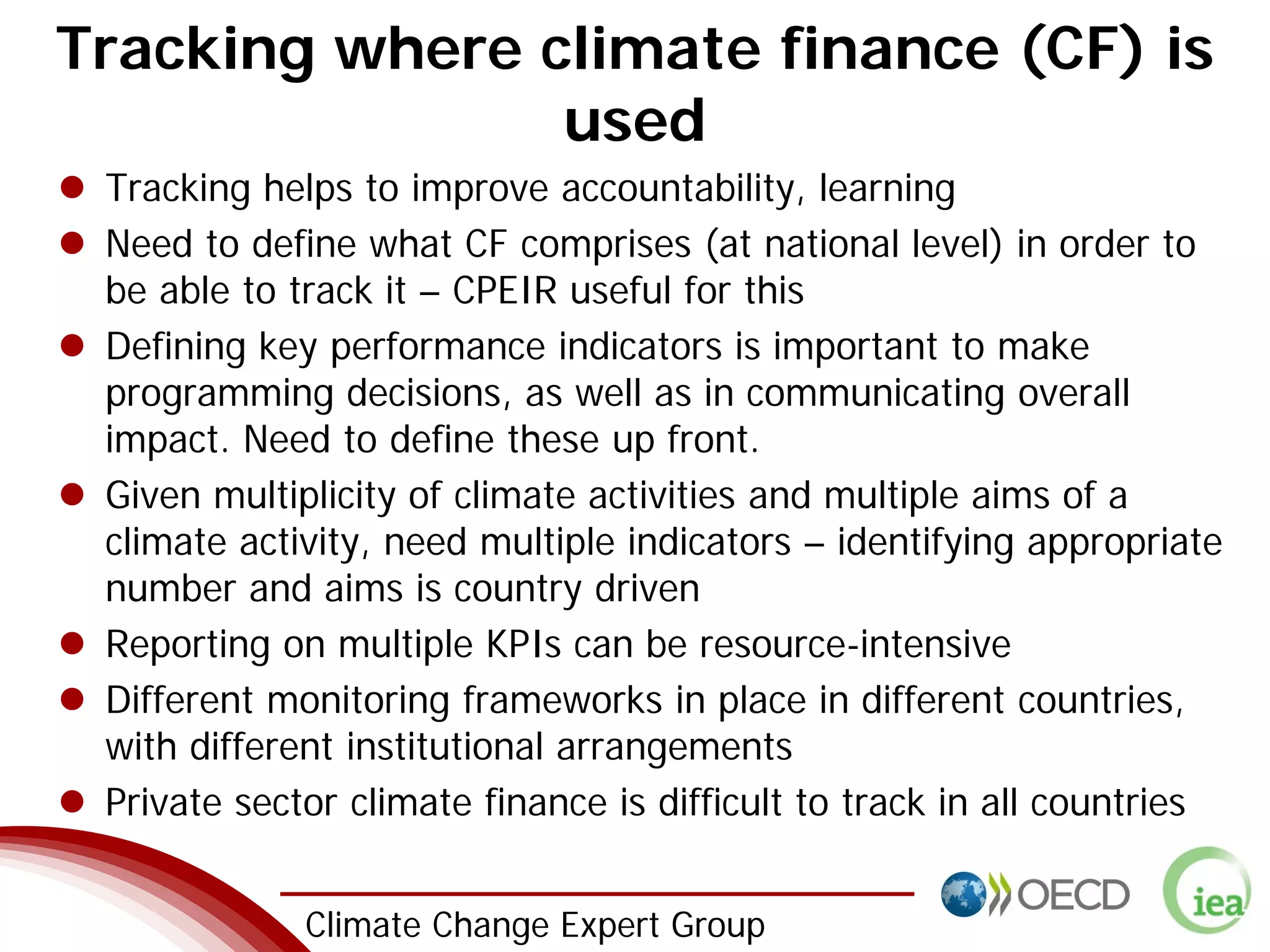
Tracking where climate finance (CF) is
used
 Tracking helps to improve accountability, learning
 Need to define what CF comprises (at national level) in order to
be able to track it – CPEIR useful for this
 Defining key performance indicators is important to make
programming decisions, as well as in communicating overall
impact. Need to define these up front.
 Given multiplicity of climate activities and multiple aims of a
climate activity, need multiple indicators – identifying appropriate
number and aims is country driven
 Reporting on multiple KPIs can be resource-intensive
 Different monitoring frameworks in place in different countries,
with different institutional arrangements
 Private sector climate finance is difficult to track in all countries
3 Climate Change Expert Group
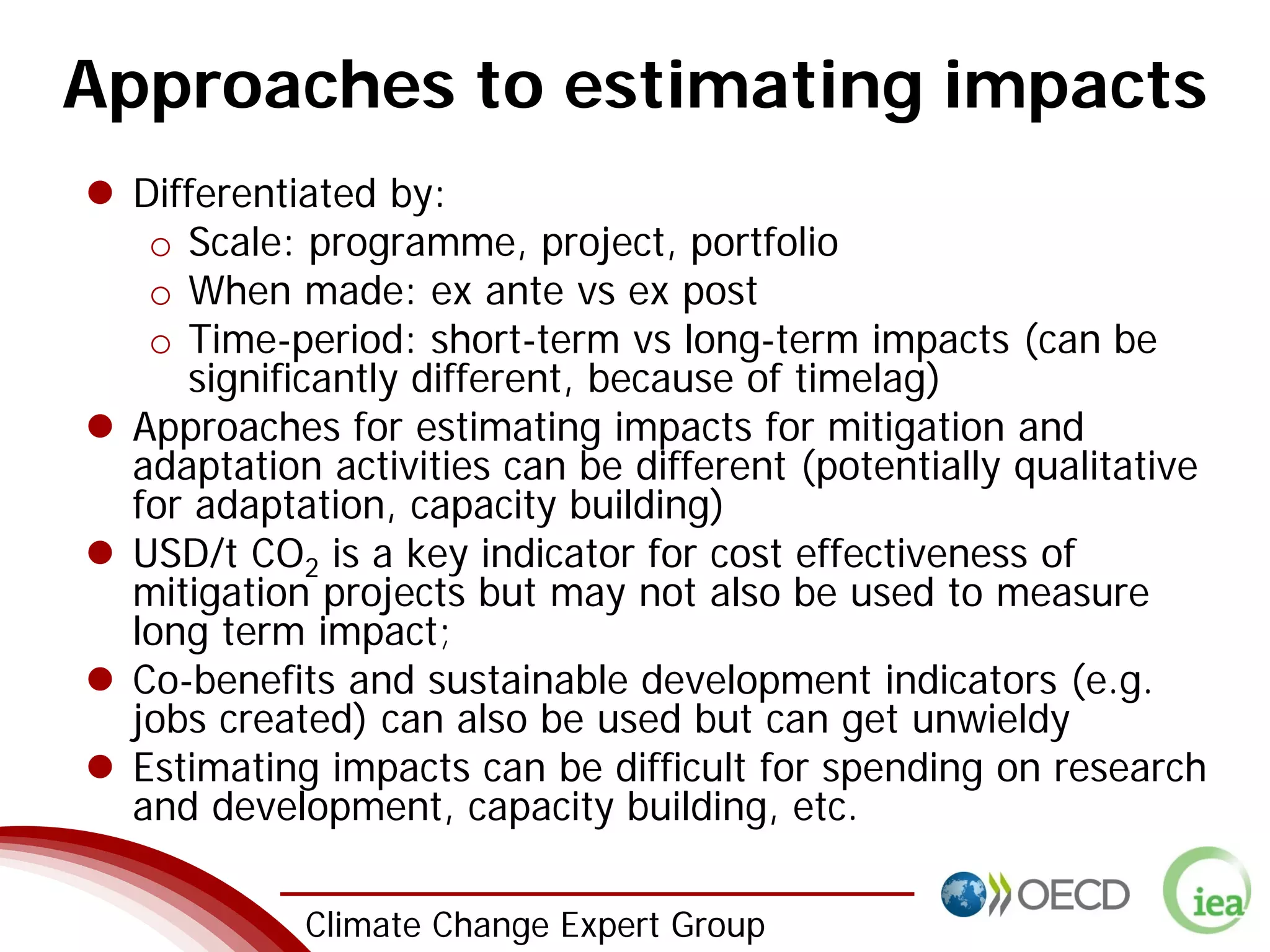
Approaches to estimating impacts
 Differentiated by:
o Scale: programme, project, portfolio
o When made: ex ante vs ex post
o Time-period: short-term vs long-term impacts (can be
significantly different, because of timelag)
 Approaches for estimating impacts for mitigation and
adaptation activities can be different (potentially qualitative
for adaptation, capacity building)
 USD/t CO2 is a key indicator for cost effectiveness of
mitigation projects but may not also be used to measure
long term impact;
 Co-benefits and sustainable development indicators (e.g.
jobs created) can also be used but can get unwieldy
 Estimating impacts can be difficult for spending on research
and development, capacity building, etc.
4 Climate Change Expert Group
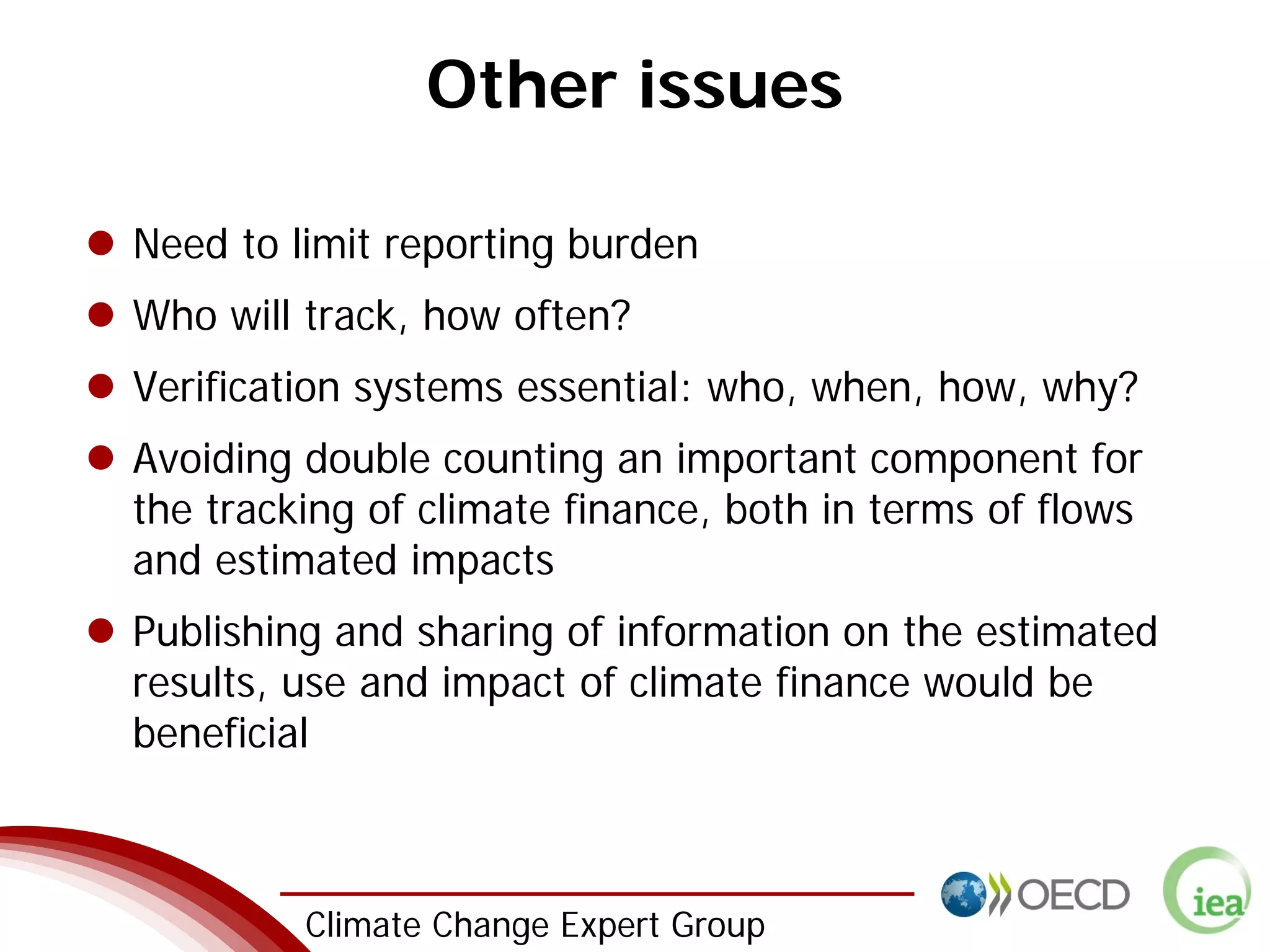
Other issues
 Need to limit reporting burden
 Who will track, how often?
 Verification systems essential: who, when, how, why?
 Avoiding double counting an important component for
the tracking of climate finance, both in terms of flows
and estimated impacts
 Publishing and sharing of information on the estimated
results, use and impact of climate finance would be
beneficial

Breakout B summary slides CCXG GF September 2016

  • 1.
    Climate Change ExpertGroup www.oecd.org/env/cc/ccxg.htm Tracking the use, impact and estimated results of support received Co-facilitators: Diann Black-Layne, Tomonori Sudo CCXG Global Forum on the Environment and Climate Change 13 September 2016
  • 2.
    2 Climate ChangeExpert Group Tracking where climate finance (CF) is used  Tracking helps to improve accountability, learning  Need to define what CF comprises (at national level) in order to be able to track it – CPEIR useful for this  Defining key performance indicators is important to make programming decisions, as well as in communicating overall impact. Need to define these up front.  Given multiplicity of climate activities and multiple aims of a climate activity, need multiple indicators – identifying appropriate number and aims is country driven  Reporting on multiple KPIs can be resource-intensive  Different monitoring frameworks in place in different countries, with different institutional arrangements  Private sector climate finance is difficult to track in all countries
  • 3.
    3 Climate ChangeExpert Group Approaches to estimating impacts  Differentiated by: o Scale: programme, project, portfolio o When made: ex ante vs ex post o Time-period: short-term vs long-term impacts (can be significantly different, because of timelag)  Approaches for estimating impacts for mitigation and adaptation activities can be different (potentially qualitative for adaptation, capacity building)  USD/t CO2 is a key indicator for cost effectiveness of mitigation projects but may not also be used to measure long term impact;  Co-benefits and sustainable development indicators (e.g. jobs created) can also be used but can get unwieldy  Estimating impacts can be difficult for spending on research and development, capacity building, etc.
  • 4.
    4 Climate ChangeExpert Group Other issues  Need to limit reporting burden  Who will track, how often?  Verification systems essential: who, when, how, why?  Avoiding double counting an important component for the tracking of climate finance, both in terms of flows and estimated impacts  Publishing and sharing of information on the estimated results, use and impact of climate finance would be beneficial