BRAINSTORMING
SHAIKH M. AMEER
M. COM (B.M), SEM 3
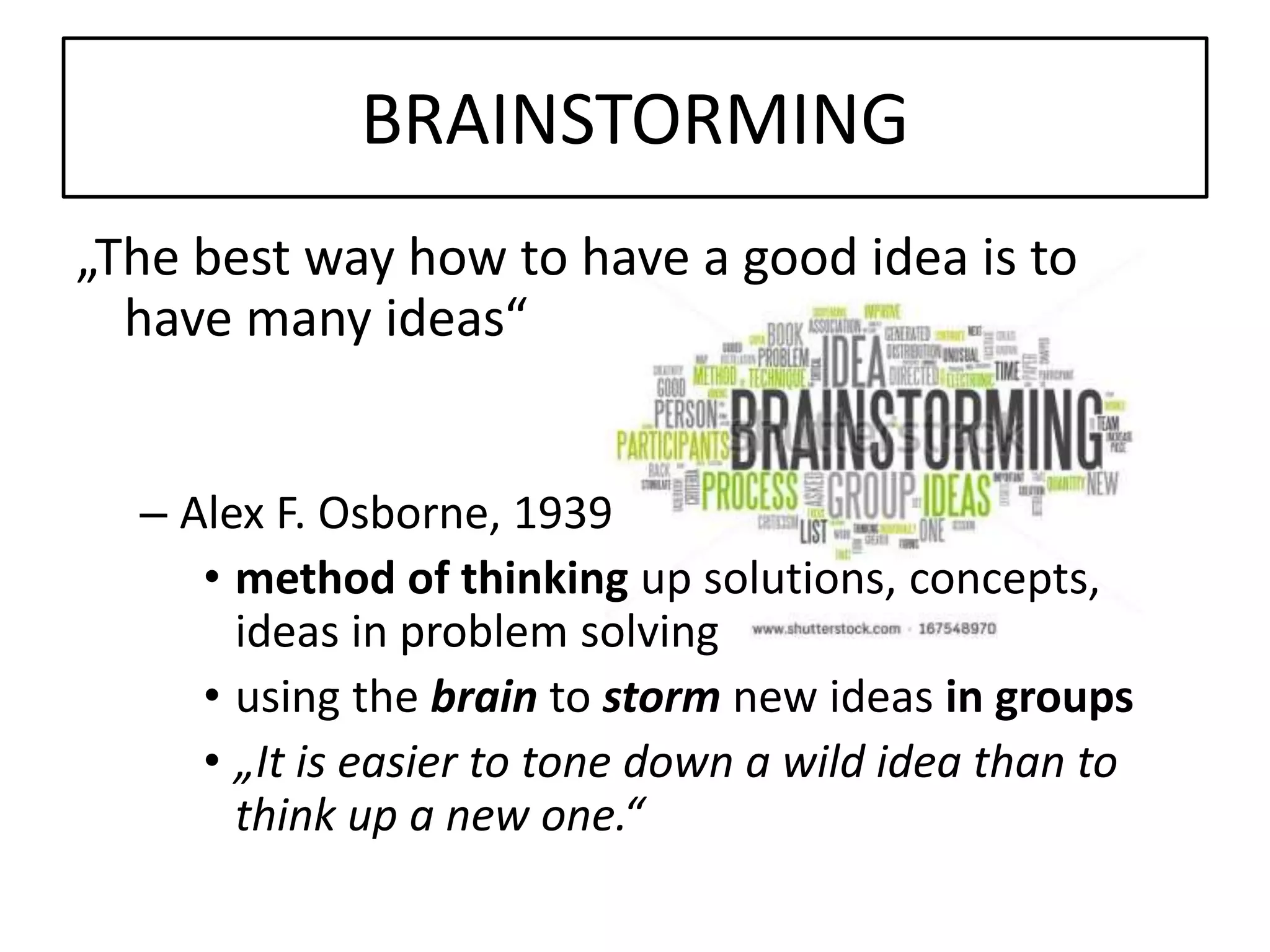
BRAINSTORMING
„The best way how to have a good idea is to
have many ideas“
– Alex F. Osborne, 1939
• method of thinking up solutions, concepts,
ideas in problem solving
• using the brain to storm new ideas in groups
• „It is easier to tone down a wild idea than to
think up a new one.“
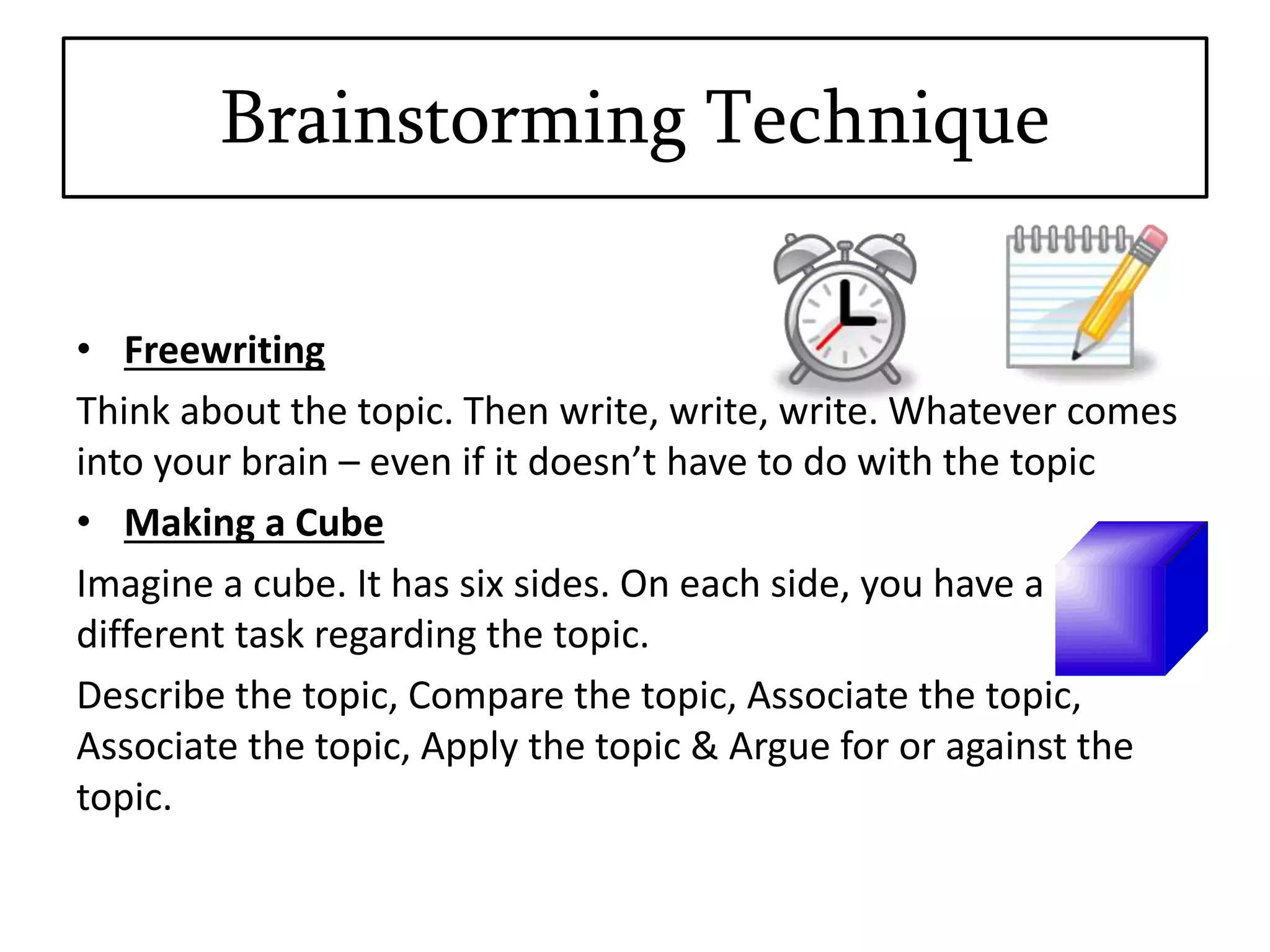
Brainstorming Technique
• Freewriting
Think about the topic. Then write, write, write. Whatever comes
into your brain – even if it doesn’t have to do with the topic
• Making a Cube
Imagine a cube. It has six sides. On each side, you have a
different task regarding the topic.
Describe the topic, Compare the topic, Associate the topic,
Associate the topic, Apply the topic & Argue for or against the
topic.
• Clustering
When you write down words or concepts associated with the
topic – any ideas that come into your mind.
• Listing or Bulleting
Create a list of terms/ideas/concepts about the topic. Create
multiple lists depending on the purpose.
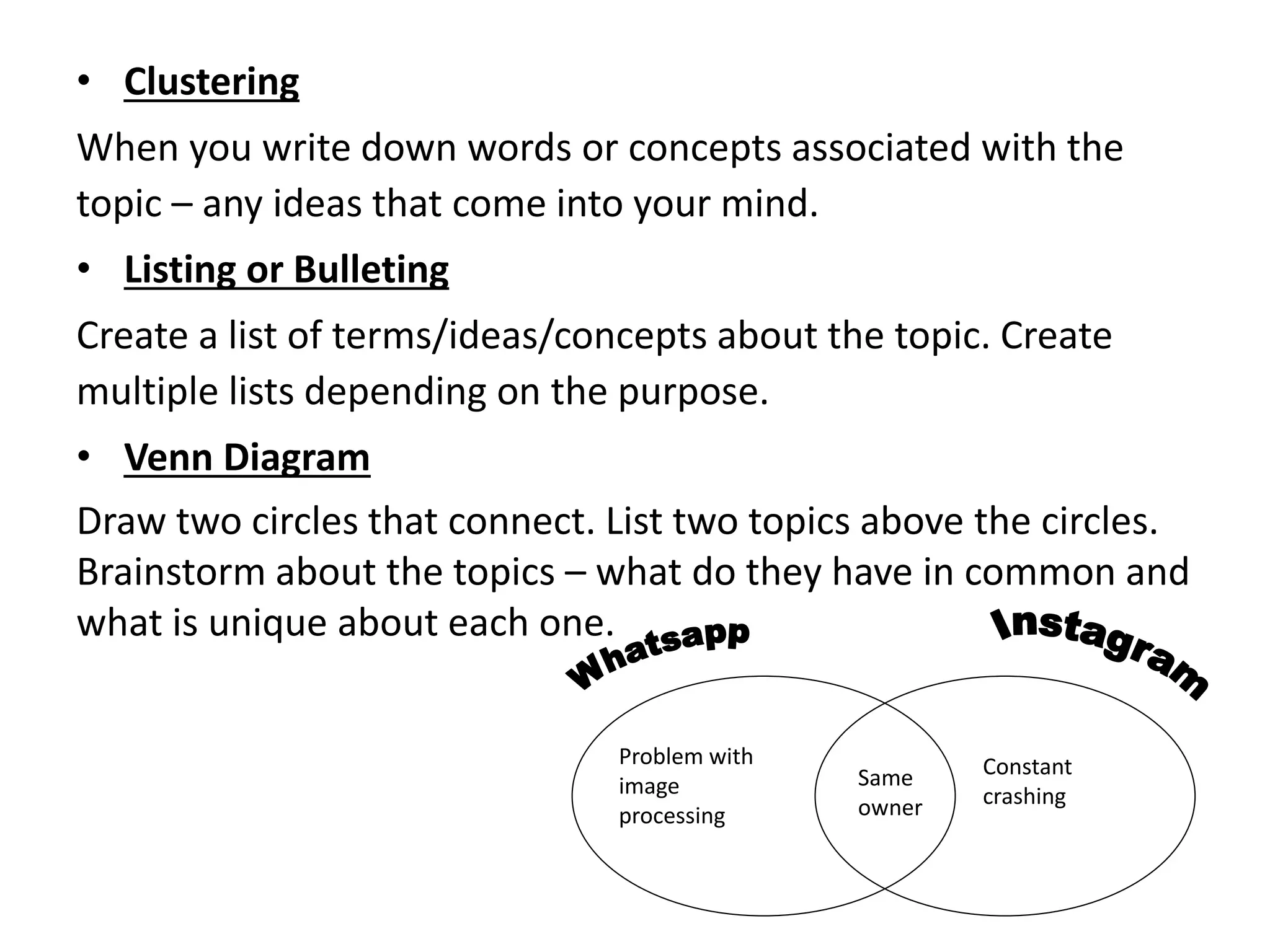
• Venn Diagram
Draw two circles that connect. List two topics above the circles.
Brainstorm about the topics – what do they have in common and
what is unique about each one.
Same
owner
Problem with
image
processing
Constant
crashing
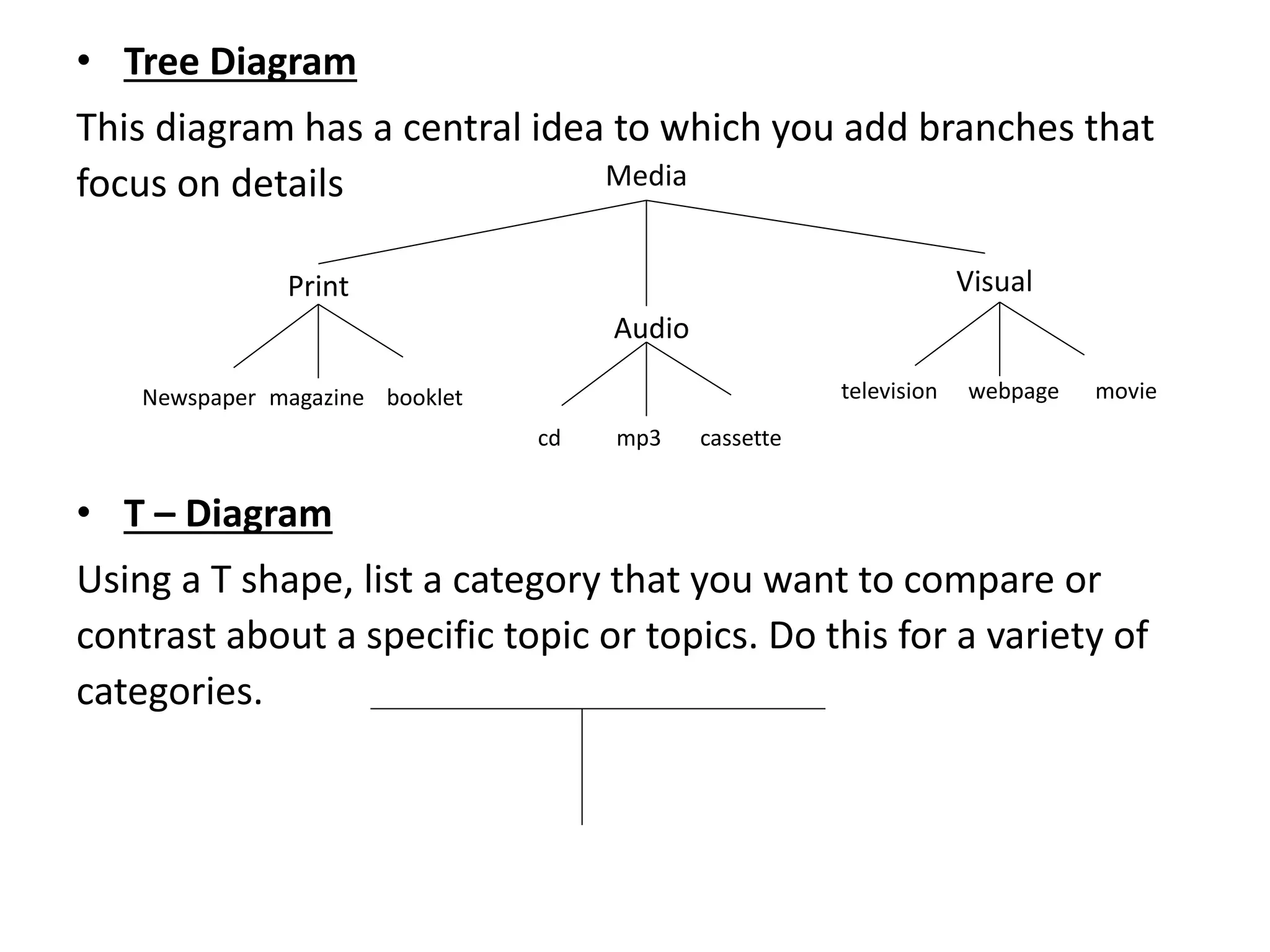
• Tree Diagram
This diagram has a central idea to which you add branches that
focus on details
• T – Diagram
Using a T shape, list a category that you want to compare or
contrast about a specific topic or topics. Do this for a variety of
categories.
Media
Print
Audio
Visual
Newspaper magazine booklet
cd mp3 cassette
television webpage movie
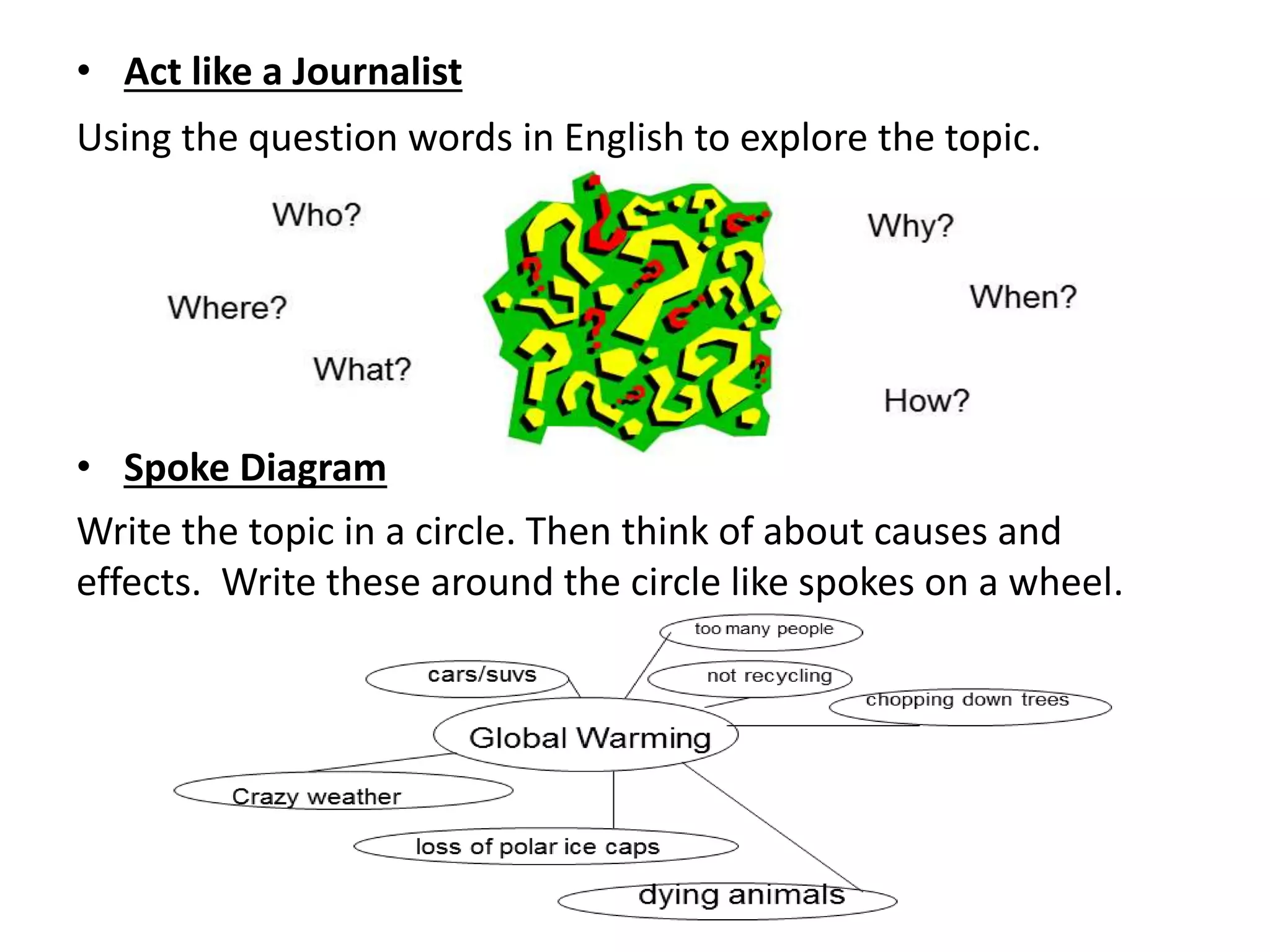
• Act like a Journalist
Using the question words in English to explore the topic.
• Spoke Diagram
Write the topic in a circle. Then think of about causes and
effects. Write these around the circle like spokes on a wheel.
Variations
• Nominal group technique
• Group passing technique
• Team idea mapping method
• Directed brainstorming
• Guided brainstorming
• Individual brainstorming
• Question brainstorming
Challenges to effective group brainstorming
• Blocking
• Collaborative fixation
• Evaluation apprehension
• Free-riding
• Personality characteristics
• Social matching, etc.

Brainstorming

  • 1.
  • 2.
    BRAINSTORMING „The best wayhow to have a good idea is to have many ideas“ – Alex F. Osborne, 1939 • method of thinking up solutions, concepts, ideas in problem solving • using the brain to storm new ideas in groups • „It is easier to tone down a wild idea than to think up a new one.“
  • 3.
    Brainstorming Technique • Freewriting Thinkabout the topic. Then write, write, write. Whatever comes into your brain – even if it doesn’t have to do with the topic • Making a Cube Imagine a cube. It has six sides. On each side, you have a different task regarding the topic. Describe the topic, Compare the topic, Associate the topic, Associate the topic, Apply the topic & Argue for or against the topic.
  • 4.
    • Clustering When youwrite down words or concepts associated with the topic – any ideas that come into your mind. • Listing or Bulleting Create a list of terms/ideas/concepts about the topic. Create multiple lists depending on the purpose. • Venn Diagram Draw two circles that connect. List two topics above the circles. Brainstorm about the topics – what do they have in common and what is unique about each one. Same owner Problem with image processing Constant crashing
  • 5.
    • Tree Diagram Thisdiagram has a central idea to which you add branches that focus on details • T – Diagram Using a T shape, list a category that you want to compare or contrast about a specific topic or topics. Do this for a variety of categories. Media Print Audio Visual Newspaper magazine booklet cd mp3 cassette television webpage movie
  • 6.
    • Act likea Journalist Using the question words in English to explore the topic. • Spoke Diagram Write the topic in a circle. Then think of about causes and effects. Write these around the circle like spokes on a wheel.
  • 7.
    Variations • Nominal grouptechnique • Group passing technique • Team idea mapping method • Directed brainstorming • Guided brainstorming • Individual brainstorming • Question brainstorming
  • 8.
    Challenges to effectivegroup brainstorming • Blocking • Collaborative fixation • Evaluation apprehension • Free-riding • Personality characteristics • Social matching, etc.