Understanding Stroke It’s A Brain Attack!
Be Stroke Smart The 3 R’s of Stroke Reduce  Risk for Stroke Recognize  Symptoms of a Stroke Respond  - Call 911 when you see someone having a stroke
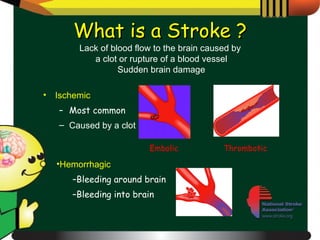
Lack of blood flow to the brain caused by  a clot or rupture of a blood vessel Sudden brain damage Ischemic Most common Caused by a clot What is a Stroke ? Embolic Thrombotic Hemorrhagic Bleeding around brain Bleeding into brain
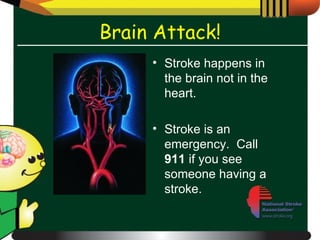
Stroke happens in the brain not in the heart. Stroke is an emergency.  Call  911  if you see someone having a stroke. Brain Attack!
Famous People  Who Had Strokes Charles Dickens Author of “A Christmas Carol” Kirk Douglas Actor President Ford  President 1974-1977   Luther Vandross Singer Della Reese Actress Charles Schultz Creator of Charlie Brown Dick Clark Host of Rockin’ New Years Eve Ted Williams Boston Red Sox Baseball player
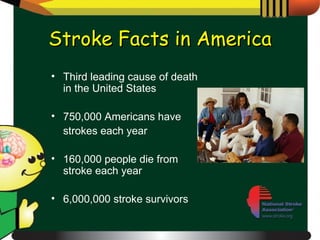
Third leading cause of death in the United States 750,000 Americans have strokes each year 160,000 people die from stroke each year 6,000,000 stroke survivors Stroke Facts in America
Stroke is preventable Stroke can disable adults Every 45 seconds, someone has a stroke Stroke Facts in America
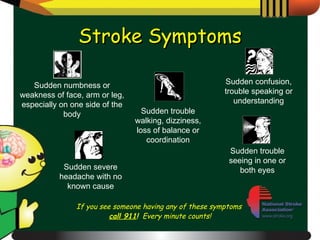
Stroke Symptoms If you see someone having any of these symptoms  call 911 !   Every minute counts! Sudden numbness or weakness of face, arm or leg, especially on one side of the body Sudden confusion, trouble speaking or understanding Sudden trouble seeing in one or both eyes Sudden trouble walking, dizziness, loss of balance or coordination Sudden severe headache with no known cause
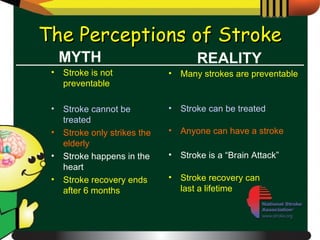
The Perceptions of Stroke Stroke is not preventable Stroke cannot be treated Stroke only strikes the elderly Stroke happens in the heart Stroke recovery ends after 6 months Many strokes are preventable Stroke can be treated Anyone can have a stroke Stroke is a “Brain Attack” Stroke recovery can  last a lifetime MYTH REALITY
Many strokes  are preventable! NSA developed these guidelines to help YOU and YOUR FAMILY reduce YOUR risk for stroke...
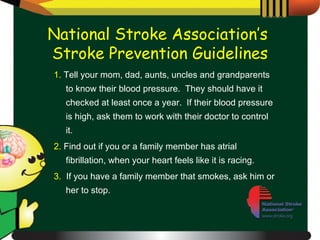
1.  Tell your mom, dad, aunts, uncles and grandparents to know their blood pressure.  They should have it checked at least once a year.  If their blood pressure is high, ask them to work with their doctor to control it. 2.  Find out if you or a family member has atrial fibrillation, when your heart feels like it is racing. 3.   If you have a family member that smokes, ask him or her to stop. National Stroke Association’s  Stroke Prevention Guidelines
4.   If you have a family member that has high cholesterol, ask him or her to work with their doctor to control it. 6.   If you or a family member are diabetic, ask your family member to follow the doctor’s recommendations carefully to control their diabetes. National Stroke Association’s  Stroke Prevention Guidelines   (continued)
7.  Include exercise, like football and cheerleading, in the activities you enjoy in your daily routine. 8.   Enjoy a lower sodium (salt), lower fat diet. 9.   If you experience any stroke symptoms, seek immediate medical attention.  Call 911! National Stroke Association’s  Stroke Prevention Guidelines (continued)
Reduce the Impact of Stroke Stroke is a Brain Attack! Preventable and treatable 3 R’s of Stroke Reduce  Risk Recognize  Stroke Symptoms Respond  immediately by calling 911
Reducing the Incidence and Impact of Stroke Teaching People About Stroke Teaching Doctors and Nurses About Stroke Advancing Stroke Research Teaching Stroke Survivors and the people that take care of them about Stroke National Stroke Association Reducing, Teaching and Advancing Stroke Care
Now go to  www.stroke.org  to find more fun games, contests, and ways to learn about stroke with National Stroke Association

Brainiac Kids Presentation

  • 1.
  • 2.
    Be Stroke SmartThe 3 R’s of Stroke Reduce Risk for Stroke Recognize Symptoms of a Stroke Respond - Call 911 when you see someone having a stroke
  • 3.
    Lack of bloodflow to the brain caused by a clot or rupture of a blood vessel Sudden brain damage Ischemic Most common Caused by a clot What is a Stroke ? Embolic Thrombotic Hemorrhagic Bleeding around brain Bleeding into brain
  • 4.
    Stroke happens inthe brain not in the heart. Stroke is an emergency. Call 911 if you see someone having a stroke. Brain Attack!
  • 5.
    Famous People Who Had Strokes Charles Dickens Author of “A Christmas Carol” Kirk Douglas Actor President Ford President 1974-1977 Luther Vandross Singer Della Reese Actress Charles Schultz Creator of Charlie Brown Dick Clark Host of Rockin’ New Years Eve Ted Williams Boston Red Sox Baseball player
  • 6.
    Third leading causeof death in the United States 750,000 Americans have strokes each year 160,000 people die from stroke each year 6,000,000 stroke survivors Stroke Facts in America
  • 7.
    Stroke is preventableStroke can disable adults Every 45 seconds, someone has a stroke Stroke Facts in America
  • 8.
    Stroke Symptoms Ifyou see someone having any of these symptoms call 911 ! Every minute counts! Sudden numbness or weakness of face, arm or leg, especially on one side of the body Sudden confusion, trouble speaking or understanding Sudden trouble seeing in one or both eyes Sudden trouble walking, dizziness, loss of balance or coordination Sudden severe headache with no known cause
  • 9.
    The Perceptions ofStroke Stroke is not preventable Stroke cannot be treated Stroke only strikes the elderly Stroke happens in the heart Stroke recovery ends after 6 months Many strokes are preventable Stroke can be treated Anyone can have a stroke Stroke is a “Brain Attack” Stroke recovery can last a lifetime MYTH REALITY
  • 10.
    Many strokes are preventable! NSA developed these guidelines to help YOU and YOUR FAMILY reduce YOUR risk for stroke...
  • 11.
    1. Tellyour mom, dad, aunts, uncles and grandparents to know their blood pressure. They should have it checked at least once a year. If their blood pressure is high, ask them to work with their doctor to control it. 2. Find out if you or a family member has atrial fibrillation, when your heart feels like it is racing. 3. If you have a family member that smokes, ask him or her to stop. National Stroke Association’s Stroke Prevention Guidelines
  • 12.
    4. If you have a family member that has high cholesterol, ask him or her to work with their doctor to control it. 6. If you or a family member are diabetic, ask your family member to follow the doctor’s recommendations carefully to control their diabetes. National Stroke Association’s Stroke Prevention Guidelines (continued)
  • 13.
    7. Includeexercise, like football and cheerleading, in the activities you enjoy in your daily routine. 8. Enjoy a lower sodium (salt), lower fat diet. 9. If you experience any stroke symptoms, seek immediate medical attention. Call 911! National Stroke Association’s Stroke Prevention Guidelines (continued)
  • 14.
    Reduce the Impactof Stroke Stroke is a Brain Attack! Preventable and treatable 3 R’s of Stroke Reduce Risk Recognize Stroke Symptoms Respond immediately by calling 911
  • 15.
    Reducing the Incidenceand Impact of Stroke Teaching People About Stroke Teaching Doctors and Nurses About Stroke Advancing Stroke Research Teaching Stroke Survivors and the people that take care of them about Stroke National Stroke Association Reducing, Teaching and Advancing Stroke Care
  • 16.
    Now go to www.stroke.org to find more fun games, contests, and ways to learn about stroke with National Stroke Association

Editor's Notes

  • #2 This presentation contains information on how to Be Stroke Smart: Reduce Risk Recognize Stroke Symptoms Respond by calling 911