BOTOX injection
and
Rehabilitation after BOTOX
Dr. Krati Omar
MPT (Pediatric disorders)
MMIPR, MMDU
Background
• BOTOX or Botulinum toxin A (BoNT-A)
injections are increasingly used to treat
muscle spasticity and are often
complemented by adjunctive rehabilitation
therapies
• Rehabilitation Therapies After Botulinum Toxin-A Injection to Manage Limb Spasticity: A Systematic Review;
Bianca Z. Kinnear et. All; 94;11;1 nov.2014; Pages 1569–1581
Introduction
• BOTOX injection is a metabolic product of the
Gram-positive, spore forming bacterium
Clostridium botulinum
• It is a ubiquitous bacterium, especially present in
soil
Essentials of physical medicine and rehabilitation; musculoskeletal disorders, pain, and rehabilitation; third edition; Walter R. Frontera
et. All; ch. 136; page;723
Introduction
• The latency period to the onset of symptoms
ranges from 4 to 6 hours, but may be up to 14
days in extreme cases
Essentials of physical medicine and rehabilitation; musculoskeletal disorders, pain, and
rehabilitation; third edition; Walter R. Frontera et. All; ch. 136; page;723
Molecular structure
Mechanism of action
• Botulinum toxin acts directly on the
neuromuscular endplate and other cholinergic
synapses, where it inhibits release of the
neurotransmitter acetylcholine, leading to
muscular paralysis of the affected fiber and loss
of target organ function
Illustrated Guide to Aesthetic Botulinum Toxin Injections Basics; Localization; Uses
Mechanism
• The mechanism of action of BOTOX have three
steps:
➢Binding
➢Internalization
➢Intracellular effect on SNARE proteins
Binding
• When the toxin is injected or absorbed from the
gastrointestinal tract, its heavy H-chain initially
binds to specific receptors on the plasma
membrane of the cholinergic nerve endings
• This binding to the presynaptic membrane shows
a high degree of affinity and specificity
Internalization
Neurotoxins
into nerve
cells
Penetration Separation
Internalization
• The neurotoxin is taken up into the nerve cell through
receptor-mediated endocytosis
• The heavy H-chain of the toxin allows the large molecule to
penetrate the cell membrane and the endosome that is
thus formed
• The H-chain separates from the L-chain as the disulfide
bond is broken. This allows the L-chain to enter the
cytoplasm of the neuron.
Intracellular effect on SNARE proteins
• The botulinum toxin light chain acts as a zinc-
dependent endopeptidase with proteolytic activity
• In the cytosol, depending on serotype, it splits a
specific protein of the SNARE complex (soluble N-
ethylmaleimide- sensitive factor attachment receptor),
which is responsible for one step of the exocytosis of
the acetylcholine vesicles.
Preparation of BOTOX
The syringe is held between the index and middle fingers, the thumb is
placed loosely on the plunger and the injection hand is supported with the
little finger. The needle should be inserted gently and in a diagonal direction
to the skin surface.
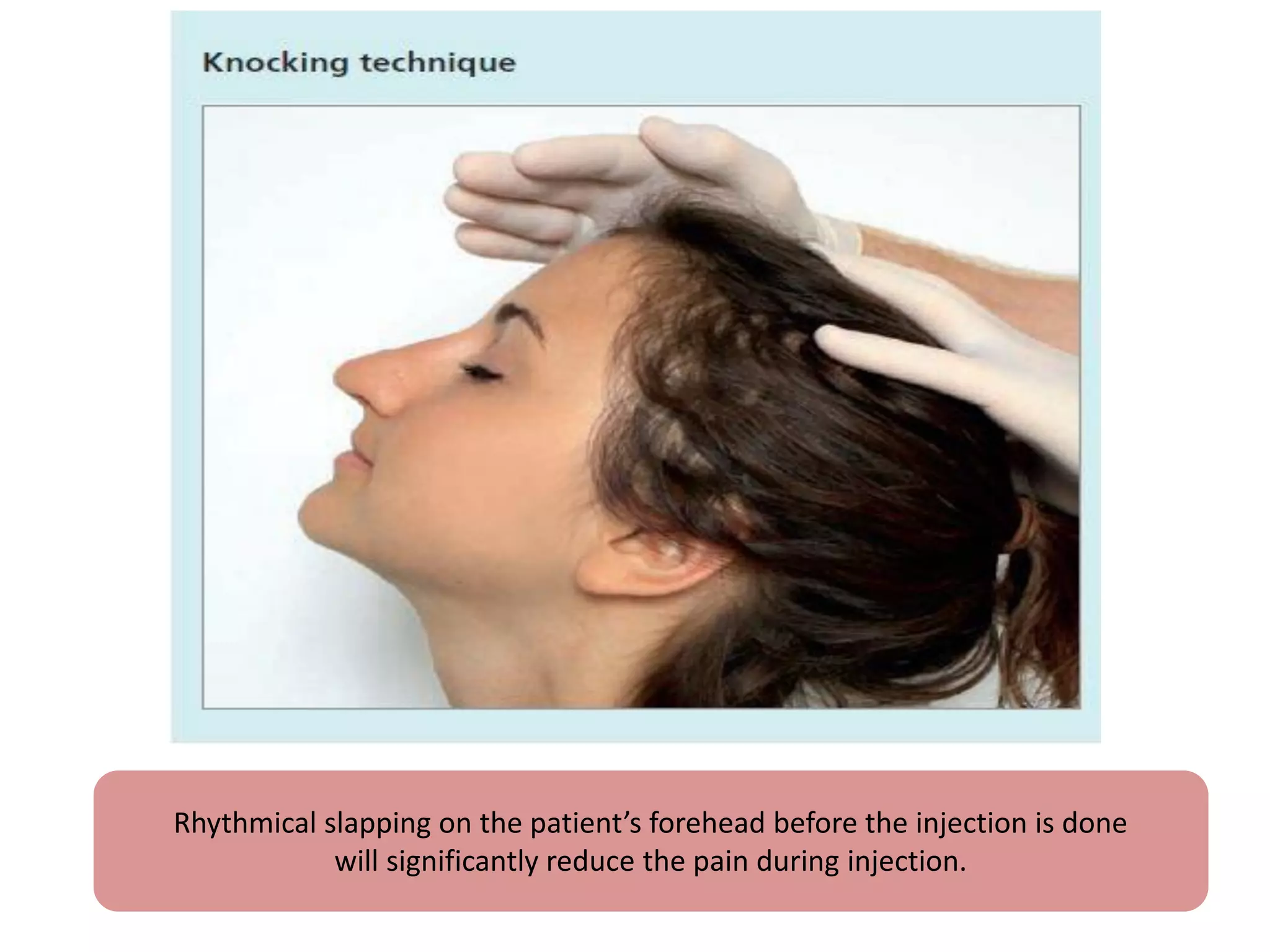
Rhythmical slapping on the patient’s forehead before the injection is done
will significantly reduce the pain during injection.
Indications
• Neurological conditions
➢Stroke
➢Brain injury
➢Multiple sclerosis
➢Cerebral palsy
Goals of BOTOX
• Reduced the dynamically produced lines that
run across the forehead
• Weakening inappropriate muscle contraction to
prevent contracture and tissue shortening
Rehabilitation after BOTOX
• Electrical stimulation
• Task-specific movement training
• Stretching
• Strengthening
• Serial casting for contracture reduction- 2 weeks
Intensive therapy after botulinum toxin in adults with spasticity after stroke versus botulinum toxin alone or
therapy alone: a pilot, feasibility randomized trial Natasha A. et all;2018;4;82
Rehabilitation
• Splinting: used to provide long stretch to a
muscle
• Orthotics: used to assist walking by corrected
foot position
Intensive therapy after botulinum toxin in adults with spasticity after stroke versus botulinum toxin alone or
therapy alone: a pilot, feasibility randomized trial Natasha A. et all;2018;4;82
Thank you

BOTOX injection and Rehabilitation after BOTOX

  • 1.
    BOTOX injection and Rehabilitation afterBOTOX Dr. Krati Omar MPT (Pediatric disorders) MMIPR, MMDU
  • 2.
    Background • BOTOX orBotulinum toxin A (BoNT-A) injections are increasingly used to treat muscle spasticity and are often complemented by adjunctive rehabilitation therapies • Rehabilitation Therapies After Botulinum Toxin-A Injection to Manage Limb Spasticity: A Systematic Review; Bianca Z. Kinnear et. All; 94;11;1 nov.2014; Pages 1569–1581
  • 3.
    Introduction • BOTOX injectionis a metabolic product of the Gram-positive, spore forming bacterium Clostridium botulinum • It is a ubiquitous bacterium, especially present in soil Essentials of physical medicine and rehabilitation; musculoskeletal disorders, pain, and rehabilitation; third edition; Walter R. Frontera et. All; ch. 136; page;723
  • 4.
    Introduction • The latencyperiod to the onset of symptoms ranges from 4 to 6 hours, but may be up to 14 days in extreme cases Essentials of physical medicine and rehabilitation; musculoskeletal disorders, pain, and rehabilitation; third edition; Walter R. Frontera et. All; ch. 136; page;723
  • 5.
  • 6.
    Mechanism of action •Botulinum toxin acts directly on the neuromuscular endplate and other cholinergic synapses, where it inhibits release of the neurotransmitter acetylcholine, leading to muscular paralysis of the affected fiber and loss of target organ function Illustrated Guide to Aesthetic Botulinum Toxin Injections Basics; Localization; Uses
  • 7.
    Mechanism • The mechanismof action of BOTOX have three steps: ➢Binding ➢Internalization ➢Intracellular effect on SNARE proteins
  • 8.
    Binding • When thetoxin is injected or absorbed from the gastrointestinal tract, its heavy H-chain initially binds to specific receptors on the plasma membrane of the cholinergic nerve endings • This binding to the presynaptic membrane shows a high degree of affinity and specificity
  • 9.
  • 10.
    Internalization • The neurotoxinis taken up into the nerve cell through receptor-mediated endocytosis • The heavy H-chain of the toxin allows the large molecule to penetrate the cell membrane and the endosome that is thus formed • The H-chain separates from the L-chain as the disulfide bond is broken. This allows the L-chain to enter the cytoplasm of the neuron.
  • 11.
    Intracellular effect onSNARE proteins • The botulinum toxin light chain acts as a zinc- dependent endopeptidase with proteolytic activity • In the cytosol, depending on serotype, it splits a specific protein of the SNARE complex (soluble N- ethylmaleimide- sensitive factor attachment receptor), which is responsible for one step of the exocytosis of the acetylcholine vesicles.
  • 12.
  • 13.
    The syringe isheld between the index and middle fingers, the thumb is placed loosely on the plunger and the injection hand is supported with the little finger. The needle should be inserted gently and in a diagonal direction to the skin surface.
  • 14.
    Rhythmical slapping onthe patient’s forehead before the injection is done will significantly reduce the pain during injection.
  • 15.
    Indications • Neurological conditions ➢Stroke ➢Braininjury ➢Multiple sclerosis ➢Cerebral palsy
  • 16.
    Goals of BOTOX •Reduced the dynamically produced lines that run across the forehead • Weakening inappropriate muscle contraction to prevent contracture and tissue shortening
  • 17.
    Rehabilitation after BOTOX •Electrical stimulation • Task-specific movement training • Stretching • Strengthening • Serial casting for contracture reduction- 2 weeks Intensive therapy after botulinum toxin in adults with spasticity after stroke versus botulinum toxin alone or therapy alone: a pilot, feasibility randomized trial Natasha A. et all;2018;4;82
  • 18.
    Rehabilitation • Splinting: usedto provide long stretch to a muscle • Orthotics: used to assist walking by corrected foot position Intensive therapy after botulinum toxin in adults with spasticity after stroke versus botulinum toxin alone or therapy alone: a pilot, feasibility randomized trial Natasha A. et all;2018;4;82
  • 19.