






Self-Management and Touring Nationally and Internationally Paola Prestini
Self-Management and Touring Nationally and Internationally:  Monday 10/8/07, 10:00am  Creating Promotional Materials & Creating a Non-Conventional Career: the Art of Freelancing: Thursday 10/25/07, 10:00am   Funding for the Bootstrap Music Series comes from The New York State Music Fund, established by the New York State Attorney General at Rockefeller Philanthropy Advisors.  
Don’t Forget the Blog assignment! Create a list of artists or organizations you  admire and what you would emulate  from their choices  and careers. How will you integrate  this into your own career plan?
Conference Logistics You can mute your phone with *6 You can unmute your phone with *7 If you have a question, type it into the chat Questions will be answered throughout the Webinar at various points
Bootstraps Self-Management and Touring Nationally and Internationally Ideas and models that can help create or augment a touring career when self-managing. This resource will also include legal forms needed when traveling as well as tips on creating riders and contracts.
Self-Management and Touring Establishing a national and international performing career is like building a giant lego project.  A couple important words while forging down this difficult path: don’t be afraid to be different--unique ideas and approaches to performing careers are important in order to keep our field evolving (it may just take longer); don’t be easily discouraged--people in curatorial positions need lots of reminding; don’t be shy--networking is important, and you must know how to sell your ideas;  and , imitation is key…do study careers of artists and groups you admire.
The Beginning who I am…
Then…1999
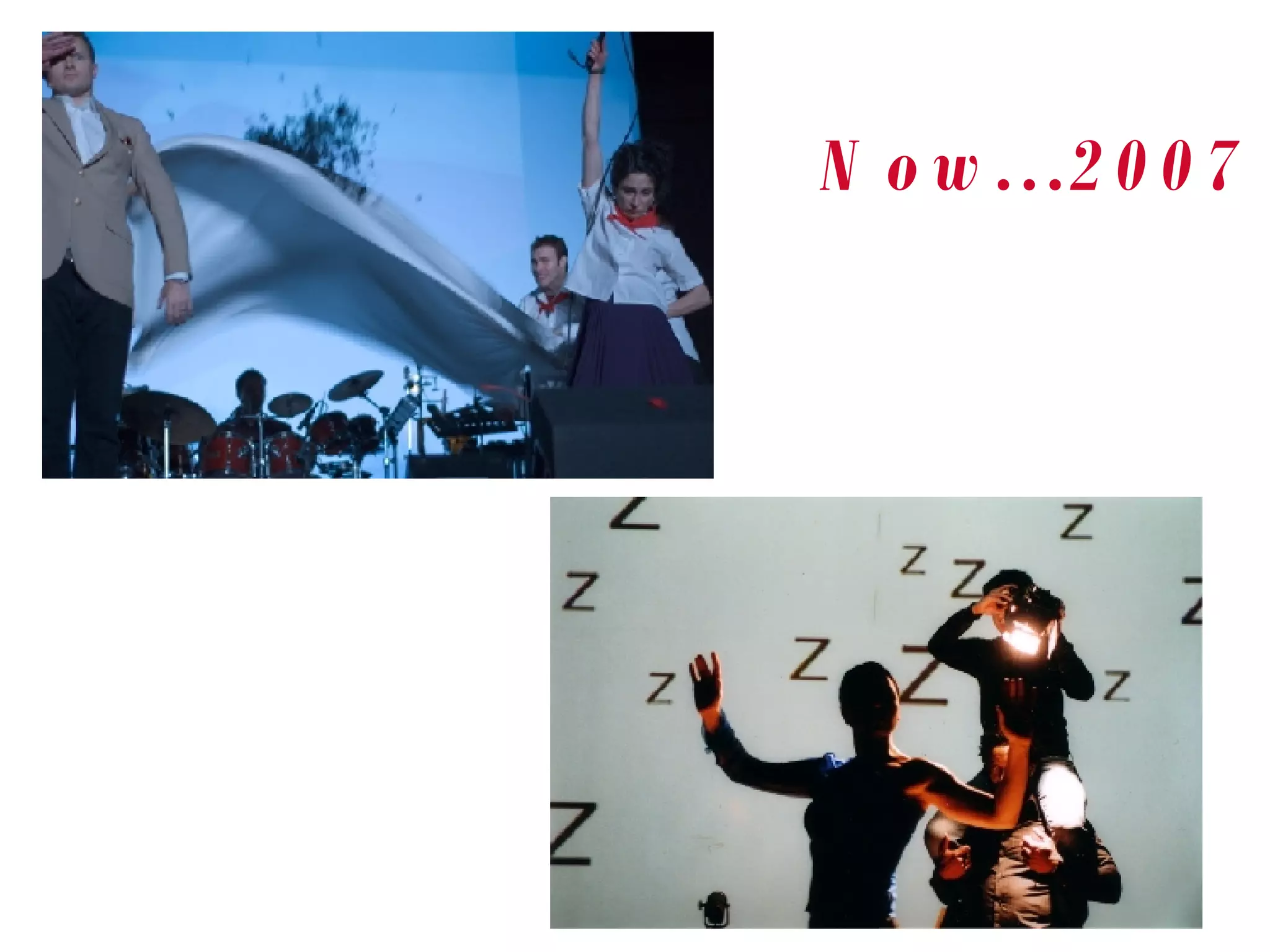
Now…2007
 
Creating a custom fit plan for your organization is important. Research, planning and redesigning is key. Begin by combining your own ideas with facets from the performing careers of artists and organizations you admire.  The following groups and artists have facets of their career paths that I have adopted for my own. They all have one thing in common:   Fearlessness!
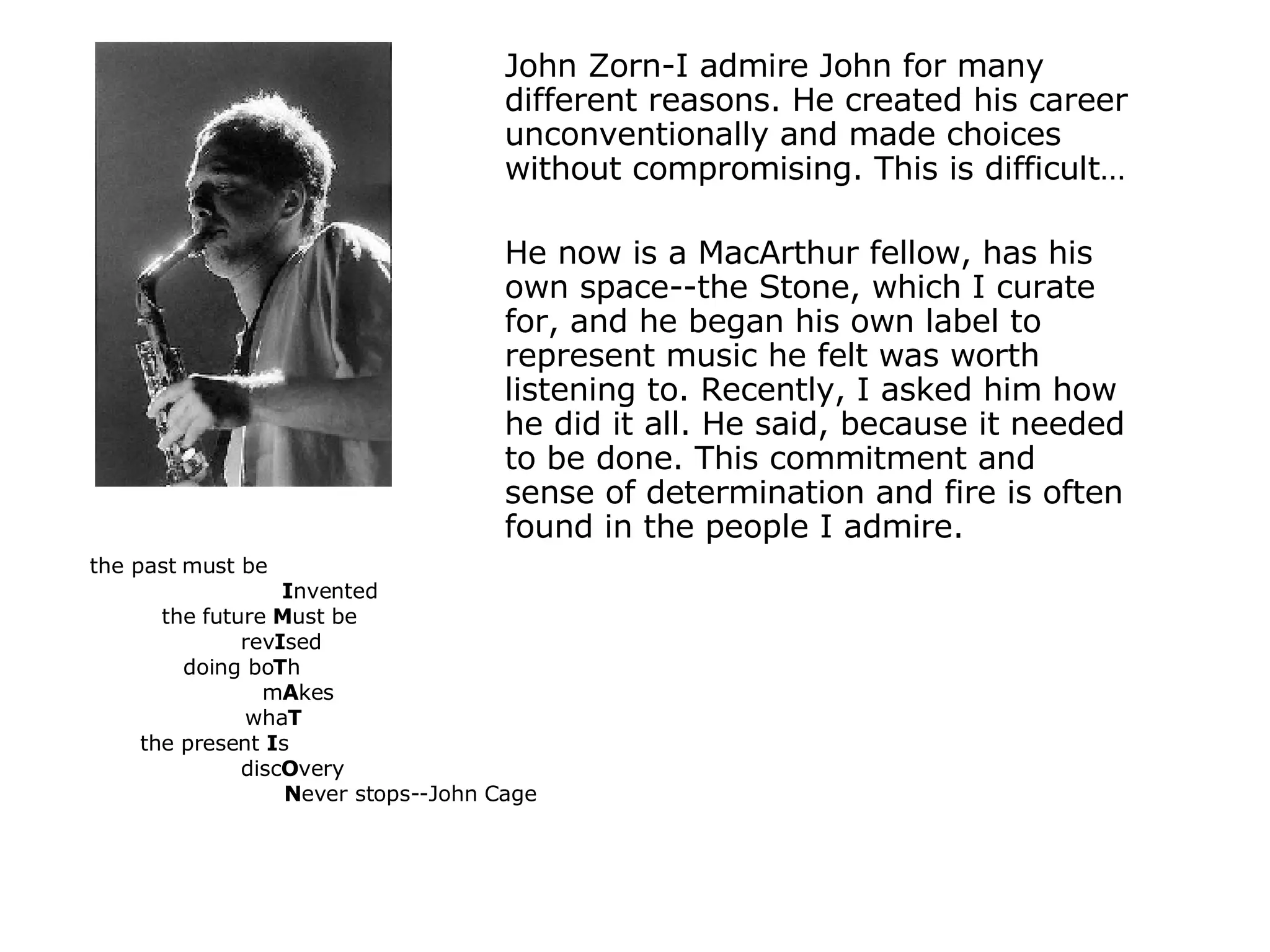
John Zorn-I admire John for many different reasons. He created his career unconventionally and made choices without compromising. This is difficult… He now is a MacArthur fellow, has his own space--the Stone, which I curate for, and he began his own label to represent music he felt was worth listening to. Recently, I asked him how he did it all. He said, because it needed to be done. This commitment and sense of determination and fire is often found in the people I admire. the past must be    I nvented the future  M ust be   rev I sed  doing bo T h  m A kes wha T the present  I s   disc O very N ever stops--John Cage
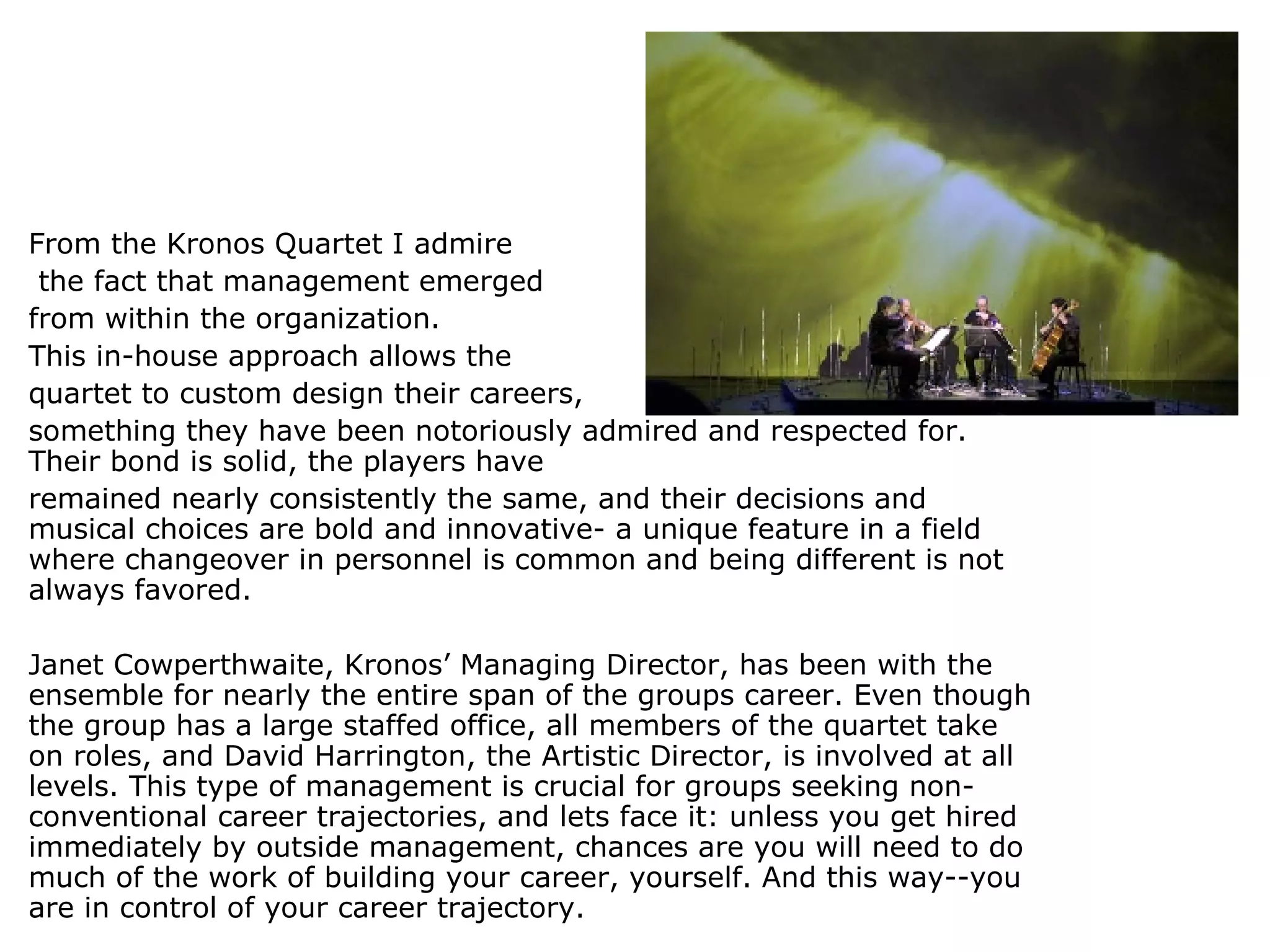
From the Kronos Quartet I admire   the fact that management emerged  from within the organization.  This in-house approach allows the  quartet to custom design their careers,  something they have been notoriously admired and respected for. Their bond is solid, the players have  remained nearly consistently the same, and their decisions and musical choices are bold and innovative- a unique feature in a field where changeover in personnel is common and being different is not always favored.  Janet Cowperthwaite, Kronos’ Managing Director, has been with the ensemble for nearly the entire span of the groups career. Even though the group has a large staffed office, all members of the quartet take on roles, and David Harrington, the Artistic Director, is involved at all levels. This type of management is crucial for groups seeking non-conventional career trajectories, and lets face it: unless you get hired immediately by outside management, chances are you will need to do much of the work of building your career, yourself. And this way--you are in control of your career trajectory.
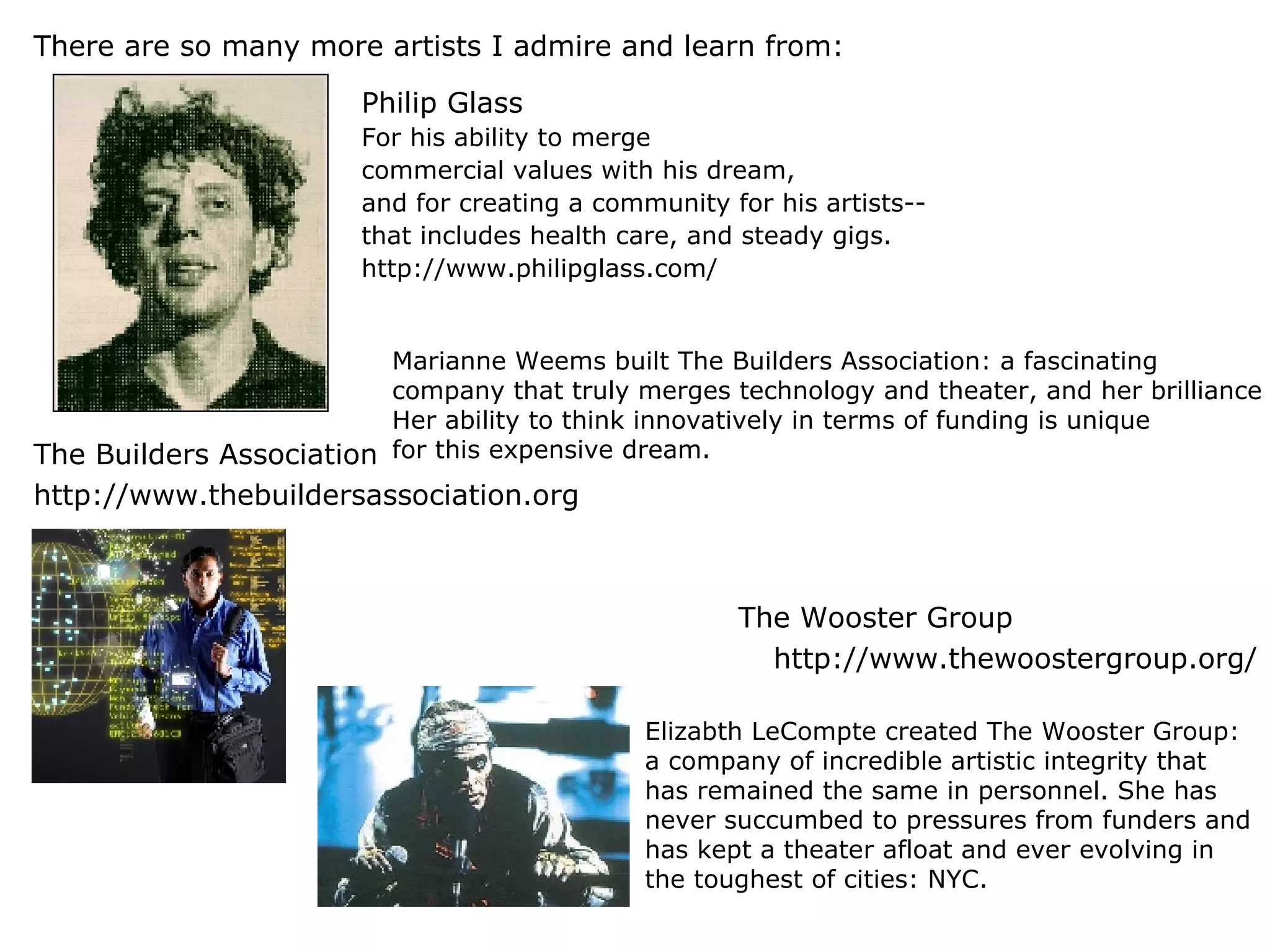
There are so many more artists I admire and learn from: The Builders Association http://www.thebuildersassociation.org   The Wooster Group http://www.thewoostergroup.org/ Philip Glass For his ability to merge  commercial values with his dream,  and for creating a community for his artists-- that includes health care, and steady gigs. http://www.philipglass.com/ Marianne Weems built The Builders Association: a fascinating  company that truly merges technology and theater, and her brilliance does not stop there.  Her ability to think innovatively in terms of funding is unique  for this expensive dream. Elizabth LeCompte created The Wooster Group: a company of incredible artistic integrity that has remained the same in personnel. She has never succumbed to pressures from funders and has kept a theater afloat and ever evolving in the toughest of cities: NYC.
How to begin… First and foremost, nurture and develop the relationships you have formed with the people you meet in school, or with whom you have developed strongest artistic bonds. This kind of commitment is always rewarded; you will need those bonds to get you through the customary rejections, and in the end, the successes will only taste sweeter. Each person you work with has connections and different talents. Capitalize on those.  You will need to organize your support materials. This should include a video press kit with a brochure, photographs, music CD(s), and reviews. Packaging does matter; DO spend time making your work look aesthetically appealing; DON’T not send the material because it is not perfect or store ready. I am of the opinion that there are phases to your material and people expect this. Again, producers, curators and directors will need reminding, so sending versions of your work as it progresses is a good idea.
 
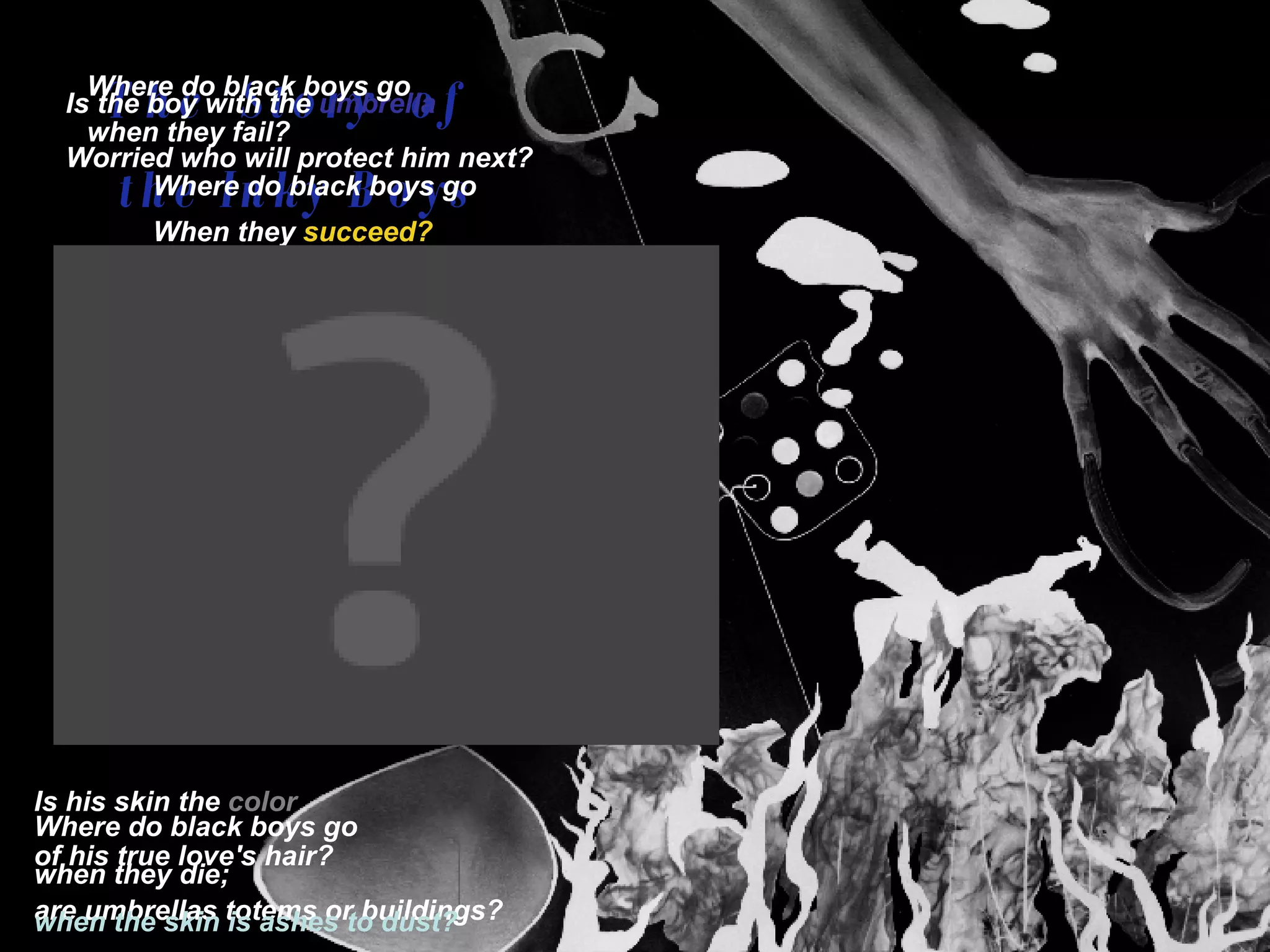
The  Story  of  the Inky Boys Black black black Black black black Black black black Black black black Black black black Black black black Black black black Black black black Black black black Black black black Is the boy with the   umbrella   Worried who will protect him next? Is his skin the  color  of his true love's hair?   are umbrellas totems or buildings? Where do black boys go  when they fail?   Where do black boys go  When they   succeed?   Where do   black   boys go when   they   die;   when the skin is ashes to dust?
Research websites to see where other groups tour to, and make a plan as to where you would like to see yourself in two-year increments. The beginning will be slow, and your touring may be more nationally based.  Don’t be afraid to ask groups or any mentors or contacts you may have for introductions. I was lucky to have a few key people introduce me to curators and presenters, and now I return the gesture--or pay it forward--I always email to introduce other groups to the curators who present VisionIntoArt. There is enough pie for everyone: don’t waste your time dividing the same piece. Make more pie. Always Spy! http://www.thewoostergroup.org/ http://www.thebuildersassociation.org http://markmorrisdancegroup.org/performance_calendar http://kronosquartet.org/concerts/
Send an introductory email to halls and theaters and venues of interest, and state why you think what you are offering would be a good match for their programs. Keep them updated continuously; there is a lot of competition, so curators and programmers need to be reminded of your activities and successes.  Send a brochure with different touring packages; have an idea for the prices of the performances you can offer, as well as for  the education options.These prices will need to be assessed and negotiated on a case by case basis. Different venues have different budgets, so keep this in mind when creating your price menu.  Whenever possible, make contact in person or by phone. As wonderfully impersonal and safe as emails can be, personal connections are stronger and more impacting then written connections.  An extra step in effort on your part can make you memorable!!
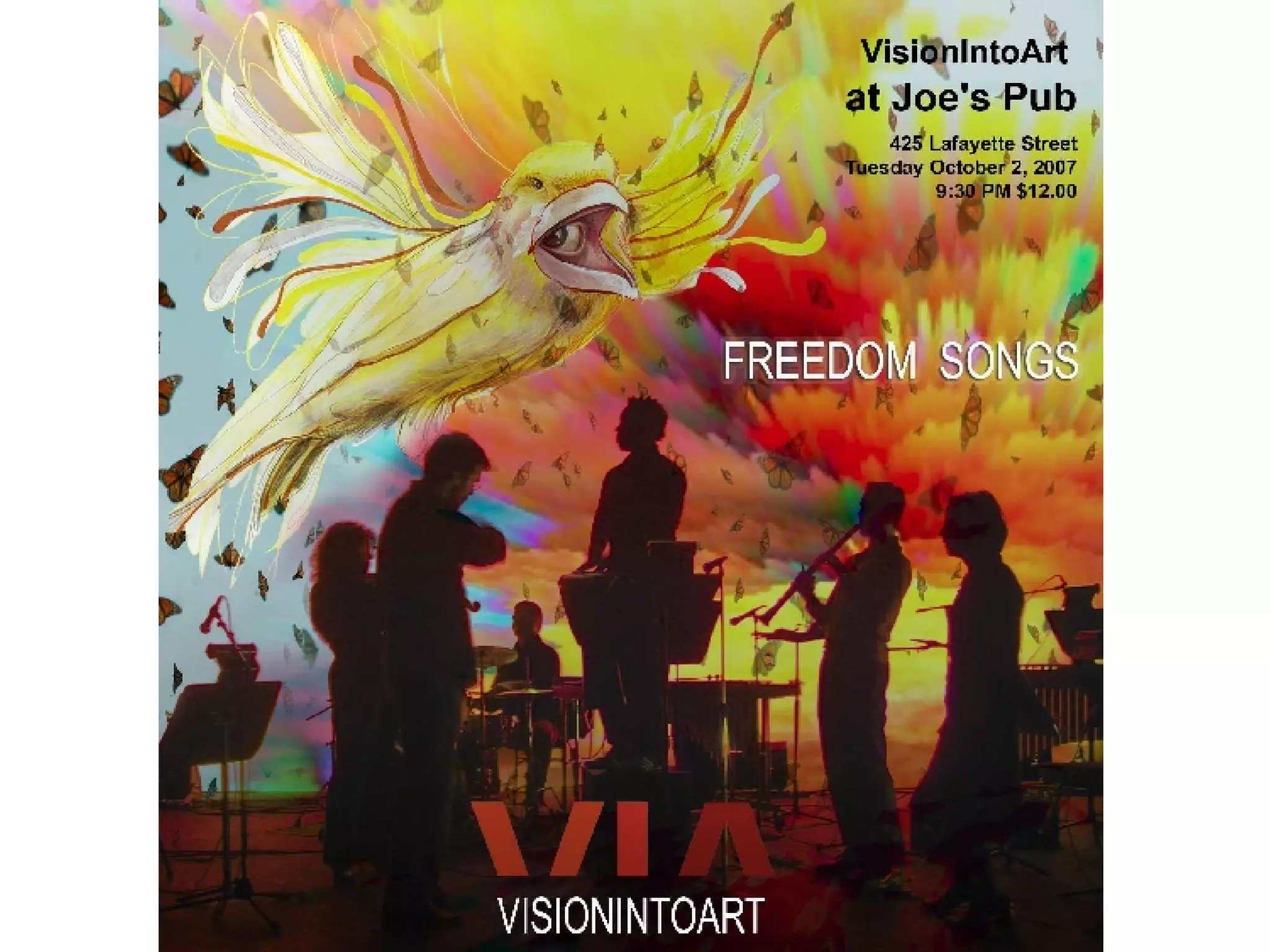
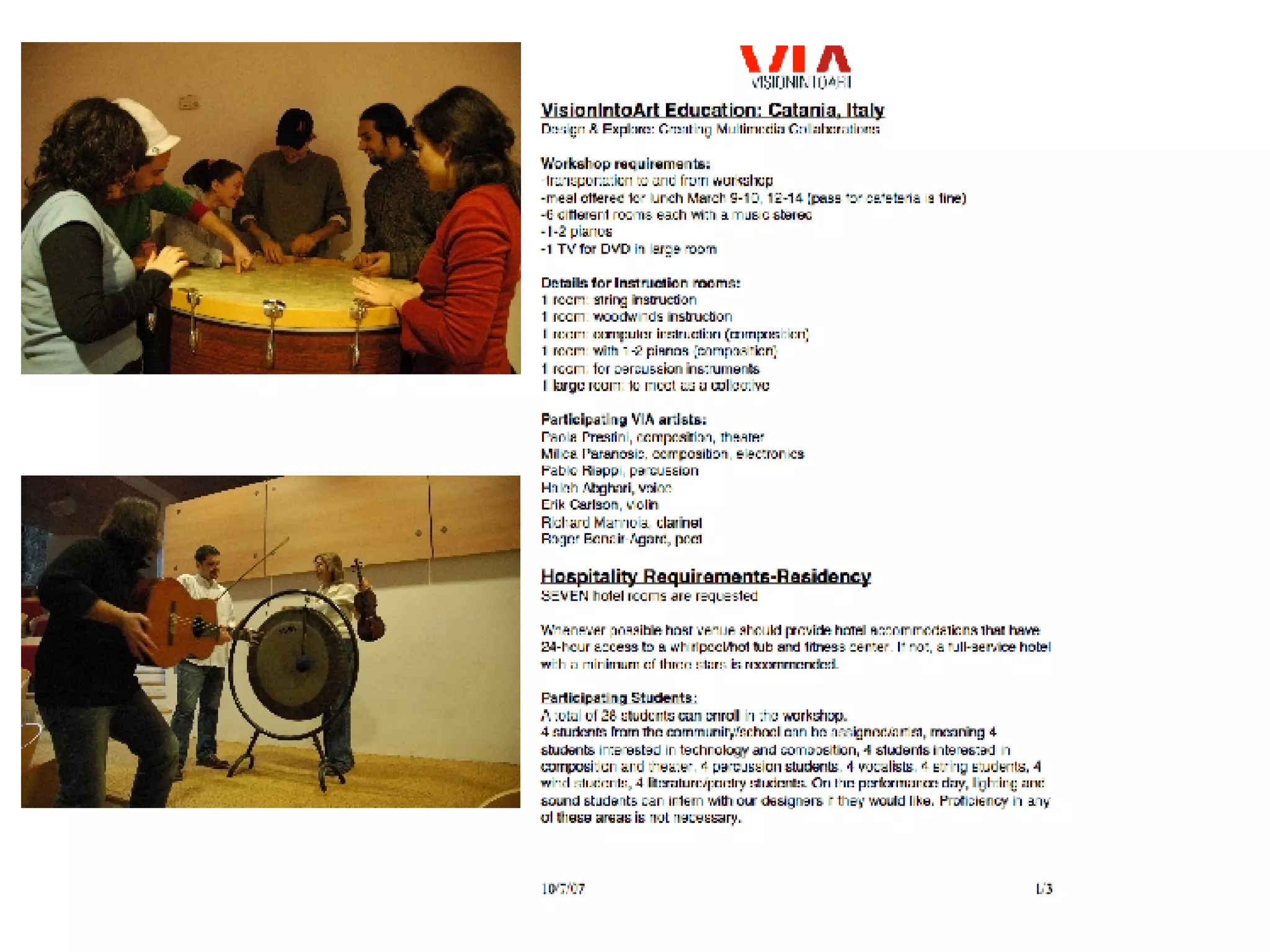
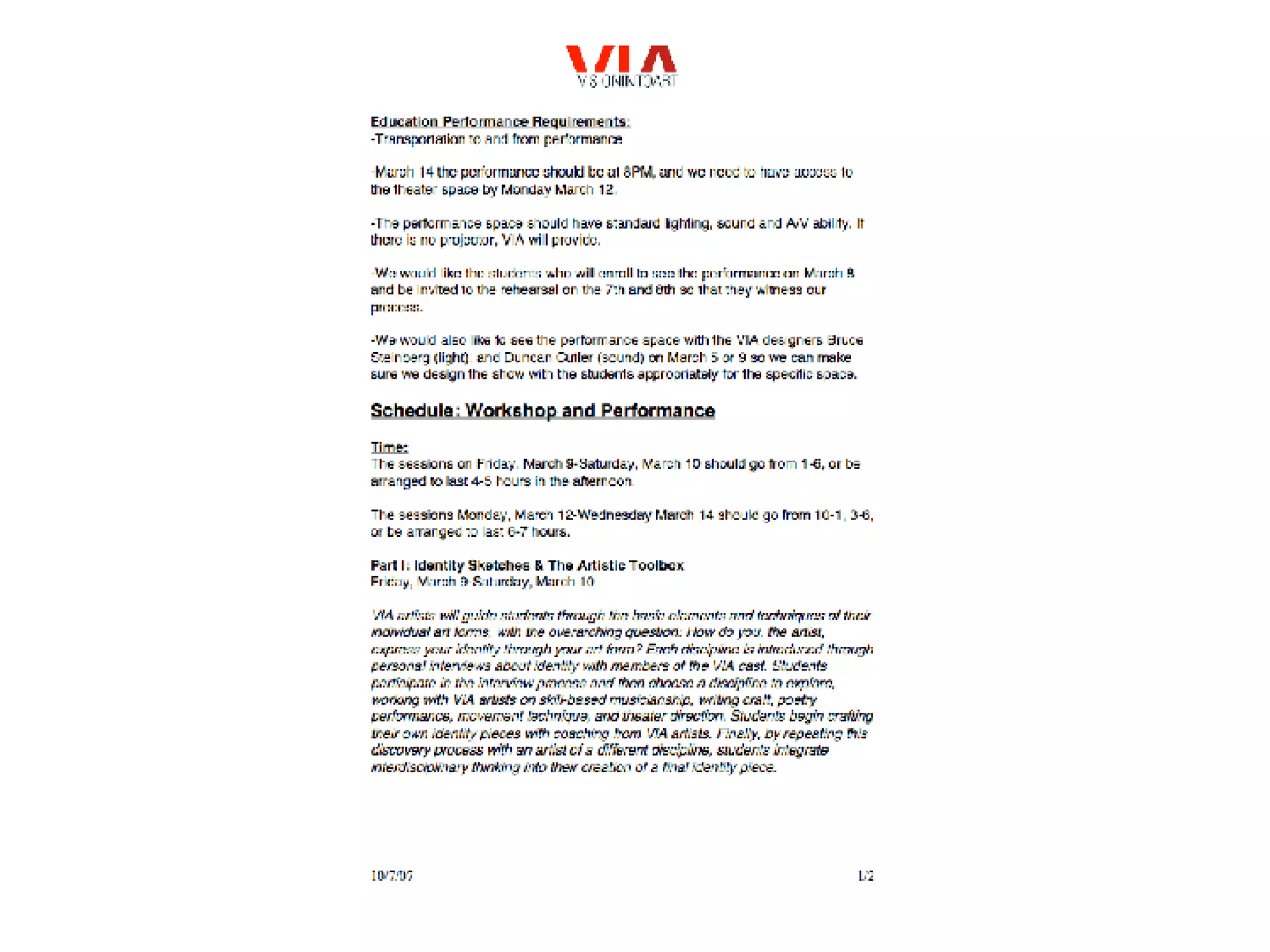
The key to touring is career sustainability: each curator who invites you should want to re-invite you. You make skip a season or two, but these relationships are invaluable. Also, be creative as to where you perform. There are all kinds of venues to take advantage of! Concert halls, museums, clubs, festivals, galleries, theaters, and non-traditional performing venues.  In April, VisionIntoArt is performing on the roof of a hotel in Mexico City-we are collaborating with a visual artist on an installation for the roof with paintings, film, sculptures, sound,  and  an abandoned trolley car. Dream up possibilities, and then make it happen.  You will need both the conventional and non-conventional gigs to sustain your career.
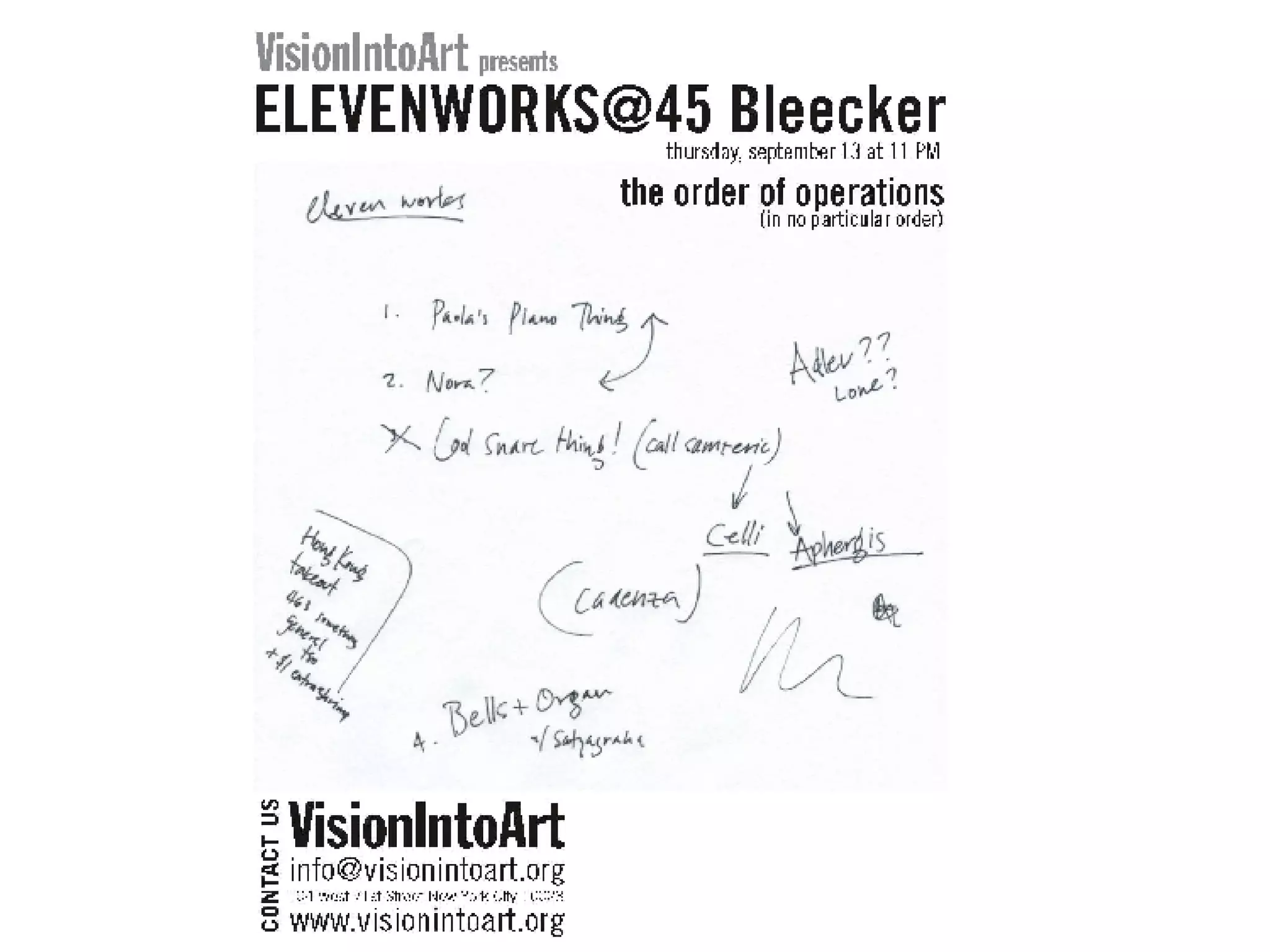
Stretch your imagination-countless places are seeking to boast of concert series and their multidisciplinary interests. This could be your chance--but don’t be taken advantage of. I am well familiar with the optimism and near-sightedness that comes with the desire to ‘make it’.  I remember starting out in NYC with our group in 2000; we were seeking for a venue--and we found one. It was a popular theater in the Lower East Side, and we were given Monday nights at 11PM. We felt as though we had won the lottery. The series was called ElevenWorks. 11 works, $11, at 11PM,  worked  (or so we hoped). While the series  was  important for our growth, and we did begin to build our audience base, we were also asked to give all our proceeds to the theater as well as do other services.  Needless to say, we eventually saw the light.  Remember you are offering something of worth. Don’t undervalue yourself. Most of the time, people will get away with what they can, and you are responsible for setting your own limits.
 
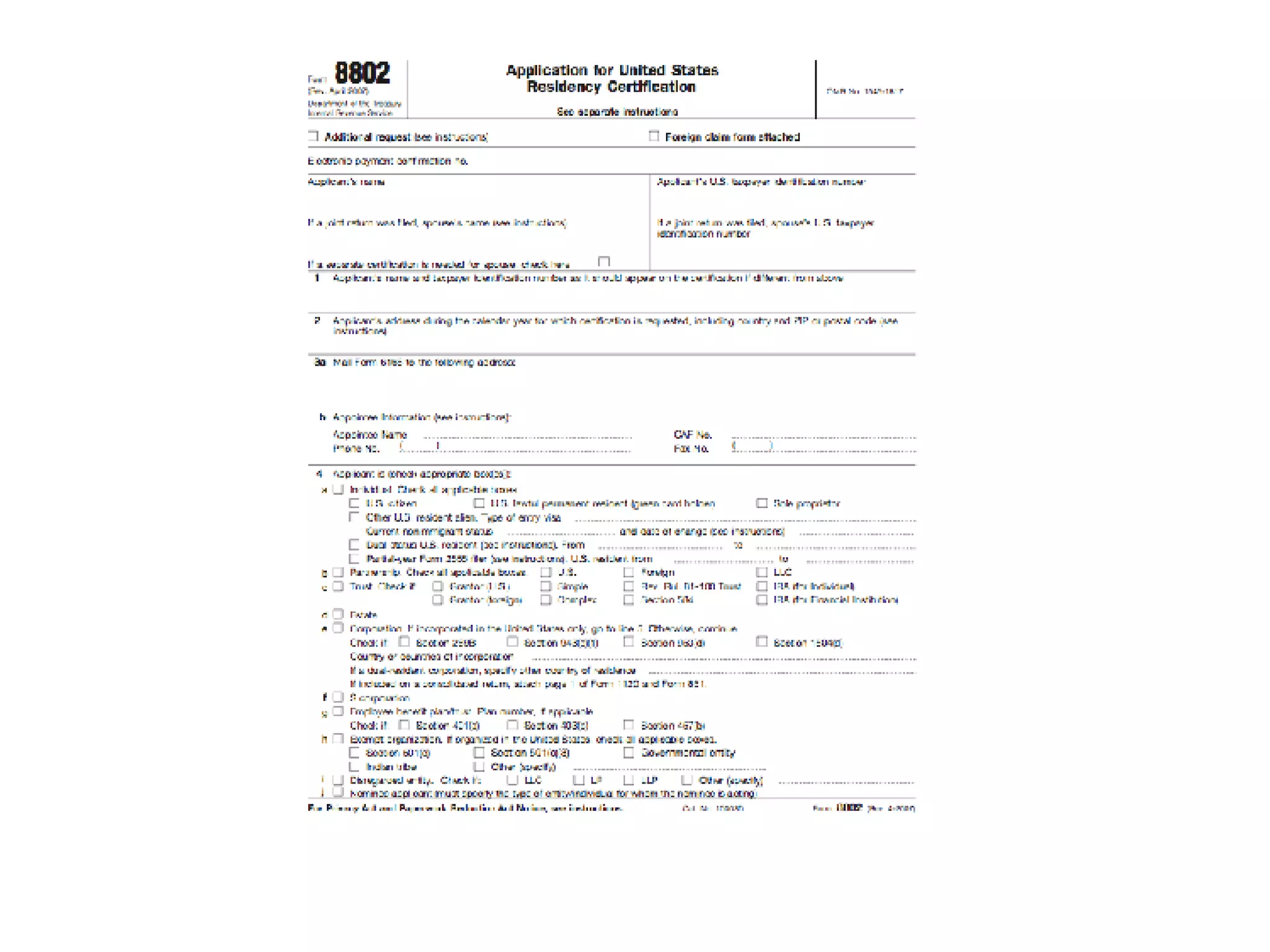
As you begin to tour internationally, certain companies and organizations require forms that release you from double taxation.  Only supply this if it is requested of you from the producing organization. Forms needed: IRS Form (6166).  This form basically states that you are a US nonprofit, and pay taxes here, including income from the country you are traveling to. You will need to apply for the form 8802 in order to obtain form 6166. 30-45 day turnover. Form SSA-L600 comes from the social security administration, and is a fill in form under their seal (they send you blanks), which basically states that the employees of your group -- each performer, tech, etc., is an employee, and that you pay SS taxes for them in the US. To establish an exemption from compulsory coverage and taxes under the system of the country you are traveling to, your employer must request a certificate of coverage. Touring Internationally
 
To apply for the certificate, write to: Social Security Administration Office of International Programs P.O. Box 17741 Baltimore, Maryland 21235-7741 U.S.A.  The request may be sent by FAX, if preferred, to (410) 966-1861.  Please note this FAX number should only be used for requesting certificates of coverage.
No special form is required to request a certificate, but, the request must be in writing and provide the following information: full name of worker date and place of birth citizenship country of worker's permanent residence U.S. Social Security number name and address of the employer in the U.S. and the country you are traveling to date the employment began Your can also request a certificate of U.S. coverage for you over the Internet using a special online request form available at www.socialsecurity.gov/coc. Only an employer can use the online form to request a certificate of coverage."
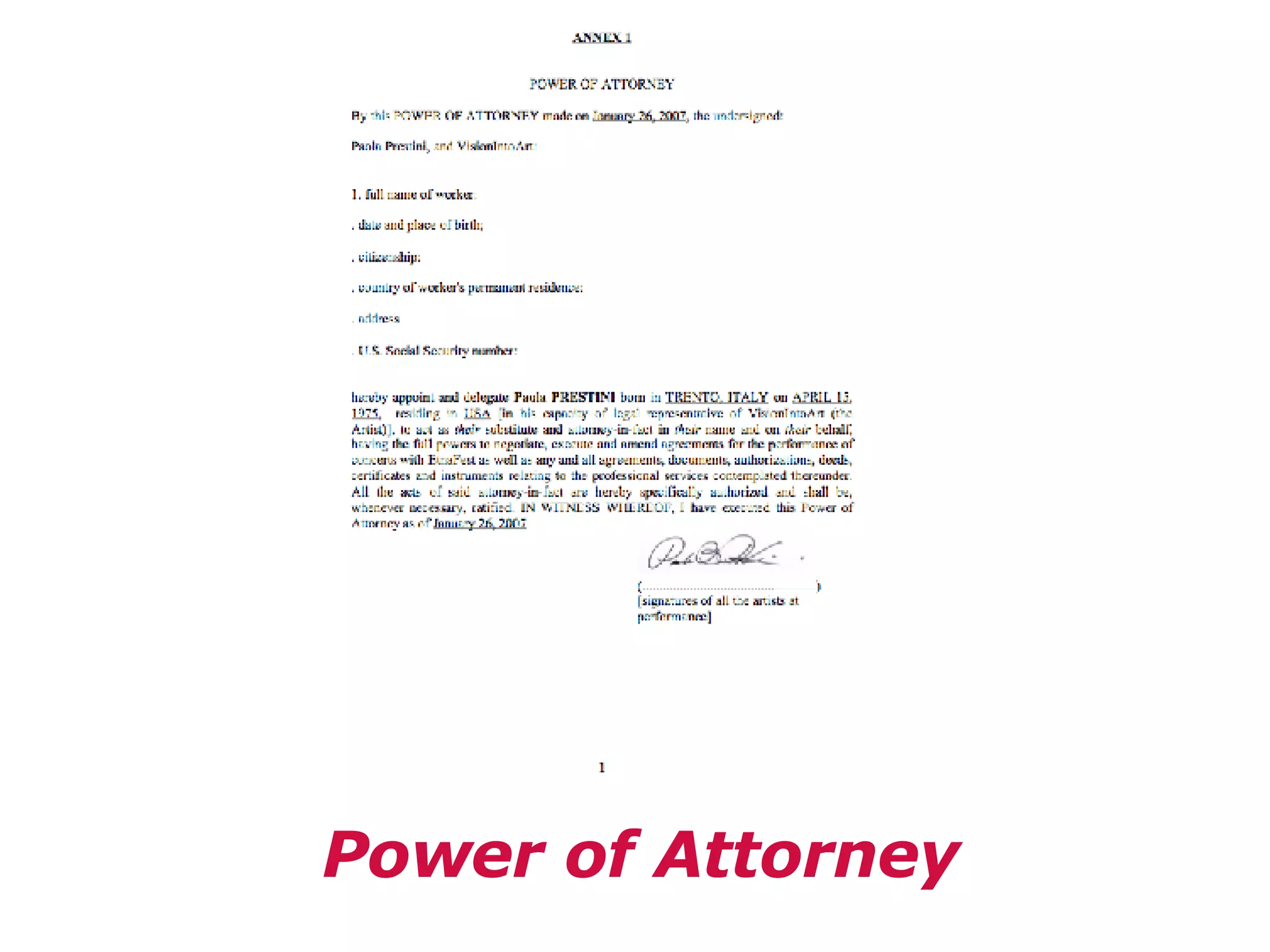
Power of Attorney: This written consent gives the company complete assurance that you have authority to sign on behalf of the artists, and negotiate on their behalf too.  All you have to do is print the form out, fill in the blanks, have the artists sign. Contract: Contracts are usually created by the hosting organization. Do not sign until you are sure of everything they are stating. Read the fine print. Sometimes presenters will pay you half of your fee before, and half after. Ask for this before signing.
Power of Attorney
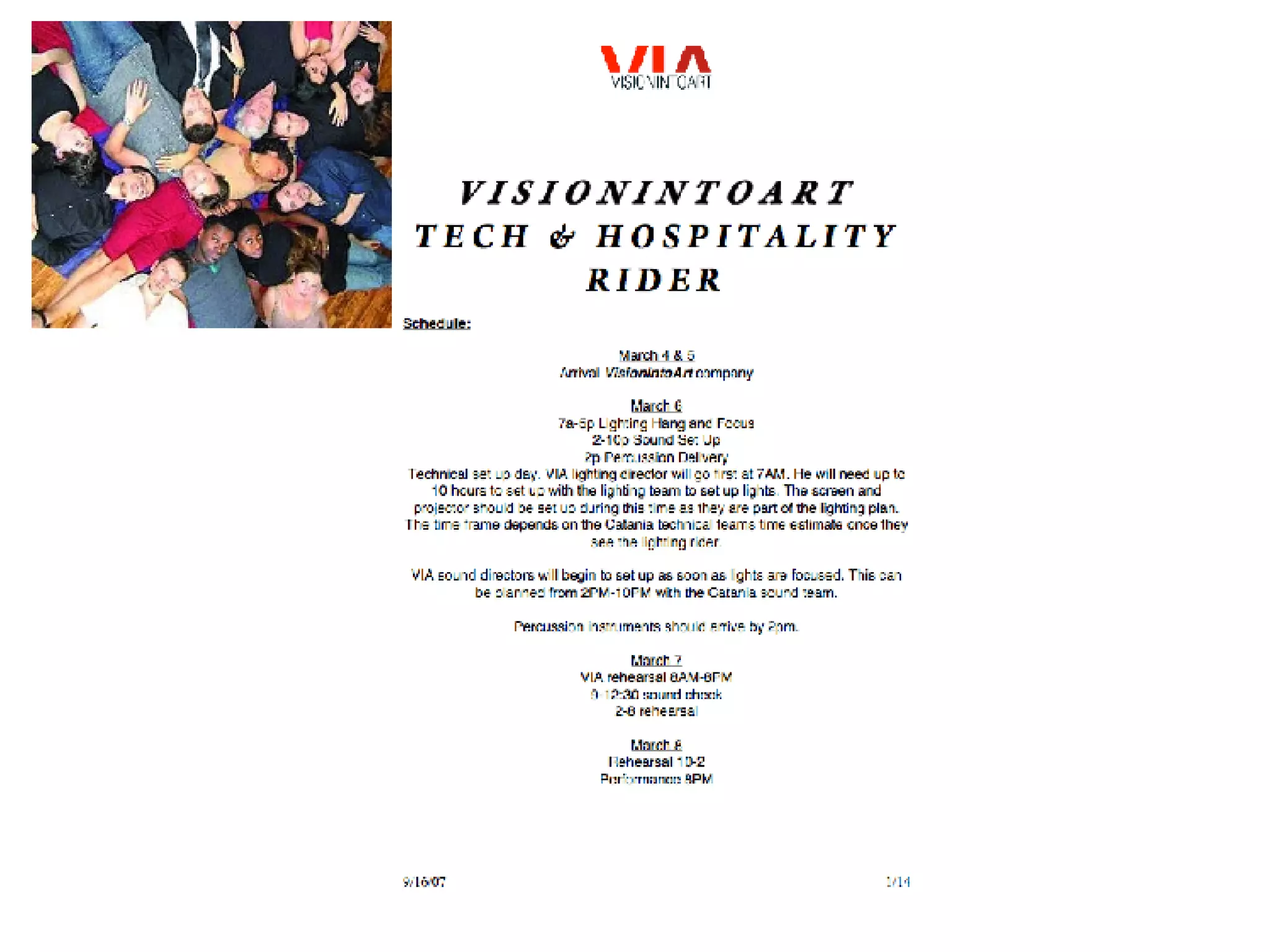
Rider: This is important! Do not sign any contracts until they have agreed to everything you need in your rider. International companies tend to have more producing money so don’t be afraid to request single rooms, stipends, and everything technical you may need.  Stipends sometimes will come from your own organization, and in this case, build it into your fee.  Ask organizations you admire to study their riders-this will help you build a thorough rider.  This is your assurance that you receive what you need in order to perform at your best. Ask technical personnel in your ensemble to contribute for A/V details.


The End Best of luck! And feel free to write with more questions. It is a fun ride…. As Phillip Glass recently said to me about composing: “ Keep writing, and live long.” The secret for a successful career. Keep up the great work. Keep imagining, keep working, and try to keep perspective!
Eastern European Contacts This is just the begnning. Feel free to ask me about grants and further festival contacts!
Bosnia and Herzegovina Sarajevo Center for Contemporary Arts  www.scca.ba Dunja Blažević --  [email_address] Amra Bakšić Čamo –  [email_address] Enes Zlatar – enes@pro.ba Timur Makarević -- timur@pro.ba Redžinald Simek -- simek@pro.ba Lara Hasanbegović -- lara@scca.ba Sanela Bojadžić --  [email_address] Sarajevo Center for Contemporary Art - SCCA  Obala Maka Dizdara 3 71000 Sarajevo Bosnia & Herzegovina Telephone / Fax: +387.33.665.304
MESS International Theater Festival  www.mess.ba [email_address]   [email_address] Maršala Tita 54/I  71000 Sarajevo Bosnia-Herzegovina Phone: +387 33 200 392 Fax: +387 33 211 972 Ukraine Association New Music  anm.odessa.ua [email_address] Karmella Tsepkolenko - president [email_address] Oleksandr Perepelytsya [email_address]
Bulgaria The Red House Centre for Culture and Debate  www.redhouse-sofia.org 15, Ljuben Karavelov St. Sofia 1142, Bulgaria T/F: + 359 2 988 81 88 e-mail:  [email_address] Dessislava Gavrilova – Director -- dgavrilova@redhouse-sofia.org Tzvetelina   Iossifova  – Director -- tzviossifova@redhouse-sofia.org InterSpace Media Art Center  www.i-space.org 27 Benkovski Str. Ent. 2 fl. 1 ap. 18 Sofia 1000 +359 (2) 983 48 43 Petko Dourmana, artist, managing director -- dourmana@i-space.org Vladimir Petkov, project manager -- vpetkov@i-space.org
Croatia Institute for Contemporary Art  www.scca.hr Mr. Darko Šimičić,  program coordinator – darko@scc.hr Ms  Janka   Vukmir ,  director --  [email_address] Berislavićeva 20, 10000 Zagreb phone/fax: 385 1 48 72 111, 385 1 48 72 112 Museum of Contemporary Art  www.mdc.hr/msu Audio-Visual Department Manager:  Mr. Mladen Lucic,  Senior Curator Education Department Manager: Mr. Mladen Lucic,  Senior Curator Email:  [email_address] Address: Habdeliceva 2, 10000 Zagreb Phone: 01/48-51-930, 48-51-931
Eurokaz International Festival of New Theatre  www.eurokaz.hr Eurokaz Festival Bogovićeva 1/IV, 1000 Zagreb, Croatia tel.: + 385 1 48 47 856 tel.: + 385 1 48 15 080  tel./fax.: +385 1 4854 424 Multimedia Institute  mama.mi2.hr Preradovićeva 18 10000 Zagreb, CROATIA tel: +385.1.4856400 fax: +385.1.4855729 email:  [email_address] MB: 1441868 Czech Republic Foundation and Center for Contemporary Arts  www.fcca.cz Ludvik Hlavacek Director, Public Arts Program ludvik.hlavacek @ fcca.cz Gabriela Kotikova - Bukovinska
Estonia Center for Contemporary Arts  www.cca.ee Johannes Saar – Director [email_address] ee Vabaduse   v ä ljak  6 10146 Tallinn tel:  372 6314050, 372 6443542 fax:  372 6314049 e-mail:   [email_address] Hungary C3 Center for Culture and Communication  www.c3.hu H-1022 Budapest, Szpáhi utca 20. Tel: + 36-1-4887070, Fax: + 36-1-214-6872  E-mail:  [email_address] Trafo Center Budapest, Hungary Gyorgy Szabo, curator http://www.trafo.com/

Boostraps2read

  • 1.
    Self-Management and TouringNationally and Internationally Paola Prestini
  • 2.
    Self-Management and TouringNationally and Internationally: Monday 10/8/07, 10:00am Creating Promotional Materials & Creating a Non-Conventional Career: the Art of Freelancing: Thursday 10/25/07, 10:00am Funding for the Bootstrap Music Series comes from The New York State Music Fund, established by the New York State Attorney General at Rockefeller Philanthropy Advisors.  
  • 3.
    Don’t Forget theBlog assignment! Create a list of artists or organizations you admire and what you would emulate from their choices and careers. How will you integrate this into your own career plan?
  • 4.
    Conference Logistics Youcan mute your phone with *6 You can unmute your phone with *7 If you have a question, type it into the chat Questions will be answered throughout the Webinar at various points
  • 5.
    Bootstraps Self-Management andTouring Nationally and Internationally Ideas and models that can help create or augment a touring career when self-managing. This resource will also include legal forms needed when traveling as well as tips on creating riders and contracts.
  • 6.
    Self-Management and TouringEstablishing a national and international performing career is like building a giant lego project. A couple important words while forging down this difficult path: don’t be afraid to be different--unique ideas and approaches to performing careers are important in order to keep our field evolving (it may just take longer); don’t be easily discouraged--people in curatorial positions need lots of reminding; don’t be shy--networking is important, and you must know how to sell your ideas; and , imitation is key…do study careers of artists and groups you admire.
  • 7.
  • 8.
  • 9.
  • 10.
  • 11.
    Creating a customfit plan for your organization is important. Research, planning and redesigning is key. Begin by combining your own ideas with facets from the performing careers of artists and organizations you admire. The following groups and artists have facets of their career paths that I have adopted for my own. They all have one thing in common: Fearlessness!
  • 12.
    John Zorn-I admireJohn for many different reasons. He created his career unconventionally and made choices without compromising. This is difficult… He now is a MacArthur fellow, has his own space--the Stone, which I curate for, and he began his own label to represent music he felt was worth listening to. Recently, I asked him how he did it all. He said, because it needed to be done. This commitment and sense of determination and fire is often found in the people I admire. the past must be I nvented the future M ust be rev I sed doing bo T h m A kes wha T the present I s disc O very N ever stops--John Cage
  • 13.
    From the KronosQuartet I admire the fact that management emerged from within the organization. This in-house approach allows the quartet to custom design their careers, something they have been notoriously admired and respected for. Their bond is solid, the players have remained nearly consistently the same, and their decisions and musical choices are bold and innovative- a unique feature in a field where changeover in personnel is common and being different is not always favored. Janet Cowperthwaite, Kronos’ Managing Director, has been with the ensemble for nearly the entire span of the groups career. Even though the group has a large staffed office, all members of the quartet take on roles, and David Harrington, the Artistic Director, is involved at all levels. This type of management is crucial for groups seeking non-conventional career trajectories, and lets face it: unless you get hired immediately by outside management, chances are you will need to do much of the work of building your career, yourself. And this way--you are in control of your career trajectory.
  • 14.
    There are somany more artists I admire and learn from: The Builders Association http://www.thebuildersassociation.org The Wooster Group http://www.thewoostergroup.org/ Philip Glass For his ability to merge commercial values with his dream, and for creating a community for his artists-- that includes health care, and steady gigs. http://www.philipglass.com/ Marianne Weems built The Builders Association: a fascinating company that truly merges technology and theater, and her brilliance does not stop there. Her ability to think innovatively in terms of funding is unique for this expensive dream. Elizabth LeCompte created The Wooster Group: a company of incredible artistic integrity that has remained the same in personnel. She has never succumbed to pressures from funders and has kept a theater afloat and ever evolving in the toughest of cities: NYC.
  • 15.
    How to begin…First and foremost, nurture and develop the relationships you have formed with the people you meet in school, or with whom you have developed strongest artistic bonds. This kind of commitment is always rewarded; you will need those bonds to get you through the customary rejections, and in the end, the successes will only taste sweeter. Each person you work with has connections and different talents. Capitalize on those. You will need to organize your support materials. This should include a video press kit with a brochure, photographs, music CD(s), and reviews. Packaging does matter; DO spend time making your work look aesthetically appealing; DON’T not send the material because it is not perfect or store ready. I am of the opinion that there are phases to your material and people expect this. Again, producers, curators and directors will need reminding, so sending versions of your work as it progresses is a good idea.
  • 16.
  • 17.
    The Story of the Inky Boys Black black black Black black black Black black black Black black black Black black black Black black black Black black black Black black black Black black black Black black black Is the boy with the umbrella Worried who will protect him next? Is his skin the color of his true love's hair? are umbrellas totems or buildings? Where do black boys go when they fail? Where do black boys go When they succeed? Where do black boys go when they die; when the skin is ashes to dust?
  • 18.
    Research websites tosee where other groups tour to, and make a plan as to where you would like to see yourself in two-year increments. The beginning will be slow, and your touring may be more nationally based. Don’t be afraid to ask groups or any mentors or contacts you may have for introductions. I was lucky to have a few key people introduce me to curators and presenters, and now I return the gesture--or pay it forward--I always email to introduce other groups to the curators who present VisionIntoArt. There is enough pie for everyone: don’t waste your time dividing the same piece. Make more pie. Always Spy! http://www.thewoostergroup.org/ http://www.thebuildersassociation.org http://markmorrisdancegroup.org/performance_calendar http://kronosquartet.org/concerts/
  • 19.
    Send an introductoryemail to halls and theaters and venues of interest, and state why you think what you are offering would be a good match for their programs. Keep them updated continuously; there is a lot of competition, so curators and programmers need to be reminded of your activities and successes. Send a brochure with different touring packages; have an idea for the prices of the performances you can offer, as well as for the education options.These prices will need to be assessed and negotiated on a case by case basis. Different venues have different budgets, so keep this in mind when creating your price menu. Whenever possible, make contact in person or by phone. As wonderfully impersonal and safe as emails can be, personal connections are stronger and more impacting then written connections. An extra step in effort on your part can make you memorable!!
  • 20.
    The key totouring is career sustainability: each curator who invites you should want to re-invite you. You make skip a season or two, but these relationships are invaluable. Also, be creative as to where you perform. There are all kinds of venues to take advantage of! Concert halls, museums, clubs, festivals, galleries, theaters, and non-traditional performing venues. In April, VisionIntoArt is performing on the roof of a hotel in Mexico City-we are collaborating with a visual artist on an installation for the roof with paintings, film, sculptures, sound, and an abandoned trolley car. Dream up possibilities, and then make it happen. You will need both the conventional and non-conventional gigs to sustain your career.
  • 21.
    Stretch your imagination-countlessplaces are seeking to boast of concert series and their multidisciplinary interests. This could be your chance--but don’t be taken advantage of. I am well familiar with the optimism and near-sightedness that comes with the desire to ‘make it’. I remember starting out in NYC with our group in 2000; we were seeking for a venue--and we found one. It was a popular theater in the Lower East Side, and we were given Monday nights at 11PM. We felt as though we had won the lottery. The series was called ElevenWorks. 11 works, $11, at 11PM, worked (or so we hoped). While the series was important for our growth, and we did begin to build our audience base, we were also asked to give all our proceeds to the theater as well as do other services. Needless to say, we eventually saw the light. Remember you are offering something of worth. Don’t undervalue yourself. Most of the time, people will get away with what they can, and you are responsible for setting your own limits.
  • 22.
  • 23.
    As you beginto tour internationally, certain companies and organizations require forms that release you from double taxation. Only supply this if it is requested of you from the producing organization. Forms needed: IRS Form (6166). This form basically states that you are a US nonprofit, and pay taxes here, including income from the country you are traveling to. You will need to apply for the form 8802 in order to obtain form 6166. 30-45 day turnover. Form SSA-L600 comes from the social security administration, and is a fill in form under their seal (they send you blanks), which basically states that the employees of your group -- each performer, tech, etc., is an employee, and that you pay SS taxes for them in the US. To establish an exemption from compulsory coverage and taxes under the system of the country you are traveling to, your employer must request a certificate of coverage. Touring Internationally
  • 24.
  • 25.
    To apply forthe certificate, write to: Social Security Administration Office of International Programs P.O. Box 17741 Baltimore, Maryland 21235-7741 U.S.A. The request may be sent by FAX, if preferred, to (410) 966-1861. Please note this FAX number should only be used for requesting certificates of coverage.
  • 26.
    No special formis required to request a certificate, but, the request must be in writing and provide the following information: full name of worker date and place of birth citizenship country of worker's permanent residence U.S. Social Security number name and address of the employer in the U.S. and the country you are traveling to date the employment began Your can also request a certificate of U.S. coverage for you over the Internet using a special online request form available at www.socialsecurity.gov/coc. Only an employer can use the online form to request a certificate of coverage."
  • 27.
    Power of Attorney:This written consent gives the company complete assurance that you have authority to sign on behalf of the artists, and negotiate on their behalf too. All you have to do is print the form out, fill in the blanks, have the artists sign. Contract: Contracts are usually created by the hosting organization. Do not sign until you are sure of everything they are stating. Read the fine print. Sometimes presenters will pay you half of your fee before, and half after. Ask for this before signing.
  • 28.
  • 29.
    Rider: This isimportant! Do not sign any contracts until they have agreed to everything you need in your rider. International companies tend to have more producing money so don’t be afraid to request single rooms, stipends, and everything technical you may need. Stipends sometimes will come from your own organization, and in this case, build it into your fee. Ask organizations you admire to study their riders-this will help you build a thorough rider. This is your assurance that you receive what you need in order to perform at your best. Ask technical personnel in your ensemble to contribute for A/V details.
  • 30.
  • 31.
  • 32.
  • 33.
  • 34.
  • 35.
  • 36.
  • 37.
  • 38.
  • 39.
  • 40.
  • 41.
  • 42.
    The End Bestof luck! And feel free to write with more questions. It is a fun ride…. As Phillip Glass recently said to me about composing: “ Keep writing, and live long.” The secret for a successful career. Keep up the great work. Keep imagining, keep working, and try to keep perspective!
  • 43.
    Eastern European ContactsThis is just the begnning. Feel free to ask me about grants and further festival contacts!
  • 44.
    Bosnia and HerzegovinaSarajevo Center for Contemporary Arts www.scca.ba Dunja Blažević -- [email_address] Amra Bakšić Čamo – [email_address] Enes Zlatar – enes@pro.ba Timur Makarević -- timur@pro.ba Redžinald Simek -- simek@pro.ba Lara Hasanbegović -- lara@scca.ba Sanela Bojadžić -- [email_address] Sarajevo Center for Contemporary Art - SCCA Obala Maka Dizdara 3 71000 Sarajevo Bosnia & Herzegovina Telephone / Fax: +387.33.665.304
  • 45.
    MESS International TheaterFestival www.mess.ba [email_address] [email_address] Maršala Tita 54/I 71000 Sarajevo Bosnia-Herzegovina Phone: +387 33 200 392 Fax: +387 33 211 972 Ukraine Association New Music anm.odessa.ua [email_address] Karmella Tsepkolenko - president [email_address] Oleksandr Perepelytsya [email_address]
  • 46.
    Bulgaria The RedHouse Centre for Culture and Debate www.redhouse-sofia.org 15, Ljuben Karavelov St. Sofia 1142, Bulgaria T/F: + 359 2 988 81 88 e-mail: [email_address] Dessislava Gavrilova – Director -- dgavrilova@redhouse-sofia.org Tzvetelina Iossifova – Director -- tzviossifova@redhouse-sofia.org InterSpace Media Art Center www.i-space.org 27 Benkovski Str. Ent. 2 fl. 1 ap. 18 Sofia 1000 +359 (2) 983 48 43 Petko Dourmana, artist, managing director -- dourmana@i-space.org Vladimir Petkov, project manager -- vpetkov@i-space.org
  • 47.
    Croatia Institute forContemporary Art www.scca.hr Mr. Darko Šimičić, program coordinator – darko@scc.hr Ms Janka Vukmir , director -- [email_address] Berislavićeva 20, 10000 Zagreb phone/fax: 385 1 48 72 111, 385 1 48 72 112 Museum of Contemporary Art www.mdc.hr/msu Audio-Visual Department Manager: Mr. Mladen Lucic, Senior Curator Education Department Manager: Mr. Mladen Lucic, Senior Curator Email: [email_address] Address: Habdeliceva 2, 10000 Zagreb Phone: 01/48-51-930, 48-51-931
  • 48.
    Eurokaz International Festivalof New Theatre www.eurokaz.hr Eurokaz Festival Bogovićeva 1/IV, 1000 Zagreb, Croatia tel.: + 385 1 48 47 856 tel.: + 385 1 48 15 080 tel./fax.: +385 1 4854 424 Multimedia Institute mama.mi2.hr Preradovićeva 18 10000 Zagreb, CROATIA tel: +385.1.4856400 fax: +385.1.4855729 email: [email_address] MB: 1441868 Czech Republic Foundation and Center for Contemporary Arts www.fcca.cz Ludvik Hlavacek Director, Public Arts Program ludvik.hlavacek @ fcca.cz Gabriela Kotikova - Bukovinska
  • 49.
    Estonia Center forContemporary Arts www.cca.ee Johannes Saar – Director [email_address] ee Vabaduse v ä ljak 6 10146 Tallinn tel: 372 6314050, 372 6443542 fax: 372 6314049 e-mail: [email_address] Hungary C3 Center for Culture and Communication www.c3.hu H-1022 Budapest, Szpáhi utca 20. Tel: + 36-1-4887070, Fax: + 36-1-214-6872 E-mail: [email_address] Trafo Center Budapest, Hungary Gyorgy Szabo, curator http://www.trafo.com/