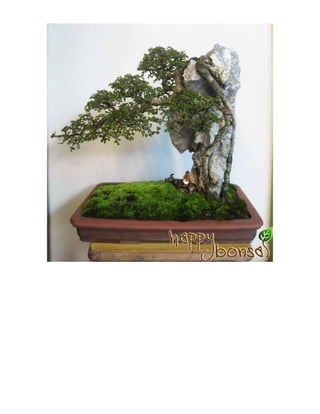
The basics
There are some general guidelines for all bonsai. Branches alternate from left to right and to
the back from the first branch to the top. The first branch is usually 1/3rd the distance from
the pot to the top, and is usually the longest and thickest. Branches get closer together,
thinner, and shorter as they get closer to the top. There should be no scars on the front, they
are hidden in the back when possible. The tree is off center in the pot. The trunk should be
thick at the bottom, and gradually get thinner along the length to the top. The top should lean
toward the viewer.
Formal Upright
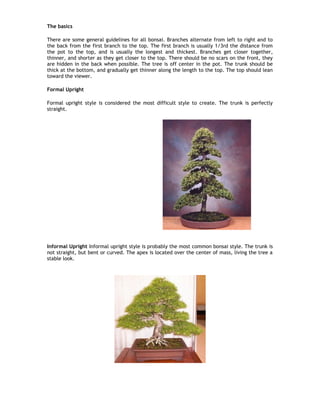
Formal upright style is considered the most difficult style to create. The trunk is perfectly
straight.
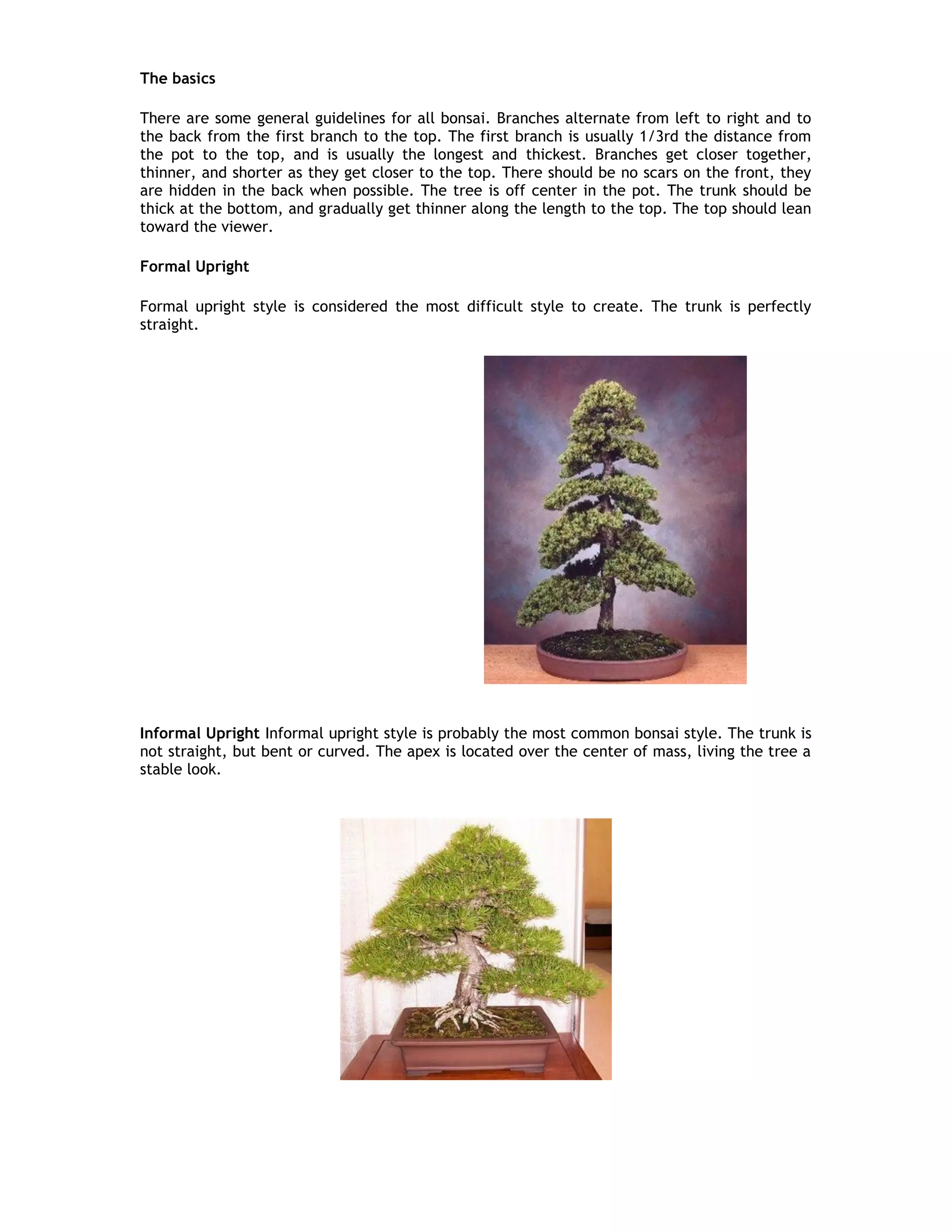
Informal Upright Informal upright style is probably the most common bonsai style. The trunk is
not straight, but bent or curved. The apex is located over the center of mass, living the tree a
stable look.
Slanted
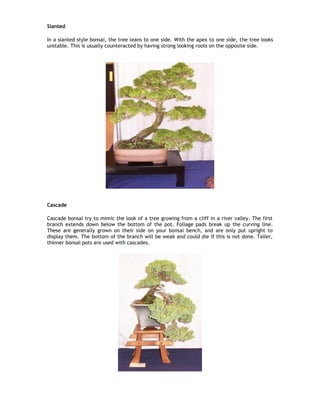
In a slanted style bonsai, the tree leans to one side. With the apex to one side, the tree looks
unstable. This is usually counteracted by having strong looking roots on the opposite side.
Cascade
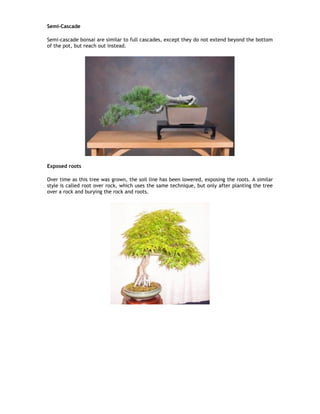
Cascade bonsai try to mimic the look of a tree growing from a cliff in a river valley. The first
branch extends down below the bottom of the pot. Foliage pads break up the curving line.
These are generally grown on their side on your bonsai bench, and are only put upright to
display them. The bottom of the branch will be weak and could die if this is not done. Taller,
thinner bonsai pots are used with cascades.
Semi-Cascade
Semi-cascade bonsai are similar to full cascades, except they do not extend beyond the bottom
of the pot, but reach out instead.
Exposed roots
Over time as this tree was grown, the soil line has been lowered, exposing the roots. A similar
style is called root over rock, which uses the same technique, but only after planting the tree
over a rock and burying the rock and roots.
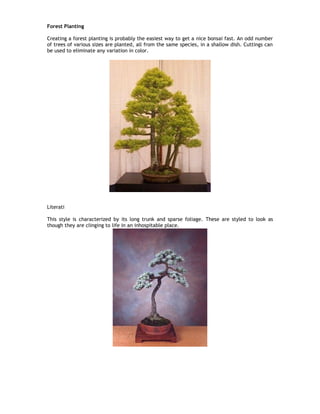
Forest Planting
Creating a forest planting is probably the easiest way to get a nice bonsai fast. An odd number
of trees of various sizes are planted, all from the same species, in a shallow dish. Cuttings can
be used to eliminate any variation in color.
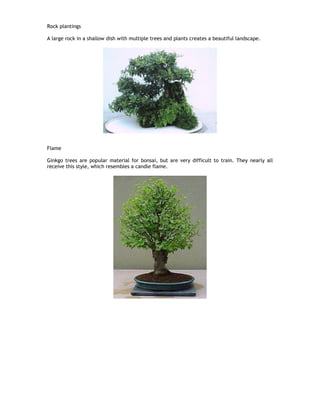
Literati
This style is characterized by its long trunk and sparse foliage. These are styled to look as
though they are clinging to life in an inhospitable place.
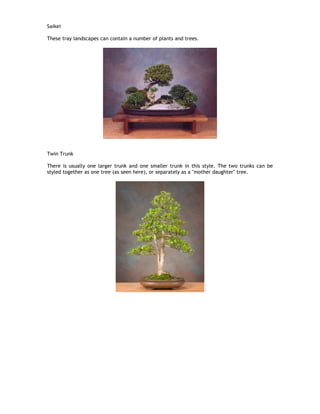
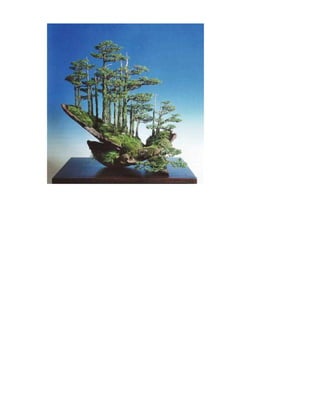
Rock plantings
A large rock in a shallow dish with multiple trees and plants creates a beautiful landscape.
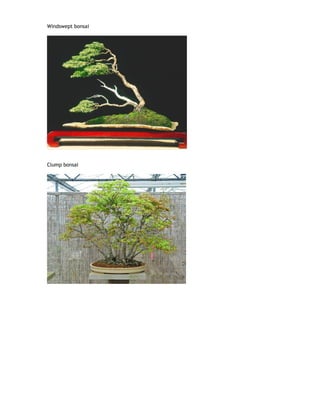
Flame
Ginkgo trees are popular material for bonsai, but are very difficult to train. They nearly all
receive this style, which resembles a candle flame.
Saikei
These tray landscapes can contain a number of plants and trees.
Twin Trunk
There is usually one larger trunk and one smaller trunk in this style. The two trunks can be
styled together as one tree (as seen here), or separately as a "mother daughter" tree.
Windswept bonsai
Clump bonsai
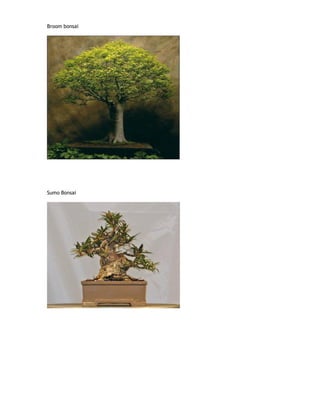
Broom bonsai
Sumo Bonsai
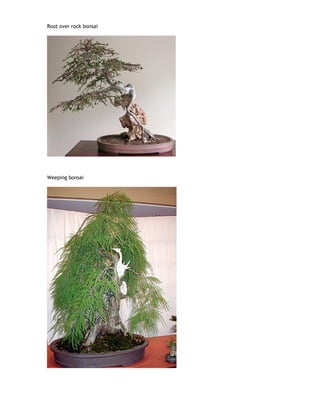
Root over rock bonsai
Weeping bonsai
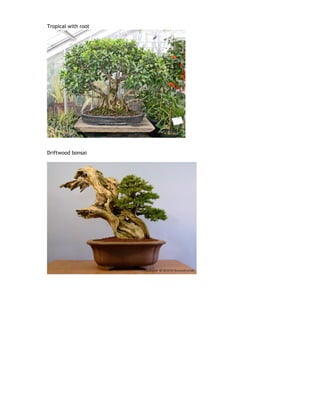
Tropical with root
Driftwood bonsai
Bonsai style
Bonsai style

Bonsai style

  • 1.
    The basics There aresome general guidelines for all bonsai. Branches alternate from left to right and to the back from the first branch to the top. The first branch is usually 1/3rd the distance from the pot to the top, and is usually the longest and thickest. Branches get closer together, thinner, and shorter as they get closer to the top. There should be no scars on the front, they are hidden in the back when possible. The tree is off center in the pot. The trunk should be thick at the bottom, and gradually get thinner along the length to the top. The top should lean toward the viewer. Formal Upright Formal upright style is considered the most difficult style to create. The trunk is perfectly straight. Informal Upright Informal upright style is probably the most common bonsai style. The trunk is not straight, but bent or curved. The apex is located over the center of mass, living the tree a stable look.
  • 2.
    Slanted In a slantedstyle bonsai, the tree leans to one side. With the apex to one side, the tree looks unstable. This is usually counteracted by having strong looking roots on the opposite side. Cascade Cascade bonsai try to mimic the look of a tree growing from a cliff in a river valley. The first branch extends down below the bottom of the pot. Foliage pads break up the curving line. These are generally grown on their side on your bonsai bench, and are only put upright to display them. The bottom of the branch will be weak and could die if this is not done. Taller, thinner bonsai pots are used with cascades.
  • 3.
    Semi-Cascade Semi-cascade bonsai aresimilar to full cascades, except they do not extend beyond the bottom of the pot, but reach out instead. Exposed roots Over time as this tree was grown, the soil line has been lowered, exposing the roots. A similar style is called root over rock, which uses the same technique, but only after planting the tree over a rock and burying the rock and roots.
  • 4.
    Forest Planting Creating aforest planting is probably the easiest way to get a nice bonsai fast. An odd number of trees of various sizes are planted, all from the same species, in a shallow dish. Cuttings can be used to eliminate any variation in color. Literati This style is characterized by its long trunk and sparse foliage. These are styled to look as though they are clinging to life in an inhospitable place.
  • 5.
    Rock plantings A largerock in a shallow dish with multiple trees and plants creates a beautiful landscape. Flame Ginkgo trees are popular material for bonsai, but are very difficult to train. They nearly all receive this style, which resembles a candle flame.
  • 6.
    Saikei These tray landscapescan contain a number of plants and trees. Twin Trunk There is usually one larger trunk and one smaller trunk in this style. The two trunks can be styled together as one tree (as seen here), or separately as a "mother daughter" tree.
  • 7.
  • 8.
  • 9.
    Root over rockbonsai Weeping bonsai
  • 10.