BONE PLATES
DR. SHANU SAURABH
DR RONGALI PRASHANTH TEJA
MAULANA AZAD MEDICAL COLLEGE
CLASSIFICATION
 SHAPE eg one third tubular plate
 WIDTH eg broad plate
 THICKNESS eg low contact plate
 SHAPE OF HOLE eg round hole plate
 ANATOMY eg condylar plate
 FUNCTION :
 NEUTRALIZATION PLATES
 COMPRESSION PLATES
 BUTTRESS PLATES
 TENSION BAND PLATES
 CONDYLAR PLATES
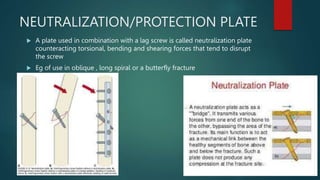
NEUTRALIZATION/PROTECTION PLATE
 A plate used in combination with a lag screw is called neutralization plate
counteracting torsional, bending and shearing forces that tend to disrupt
the screw
 Eg of use in oblique , long spiral or a butterfly fracture
COMPRESSION PLATE
 Direction of compression force is parallel to the plate
 Advantages of compression:
 Immediate increase in mechanical stability
 Less callus bridging distance
 Blood supply protection
 Friction reduction
 Increased primary bone healing
 TYPES OF COMPRESSION : STATIC VS DYNAMIC( tension band principle)
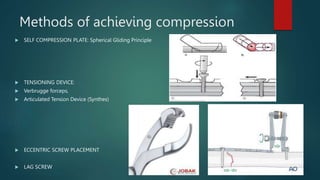
Methods of achieving compression
 SELF COMPRESSION PLATE: Spherical Gliding Principle
 TENSIONING DEVICE:
 Verbrugge forceps,
 Articulated Tension Device (Synthes)
 ECCENTRIC SCREW PLACEMENT
 LAG SCREW
TENSION BAND PLATE
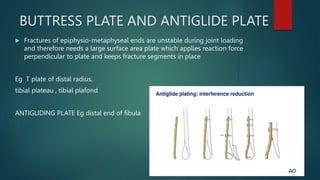
BUTTRESS PLATE AND ANTIGLIDE PLATE
 Fractures of epiphysio-metaphyseal ends are unstable during joint loading
and therefore needs a large surface area plate which applies reaction force
perpendicular to plate and keeps fracture segments in place
Eg T plate of distal radius,
tibial plateau , tibial plafond
ANTIGLIDING PLATE Eg distal end of fibula
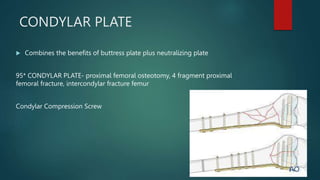
CONDYLAR PLATE
 Combines the benefits of buttress plate plus neutralizing plate
95* CONDYLAR PLATE- proximal femoral osteotomy, 4 fragment proximal
femoral fracture, intercondylar fracture femur
Condylar Compression Screw

BONE PLATES final.pptx

  • 1.
    BONE PLATES DR. SHANUSAURABH DR RONGALI PRASHANTH TEJA MAULANA AZAD MEDICAL COLLEGE
  • 2.
    CLASSIFICATION  SHAPE egone third tubular plate  WIDTH eg broad plate  THICKNESS eg low contact plate  SHAPE OF HOLE eg round hole plate  ANATOMY eg condylar plate  FUNCTION :  NEUTRALIZATION PLATES  COMPRESSION PLATES  BUTTRESS PLATES  TENSION BAND PLATES  CONDYLAR PLATES
  • 3.
    NEUTRALIZATION/PROTECTION PLATE  Aplate used in combination with a lag screw is called neutralization plate counteracting torsional, bending and shearing forces that tend to disrupt the screw  Eg of use in oblique , long spiral or a butterfly fracture
  • 4.
    COMPRESSION PLATE  Directionof compression force is parallel to the plate  Advantages of compression:  Immediate increase in mechanical stability  Less callus bridging distance  Blood supply protection  Friction reduction  Increased primary bone healing  TYPES OF COMPRESSION : STATIC VS DYNAMIC( tension band principle)
  • 5.
    Methods of achievingcompression  SELF COMPRESSION PLATE: Spherical Gliding Principle  TENSIONING DEVICE:  Verbrugge forceps,  Articulated Tension Device (Synthes)  ECCENTRIC SCREW PLACEMENT  LAG SCREW
  • 6.
  • 7.
    BUTTRESS PLATE ANDANTIGLIDE PLATE  Fractures of epiphysio-metaphyseal ends are unstable during joint loading and therefore needs a large surface area plate which applies reaction force perpendicular to plate and keeps fracture segments in place Eg T plate of distal radius, tibial plateau , tibial plafond ANTIGLIDING PLATE Eg distal end of fibula
  • 8.
    CONDYLAR PLATE  Combinesthe benefits of buttress plate plus neutralizing plate 95* CONDYLAR PLATE- proximal femoral osteotomy, 4 fragment proximal femoral fracture, intercondylar fracture femur Condylar Compression Screw