Dan Karran
 @dankarran
@BombSightUK
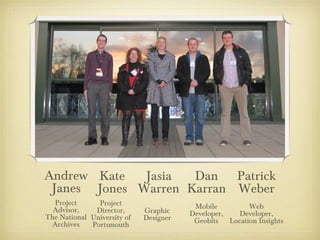
Andrew Kate   Jasia  Dan Patrick
 Janes Jones Warren Karran Weber
  Project      Project                   Mobile        Web
  Advisor,    Director,      Graphic    Developer,  Developer,
The National University of   Designer    Geobits Location Insights
 Archives    Portsmouth
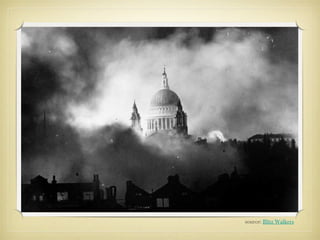
source: Blitz Walkers
The Project
•Mapping the London WW2 bomb census between
 7 October 1940 and 6th June 1941
•Maps previously only available in the Reading
 Room at The National Archives
•Making the maps available to citizen researchers,
 academics and students wanting to explore where
 the bombs fell and to discover memories and
 photographs from the period
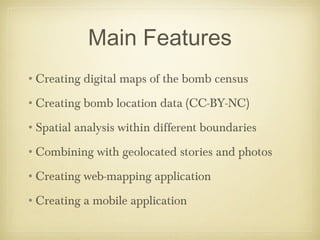
Main Features
•Creating digital maps of the bomb census
•Creating bomb location data (CC-BY-NC)
•Spatial analysis within different boundaries
•Combining with geolocated stories and photos
•Creating web-mapping application
•Creating a mobile application
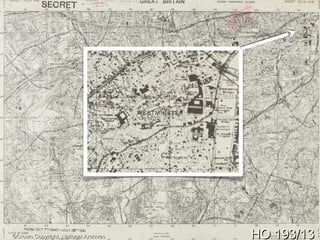
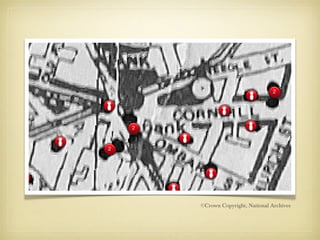
©Crown Copyright, National Archives   HO 193/13
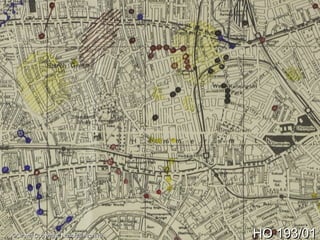
©Crown Copyright, National Archives   HO 193/01
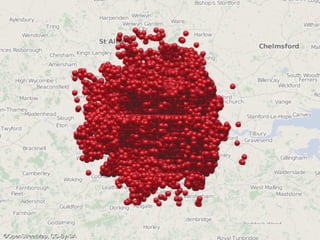
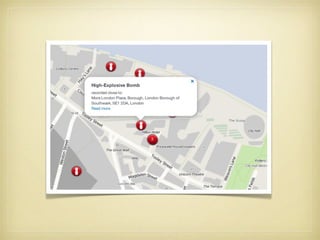
©OpenStreetMap, CC-By-SA
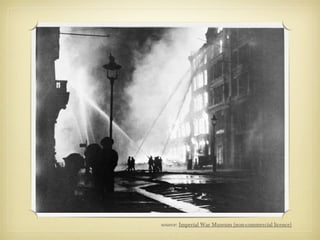
source: Imperial War Museum (non-commercial licence)
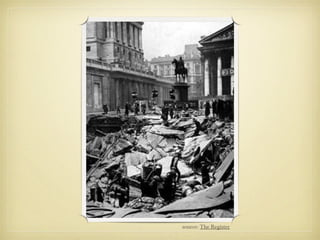
source: The Register
©Crown Copyright, National Archives
Technology
•PostGIS
•GeoServer (map tiles & WFS with GeoJSON)
•Django
•Leaflet
•OpenStreetMap
•Bootstrap
Mobile Technology

•Android
•Phonegap / Cordova
•Leaflet
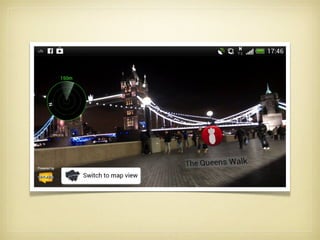
•Wikitude Augmented Reality
Project Outcomes
• Georeferenced bomb maps, digital record of national importance
• Final data shared with The National Archives; reduce use of the
  original maps and aid their preservation
• Opening up maps – increasing accessibility; remove need for
  specialist skills to prepare and process data; only need to do things
  once
• Geographic framework for study of impact of bombing; aiding
  understanding of social/economic impact, post WW2
• Augmented reality app not just for academic use; the power of
  geography
Still to Come
•Download datasets for non-commercial use
 (Spring)
•Tutorials on using the site (Summer)
•iOS mobile app


•& more work... (if we can find funding)
bombsight.org
               @BombSightUK


@dankarran   dan@geobits.co.uk   dankarran.com

Bomb Sight presentation for Geomob London

Editor's Notes

  • #4 London Blitz started 7 September 1940 with 950 bombers on daytime raid (first and last mass daylight raid) Birmingham and Liverpool already attacked in August ended 16/21 May 1941 attacked 71 times over 267 days (37 weeks) 30,000 died, 50,000 injured 1 million houses destroyed
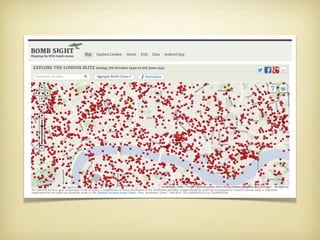
  • #7 Aggregate maps Recording bombs dropped at night, 7 Oct 1940 - 6 June 1941 35 map sheets for Civil Defence Region 5 (London)
  • #8 Weekly maps over 500 2.5inch to the mile map sheets for Region 5 (London) we picked 9 for central London covering first week of reporting (7-14 Oct) colours show day of week, different symbols different types of bombs
  • #9 All aggregate data ~30,000 bombs cartography - impact, consistency
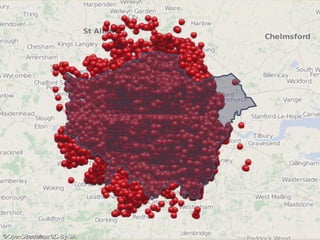
  • #10 Greater London ~28,000 high explosive bombs ~400 parachute mines
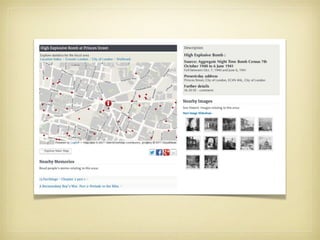
  • #13 including geolocated stories from BBC WW2 People’s War and geolocated photos from Imperial War Museum’s open licensed collection
  • #14 Photos Queen Victoria Street, near Bank, 10 May 1941
  • #15 Accuracy bomb destroying Central Line ticket hall at Bank Station
  • #16 Accuracy point locations sometimes slightly off, georeferencing of images not perfect
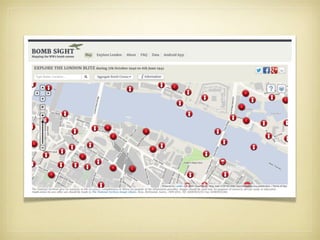
  • #17 Geocoding accuracy historic data using modern dataset - close to More London Place, street name changes over time, etc.
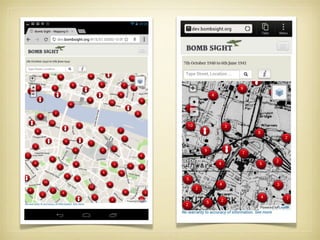
  • #19 Responsive site, perfect for tablets, smartphones, etc.
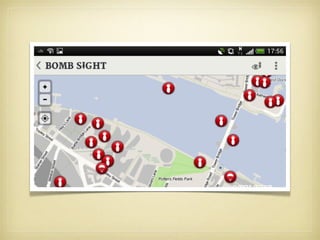
  • #20 Android app
  • #21 Augmented reality
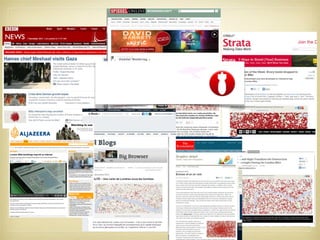
  • #24 ~70 global media reports 7th December - 185,000 unique visitors (~6 per second at peak) 380,000 unique visitors since launch