What is a Bone Density Scan (DXA)?
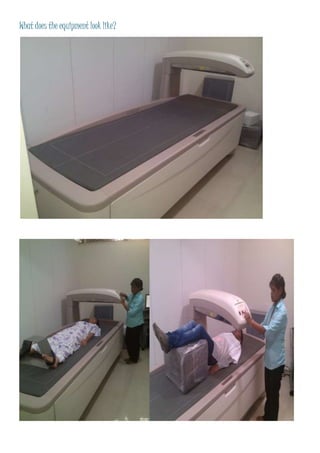
Bone density scanning, also called dual-energy x-ray absorptiometry (DXA) or bone densitometry,
is an enhanced form of x-raytechnology that is used to measure bone loss. DXA is today's
established standard for measuring bone mineral density (BMD).
DXA is most often performed on the lower spine and hips.
What are some common uses of the procedure?
DXA is most often used to diagnose osteoporosis, a condition that often affects women after
menopause but may also be found in men and rarely in children. Osteoporosis involves a gradual
loss of calcium, as well as structural changes, causing the bones to become thinner, more fragile
and more likely to break. DXA is also effective in tracking the effects of treatment for
osteoporosis and other conditions that cause bone loss.
What is Osteoporosis?
Osteoporosis is the weakening of bones in the body. It is caused by lack of calcium deposited in
the bones. This lack of calcium causes the bones to become brittle, so they break easily. Some
side effects are limping. Some symptoms late in the disease include pain in the bones, living in
a wheelchair (as a result of), and lower back pain due to spinal bone fractures.[1] Elderly people
are more likely to develop osteoporosis than younger people. The amount of calcium in the bones
decreases as a person gets older.
Bone density testing is strongly recommended to who?
Those who
 are a post-menopausal woman and not taking estrogen.
 have a personal or maternal history of hip fracture or smoking.
 are a post-menopausal woman who is tall (over 5 feet 7 inches) or thin (less than 125
pounds).
 are a man with clinical conditions associated with bone loss.
 use medications that are known to cause bone loss, including corticosteroids such as
Prednisone, various anti-seizure medications such as Dilantin and certain barbiturates, or
high-dose thyroid replacement drugs.
 have diabetes, liver disease, kidney disease or a family history of osteoporosis.
 have high bone turnover, which shows up in the form of excessive collagen in urine samples.
 have a thyroid condition, such as hyperthyroidism.
 have a parathyroid condition, such as hyperparathyroidism.
 have experienced a fracture after only mild trauma.
 have had x-ray evidence of vertebral fracture or other signs of osteoporosis.
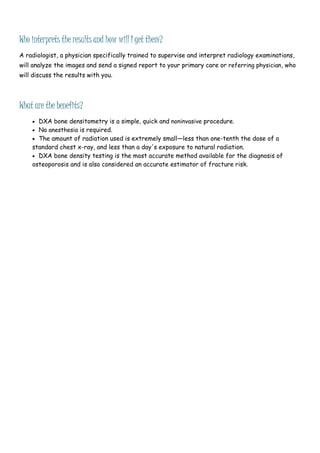
What does the equipment look like?
Who interprets the results and how will I get them?
A radiologist, a physician specifically trained to supervise and interpret radiology examinations,
will analyze the images and send a signed report to your primary care or referring physician, who
will discuss the results with you.
What are the benefits?
 DXA bone densitometry is a simple, quick and noninvasive procedure.
 No anesthesia is required.
 The amount of radiation used is extremely small—less than one-tenth the dose of a
standard chest x-ray, and less than a day's exposure to natural radiation.
 DXA bone density testing is the most accurate method available for the diagnosis of
osteoporosis and is also considered an accurate estimator of fracture risk.

BMD

  • 1.
    What is aBone Density Scan (DXA)? Bone density scanning, also called dual-energy x-ray absorptiometry (DXA) or bone densitometry, is an enhanced form of x-raytechnology that is used to measure bone loss. DXA is today's established standard for measuring bone mineral density (BMD). DXA is most often performed on the lower spine and hips. What are some common uses of the procedure? DXA is most often used to diagnose osteoporosis, a condition that often affects women after menopause but may also be found in men and rarely in children. Osteoporosis involves a gradual
  • 2.
    loss of calcium,as well as structural changes, causing the bones to become thinner, more fragile and more likely to break. DXA is also effective in tracking the effects of treatment for osteoporosis and other conditions that cause bone loss. What is Osteoporosis? Osteoporosis is the weakening of bones in the body. It is caused by lack of calcium deposited in the bones. This lack of calcium causes the bones to become brittle, so they break easily. Some side effects are limping. Some symptoms late in the disease include pain in the bones, living in a wheelchair (as a result of), and lower back pain due to spinal bone fractures.[1] Elderly people are more likely to develop osteoporosis than younger people. The amount of calcium in the bones decreases as a person gets older. Bone density testing is strongly recommended to who? Those who  are a post-menopausal woman and not taking estrogen.  have a personal or maternal history of hip fracture or smoking.  are a post-menopausal woman who is tall (over 5 feet 7 inches) or thin (less than 125 pounds).  are a man with clinical conditions associated with bone loss.  use medications that are known to cause bone loss, including corticosteroids such as Prednisone, various anti-seizure medications such as Dilantin and certain barbiturates, or high-dose thyroid replacement drugs.  have diabetes, liver disease, kidney disease or a family history of osteoporosis.  have high bone turnover, which shows up in the form of excessive collagen in urine samples.  have a thyroid condition, such as hyperthyroidism.  have a parathyroid condition, such as hyperparathyroidism.  have experienced a fracture after only mild trauma.  have had x-ray evidence of vertebral fracture or other signs of osteoporosis.
  • 3.
    What does theequipment look like?
  • 4.
    Who interprets theresults and how will I get them? A radiologist, a physician specifically trained to supervise and interpret radiology examinations, will analyze the images and send a signed report to your primary care or referring physician, who will discuss the results with you. What are the benefits?  DXA bone densitometry is a simple, quick and noninvasive procedure.  No anesthesia is required.  The amount of radiation used is extremely small—less than one-tenth the dose of a standard chest x-ray, and less than a day's exposure to natural radiation.  DXA bone density testing is the most accurate method available for the diagnosis of osteoporosis and is also considered an accurate estimator of fracture risk.