
Nature of Business
     Activity
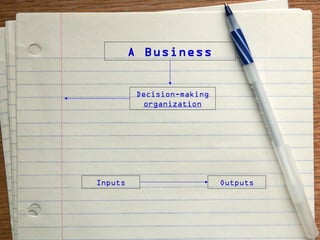
A Business


          Decision-making
           organization


Inputs                      Outputs
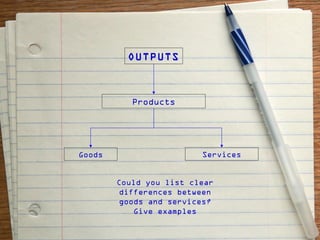
OUTPUTS


           Products


Goods                    Services


        Could you list clear
         differences between
         goods and services?
            Give examples
• Peter Drucker said:

“The only purpose of a
business is to create
      customers”


         What is a
         customer?
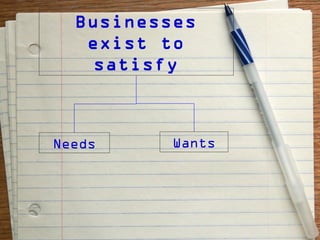
Businesses
   exist to
    satisfy


Needs     Wants
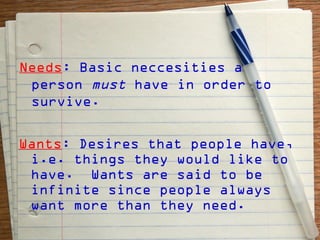
Needs: Basic neccesities a
 person must have in order to
 survive.

Wants: Desires that people have,
 i.e. things they would like to
 have. Wants are said to be
 infinite since people always
 want more than they need.
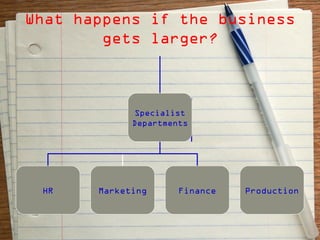
What happens if the business
        gets larger?


              Specialist
             Departments


 HR    Marketing      Finance   Production
• “It is easy to open a business
 but much more difficult to keep
             it open”

        -Chinese proverb


        Analyze why this
       statement would be
             true.|
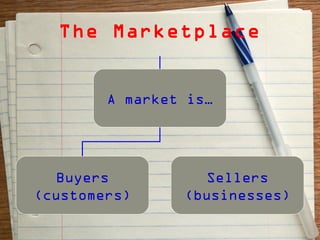
The Marketplace


        A market is…


   Buyers          Sellers
(customers)     (businesses)
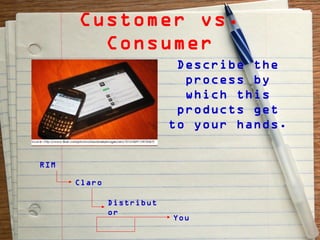
Customer vs.
        Consumer
                           Describe the
                            process by
                            which this
                           products get
                          to your hands.


RIM

      Claro

              Distribut
              or
                          You
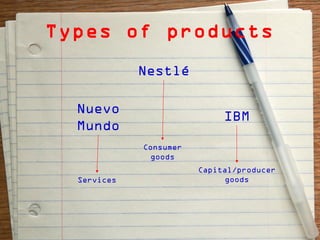
Types of products
             Nestlé

  Nuevo
                             IBM
  Mundo
             Consumer
               goods
                        Capital/producer
  Services                    goods
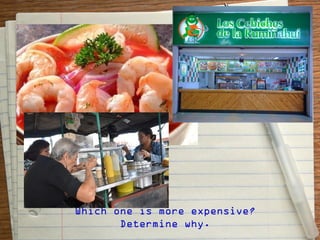
Which one is more expensive?
       Determine why.
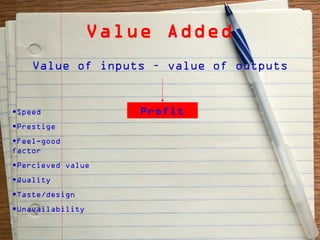
Value Added
    Value of inputs – value of outputs


•Speed                Profit
•Prestige
•Feel-good
factor
•Percieved value
•Quality
•Taste/design
•Unavailability
Opportunity Cost
• It wasn't until the mid 1990s that supermarket went against
  advice and began to trade on sundays. Supermarkets in the
  UK realized the opportunity cost of being closed on sundays.
  They were fined for such actions, as licensing to trade on
  sundays had not been enacted, but the fines were so
  insignificant compared to the revenues they were earning by
  openning on sundays that the supermarkets continued with
  this practice. McDonald's Corporation has followed by
  opening some 24-hours stores around the world. Some
  banks in Hong Kong have openened on sundays since 2006.

• Define the term opportunity cost.
The role of profit
Profit refers to the positive difference
  between a firm’s total revenues and its
  total costs per period of time.

Revenues: inflows of money, usually from
 the sale of products.

Costs: Outflows of money, to finance
 production activities.
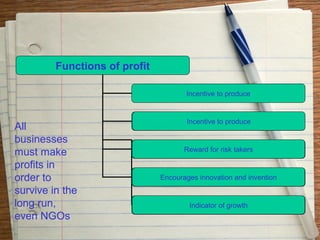
Functions of profit

                                       Incentive to produce


                                       Incentive to produce
                                        Reward for risk takers
All
businesses
                                      Reward for risk takers
must make                         Encourages innovation and invention

profits in
order to                       Encourages innovation and invention
                                        Indicator of growth

survive in the
long run,                               Indicatorof finance
                                          Source of growth

even NGOs
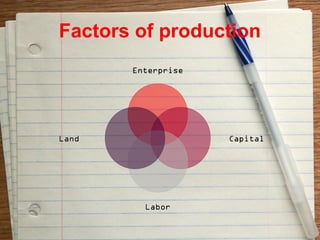
Factors of production
       Enterprise


Land                Capital


         Labor
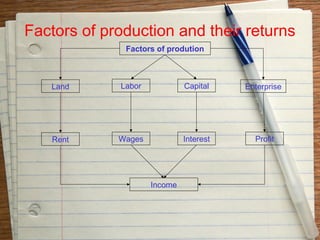
Factors of production and their returns
              Factors of prodution


   Land      Labor            Capital    Enterprise


   Rent      Wages            Interest     Profit


                     Income
Specialization
Think of a pizzeria. What do they produce?
 How do they do it? Who makes it?

It means that a business concentrates on
   the production of a particular good or
   service or a small range of similar
   products
Specialization
It ocurrs at different levels:
• Individuals: people specialize in a profession,
   e.g. laywers, doctors.
• Departamental: within an organization, e.g.
   marketing, finance.
• Corporate: in a limited range of products, e.g.
   Dell, Hilton, Sony
• Regional: London and NY specialize in financial
   services.
• National: Japan and Germany are known for
   their manufacturing.
                   DIVISION OF LABOR
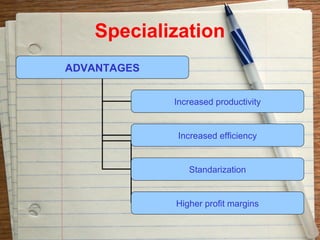
Specialization
ADVANTAGES


             Increased productivity


             Increased efficiency


                Standarization


             Higher profit margins
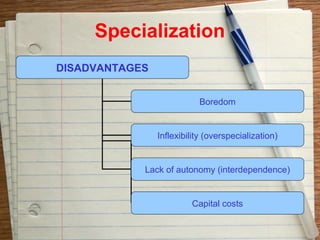
Specialization
DISADVANTAGES


                           Boredom


                Inflexibility (overspecialization)


            Lack of autonomy (interdependence)


                         Capital costs
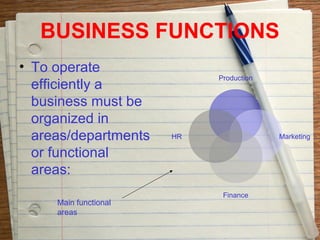
BUSINESS FUNCTIONS
• To operate
                            Production
  efficiently a
  business must be
  organized in
  areas/departments    HR                Marketing

  or functional
  areas:
                             Finance
     Main functional
     areas
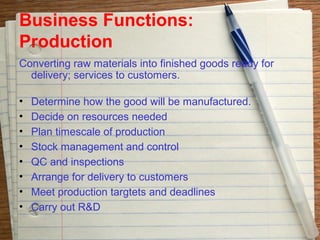
Business Functions:
Production
Converting raw materials into finished goods ready for
  delivery; services to customers.

•   Determine how the good will be manufactured.
•   Decide on resources needed
•   Plan timescale of production
•   Stock management and control
•   QC and inspections
•   Arrange for delivery to customers
•   Meet production targtets and deadlines
•   Carry out R&D
Business Functions:
Marketing
To identify and satisfy consumer wants and needs.
  Ultimately, they ensure the products sell.

This is done using tools: market research, test marketing,
  packaging and advertising.

To sum up, the four P’s of Marketing are:
• Product
• Price
• Promotion
• Place
Business Functions:
Finance
This dept. is in charge of managing the
 firm’s money. The fnance manager must
 ensure that accurate recording and
 reporting of financial documentation takes
 place. This is to comply with legal
 requirements* and to inform those
 interested in the financial position of the
 business.
Business Functions:
 Human Resources (Personnel)
This dept. is responsible for managing
 personnel: workforce planning, training,
 appraisal, pay and benefits, equal
 opportunities, health and safety matters,
 and fostering working relations.

Nature of Business Activity

  • 1.
  • 2.
    A Business Decision-making organization Inputs Outputs
  • 3.
    OUTPUTS Products Goods Services Could you list clear differences between goods and services? Give examples
  • 4.
    • Peter Druckersaid: “The only purpose of a business is to create customers” What is a customer?
  • 5.
    Businesses exist to satisfy Needs Wants
  • 6.
    Needs: Basic neccesitiesa person must have in order to survive. Wants: Desires that people have, i.e. things they would like to have. Wants are said to be infinite since people always want more than they need.
  • 7.
    What happens ifthe business gets larger? Specialist Departments HR Marketing Finance Production
  • 8.
    • “It iseasy to open a business but much more difficult to keep it open” -Chinese proverb Analyze why this statement would be true.|
  • 9.
    The Marketplace A market is… Buyers Sellers (customers) (businesses)
  • 10.
    Customer vs. Consumer Describe the process by which this products get to your hands. RIM Claro Distribut or You
  • 11.
    Types of products Nestlé Nuevo IBM Mundo Consumer goods Capital/producer Services goods
  • 12.
    Which one ismore expensive? Determine why.
  • 13.
    Value Added Value of inputs – value of outputs •Speed Profit •Prestige •Feel-good factor •Percieved value •Quality •Taste/design •Unavailability
  • 15.
    Opportunity Cost • Itwasn't until the mid 1990s that supermarket went against advice and began to trade on sundays. Supermarkets in the UK realized the opportunity cost of being closed on sundays. They were fined for such actions, as licensing to trade on sundays had not been enacted, but the fines were so insignificant compared to the revenues they were earning by openning on sundays that the supermarkets continued with this practice. McDonald's Corporation has followed by opening some 24-hours stores around the world. Some banks in Hong Kong have openened on sundays since 2006. • Define the term opportunity cost.
  • 16.
    The role ofprofit Profit refers to the positive difference between a firm’s total revenues and its total costs per period of time. Revenues: inflows of money, usually from the sale of products. Costs: Outflows of money, to finance production activities.
  • 17.
    Functions of profit Incentive to produce Incentive to produce Reward for risk takers All businesses Reward for risk takers must make Encourages innovation and invention profits in order to Encourages innovation and invention Indicator of growth survive in the long run, Indicatorof finance Source of growth even NGOs
  • 18.
    Factors of production Enterprise Land Capital Labor
  • 19.
    Factors of productionand their returns Factors of prodution Land Labor Capital Enterprise Rent Wages Interest Profit Income
  • 20.
    Specialization Think of apizzeria. What do they produce? How do they do it? Who makes it? It means that a business concentrates on the production of a particular good or service or a small range of similar products
  • 21.
    Specialization It ocurrs atdifferent levels: • Individuals: people specialize in a profession, e.g. laywers, doctors. • Departamental: within an organization, e.g. marketing, finance. • Corporate: in a limited range of products, e.g. Dell, Hilton, Sony • Regional: London and NY specialize in financial services. • National: Japan and Germany are known for their manufacturing. DIVISION OF LABOR
  • 22.
    Specialization ADVANTAGES Increased productivity Increased efficiency Standarization Higher profit margins
  • 23.
    Specialization DISADVANTAGES Boredom Inflexibility (overspecialization) Lack of autonomy (interdependence) Capital costs
  • 24.
    BUSINESS FUNCTIONS • Tooperate Production efficiently a business must be organized in areas/departments HR Marketing or functional areas: Finance Main functional areas
  • 25.
    Business Functions: Production Converting rawmaterials into finished goods ready for delivery; services to customers. • Determine how the good will be manufactured. • Decide on resources needed • Plan timescale of production • Stock management and control • QC and inspections • Arrange for delivery to customers • Meet production targtets and deadlines • Carry out R&D
  • 26.
    Business Functions: Marketing To identifyand satisfy consumer wants and needs. Ultimately, they ensure the products sell. This is done using tools: market research, test marketing, packaging and advertising. To sum up, the four P’s of Marketing are: • Product • Price • Promotion • Place
  • 27.
    Business Functions: Finance This dept.is in charge of managing the firm’s money. The fnance manager must ensure that accurate recording and reporting of financial documentation takes place. This is to comply with legal requirements* and to inform those interested in the financial position of the business.
  • 28.
    Business Functions: HumanResources (Personnel) This dept. is responsible for managing personnel: workforce planning, training, appraisal, pay and benefits, equal opportunities, health and safety matters, and fostering working relations.