DATA-DRIVEN
MANAGEMENT OF
BLUE DETERGENT
A S I M U L A T I O N C A S E S T U D Y
V I S H W A S K
1 5 1 2 0 2 0 3 2
OVERVIEW OF THE CASE
• BLUE – Key laundry detergent product for Kelsey-White.
• K-W managers took decisions regarding manufacturing and marketing based on gut
feeling or experience.
• They did not have any support for the decisions taken.
• Hence a need was identified by the CEO to take data-driven decisions.
BLUE DETERGENT MARKET
LANDSCAPE
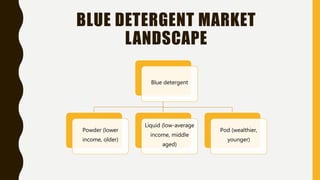
Blue detergent
Powder (lower
income, older)
Liquid (low-average
income, middle
aged)
Pod (wealthier,
younger)
BLUE DETERGENT MARKET
LANDSCAPE
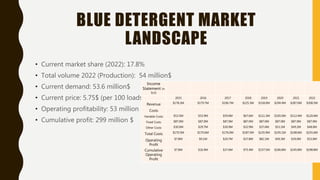
• Current market share (2022): 17.8%
• Total volume 2022 (Production): 54 million$
• Current demand: 53.6 million$
• Current price: 5.75$ (per 100 loads)
• Operating profitability: 53 million $
• Cumulative profit: 299 million $
Income
Statement (in
$US)
2015 2016 2017 2018 2019 2020 2021 2022
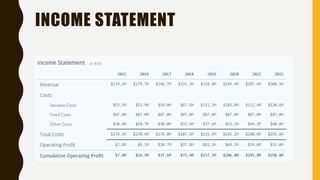
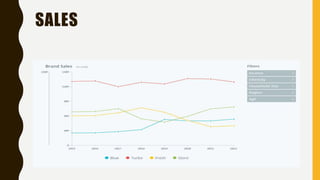
Revenue $178.2M $179.7M $196.7M $225.3M $318.0M $294.4M $287.6M $308.5M
Costs
Variable Costs $53.5M $53.9M $59.0M $67.6M $111.3M $105.0M $112.4M $120.6M
Fixed Costs $87.0M $87.0M $87.0M $87.0M $87.0M $87.0M $87.0M $87.0M
Other Costs $30.0M $29.7M $30.0M $32.9M $37.6M $53.1M $49.2M $48.0M
Total Costs $170.5M $170.6M $176.0M $187.5M $235.9M $245.1M $248.6M $255.6M
Operating
Profit
$7.8M $9.1M $20.7M $37.8M $82.1M $49.3M $39.0M $53.0M
Cumulative
Operating
Profit
$7.8M $16.9M $37.6M $75.4M $157.5M $206.8M $245.8M $298.8M
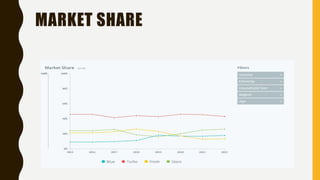
MARKET SHARE DIVISION
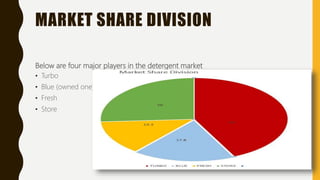
Below are four major players in the detergent market
• Turbo
• Blue (owned one)
• Fresh
• Store
STRATEGY BASED DECISIONS
• Market demand prediction and Pricing
• Formulation decisions
• Promotional spending decisions
• Market segmentation decisions
MARKET DEMAND PREDICTION AND
PRICING
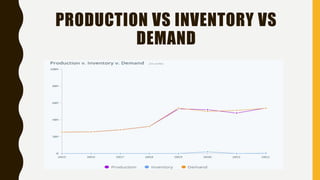
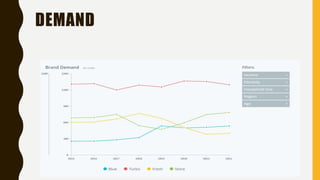
• It was estimated that the appropriate demand would be 53, 52, 48, and
54 million$ and the same range was maintained for all four years (2019
to 2022), this is because of the reduced price strategy (can contribute to
more market share) that had applied while pricing. Hence, the demand
estimation was much higher but, in the year 2020 there was an
inventory of 2m$ left and it was carry forward to the year 2021.
• Regions- west, southeast, northeast - from the estimation tool, it was
found that there were more demand in these regions.
FORMULATION DECISIONS
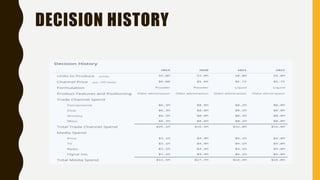
• For first two years (2019 and 2020), powder was selected as the formulation decision,
odor elimination as a positioning parameter because firstly, powder belongs to lower
income and older group i.e. lower segment- it is better to initiate the process with this
segment and the customers view this product as affordable, and dependable.
Secondly, effect of variable costs on powder is 0% (no change).
• For next two years (2021 and 2022), Liquid was selected as the formulation decision,
odor elimination as a positioning parameter. Since, the market has reached the
development phase, changing the formulation to liquid is much needed (i.e. Lower
income to average income- fall into this segment) and also variable cost is less when
compared to powder (7%).
PROMOTIONAL SPENDING DECISIONS
• These decisions were taken within the total budget available.
• Total trade channel spending from 2019 to 2022: 25.1, 35.4, 32.8,
32million$.
• Total media spending from 2019 to 2022: 12.5, 17.7, 16.4, 16million $.
• These change in values is because of the change in budget allocation
based on the performance of every year.
MARKET SEGMENTATION DECISIONS
• Since the formulation decision was powder for 2019 and 2020, the income group
selected was under $20,000 (lower income fall into this category), ethnicities were
black, Hispanic and white, all households, and the regions were west, southeast and
northeast (based on the demand prediction across regions- it was found that, these
three regions corresponds to more demand).
• The formulation decision was liquid for 2021 and 2022, the income group selected was
under $20,000 and $20,000-$39,999 (lower and average income fall into this category),
ethnicities were black, Hispanic and white, all households, and the regions were west,
southeast and northeast (based on the demand prediction across regions- it was found
that, these three regions corresponds to more demand).
OTHER STRATEGIES APPLIED
• Initially, Price leader strategy.
• Later reduced priced strategy.
• Demand based strategy.
• Strategy based on the formulation.
• Selection of specific geography that contributes to more demand
• Followed by Geographical expansion
• Average all channels-promotional strategy
• Positioning (Odor elimination as a core feature)
• Segmentation based strategy.
FINDINGS
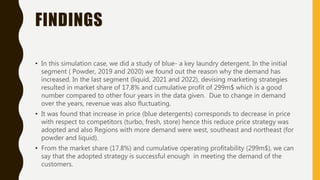
• In this simulation case, we did a study of blue- a key laundry detergent. In the initial
segment ( Powder, 2019 and 2020) we found out the reason why the demand has
increased. In the last segment (liquid, 2021 and 2022), devising marketing strategies
resulted in market share of 17.8% and cumulative profit of 299m$ which is a good
number compared to other four years in the data given. Due to change in demand
over the years, revenue was also fluctuating.
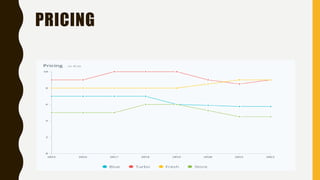
• It was found that increase in price (blue detergents) corresponds to decrease in price
with respect to competitors (turbo, fresh, store) hence this reduce price strategy was
adopted and also Regions with more demand were west, southeast and northeast (for
powder and liquid).
• From the market share (17.8%) and cumulative operating profitability (299m$), we can
say that the adopted strategy is successful enough in meeting the demand of the
customers.
PRODUCTION VS INVENTORY VS
DEMAND
INCOME STATEMENT
PRICING
MARKET SHARE
DECISION HISTORY
DEMAND
SALES

Blue detergent vishwas 151202032

  • 1.
    DATA-DRIVEN MANAGEMENT OF BLUE DETERGENT AS I M U L A T I O N C A S E S T U D Y V I S H W A S K 1 5 1 2 0 2 0 3 2
  • 2.
    OVERVIEW OF THECASE • BLUE – Key laundry detergent product for Kelsey-White. • K-W managers took decisions regarding manufacturing and marketing based on gut feeling or experience. • They did not have any support for the decisions taken. • Hence a need was identified by the CEO to take data-driven decisions.
  • 3.
    BLUE DETERGENT MARKET LANDSCAPE Bluedetergent Powder (lower income, older) Liquid (low-average income, middle aged) Pod (wealthier, younger)
  • 4.
    BLUE DETERGENT MARKET LANDSCAPE •Current market share (2022): 17.8% • Total volume 2022 (Production): 54 million$ • Current demand: 53.6 million$ • Current price: 5.75$ (per 100 loads) • Operating profitability: 53 million $ • Cumulative profit: 299 million $ Income Statement (in $US) 2015 2016 2017 2018 2019 2020 2021 2022 Revenue $178.2M $179.7M $196.7M $225.3M $318.0M $294.4M $287.6M $308.5M Costs Variable Costs $53.5M $53.9M $59.0M $67.6M $111.3M $105.0M $112.4M $120.6M Fixed Costs $87.0M $87.0M $87.0M $87.0M $87.0M $87.0M $87.0M $87.0M Other Costs $30.0M $29.7M $30.0M $32.9M $37.6M $53.1M $49.2M $48.0M Total Costs $170.5M $170.6M $176.0M $187.5M $235.9M $245.1M $248.6M $255.6M Operating Profit $7.8M $9.1M $20.7M $37.8M $82.1M $49.3M $39.0M $53.0M Cumulative Operating Profit $7.8M $16.9M $37.6M $75.4M $157.5M $206.8M $245.8M $298.8M
  • 5.
    MARKET SHARE DIVISION Beloware four major players in the detergent market • Turbo • Blue (owned one) • Fresh • Store
  • 6.
    STRATEGY BASED DECISIONS •Market demand prediction and Pricing • Formulation decisions • Promotional spending decisions • Market segmentation decisions
  • 7.
    MARKET DEMAND PREDICTIONAND PRICING • It was estimated that the appropriate demand would be 53, 52, 48, and 54 million$ and the same range was maintained for all four years (2019 to 2022), this is because of the reduced price strategy (can contribute to more market share) that had applied while pricing. Hence, the demand estimation was much higher but, in the year 2020 there was an inventory of 2m$ left and it was carry forward to the year 2021. • Regions- west, southeast, northeast - from the estimation tool, it was found that there were more demand in these regions.
  • 8.
    FORMULATION DECISIONS • Forfirst two years (2019 and 2020), powder was selected as the formulation decision, odor elimination as a positioning parameter because firstly, powder belongs to lower income and older group i.e. lower segment- it is better to initiate the process with this segment and the customers view this product as affordable, and dependable. Secondly, effect of variable costs on powder is 0% (no change). • For next two years (2021 and 2022), Liquid was selected as the formulation decision, odor elimination as a positioning parameter. Since, the market has reached the development phase, changing the formulation to liquid is much needed (i.e. Lower income to average income- fall into this segment) and also variable cost is less when compared to powder (7%).
  • 9.
    PROMOTIONAL SPENDING DECISIONS •These decisions were taken within the total budget available. • Total trade channel spending from 2019 to 2022: 25.1, 35.4, 32.8, 32million$. • Total media spending from 2019 to 2022: 12.5, 17.7, 16.4, 16million $. • These change in values is because of the change in budget allocation based on the performance of every year.
  • 10.
    MARKET SEGMENTATION DECISIONS •Since the formulation decision was powder for 2019 and 2020, the income group selected was under $20,000 (lower income fall into this category), ethnicities were black, Hispanic and white, all households, and the regions were west, southeast and northeast (based on the demand prediction across regions- it was found that, these three regions corresponds to more demand). • The formulation decision was liquid for 2021 and 2022, the income group selected was under $20,000 and $20,000-$39,999 (lower and average income fall into this category), ethnicities were black, Hispanic and white, all households, and the regions were west, southeast and northeast (based on the demand prediction across regions- it was found that, these three regions corresponds to more demand).
  • 11.
    OTHER STRATEGIES APPLIED •Initially, Price leader strategy. • Later reduced priced strategy. • Demand based strategy. • Strategy based on the formulation. • Selection of specific geography that contributes to more demand • Followed by Geographical expansion • Average all channels-promotional strategy • Positioning (Odor elimination as a core feature) • Segmentation based strategy.
  • 12.
    FINDINGS • In thissimulation case, we did a study of blue- a key laundry detergent. In the initial segment ( Powder, 2019 and 2020) we found out the reason why the demand has increased. In the last segment (liquid, 2021 and 2022), devising marketing strategies resulted in market share of 17.8% and cumulative profit of 299m$ which is a good number compared to other four years in the data given. Due to change in demand over the years, revenue was also fluctuating. • It was found that increase in price (blue detergents) corresponds to decrease in price with respect to competitors (turbo, fresh, store) hence this reduce price strategy was adopted and also Regions with more demand were west, southeast and northeast (for powder and liquid). • From the market share (17.8%) and cumulative operating profitability (299m$), we can say that the adopted strategy is successful enough in meeting the demand of the customers.
  • 13.
  • 14.
  • 15.
  • 16.
  • 17.
  • 18.
  • 19.