Blockchain Technology for Patients Medical Records
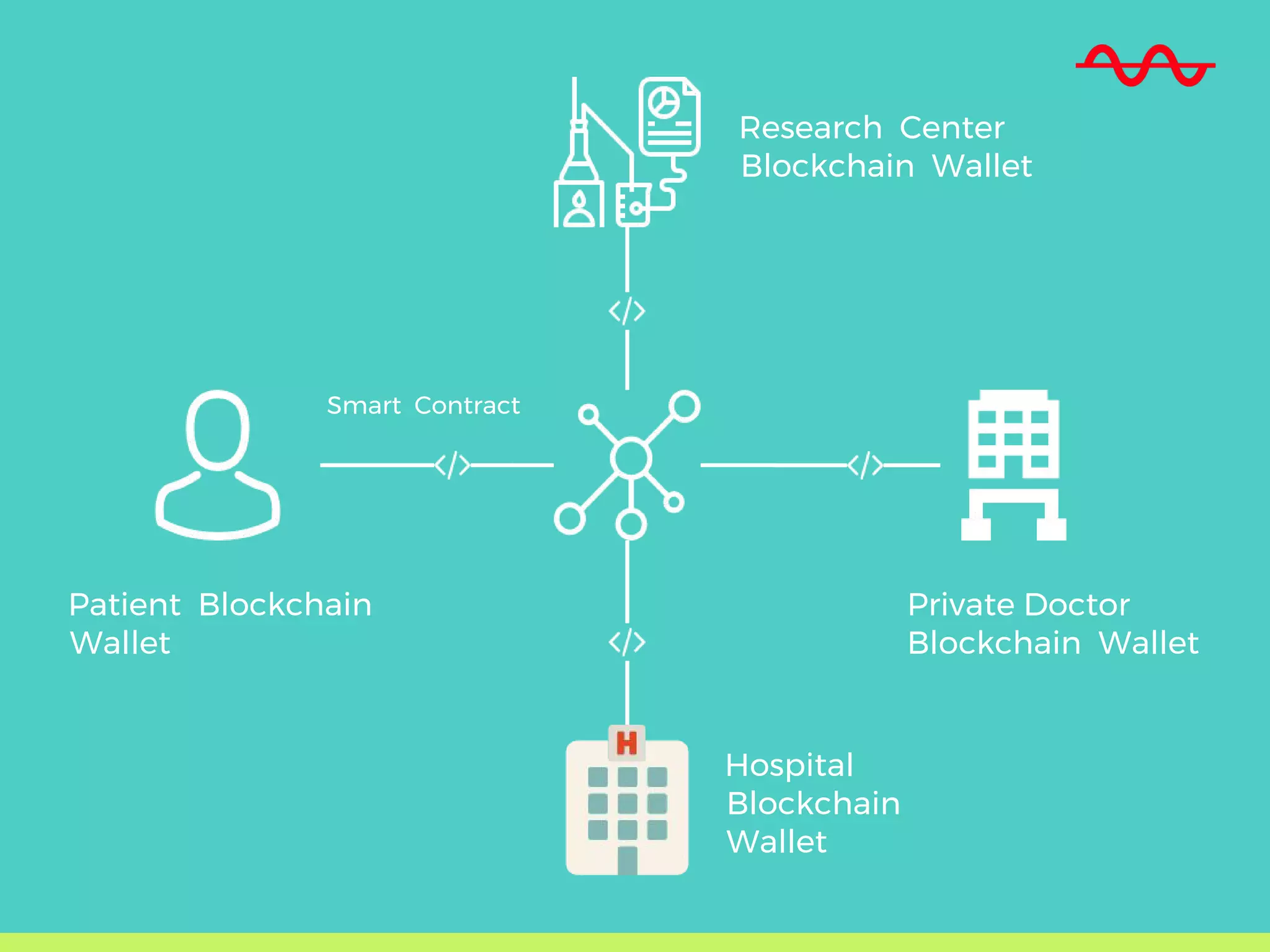
Med-ifile is pioneering the use of blockchain technology in healthcare to establish trustworthy, value-based relationships among patients, healthcare providers, and businesses, enhancing privacy and security of sensitive personal data. The system facilitates direct access to medical records through decentralized storage, dynamic consent, and smart contracts while addressing legal and economic aspects of health data management. Its initial application targets the field of in vitro fertilization, catering to a significant global population in need.
What ?
Med-iFile
develops newmechanisms of trust and of direct, value-based relationships between patients, hospitals,
research centres, and businesses, by making use, for the very first time in healthcare, of a blockchain
system.
Blockchain and Smart Contracts enhance utmost privacy and security in healthcare
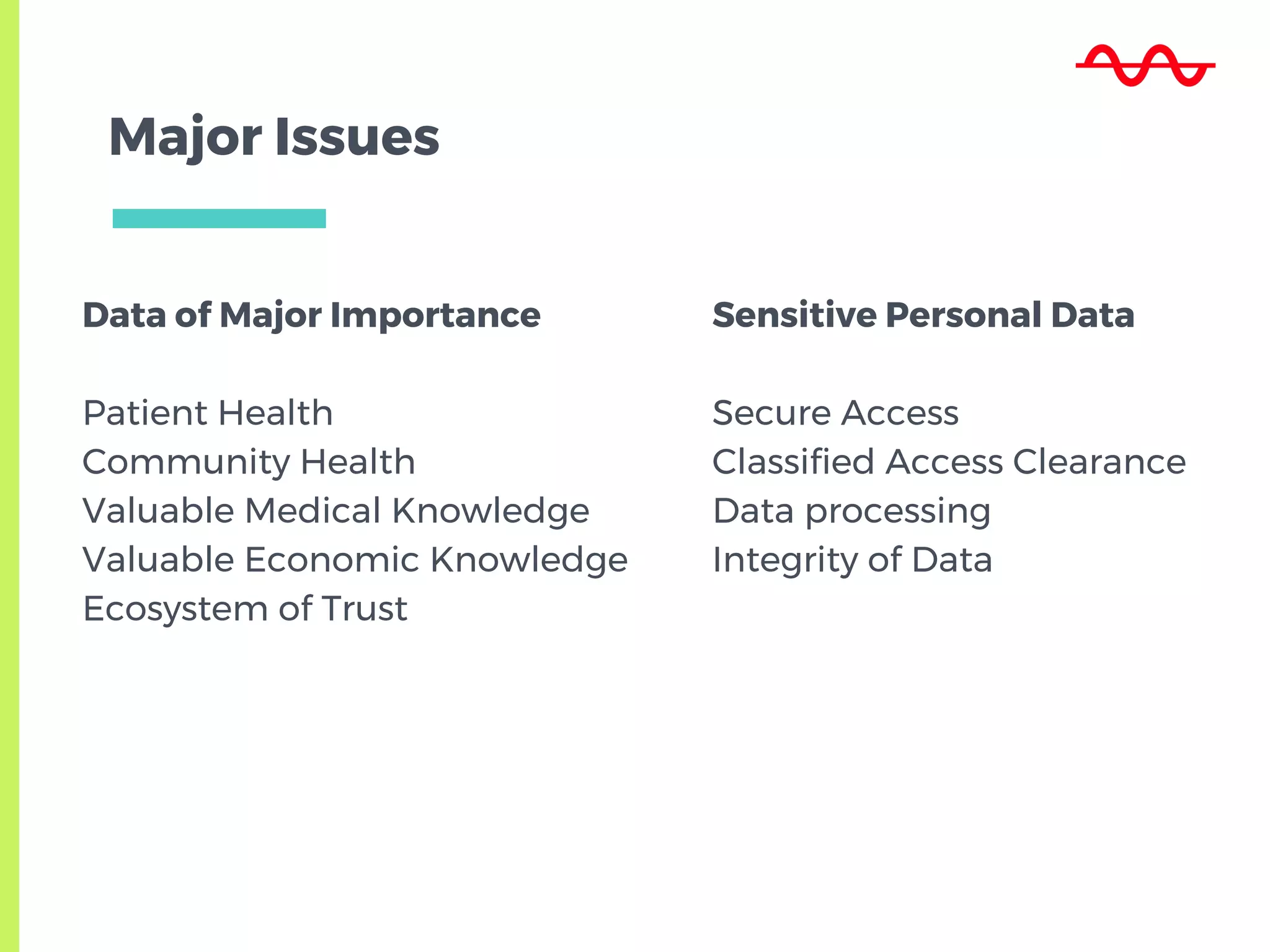
Sensitive Personal Data
SecureAccess
Classified Access Clearance
Data processing
Integrity of Data
Major Issues
Data of Major Importance
Patient Health
Community Health
Valuable Medical Knowledge
Valuable Economic Knowledge
Ecosystem of Trust
5.
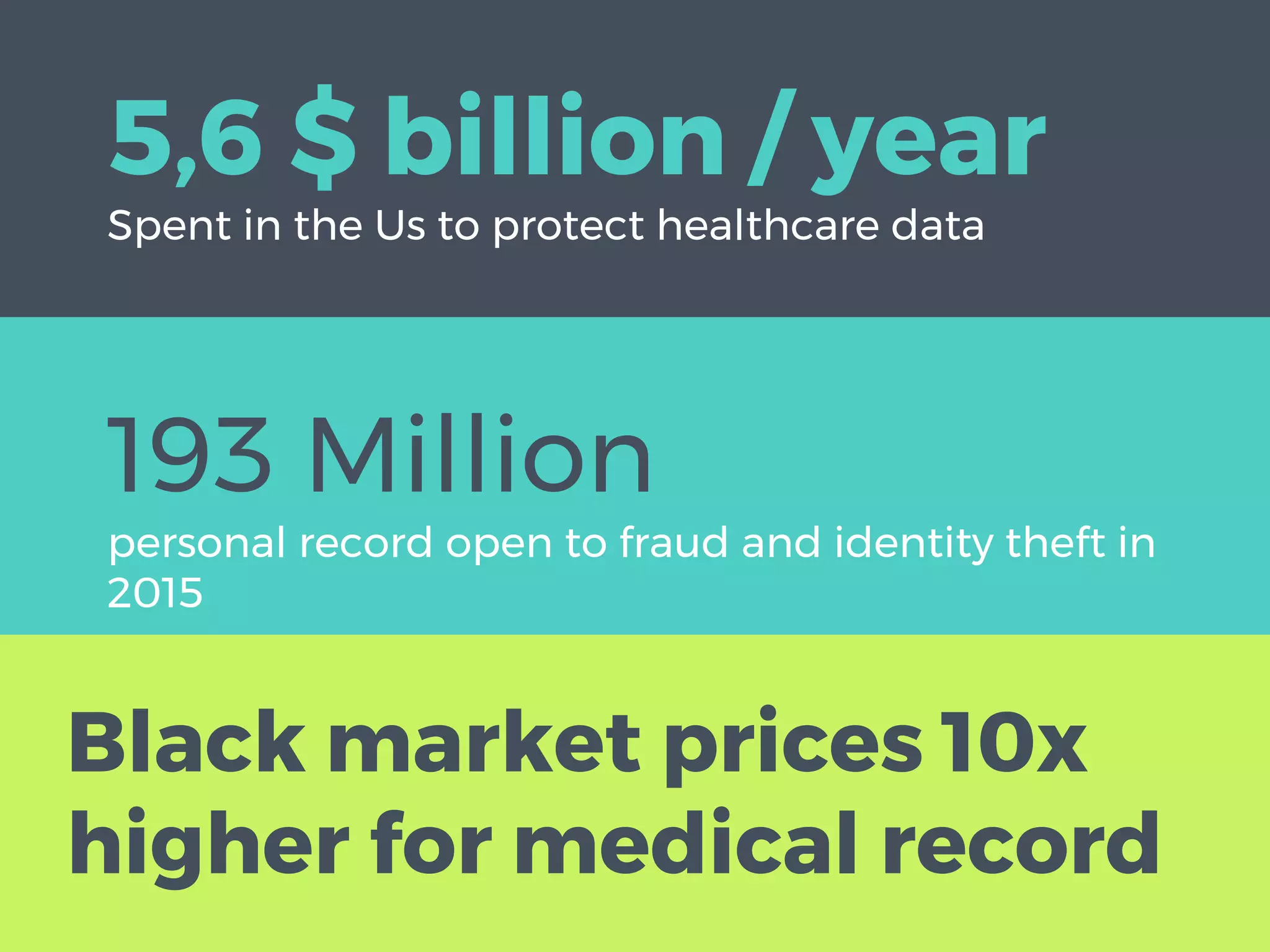
5,6 $ billion/ year
Spent in the Us to protect healthcare data
Black market prices 10x
higher for medical record
193 Million
personal record open to fraud and identity theft in
2015
6.
Why now?
Are sufficientprerequisites met?
▣ Cryptography
▣ Communication Protocols
▣ Blockchain
▣ IPFS
Basic concepts
• Personaldata accounts: personal data storage clouds enabling
individual access from any personal device through the blockchain in a
probative, secure, open and decentralized manner
• Blockchain: a digital ledger where information relating to the
distributed storage of the health data is trimmed in hash-based
language code, making it possible both to assign to each dataset a
unique ID
• Dynamic consent: the possibility for individuals to provide different
types of consent according to distinct potential data uses, taking
control over who will access his/her data and for what purpose
• Smart contracts: self-executing contractual states, based on the
formalisation of contractual relations in digital form, which are stored
on the blockchain and automate the execution of peer-to-peer
transactions under user-defined conditions
12.
Economic aspects -Basic costs
Application Cost
▣ Development
▣ Maintenance
▣ Update/Upgrade
Equipment Cost (Hardware)
▣ Data servers
▣ Hardware maintenance
▣ Hardware expansion
Operating Cost
▣ Data entry
▣ Consensus mechanism
R&D Cost
▣ Research team
▣ Data analysis and presentation
13.
Economic aspects -Financial tools
Implementation/Development
● EU Funding Programs
● Crowdfunding
(donation,rewards & equity)
● State & Private Funding
Operation
● Membership according to activity
● Alternative funding methods
○ Data entry - Application usage
○ Data storage - Data usage for research
14.
First Application:In VitroFertilization (IVF)
Why;
Significant Population
● 300.000 couples in Greece
● 90 million couples worldwide
High value of Information
● Multifactorial process - female & male
● Every attempt is an important source of
information - more efforts, higher success ratio
Organised Institutions
● Greek National Authority of Assisted Reproduction
● Fertility support organization KIVELI
15.
Team
Papastergiou Fotis
Business Development– Health sector
https://www.linkedin.com/in/fotis-papastergiou
Kalivi Sotiria
Midwife-IVF coordinator-ESHRE
MAR certified
https://www.linkedin.com/in/sotiria-
kalivi
Martinis Christos
Business Development -
Education
https://www.linkedin.com/in/cmarti
nis
Efthymiou George
Web-developer / Blockchain Developer
https://www.linkedin.com/in/george-efthymiou
Drakopoulos Nikos
Blockchain Developer - Data Management Solutions
https://www.linkedin.com/in/ndrakopoulos
Giannakis Dimitrios
Software Developer
https://www.linkedin.com/in/dimitrios-giannakis
-04bb53138/












![[DSC Europe 23][DigiHealth] Muthu Ramachandran AI and Blockchain Framework fo...](https://cdn.slidesharecdn.com/ss_thumbnails/ywfr1vamszg8ermdrhjc-muthu-ram-231130112725-9ce2bf0e-thumbnail.jpg?width=640&height=640&fit=bounds)


