Typography and Computer Applications
817
Project File Topic: Blockchain
Made By: Yash Agarwal
Class: 12th A
Roll No: 40
Certificate
This is to certify that Yash Agarwal of class 12 has successfully completed
the project work for Typography and Computer Applications, titled as
“Blockchain: The Revolutionizing Technology” for the Class 12 CBSE
Practical Examination.
Ms. Pooja Marwah
Acknowledgement
For the successful completion of this project, I would like to express my deep gratitude
towards my Typography and Computer applications teacher Ms. Pooja Marwah for her
continuous guidance and support throughout the tenure. Without her guidance and
motivation, this project’s success would not have been possible.
Description of the Project
This Project is based on the topic of Blockchain. This covers the following content:
 Introduction
 Key Features of Blockchain
 Blockchain in Finance
 Blockchain in Supply Chain
 Blockchain in Healthcare
 Challenges and Opportunities
 Blockchain and Cybersecurity
 Future Applications
Blockchain:
The
Revolutionizing
Technology
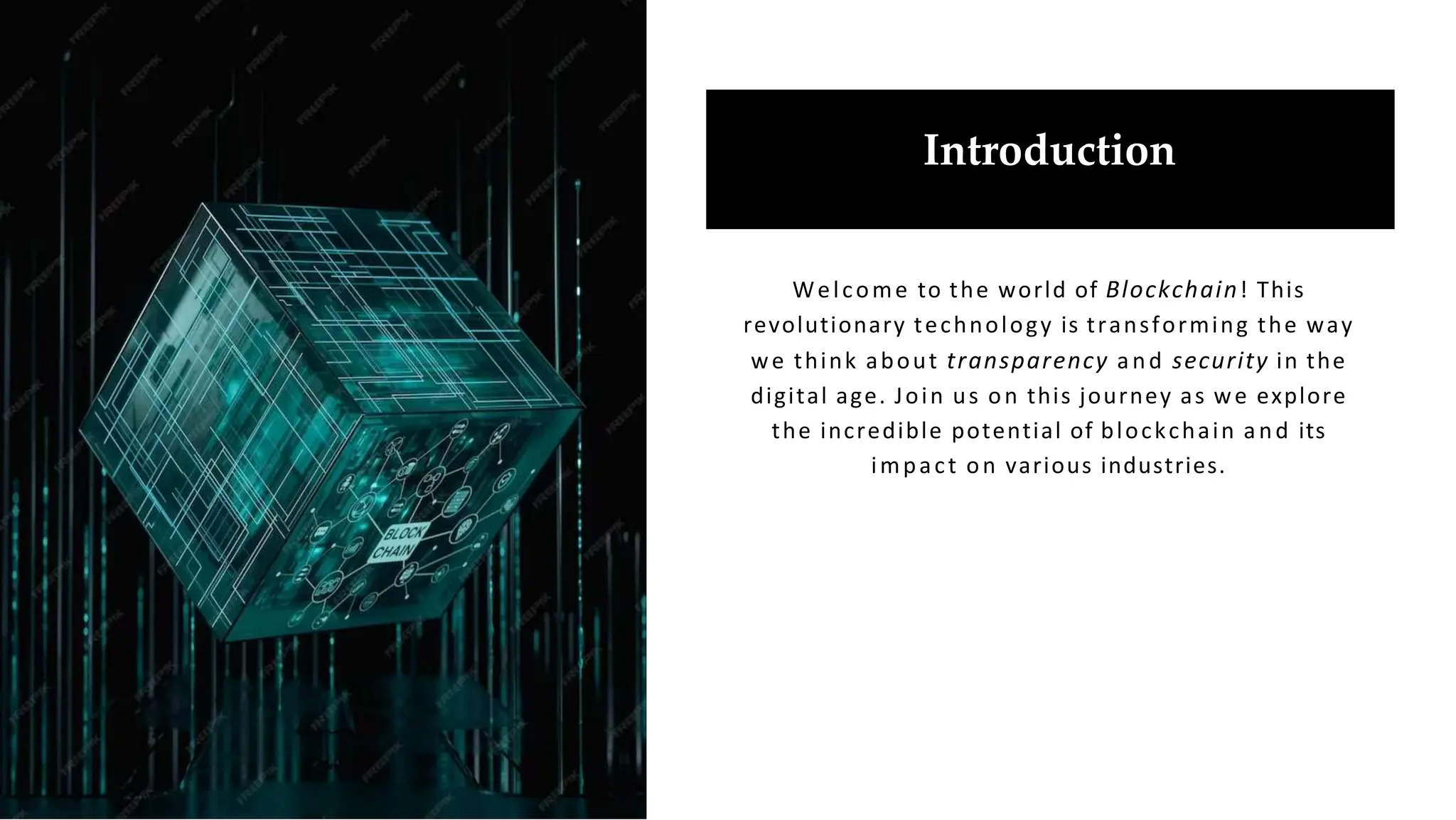
Introduction
Welcome to the world of Blockchain! This
revolutionary technology is transforming the way
we think about transparency and security in the
digital age. Join us on this journey as we explore
the incredible potential of blockchain and its
impact on various industries.
What is Blockchain?
At its core, is a
decentralized and
digital ledger. It enables secure and
transparent transactions without
the need for intermediaries. Each
transaction is recorded in a block,
linked to previous blocks, forming a
chain. This
technology has the potential to
revolutionize industries like finance,
supply chain, healthcare, and more.
Key Features of Blockchain
Blockchain's key features include
, , and
. Transactions are visible
to all participants, ensuring
transparency. The use of
ensures secure and tamper-resistant
data. Unlike traditional systems,
blockchain operates in a decentralized
manner, eliminating the need for a
central authority.
Blockchain in Finance
The financial sector is embracing
blockchain for and
transactions. Blockchain enables
faster cross-border payments,
reduces fraud, and enhances
. Smart contracts on
blockchain automate processes,
reducing costs and improving
transparency. With blockchain, the
future of finance is becoming more
inclusive and accessible to all.
Blockchain in Supply Chain
Blockchain brings and
to supply chains. With
blockchain, every step of the supply chain
can be recorded, ensuring authenticity
and reducing counterfeiting. Smart
contracts automate agreements between
parties, streamlining logistics and
reducing disputes. Blockchain
revolutionizes supply chain management,
m a k i n g it more efficient and trustworthy.
Blockchain in Healthcare
In healthcare, blockchain enhances
and .
Patient records stored on blockchain
are encrypted and accessible only by
authorized parties. Blockchain
enables seamless sharing of medical
data between healthcare providers,
improving patient care and reducing
errors. With blockchain, the
healthcare industry is advancing
towards a more efficient and patient-
centric future.
Challenges and Opportunities
While blockchain offers immense
potential, it also faces challenges.
Scalability, regulatory frameworks, and
energy consumption are areas of concern.
However, the opportunities are vast.
Blockchain can revolutionize voting
systems, intellectual property rights, digital
identities, and more. Embracing
blockchain technology will pave the way
for a more transparent, secure, and
decentralized future.
Blockchain and Cybersecurity
Blockchain plays a crucial role in
enhancing cybersecurity. Its
decentralized nature makes it
resistant to hacking and data
manipulation. Blockchain-based
identity m a n a g e m e n t systems
provide a secure framework for
digital identities. B y leveraging
blockchain, organizations can
safeguard sensitive information
and protect against cyber threats,
ensuring a safer digital ecosystem.
Future Applications of Blockchain
The future holds exciting possibilities
for blockchain. From decentralized
finance (DeFi) and tokenization of
assets to Internet of Things (IoT)
integration and global supply chain
transparency, blockchain will continue
to disrupt industries. As technology
evolves, blockchain's potential to
reshape the digital landscape is
limitless, unlocking new opportunities
and driving innovation.
Conclusion
In conclusion, blockchain is revolutionizing transparency and security
in the digital age. Its decentralized and immutable nature ensures
trust and eliminates intermediaries. From finance to healthcare and
supply chain to cybersecurity, blockchain is transforming industries
and unlocking new possibilities. Embrace this technology to be a part
of the decentralized future and drive innovation in the digital world.

BlockChain: The revolutionary technology project report

  • 1.
    Typography and ComputerApplications 817 Project File Topic: Blockchain Made By: Yash Agarwal Class: 12th A Roll No: 40
  • 2.
    Certificate This is tocertify that Yash Agarwal of class 12 has successfully completed the project work for Typography and Computer Applications, titled as “Blockchain: The Revolutionizing Technology” for the Class 12 CBSE Practical Examination. Ms. Pooja Marwah
  • 3.
    Acknowledgement For the successfulcompletion of this project, I would like to express my deep gratitude towards my Typography and Computer applications teacher Ms. Pooja Marwah for her continuous guidance and support throughout the tenure. Without her guidance and motivation, this project’s success would not have been possible.
  • 4.
    Description of theProject This Project is based on the topic of Blockchain. This covers the following content:  Introduction  Key Features of Blockchain  Blockchain in Finance  Blockchain in Supply Chain  Blockchain in Healthcare  Challenges and Opportunities  Blockchain and Cybersecurity  Future Applications
  • 5.
  • 6.
    Introduction Welcome to theworld of Blockchain! This revolutionary technology is transforming the way we think about transparency and security in the digital age. Join us on this journey as we explore the incredible potential of blockchain and its impact on various industries.
  • 7.
    What is Blockchain? Atits core, is a decentralized and digital ledger. It enables secure and transparent transactions without the need for intermediaries. Each transaction is recorded in a block, linked to previous blocks, forming a chain. This technology has the potential to revolutionize industries like finance, supply chain, healthcare, and more.
  • 8.
    Key Features ofBlockchain Blockchain's key features include , , and . Transactions are visible to all participants, ensuring transparency. The use of ensures secure and tamper-resistant data. Unlike traditional systems, blockchain operates in a decentralized manner, eliminating the need for a central authority.
  • 9.
    Blockchain in Finance Thefinancial sector is embracing blockchain for and transactions. Blockchain enables faster cross-border payments, reduces fraud, and enhances . Smart contracts on blockchain automate processes, reducing costs and improving transparency. With blockchain, the future of finance is becoming more inclusive and accessible to all.
  • 10.
    Blockchain in SupplyChain Blockchain brings and to supply chains. With blockchain, every step of the supply chain can be recorded, ensuring authenticity and reducing counterfeiting. Smart contracts automate agreements between parties, streamlining logistics and reducing disputes. Blockchain revolutionizes supply chain management, m a k i n g it more efficient and trustworthy.
  • 11.
    Blockchain in Healthcare Inhealthcare, blockchain enhances and . Patient records stored on blockchain are encrypted and accessible only by authorized parties. Blockchain enables seamless sharing of medical data between healthcare providers, improving patient care and reducing errors. With blockchain, the healthcare industry is advancing towards a more efficient and patient- centric future.
  • 12.
    Challenges and Opportunities Whileblockchain offers immense potential, it also faces challenges. Scalability, regulatory frameworks, and energy consumption are areas of concern. However, the opportunities are vast. Blockchain can revolutionize voting systems, intellectual property rights, digital identities, and more. Embracing blockchain technology will pave the way for a more transparent, secure, and decentralized future.
  • 13.
    Blockchain and Cybersecurity Blockchainplays a crucial role in enhancing cybersecurity. Its decentralized nature makes it resistant to hacking and data manipulation. Blockchain-based identity m a n a g e m e n t systems provide a secure framework for digital identities. B y leveraging blockchain, organizations can safeguard sensitive information and protect against cyber threats, ensuring a safer digital ecosystem.
  • 14.
    Future Applications ofBlockchain The future holds exciting possibilities for blockchain. From decentralized finance (DeFi) and tokenization of assets to Internet of Things (IoT) integration and global supply chain transparency, blockchain will continue to disrupt industries. As technology evolves, blockchain's potential to reshape the digital landscape is limitless, unlocking new opportunities and driving innovation.
  • 15.
    Conclusion In conclusion, blockchainis revolutionizing transparency and security in the digital age. Its decentralized and immutable nature ensures trust and eliminates intermediaries. From finance to healthcare and supply chain to cybersecurity, blockchain is transforming industries and unlocking new possibilities. Embrace this technology to be a part of the decentralized future and drive innovation in the digital world.