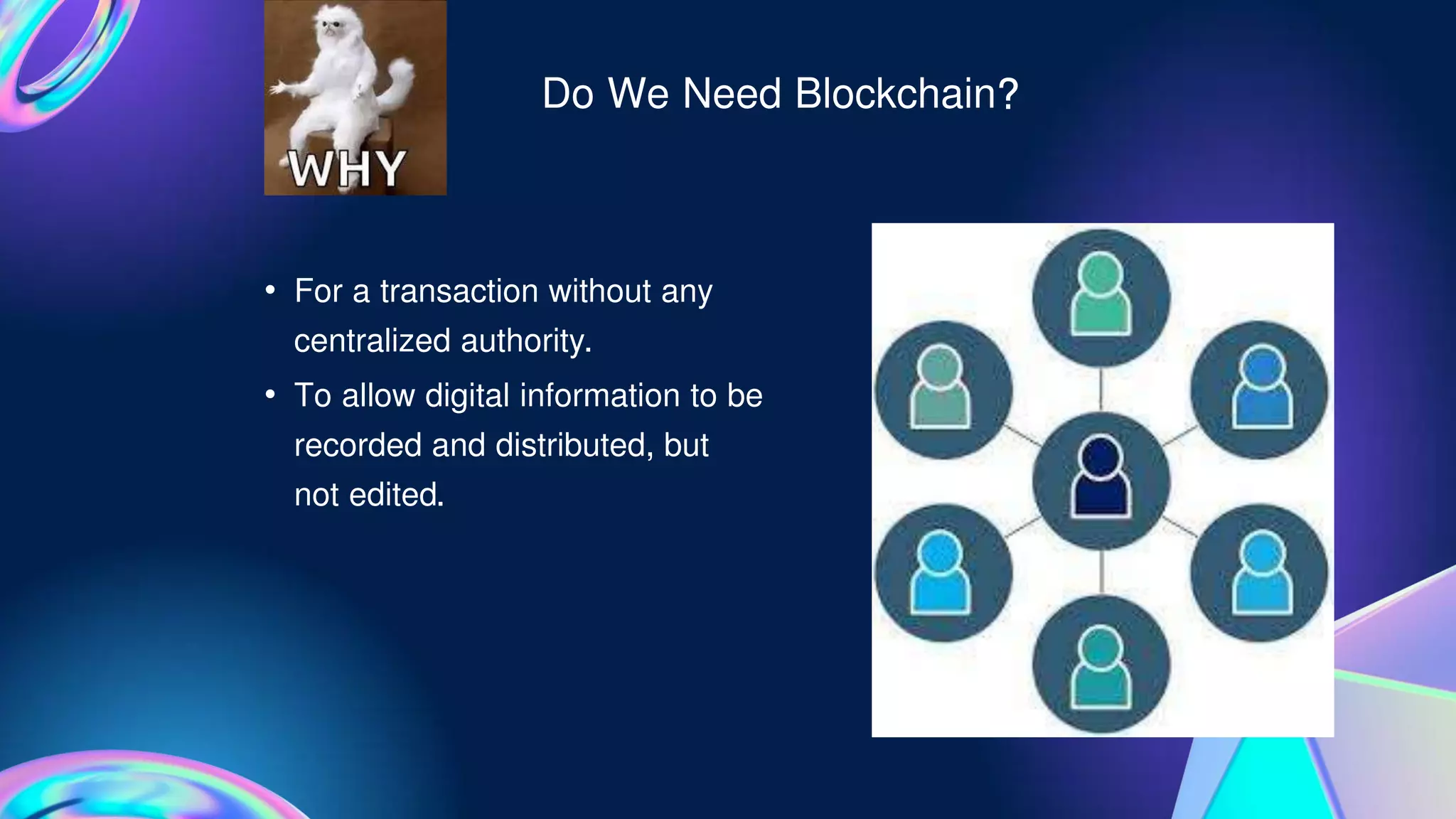
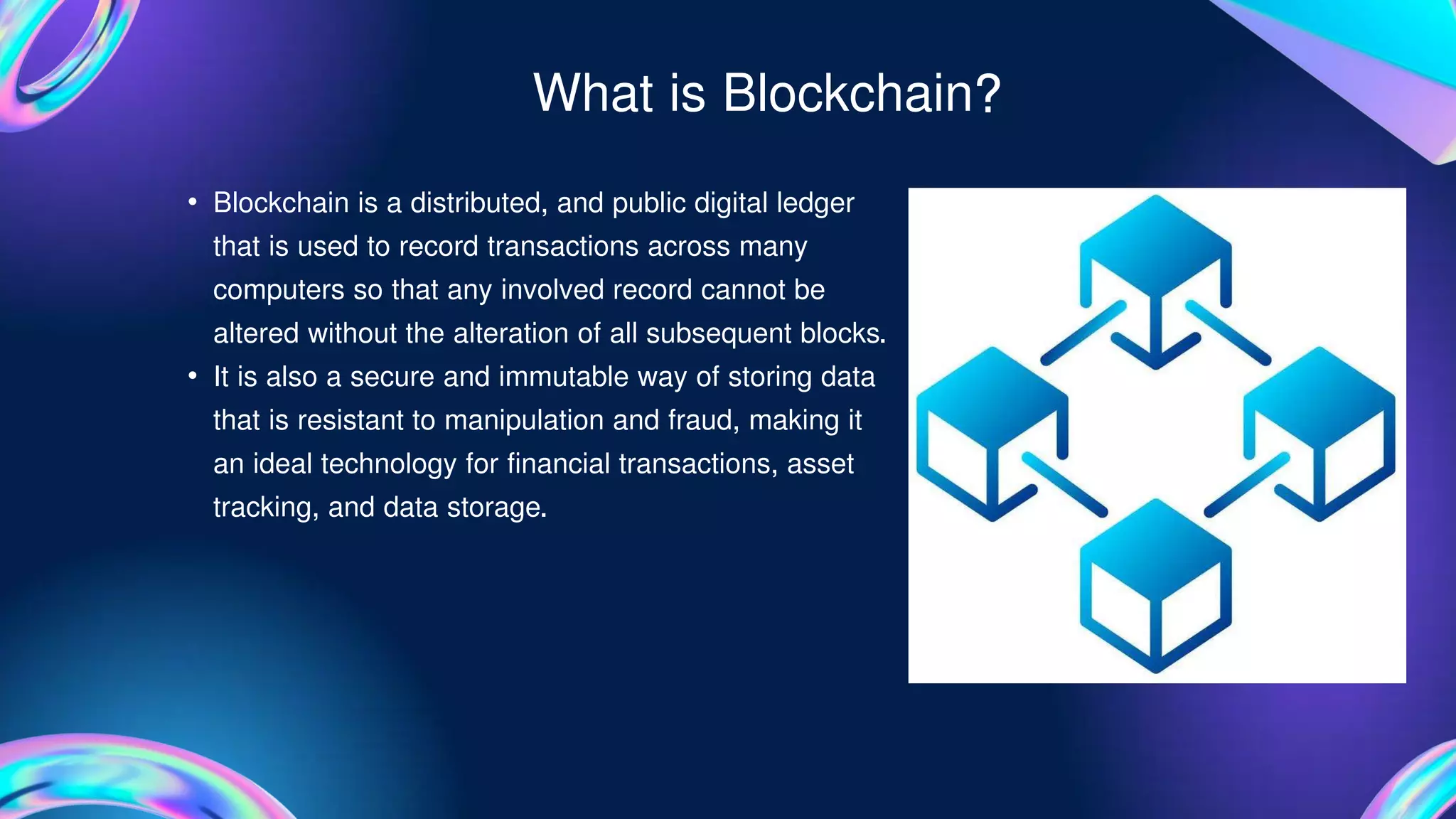
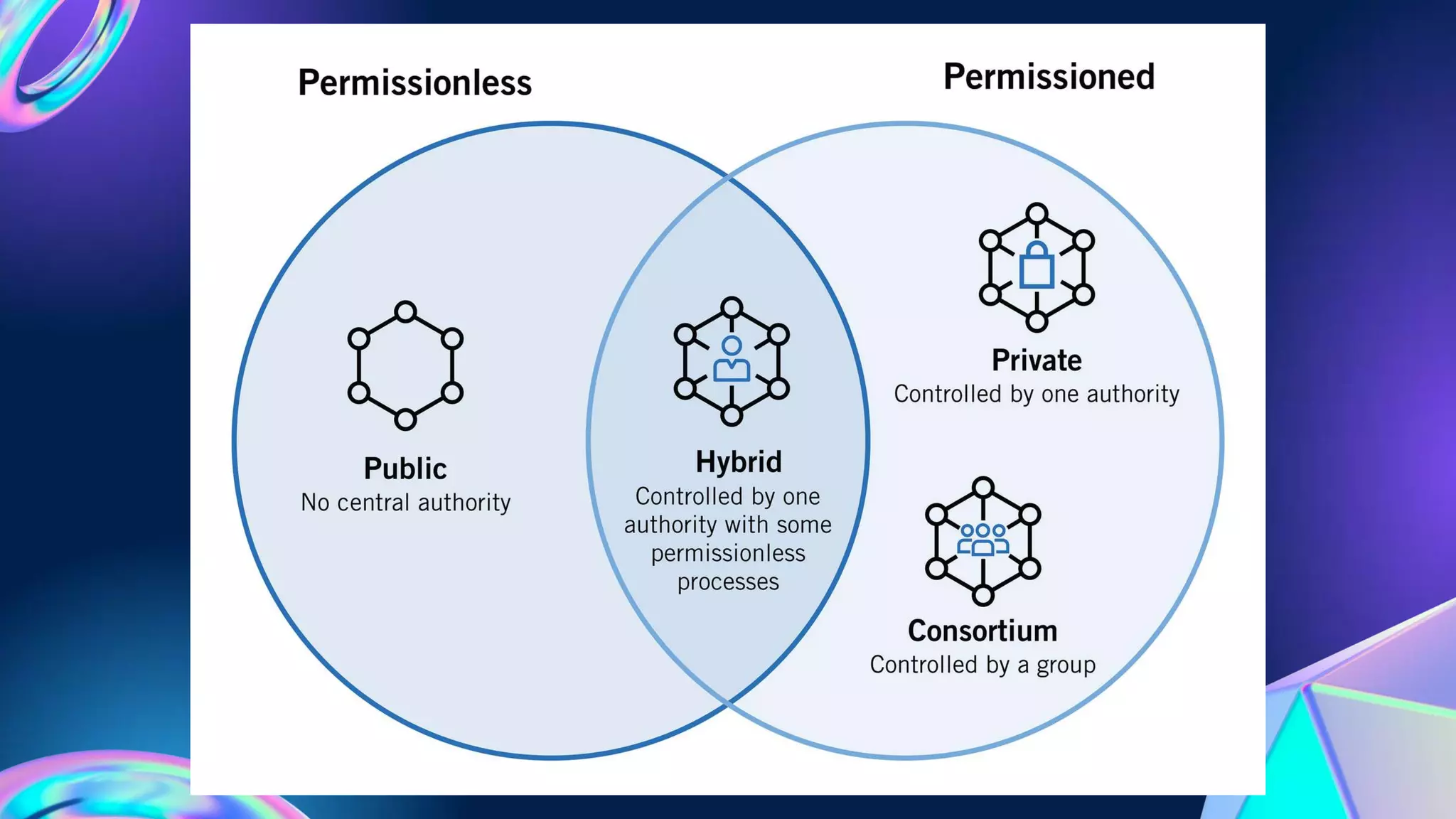
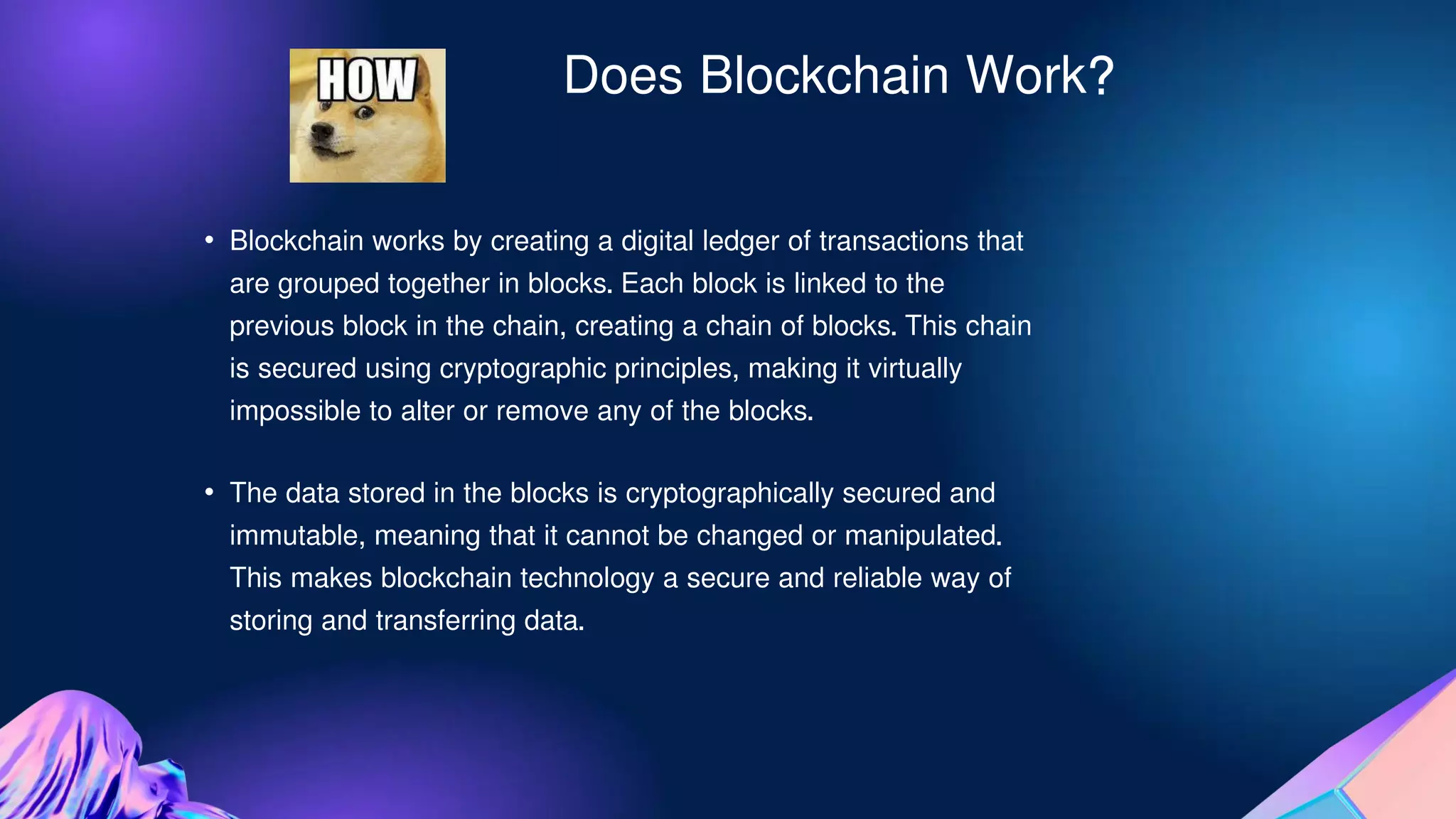
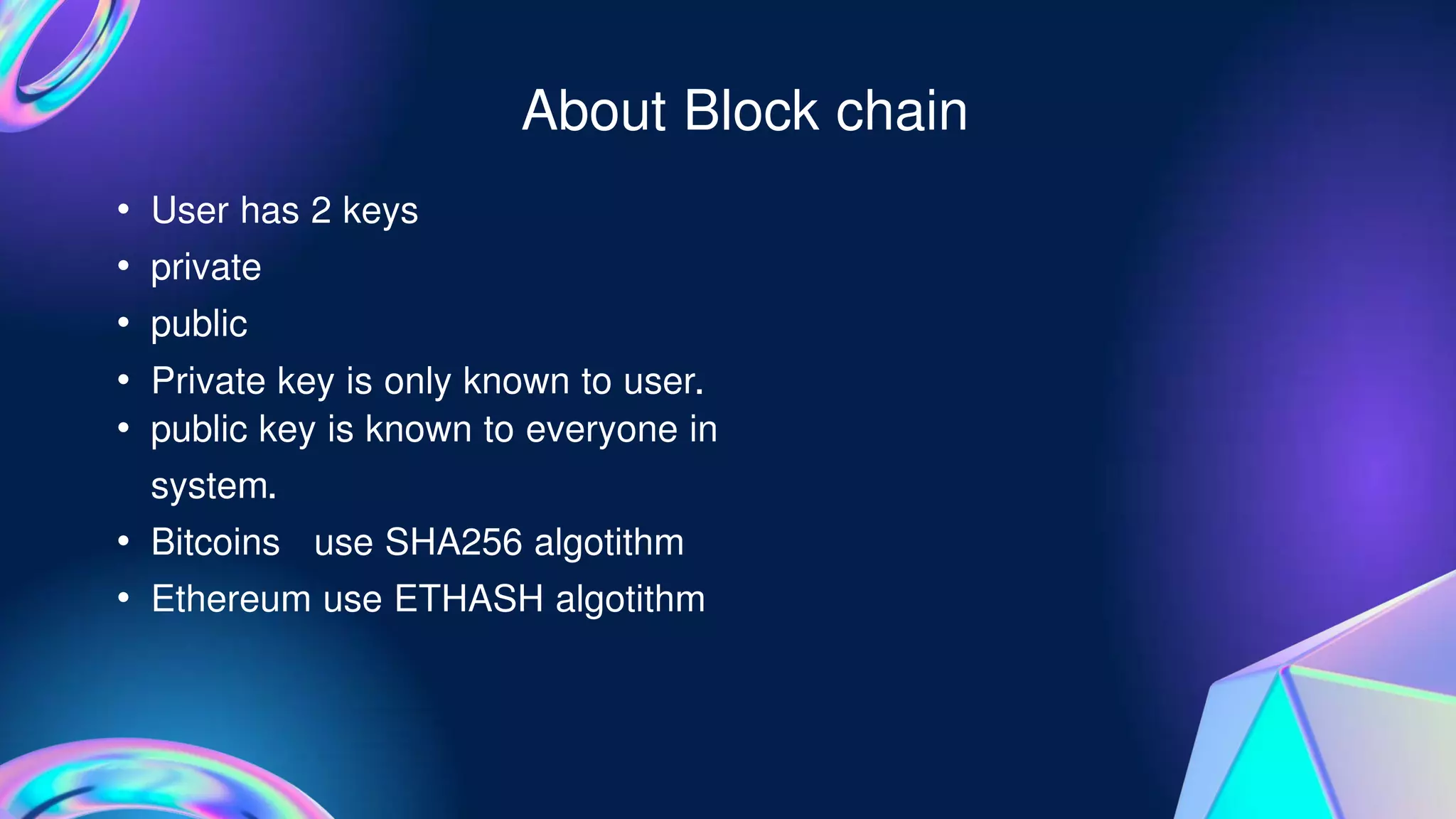
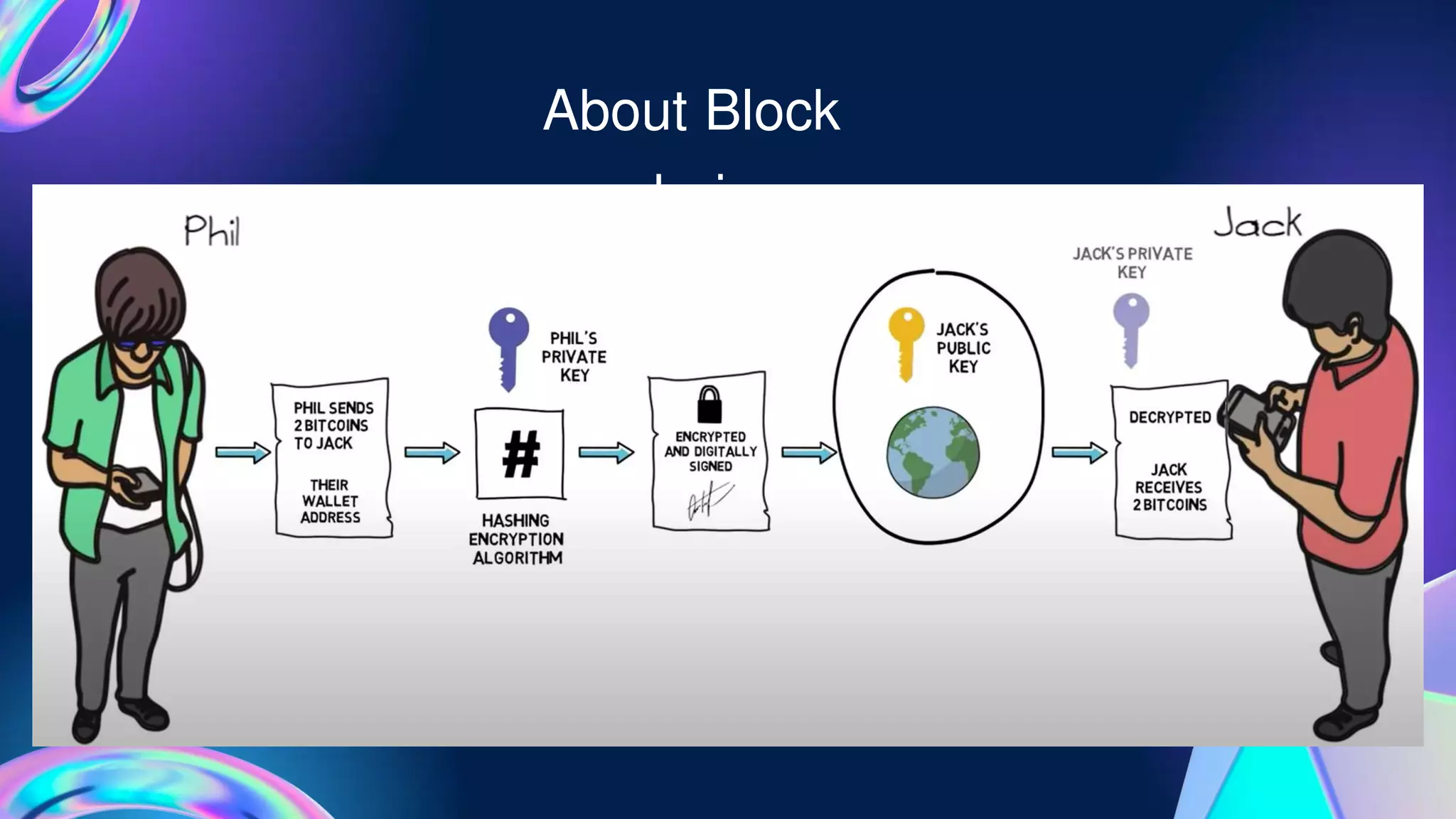
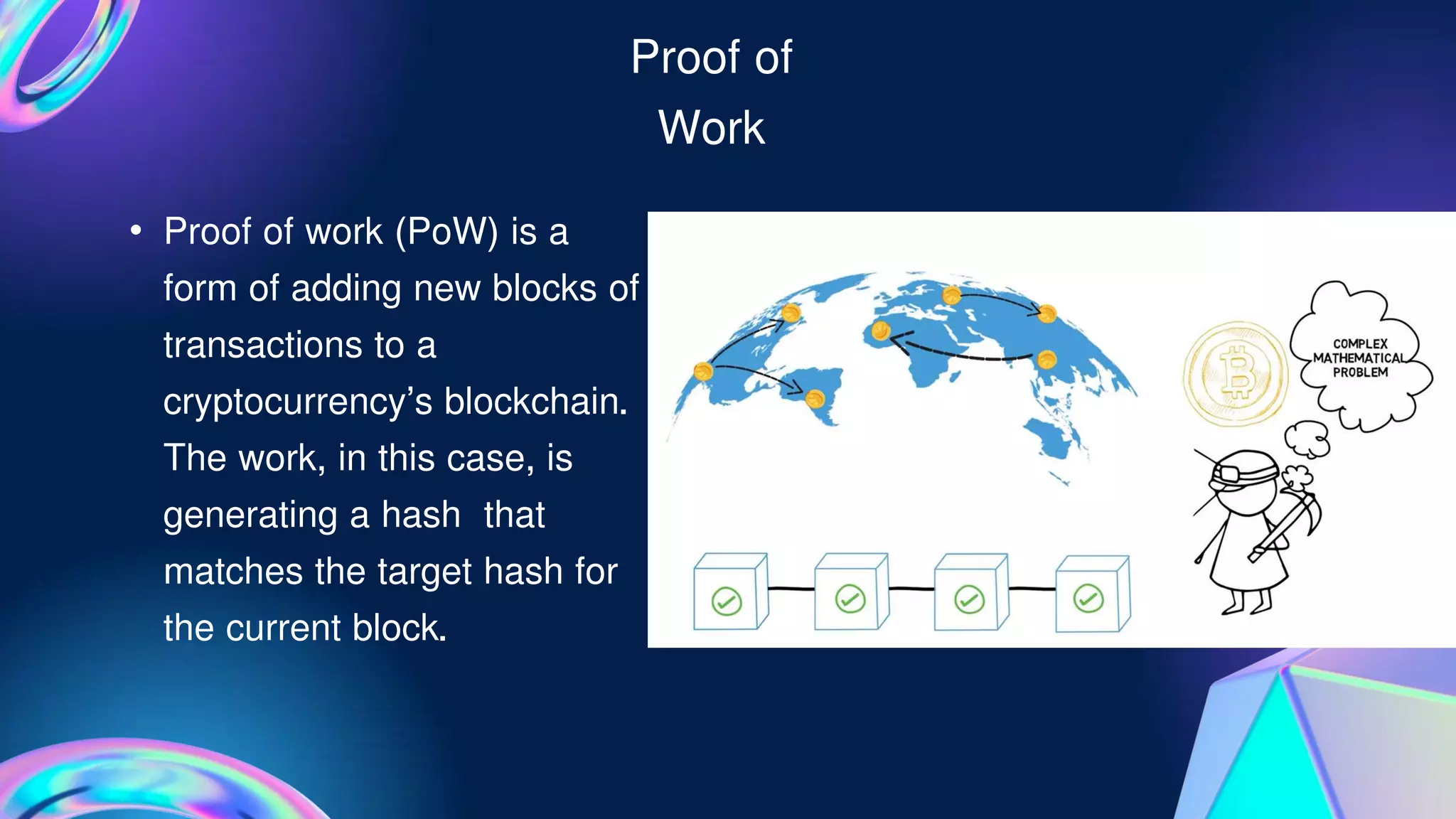
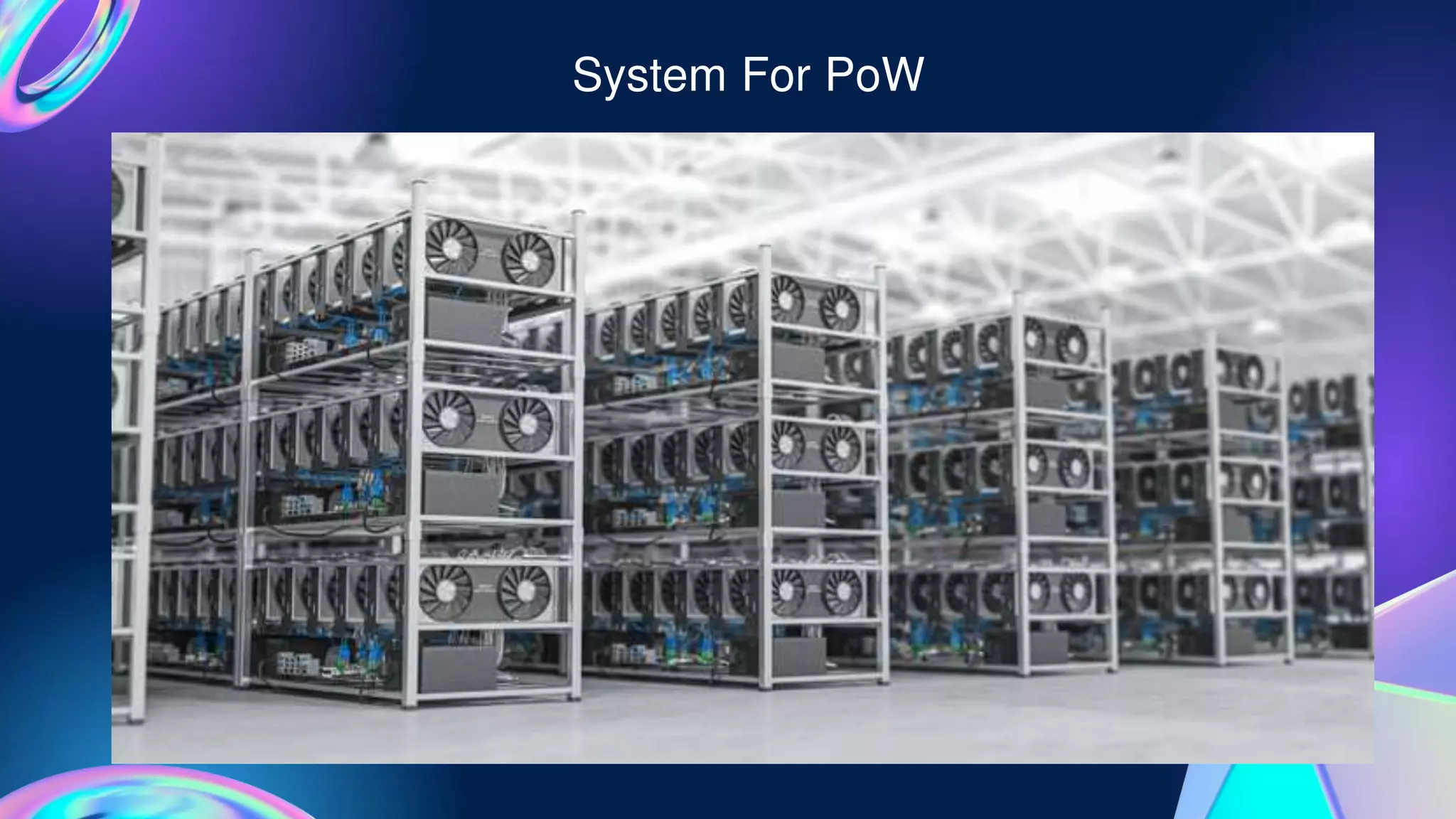
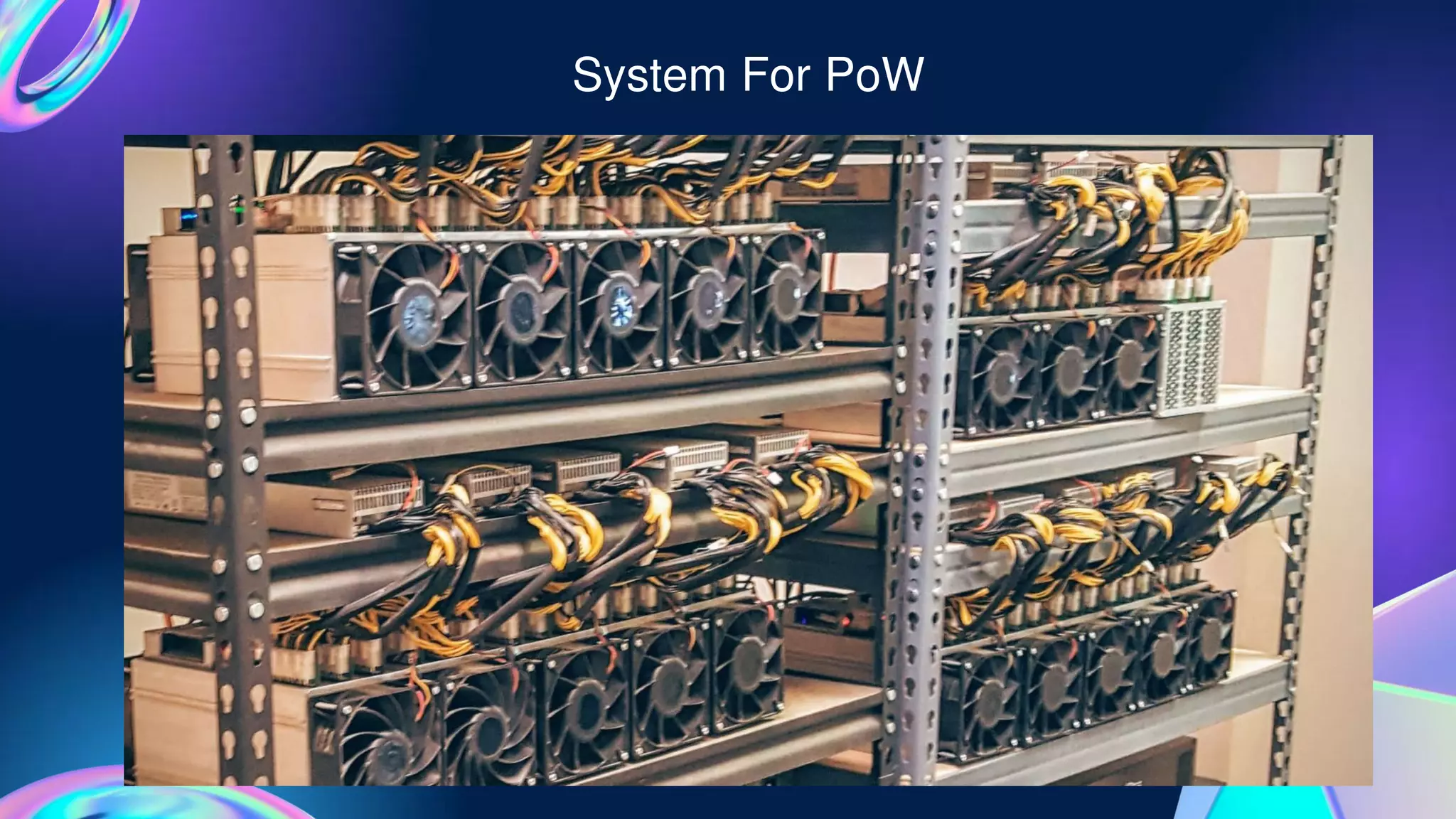
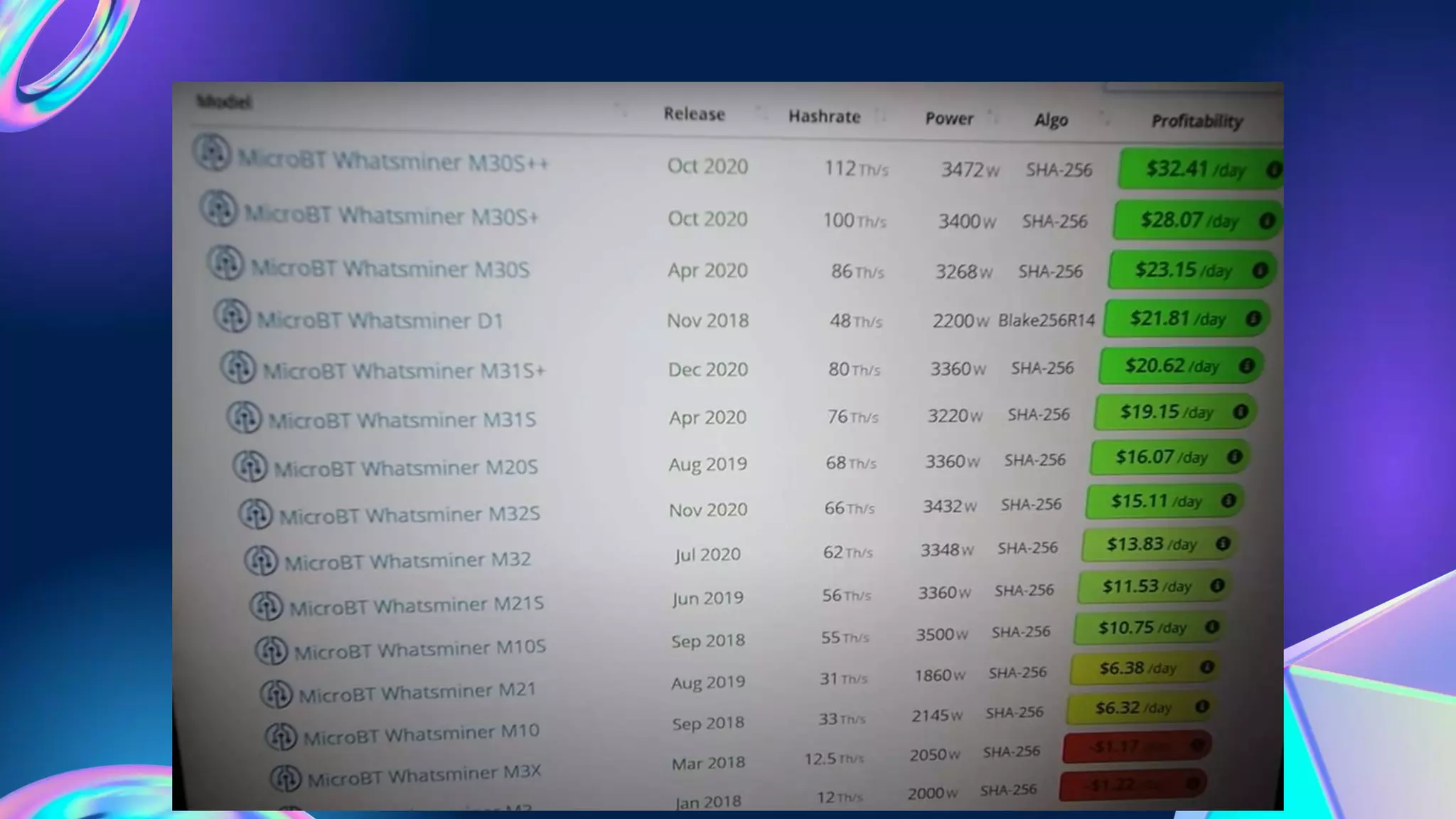
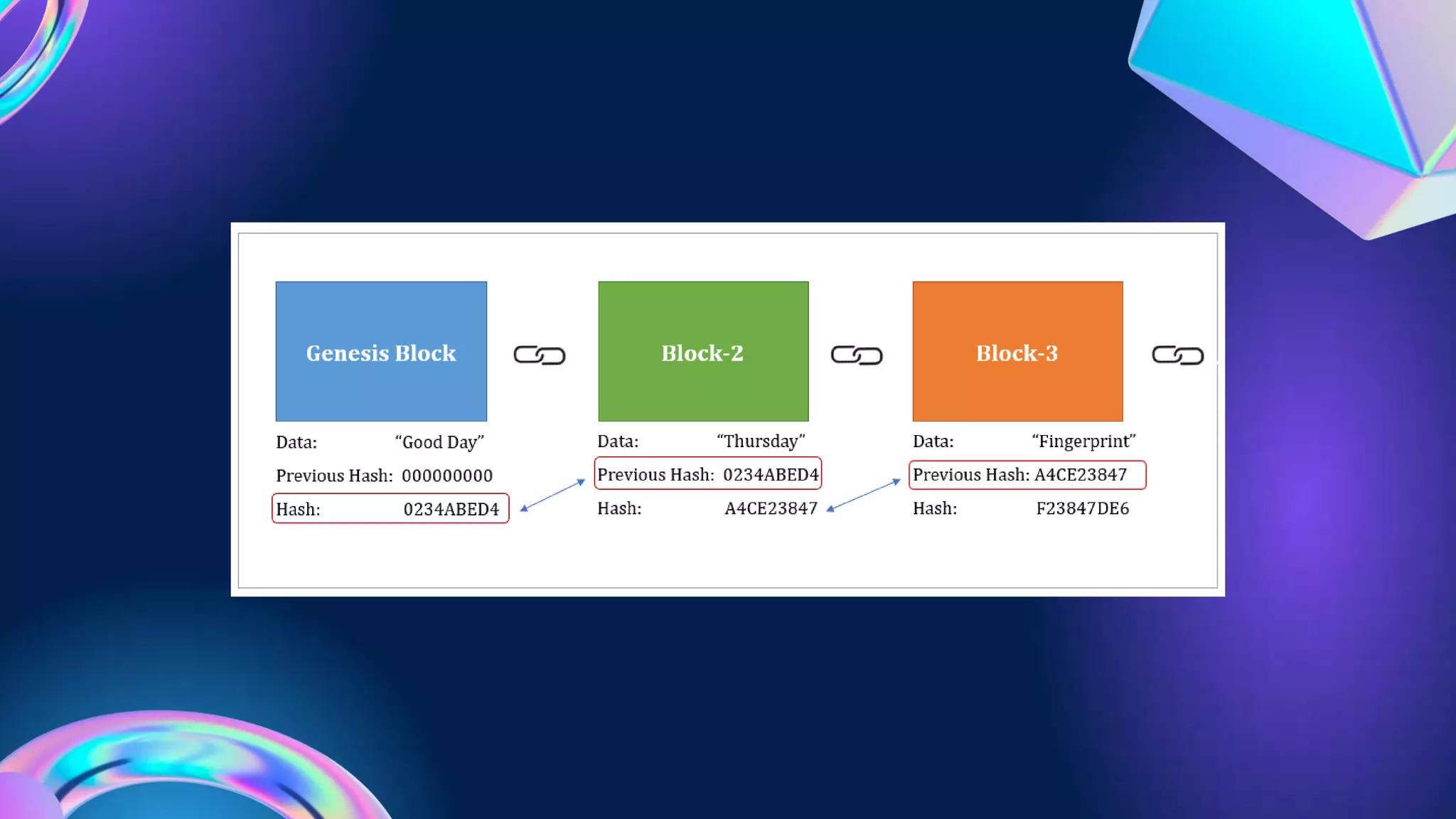
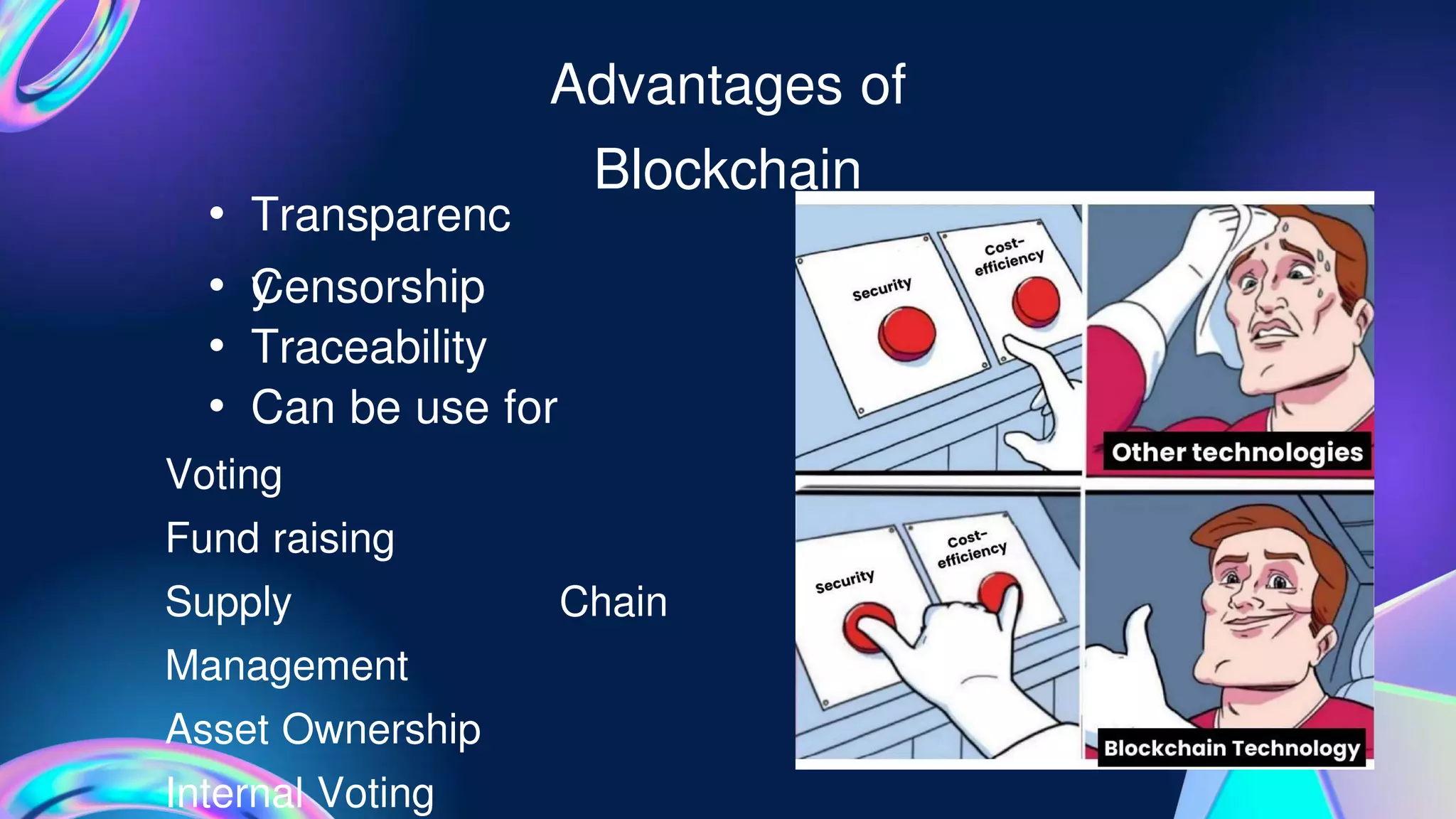
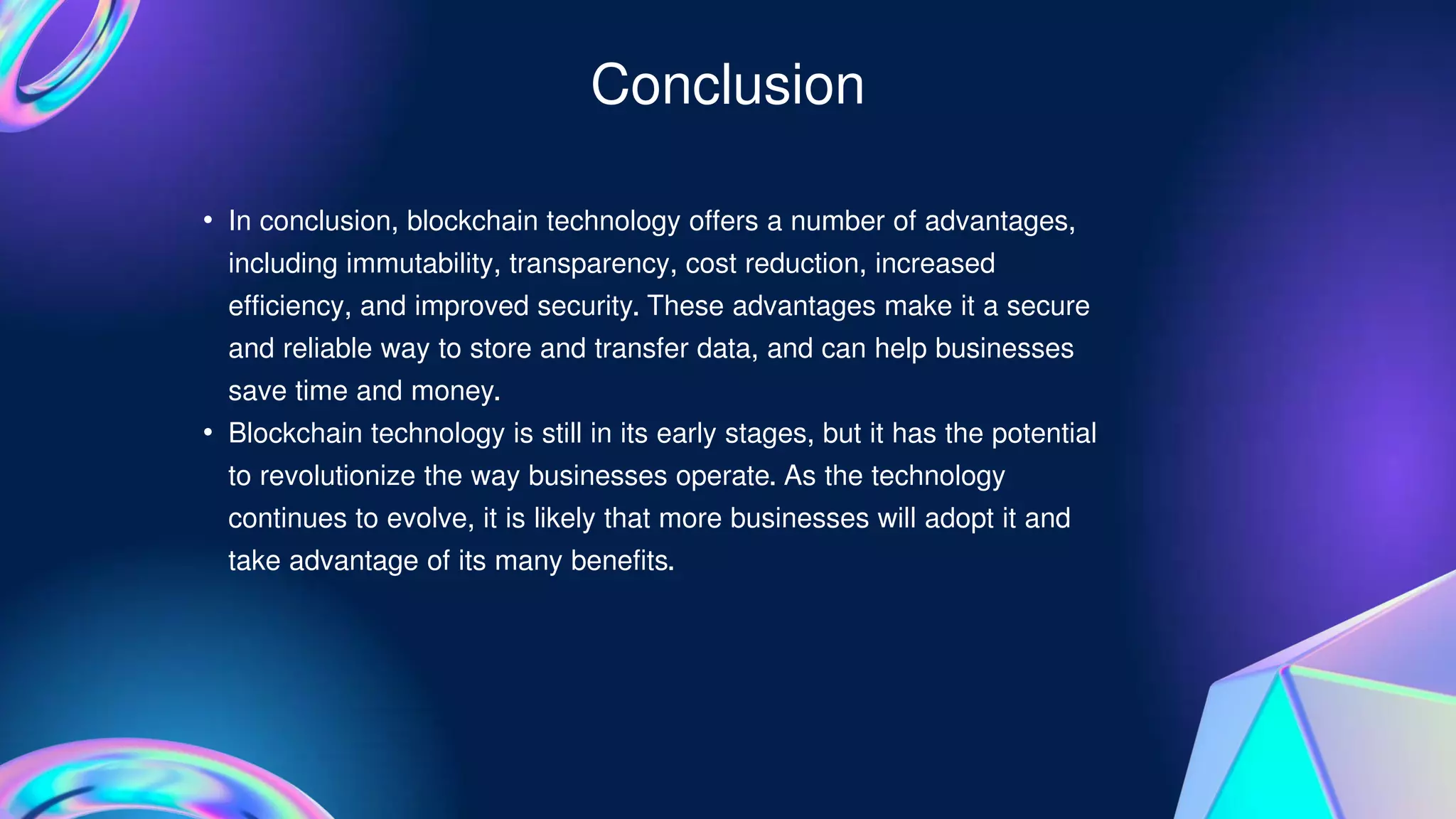
This document discusses blockchain technology, including what blockchain is, how it works, types of blockchain networks, applications of blockchain, advantages and disadvantages. Blockchain is a distributed digital ledger that records transactions in blocks that are linked using cryptography. It allows for transactions to be recorded and distributed without a central authority. Consensus algorithms like proof of work are used to validate transactions and add new blocks to the blockchain. Blockchain has applications in financial transactions, asset tracking, data storage and decentralized applications. Its advantages include transparency, security and cost reduction. However, it also faces challenges related to speed and implementation costs.




![What is Blockchain? [Applications of Blockchain in Cryptocurrency and Banking]](https://cdn.slidesharecdn.com/ss_thumbnails/blockchaindecentralizedstoragepowposmechanisms-250609045147-b01d52eb-thumbnail.jpg?width=640&height=640&fit=bounds)


![Vibe Coding vs. Spec-Driven Development [Free Meetup]](https://cdn.slidesharecdn.com/ss_thumbnails/vibecodingvsspecdrivendevelopment-251209105622-43f455e7-thumbnail.jpg?width=640&height=640&fit=bounds)


