Blended Learning for
History & Social Science courses
Mike Gwaltney
mikegwaltney.net/blog
Twitter: @MikeGwaltney
Email: mike@mikegwaltney.net
Global Education Conference 2010
Essential Questions
for Conversation
 What is Blended Learning?
 Why is it beneficial for our students?
 What strategies work best in a Blended Learning
model?
 What resources can be employed in traditional
classes to start blending teaching and learning?
 What challenges are presented by a move to a
Blended Learning model?
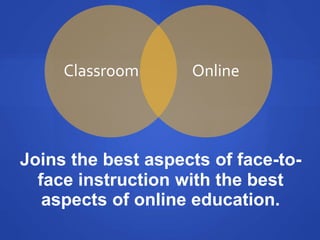
Classroom Online
Joins the best aspects of face-to-
face instruction with the best
aspects of online education.
Effective? Relevant?
• There is early evidence that
a "blended" instructional approach can result in
learning outcome
gains (http://www.uic.edu/depts/oee/blended/work
shop/bibliography.pdf).
• 93% of Higher Ed instructors and admin say they
are using blended learning strategies somewhere
in their institution. 7 in 10 expect more than 40%
of their schools’ courses to be blended by
2013 (Bonk, C. J. & Graham, C. R. (Eds.).
• Web Learning @ Penn State Univ.
http://weblearning.psu.edu/
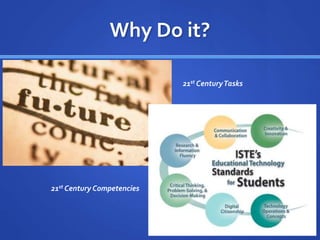
Why Do it?
21st Century Competencies
21st CenturyTasks
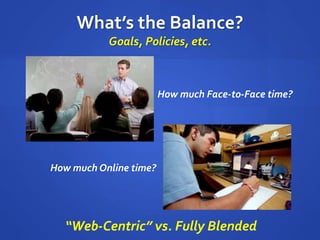
What’s the Balance?
Goals, Policies, etc.
How much Face-to-Face time?
How much Online time?
“Web-Centric” vs. Fully Blended
“The Flip”Version
 Classroom time is used for interactive
experiences / discussion of big ideas
 Collaboration, CriticalThinking, Creative problem-
solving are done with instructor on the side
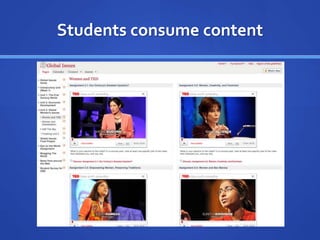
 Online time is used for consumption of
multimedia-rich content
 Student acquires important information on his/her own
Students consume content
Gold-Standard Blended Learning
 Student-Centered
 Students are “doing” online, teachers are facilitating /
coaching
 Students make their own meaning by applying (transferring)
what they learn to "authentic, meaningful, worthwhile
tasks” online, creating content
 PerformanceTasks and Assessments are Authentic
i.e. “real-world”
 Communicate and Collaborate
 Manage information
 Think Critically and Problem-solve
 Create own products with Authentic Audiences
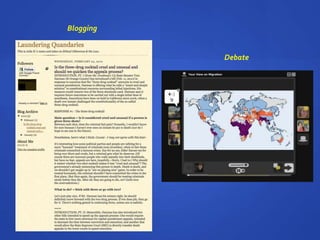
Blogging
Debate
Questions so far?
 What is Blended Learning?
 Why is it beneficial for our students?
 What strategies work best in a Blended Learning model?
Getting Started
 Web Hosting
 Google Sites
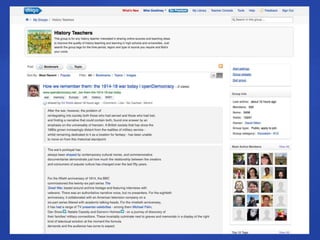
 Blogs
 Edublogs, Wordpress, Blogger
 Learning Managements Systems (LMS)
 Blackboard, Moodle, Haiku, etc.
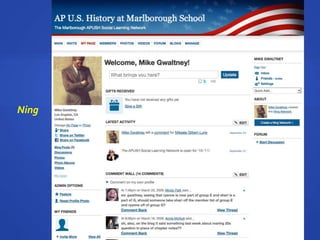
 Social Networks
 Ning, Facebook
Ning
Tools
Content Consumption
 Textbook Sites
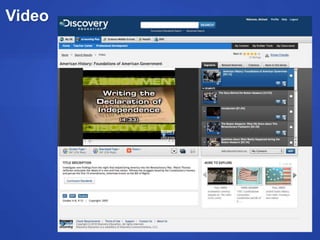
 OnlineVideo
 TED,YouTube,TeacherTube,
Discovery Ed, etc.
 News sites
 RSS Feeds / Blogs
 Podcats
 iTunes, iTunes U
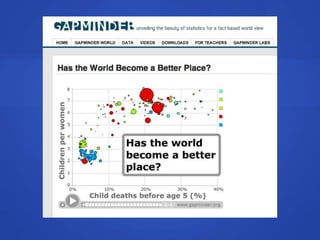
 GapMinder
 Newseum
Content Creation
 Images
 Flickr, Picasa, National
Archives
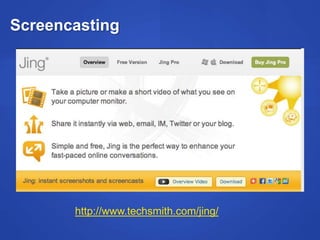
 ScreenCastingVideos
 Jing
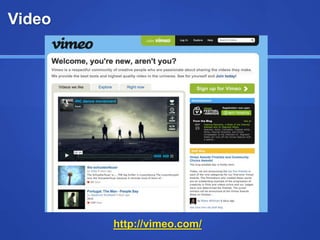
 Video Uploading
 YouTube,Vimeo
 Video Creation
 Animoto
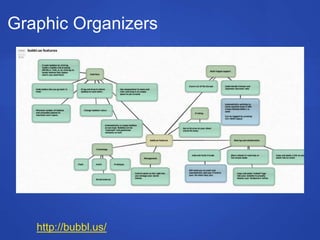
 Graphic Organizers
 bubbl.us
Screencasting
http://www.techsmith.com/jing/
Video
Video
http://vimeo.com/
http://bubbl.us/
Graphic Organizers
Great Online Content for History
and Social ScienceTeachers
 Teaching History withTechnology
http://www.thwt.org/
 NCSSTeacher Network:
http://ncssnetwork.ning.com/group/teachingwithtechnolo
gy
 100 Great History Blogs
http://www.bestcollegesonline.com/blog/2008/09/10/100-
awesome-blogs-for-history-junkies/
Web 2.0Tools for
Gold-Standard Blended Learning
Collaborate
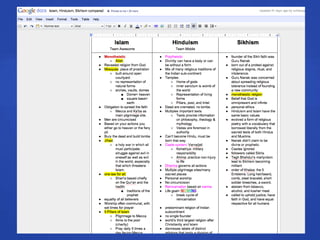
 Google Documents
 Social Bookmarking
 Diigo, Delicious
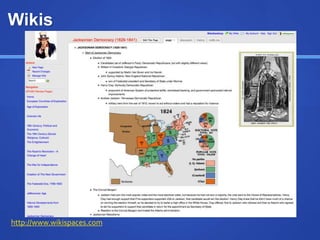
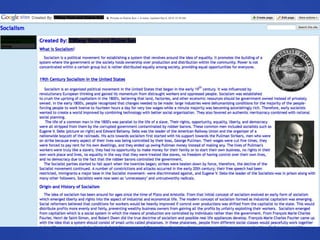
 Wikis
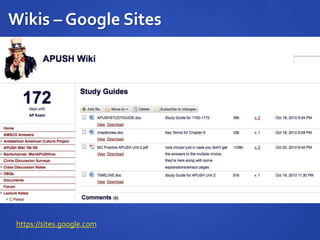
 Google Sites, Wikispaces
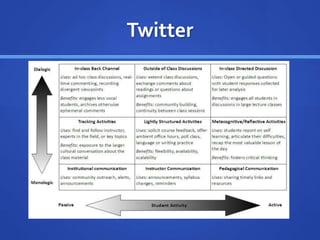
 Microblogging and Social
Networking
 Twitter, Ning, Facebook
 Personal Learning Networks
Create
 Blogs, Wikis, Podcasts
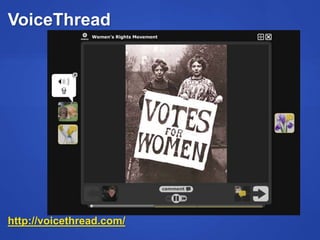
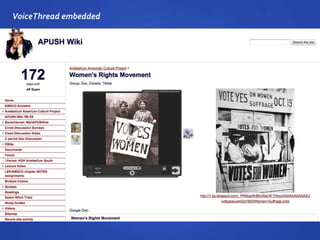
 VoiceThread Speeches,
Debates
 Storytelling
 Animoto, Prezi
 Video
 Online Discussion
Wikis
http://www.wikispaces.com
https://sites.google.com
Wikis – Google Sites
VoiceThread
http://voicethread.com/
VoiceThread embedded
Twitter
Emerging: Mobile Learning
 "We learn anywhere, anytime, anyplace; there are
opportunities to learn all around us everyday.We learn in
the home, office, on the road. Likewise, educational
content can be shaped to fit all kinds of useful delivery
media that is convenient, user-friendly, and (most
important) serves the educational need of members
without the content being shortchanged or trivialized."
Smith,J.(2001)
Assessing Online Learning
 Implications for Rubrics
 include 2 traits to distinguish between:
 content understanding
 product/performance quality
 Rubric must be properly weighted to reward the trait
emphasized by the task/assessment
Questions?
 What resources can be employed in traditional classes to
start blending teaching and learning?
 What challenges are presented by a move to a Blended
Learning model?
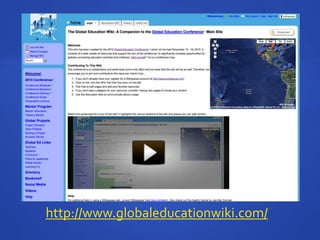
http://www.globaleducationwiki.com/
References
 Watson, John. Blending Learning:The Convergence of Online and Face-to-Face Education.Vienna,VA: North
American Council for Online Learning, 2008. Promising Practices in Online Learning. North American Council for
Online Learning. Web. 10 June 2010. http://www.inacol.org/research/ promisingpractices/NACOL_PP-
BlendedLearning-lr.pdf.
 Smith, Judith M. Ph.D. (2001). "Blended Learning: An Old Friend Gets a New Name." ExecutiveUpdate, Online.
http://www.gwsae.org/Executiveupdate/2001/March/blended.htm

Blended learning globaledcon 2010

  • 1.
    Blended Learning for History& Social Science courses Mike Gwaltney mikegwaltney.net/blog Twitter: @MikeGwaltney Email: mike@mikegwaltney.net Global Education Conference 2010
  • 3.
    Essential Questions for Conversation What is Blended Learning?  Why is it beneficial for our students?  What strategies work best in a Blended Learning model?  What resources can be employed in traditional classes to start blending teaching and learning?  What challenges are presented by a move to a Blended Learning model?
  • 4.
    Classroom Online Joins thebest aspects of face-to- face instruction with the best aspects of online education.
  • 5.
    Effective? Relevant? • Thereis early evidence that a "blended" instructional approach can result in learning outcome gains (http://www.uic.edu/depts/oee/blended/work shop/bibliography.pdf). • 93% of Higher Ed instructors and admin say they are using blended learning strategies somewhere in their institution. 7 in 10 expect more than 40% of their schools’ courses to be blended by 2013 (Bonk, C. J. & Graham, C. R. (Eds.). • Web Learning @ Penn State Univ. http://weblearning.psu.edu/
  • 6.
    Why Do it? 21stCentury Competencies 21st CenturyTasks
  • 7.
    What’s the Balance? Goals,Policies, etc. How much Face-to-Face time? How much Online time? “Web-Centric” vs. Fully Blended
  • 8.
    “The Flip”Version  Classroomtime is used for interactive experiences / discussion of big ideas  Collaboration, CriticalThinking, Creative problem- solving are done with instructor on the side  Online time is used for consumption of multimedia-rich content  Student acquires important information on his/her own
  • 9.
  • 10.
    Gold-Standard Blended Learning Student-Centered  Students are “doing” online, teachers are facilitating / coaching  Students make their own meaning by applying (transferring) what they learn to "authentic, meaningful, worthwhile tasks” online, creating content  PerformanceTasks and Assessments are Authentic i.e. “real-world”  Communicate and Collaborate  Manage information  Think Critically and Problem-solve  Create own products with Authentic Audiences
  • 11.
  • 12.
    Questions so far? What is Blended Learning?  Why is it beneficial for our students?  What strategies work best in a Blended Learning model?
  • 13.
    Getting Started  WebHosting  Google Sites  Blogs  Edublogs, Wordpress, Blogger  Learning Managements Systems (LMS)  Blackboard, Moodle, Haiku, etc.  Social Networks  Ning, Facebook
  • 14.
  • 15.
    Tools Content Consumption  TextbookSites  OnlineVideo  TED,YouTube,TeacherTube, Discovery Ed, etc.  News sites  RSS Feeds / Blogs  Podcats  iTunes, iTunes U  GapMinder  Newseum Content Creation  Images  Flickr, Picasa, National Archives  ScreenCastingVideos  Jing  Video Uploading  YouTube,Vimeo  Video Creation  Animoto  Graphic Organizers  bubbl.us
  • 16.
  • 17.
  • 18.
  • 19.
  • 21.
    Great Online Contentfor History and Social ScienceTeachers  Teaching History withTechnology http://www.thwt.org/  NCSSTeacher Network: http://ncssnetwork.ning.com/group/teachingwithtechnolo gy  100 Great History Blogs http://www.bestcollegesonline.com/blog/2008/09/10/100- awesome-blogs-for-history-junkies/
  • 22.
    Web 2.0Tools for Gold-StandardBlended Learning Collaborate  Google Documents  Social Bookmarking  Diigo, Delicious  Wikis  Google Sites, Wikispaces  Microblogging and Social Networking  Twitter, Ning, Facebook  Personal Learning Networks Create  Blogs, Wikis, Podcasts  VoiceThread Speeches, Debates  Storytelling  Animoto, Prezi  Video  Online Discussion
  • 25.
  • 26.
  • 28.
  • 29.
  • 30.
  • 31.
    Emerging: Mobile Learning "We learn anywhere, anytime, anyplace; there are opportunities to learn all around us everyday.We learn in the home, office, on the road. Likewise, educational content can be shaped to fit all kinds of useful delivery media that is convenient, user-friendly, and (most important) serves the educational need of members without the content being shortchanged or trivialized." Smith,J.(2001)
  • 32.
    Assessing Online Learning Implications for Rubrics  include 2 traits to distinguish between:  content understanding  product/performance quality  Rubric must be properly weighted to reward the trait emphasized by the task/assessment
  • 33.
    Questions?  What resourcescan be employed in traditional classes to start blending teaching and learning?  What challenges are presented by a move to a Blended Learning model?
  • 34.
  • 35.
    References  Watson, John.Blending Learning:The Convergence of Online and Face-to-Face Education.Vienna,VA: North American Council for Online Learning, 2008. Promising Practices in Online Learning. North American Council for Online Learning. Web. 10 June 2010. http://www.inacol.org/research/ promisingpractices/NACOL_PP- BlendedLearning-lr.pdf.  Smith, Judith M. Ph.D. (2001). "Blended Learning: An Old Friend Gets a New Name." ExecutiveUpdate, Online. http://www.gwsae.org/Executiveupdate/2001/March/blended.htm