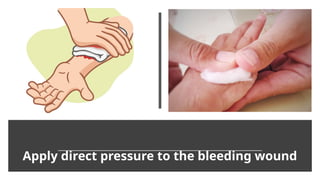
IF IT STOPS
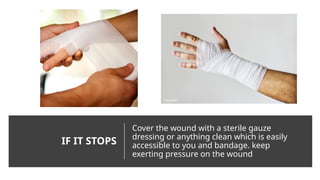
Coverthe wound with a sterile gauze
dressing or anything clean which is easily
accessible to you and bandage. keep
exerting pressure on the wound
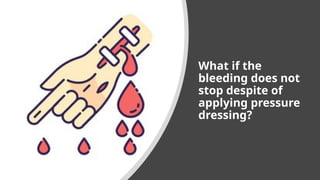
What if the
gauzegets
soaked?
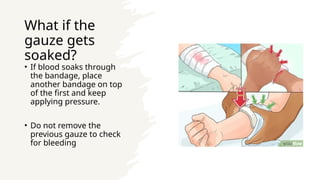
• If blood soaks through
the bandage, place
another bandage on top
of the first and keep
applying pressure.
• Do not remove the
previous gauze to check
for bleeding
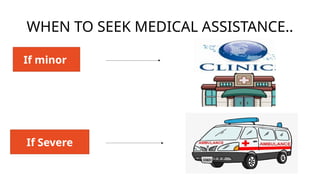
WHEN TO SEEKMEDICAL ASSISTANCE..
If minor
If Severe
17.
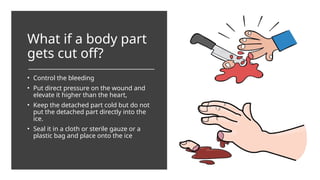
What if abody part
gets cut off?
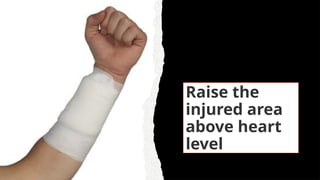
• Control the bleeding
• Put direct pressure on the wound and
elevate it higher than the heart,
• Keep the detached part cold but do not
put the detached part directly into the
ice.
• Seal it in a cloth or sterile gauze or a
plastic bag and place onto the ice
19.
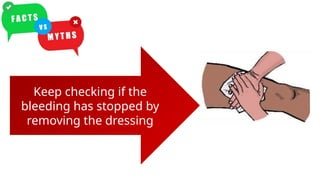
Keep checking ifthe
bleeding has stopped by
removing the dressing
Keep checking if the
bleeding has stopped by
removing the dressing
20.
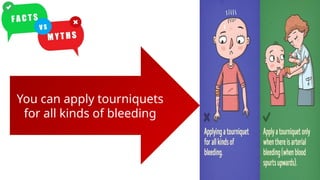
You can applytourniquets
for all kinds of bleeding
You can apply tourniquets
for all kinds of bleeding
21.
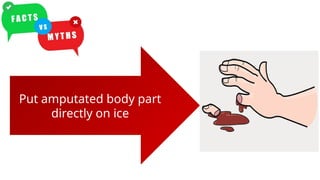
Put amputated bodypart
directly on ice
Put amputated body part
directly on ice
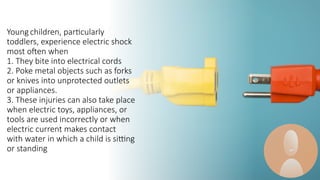
Young children, particularly
toddlers,experience electric shock
most often when
1. They bite into electrical cords
2. Poke metal objects such as forks
or knives into unprotected outlets
or appliances.
3. These injuries can also take place
when electric toys, appliances, or
tools are used incorrectly or when
electric current makes contact
with water in which a child is sitting
or standing
30.
• Disconnect thepower supply before you touch an injured child.
Never touch a live wire with your bare hands. If you have to lift a live
wire from a child, use a dry stick, a rolled-up newspaper, thick clothing,
or another sturdy, dry, nonmetallic object that won't conduct electricity.
•
Move the child as little as possible because severe electric shock may
have caused a spinal fracture.
• Once the current is off, quickly check the child's breathing, pulse, skin
color, and alertness.
If the child isn't breathing or there is no heartbeat, begin CPR
immediately while someone else goes for medical help.