
Bladder preservation in MIBC
THE SUCCESS STORY OF ORGAN PRESERVATION!
BLADDER PRESERVATION - Range
• TURBT alone
• TURBT f/b RT alone
• TURBT f/b chemotherapy
Trimodality treatment
Selective bladder preservation in form of partial cystectomy
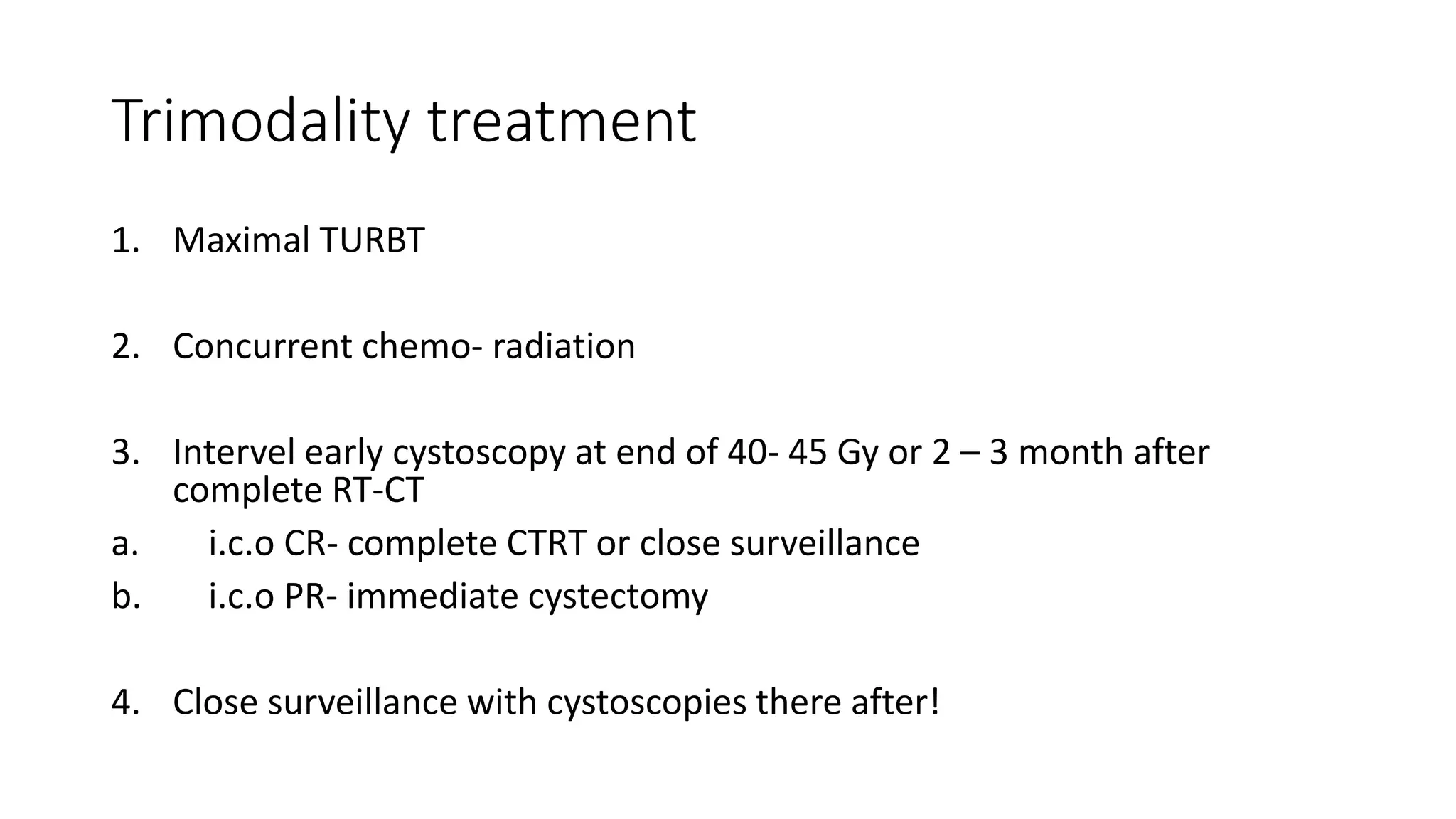
Trimodality treatment
1. Maximal TURBT
2. Concurrent chemo- radiation
3. Intervel early cystoscopy at end of 40- 45 Gy or 2 – 3 month after
complete RT-CT
a. i.c.o CR- complete CTRT or close surveillance
b. i.c.o PR- immediate cystectomy
4. Close surveillance with cystoscopies there after!
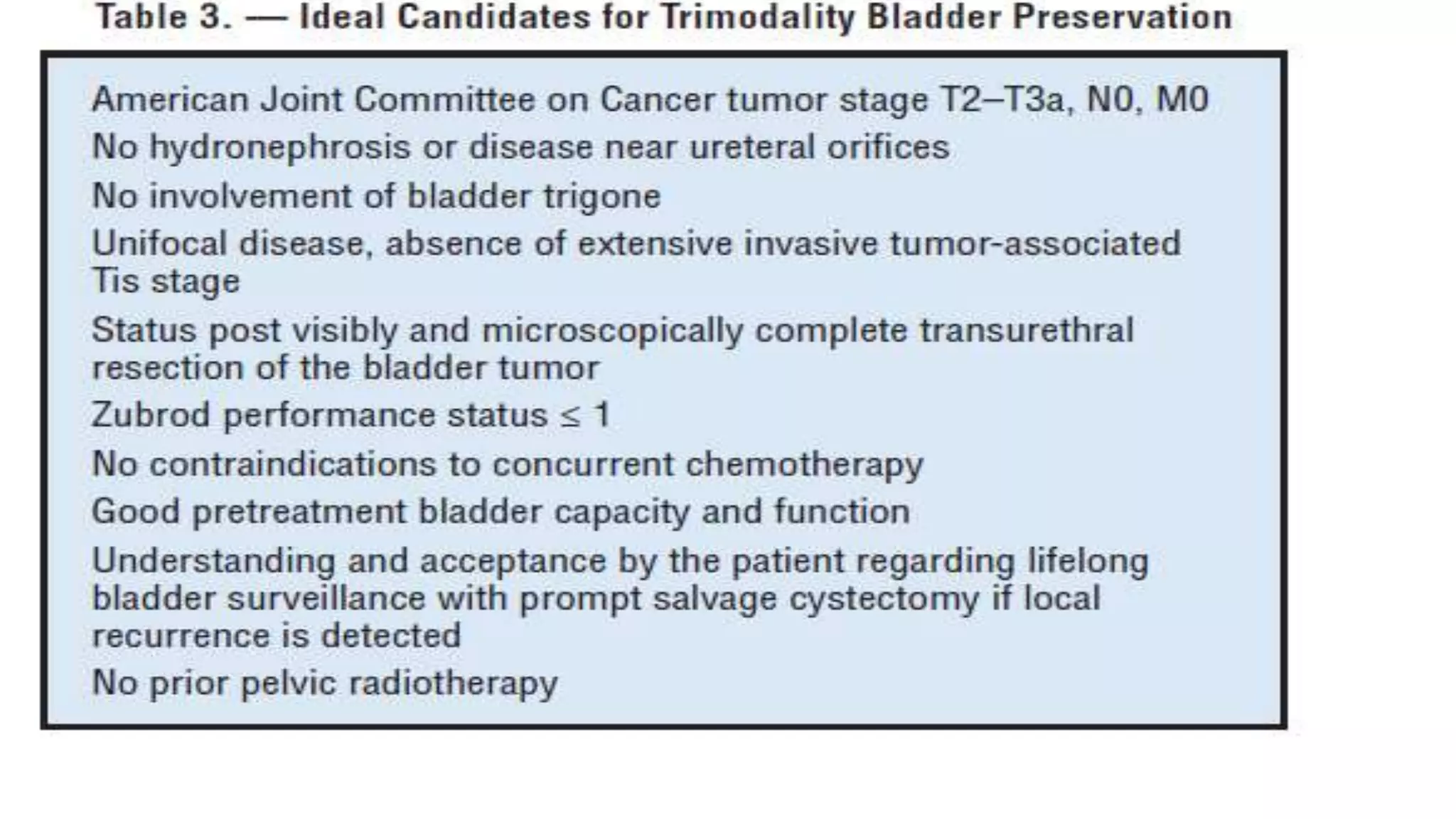
Candidates
• T2 to T4a
• Unifocal lesion less than 5 cms
• Absence of extensive CIS
• No trigone involvement or hydroureteronephrosis
• Good bladder capacity prior to treatment
• Complete TURBT
• No contraindication to chemotherapy
Basics of choosing a therapeutic option
1. Cure rate and survival
2. Organ preservation
3. Quality of life
• Ultimate aim of cancer therapy---
CURE & SURVIVAL
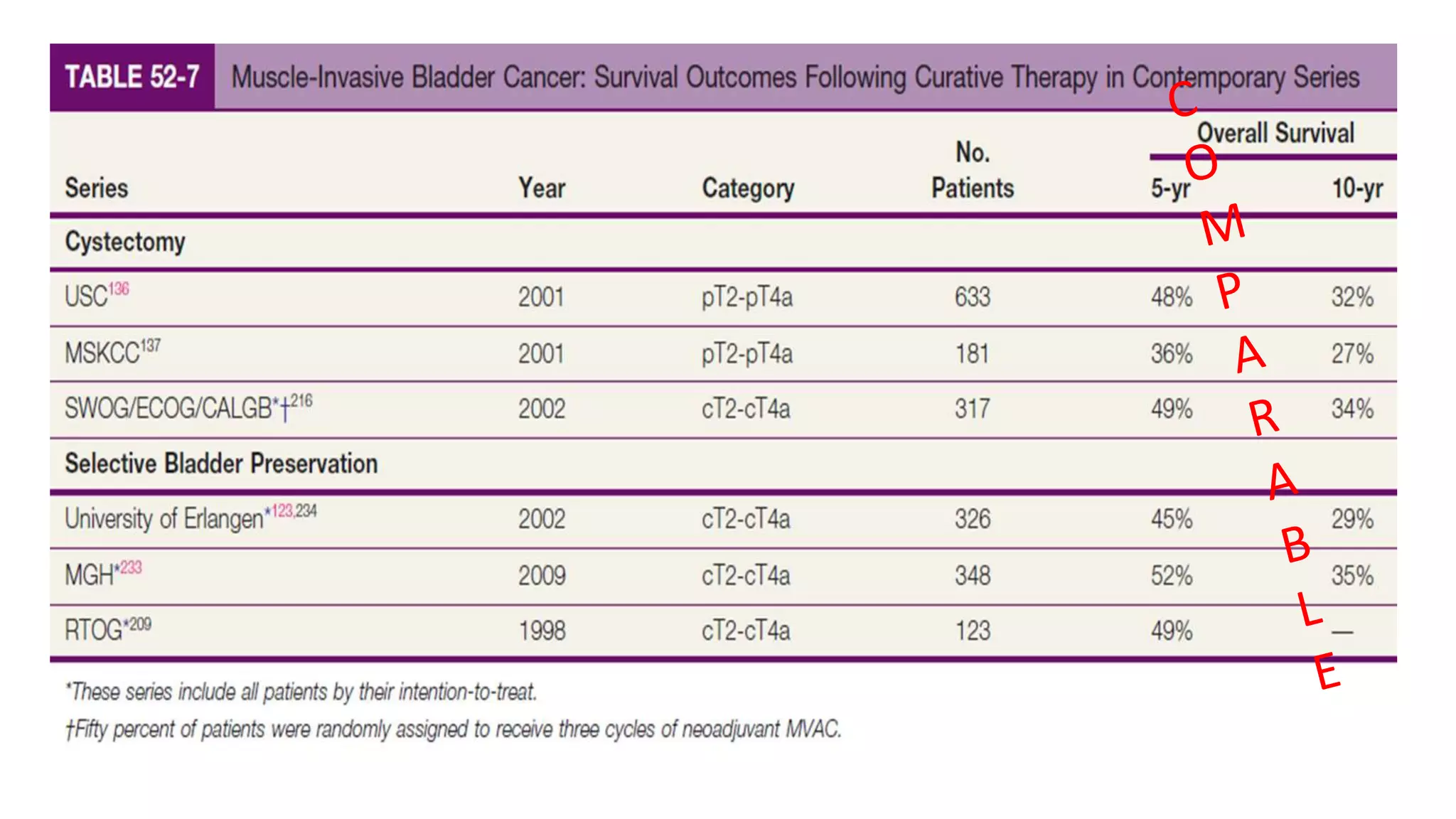
NOT TO FORGET…
• All surgical series have pathological staging versus all Bladder
preservation studies are clinical staged.
• Many cystectomy studies are retrospective analysis and hence are not
analysed with ‘intention to treat’ approach.
• Radical cystectomy series include Tis Ta T1 in their study group and
hence the results and exclude inoperable tumors( bad risk group
patients).
 Only comparable study will be a randomized control trial that
have clinical staging for both groups and all are analysed with an
intention to treat.
WHICH DOES NOT EXIST!!!
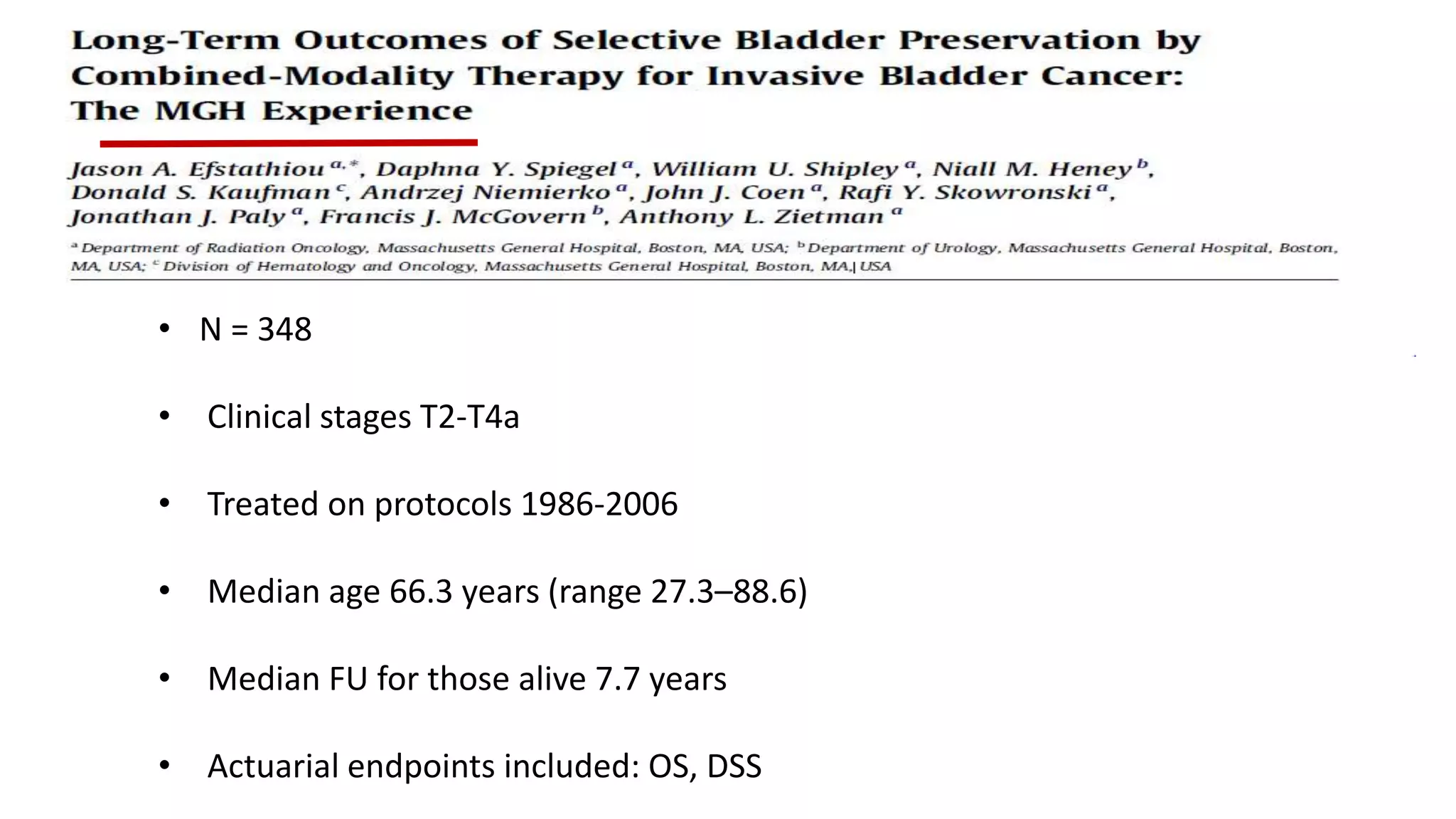
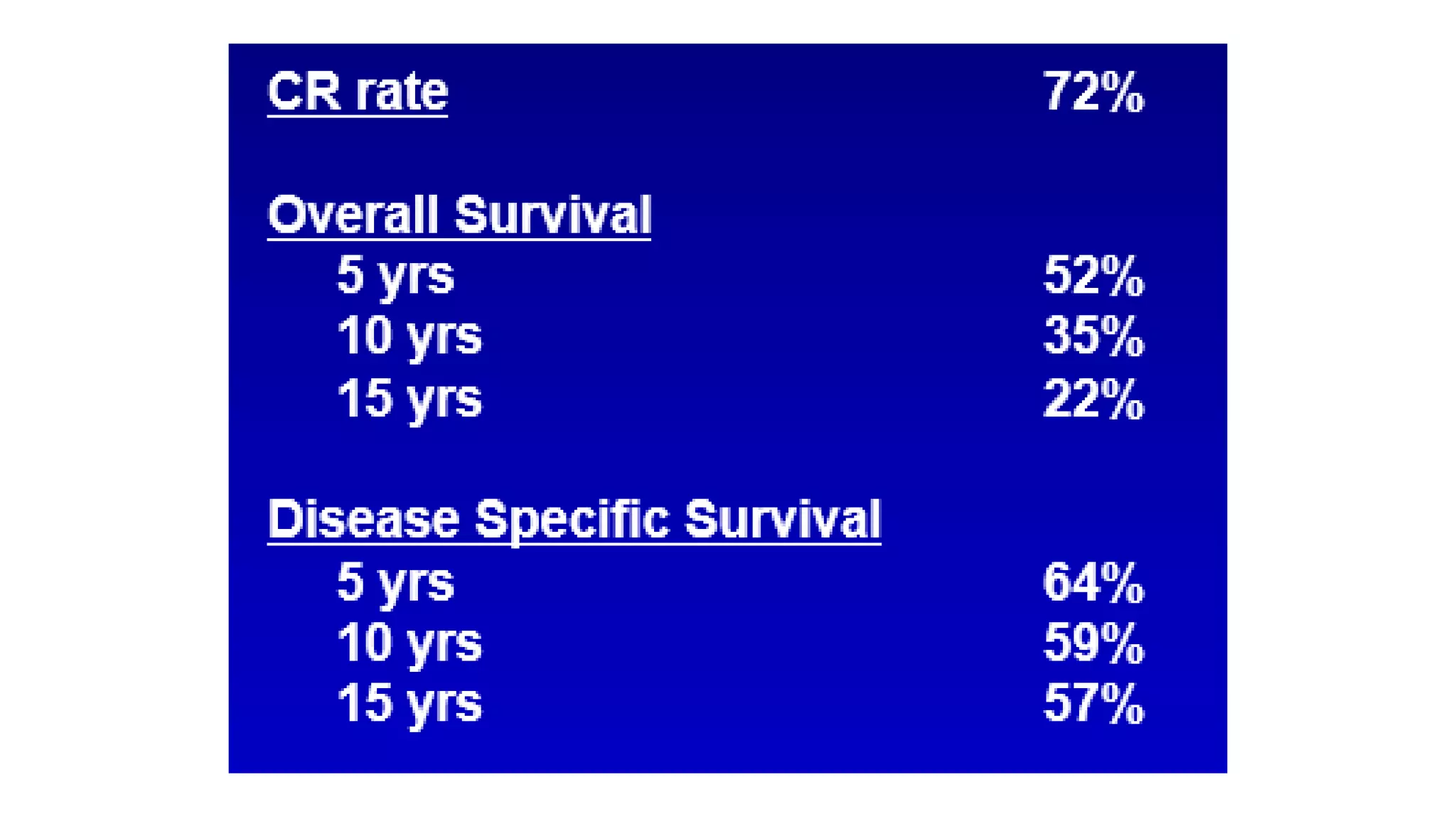
• N = 348
• Clinical stages T2-T4a
• Treated on protocols 1986-2006
• Median age 66.3 years (range 27.3–88.6)
• Median FU for those alive 7.7 years
• Actuarial endpoints included: OS, DSS
`
• Highlighted the implication of a complete TURBT which is an
important part of Bladder preservation treatment.
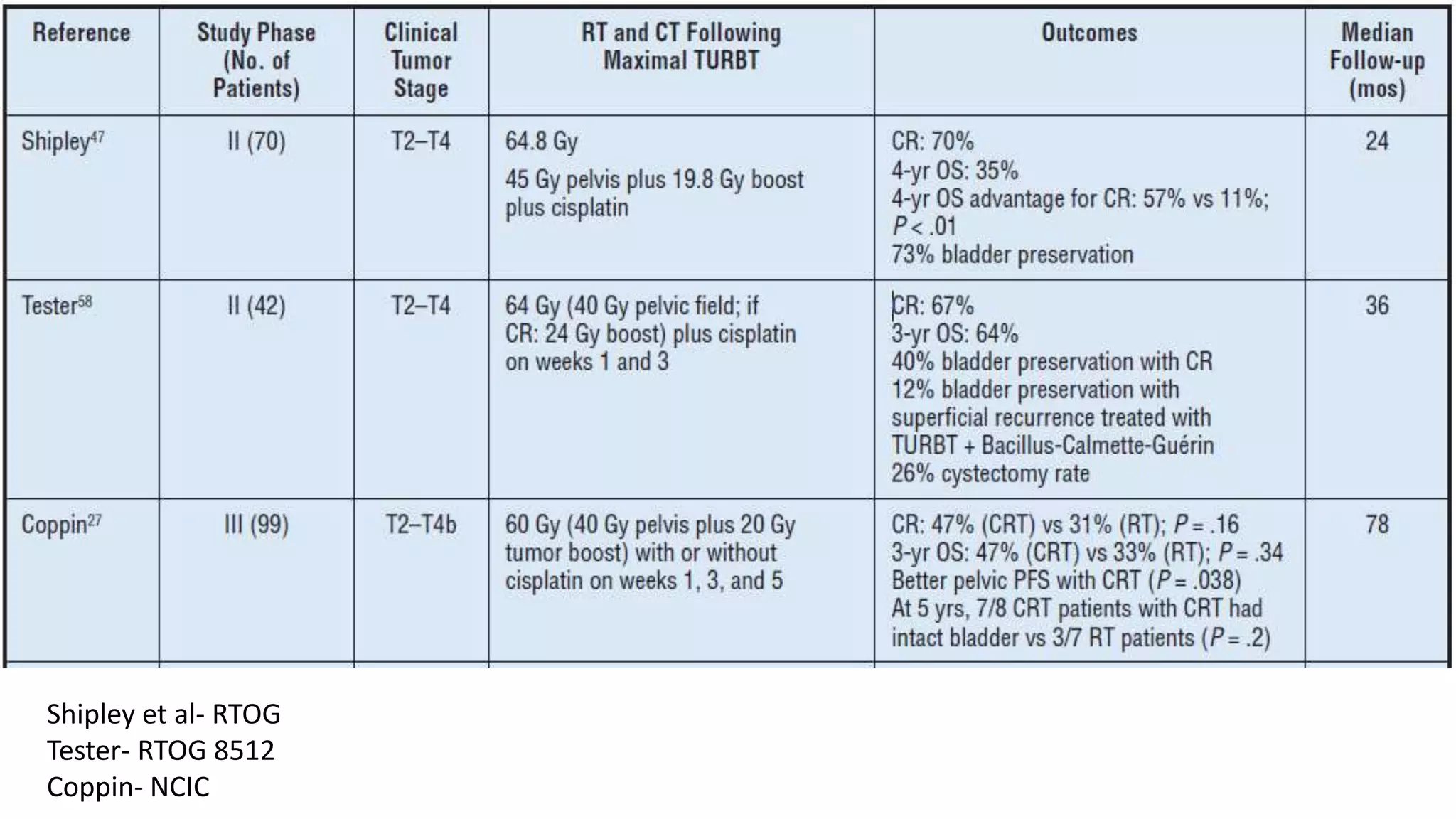
Shipley et al- RTOG
Tester- RTOG 8512
Coppin- NCIC
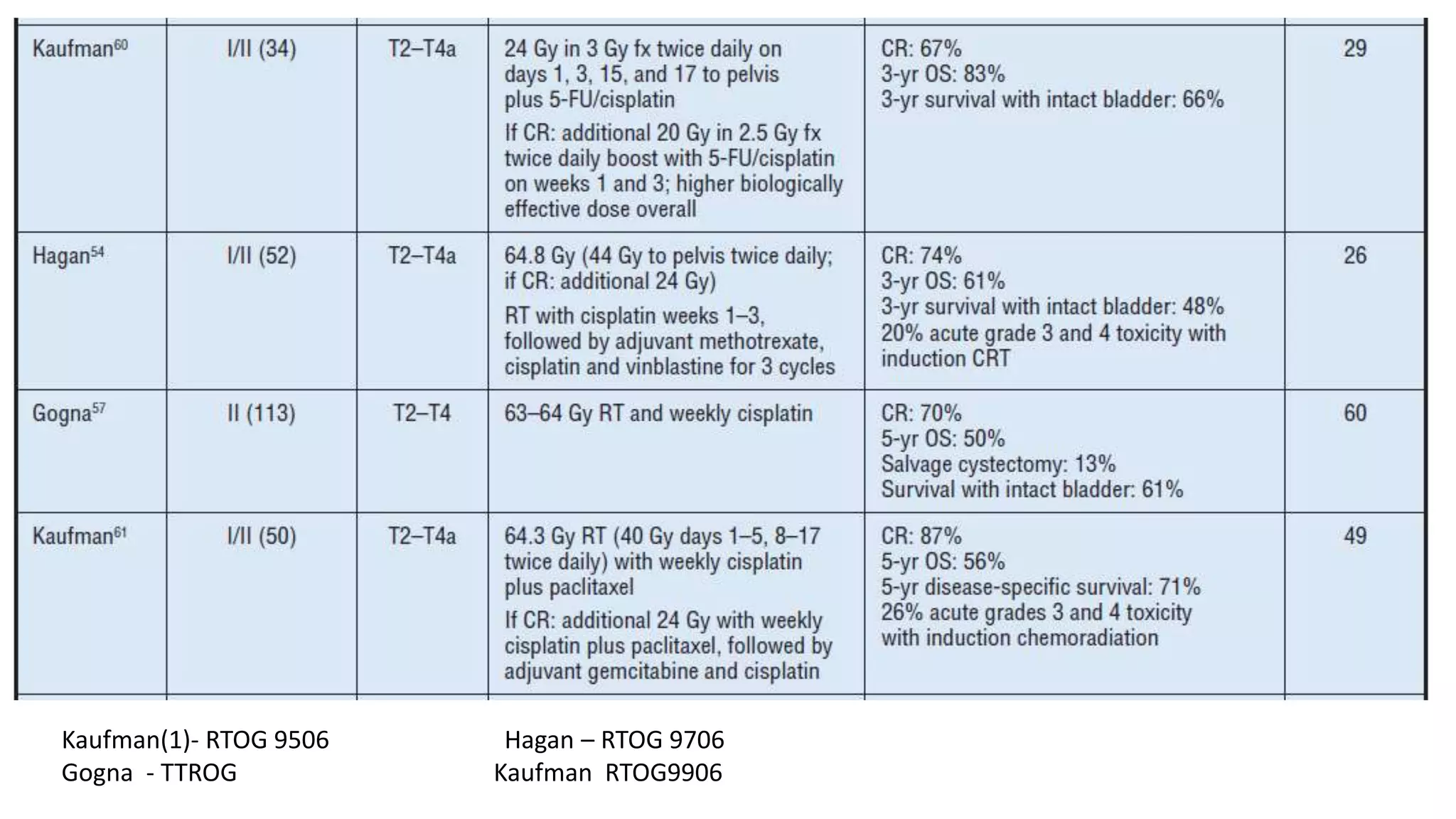
Kaufman(1)- RTOG 9506 Hagan – RTOG 9706
Gogna - TTROG Kaufman RTOG9906
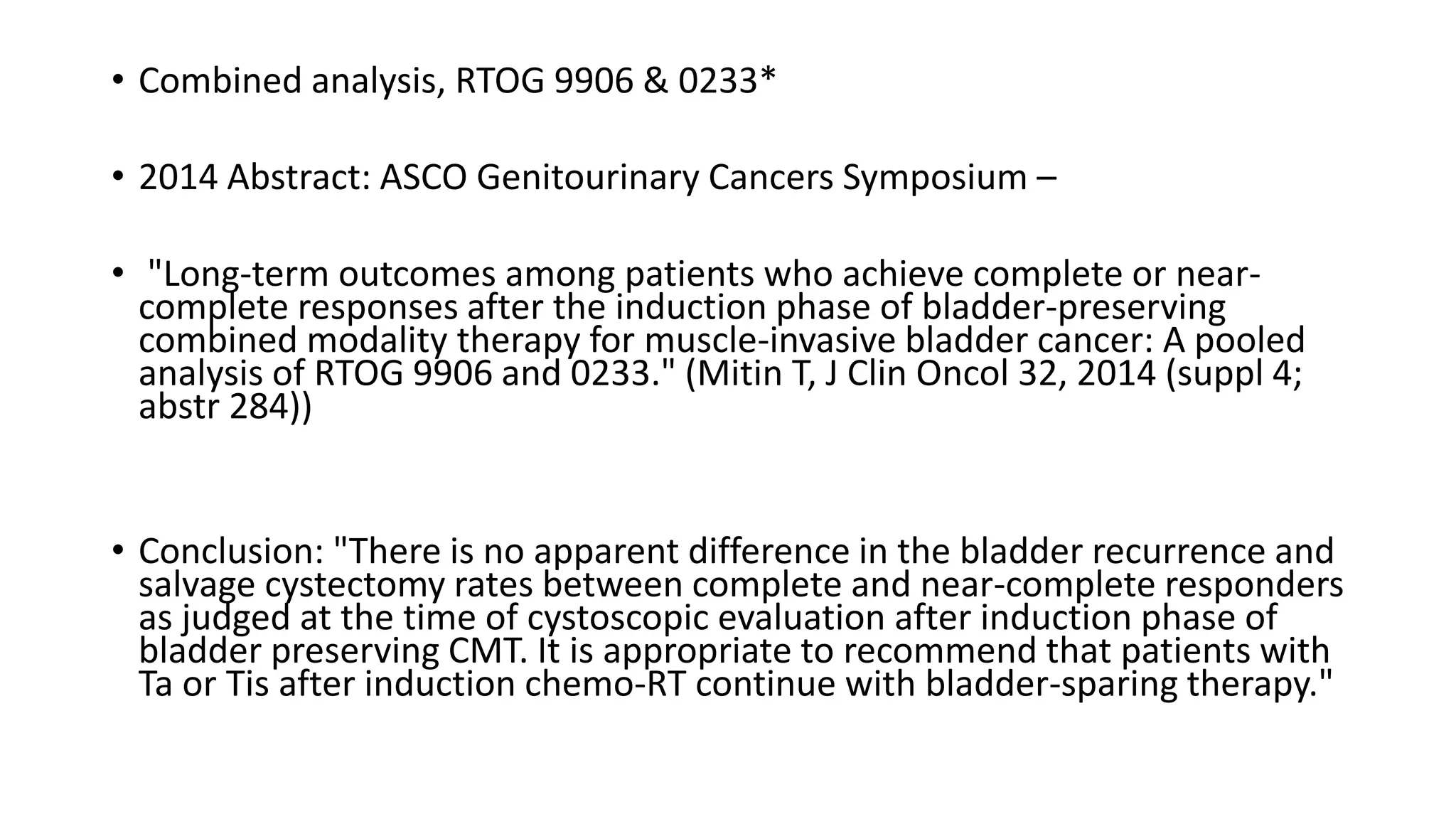
• Combined analysis, RTOG 9906 & 0233*
• 2014 Abstract: ASCO Genitourinary Cancers Symposium –
• "Long-term outcomes among patients who achieve complete or near-
complete responses after the induction phase of bladder-preserving
combined modality therapy for muscle-invasive bladder cancer: A pooled
analysis of RTOG 9906 and 0233." (Mitin T, J Clin Oncol 32, 2014 (suppl 4;
abstr 284))
• Conclusion: "There is no apparent difference in the bladder recurrence and
salvage cystectomy rates between complete and near-complete responders
as judged at the time of cystoscopic evaluation after induction phase of
bladder preserving CMT. It is appropriate to recommend that patients with
Ta or Tis after induction chemo-RT continue with bladder-sparing therapy."
Adds to benefit---
TECHNICAL ADVANCES
• Hyperfractionation
• Lipiodal IGRT
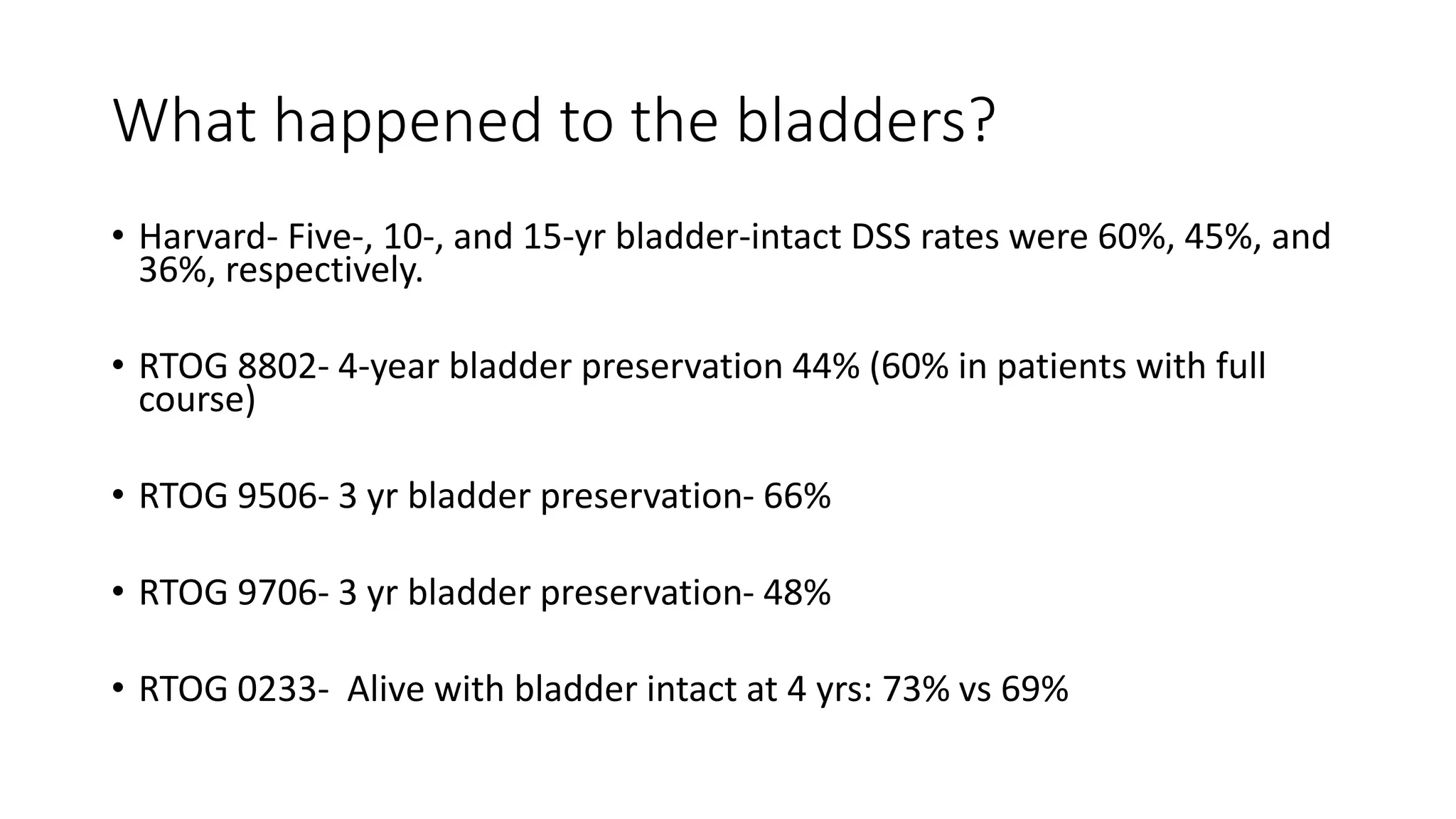
What happened to the bladders?
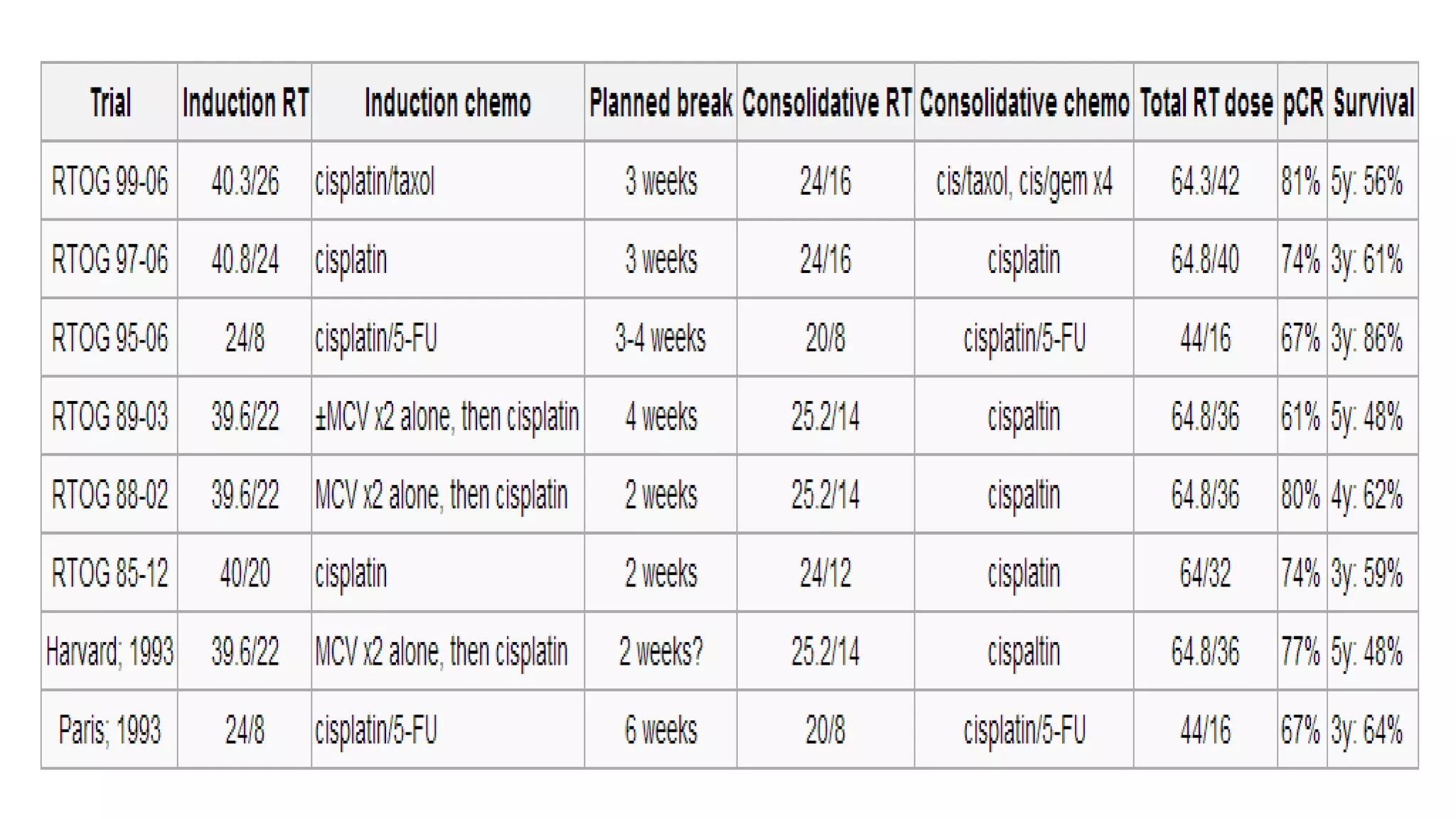
• Harvard- Five-, 10-, and 15-yr bladder-intact DSS rates were 60%, 45%, and
36%, respectively.
• RTOG 8802- 4-year bladder preservation 44% (60% in patients with full
course)
• RTOG 9506- 3 yr bladder preservation- 66%
• RTOG 9706- 3 yr bladder preservation- 48%
• RTOG 0233- Alive with bladder intact at 4 yrs: 73% vs 69%
Other modalities of bladder preservation
• Partial cystectomy
• Brachytherapy
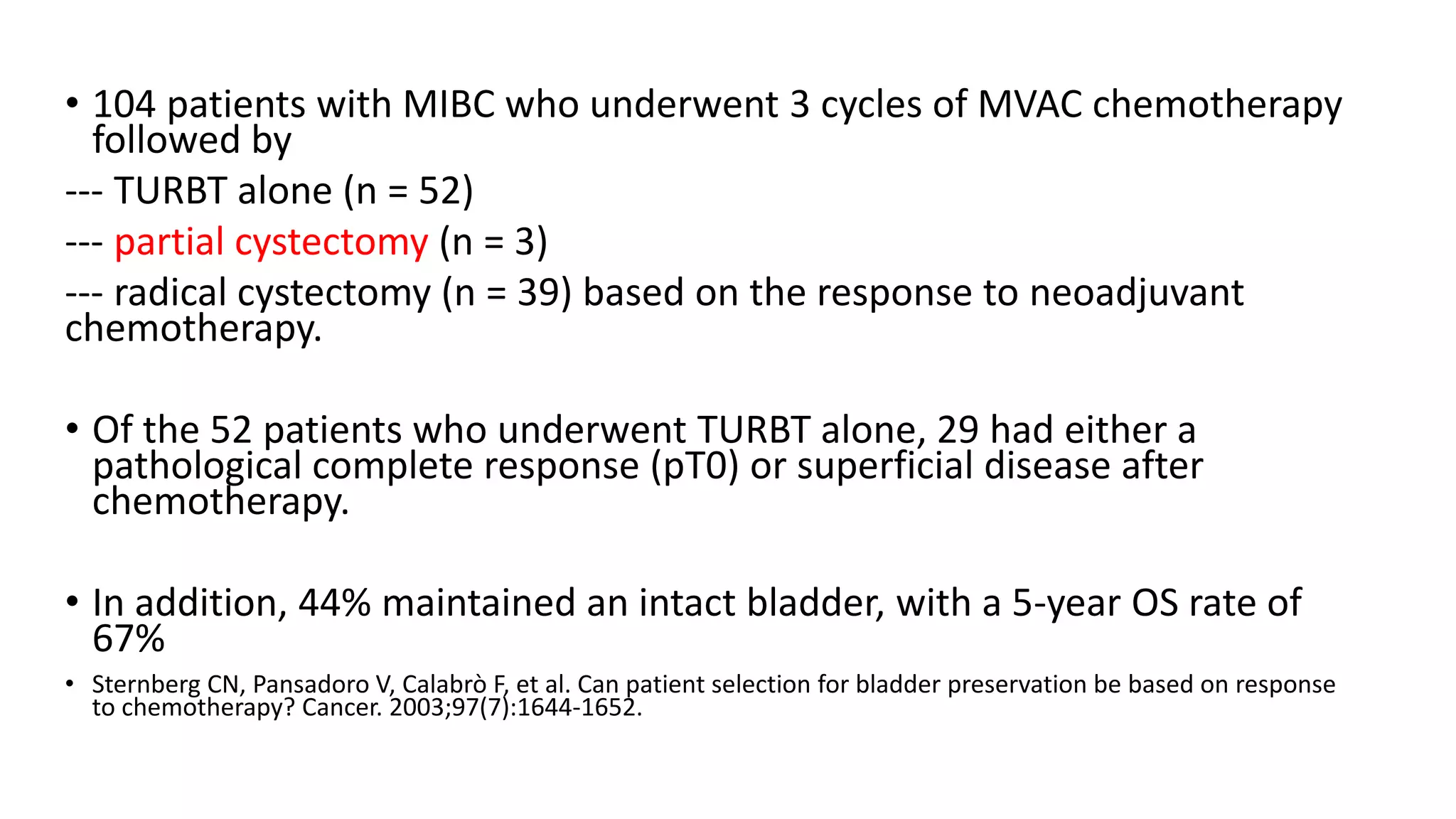
• 104 patients with MIBC who underwent 3 cycles of MVAC chemotherapy
followed by
--- TURBT alone (n = 52)
--- partial cystectomy (n = 3)
--- radical cystectomy (n = 39) based on the response to neoadjuvant
chemotherapy.
• Of the 52 patients who underwent TURBT alone, 29 had either a
pathological complete response (pT0) or superficial disease after
chemotherapy.
• In addition, 44% maintained an intact bladder, with a 5-year OS rate of
67%
• Sternberg CN, Pansadoro V, Calabrò F, et al. Can patient selection for bladder preservation be based on response
to chemotherapy? Cancer. 2003;97(7):1644-1652.
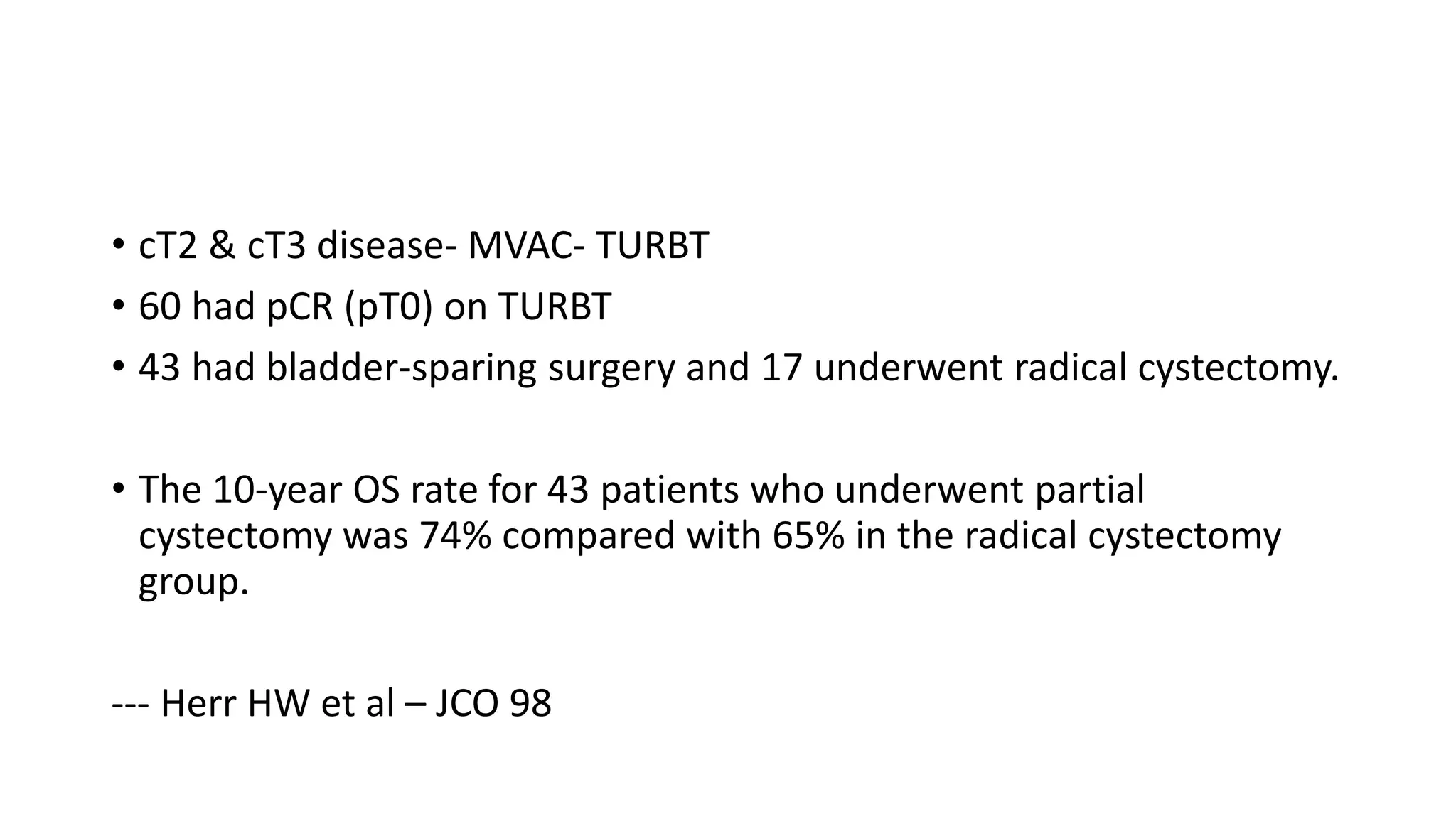
• cT2 & cT3 disease- MVAC- TURBT
• 60 had pCR (pT0) on TURBT
• 43 had bladder-sparing surgery and 17 underwent radical cystectomy.
• The 10-year OS rate for 43 patients who underwent partial
cystectomy was 74% compared with 65% in the radical cystectomy
group.
--- Herr HW et al – JCO 98
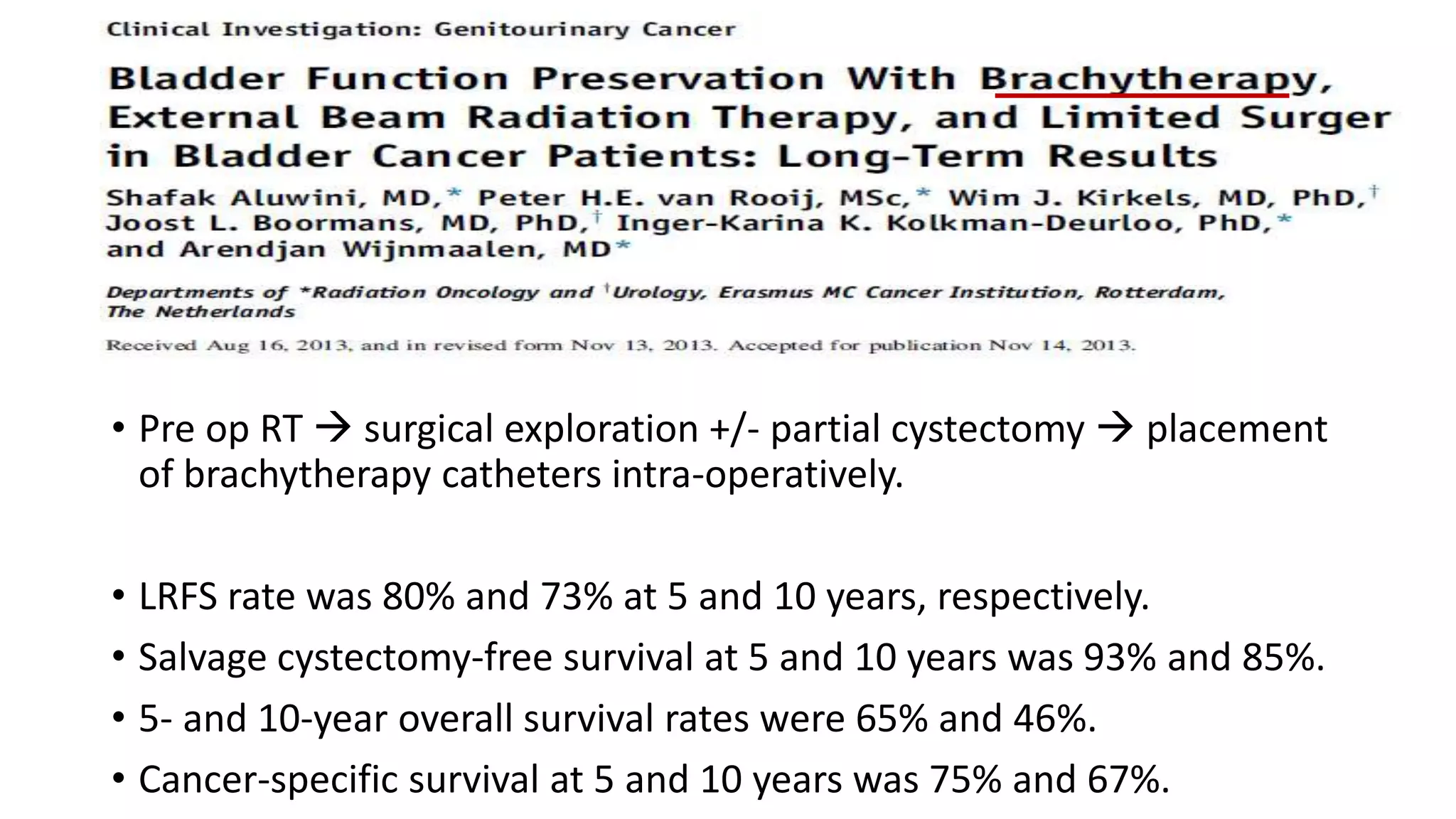
• Pre op RT  surgical exploration +/- partial cystectomy  placement
of brachytherapy catheters intra-operatively.
• LRFS rate was 80% and 73% at 5 and 10 years, respectively.
• Salvage cystectomy-free survival at 5 and 10 years was 93% and 85%.
• 5- and 10-year overall survival rates were 65% and 46%.
• Cancer-specific survival at 5 and 10 years was 75% and 67%.
• Cases of TURBT F/B Ext RT f/b BT
• No difference in 5 yr, 10 yr OS, DSS
---- Nieuwenhuijzen et al- European urology 2005
---- Elzbieta Van Der Steen Banasik et al- Radiotherapy & oncology 2009
• Also very important,
TOXICITY & QUALITY OF LIFE
PELVIC TOXICITY
• Late pelvic toxicity with a bladder-sparing approach is low.
• On RTOG protocols 89-03, 95-06, 97-06, and 99-06, the incidence of –
-- late grade 3 genitourinary toxicities- 6%
-- gastrointestinal toxicities- 2%, respectively
(based on a median follow-up of 5 years)
Radical Cystectomy
• Surgical removal of the bladder, adjacent organs, and regional lymph
nodes
• In men, the bladder, prostate, seminal vesicles, proximal vas deferens,
and proximal urethra, with a margin of adipose tissue and
peritoneum, are resected en bloc.
• In women, the procedure involves an anterior pelvic exenteration to
remove the bladder, urethra, uterus, fallopian tubes, ovaries, anterior
vaginal wall, and surrounding fascia en bloc.
All this at an age of over 65 years!!
Diversions
• Orthotopic neobladder
• Ileal conduit (urostomy)
• Continent urinary diversion
• NO DIFFERENCE in the scores in any scale across these procedures.
---- Hara I et al- BJU Int 2002, Dutta SC et al J Urol 2002
• Using ileum causes malabsorption, renal acid regulation dysfunction(
hypokalemic- hypochloremic acidosis), increased oxalate abrorption,
osteoporosis, etc
• Erectile dysfunction-
49 sexually active men underwent radical cystectomy
33% nerve sparing procedure
Median f/u- 47 months,mean sexual health inventory scores decreased from 22
to 4 (P < .05),86% of men unable to perform vaginal penetration.
Zippe CD, Raina R, Massanyi EZ, et al. Sexual function after male
radical cystectomy in a sexually active population. Urology. 2004;64(4):682-
685; discussion 685-686
For bladder preservation
Massachusetts study of QOL and urodynamic studies on 71 patients with intact
bladders after chemoradiation therapy. Median follow-up of 6.3 years
• 75% of patients had normally functioning bladders based on urodynamic studies
• 85% reported no urgency or occasional urgency.
• 22% had a reduced bladder capacity
• 7 of the patients reporting significant symptoms.
• 50% had normal erectile function
Weiss et al who found that 4% of patients were dissatisfied with their bladder
function following chemoradiation therapy. (Strahlenther Onkol. 2005)
COMPARATIVE STUDY
Distressful symptoms and well-being after radical cystectomy and orthotopic
bladder substitution compared with a matched control population. Henningsohn L
et al. J Urol. 2002.
• 58- irradiated, 251- cystectomized, 310- general
• RT group- 74% reported little or no distress from symptoms from the urinary
tract, 38% had had intercourse the previous month and 57% (men) reported they
had ejaculated.
• Cystectomized patients, 13% had had intercourse and 0% (men) had ejaculated.
• Comparable GI toxicity
• After radical radiotherapy, 46% of the patients were willing to accept some risk
of decreased survival to become symptom-free.
• Quality of Life in Bladder Cancer Patients Treated with Radical
Cystectomy and Orthotopic Bladder Reconstruction versus Bladder
Preservation Protocol. Mohamed I El-Sayed et al. March 2013. J
Cancer Sci Ther
• Statistically significant difference in terms of bladder function, sexual
function and gi tract symptoms.
Option after recurrence exists !
• Salvage cystectomy is always an option later.
• The perioperative morbidity and mortality rates of salvage cystectomy
after previous bladder chemoradiation therapy were not very
different from primary cystectomy
Basics of choosing a therapeutic option
Cure rate and survival
Organ preservation
Quality of life
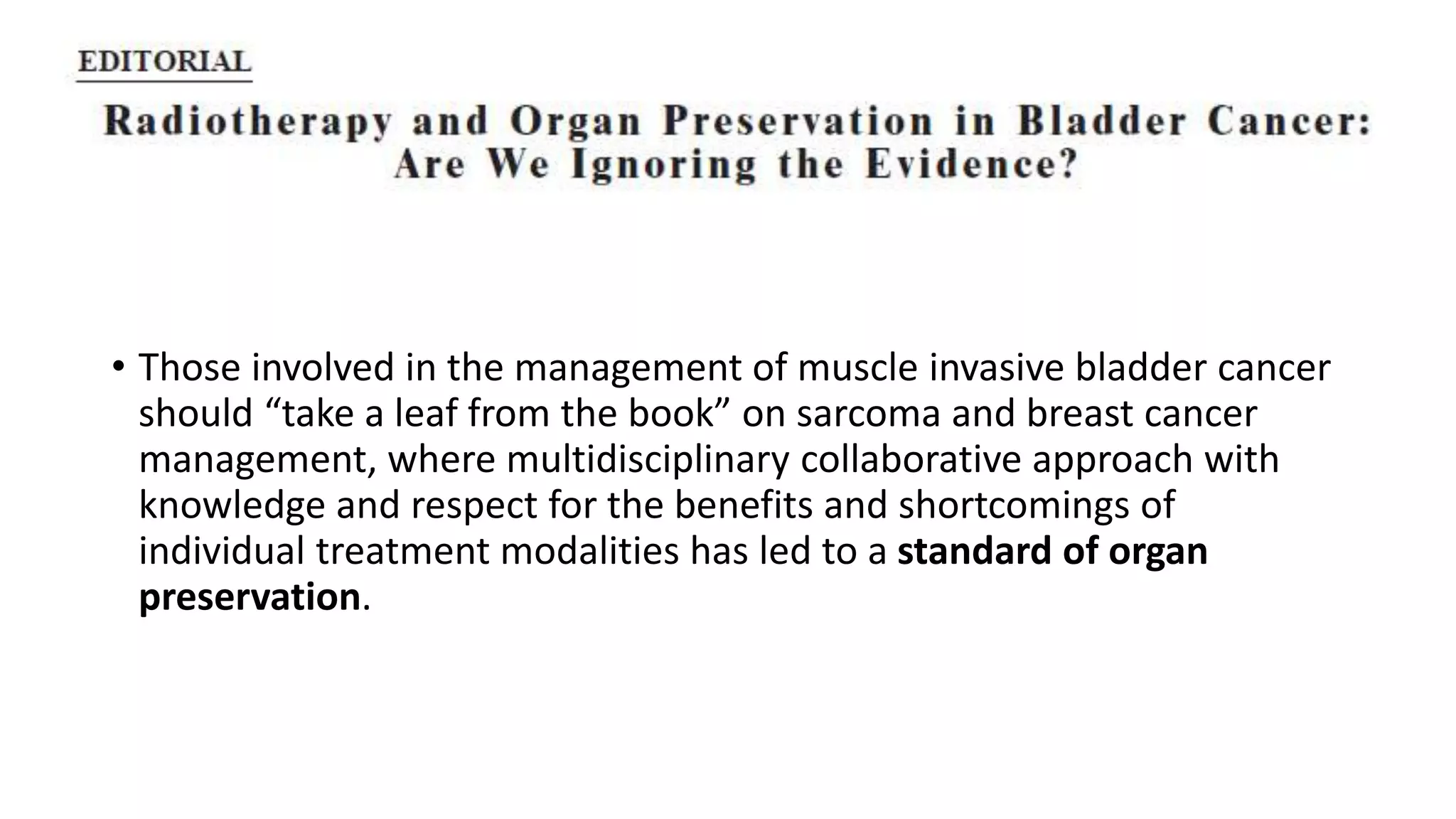
• Those involved in the management of muscle invasive bladder cancer
should “take a leaf from the book” on sarcoma and breast cancer
management, where multidisciplinary collaborative approach with
knowledge and respect for the benefits and shortcomings of
individual treatment modalities has led to a standard of organ
preservation.
• Thankyou
Bladder preservation in mibc

Bladder preservation in mibc

  • 1.
    Bladder preservation inMIBC THE SUCCESS STORY OF ORGAN PRESERVATION!
  • 2.
    BLADDER PRESERVATION -Range • TURBT alone • TURBT f/b RT alone • TURBT f/b chemotherapy Trimodality treatment Selective bladder preservation in form of partial cystectomy
  • 3.
    Trimodality treatment 1. MaximalTURBT 2. Concurrent chemo- radiation 3. Intervel early cystoscopy at end of 40- 45 Gy or 2 – 3 month after complete RT-CT a. i.c.o CR- complete CTRT or close surveillance b. i.c.o PR- immediate cystectomy 4. Close surveillance with cystoscopies there after!
  • 4.
    Candidates • T2 toT4a • Unifocal lesion less than 5 cms • Absence of extensive CIS • No trigone involvement or hydroureteronephrosis • Good bladder capacity prior to treatment • Complete TURBT • No contraindication to chemotherapy
  • 5.
    Basics of choosinga therapeutic option 1. Cure rate and survival 2. Organ preservation 3. Quality of life
  • 6.
    • Ultimate aimof cancer therapy--- CURE & SURVIVAL
  • 8.
    NOT TO FORGET… •All surgical series have pathological staging versus all Bladder preservation studies are clinical staged. • Many cystectomy studies are retrospective analysis and hence are not analysed with ‘intention to treat’ approach. • Radical cystectomy series include Tis Ta T1 in their study group and hence the results and exclude inoperable tumors( bad risk group patients).
  • 9.
     Only comparablestudy will be a randomized control trial that have clinical staging for both groups and all are analysed with an intention to treat. WHICH DOES NOT EXIST!!!
  • 10.
    • N =348 • Clinical stages T2-T4a • Treated on protocols 1986-2006 • Median age 66.3 years (range 27.3–88.6) • Median FU for those alive 7.7 years • Actuarial endpoints included: OS, DSS
  • 12.
    ` • Highlighted theimplication of a complete TURBT which is an important part of Bladder preservation treatment.
  • 13.
    Shipley et al-RTOG Tester- RTOG 8512 Coppin- NCIC
  • 14.
    Kaufman(1)- RTOG 9506Hagan – RTOG 9706 Gogna - TTROG Kaufman RTOG9906
  • 15.
    • Combined analysis,RTOG 9906 & 0233* • 2014 Abstract: ASCO Genitourinary Cancers Symposium – • "Long-term outcomes among patients who achieve complete or near- complete responses after the induction phase of bladder-preserving combined modality therapy for muscle-invasive bladder cancer: A pooled analysis of RTOG 9906 and 0233." (Mitin T, J Clin Oncol 32, 2014 (suppl 4; abstr 284)) • Conclusion: "There is no apparent difference in the bladder recurrence and salvage cystectomy rates between complete and near-complete responders as judged at the time of cystoscopic evaluation after induction phase of bladder preserving CMT. It is appropriate to recommend that patients with Ta or Tis after induction chemo-RT continue with bladder-sparing therapy."
  • 16.
    Adds to benefit--- TECHNICALADVANCES • Hyperfractionation • Lipiodal IGRT
  • 17.
    What happened tothe bladders? • Harvard- Five-, 10-, and 15-yr bladder-intact DSS rates were 60%, 45%, and 36%, respectively. • RTOG 8802- 4-year bladder preservation 44% (60% in patients with full course) • RTOG 9506- 3 yr bladder preservation- 66% • RTOG 9706- 3 yr bladder preservation- 48% • RTOG 0233- Alive with bladder intact at 4 yrs: 73% vs 69%
  • 18.
    Other modalities ofbladder preservation • Partial cystectomy • Brachytherapy
  • 19.
    • 104 patientswith MIBC who underwent 3 cycles of MVAC chemotherapy followed by --- TURBT alone (n = 52) --- partial cystectomy (n = 3) --- radical cystectomy (n = 39) based on the response to neoadjuvant chemotherapy. • Of the 52 patients who underwent TURBT alone, 29 had either a pathological complete response (pT0) or superficial disease after chemotherapy. • In addition, 44% maintained an intact bladder, with a 5-year OS rate of 67% • Sternberg CN, Pansadoro V, Calabrò F, et al. Can patient selection for bladder preservation be based on response to chemotherapy? Cancer. 2003;97(7):1644-1652.
  • 20.
    • cT2 &cT3 disease- MVAC- TURBT • 60 had pCR (pT0) on TURBT • 43 had bladder-sparing surgery and 17 underwent radical cystectomy. • The 10-year OS rate for 43 patients who underwent partial cystectomy was 74% compared with 65% in the radical cystectomy group. --- Herr HW et al – JCO 98
  • 21.
    • Pre opRT  surgical exploration +/- partial cystectomy  placement of brachytherapy catheters intra-operatively. • LRFS rate was 80% and 73% at 5 and 10 years, respectively. • Salvage cystectomy-free survival at 5 and 10 years was 93% and 85%. • 5- and 10-year overall survival rates were 65% and 46%. • Cancer-specific survival at 5 and 10 years was 75% and 67%.
  • 22.
    • Cases ofTURBT F/B Ext RT f/b BT • No difference in 5 yr, 10 yr OS, DSS ---- Nieuwenhuijzen et al- European urology 2005 ---- Elzbieta Van Der Steen Banasik et al- Radiotherapy & oncology 2009
  • 23.
    • Also veryimportant, TOXICITY & QUALITY OF LIFE
  • 24.
    PELVIC TOXICITY • Latepelvic toxicity with a bladder-sparing approach is low. • On RTOG protocols 89-03, 95-06, 97-06, and 99-06, the incidence of – -- late grade 3 genitourinary toxicities- 6% -- gastrointestinal toxicities- 2%, respectively (based on a median follow-up of 5 years)
  • 25.
    Radical Cystectomy • Surgicalremoval of the bladder, adjacent organs, and regional lymph nodes • In men, the bladder, prostate, seminal vesicles, proximal vas deferens, and proximal urethra, with a margin of adipose tissue and peritoneum, are resected en bloc. • In women, the procedure involves an anterior pelvic exenteration to remove the bladder, urethra, uterus, fallopian tubes, ovaries, anterior vaginal wall, and surrounding fascia en bloc. All this at an age of over 65 years!!
  • 26.
    Diversions • Orthotopic neobladder •Ileal conduit (urostomy) • Continent urinary diversion
  • 27.
    • NO DIFFERENCEin the scores in any scale across these procedures. ---- Hara I et al- BJU Int 2002, Dutta SC et al J Urol 2002 • Using ileum causes malabsorption, renal acid regulation dysfunction( hypokalemic- hypochloremic acidosis), increased oxalate abrorption, osteoporosis, etc
  • 28.
    • Erectile dysfunction- 49sexually active men underwent radical cystectomy 33% nerve sparing procedure Median f/u- 47 months,mean sexual health inventory scores decreased from 22 to 4 (P < .05),86% of men unable to perform vaginal penetration. Zippe CD, Raina R, Massanyi EZ, et al. Sexual function after male radical cystectomy in a sexually active population. Urology. 2004;64(4):682- 685; discussion 685-686
  • 29.
    For bladder preservation Massachusettsstudy of QOL and urodynamic studies on 71 patients with intact bladders after chemoradiation therapy. Median follow-up of 6.3 years • 75% of patients had normally functioning bladders based on urodynamic studies • 85% reported no urgency or occasional urgency. • 22% had a reduced bladder capacity • 7 of the patients reporting significant symptoms. • 50% had normal erectile function Weiss et al who found that 4% of patients were dissatisfied with their bladder function following chemoradiation therapy. (Strahlenther Onkol. 2005)
  • 30.
    COMPARATIVE STUDY Distressful symptomsand well-being after radical cystectomy and orthotopic bladder substitution compared with a matched control population. Henningsohn L et al. J Urol. 2002. • 58- irradiated, 251- cystectomized, 310- general • RT group- 74% reported little or no distress from symptoms from the urinary tract, 38% had had intercourse the previous month and 57% (men) reported they had ejaculated. • Cystectomized patients, 13% had had intercourse and 0% (men) had ejaculated. • Comparable GI toxicity • After radical radiotherapy, 46% of the patients were willing to accept some risk of decreased survival to become symptom-free.
  • 31.
    • Quality ofLife in Bladder Cancer Patients Treated with Radical Cystectomy and Orthotopic Bladder Reconstruction versus Bladder Preservation Protocol. Mohamed I El-Sayed et al. March 2013. J Cancer Sci Ther • Statistically significant difference in terms of bladder function, sexual function and gi tract symptoms.
  • 32.
    Option after recurrenceexists ! • Salvage cystectomy is always an option later. • The perioperative morbidity and mortality rates of salvage cystectomy after previous bladder chemoradiation therapy were not very different from primary cystectomy
  • 33.
    Basics of choosinga therapeutic option Cure rate and survival Organ preservation Quality of life
  • 34.
    • Those involvedin the management of muscle invasive bladder cancer should “take a leaf from the book” on sarcoma and breast cancer management, where multidisciplinary collaborative approach with knowledge and respect for the benefits and shortcomings of individual treatment modalities has led to a standard of organ preservation.
  • 35.

Editor's Notes

  • #8 USC- STEIN ET AL MSKCC- DALBAGNI ET AL SWOG- GROSSMAN ET AL RTOG SHIPLEY ET AL
  • #20 MVAC- methotrexate, vinblastine, doxorubicin, and cisplatin